Basic geometry understanding Math Worksheets for Ages 3-5
8 filtered results
-
From - To
Discover our "Basic Geometry Understanding" math worksheets, designed specifically for children aged 3-5. These engaging activities introduce young learners to essential geometric concepts, such as shapes, sizes, and spatial relationships. Our worksheets feature colorful illustrations and interactive exercises that foster critical thinking and boost early math skills. With a focus on playful learning, children will enjoy sorting, matching, and identifying shapes, helping to build a strong foundation in geometry. Perfect for preschool and kindergarten students, these resources make learning fun and accessible while enhancing cognitive development. Explore our collection and support your child's journey into the world of mathematics today!
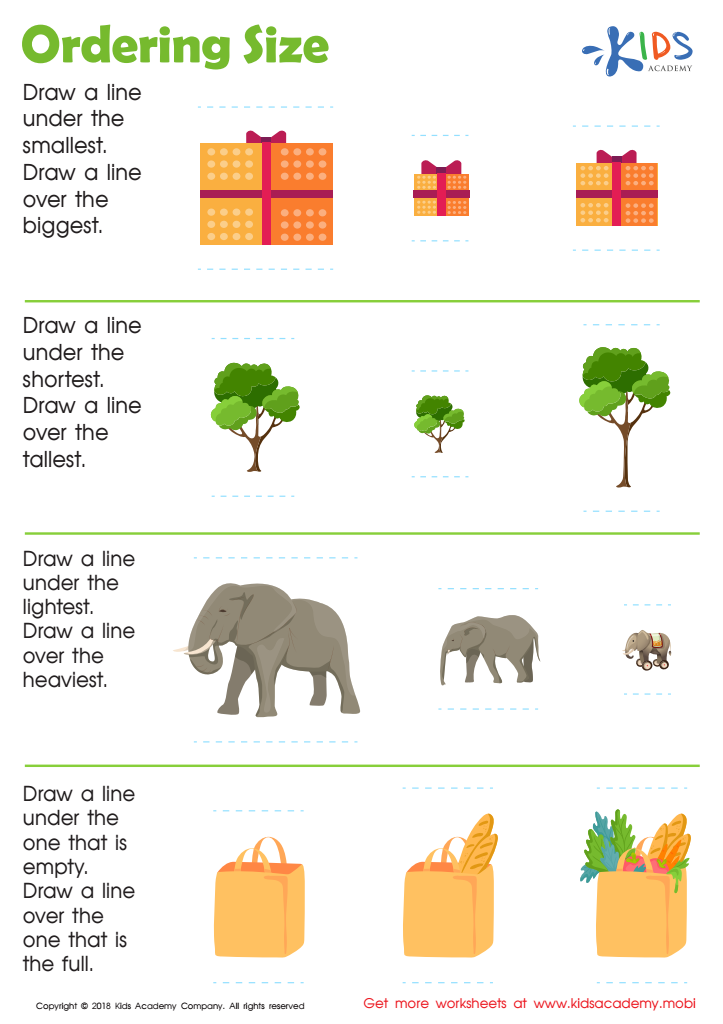
Ordering Size Worksheet
 Assign to My Students
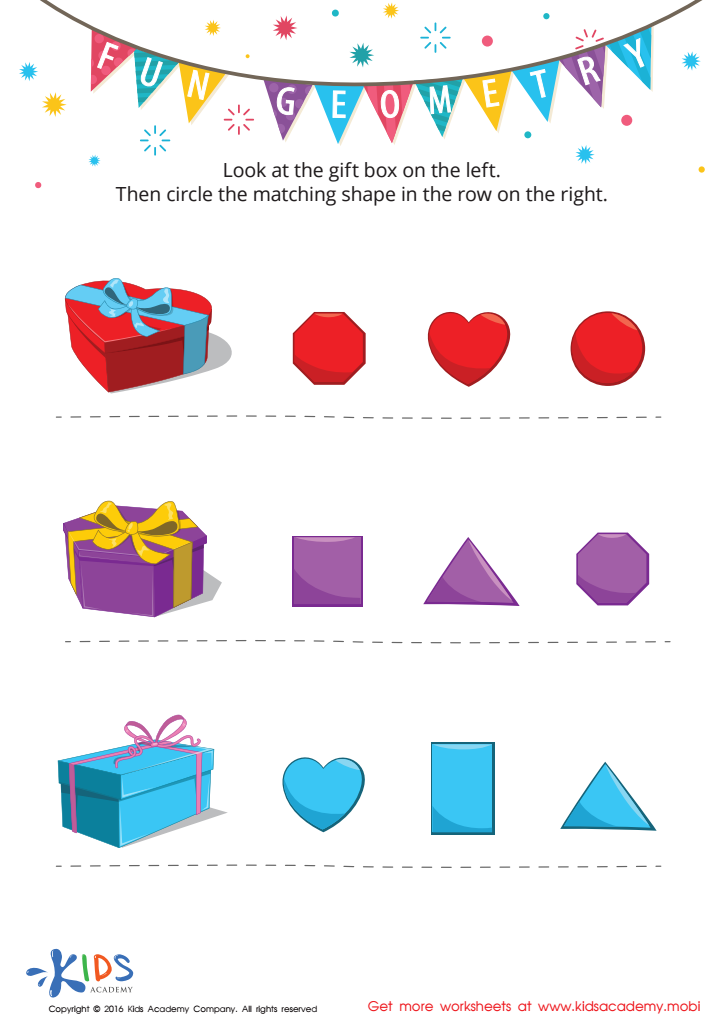
Fun Geometry Worksheet
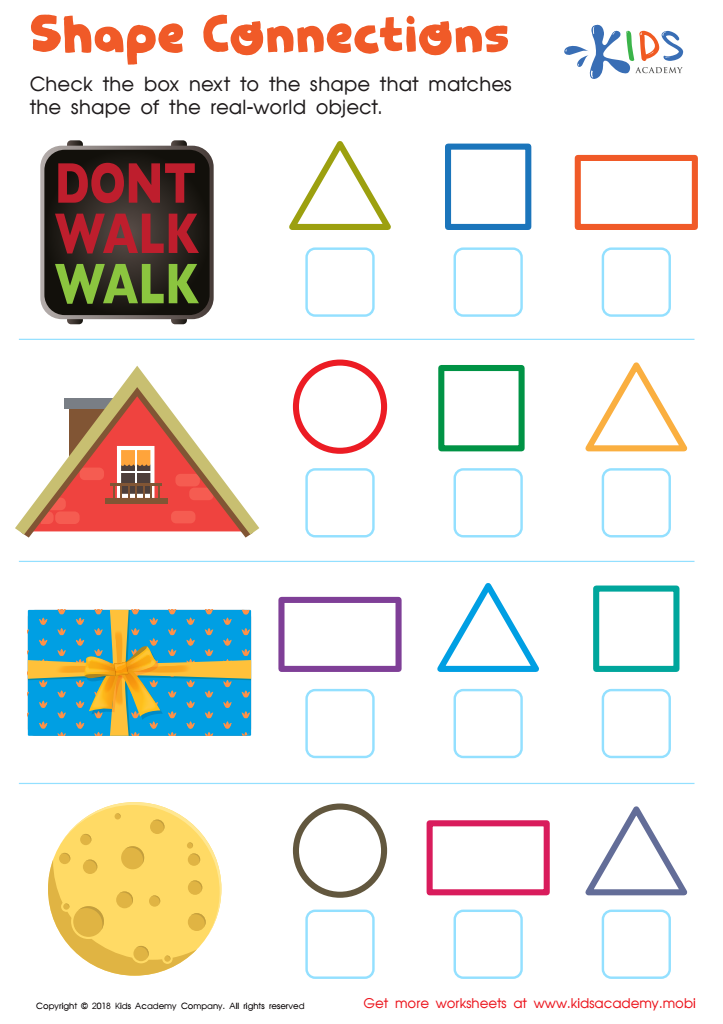
Shape Connections Worksheet
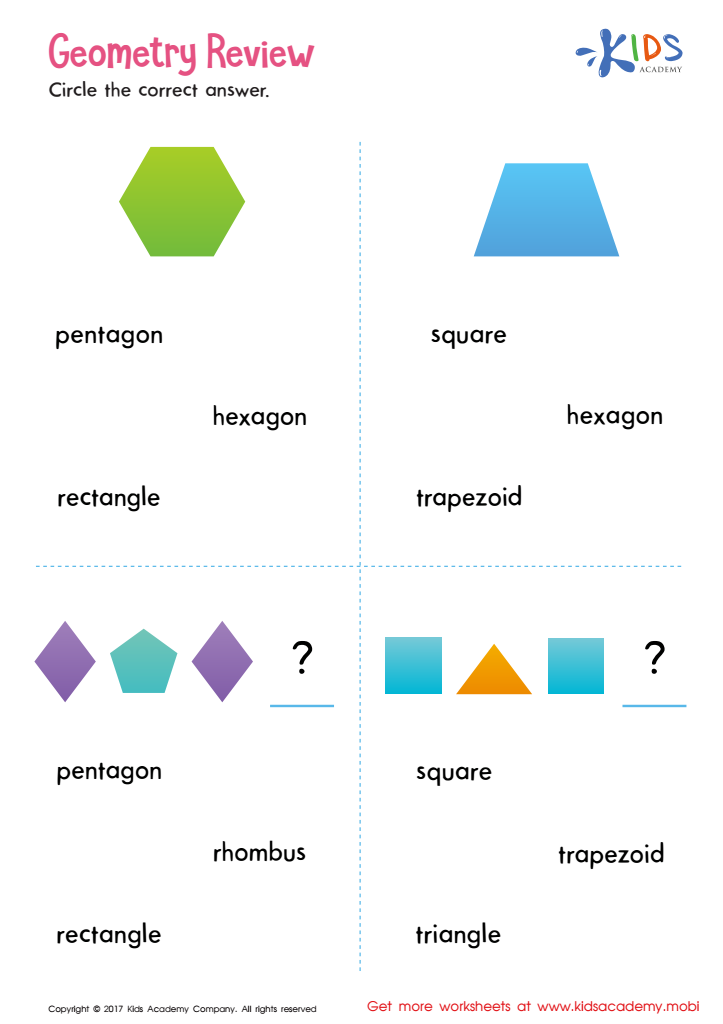
Geometry Review Printable
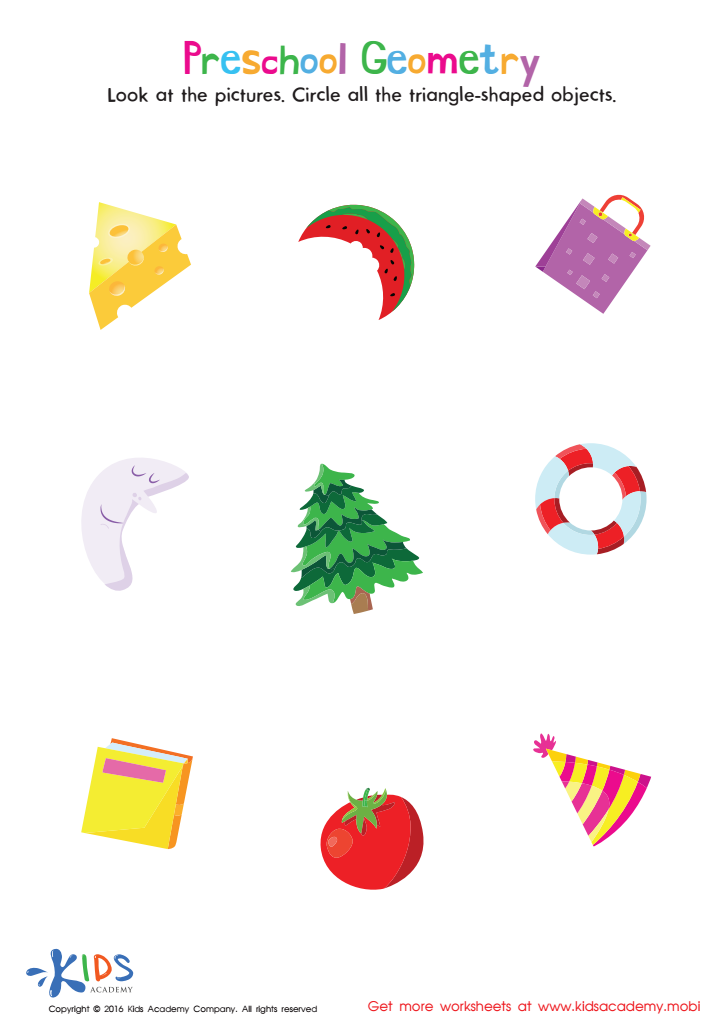
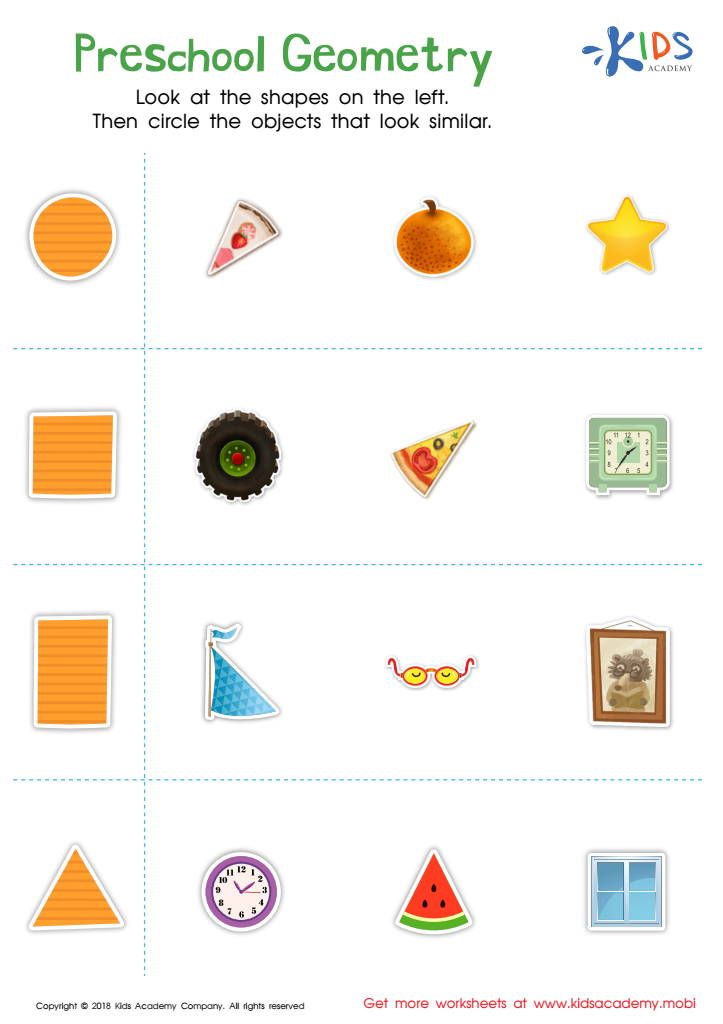
Preschool Geometry Worksheet
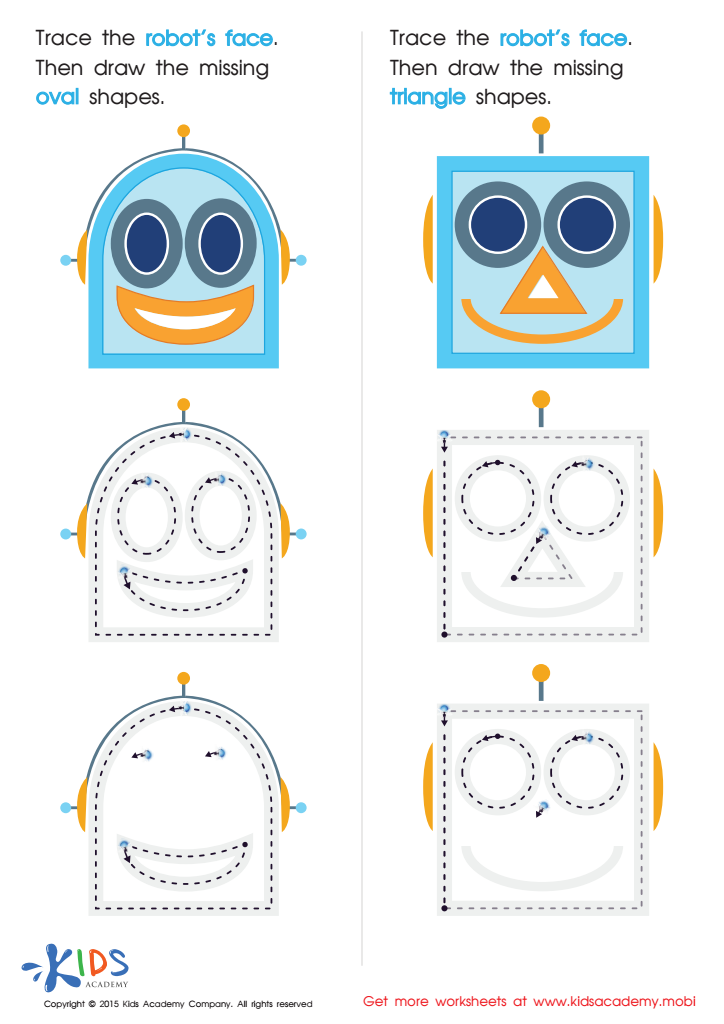
Drawing Ovals And Triangles with Fun Printable
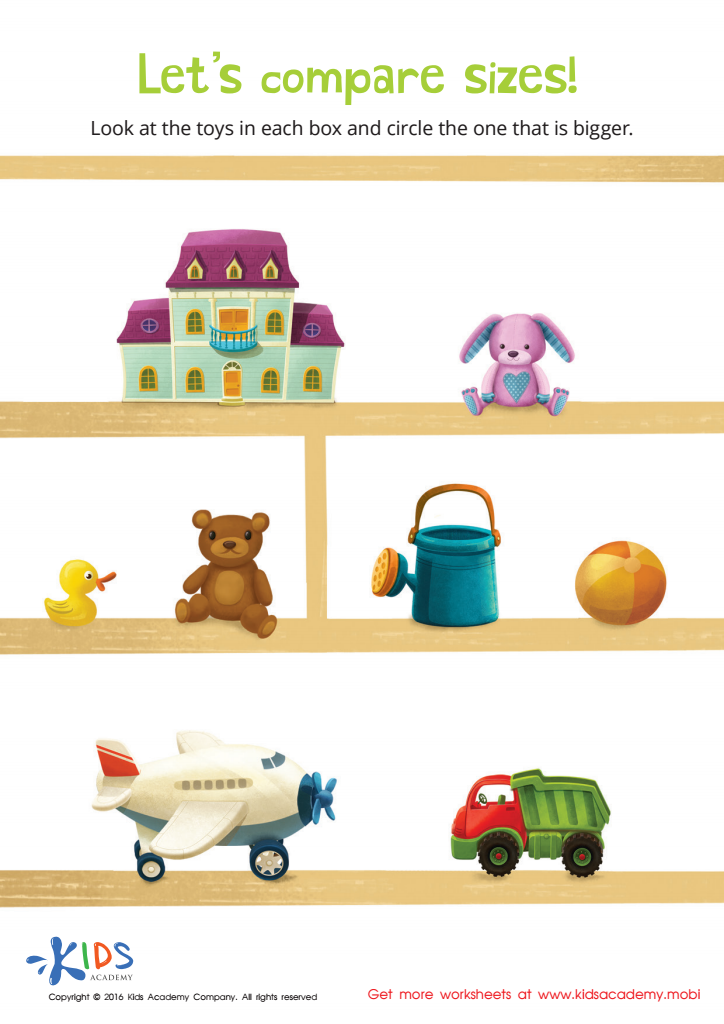
Classifying by Size Sorting Worksheet






Understanding basic geometry is critical for children aged 3-5 as it lays the foundation for mathematical reasoning and problem-solving skills needed later in life. At this developmental stage, children are naturally curious and eager to explore their environment, making it an ideal time to introduce geometric concepts such as shapes, sizes, and spatial relationships.
Engaging with geometry helps young learners enhance their understanding of the world around them. For instance, identifying and naming basic shapes like circles, squares, and triangles improves their observational skills and vocabulary. This knowledge fosters cognitive development, supporting children in classifying and comparing objects.
Additionally, geometry aids in developing critical cognitive skills such as spatial awareness and visual perception. Activities like building with blocks, drawing shapes, or participating in shape-sorting games encourage children to think spatially and creatively. These experiences not only make math enjoyable but also promote teamwork and cooperative play.
Furthermore, a solid grasp of geometric concepts fosters smoother transitions into more complex mathematical ideas in later grades. It ultimately contributes to children's overall academic success and prepares them for real-world challenges, making it crucial for parents and teachers to actively participate in their understanding of basic geometry.








