Rhyming skills development Reading Worksheets for Ages 3-5
3 filtered results
-
From - To
Develop early literacy with our "Rhyming Skills Development Reading Worksheets" designed for ages 3-5. These engaging printable activities help young learners recognize and generate rhymes, boosting their phonemic awareness and reading readiness. Each fun and colorful worksheet incorporates playful exercises, such as matching rhyming words and identifying rhyming pairs, to make learning enjoyable. Perfect for preschool and kindergarten children, these worksheets are essential tools for fostering a strong foundation in reading. Our rhyming activities are tailored to support early education standards, ensuring your child gains the skills needed for future academic success. Start exploring now!
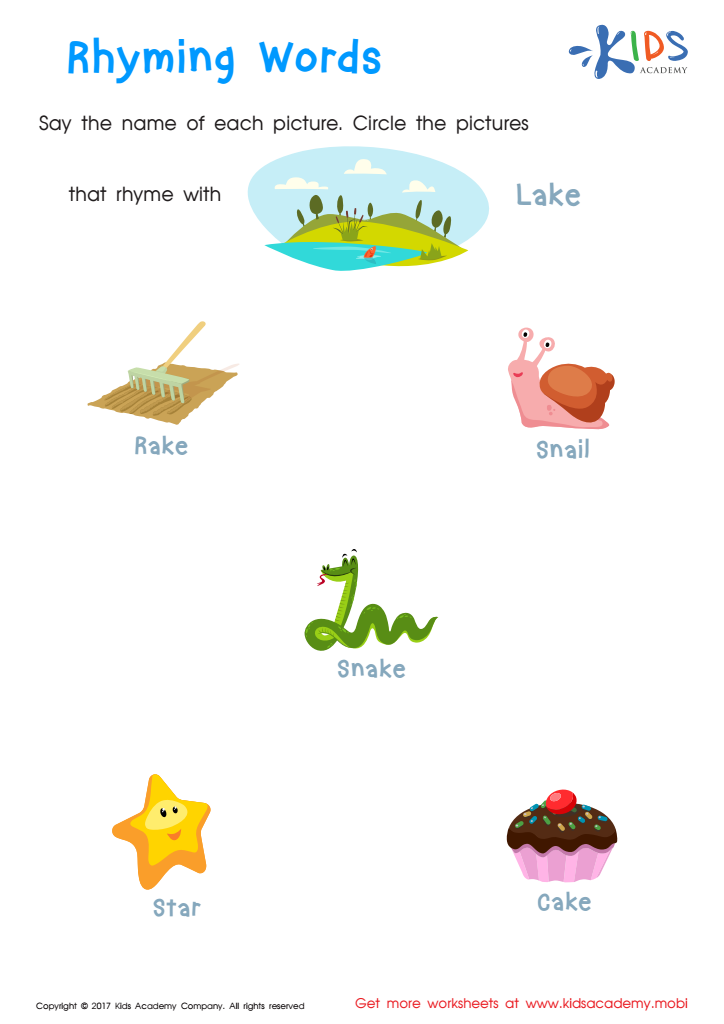
Rhyming Words Rhyming Worksheet
 Assign to My Students
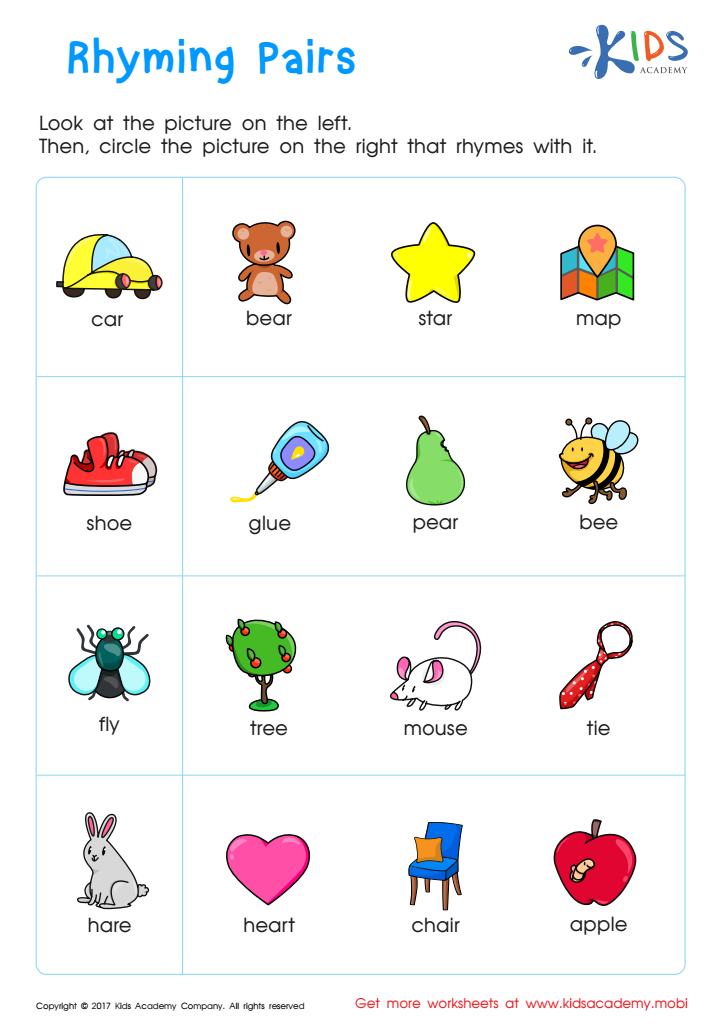
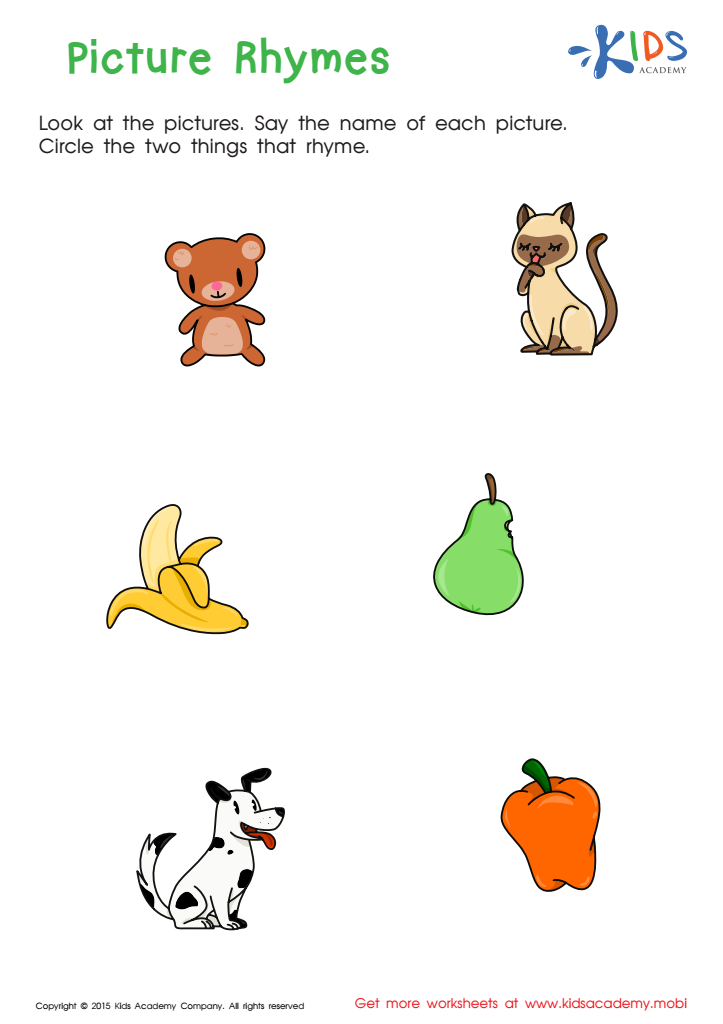
First Words: Picture Rhymes Worksheet








Rhyming skills development is a crucial aspect of early literacy for children aged 3-5. Rhyming helps young minds recognize sounds and patterns in language, which, in turn, strengthens phonemic awareness. Phonemic awareness—the understanding that words are made up of individual sounds (phonemes)—is foundational to learning to read. When children hear and generate rhymes, they practice discerning sounds in words, aiding their ability to decode words when they start to read.
Rhyming also boosts memory and recall abilities. Nursery rhymes or simple rhyming songs are often easier for young children to remember than non-rhyming sequences, which hooks them into the joy of language and sets the stage for longer attention spans and better memory skills. Additionally, creative rhyming can stimulate imagination, leading to more engaging storytelling and an enriched vocabulary.
Furthermore, incorporating rhyming activities into everyday learning can make literacy fun and interactive, nurturing a positive attitude toward reading. Shared rhyming games between parents or teachers and children can also strengthen bonds, create safe learning environments, and instill a love for books early on. Overall, cultivating rhyming skills is not just about language mechanics; it's about fostering a comprehensive, joyous pathway into the world of reading and literacy.








