Categorization skills Science Worksheets for Ages 3-5
5 filtered results
-
From - To
Enhance your child's learning experience with our Categorization Skills Science Worksheets designed specifically for ages 3-5! These engaging worksheets introduce young learners to the world of science through fun and interactive categorization activities. By sorting and grouping items based on similarities and differences, children develop essential critical thinking and organizational skills. Our resources incorporate vibrant visuals and simple instructions to capture young imaginations, making learning a delight. Perfect for preschool and kindergarten settings, these worksheets encourage hands-on exploration and discovery while laying the foundation for future scientific understanding. Ignite your child's curiosity and foster a love for learning with our science categorization worksheets!
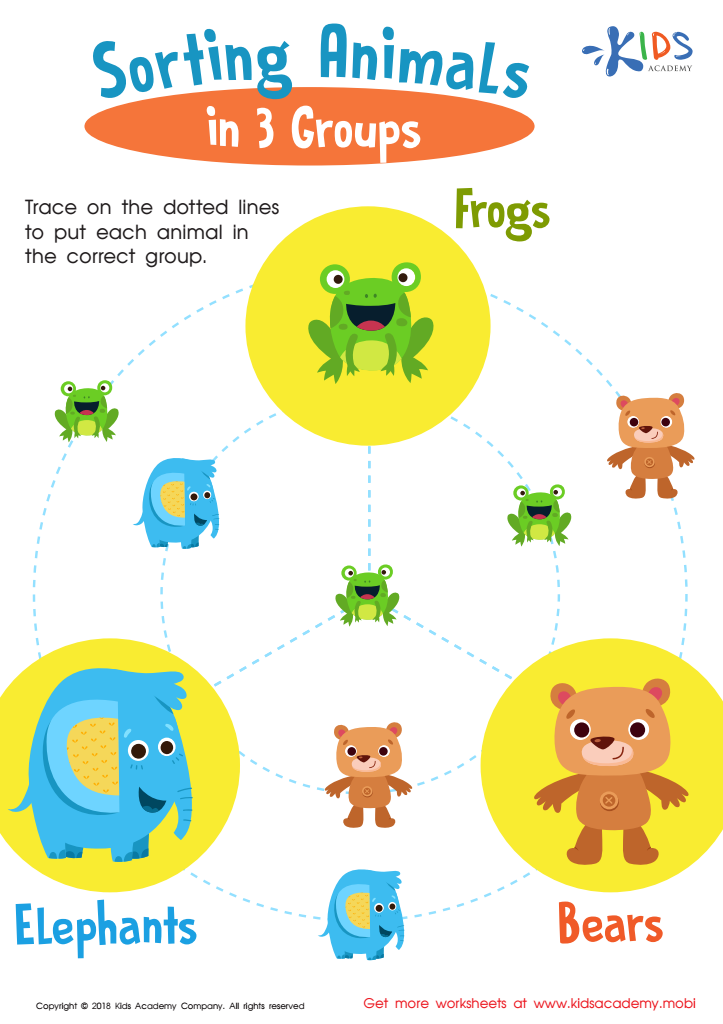
Sorting Animals in 3 Groups Worksheet
 Assign to My Students
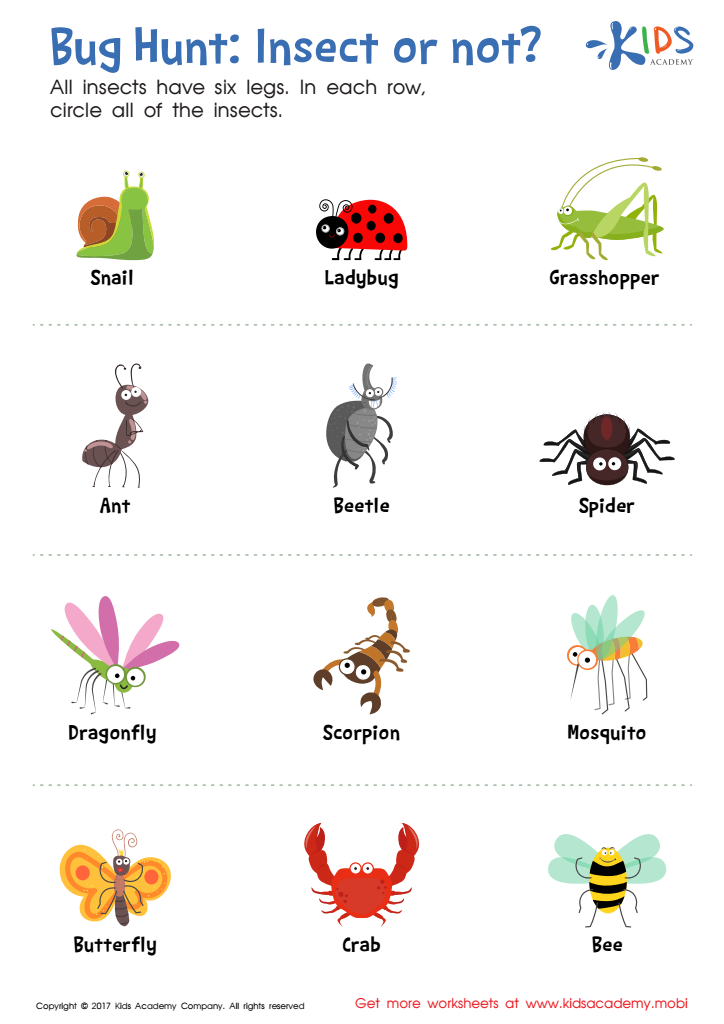
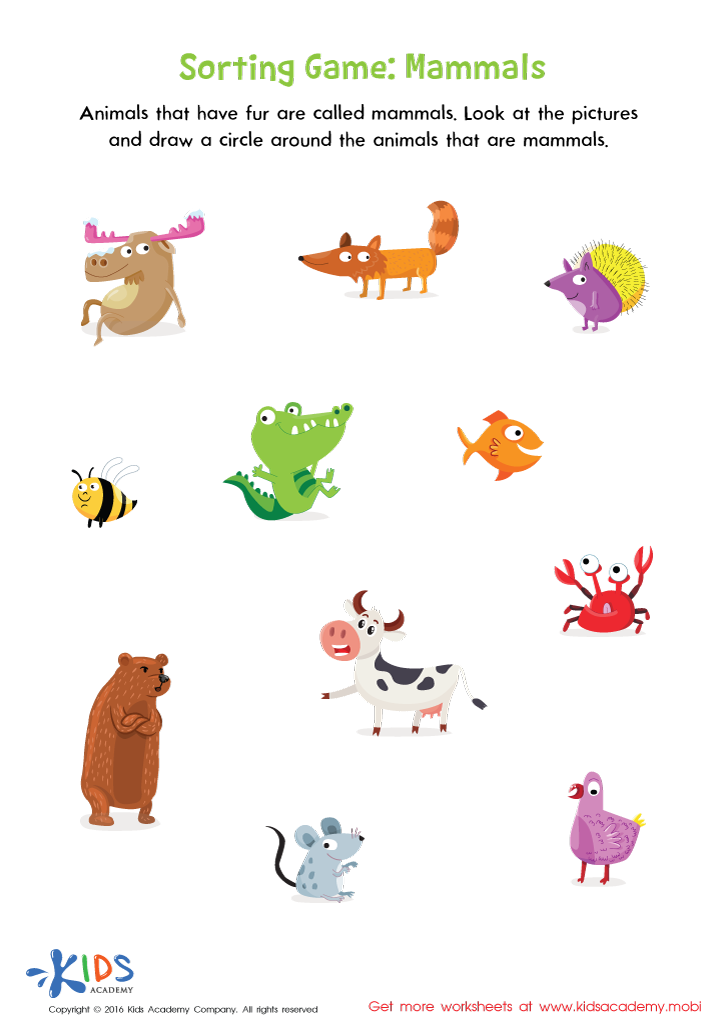
Mammals Sorting Worksheet

Identifying Living or Non–living Worksheet
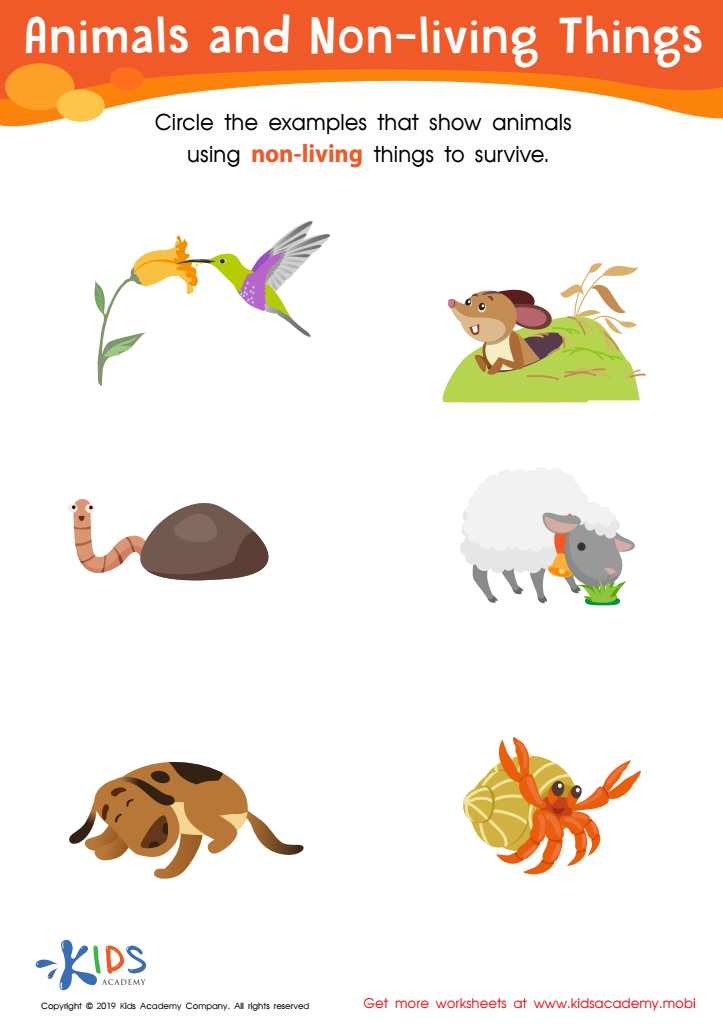
Animals and Non-Living Things Worksheet





Categorization skills are essential for children aged 3-5 as they serve as foundational cognitive abilities that influence a child’s interaction with the world. At this age, children actively explore and make sense of their surroundings, and categorization helps them organize their experiences. By grouping objects, animals, or concepts based on shared characteristics, children enhance critical thinking and problem-solving skills, laying groundwork for later academic success.
Parents and teachers should prioritize these skills because they foster effective language development. As children categorize, they learn new vocabulary words related to various categories, enhancing communication and comprehension. Additionally, categorization encourages social skills; children learn to identify similarities and differences, enabling better interactions with peers through shared interests.
Engaging in categorization activities, such as sorting toys or classifying animals, not only makes learning enjoyable but also aids in developing a sense of order and logic within a chaotic world. Ultimately, nurturing categorization skills in young children equips them with the necessary tools for analytical thinking, helps build their self-confidence, and prepares them for more advanced learning tasks as they grow. Therefore, both parents and teachers play a pivotal role in shaping these critical early developmental skills through intentional activities and support.







