Critical thinking skills Science Worksheets for Ages 3-5
5 filtered results
-
From - To
Our Critical Thinking Skills Science Worksheets for ages 3-5 are designed to engage and challenge young minds. These worksheets help develop foundational skills by encouraging observation, comparison, and logical reasoning. Activities are crafted with fun, colorful visuals to captivate early learners while promoting vital skills like problem-solving, analyzing patterns, and making predictions. With topics ranging from nature and animals to everyday objects, children will build their understanding of the world around them. Equip your preschooler with the tools they need for academic success and lifelong learning through engaging, thoughtfully designed exercises that make science exploration both educational and enjoyable.
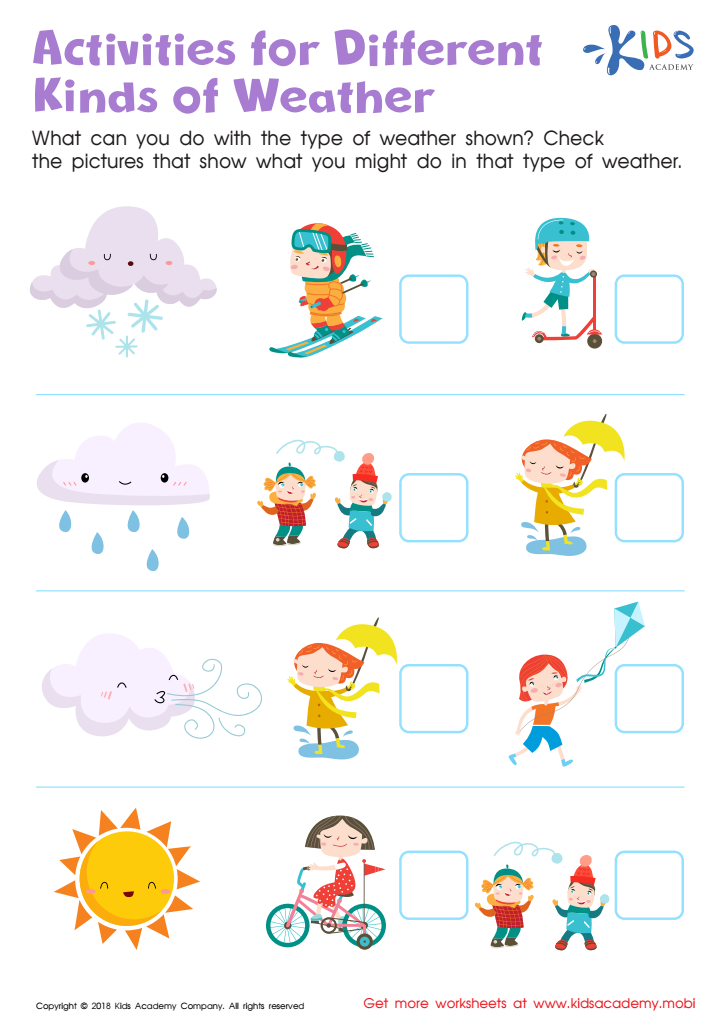
Activities for Different Kinds of Weather Worksheet
 Assign to My Students
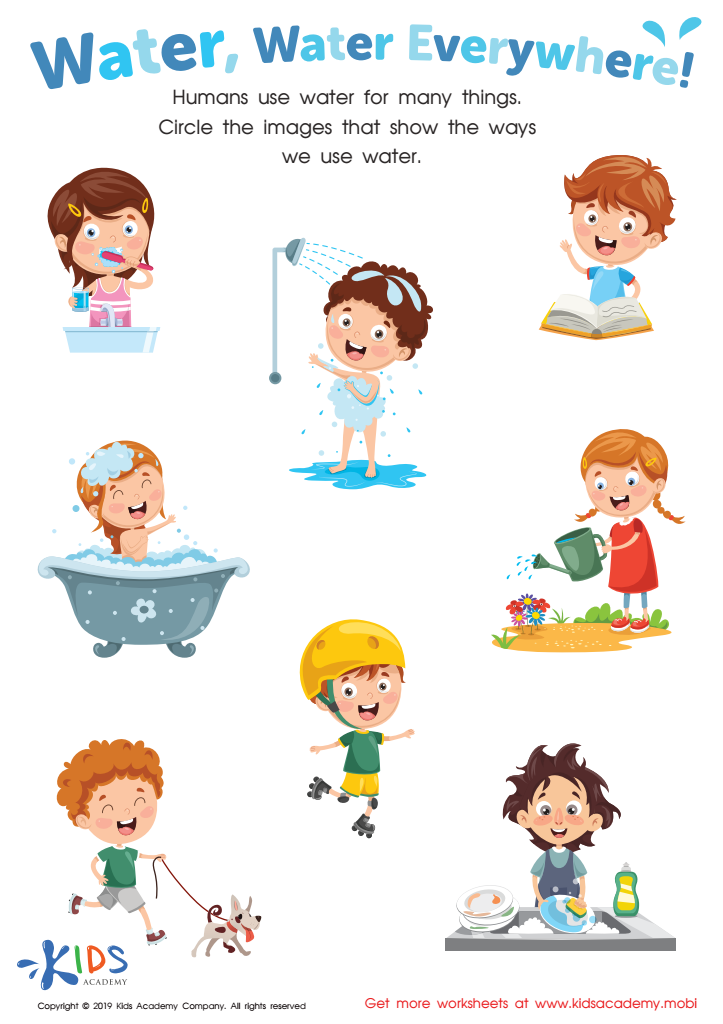
Water, Water Everywhere! Worksheet
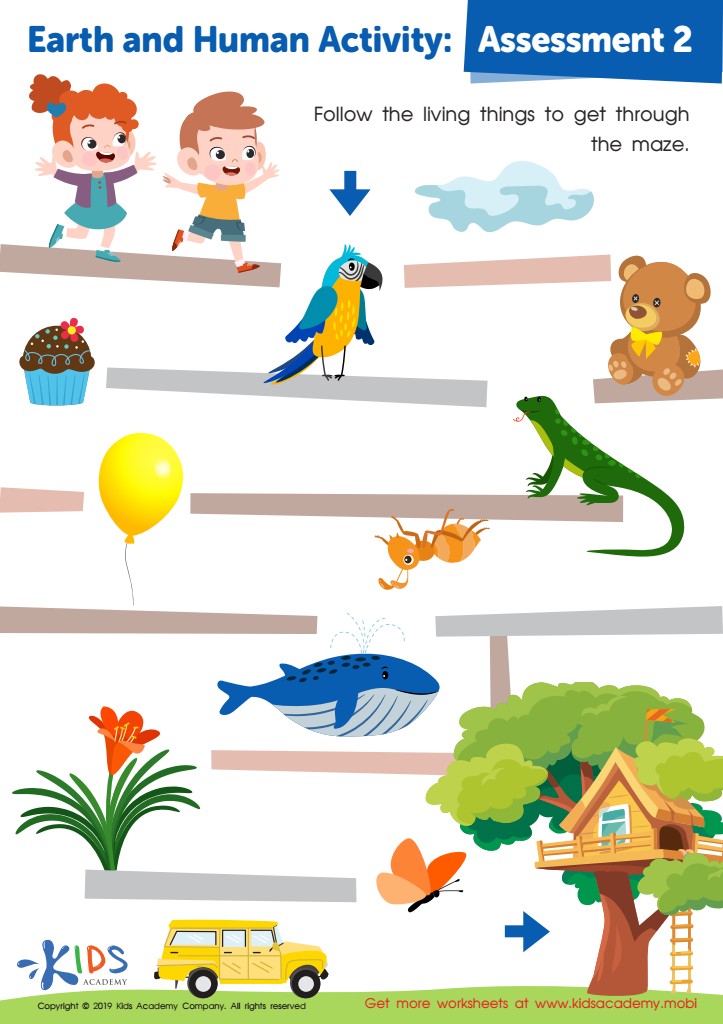
Earth and Human Activity: Assessment 2 Worksheet
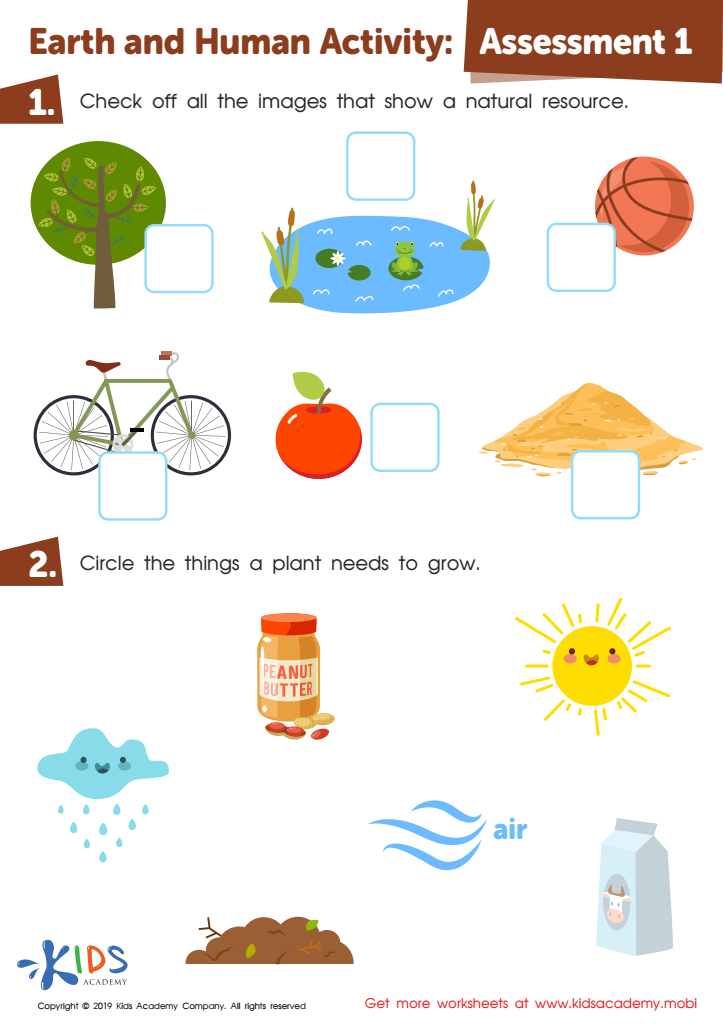
Earth and Human Activity: Assessment 1 Worksheet
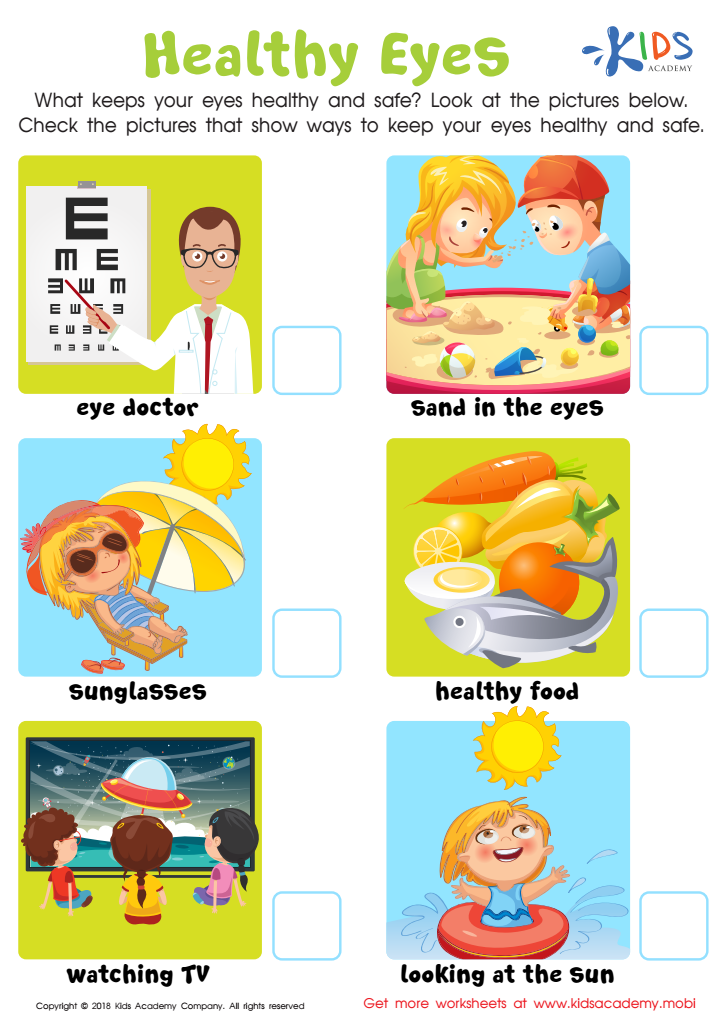
Healthy Eyes Worksheet







Critical thinking skills in science for ages 3-5 are foundational to a child's cognitive development and academic success. At this early stage, children are naturally curious and show a readiness to explore and question the world around them. By fostering critical thinking, parents and teachers help harness this innate curiosity, guiding young minds to observe, analyze, and draw conclusions.
Engaging in science activities promotes problem-solving and decision-making skills. For example, when children are asked to predict what happens when they mix water with sand, they practice forecasting and reasoning. These exercises enhance their ability to understand cause-and-effect relationships, a crucial component of critical thinking.
Additionally, critical thinking in science encourages creativity and open-mindedness. Young learners become adept at considering multiple ways to approach a problem, increasing their flexibility in thought. This early practice instills persistence as children learn that finding answers often requires trial and error.
Moreover, early exposure to critical thinking lays the groundwork for future learning. Children who develop these skills are more likely to excel in STEM subjects later on. They also become more independent and confident learners, capable of in-depth investigation and skeptical analysis.
Therefore, investing time in nurturing critical thinking in science during early childhood sets the stage for lifelong intellectual growth and curiosity.







