Shape Recognition Science Worksheets for Ages 3-5
3 filtered results
-
From - To
Unlock your child's potential with our Shape Recognition Science Worksheets for Ages 3-5! Designed to cater to the developmental needs of preschoolers, these engaging worksheets enable young learners to identify and comprehend various geometric shapes. Featuring visually appealing illustrations and fun activities, our exercises enhance critical thinking, fine motor skills, and cognitive development. Perfect for early childhood education, these easy-to-use worksheets provide a solid foundation in both basic geometry and early science concepts. Foster a love for learning while equipping your child with essential skills for kindergarten success. Discover endless learning possibilities at Kids Academy today!
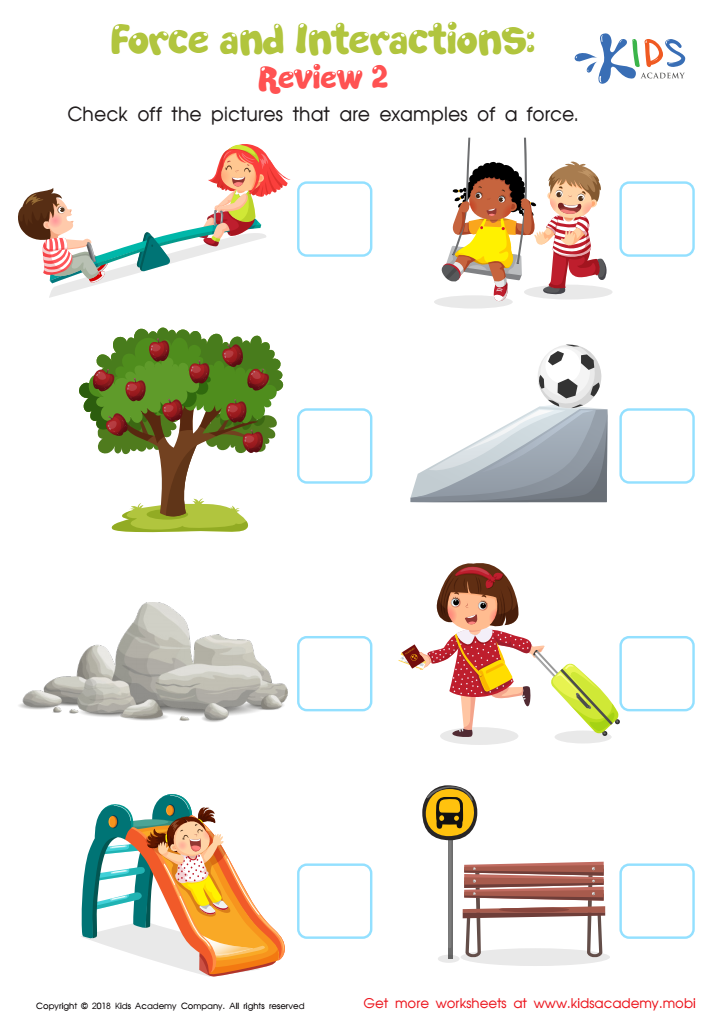
Force and Interactions: Review 2 Worksheet
 Assign to My Students
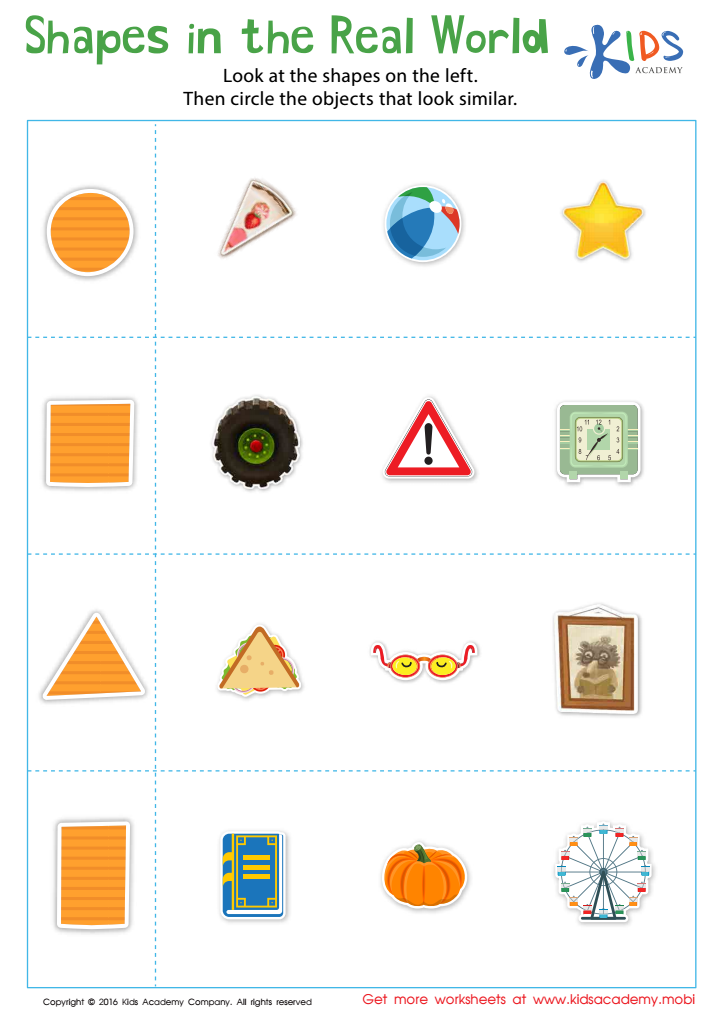
Shapes in the Real World Worksheet
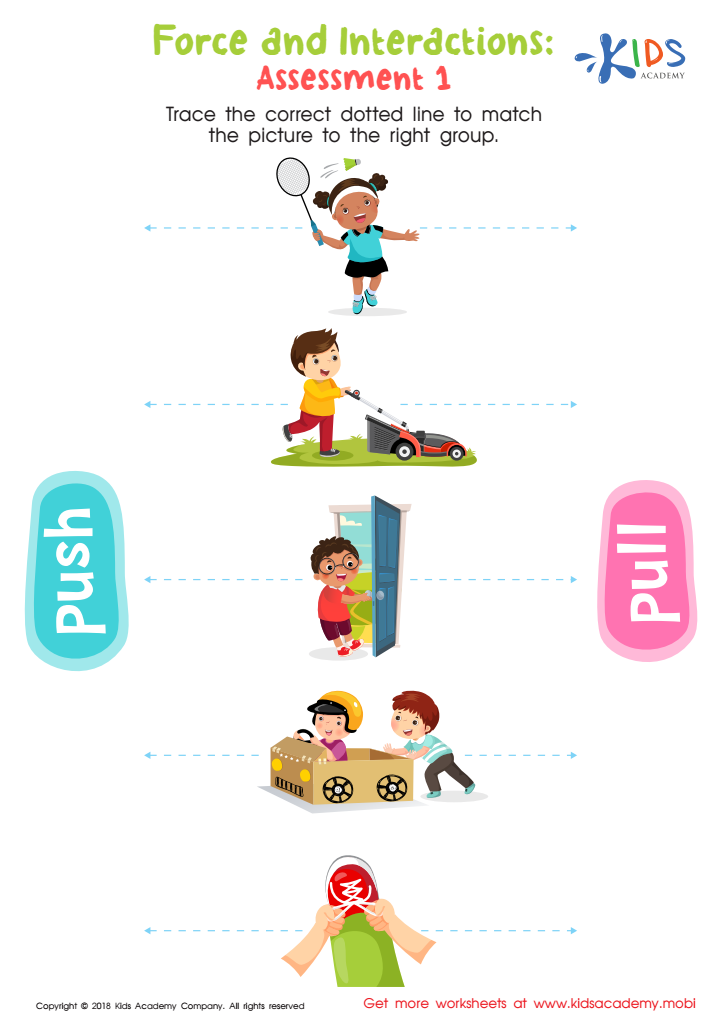
Force and Interactions: Assessment 2 Worksheet







Shape recognition science is crucial for children ages 3-5 because it lays the foundation for early cognitive development and academic success. Recognizing basic shapes helps young children develop essential skills such as observation, categorization, and problem-solving. This early skill set promotes the ability to understand more complex geometric concepts and spatial relations later on.
Shape recognition also plays a crucial role in early literacy and numeracy. When children learn to differentiate between shapes, they sharpen their visual discrimination abilities, which are vital for distinguishing between letters and numbers. For instance, recognizing the difference between a circle and an oval helps a child later distinguish between the letters "o" and "c" or "b" and "d."
Moreover, knowing shapes aids children in understanding and categorizing the world around them. It enhances memory and concentration as they compare and contrast objects of different forms. This aids emotional development by boosting confidence as children succeed in games and puzzles related to shapes.
Parents and teachers should care about shape recognition science because it underpins mathematical reasoning, language acquisition, and sensory processing. Structured and playful learning activities centered around shapes can significantly enhance a child's ability to grasp more abstract concepts, making shape recognition science a crucial component of early childhood education.







