Filters

131 filtered results

Clear all filters
Favorites
With answer key
Interactive

131 filtered results

Difficulty Level

Grade


Subject

    Check out this FREE Trial Lesson on Geometry for age 3-6!

    Sorting Shapes

    Favorites
    With answer key
    Interactive
    • 3-6
    • Geometry
    Geometry - Assessment 2 Worksheet Preview
    Geometry - Assessment 2 Worksheet Preview

    Geometry – Assessment 2 Worksheet

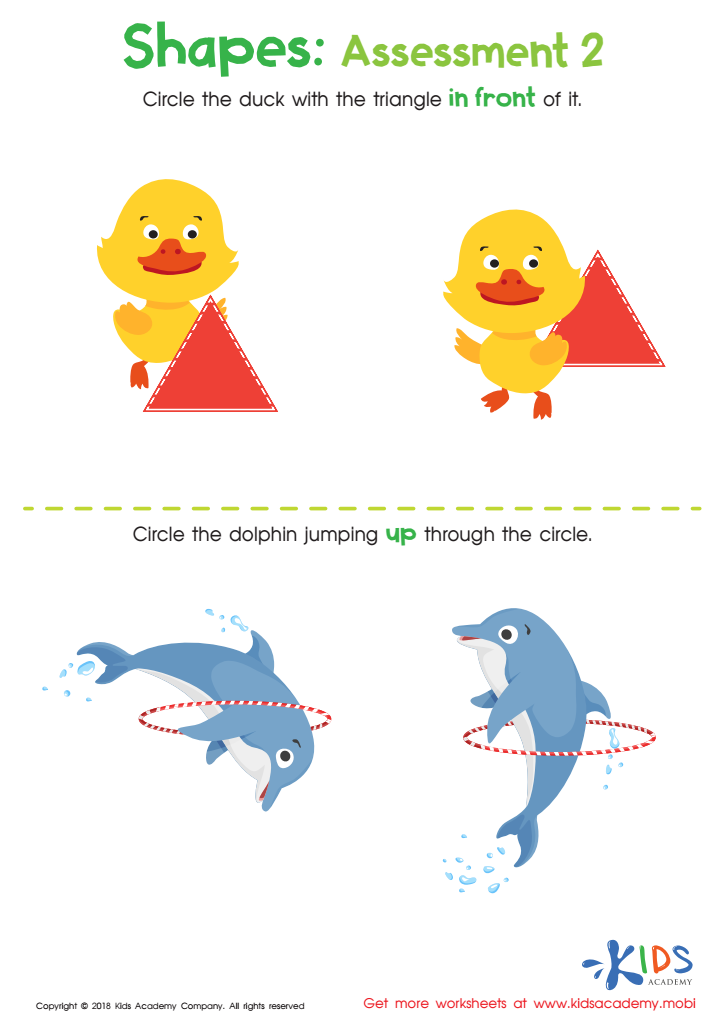
    Preschoolers will learn to identify circles and triangles and practice using terms like "in front of" to place objects. This skill is key to further learning and is an important part of development.
    Geometry – Assessment 2 Worksheet
    Worksheet
    Sorting Shapes - Part 2 Worksheet
    Sorting Shapes - Part 2 Worksheet

    Sorting Shapes - Part 2 Worksheet

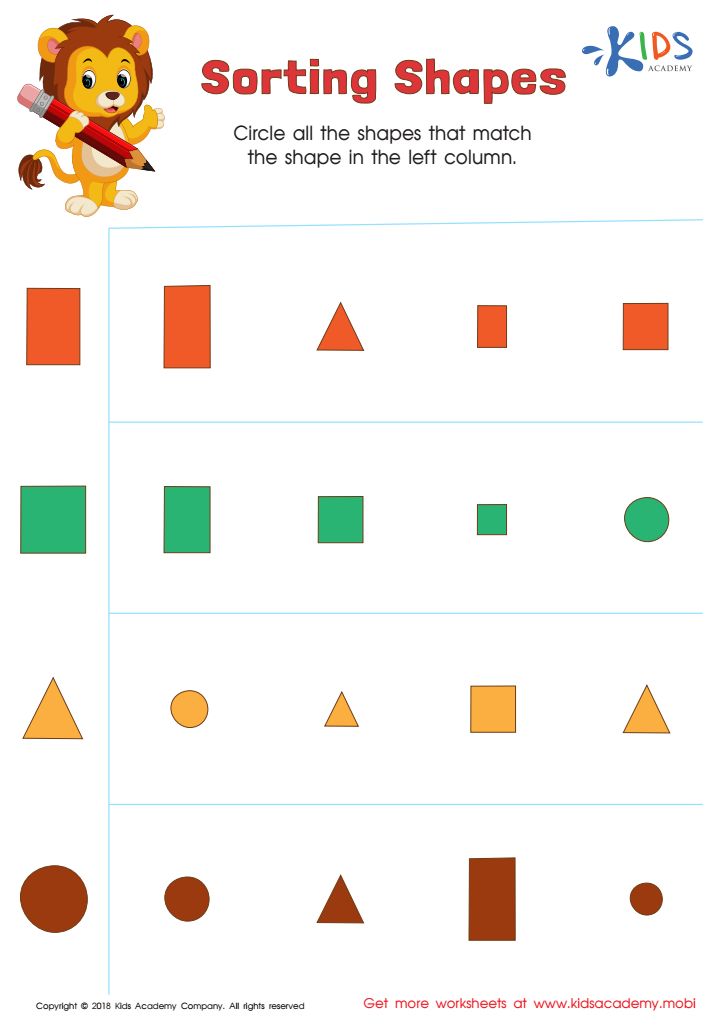
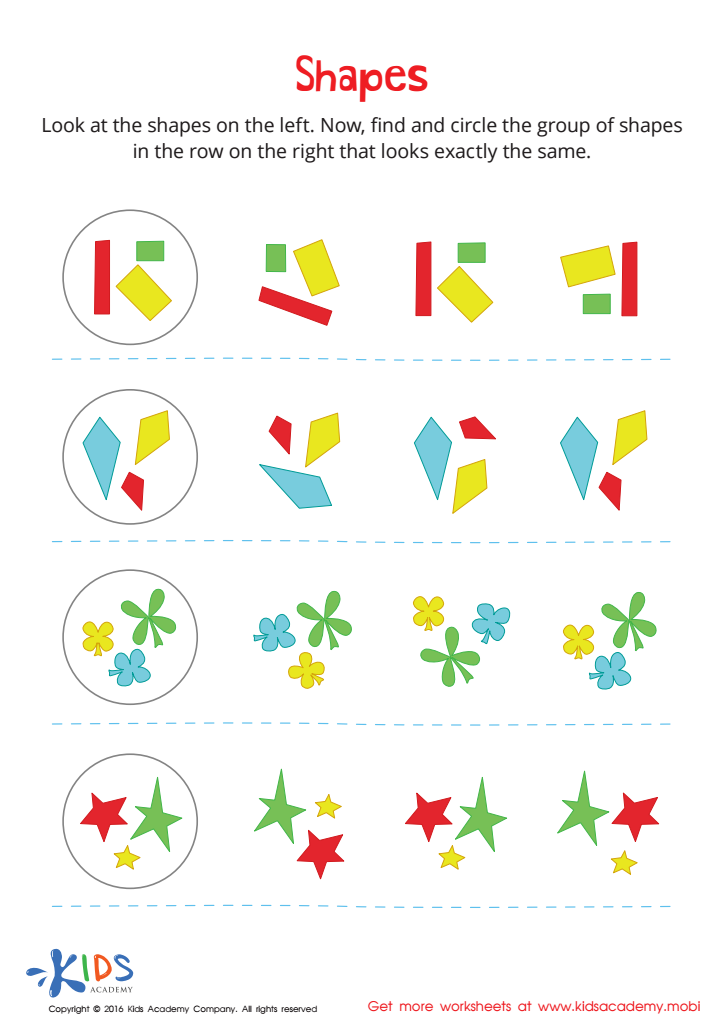
    Tired of dull worksheets? Look no further than Kids Academy's colorful shape-sorting worksheet! It's perfect for challenging your toddler's problem-solving skills. Print the free PDF page and let your child practice the basics of geometry. Have them work down the left column, circling the shapes on the right that match. It's a great way to form a strong foundation in early learning.
    Sorting Shapes - Part 2 Worksheet
    Worksheet
    Preschool Matching Worksheet
    Preschool Matching Worksheet

    Shapes Worksheet

    This fun worksheet will challenge your child to recognize tricky patterns, sort through similar ones, and create strategies to get the right answer. It'll also help them to strengthen problem-solving skills and build confidence. With more challenging tasks, your child will be ready to tackle higher level math and sequencing skills.
    Shapes Worksheet
    Worksheet
    Data: Assessment 1 Worksheet
    Data: Assessment 1 Worksheet

    Data: Assessment 1 Worksheet

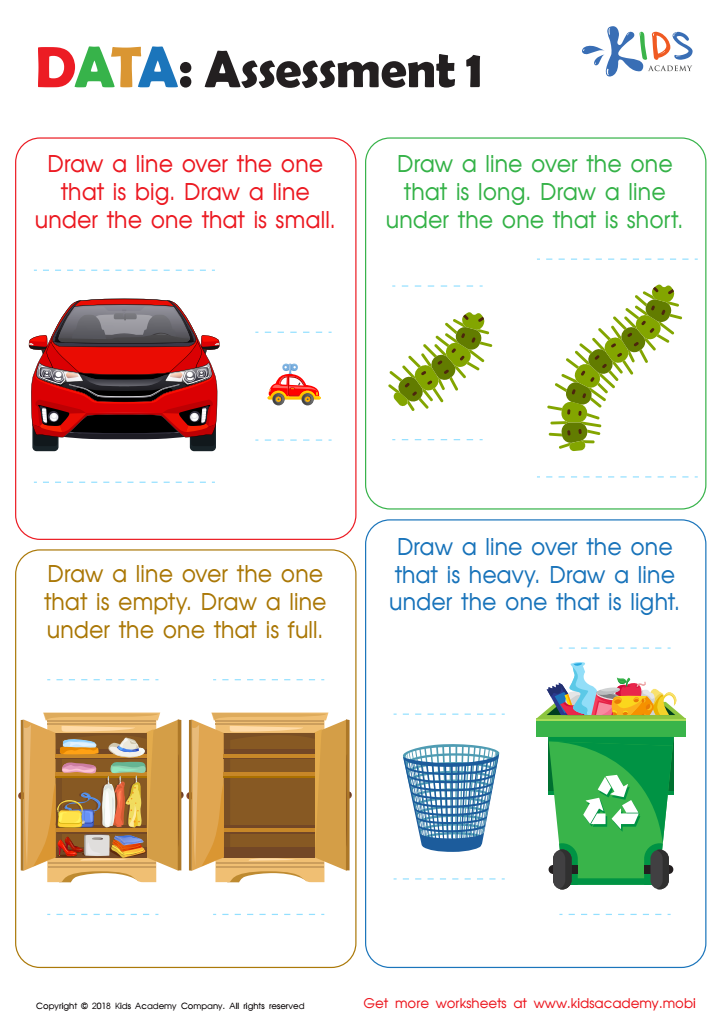
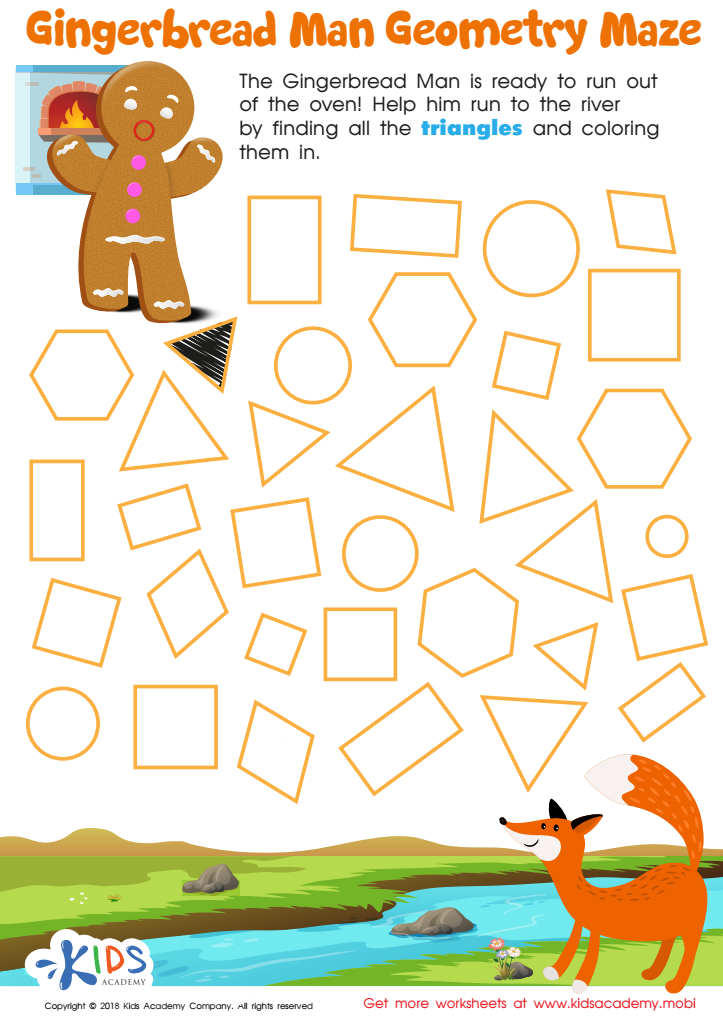
    Assess your students' knowledge of measurement words with this worksheet. Have them compare and describe objects/quantities using words like "big", "small", "long", "short", "empty", "full", "heavy" and "light". Encourage further learning by asking students to provide examples of each word meaning.
    Data: Assessment 1 Worksheet
    Worksheet
    Gingerbread Man Geometry Maze Worksheet
    Gingerbread Man Geometry Maze Worksheet

    Gingerbread Man Geometry Maze Worksheet

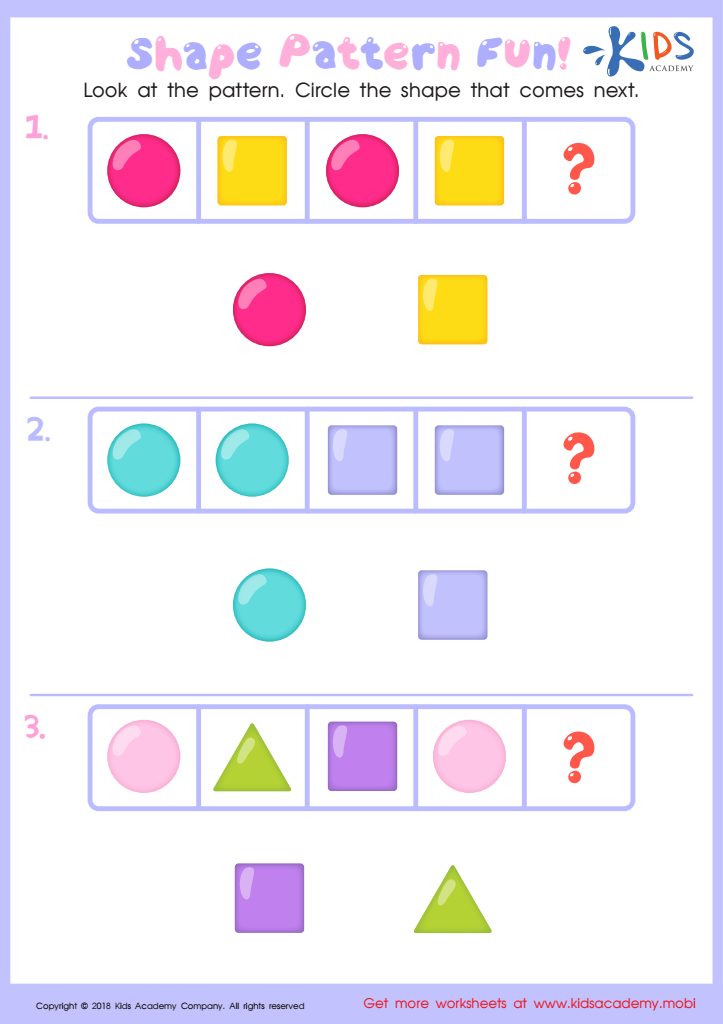
    Help a beloved character escape the oven! Kids race through a sea of geometrical shapes, searching for triangles of various sizes. With this free worksheet, they can have fun while learning about similarity of geometrical shapes concepts. Run, run, run as fast as they can!
    Gingerbread Man Geometry Maze Worksheet
    Worksheet
    Shape Pattern Fun Worksheet
    Shape Pattern Fun Worksheet

    Shape Pattern Fun Worksheet

    Challenge your kids to look at the pictures and identify colors, shapes and patterns. Ask them to circle the shapes that follow the sequence. See if they can spot the pattern and stick to it!
    Shape Pattern Fun Worksheet
    Worksheet
    Build and Match Worksheet
    Build and Match Worksheet

    Build and Match Worksheet

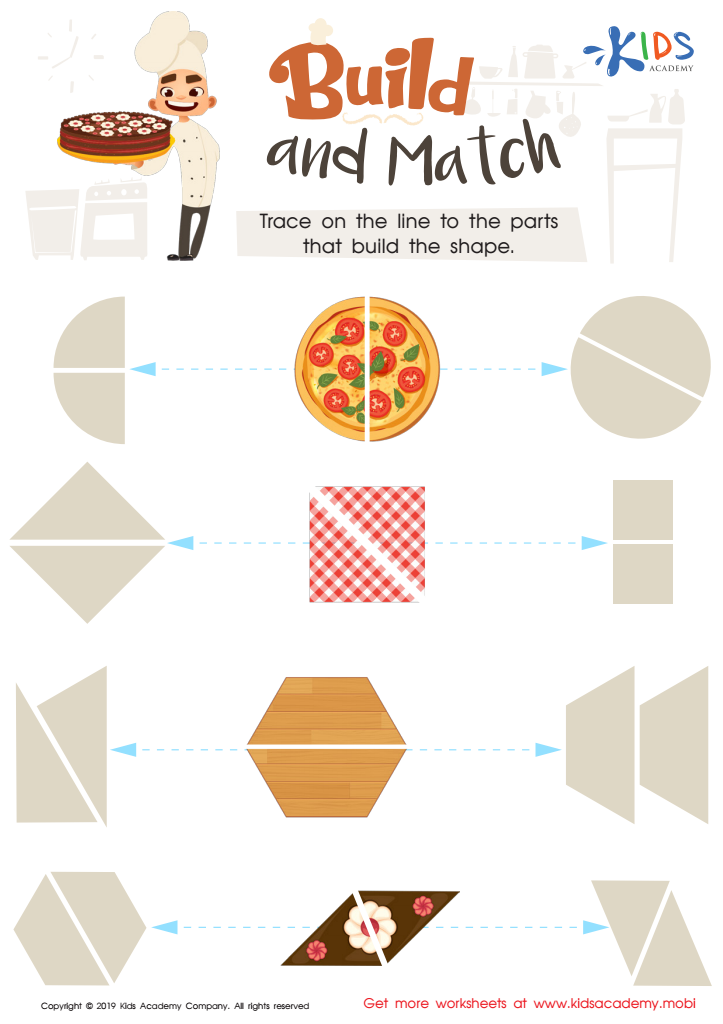
    This bright worksheet will get your kids excited to learn more! Use the colorful images and shapes to engage them and have them trace the parts to build the shape. This fun exercise will help them retain the lessons and make it an enjoyable experience.
    Build and Match Worksheet
    Worksheet
    Equal Parts: Food Worksheet
    Equal Parts: Food Worksheet

    Equal Parts: Food Worksheet

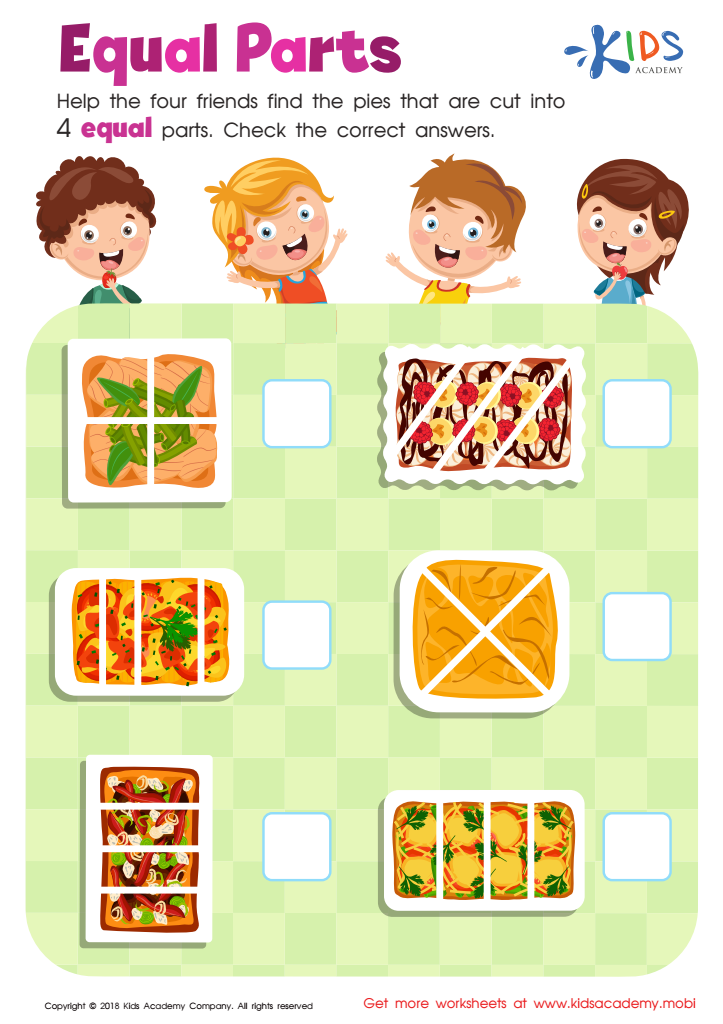
    Kids love pies! In this worksheet, they must help four friends share one equally. Six pictures of pies cut in different ways are provided. Your child must choose the one where the pie is divided into four equal parts. That way, each friend gets an equal share.
    Equal Parts: Food Worksheet
    Worksheet
    Find the First! Worksheet
    Find the First! Worksheet

    Find the First! Worksheet

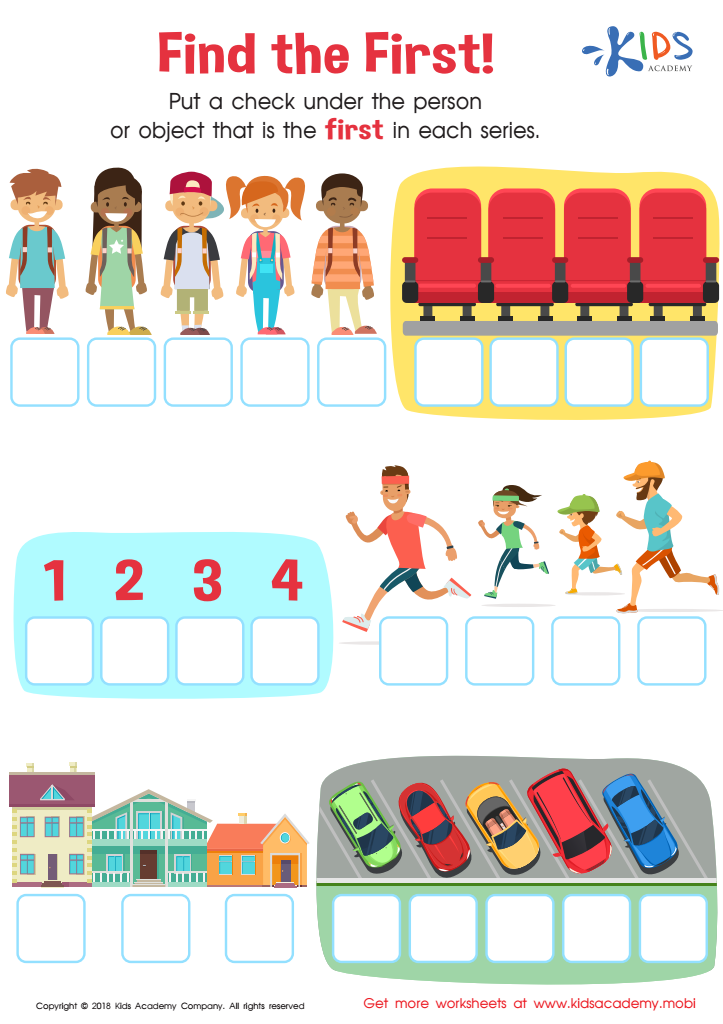
    Have your young students discuss what it means to be first in line, row, or a race. This free worksheet helps clarify their understanding of "first". View each group of people/objects and choose the first one. Follow up with hands-on activities like lining up students/toys or acting out a sequence of movements. Students can tell what happened first. Enjoy this printout for a fun math lesson!
    Find the First! Worksheet
    Worksheet
    Data: Assessment 2 Worksheet
    Data: Assessment 2 Worksheet

    Data: Assessment 2 Worksheet

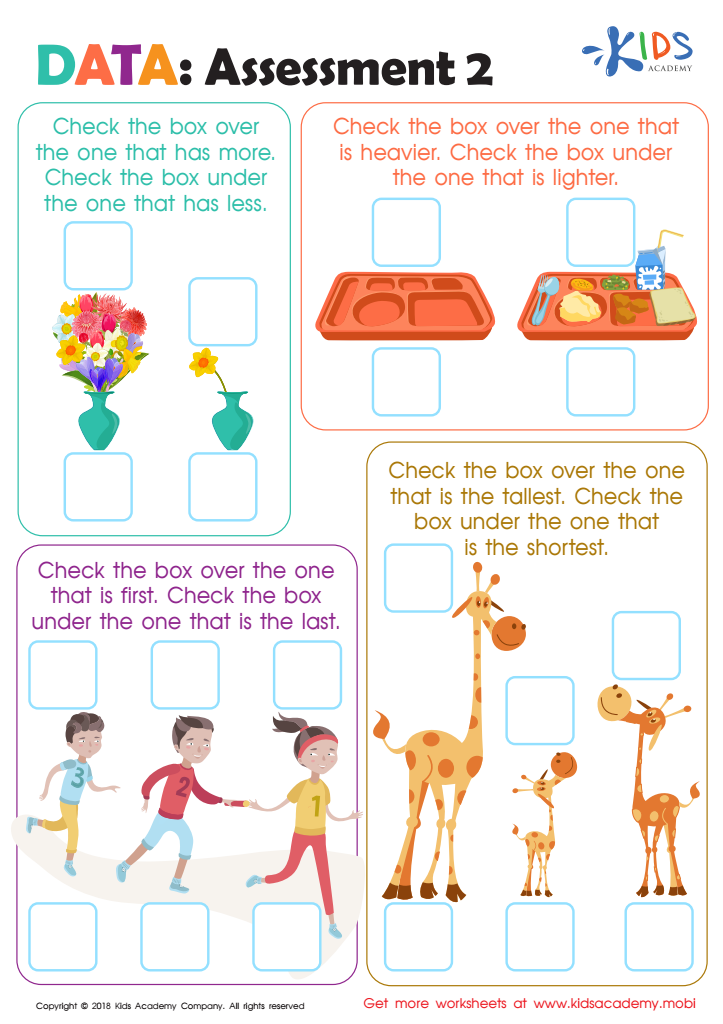
    This printable worksheet tests students' understanding of words related to quantity and measurement, such as "more", "less", "heavy", "light", "first", "last", "tall", and "short". It helps children compare and contrast when solving measurement problems. Ideal for math classes, it encourages students to gain the essential skills needed in subjects like math, science, and reading.
    Data: Assessment 2 Worksheet
    Worksheet
    Construction Shapes Worksheet

    Construction Shapes Worksheet

    Construction Shapes Worksheet

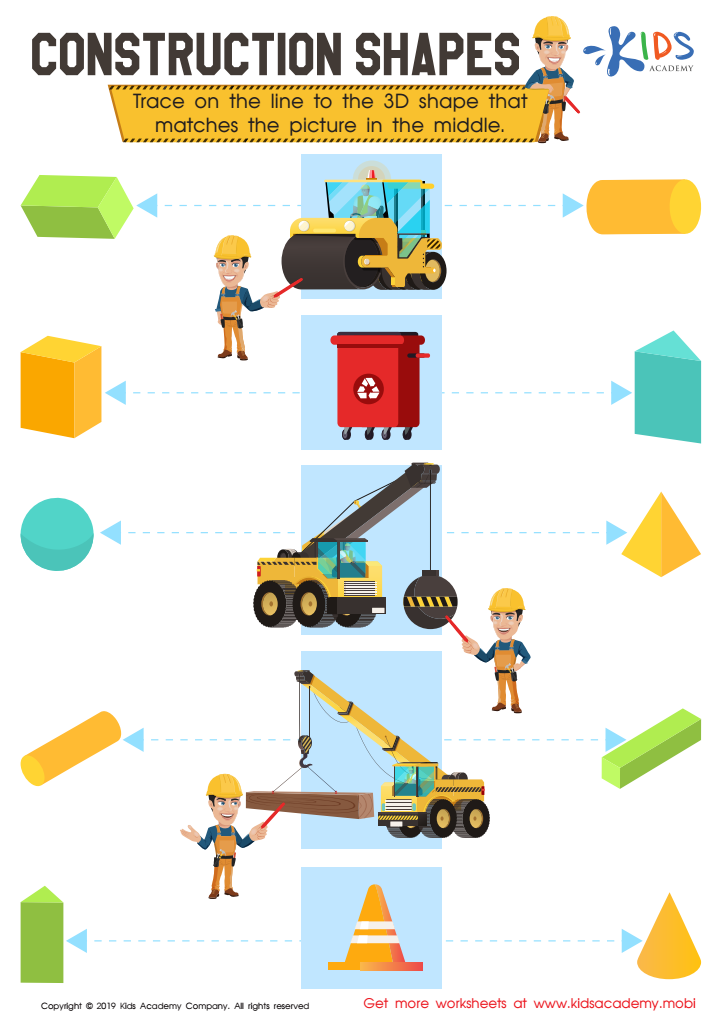
    Construction workers are professionals who build structures like buildings. In this worksheet, kids will learn about shapes with the help of workers and their equipment. Help them trace the lines to the 3D shape that matches the picture in the middle.
    Construction Shapes Worksheet
    Worksheet


    ... 5 6

    Geometry is a foundational aspect of early childhood education, and parents and teachers should prioritize it for children aged 3-6 for several compelling reasons. Firstly, early exposure to geometric concepts enhances spatial awareness, which is crucial for children's ability to understand shapes, sizes, and positions in their environments. This cognitive skill aids in everyday tasks such as navigation and organization.

    Secondly, geometry fosters critical thinking and problem-solving skills. Children learn to analyze shapes and their properties, boosting their ability to think logically and creatively. Engaging in geometric activities like sorting, stacking, and constructing shapes fuels curiosity and exploration.

    Moreover, geometry is deeply connected to math literacy. By teaching young learners about geometric shapes and spatial relationships, parents and teachers lay the groundwork for advanced mathematical concepts later on, reducing math anxiety and building confidence.

    Lastly, geometry encourages observational skills and attention to detail. Activities at this developmental stage also promote fine motor skills through hands-on learning, such as cutting shapes or drawing them.

    By nurturing an understanding of geometry from ages 3-6, parents and teachers can enhance cognitive development, prepare children for future academic success, and ignite a lifelong passion for learning.