
Vocabulary enhancement Math Worksheets for Ages 3-6
28 filtered results
Difficulty Level
Grade
Age
-
From - To
Subject
Activity
Standards
Explore our "Vocabulary Enhancement Math Worksheets for Ages 3-6" designed to build both mathematical and language skills in young learners. These engaging worksheets utilize fun, age-appropriate activities to introduce essential math vocabulary, helping children understand and retain basic math concepts. Through colorful illustrations and interactive exercises, kids gradually become familiar with terms like “more,” “less,” “equal,” and many others. Perfect for preschool and kindergarten students, our worksheets aim to make learning math words enjoyable and effective, laying a strong foundation for future academic success. Empower your child's learning journey with our comprehensive, easy-to-use resources.
Favorites
With answer key
Interactive
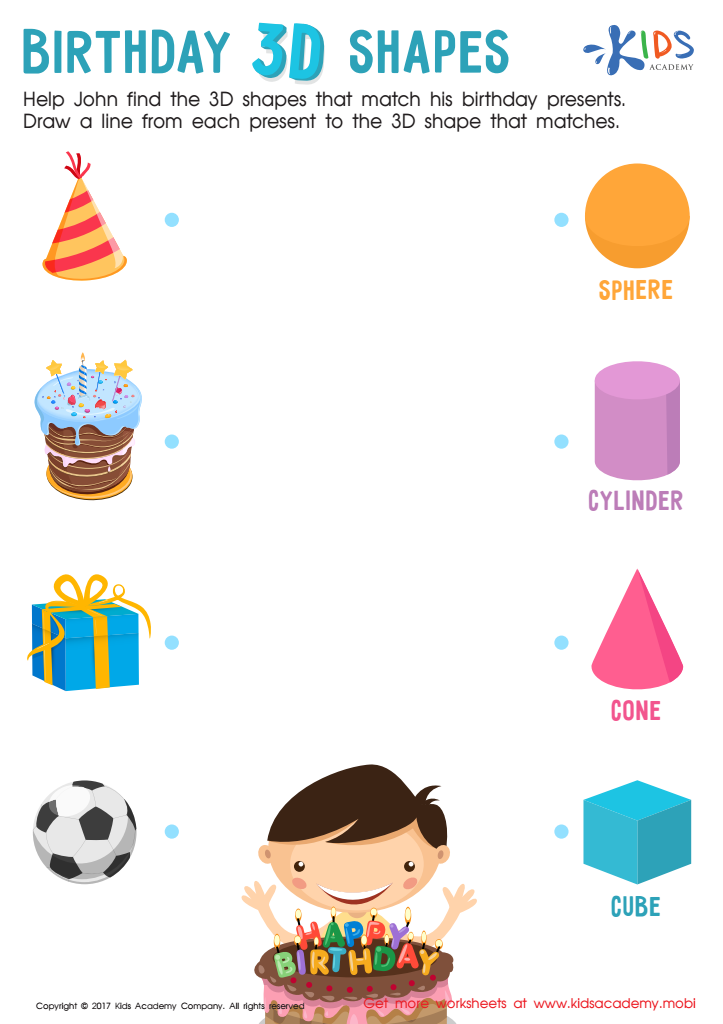
Birthday 3D Shapes Worksheet
It's John's birthday and he needs your help. Ask your kids to draw a line from each present to the matching 3D shape. First, check they understand the difference between 2D and 3D shapes. Then, they can help John figure out which 3D shape matches each present.
 Assign to My Students
Birthday 3D Shapes Worksheet
Worksheet
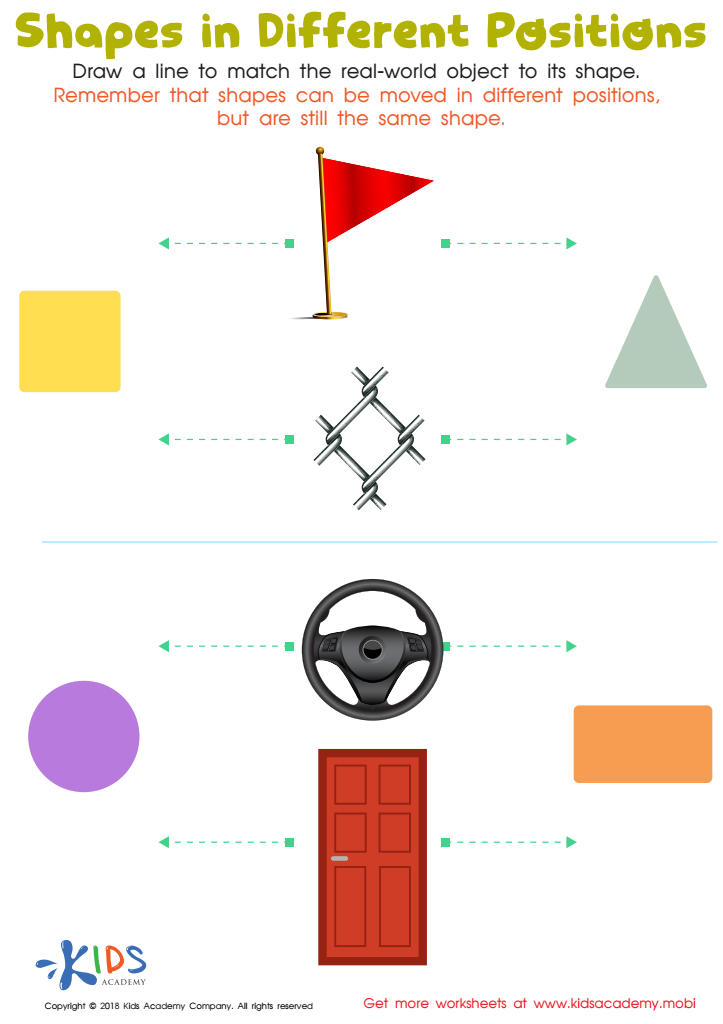
Shapes in Different Positions Worksheet
Children can practice and strengthen their visual-discernment, hand-eye coordination and neural connections by manipulating shapes in their minds and matching them with the right answer. This PDF with bright colors gives your kids the opportunity to do so.
Shapes in Different Positions Worksheet
Worksheet
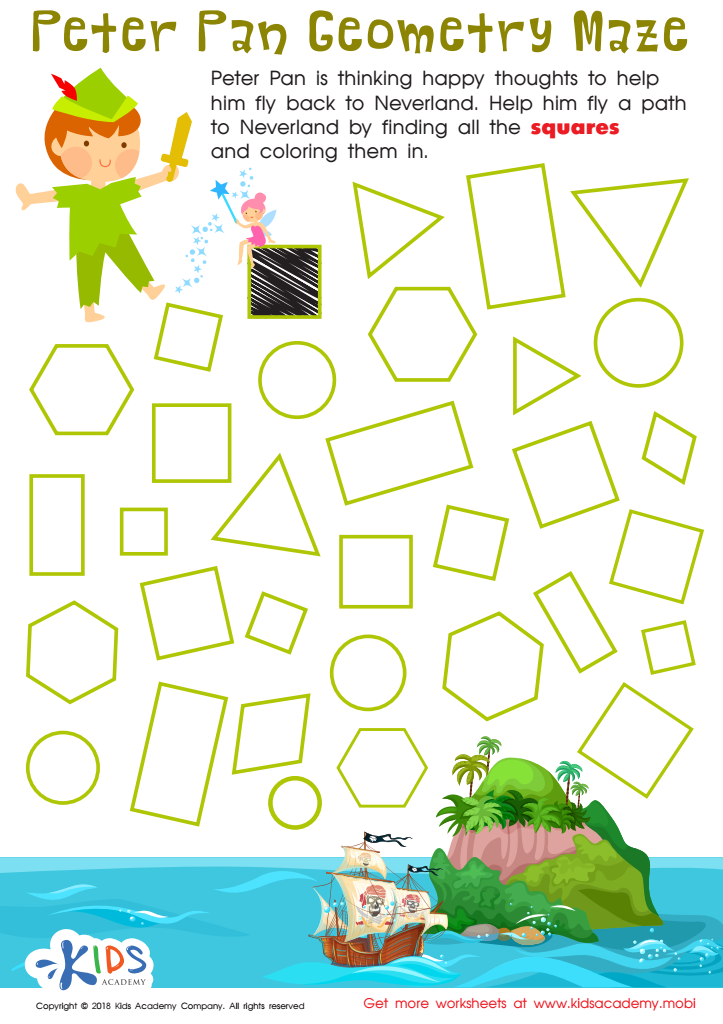
Peter Pan Worksheet
Kindergarteners can join Peter Pan on an adventure to Neverland! They can help him by coloring squares to create a path, strengthening their shape identification skills in a fun maze. Let the journey begin!
Peter Pan Worksheet
Worksheet
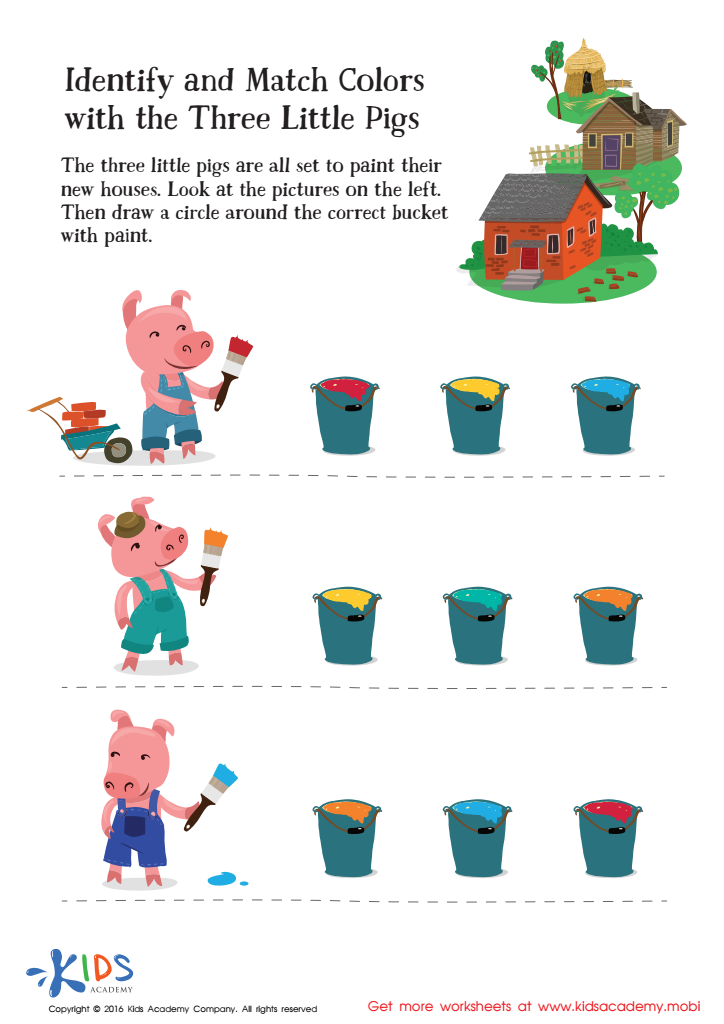
Fairy Tale Worksheet: Identify and Match Colors with Three Little Pigs
Help the 3 Little Pigs find the right color for their houses! This fun worksheet will have your child developing their problem solving and color recognition skills. It's a great way to start building the foundation for advanced logic skills. Plus, they'll love the Three Little Pigs coloring pages.
Fairy Tale Worksheet: Identify and Match Colors with Three Little Pigs
Worksheet
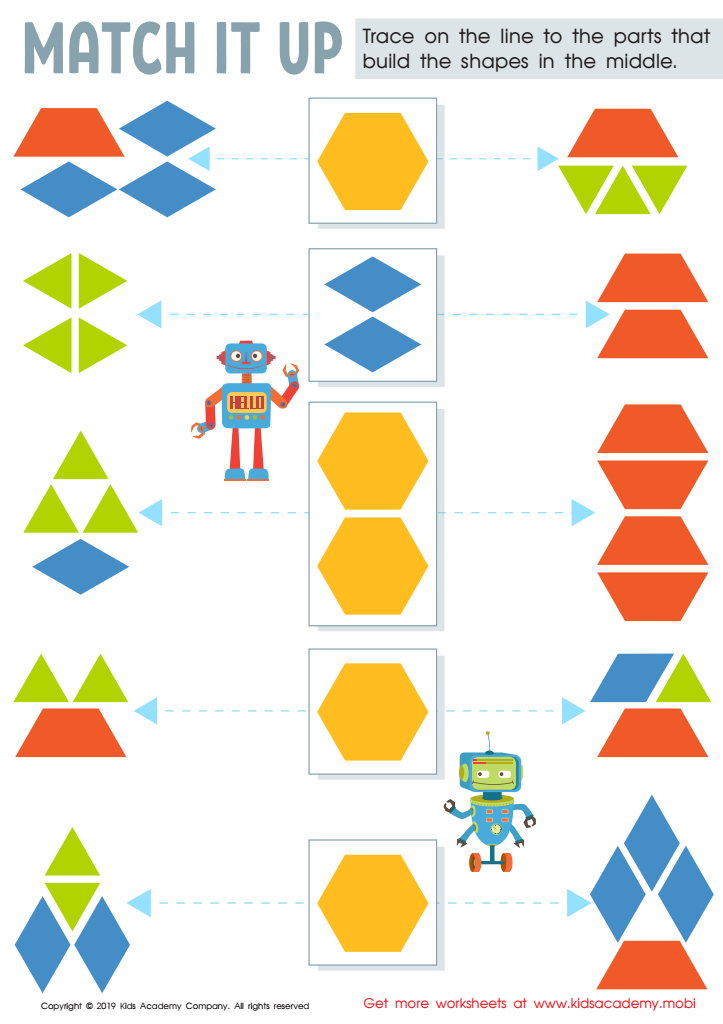
Match It up Worksheet
If your kids are into robots, they'll be thrilled to work on this worksheet. Ask them to name shapes they know, and help them draw and identify these shapes. Look at the shapes in the middle, and the sides. Finally, help your kids trace the lines to build the shapes in the middle.
Match It up Worksheet
Worksheet
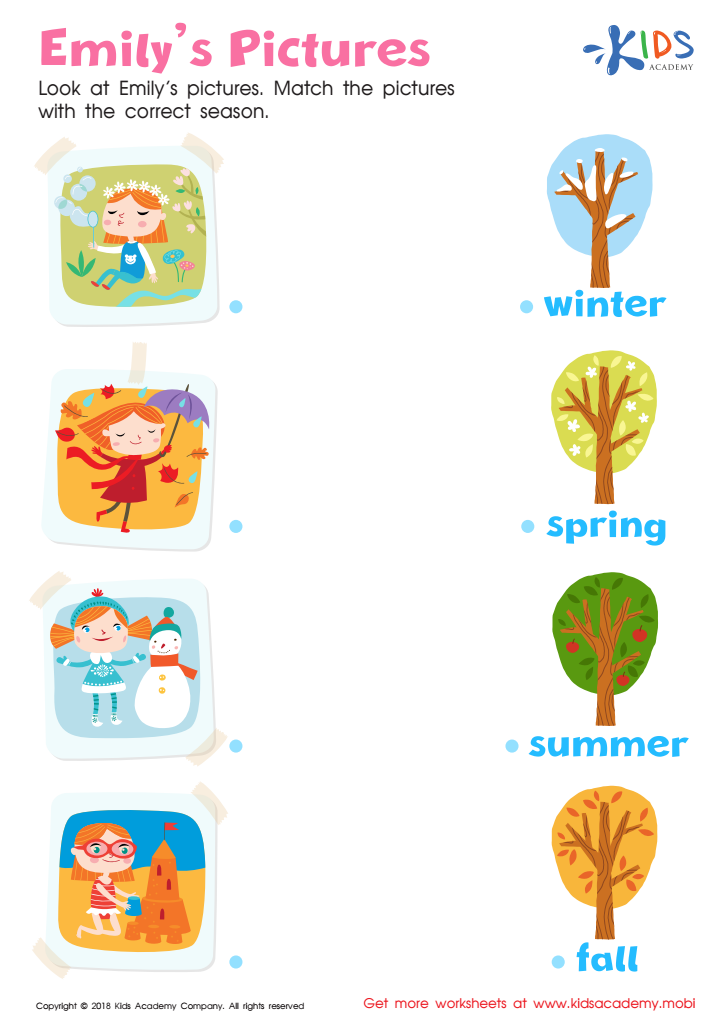
Emily's Pictures Worksheet
Look at the pictures of Emily on the left. Ask your child what she's doing in each one. Then, match the activities to the seasons on the right. Help your kids identify the correct season for each activity. Shorten to 80 words: Look at the pictures of Emily on the left. Ask your child what she's doing in each one, then match the activities to the seasons on the right. Help your kids find the correct season for each activity.
Emily's Pictures Worksheet
Worksheet
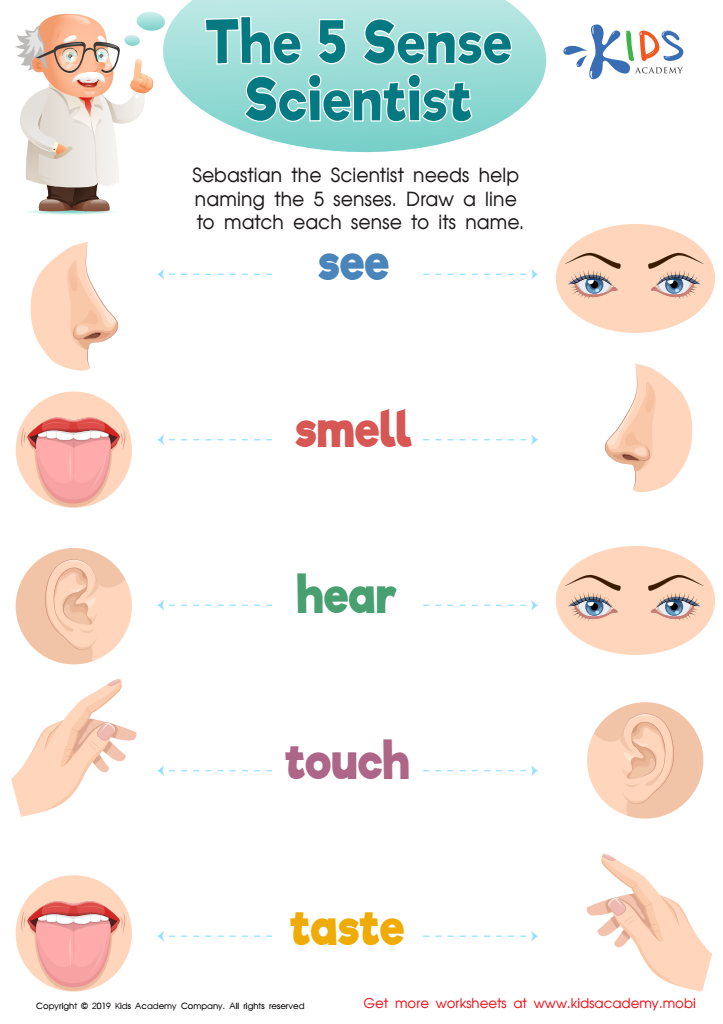
The 5 Sense Scientist Worksheet
Our young children will have fun learning about their five senses with this free Sense Scientist worksheet. Helping Sebastian the Scientist, they'll name the five senses and use traceable lines to connect each picture with its correct sense. Colorful words and pictures will create a memorable picture representation.
The 5 Sense Scientist Worksheet
Worksheet
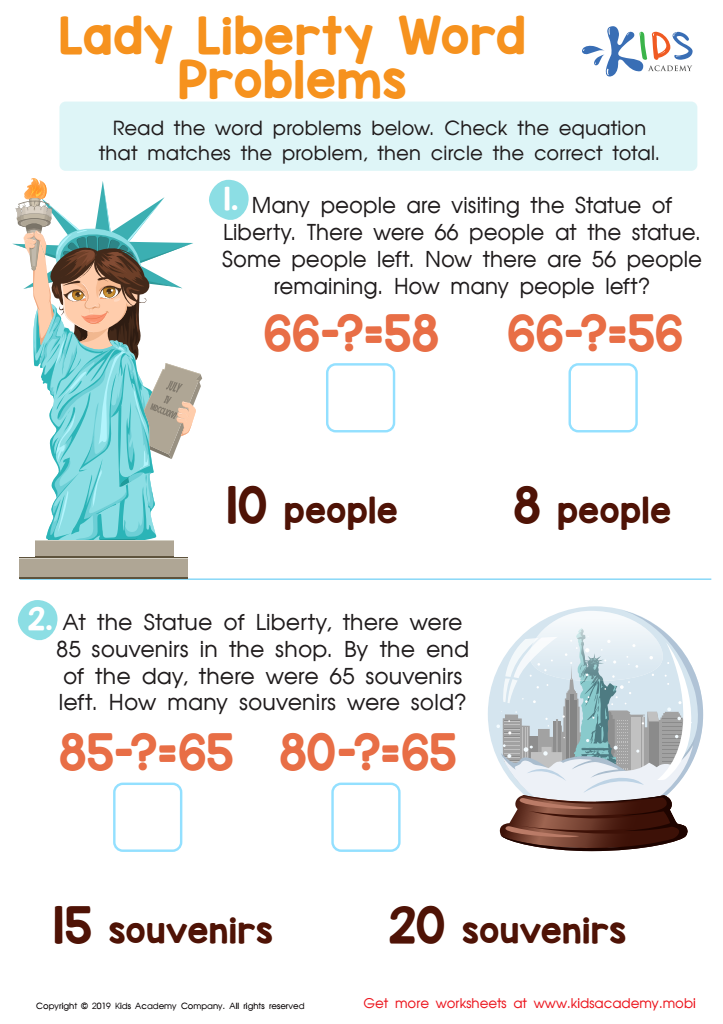
Lady Liberty Worksheet
Have your students ever been to the Statue of Liberty? Ask them to tell you where it is and what it looks like. Every day, the statue draws a crowd admiring its beauty, taking pics and learning more about it. Pose a word problem and help them check the answer. Circle the correct total. (80 words)
Lady Liberty Worksheet
Worksheet
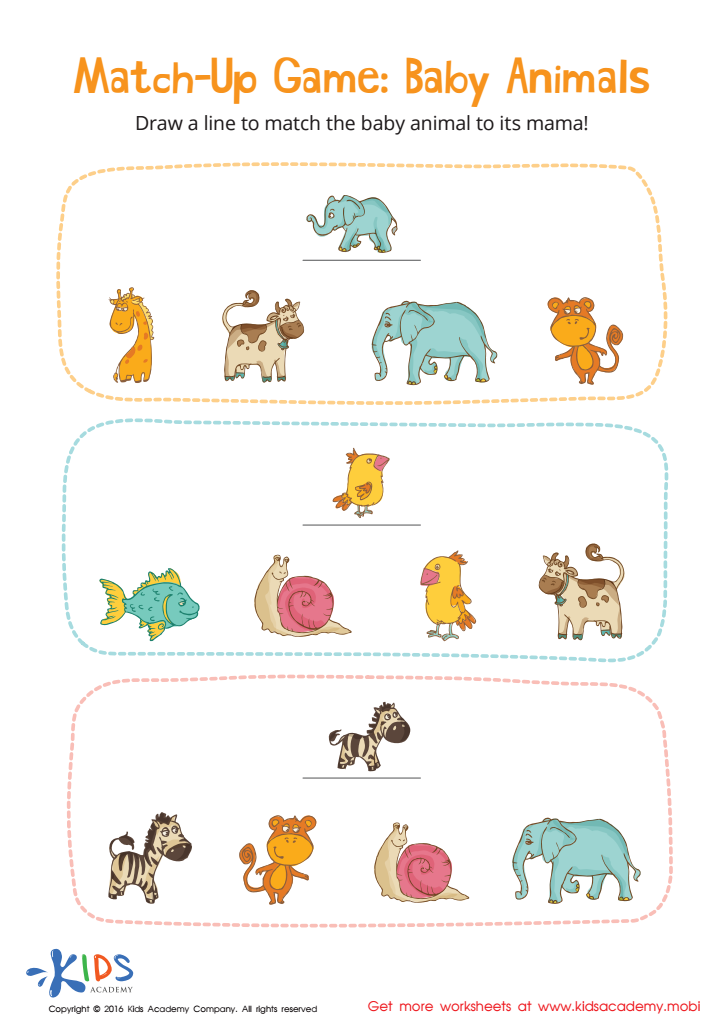
Baby Animals Match-Up Worksheet
Help baby animals find their mummies by using this fun matching worksheet. Kids can practice logical reasoning skills while recognizing similar pictures and learning about animals. Extend their knowledge by having them identify each cute animal!
Baby Animals Match-Up Worksheet
Worksheet
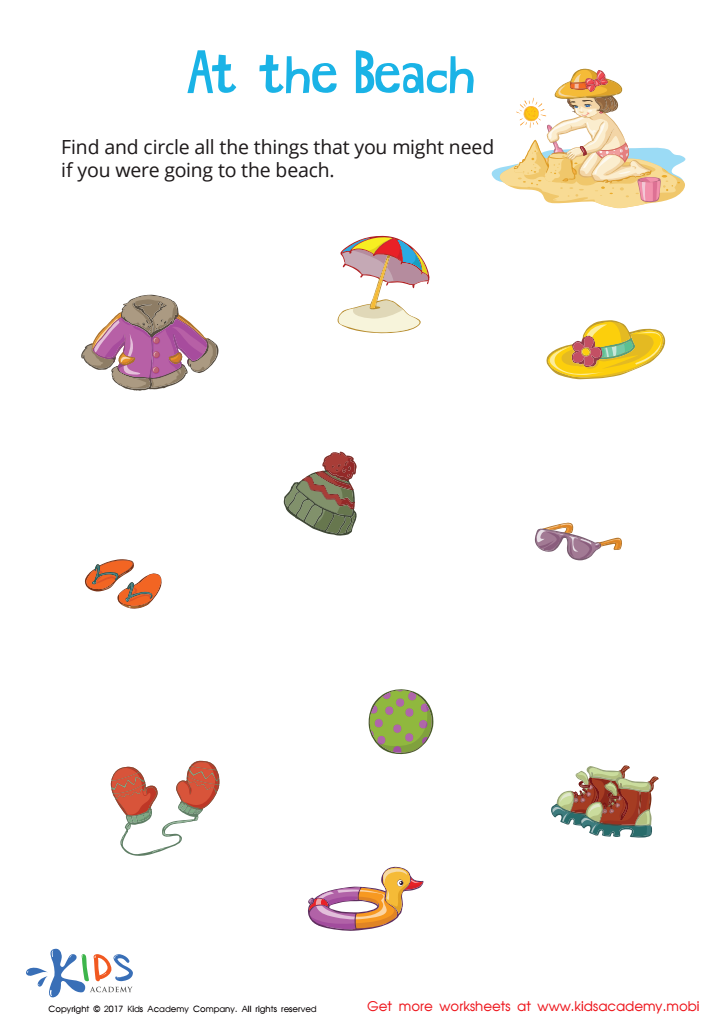
At the Beach Sorting Worksheet
Let your child get beach-ready with this summer worksheet! They'll sort items for a beach trip, then imagine their own trip and make a list. This helps sharpen problem solving and sorting skills plus encourages creative thought.
At the Beach Sorting Worksheet
Worksheet
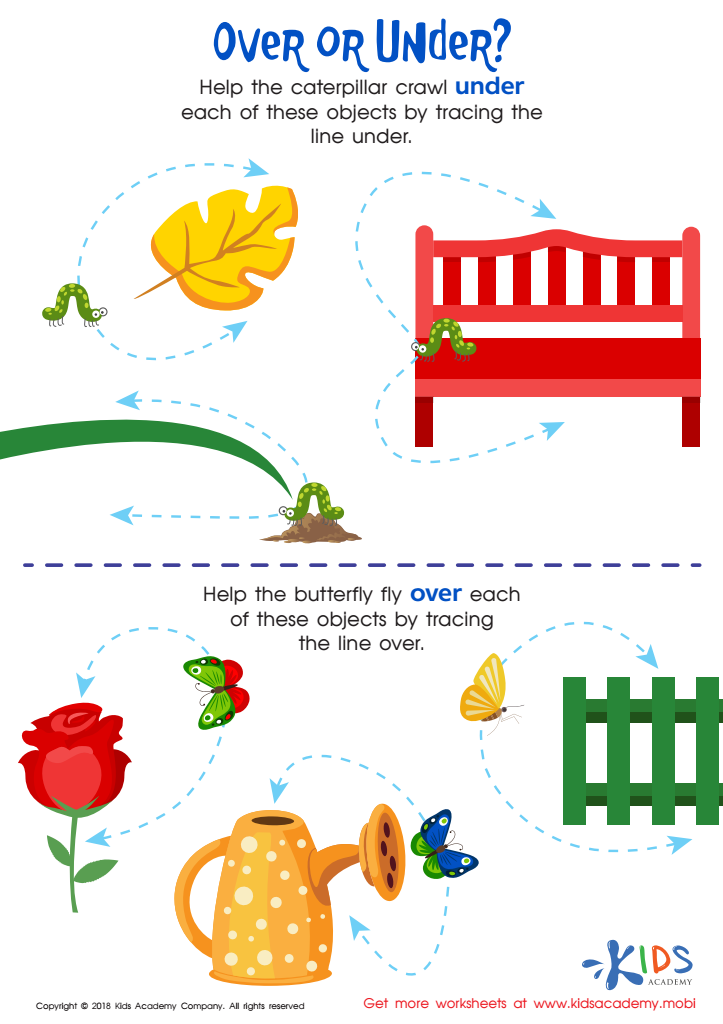
Over or Under? Worksheet
Math for young kids isn't just about numbers and counting, but also spatial concepts like geometry. This worksheet helps students learn "over" and "under" by tracing the movement of caterpillars and butterflies. Downloadable for free, it's an effective teaching tool for early learners.
Over or Under? Worksheet
Worksheet
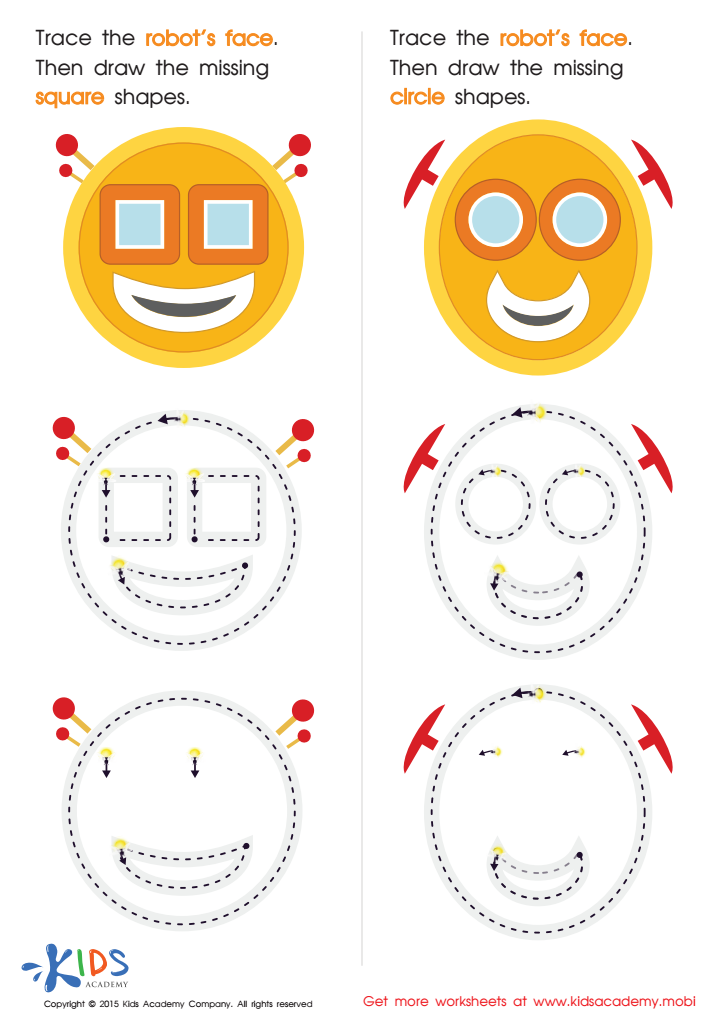
Practicing to Draw Circles And Squares Printable
Download our free printable geometry worksheets to learn shapes with your preschoolers. Trace Robot's face, draw the square parts and round shapes, remember the names for each one. Get more materials for kids at Kids Academy and make learning fun with our free printable geometry worksheets.
Practicing to Draw Circles And Squares Printable
Worksheet
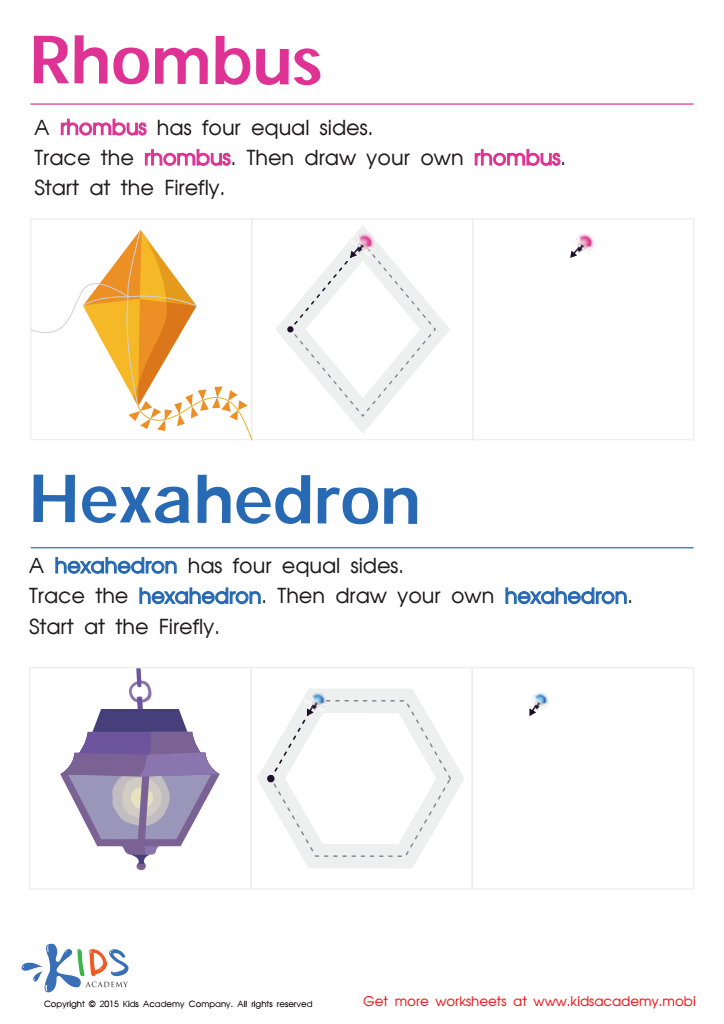
Draw a Rhombus And a Hexahedron Printable
Trace, draw and recognize shapes like rhombus, hexahedron and more! Start with the firefly to trace a rhombus, then use the yellow kite to remember the shape. Use the light to trace and draw a hexahedron. Learn with the best!
Draw a Rhombus And a Hexahedron Printable
Worksheet
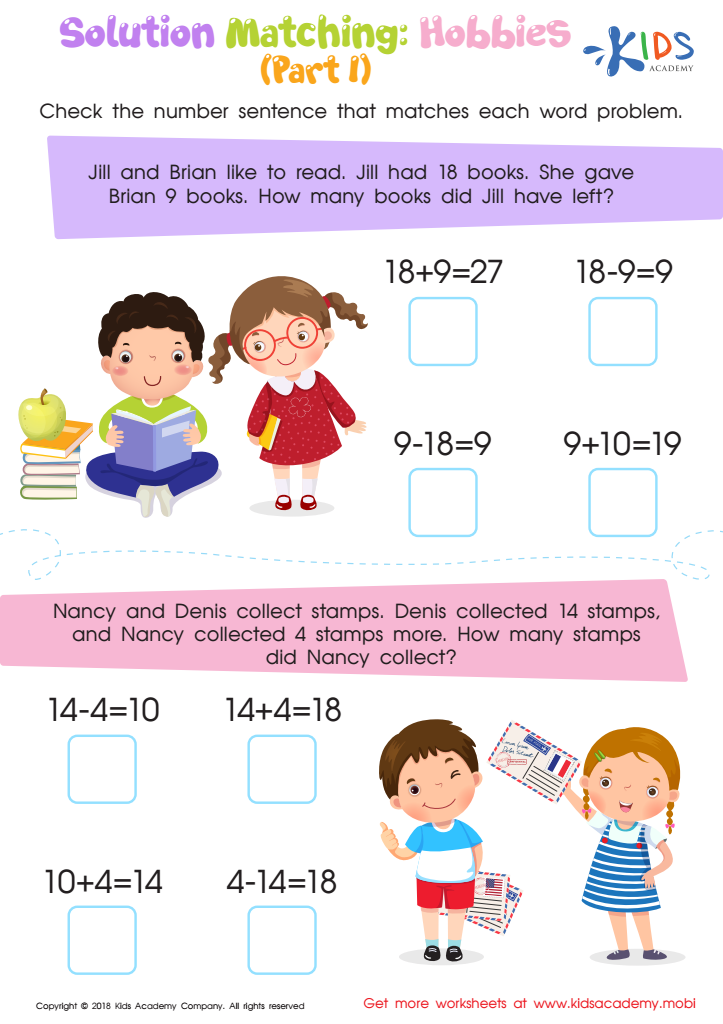
Solution Matching: Hobbies. Part 1 Worksheet
Math problems can be made more fun and easier to solve by relating them to real-life activities. Kids Academy's free printable worksheet helps your child to do this. Read each problem, paying attention to the numbers and terms, then choose the correct equation from the options given. This will help your child to understand the problem and get the right result!
Solution Matching: Hobbies. Part 1 Worksheet
Worksheet
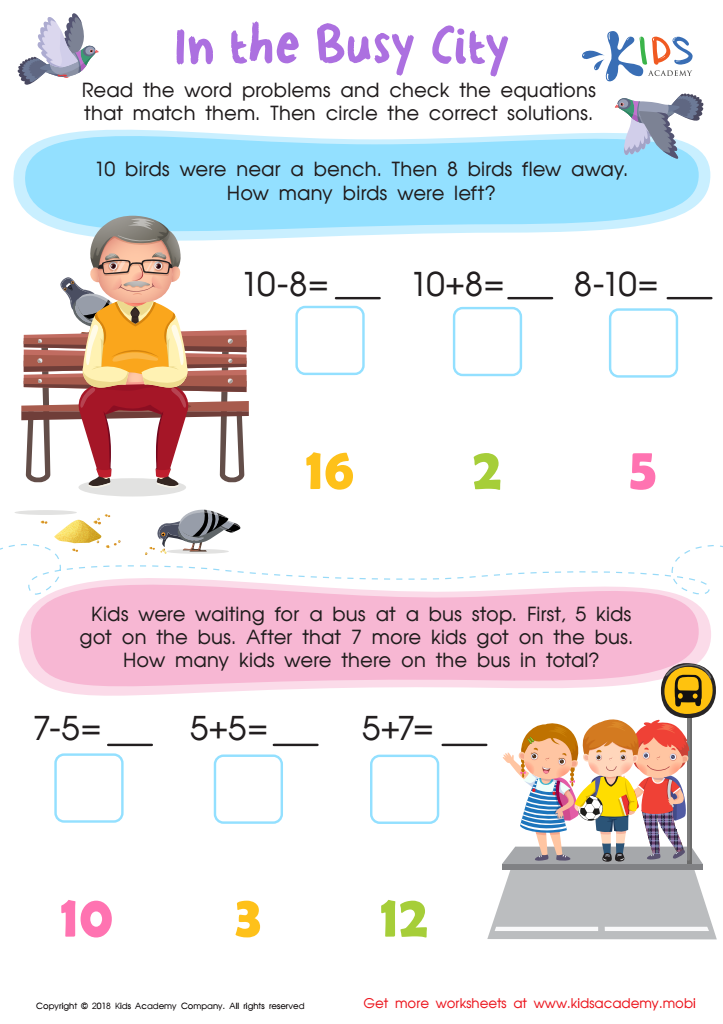
In the Busy City Word Problems Worksheet
Take a stroll and help your child solve math word problems with this fun printable from Kids Academy! Colorful images make the scenarios more enjoyable. Have them read the problem carefully and solve the matching equation. Check the box next to the answer to mark it as correct!
In the Busy City Word Problems Worksheet
Worksheet
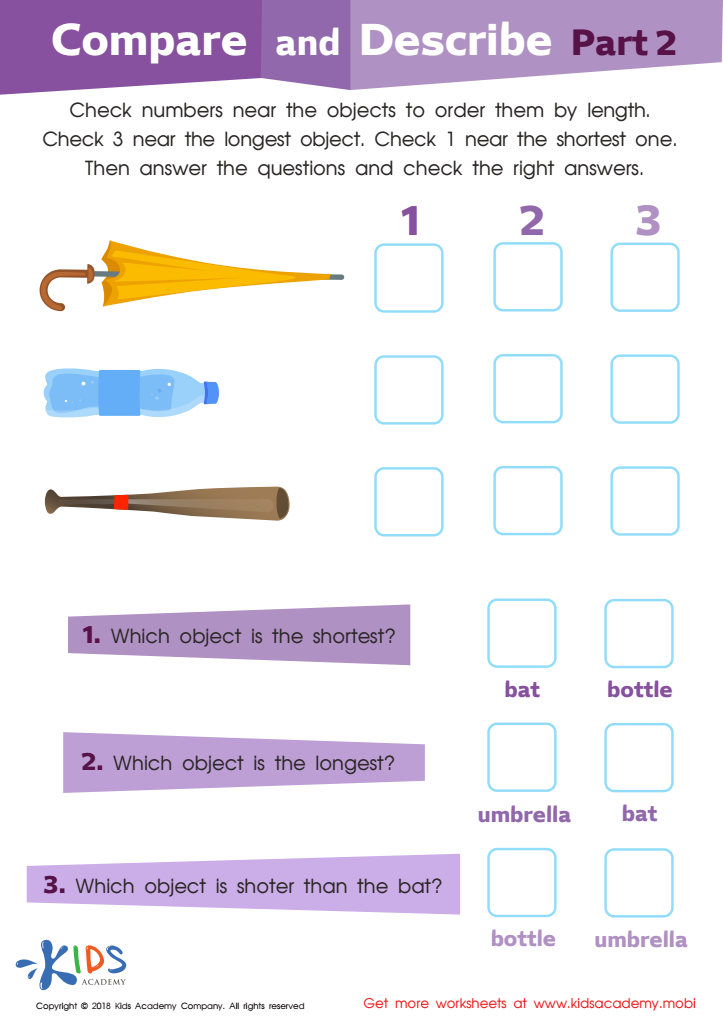
Compare and Describe: Part 2 Worksheet
Help kids hone their comparison skills with this fun measurement worksheet! Kids will sort objects by length and check off the boxes as they go. At the bottom, they'll read the questions and take a final look at the images to complete the exercise. An exciting way to learn measurement!
Compare and Describe: Part 2 Worksheet
Worksheet
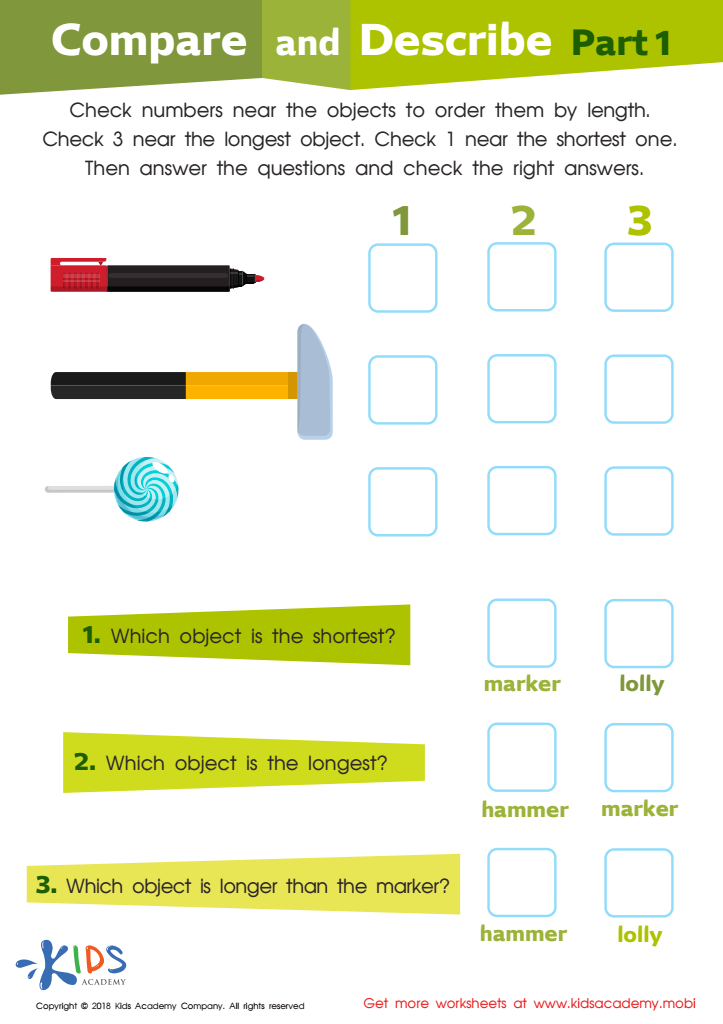
Compare and Describe: Part 1 Worksheet
In this worksheet from Kids Academy, kids can start learning measurement in stages. Observe the images, then compare their length - which one is shortest? Which one is longest? Answer the questions at the bottom to complete the sheet. It's an easy way to help kids understand measurement basics.
Compare and Describe: Part 1 Worksheet
Worksheet
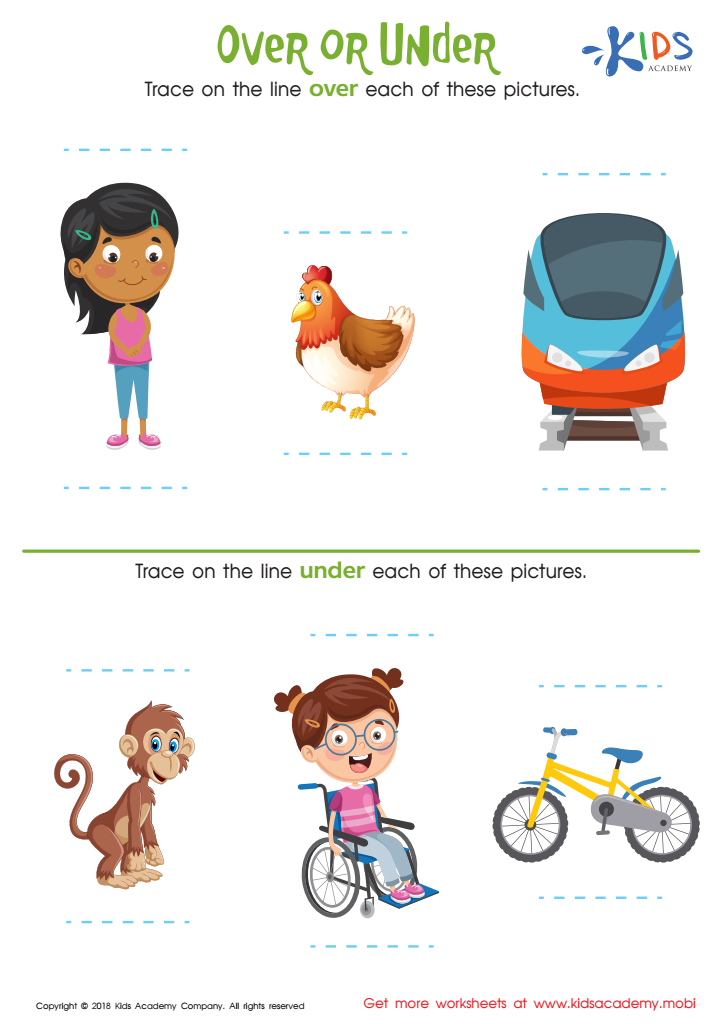
Over or Under Worksheet
Help your toddler grasp prepositions like "over" and "under" with this fun worksheet. Have them trace lines over the pictures on one half and under the pictures on the other, thus practicing basic communication and math concepts. Strengthen your child's understanding and communication skills with this activity.
Over or Under Worksheet
Worksheet
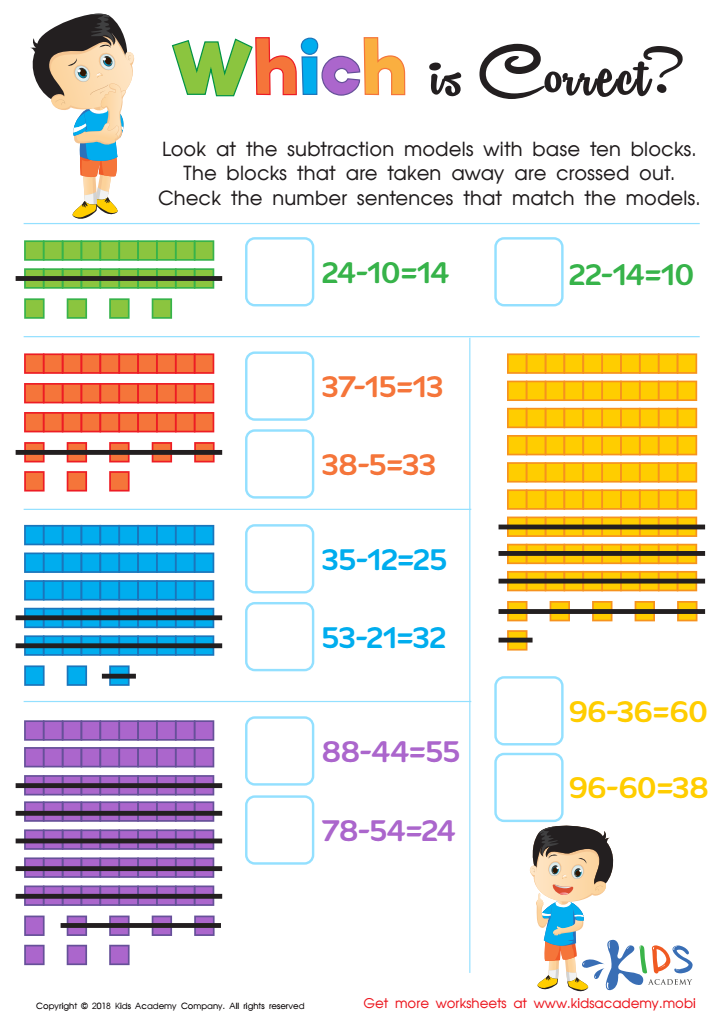
Which Is Correct? Math Worksheet
Young mathematicians will gain confidence solving subtraction problems with this bright, colorful worksheet. They'll use base ten blocks representations, then pick the right number sentence to match. It's great practice for developing number sense, helping them excel in higher-level math.
Which Is Correct? Math Worksheet
Worksheet
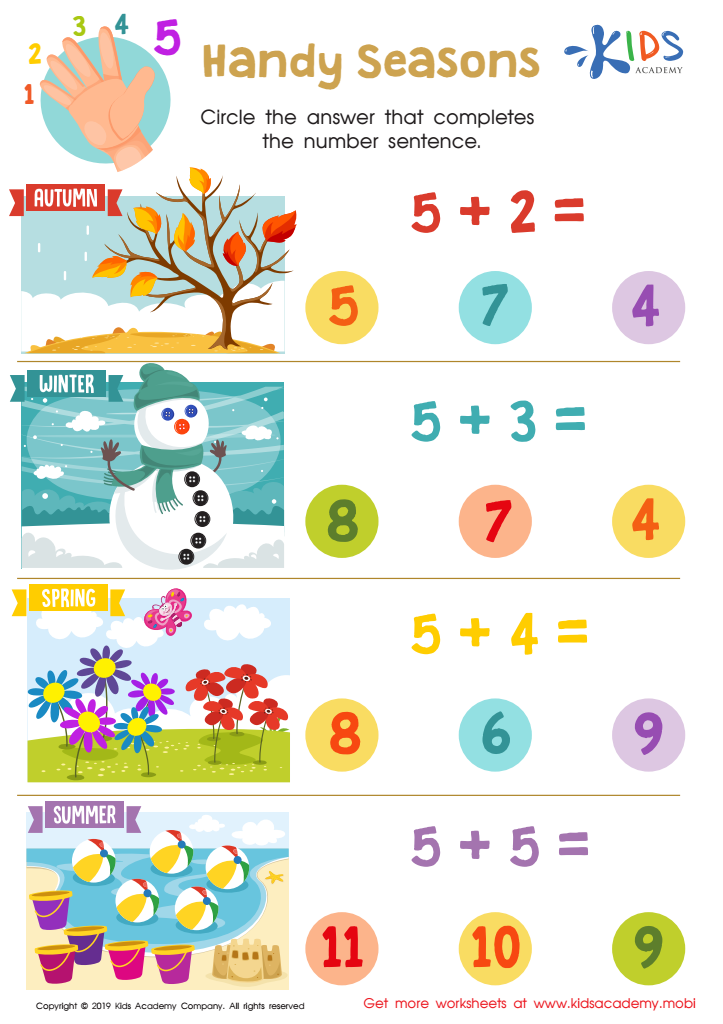
Handy Seasons Worksheet
Help your kids understand number sentences with this fun and colorful worksheet, featuring 4 pictures. Get them to identify each season, then circle the answer that completes the number sentence given. Make math exciting and get your kids excited to learn!
Handy Seasons Worksheet
Worksheet
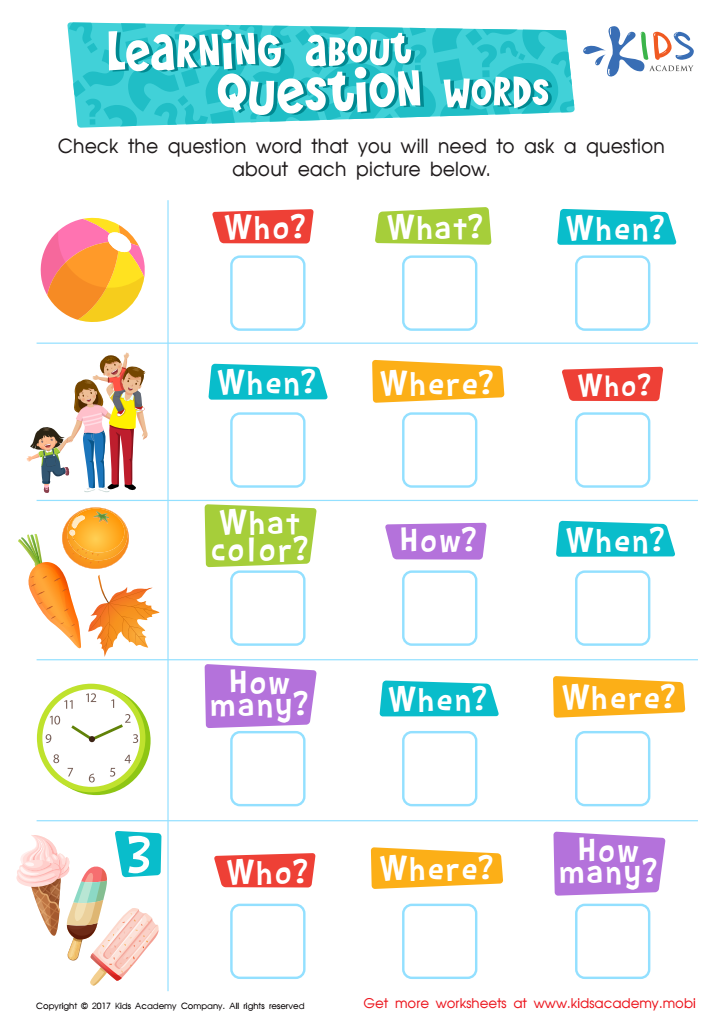
Learning about Question Words Worksheet
Learning language can be difficult, but this free printable worksheet will help! Have your child look at the picture and name it. Then help them choose the right question word to ask something about it. For example, when looking at a beach ball, you can't ask "Who?" Instead, look through the list to select the right word. It's a great way to learn language basics!
Learning about Question Words Worksheet
Worksheet
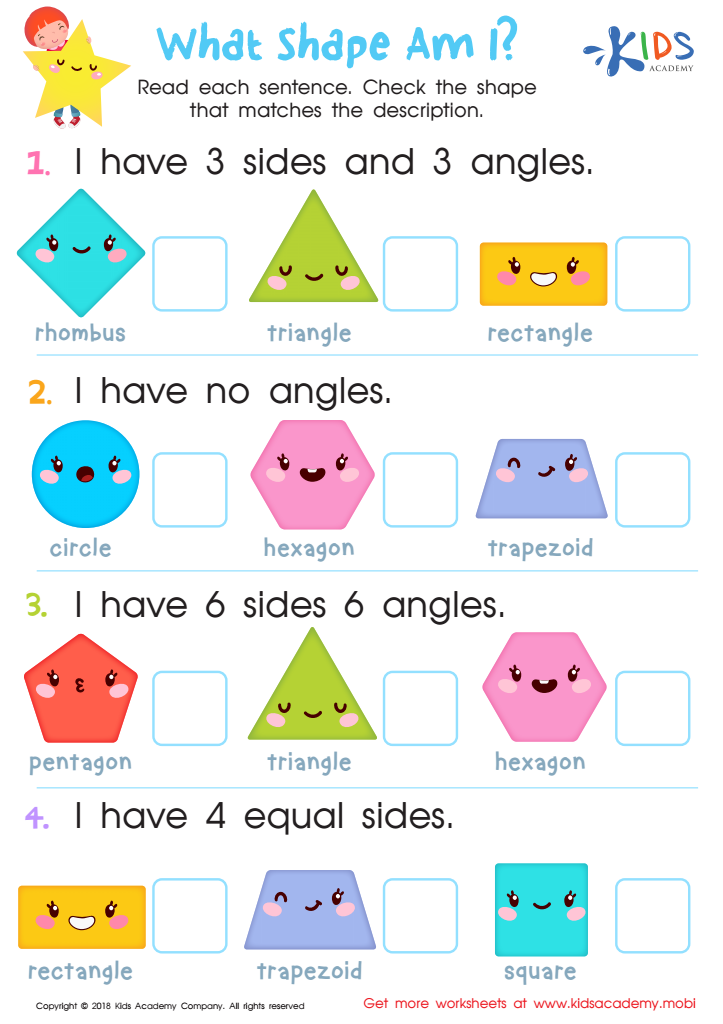
What Shape Am I? Worksheet
Help your child read each sentence in this colorful worksheet. Have them identify the shapes described and check the boxes. To prepare, ask simple questions like "How many sides does a triangle have?" and "Which shape has 4 equal sides?" Your child will become more skilled at shapes by the end of this activity.
What Shape Am I? Worksheet
Worksheet
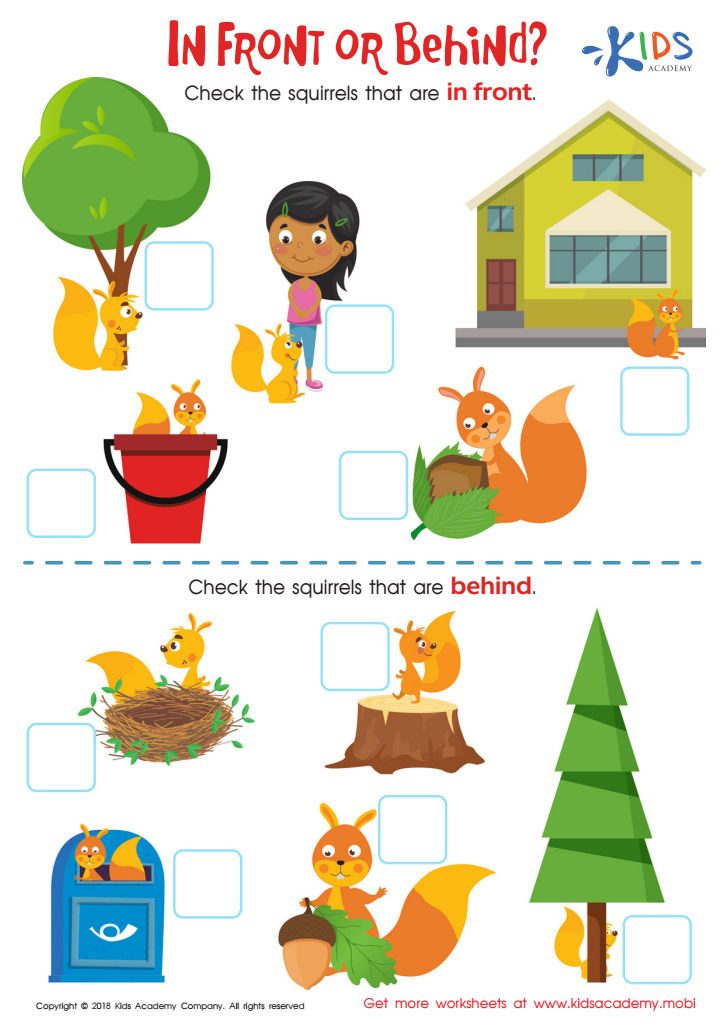
In Front or Behind: Part 2 Worksheet
Teach positional words "front" and "behind" with this fun worksheet! Students identify where the squirrel is in relation to the object - in front or behind. It's a great exercise to practice early geometry skills and understanding object movement.
In Front or Behind: Part 2 Worksheet
Worksheet
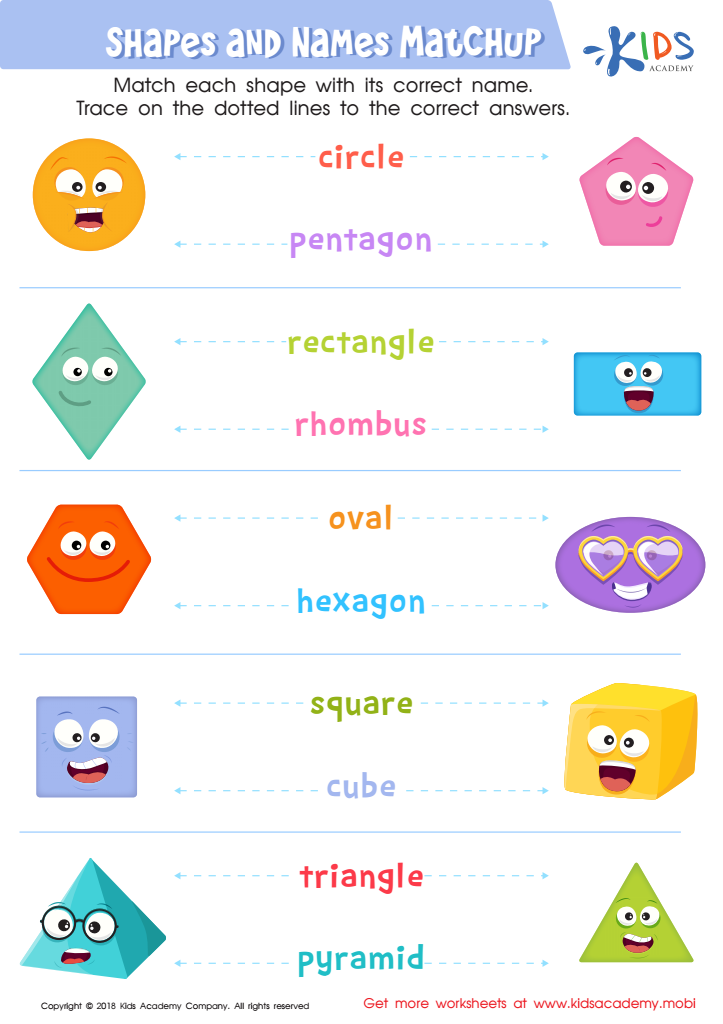
Shapes and Names Matchup Worksheet
Introduce your students to shapes if they aren't familiar. Look at the sheet with them and ask them to identify shapes. Help them match each shape to its name, then trace the dotted lines to the answers. Even if they haven't seen shapes before, this exercise will be easy - with your help!
Shapes and Names Matchup Worksheet
Worksheet
Join Kids Academy for Free
Who is primarily going to use this learning content?



.jpg)


Vocabulary enhancement in math for ages 3-6 is crucial because it lays the foundation for future academic success and cognitive development. At this age, children's brains are extraordinarily receptive to new information. Introducing them to basic mathematical vocabulary like "more," "less," "big," "small," "number," and "count" helps to build a solid groundwork for later mathematical learning.
Parents and teachers should care because strong math vocabulary skills directly correlate with a child's ability to understand complex math concepts later on. It aids in the development of critical thinking and problem-solving skills. Early math conversations encourage children to describe the world around them, boosting their ability to communicate effectively.
Additionally, math vocabulary enhancement supports literacy development. When children learn to associate words with numerical concepts, they simultaneously improve their language and math skills. This dual development is vital in ensuring that children do not fall behind in either area.
Furthermore, engaging young children with fun, interactive math vocabulary activities can foster a love for math, making them more likely to embrace and excel in the subject as they grow. Therefore, prioritizing vocabulary enhancement in math creates a ripple effect that benefits children academically, socially, and emotionally.








