Filters

476 filtered results

Clear all filters
Favorites
With answer key
Interactive

476 filtered results

Difficulty Level

Grade


Subject

    Check out this FREE Trial Lesson on Reading for age 3-6!

    Identify Basic Similarities and Differences Between Two Texts on the Same Topic

    Favorites
    With answer key
    Interactive
    • 3-6
    • Reading
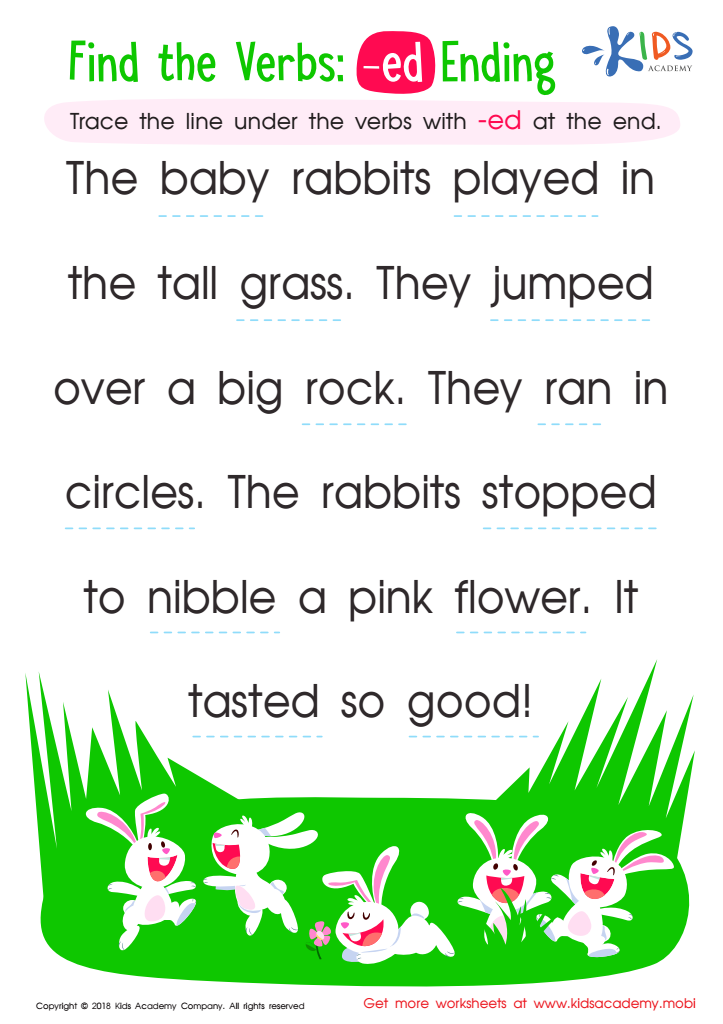
    Find The Verbs: -ed Ending Worksheet
    Find The Verbs: -ed Ending Worksheet

    Find The Verbs: -ed Ending Worksheet

    Help your kid boost grammar skills using this spring-themed worksheet! Read the paragraph aloud and have them underline verbs with -ed endings. They'll have fun with the cute bunnies and learn about the importance of verbs in a sentence!
    Find The Verbs: -ed Ending Worksheet
    Worksheet
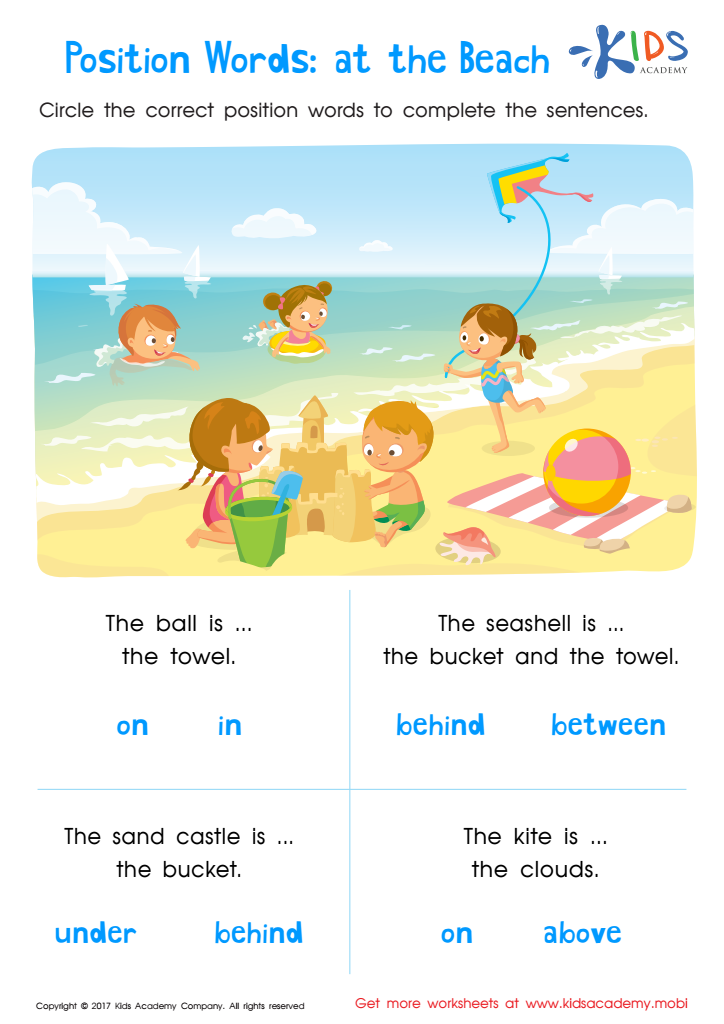
    Positional Words Worksheet
    Positional Words Worksheet

    At the Beach Printable Sight Words Worksheet

    At the Beach Printable Sight Words Worksheet
    Worksheet
    Cities Worksheet
    Cities Worksheet

    Cities Worksheet

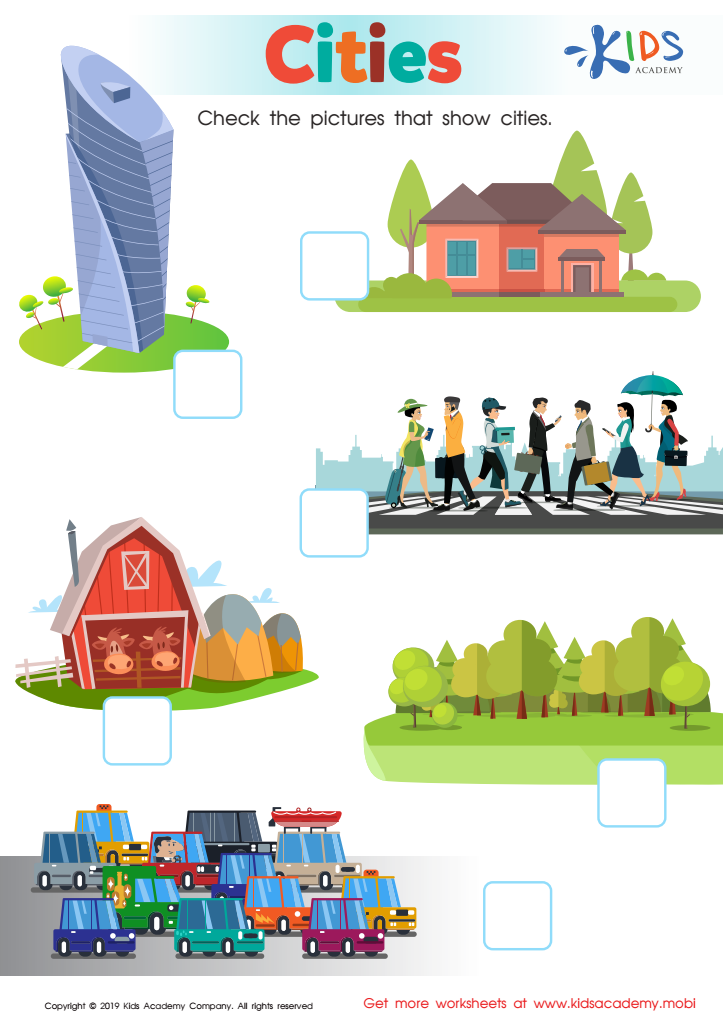
    This social studies PDF introduces kids to the differences between cities and towns. Colorful imagery helps them to distinguish between the two; for example, cities have traffic, business people and skyscrapers, while suburbs and rural areas do not. This allows children to have a reference point for what makes cities unique.
    Cities Worksheet
    Worksheet
    Sounding it Out: Part 3 Worksheet
    Sounding it Out: Part 3 Worksheet

    Sounding it Out: Part 3 Worksheet

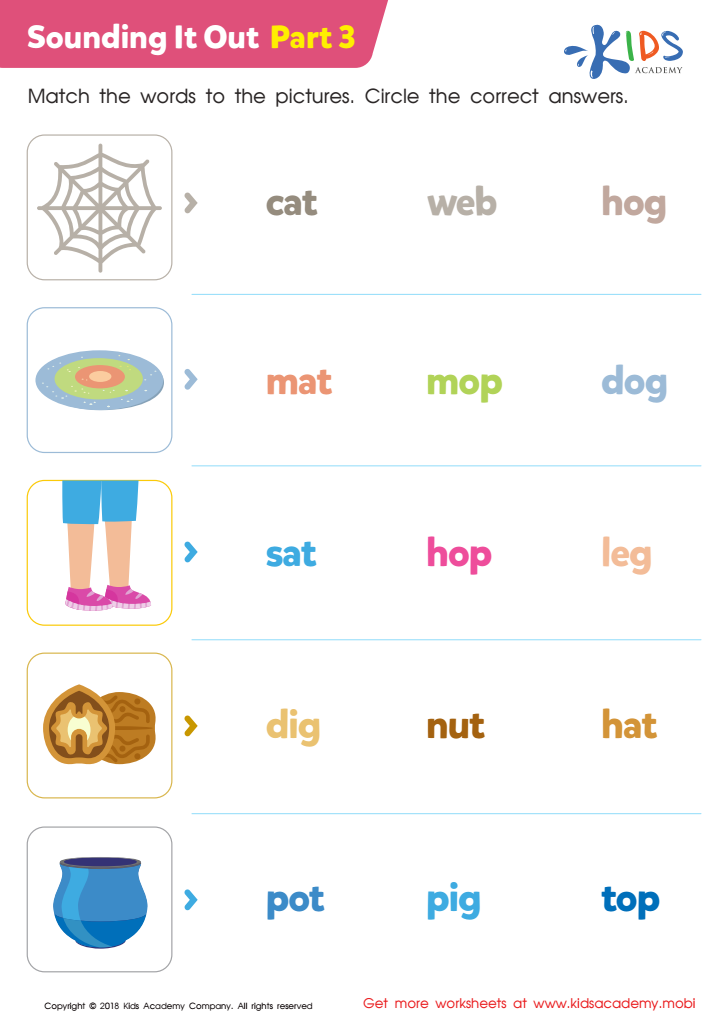
    Once Parts 1 and 2 are complete, this printable phonics worksheet will help kids take their reading skills to the next level! As they gain confidence, give them hints less often and direct their attention to three words in a row. Ask them to read and circle the correct word to complete!
    Sounding it Out: Part 3 Worksheet
    Worksheet
    More Turtle Facts Worksheet
    More Turtle Facts Worksheet

    More Turtle Facts Worksheet

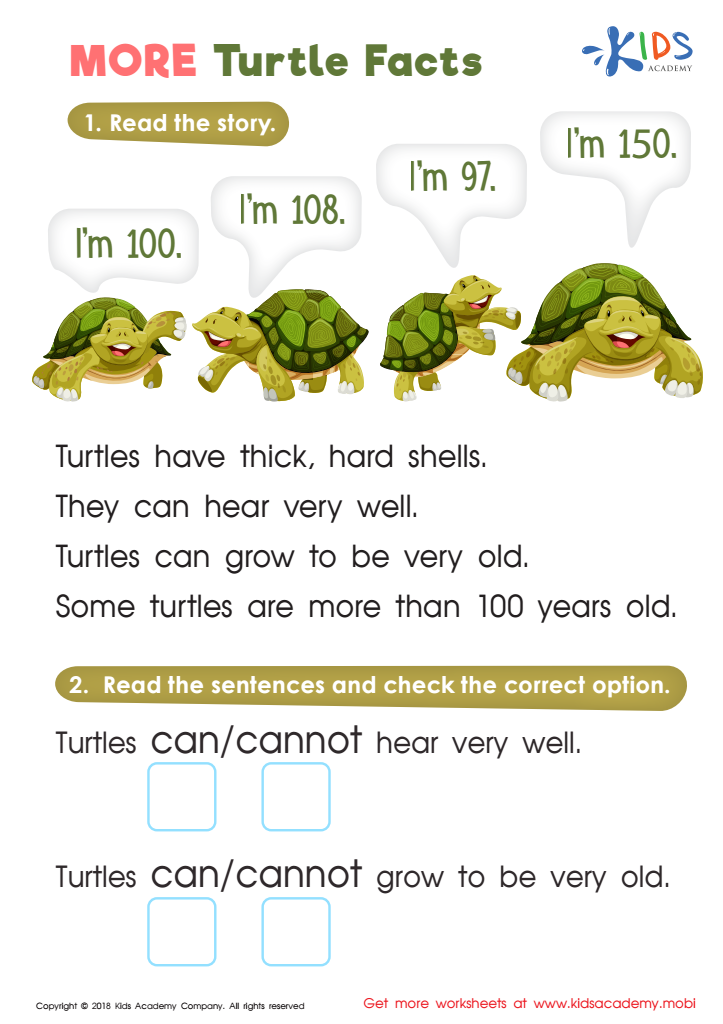
    Discover more fun facts about turtles with this reading worksheet! Read through the paragraph, check out the pictures, then answer the questions at the bottom to see how well your child remembers what they learned. Find out what turtles can and can't do by ticking the boxes. Let the turtle-filled learning begin!
    More Turtle Facts Worksheet
    Worksheet
    What Doesn’t Belong Worksheet for Preschool
    What Doesn’t Belong Worksheet for Preschool

    First Words: What Doesn't Belong Worksheet
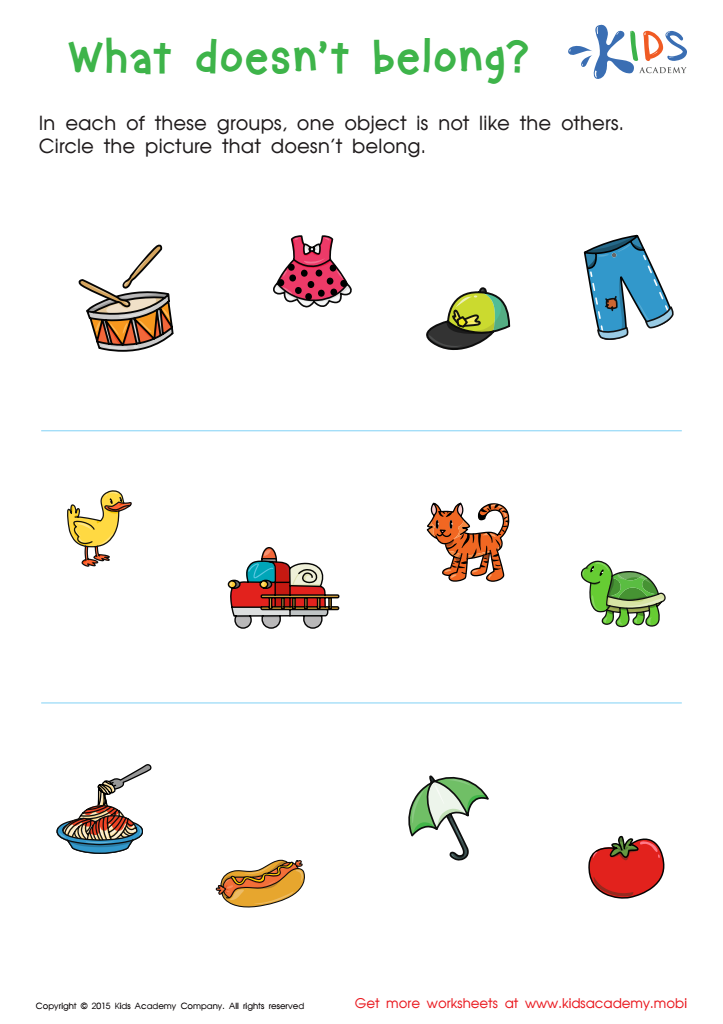
    Categorizing items is an important skill for little learners. Sorting and classifying objects helps kids make sense of the world. With this "what doesn't belong" worksheet, your child will practice problem-solving, strengthen categorization and improve logical reasoning skills. It's perfect for toddlers and preschoolers, with bright and exciting images giving their minds a challenging workout!
    First Words: What Doesn't Belong Worksheet
    Worksheet
    Which is the Correct Sentence? Worksheet
    Which is the Correct Sentence? Worksheet

    Which is the Correct Sentence? Worksheet

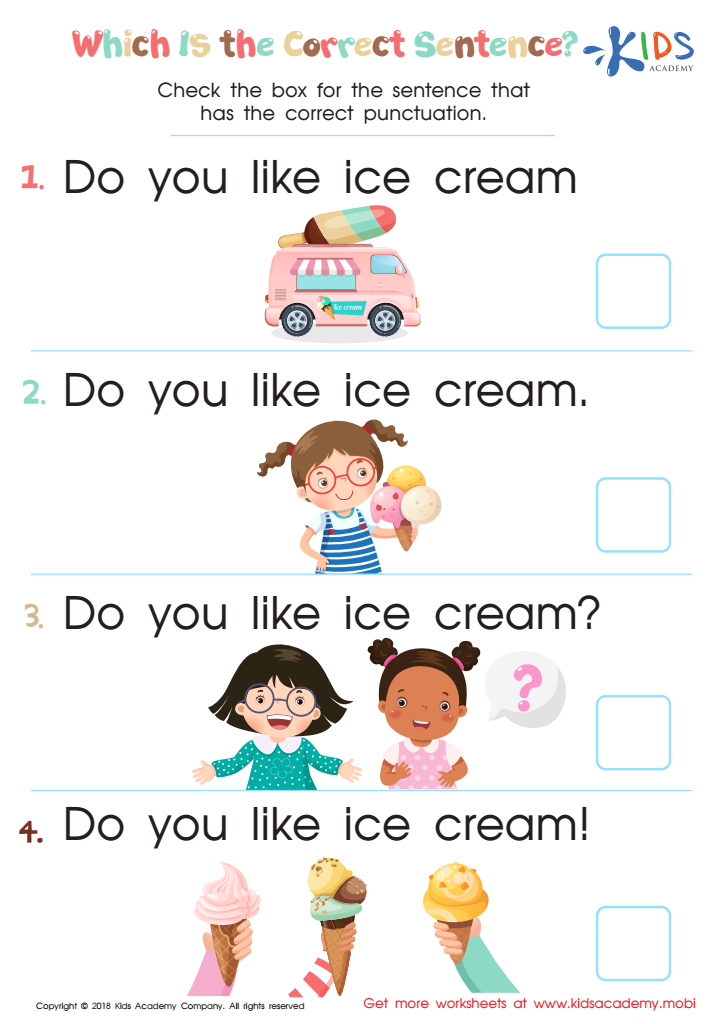
    Punctuation is crucial in sentence formation. If your kid still doesn't grasp it, bigger hurdles await when writing sentences. Get them to read simple sentences, then ask if they know the right punctuation. Assist them in selecting the sentence that has the accurate punctuation.
    Which is the Correct Sentence? Worksheet
    Worksheet
    Where Do We Sleep Worksheet
    Where Do We Sleep Worksheet

    Where Do We Sleep Worksheet

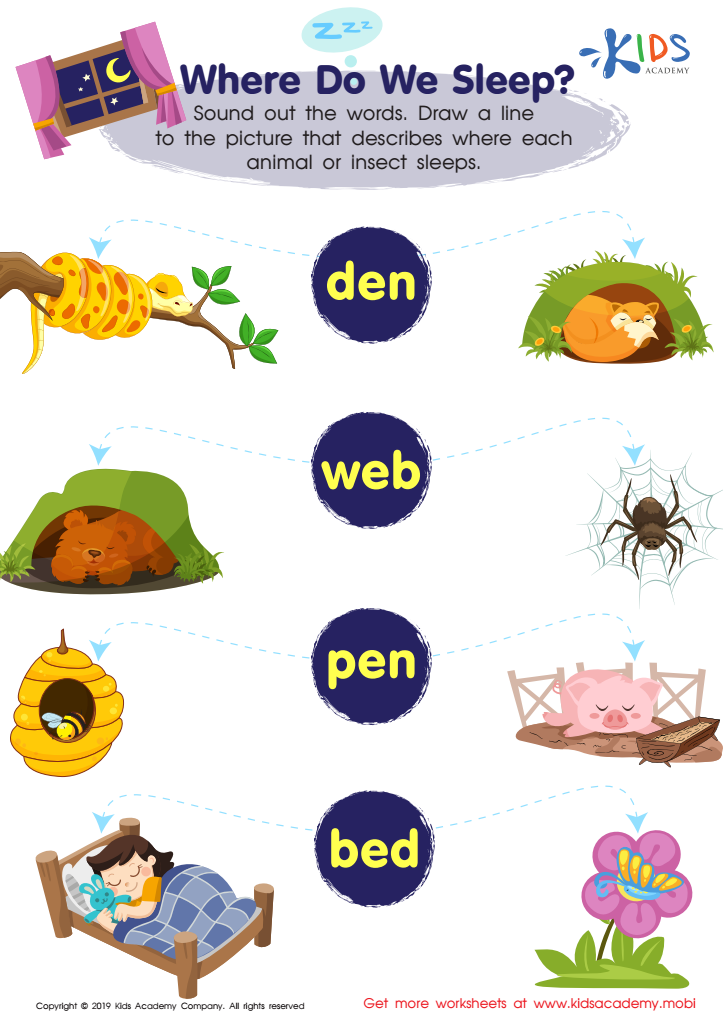
    Help your kids understand the importance of a safe space with this activity: Ask them to draw a line connecting the different animals and insects to the words that describe where they sleep. Remind them that everyone needs a sanctuary to rest – like the animals and insects in this printout.
    Where Do We Sleep Worksheet
    Worksheet
    Safety First Worksheet
    Safety First Worksheet

    Safety First Worksheet

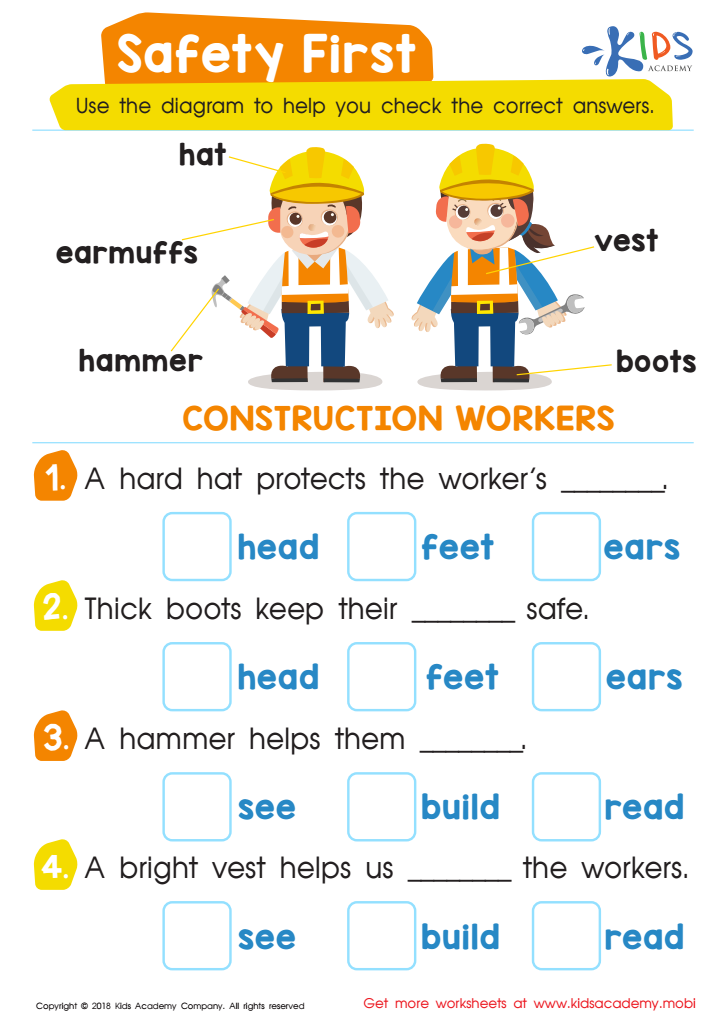
    Diagrams can be informative but inference is key. This worksheet contains diagrams of construction worker equipment. Get your little one to use prior knowledge to work out the uses and protection of each part. Then read the sentences and check the correct answer that fills in the blanks!
    Safety First Worksheet
    Worksheet
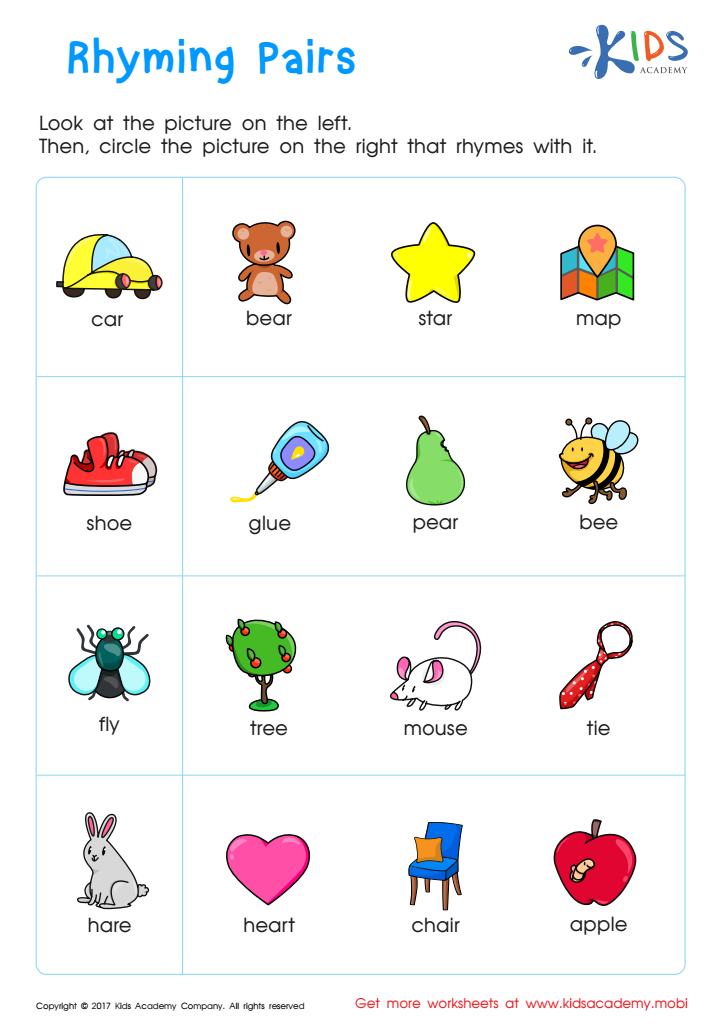
    Free Rhyming Pairs Worksheet
    Free Rhyming Pairs Worksheet

    Rhyming Pairs Worksheet

    Rhyming Pairs Worksheet
    Worksheet
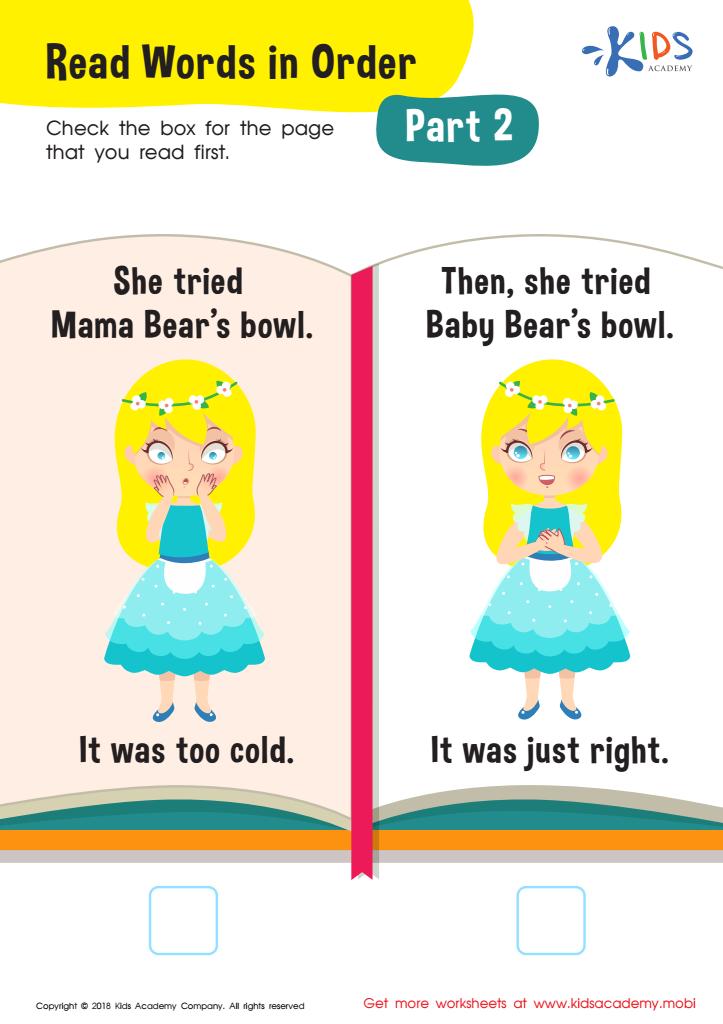
    Read Words Order Part 2 Worksheet
    Read Words Order Part 2 Worksheet

    Read Words Order Part 2 Worksheet

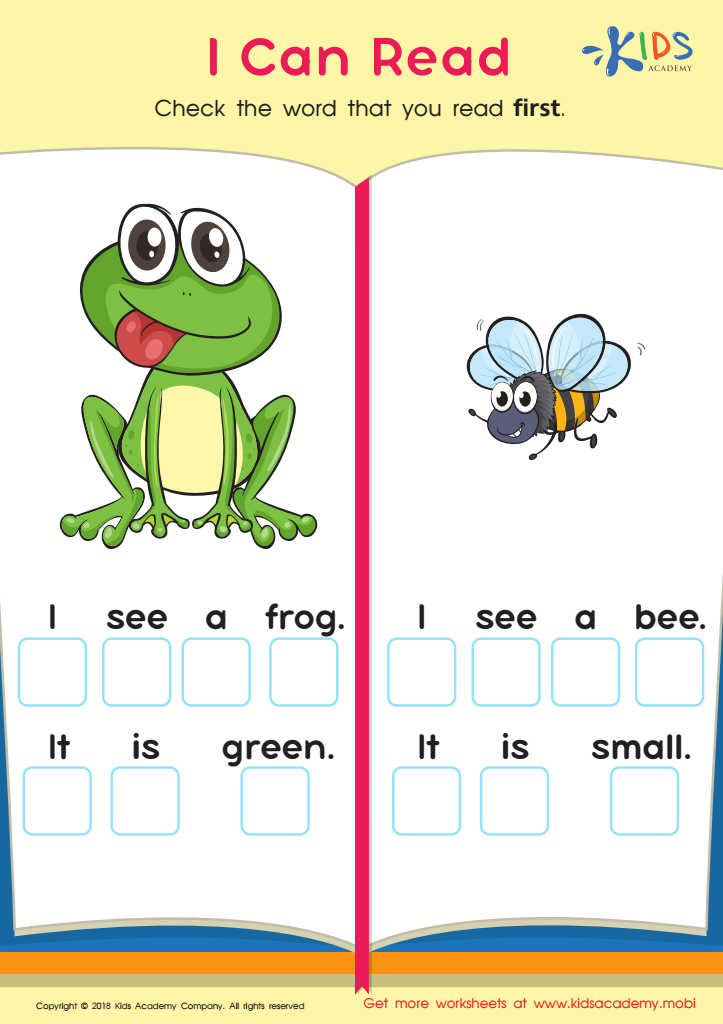
    Help your students make progress with reading by using this easy worksheet. It includes two pictures with short sentences your child should be able to read. Ask them to read these out loud, and if they're struggling, help them. Then, they should check the box that shows the page they'd read first.
    Read Words Order Part 2 Worksheet
    Worksheet
    Going to the Dentist Worksheet
    Going to the Dentist Worksheet

    Going to the Dentist Worksheet

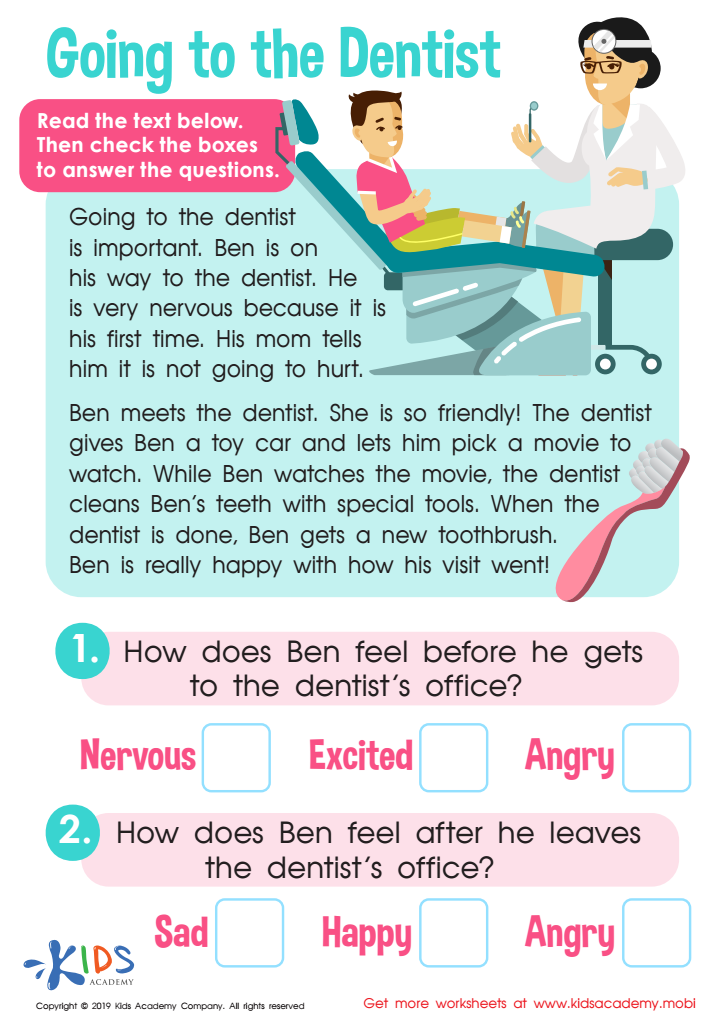
    Kids can feel anxious when going to the dentist, but understanding why they go helps them cope. This free text helps them learn, as they read and answer questions about Ben's visit. They'll gain insight into Ben's emotions, while honing their critical thinking skills.
    Going to the Dentist Worksheet
    Worksheet
    Read Words Order Part 1 Worksheet
    Read Words Order Part 1 Worksheet

    Read Words Order Part 1 Worksheet

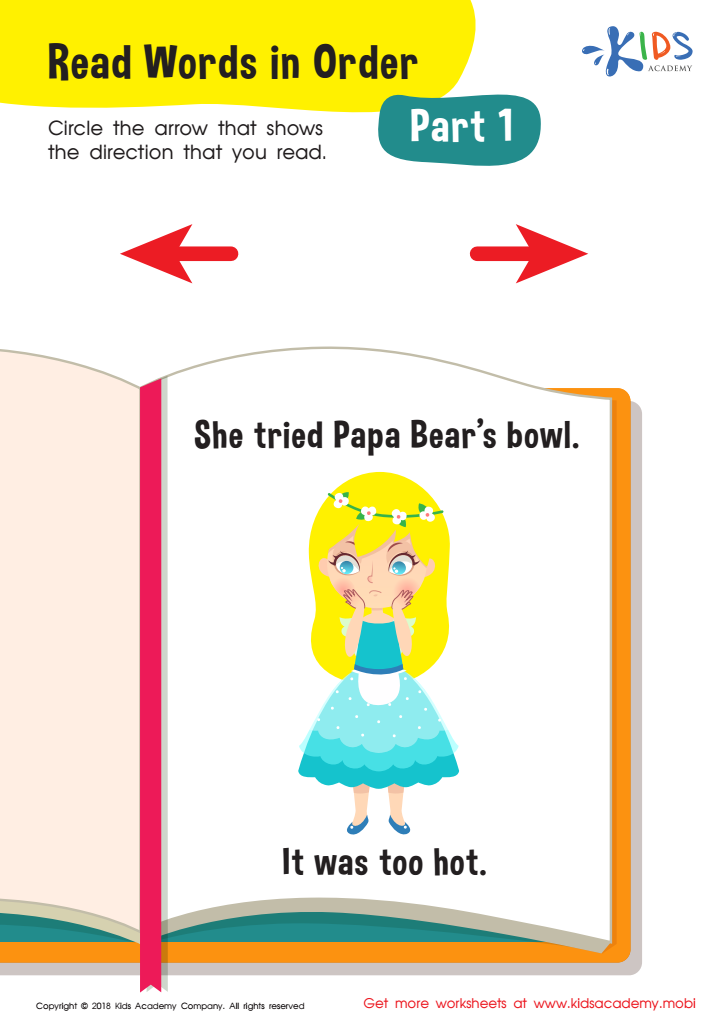
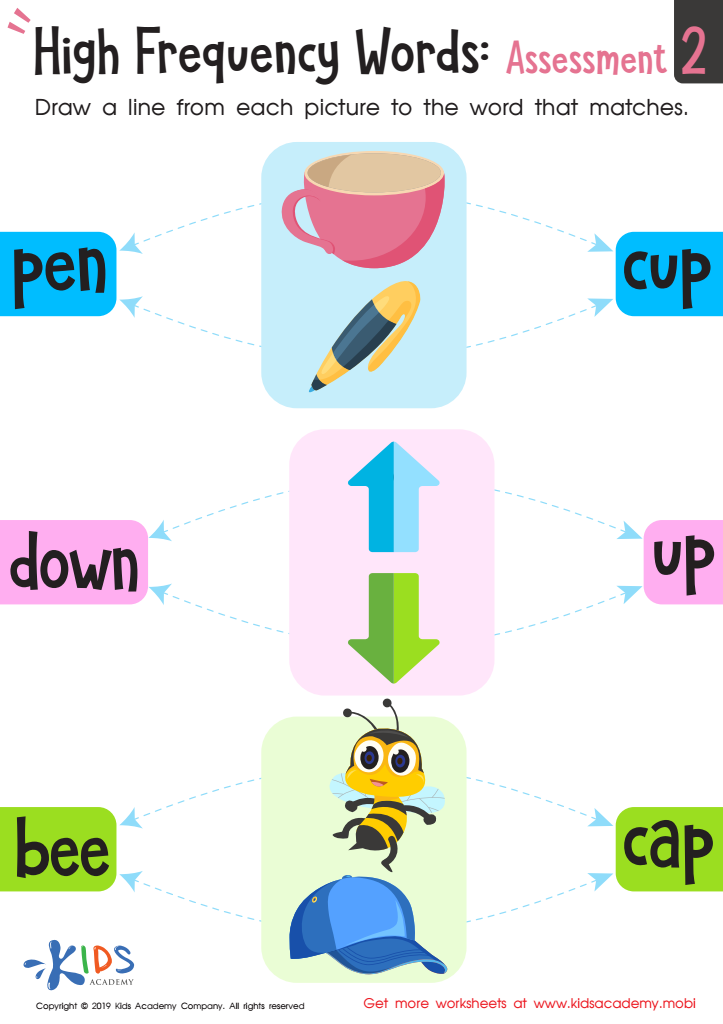
    Is your child just starting out with reading or having trouble? This worksheet is perfect! It'll help them learn the right way to read. Ask them to circle the arrow that shows the right direction to read. With this exercise, your child can overcome some of their reading challenges.
    Read Words Order Part 1 Worksheet
    Worksheet
    High Frequency Words: Assessment 2 Worksheet
    High Frequency Words: Assessment 2 Worksheet

    High Frequency Words: Assessment 2 Worksheet

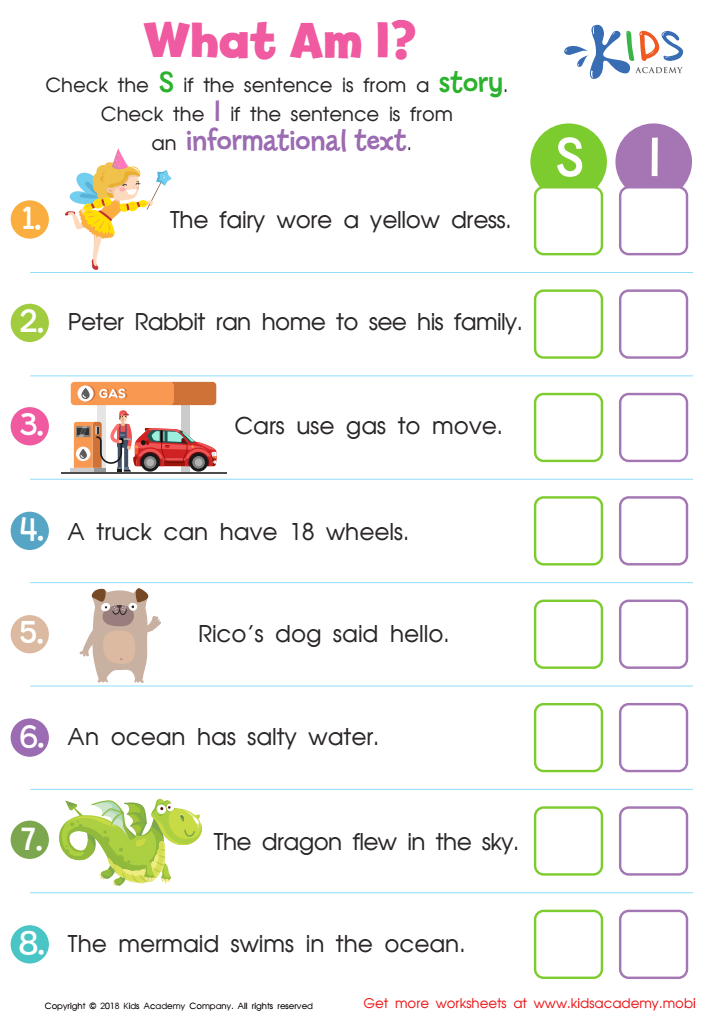
    Having knowledge of high frequency words can make emergent readers stronger and boost comprehension. This free assessment worksheet uses traceable lines to connect the picture to its corresponding words, allowing them to feel successful. It's a great way to reinforce high frequency words with familiar imagery.
    High Frequency Words: Assessment 2 Worksheet
    Worksheet
    What Am I? Worksheet
    What Am I? Worksheet

    What Am I? Worksheet

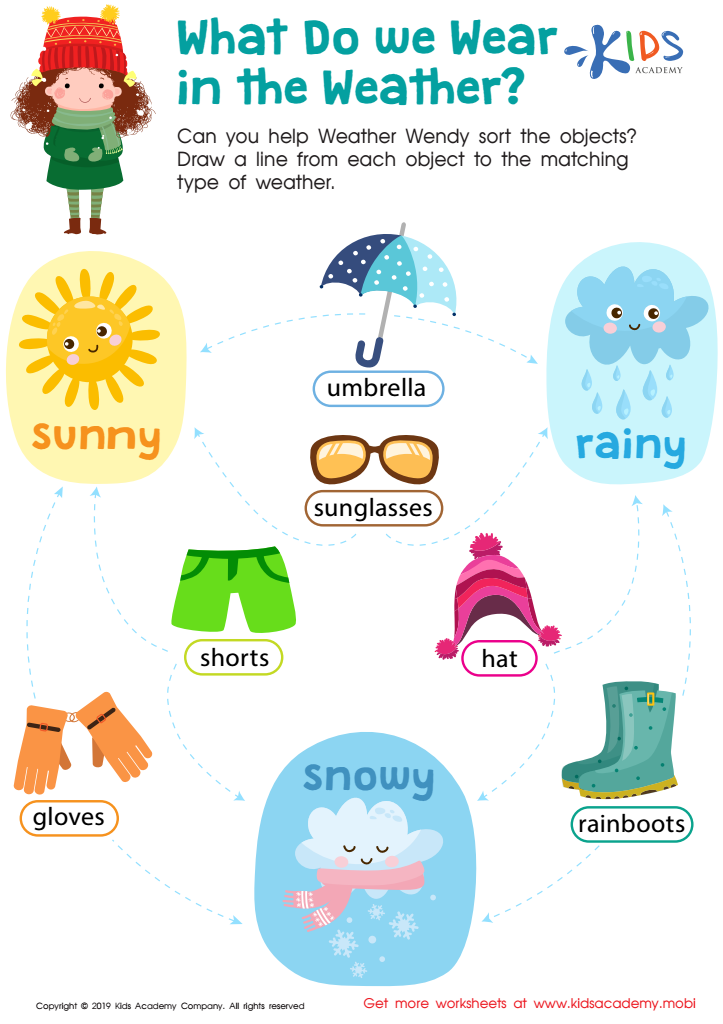
    This worksheet assesses students' ability to differentiate between stories and texts they read for facts. Students learn to distinguish between reading for pleasure and reading for information. It includes statements from both a story and an informational text, and students must decide what type of text it is.
    What Am I? Worksheet
    Worksheet
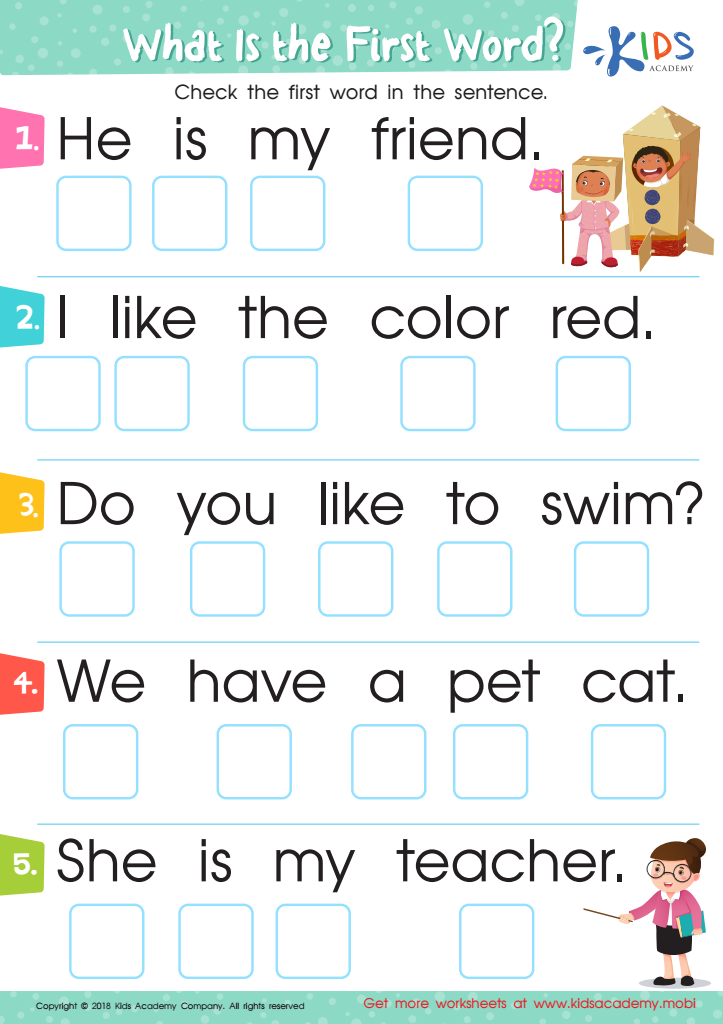
    What is the First Word? Worksheet
    What is the First Word? Worksheet

    What is the First Word? Worksheet

    Help your students test their sentence-reading skills with this printout! After teaching the alphabet, have them identify and write the first word in each sentence. With this exercise, they'll gain reading proficiency and be better prepared to write their own sentences.
    What is the First Word? Worksheet
    Worksheet
    What Do We Wear in the Weather? Worksheet
    What Do We Wear in the Weather? Worksheet

    What Do We Wear in the Weather? Worksheet

    This worksheet boosts young learners' everyday vocab with fun high-frequency weather words. They'll see and match familiar pictures to the words they read. Plus, it helps them develop fine motor skills. Perfect for preschoolers.
    What Do We Wear in the Weather? Worksheet
    Worksheet
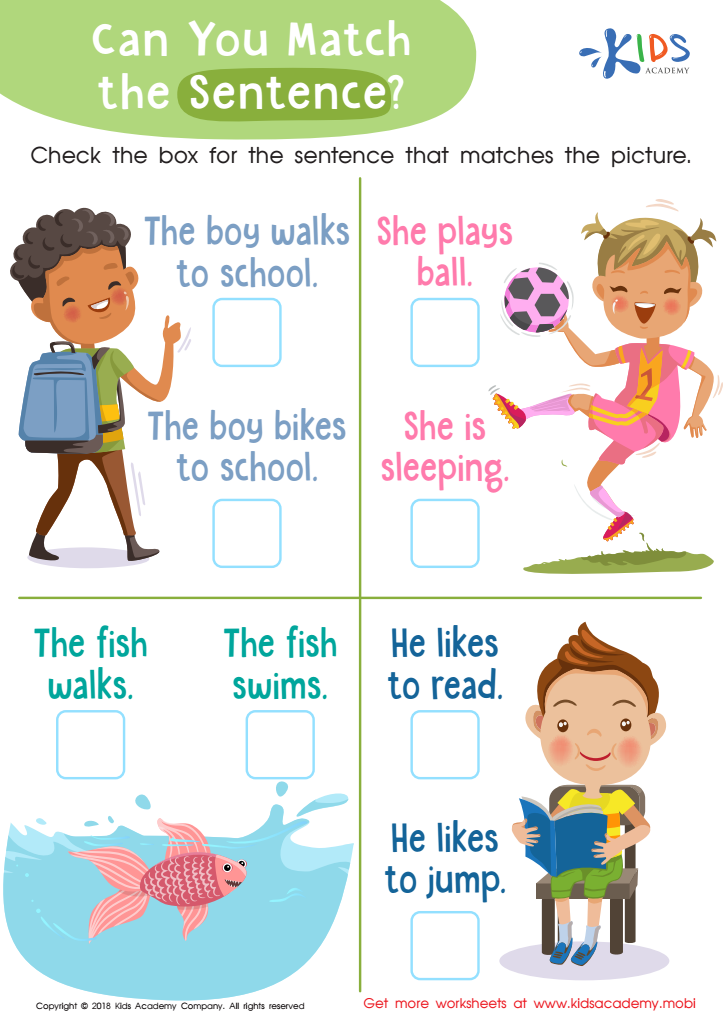
    Can You Match the Sentence? Worksheet
    Can You Match the Sentence? Worksheet

    Can You Match the Sentence? Worksheet

    Kids gain fluency with this worksheet which uses bright pictures. They select the sentence that matches the image and check the box. This repetition of words and phrases helps them improve their reading skills while having fun.
    Can You Match the Sentence? Worksheet
    Worksheet
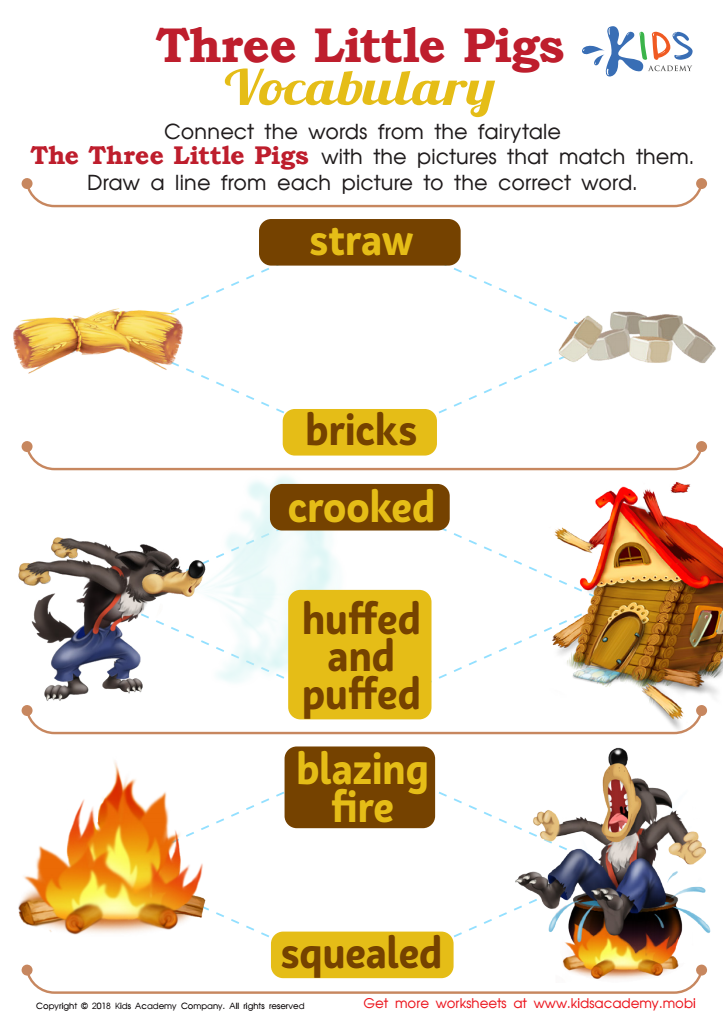
    Three Little Pigs Vocabulary Worksheet
    Three Little Pigs Vocabulary Worksheet

    Three Little Pigs Vocabulary Worksheet

    Read the Three Little Pigs to your children. Have them use the tracing sheet to connect the story words with the pictures. This is a fun and educational way to help them build their vocabulary.
    Three Little Pigs Vocabulary Worksheet
    Worksheet
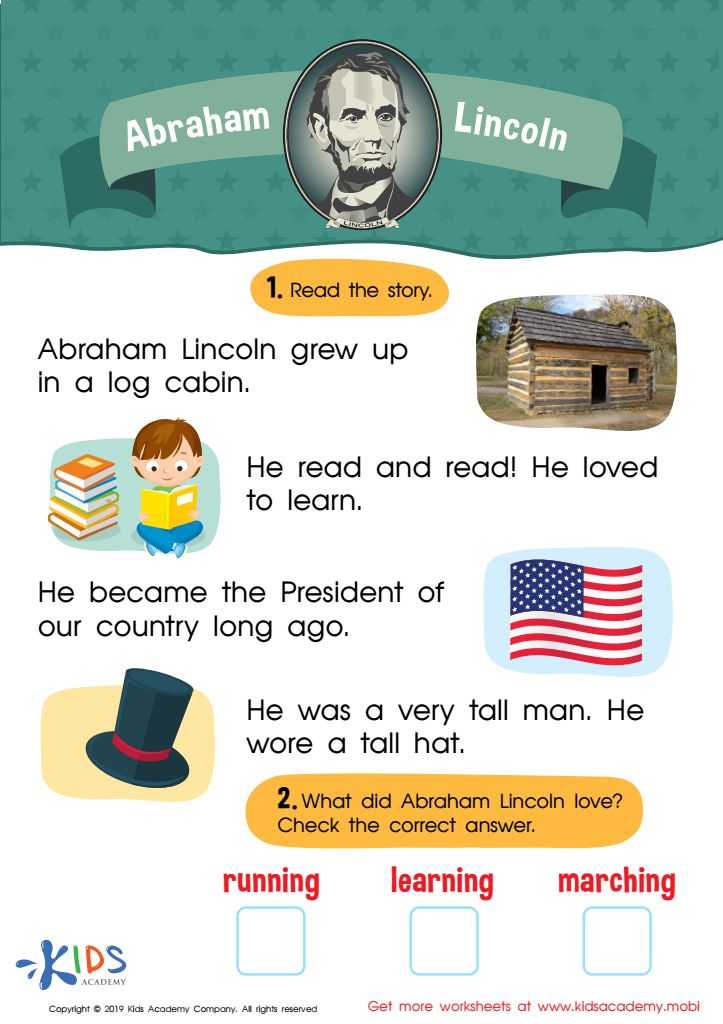
    Abraham Lincoln Worksheet
    Abraham Lincoln Worksheet

    Abraham Lincoln Worksheet

    Let your kids listen to interesting stories while having fun! Read the short story in this worksheet, point to the picture representing each sentence, then ask the questions and check the answers. Doing this will help your children learn new things and build their vocabulary.
    Abraham Lincoln Worksheet
    Worksheet
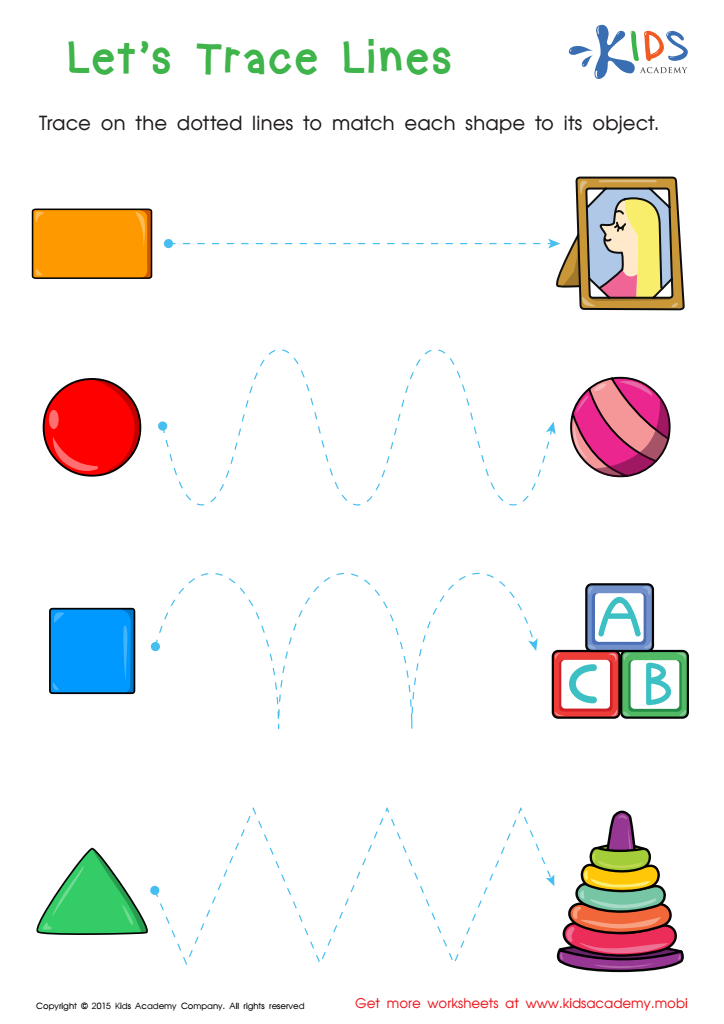
    Printable Tracing Lines for Toddlers
    Printable Tracing Lines for Toddlers

    First Words: Let's Trace Lines Worksheet
    Printable tracing lines for toddlers will provide your little one with the skills needed for future handwriting success. Proper grip, fine motor skills, and hand-to-eye coordination are key. Let's get their writing journey off to a great start!
    First Words: Let's Trace Lines Worksheet
    Worksheet
    Little Elephant's Birthday Worksheet
    Little Elephant's Birthday Worksheet

    Little Elephant's Birthday Worksheet

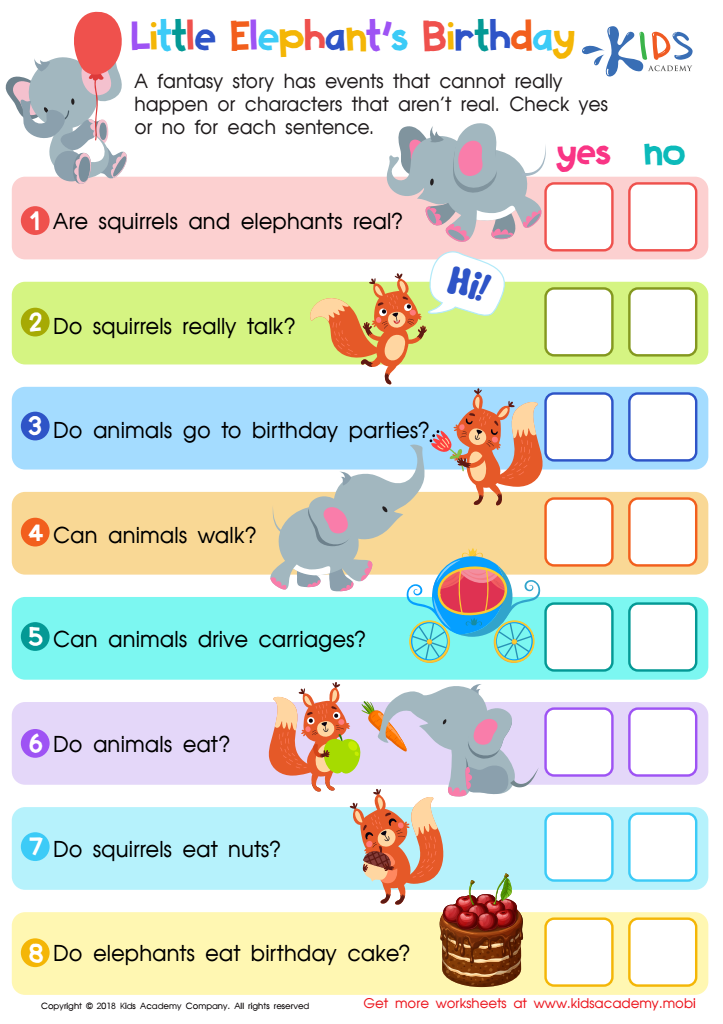
    It's Little Elephant's birthday! Help your students celebrate with this fun worksheet full of colors and pictures. Deciding which questions are facts and which are fiction will help them differentiate between fantasy stories and reality. Let them have fun learning why certain elements of fantasy can't be true!
    Little Elephant's Birthday Worksheet
    Worksheet
    I Can Read Worksheet
    I Can Read Worksheet

    I Can Read Worksheet

    Test your child's reading skills with this fun worksheet. See how well they know one-letter, two-letter, and five-letter words. Ask your little one to read the sentences and tick the word they identify first. It's a great way to track their progress and help them become more confident readers.
    I Can Read Worksheet
    Worksheet
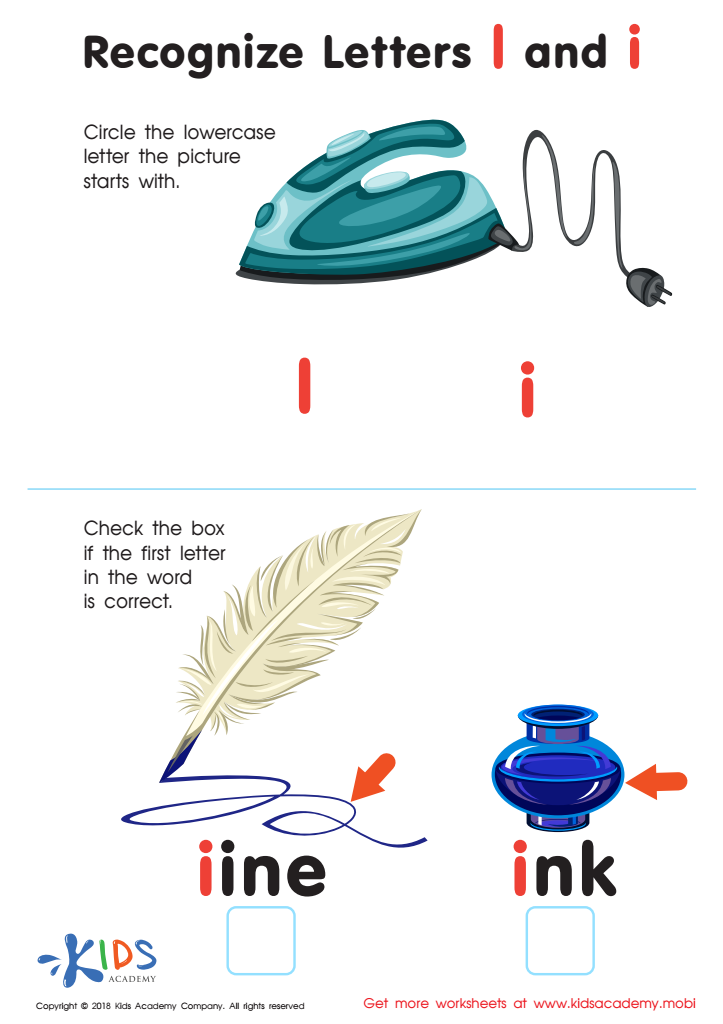
    Recognize Letters l and i Worksheet

    Recognize Letters l and i Worksheet

    Recognize Letters l and i Worksheet

    Help your child become familiar with uppercase and lowercase letters. Have them look at the pictures in the worksheet and circle the lowercase letter the picture starts with. For example: which one is the lowercase "i", the capital "I" or the small "i"?
    Recognize Letters l and i Worksheet
    Worksheet


    Reading for ages 3-6 is vital as it lays the foundation for literacy, academic success, and cognitive development. At this age, children's brains are highly adaptable and receptive to new information, making it an ideal time to cultivate language skills. Reading aloud to children helps them develop vocabulary, listening skills, and comprehension abilities. It enriches their imagination and allows them to understand diverse perspectives and cultures.

    Furthermore, early exposure to books significantly influences a child's future reading habits and attitudes toward learning. Establishing a routine of reading fosters a lifelong love of books and knowledge. Socially and emotionally, reading together strengthens the bond between parents, teachers, and children, providing a comforting and secure environment where kids can express themselves and their feelings.

    Cognitively, it stimulates brain development by enhancing memory, focus, and concentration. Children also build critical thinking and problem-solving skills as they follow plots, predict outcomes, and understand characters' motivations. In essence, reading for ages 3-6 profoundly impacts a child’s educational trajectory, making it an indispensable practice for parents and educators committed to nurturing well-rounded, curious, and capable learners.