Middle Vowel Worksheets for Ages 3-7
4 filtered results
-
From - To
Boost your child's phonics skills with our engaging Middle Vowel Worksheets, designed for ages 3-7. These fun, educational activities help young learners recognize and pronounce middle vowel sounds, crucial for early reading development. Each worksheet is thoughtfully crafted with vibrant illustrations and simple exercises tailored to captivate children's interest and enhance their understanding. Our comprehensive approach ensures that kids enjoy the learning process while steadily advancing their literacy skills. Perfect for classroom use or at-home practice, these worksheets provide a strong foundation in phonetics that will support your child's journey towards becoming a confident reader.
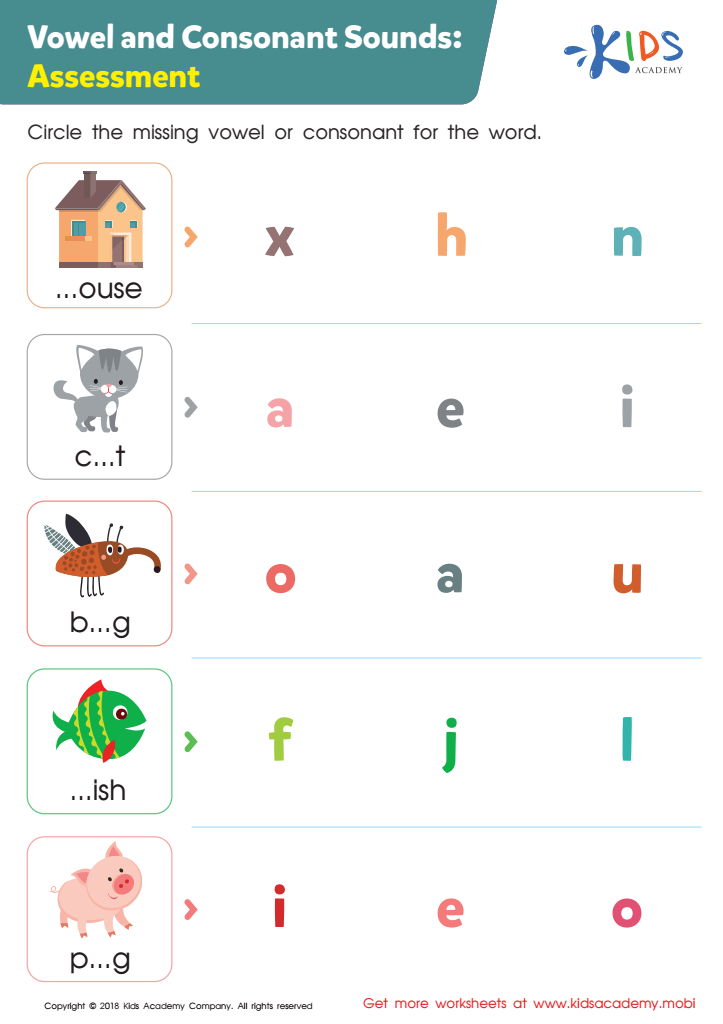
Vowel and Consonant Sounds: Assessment Worksheet
 Assign to My Students
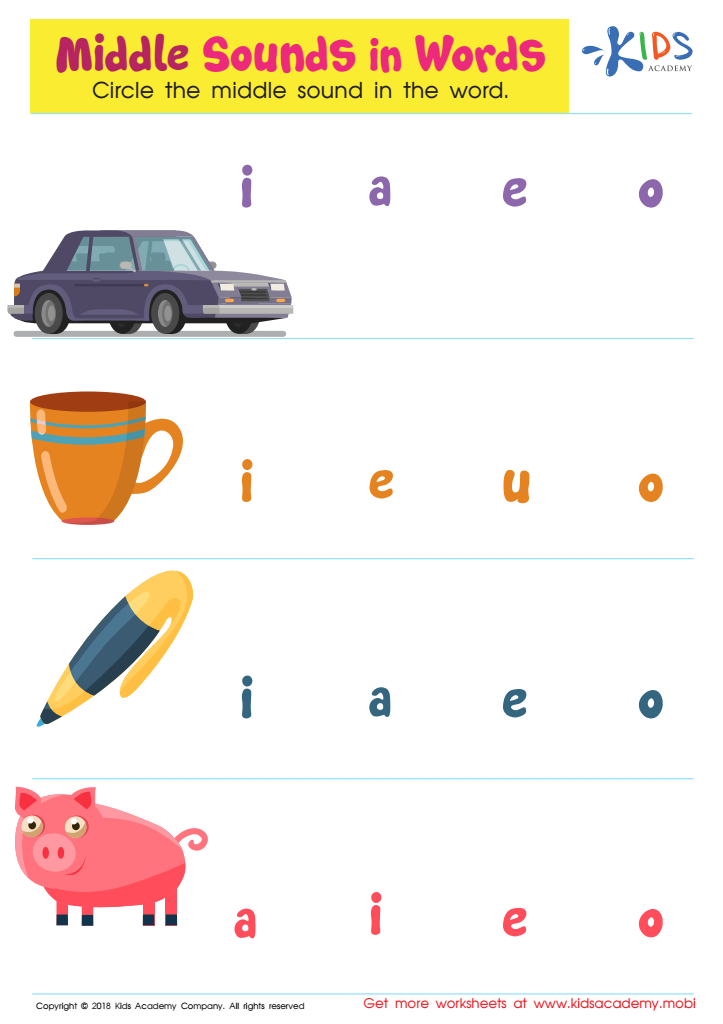
Middle Sounds in Words Worksheet
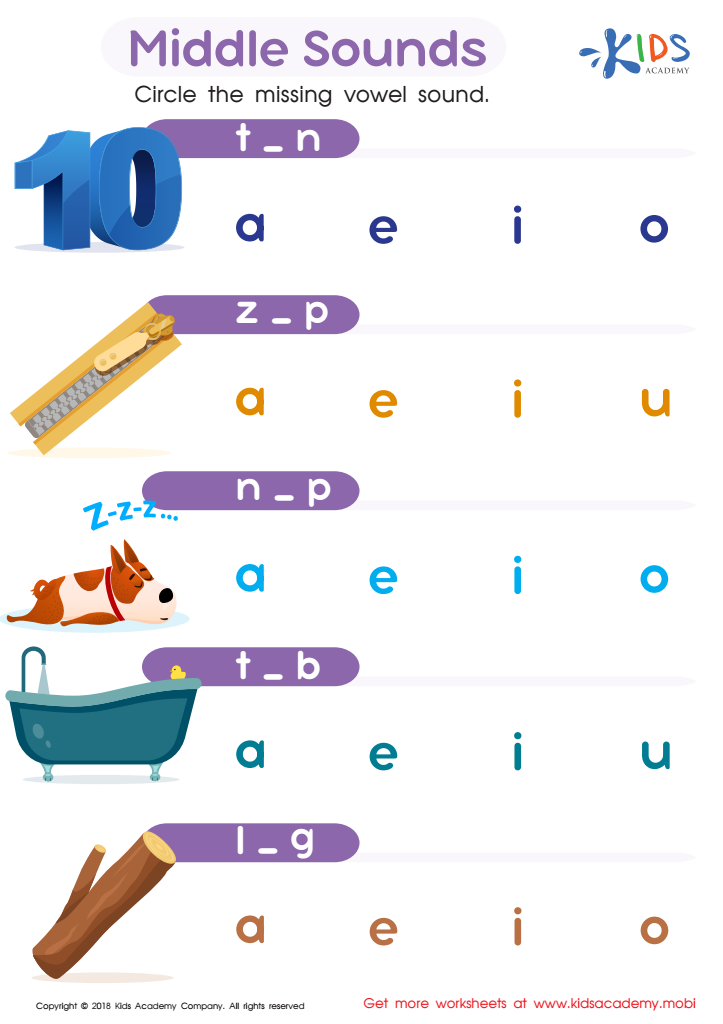
Middle Sounds Worksheet
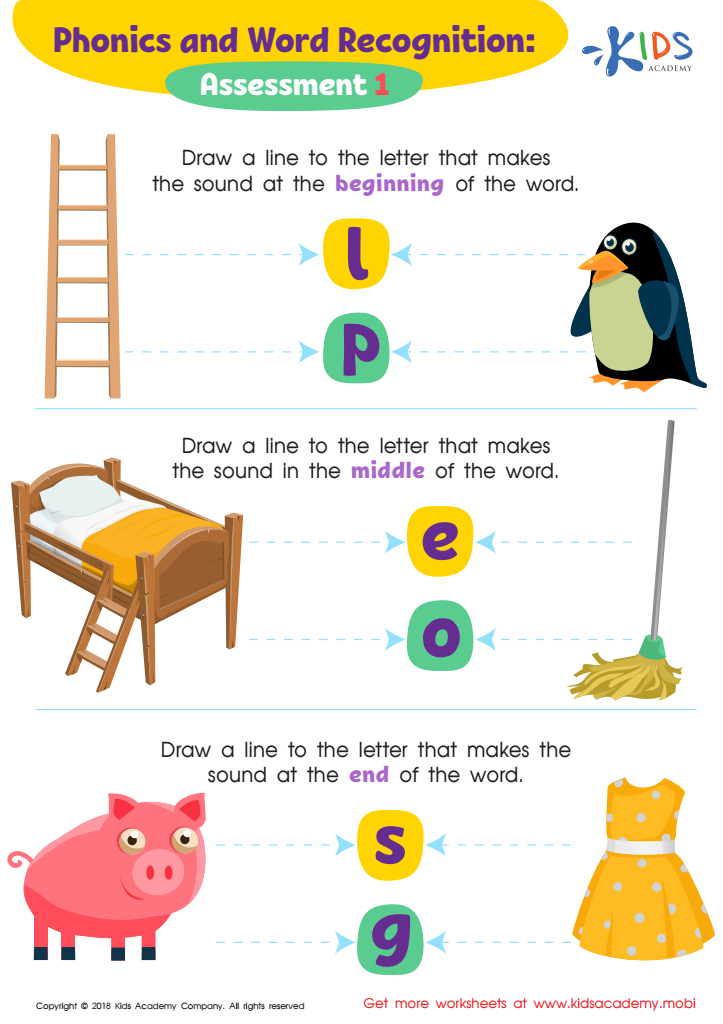
Phonics and Word Recognition: Assessment 1 ELA Worksheet



Understanding middle vowels is essential for children ages 3-7 as it lays the foundation for reading and writing skills. Middle vowels, or the vowels found in the middle of simple words like "cat," "pet," or "pig," perform a crucial role in phonemic awareness, which is the ability to hear, identify, and manipulate individual sounds in spoken words.
For young learners, mastering middle vowels helps them decode words, improving their reading fluency. As children recognize patterns in words and the sounds that correspond to each letter, they build a stronger grasp of language. This early phonetic understanding is a predictor of future reading success, vital for overall academic achievement.
Furthermore, recognizing middle vowels supports better spelling and word construction. Children start to understand how altering a vowel can change the meaning of a word, enhancing their vocabulary. It also boosts their confidence as young readers, making them more likely to enjoy reading activities.
For teachers and parents, emphasizing middle vowels during early education fosters a solid linguistic foundation. Using engaging activities like phonics games, flashcards, and reading aloud can make learning these sounds enjoyable and effective. Ensuring competency in middle vowels sets children on a path toward effective communication and lifelong learning.