Silent Vowels Worksheets for Ages 3-7
4 filtered results
-
From - To
Discover captivating "Silent Vowels Worksheets for Ages 3-7" designed to make learning fun and engaging! Tailored for young learners, our printable worksheets help children understand tricky silent vowel patterns in a playful and engaging manner. Each activity is crafted to boost reading skills, reinforce phonics knowledge, and enhance vocabulary. Perfect for preschoolers and early elementary students, these worksheets offer a variety of games and exercises that promote confidence in silent vowel usage. Foster a love for learning with our interactive, teacher-designed resources – a delightful way to support your child’s early literacy journey!
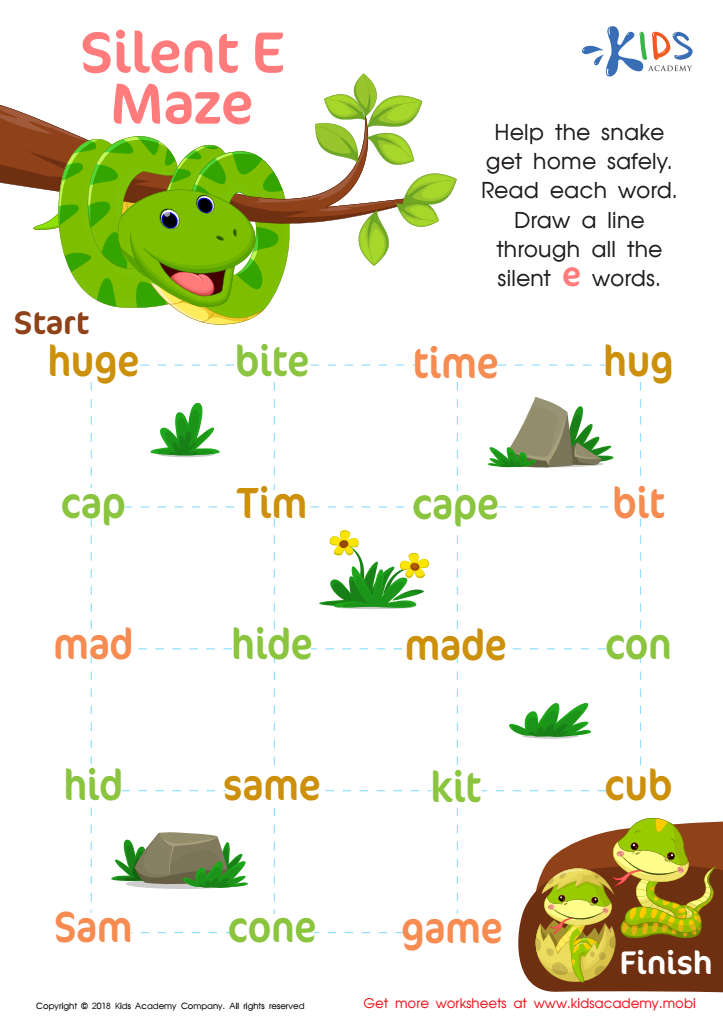
Silent E Maze Worksheet
 Assign to My Students
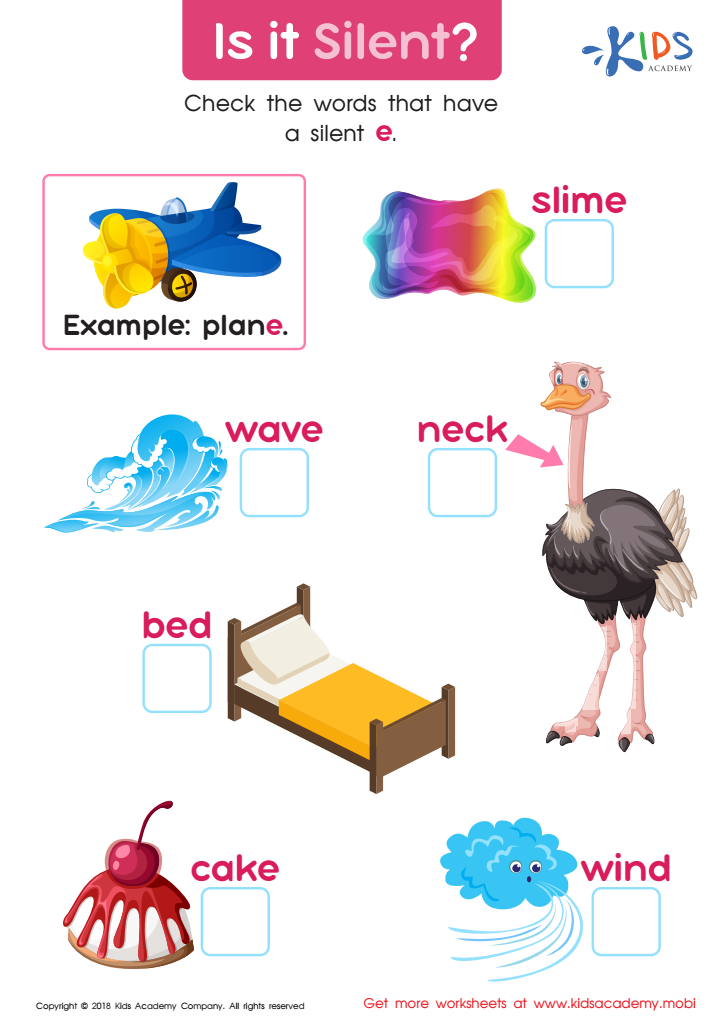
Is It Silent? Worksheet
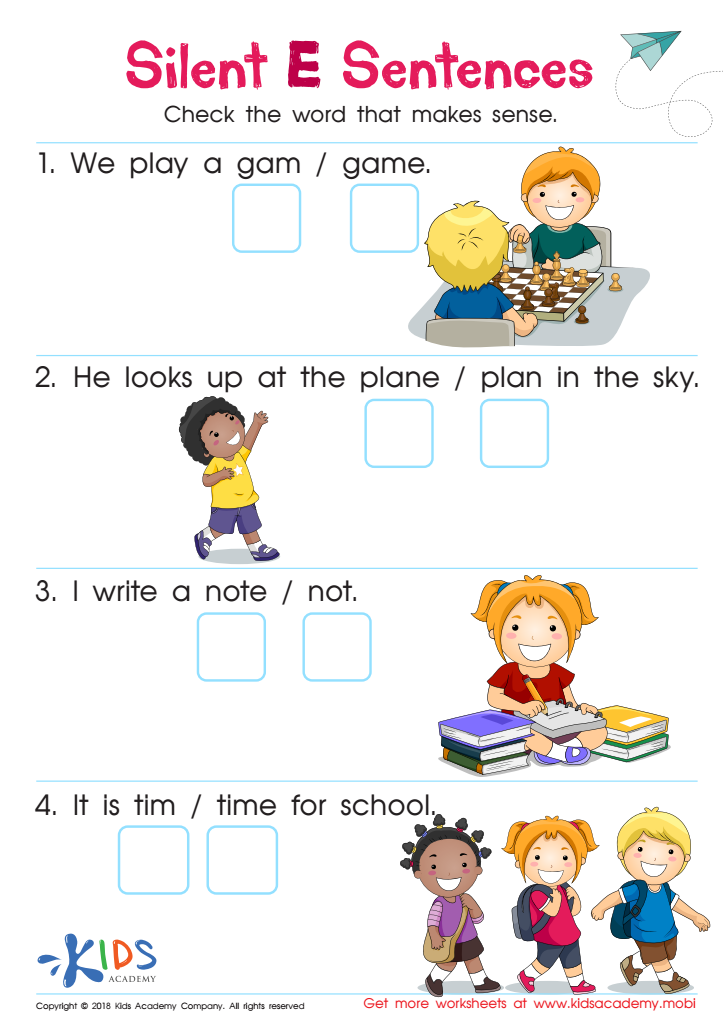
Silent E Sentences Worksheet
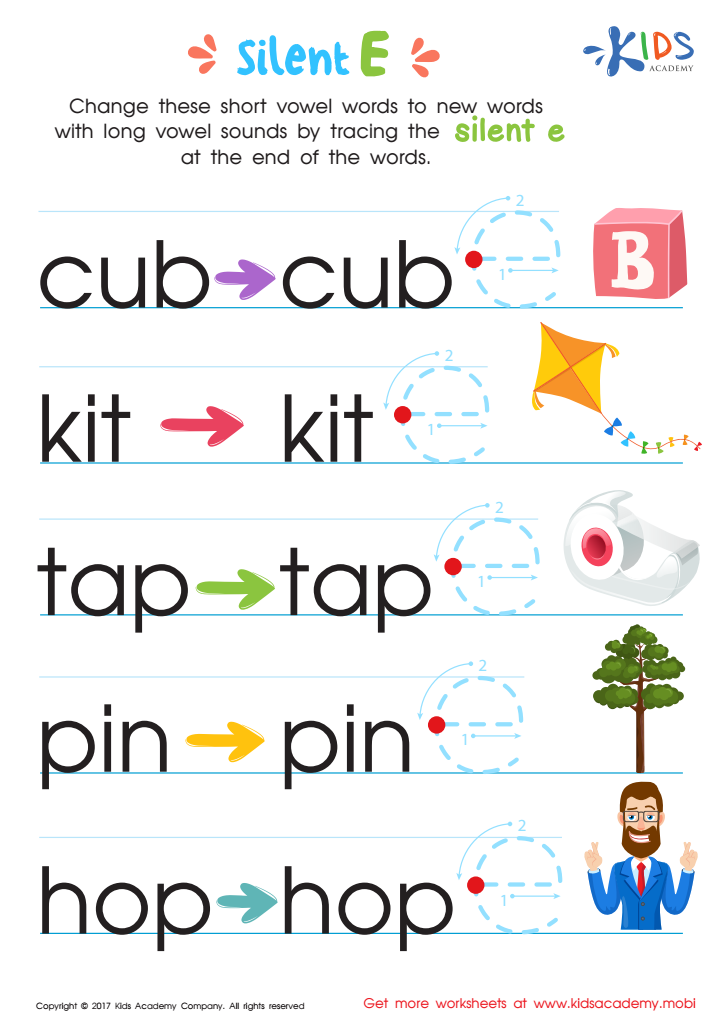
Silent E Words Worksheet


Parents and teachers should care about silent vowels for children aged 3-7 because understanding them is fundamental to early literacy development. Silent vowels, such as the "e" in "bake," play a significant role in English pronunciation and spelling rules. Young learners who grasp the concept of silent vowels can better decode words, which is essential for reading fluency. When they encounter new words, they will be more likely to recognize that some letters may not be pronounced but still affect the word's meaning and pronunciation.
This comprehension supports phonemic awareness, an essential skill for fluent reading. Furthermore, it aids spelling skills, as children learn to apply common patterns and rules. For example, understanding that the "e" at the end of "hate" makes the "a" long, whereas "hat" has a different sound and meaning, builds both their phonics skills and their vocabulary.
Caring about and teaching silent vowels early can also reduce frustration and increase confidence in young readers, setting a strong foundation for their overall literacy journey. Equipped with these foundational skills, children are more likely to become proficient readers and writers, crucial for their academic success and lifelong learning.