Adding up to 1000 Without Regrouping Worksheets for Ages 3-7 - Page 3
73 filtered results
-
From - To
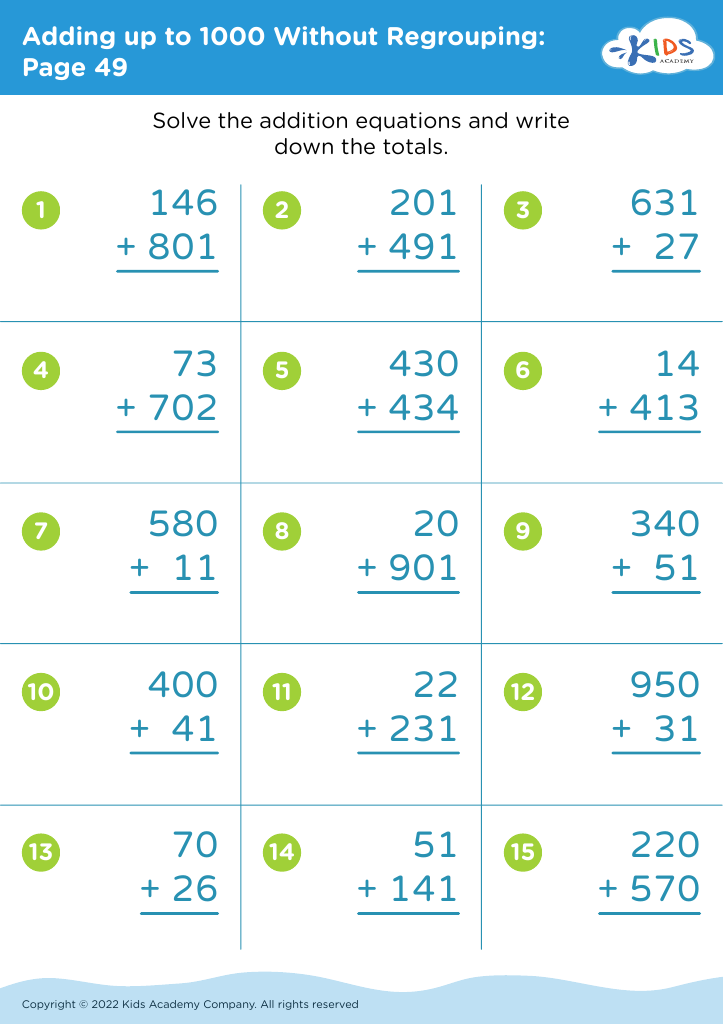
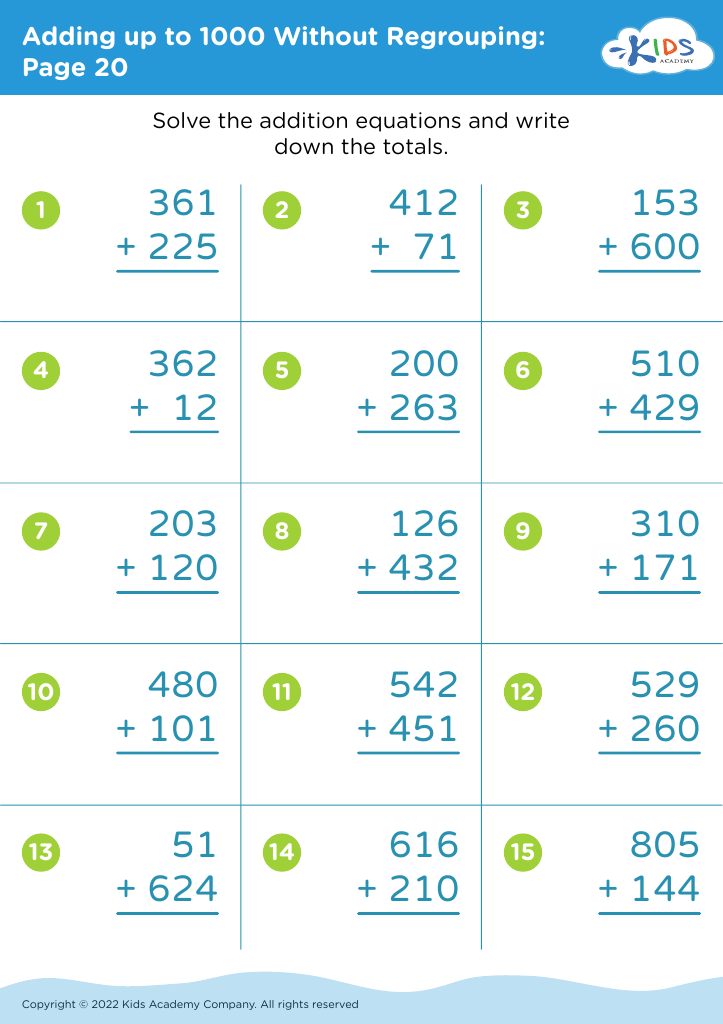
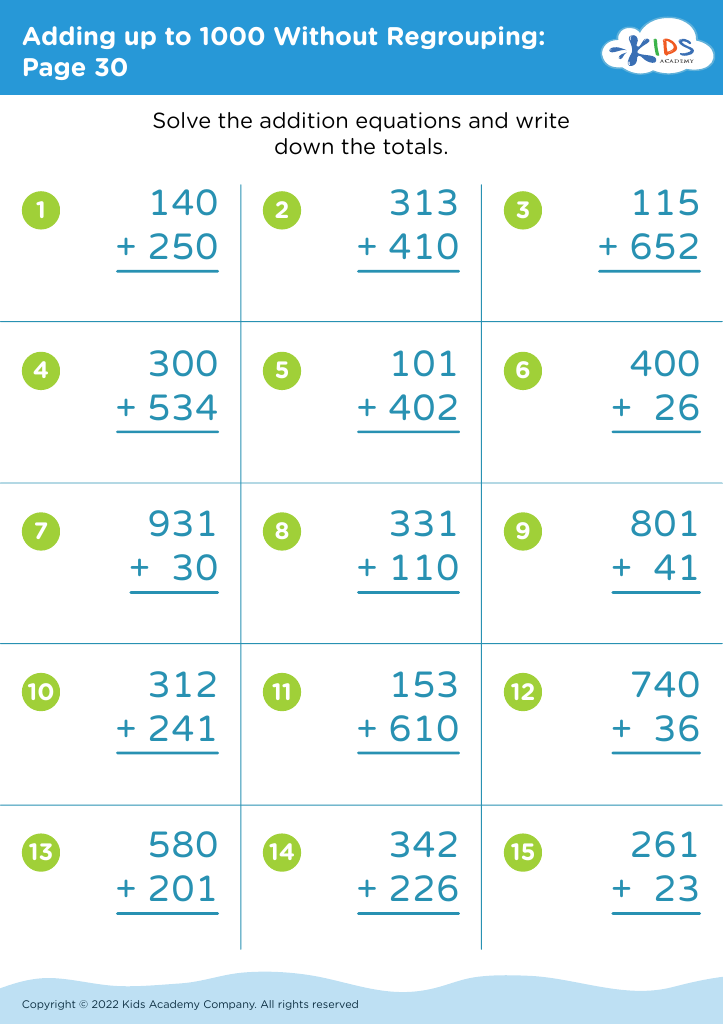
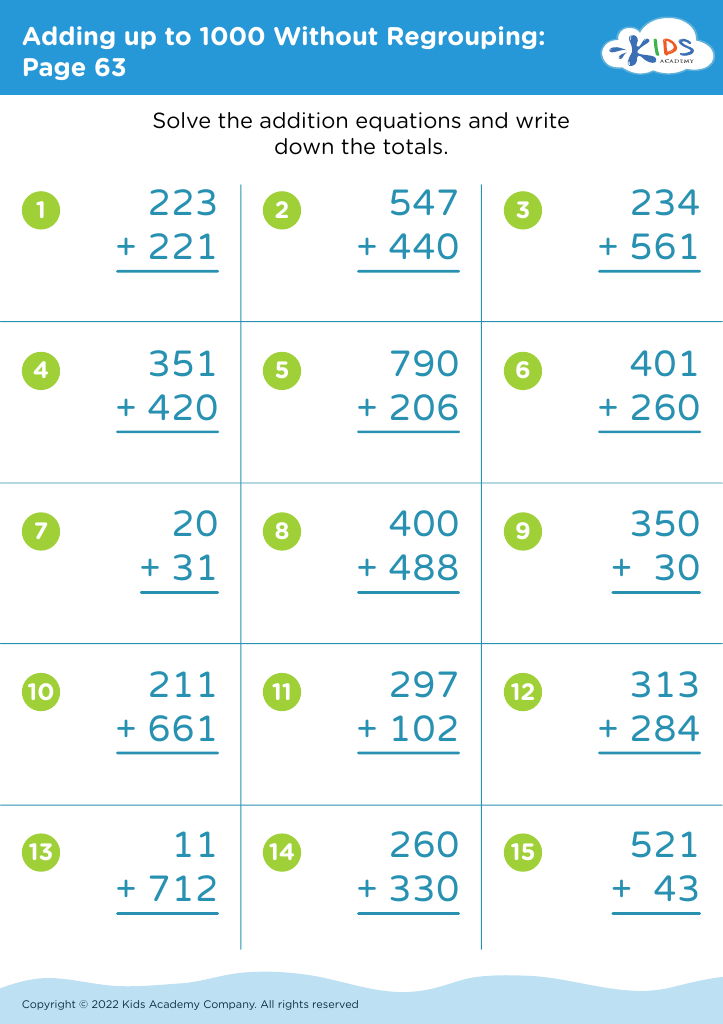
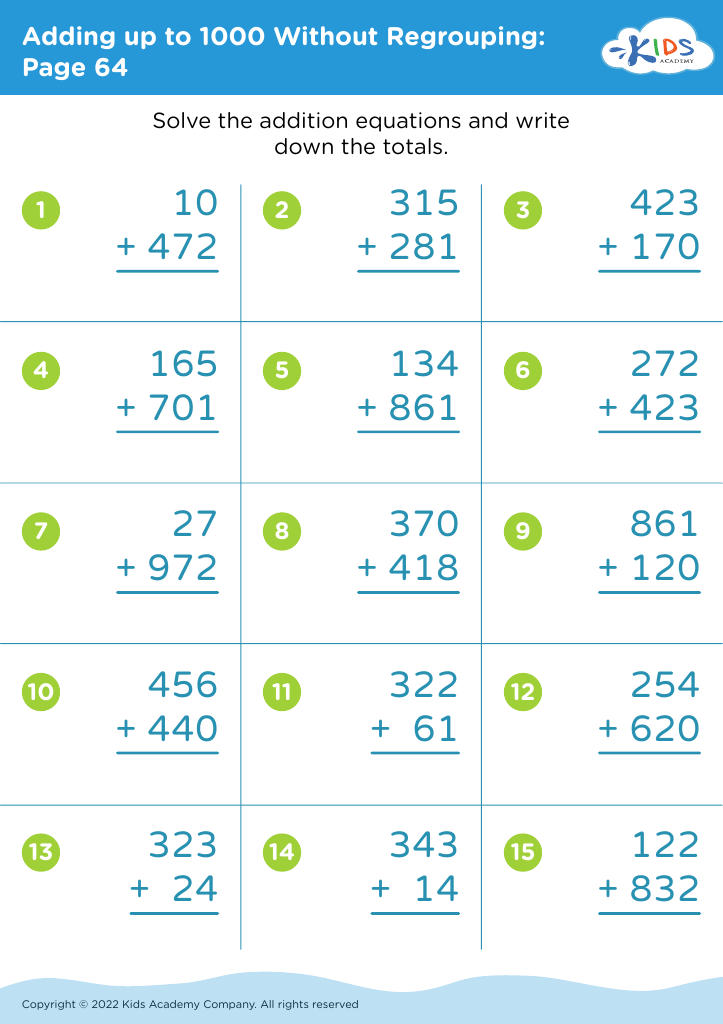
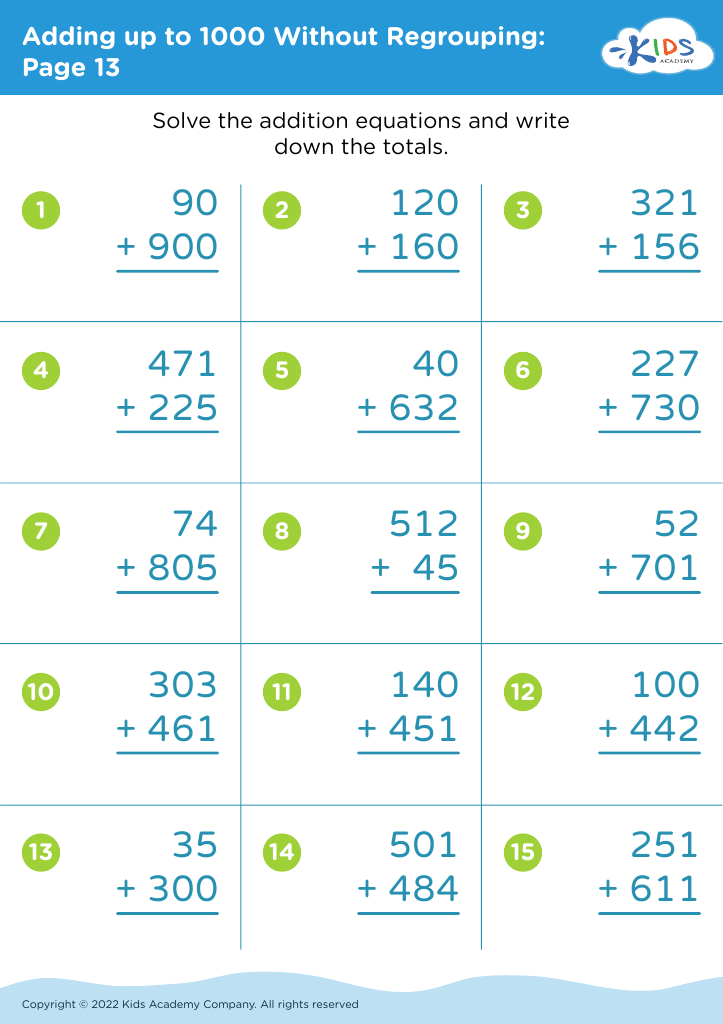
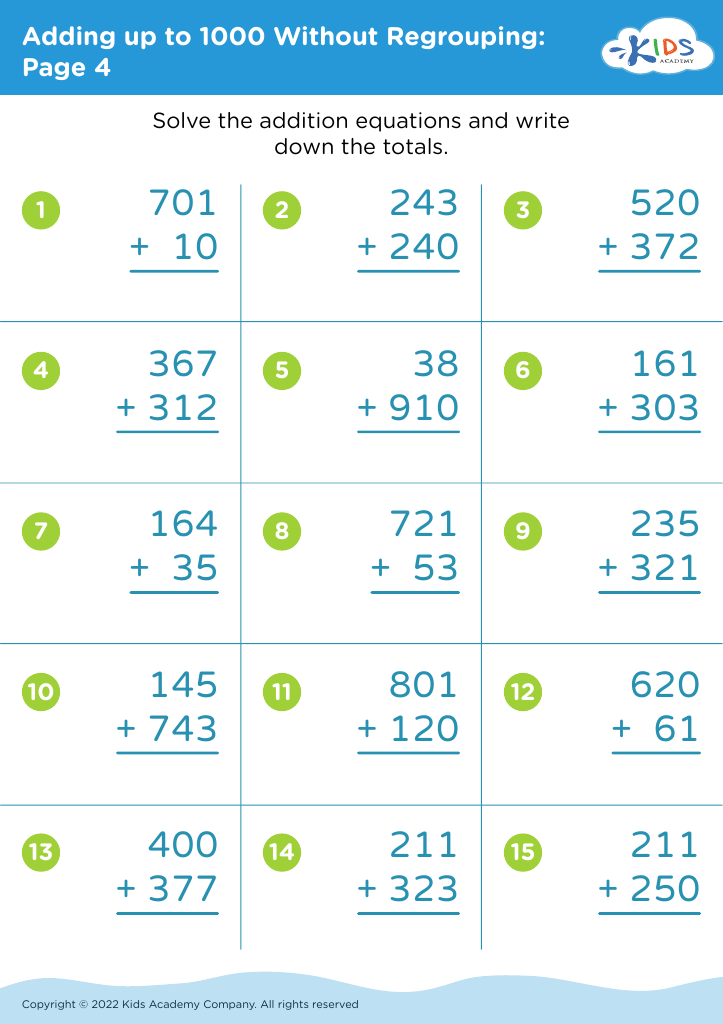
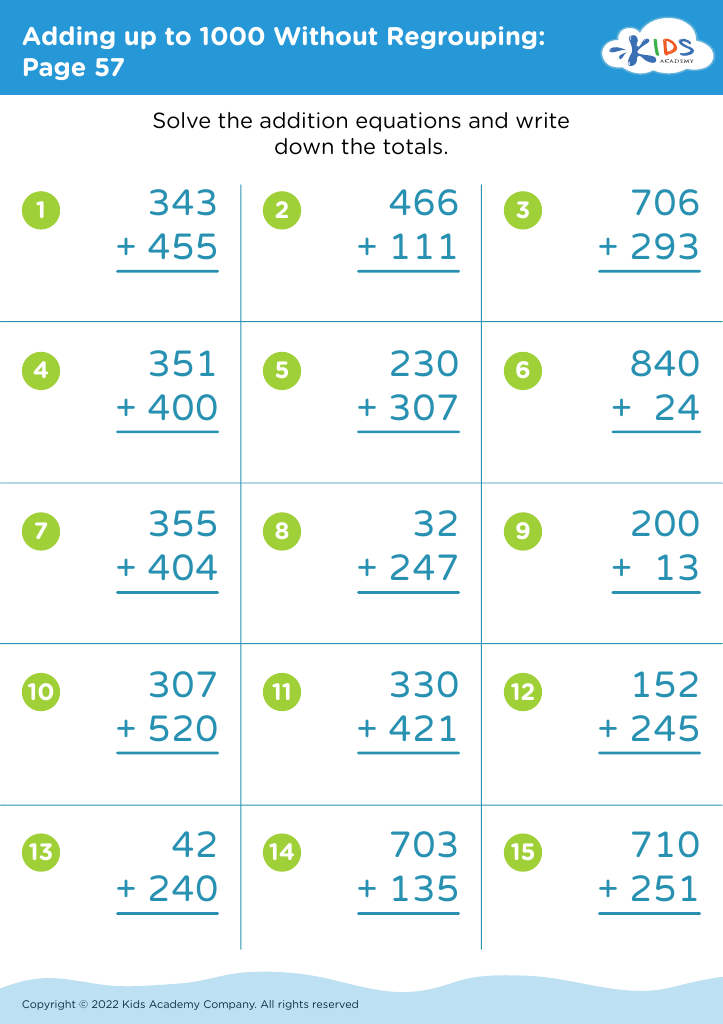
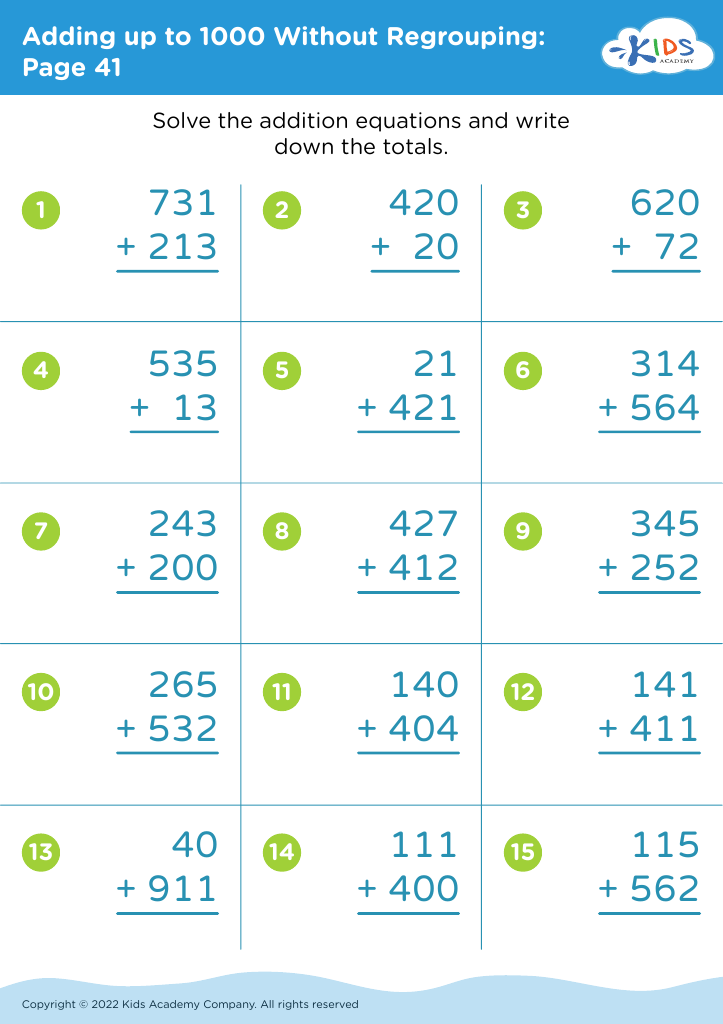
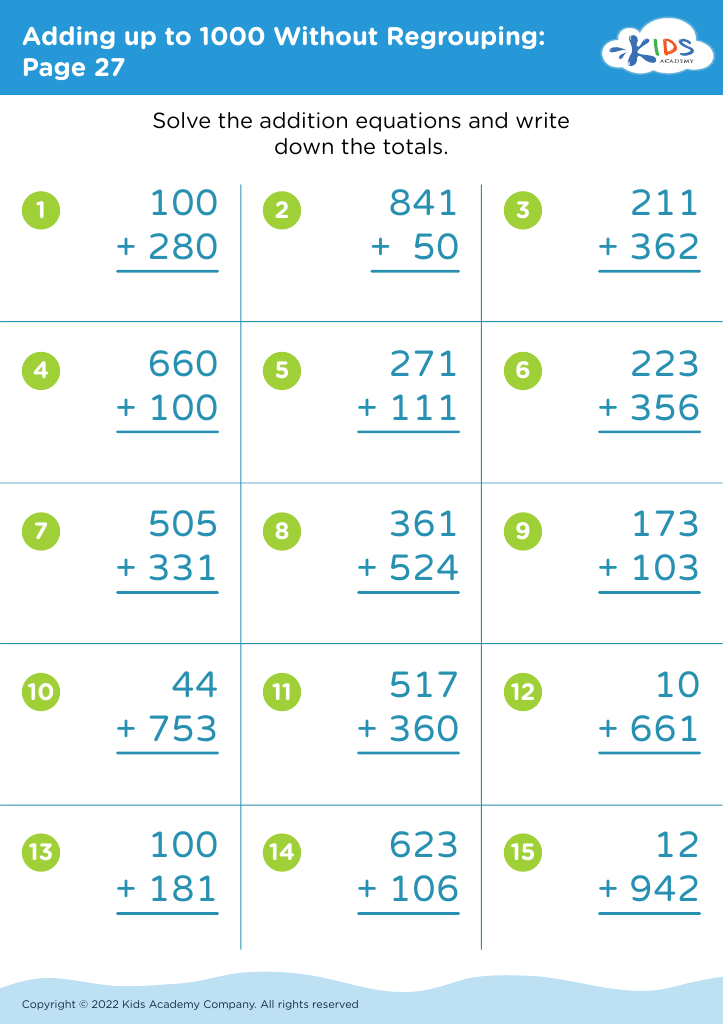
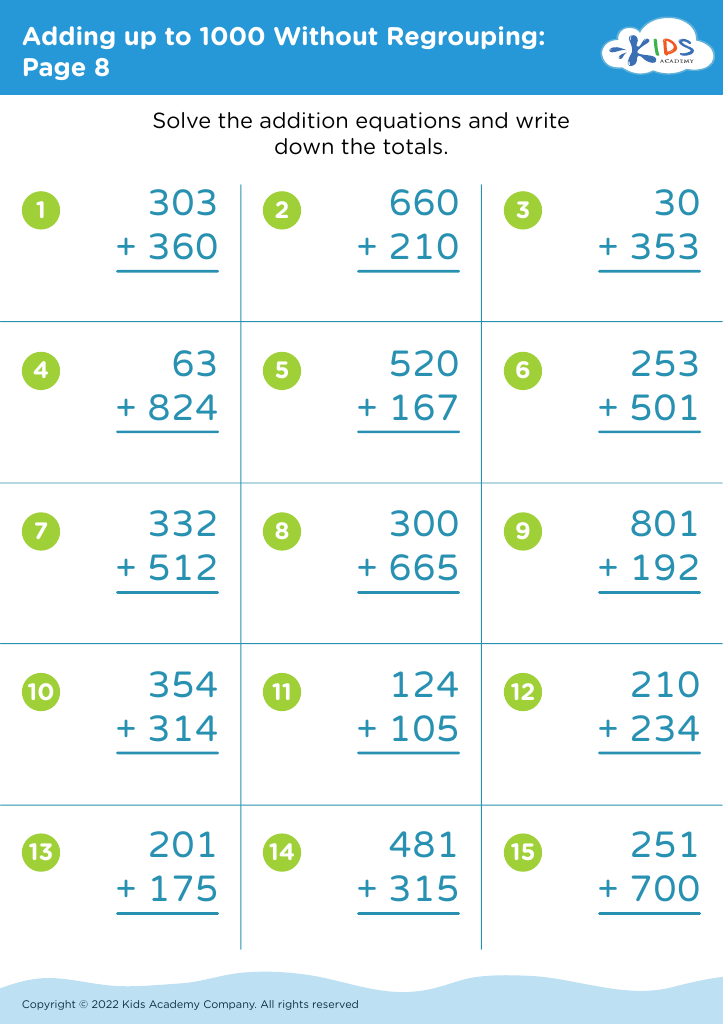
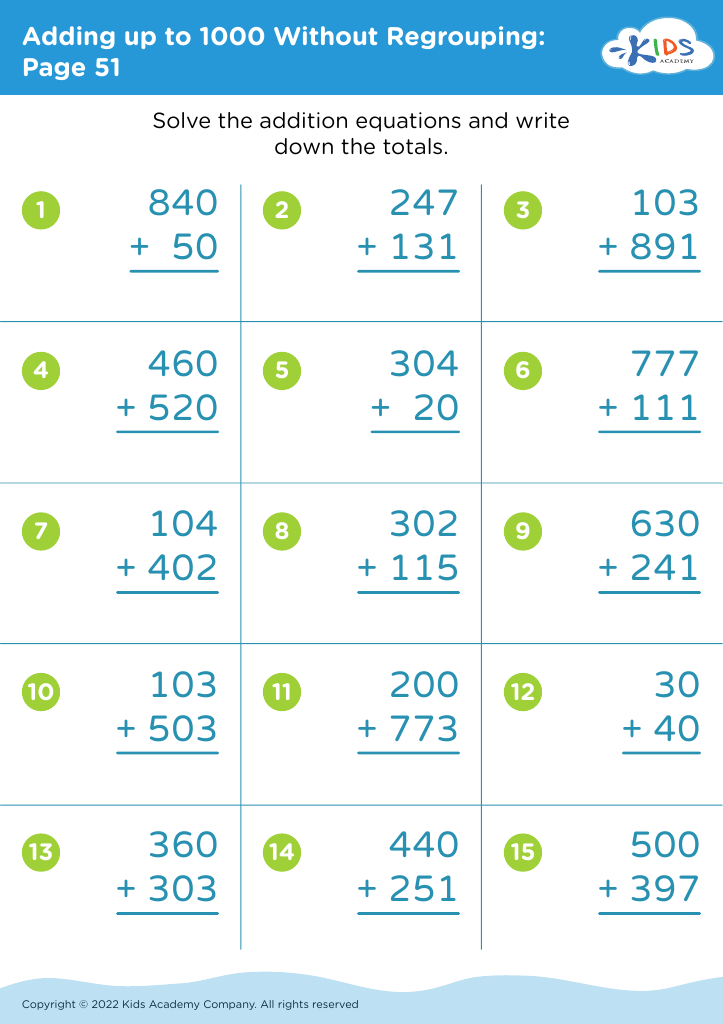
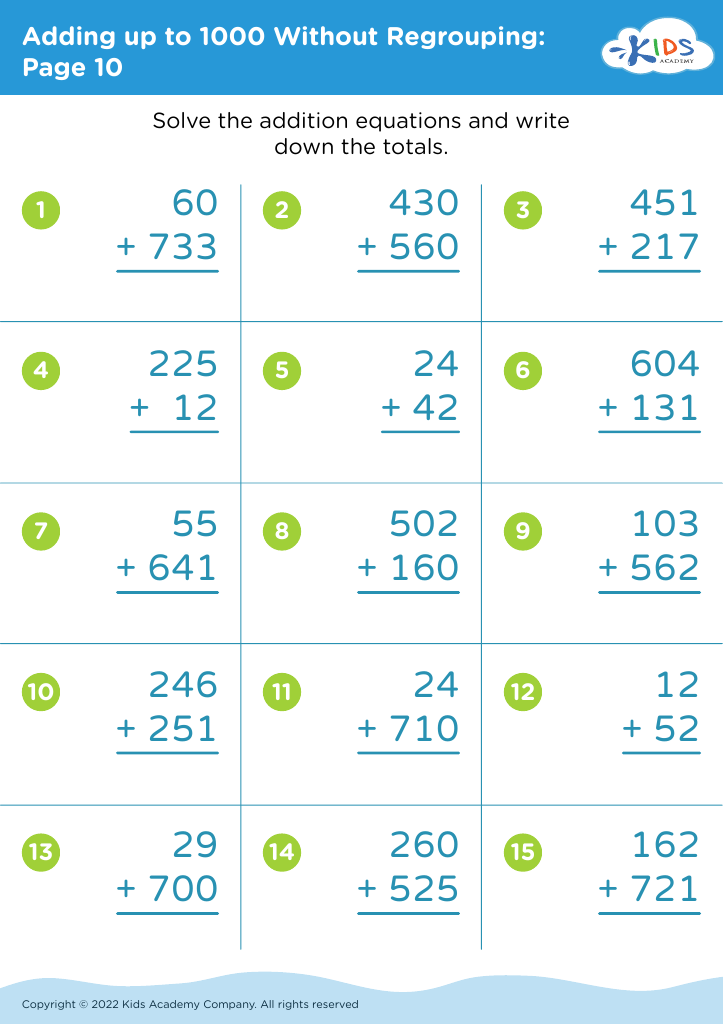
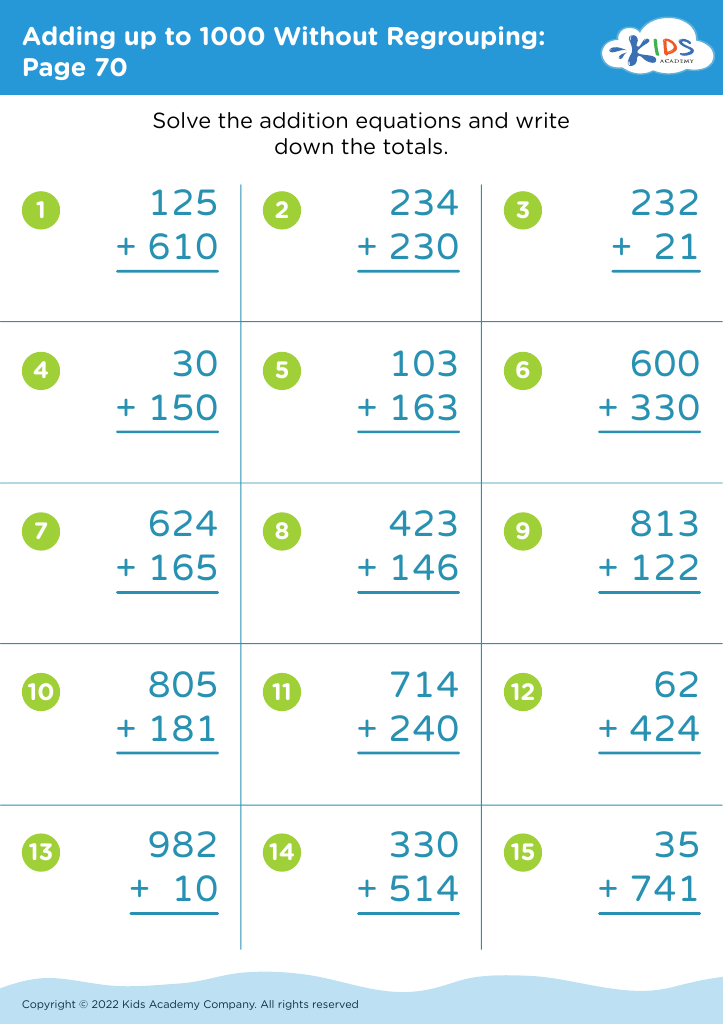
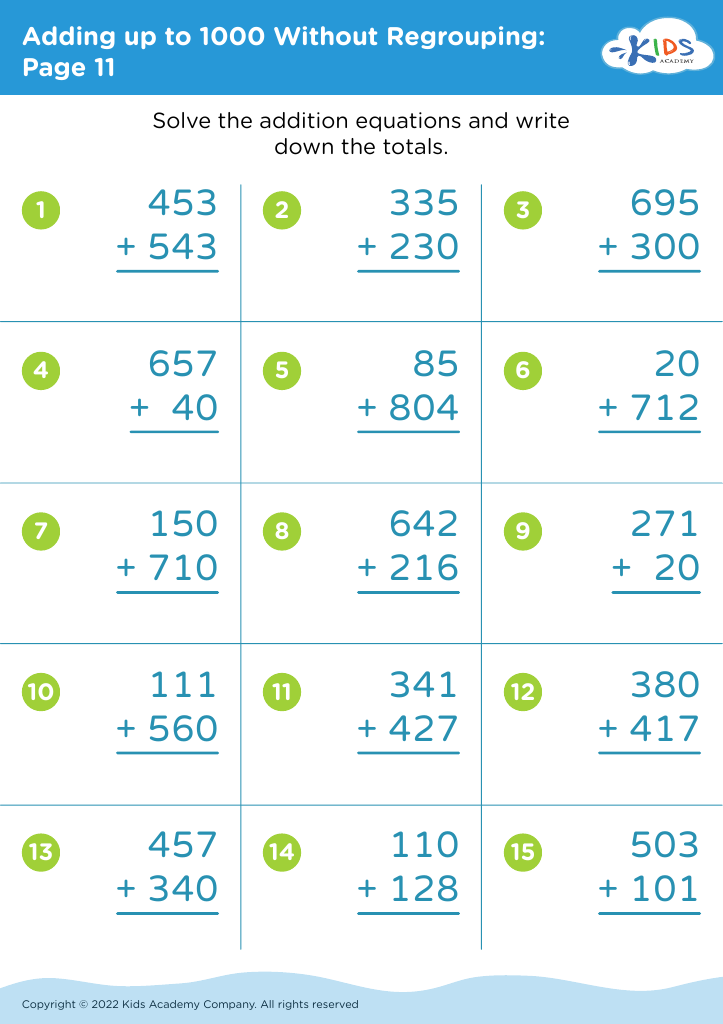
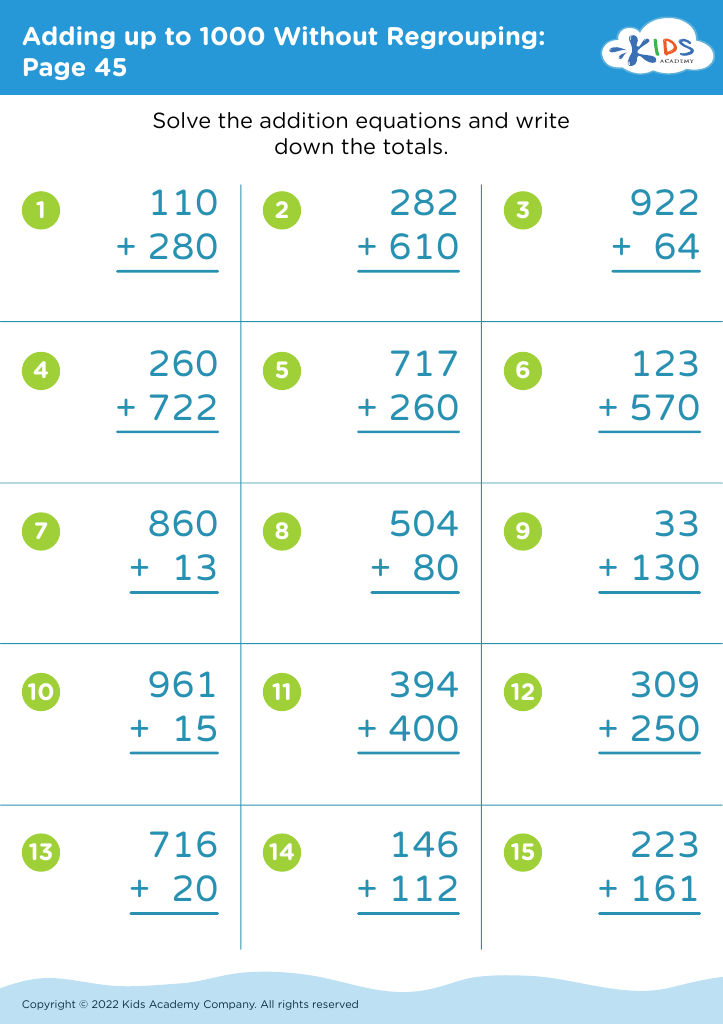
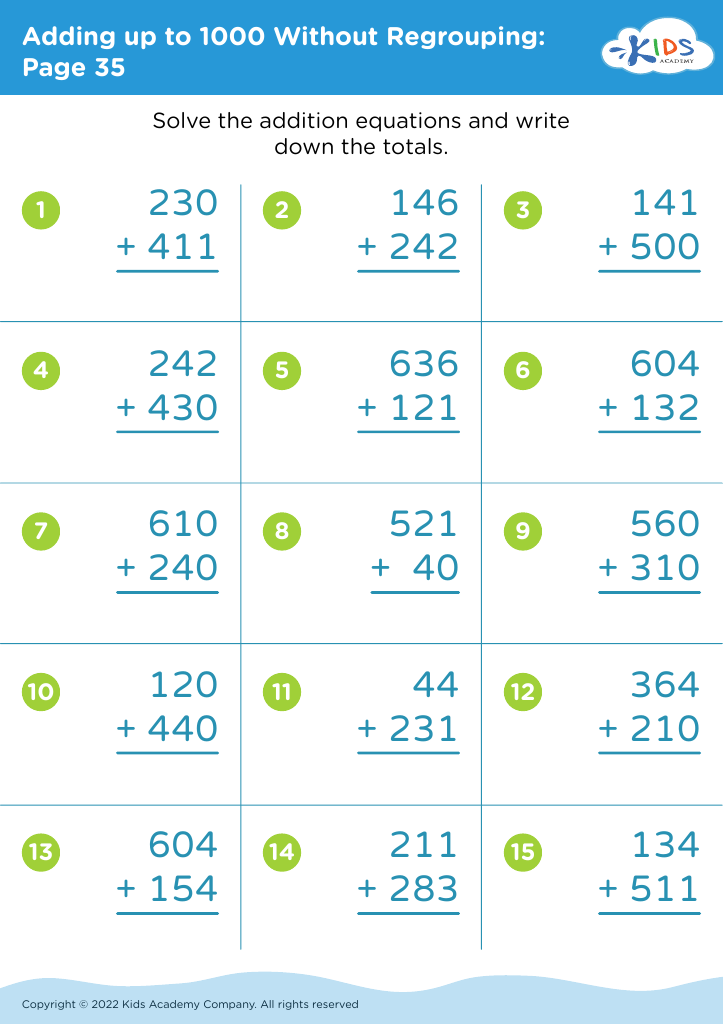
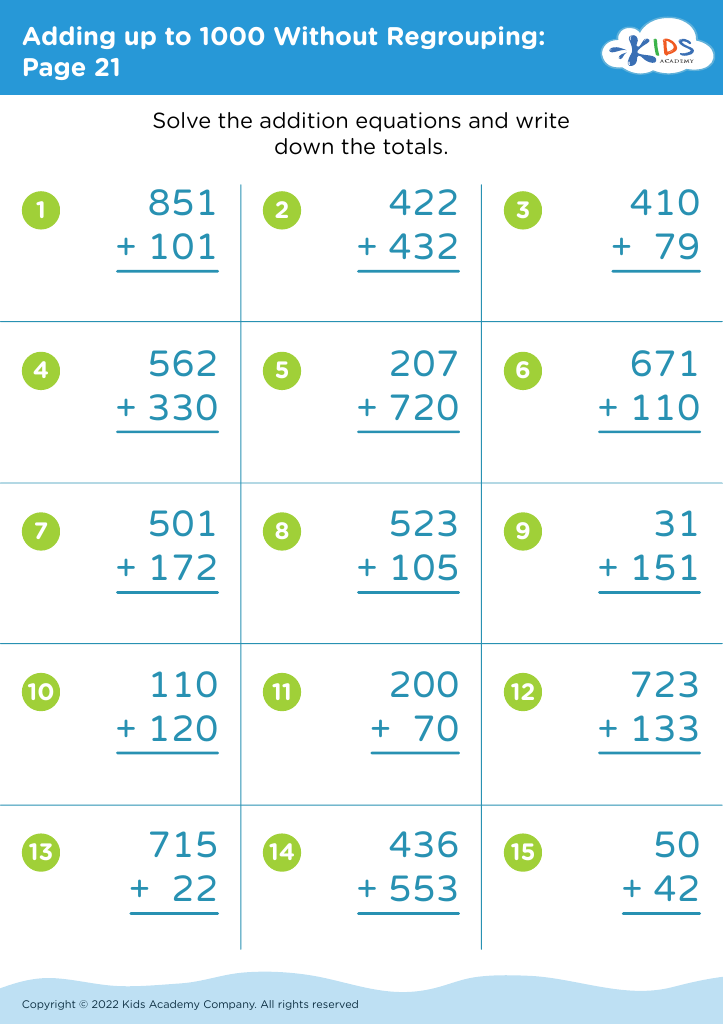
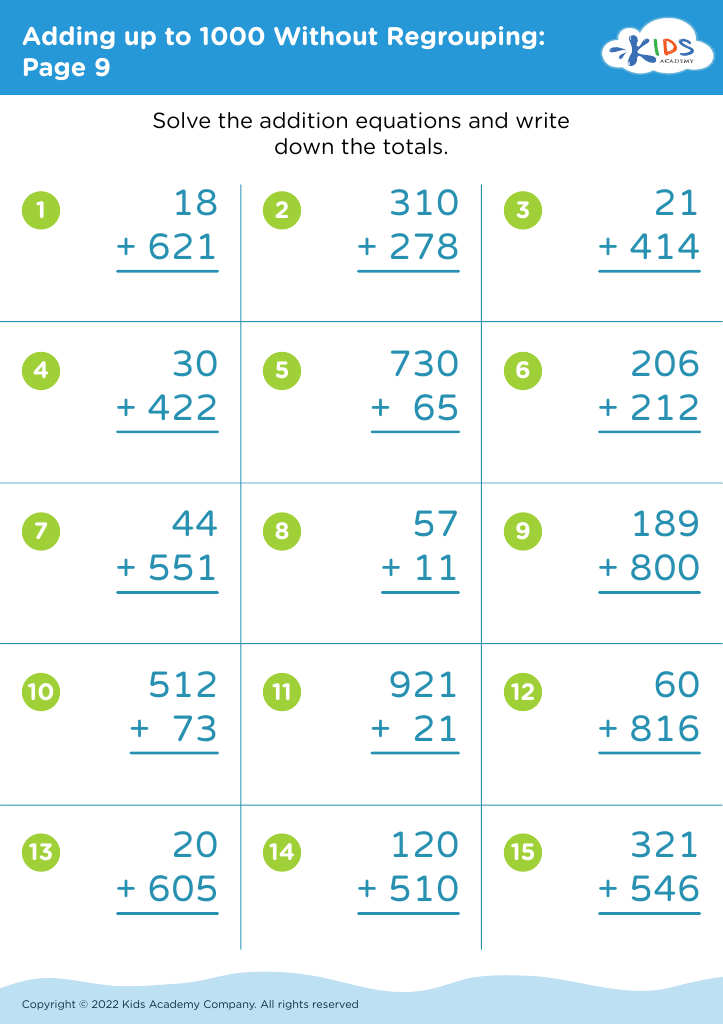
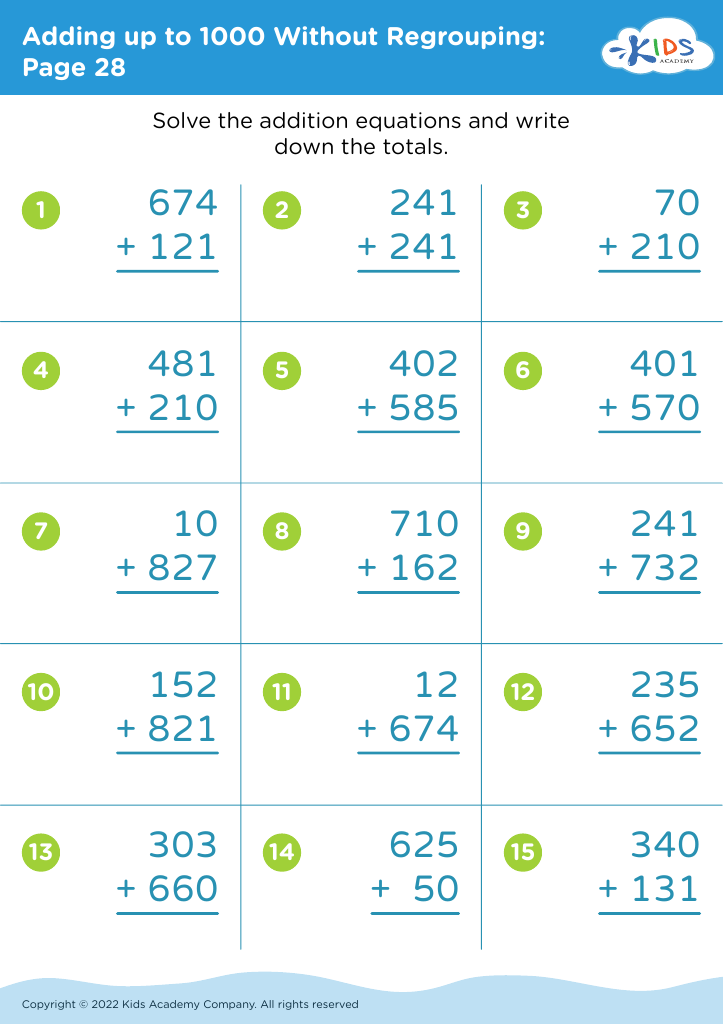
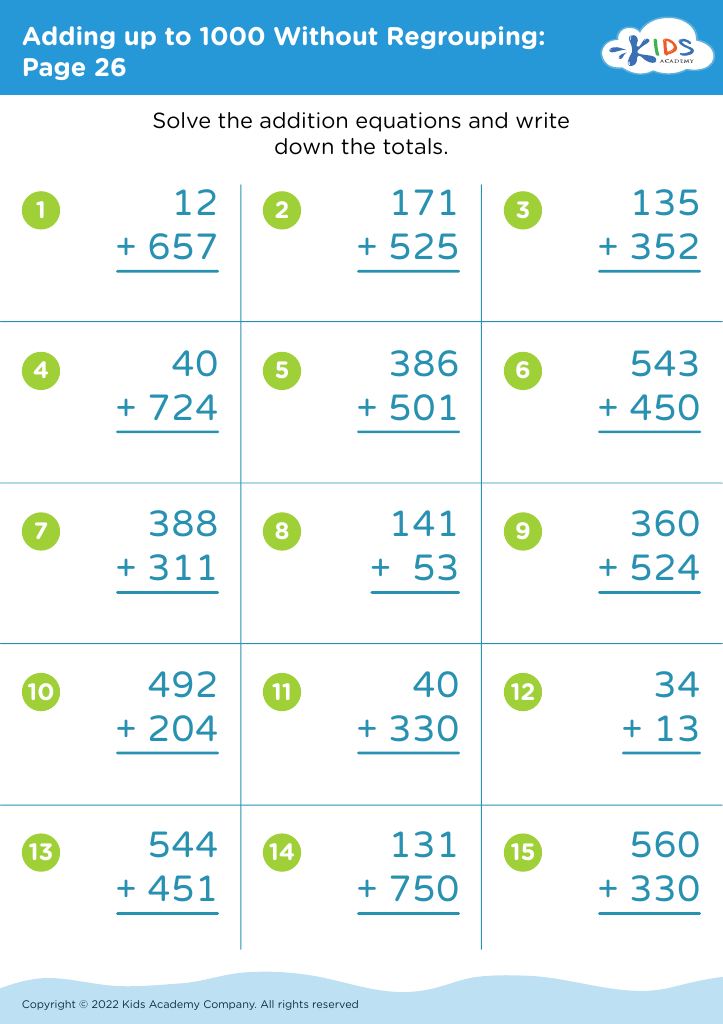
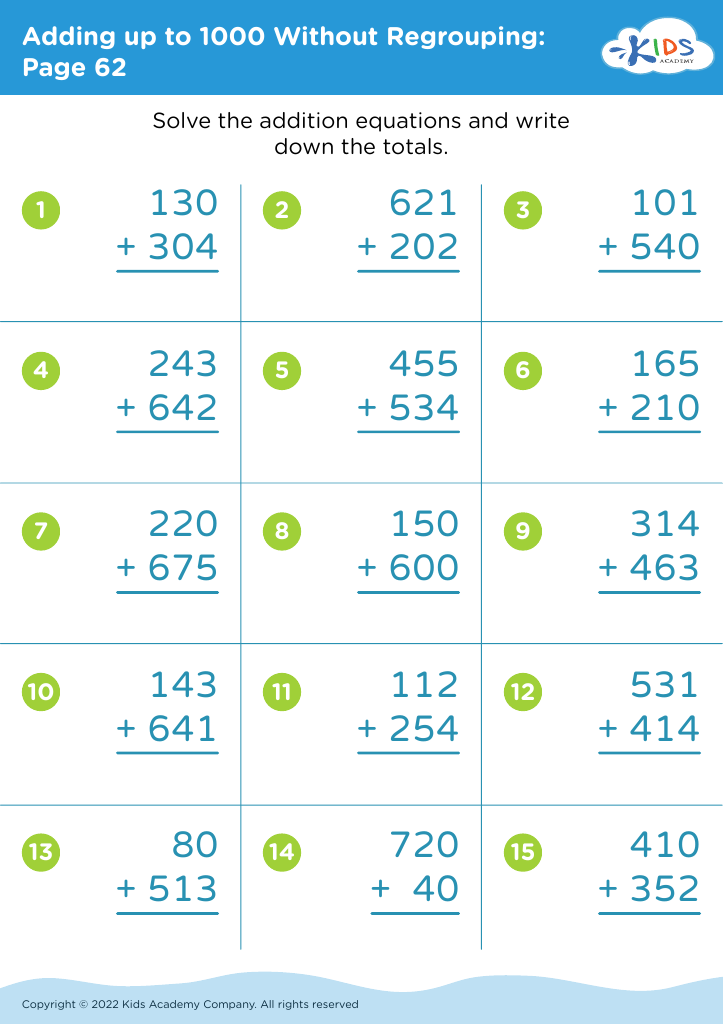
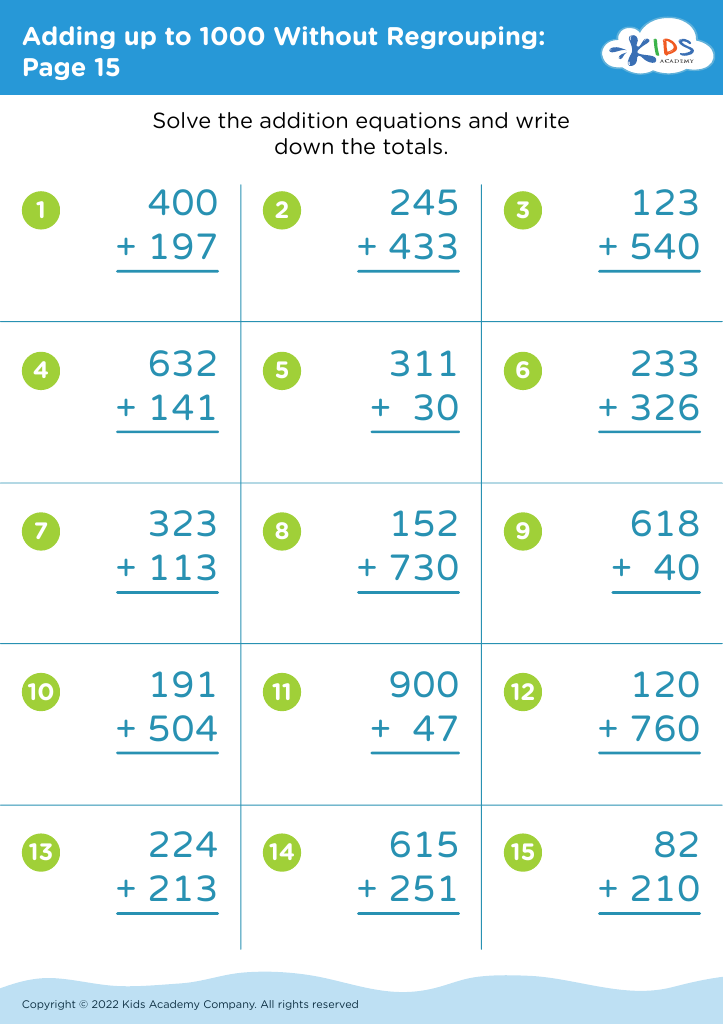
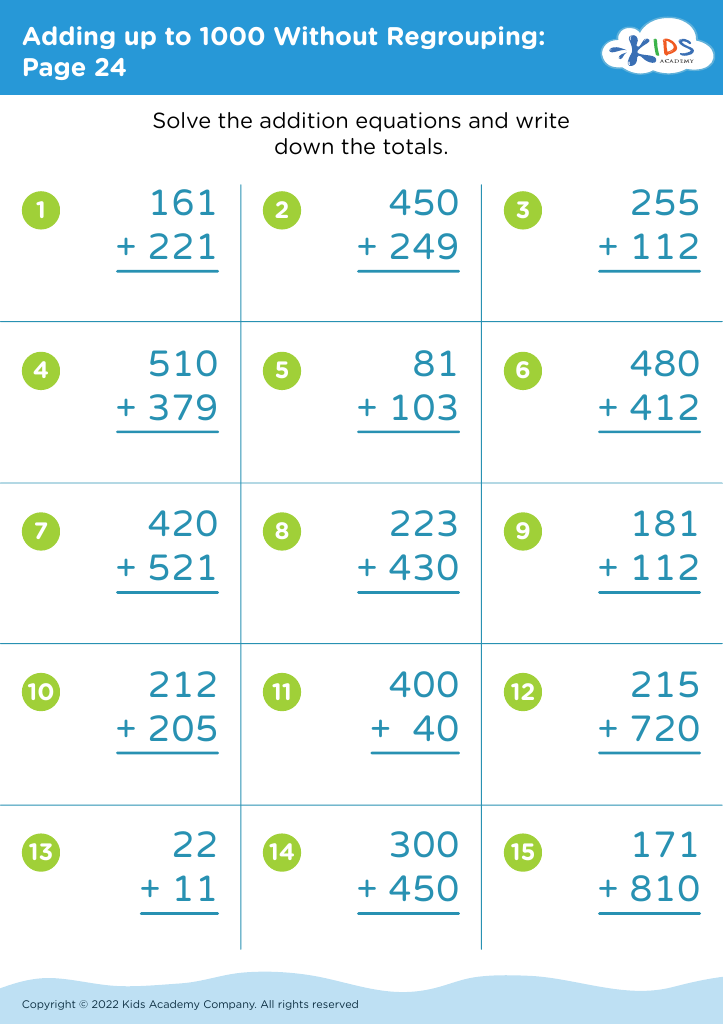



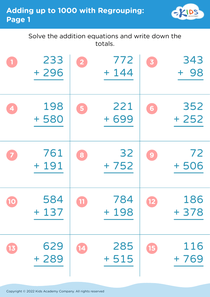
At ages 3-7, children lay the groundwork for their future learning and problem-solving skills. Teaching them to add up to 1000 without regrouping opens up significant educational benefits. First, it enhances their understanding of numbers, reinforcing the foundation for more complex math concepts they'll encounter later. This specific method teaches children about place value, number sense, and the relationships between units, tens, and hundreds.
Second, mastering this skill builds confidence and instills a sense of accomplishment. Because 3-7-year-olds thrive on encouragement, early success in math makes them more enthusiastic learners, willing to face more challenging tasks down the road. Parents and teachers observing this growth find it easier to tailor subsequent instructions to each child’s developmental stage.
Third, early math skills are highly predictive of later academic achievement not just in math but in literacy and overall learning ability. According to multiple studies, proficiency in early math correlates with later academic success and critical thinking skills.
By making math engaging and approachable early on, you set children on a path to academic success, promote a positive attitude toward education, and provide them with the tools necessary for lifelong problem-solving and cognitive development. Thus, focusing on math skills like adding up to 1000 without regrouping is an investment in their educational journey.