Filters

57 filtered results

Clear all filters
Favorites
With answer key
Interactive

57 filtered results

Difficulty Level

Grade


Check out this FREE Trial Lesson on Math for age 3-7!

Count up to 3 Objects

Favorites
With answer key
Interactive
  • 3-7
  • Visual perception
  • Math
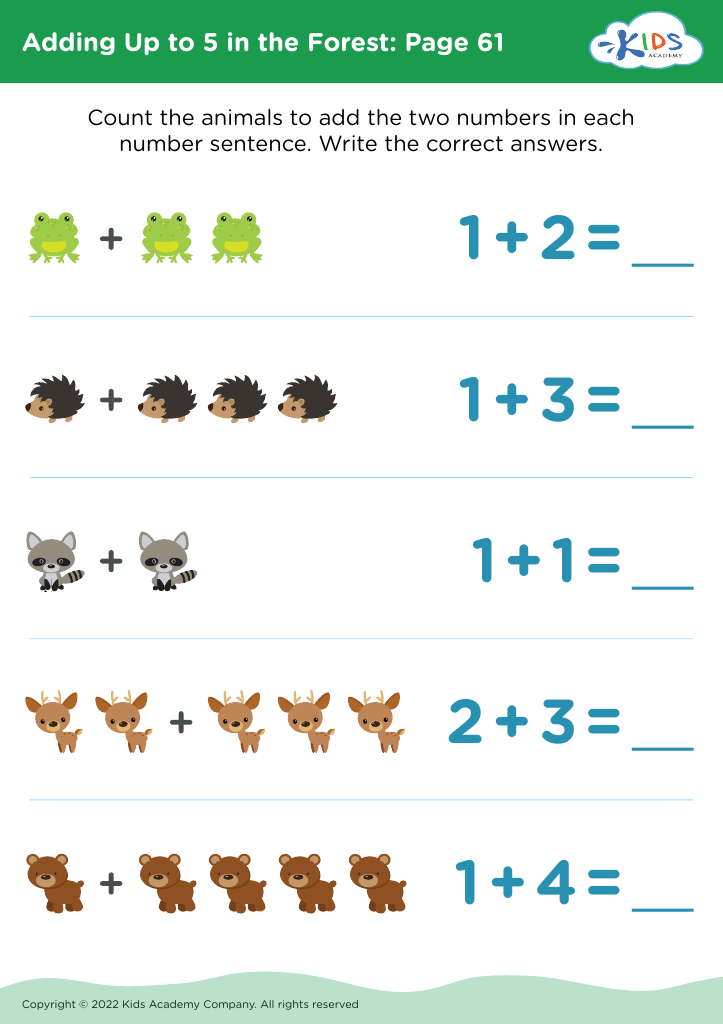
Adding Up to 5 in the Forest: Page 61
Worksheet
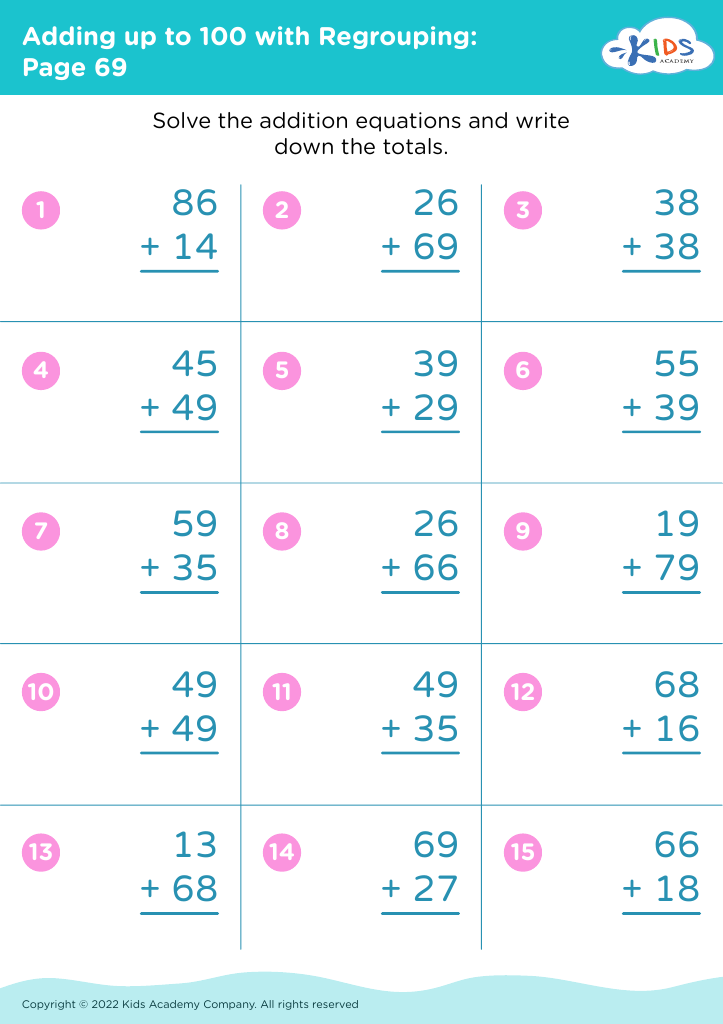
Adding up to 100 with Regrouping: Page 69
Worksheet
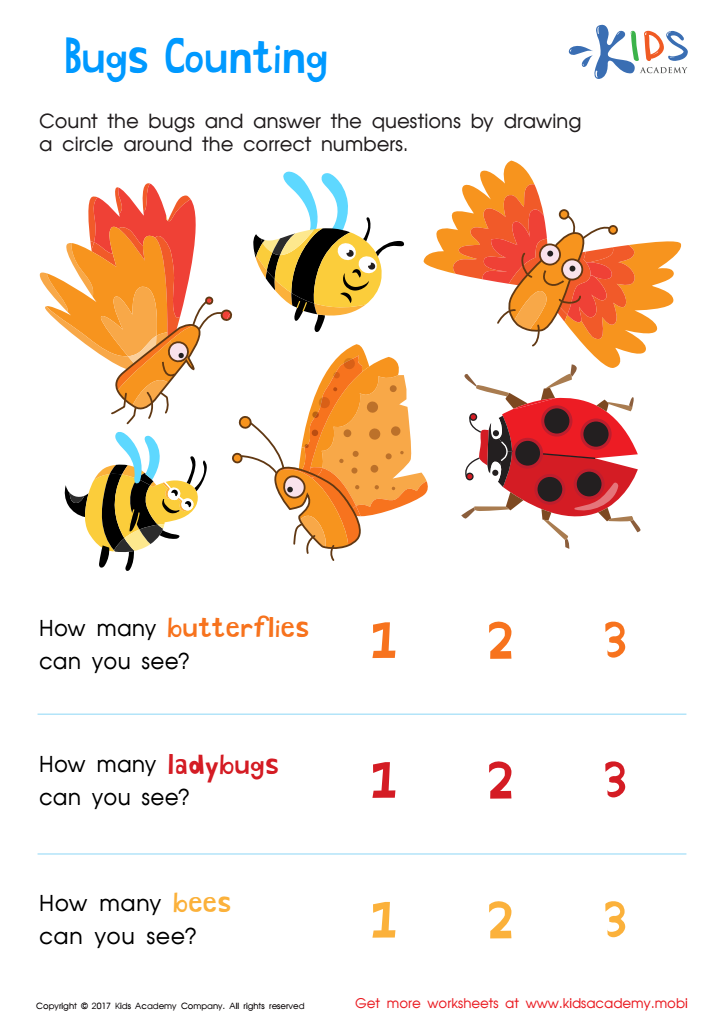
Bugs Counting Printable Worksheet

Bugs Counting Worksheet

Filled with bright reds, yellows, and oranges, your child will love solving these fun bug-related math problems.
Bugs Counting Worksheet
Worksheet
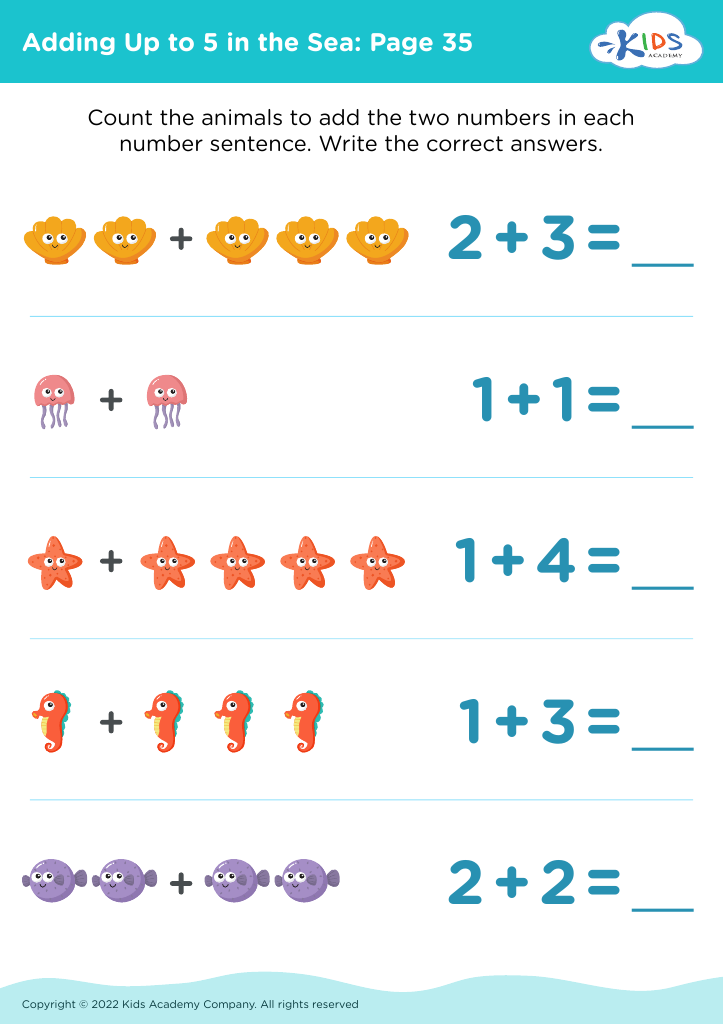
Adding Up to 5 in the Sea: Page 35
Worksheet
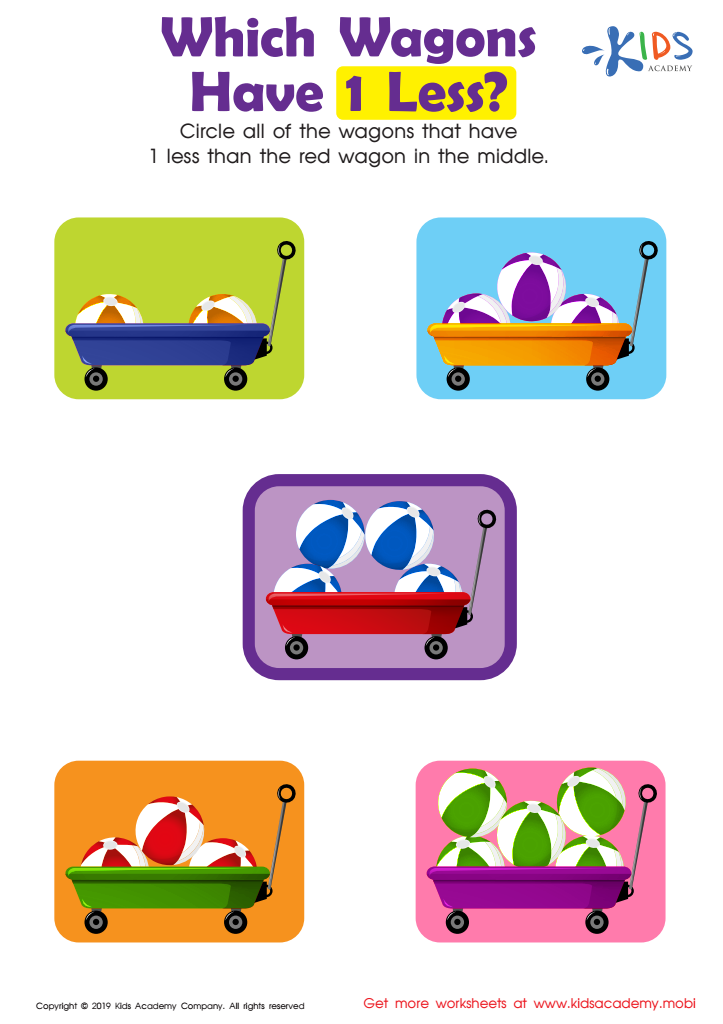
Which Wagons Have 1 Less? Worksheet

Which Wagons Have 1 Less? Worksheet

Test your kid's counting skills with a simple exercise. Ask them to count the balls in the five wagons shown and to circle the wagons with one less than the red wagon in the middle. This will give their brains a simple task that tests their knowledge of numbers.
Which Wagons Have 1 Less? Worksheet
Worksheet
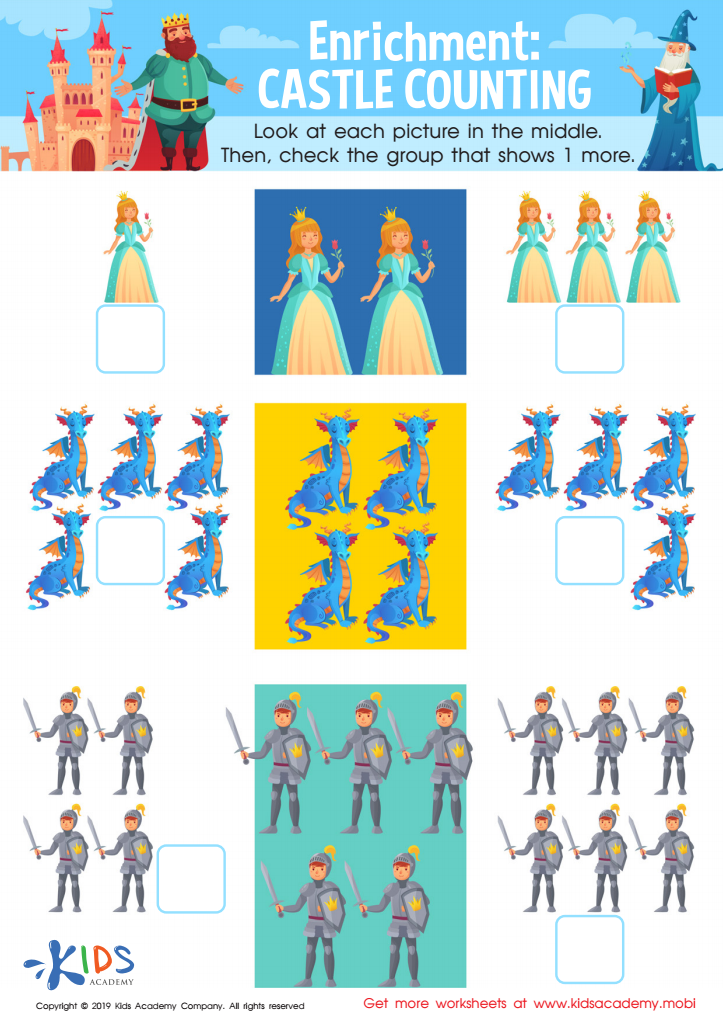
Enrichment: Castle Counting Worksheet

Enrichment: Castle Counting Worksheet

Help your kids learn to count. Start with easy counting of numbers as high as possible. Use the pictures in this printout. Point to the middle one, help them identify it and then count one more than it. Do this to help them get ready for more difficult math concepts like addition, subtraction and multiplication.
Enrichment: Castle Counting Worksheet
Worksheet
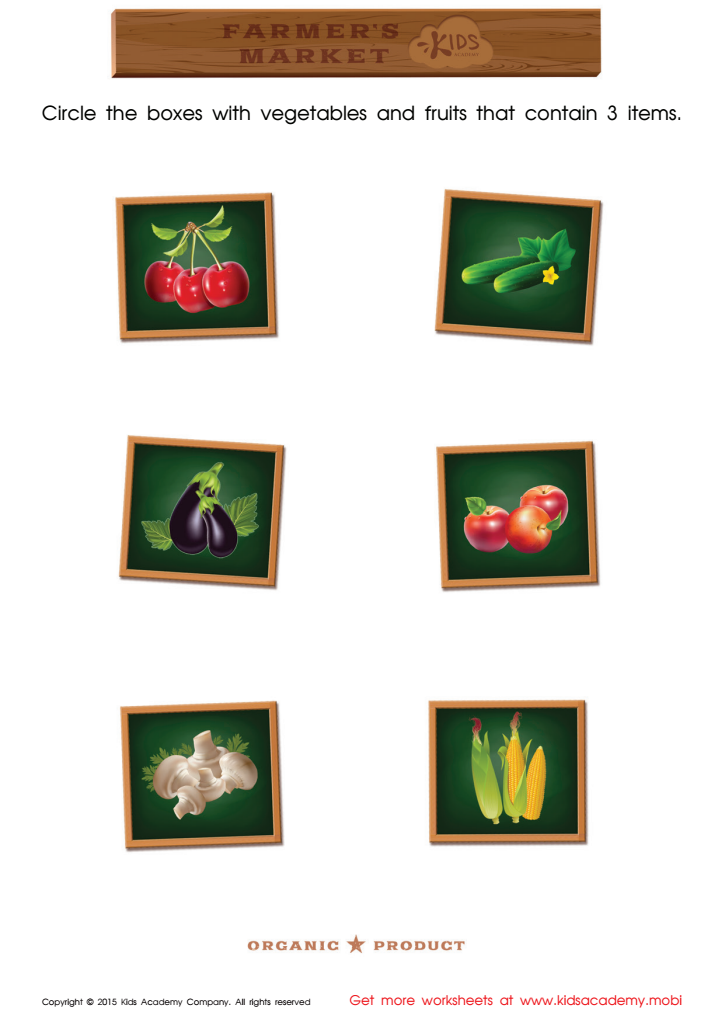
Math PDF Worksheets - Count and Match Vegetables: 1 – 5

Count and Match Vegetables 1 – 5 Math Worksheet
Get your kindergartener to match the same number of vegetables with the boxes using this fantastic math worksheet. Using the Singapore approach, this printable worksheet makes math problems easy and fun for kids. Want more free worksheets? Click here for Kids Academy's selection!
Count and Match Vegetables 1 – 5 Math Worksheet
Worksheet
Size Comparison Worksheet

Classifying by Size Sorting Worksheet
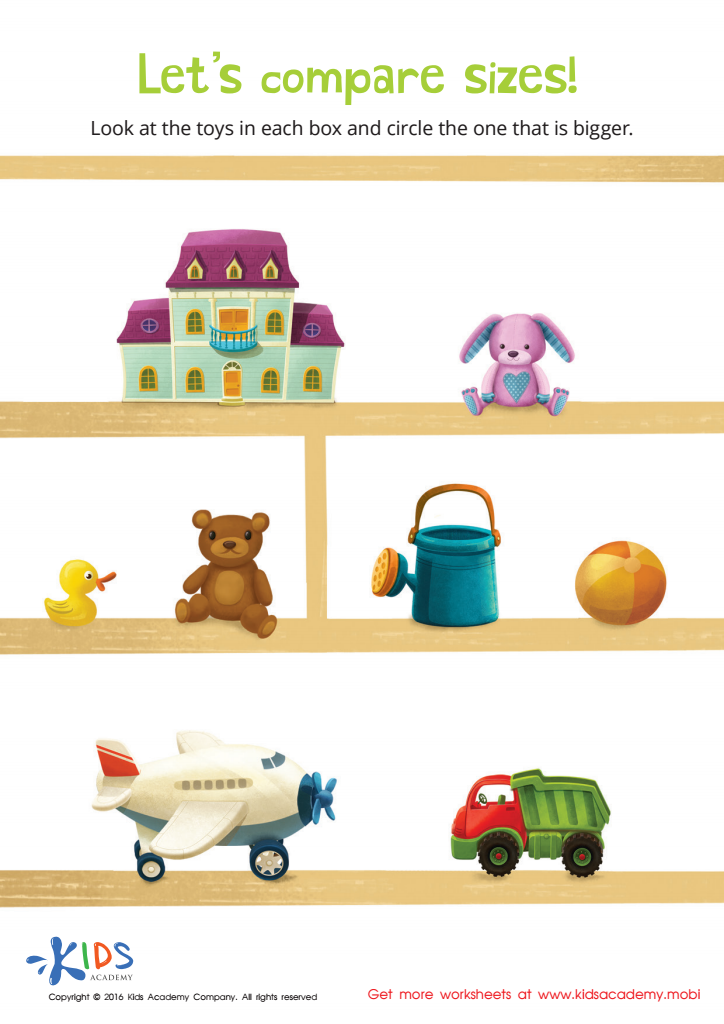
Help your preschooler recognize differences in size using this fun worksheet! Your child will engage in important spatial recognition and problem-solving skills while talking with you about objects that can be small or large. Enjoy the vibrant pictures together!
Classifying by Size Sorting Worksheet

Worksheet
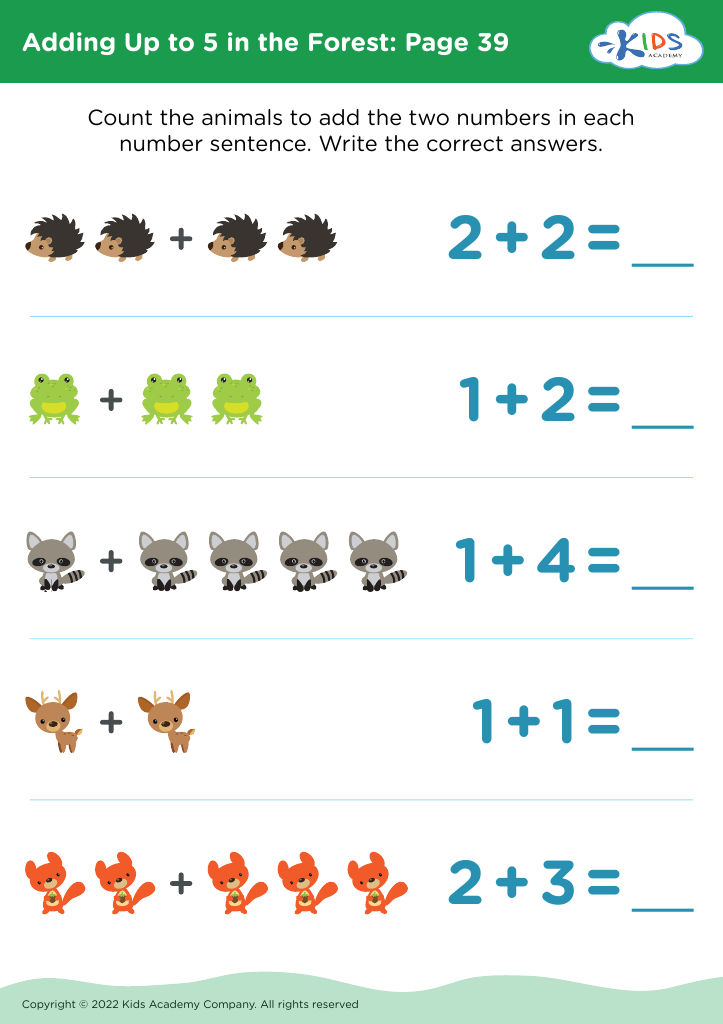
Adding Up to 5 in the Forest: Page 39
Worksheet


... 2 3

Visual perception is a critical component of early math development for children aged 3 to 7. This skill involves the ability to interpret and make sense of visual information, which is essential for understanding shapes, sizes, patterns, and spatial relationships—all foundational aspects of mathematics. Parents and teachers should prioritize visual perception skills because they directly influence a child's ability to recognize numbers, solve problems, and grasp mathematical concepts.

For example, a child who can visually differentiate shapes is better equipped to understand geometric terms like "triangle" or "circle," while those who can perceive patterns will excel in recognizing sequences—key for early addition and subtraction tasks. As students progress, strong visual perception provides a groundwork for more complex mathematical operations, such as measurement and problem-solving.

Encouraging activities like matching games, puzzles, and construction tasks can enhance these skills. Furthermore, fostering visual perception enriches a child's overall cognitive development and boosts confidence, making learning more enjoyable. When parents and teachers invest in strengthening these skills, they help create a solid foundation for future success in math, ultimately boosting academic performance and fostering a positive attitude towards learning.