Time Worksheets for Ages 3-7 - Page 2
25 filtered results
-
From - To
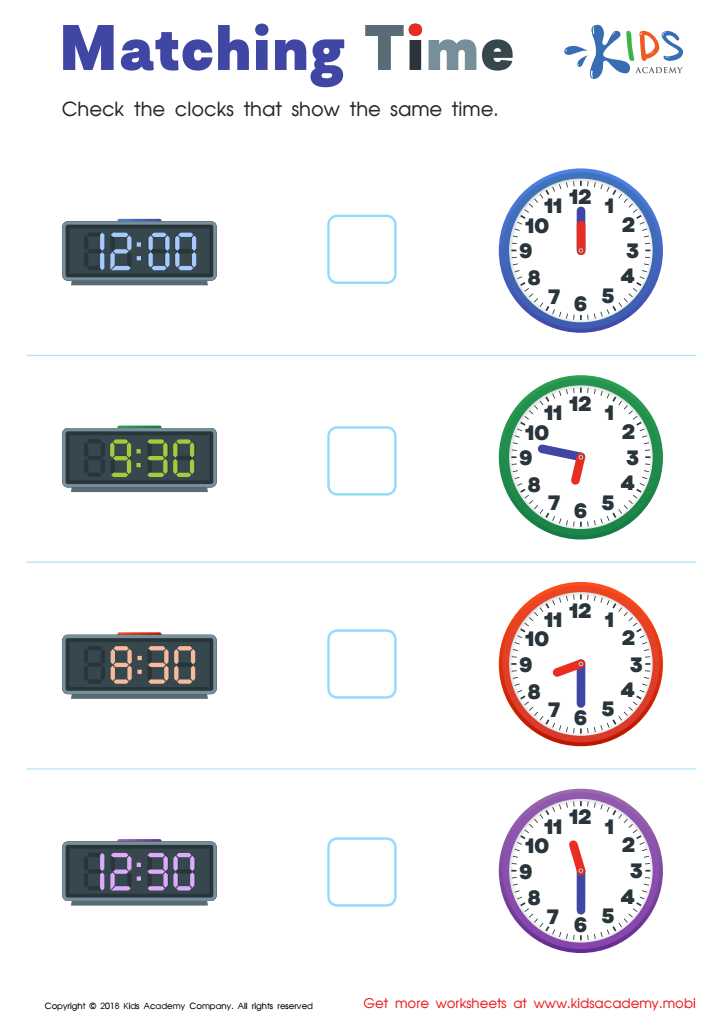
Matching Time Worksheet
 Assign to My Students








Time management skills are crucial for children aged 3-7 as they lay the foundation for future academic and life success. At this developmental stage, establishing routines helps children understand structure and order, promoting predictability and security which are vital for emotional stability. By incorporating tools such as visual schedules, timers, and consistent daily routines, children learn to anticipate what happens next and transition smoothly between activities, reducing anxiety and tantrums.
Most importantly, learning the concept of time fosters self-discipline and responsibility. When children understand that certain tasks have specific durations, they start developing patience and the ability to wait their turn, which is integral to social interactions. Additionally, time management skills encourage independence as children gradually learn to complete tasks within a given timeframe, such as getting dressed or tidying up toys, enhancing their sense of accomplishment and self-esteem.
Furthermore, these skills have long-term academic benefits. Children who grasp the concept of time can better handle the structure of school, prioritize tasks, and meet deadlines. Teachers and parents providing early exposure to time management create a positive attitude towards organization, aptly preparing children to face more complex scheduling and responsibilities in the future. Thus, focusing on helping young children understand and manage time is an investment in their holistic developmental growth.








