Contextual understanding Reading Worksheets for Ages 3-7
10 filtered results
-
From - To
Introduce young learners, aged 3-7, to the world of contextual understanding with our engaging reading worksheets! Designed to foster early reading skills, these activities focus on helping kids grasp the meaning of words and sentences within a story. Through fun exercises and colorful illustrations, children are encouraged to use context clues to improve comprehension and vocabulary. Perfect for homeschooling or classroom settings, our worksheets aim to build a strong foundation for fluent reading. Visit our site at Kids Academy to explore these essential resources tailored for young minds to thrive in their educational journey.
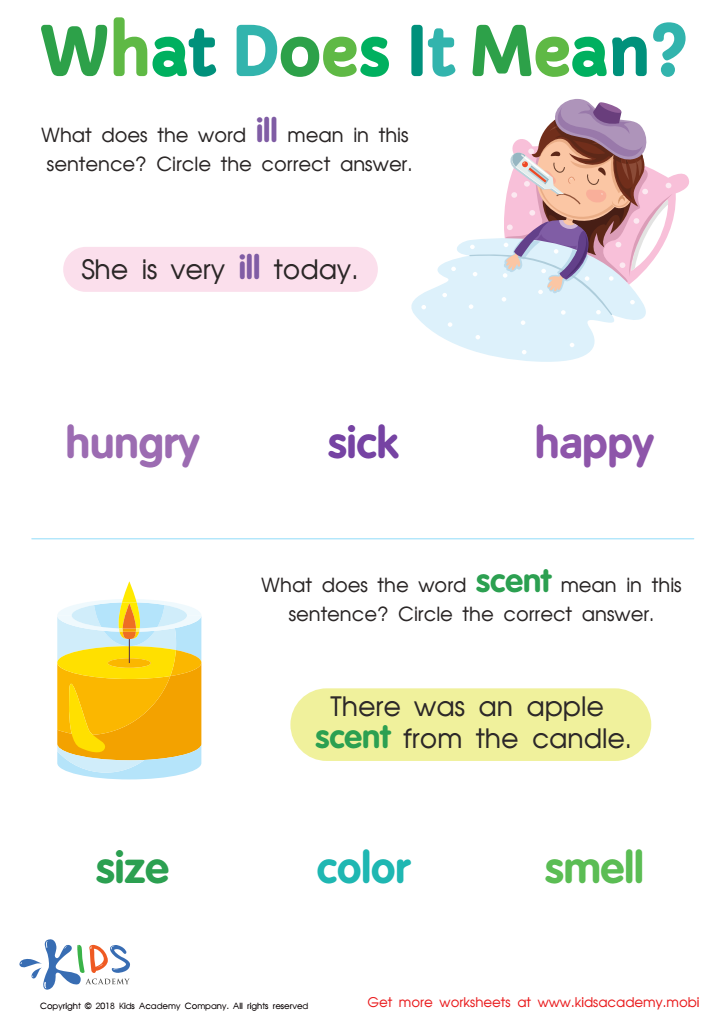
What Does It Mean? Worksheet
 Assign to My Students
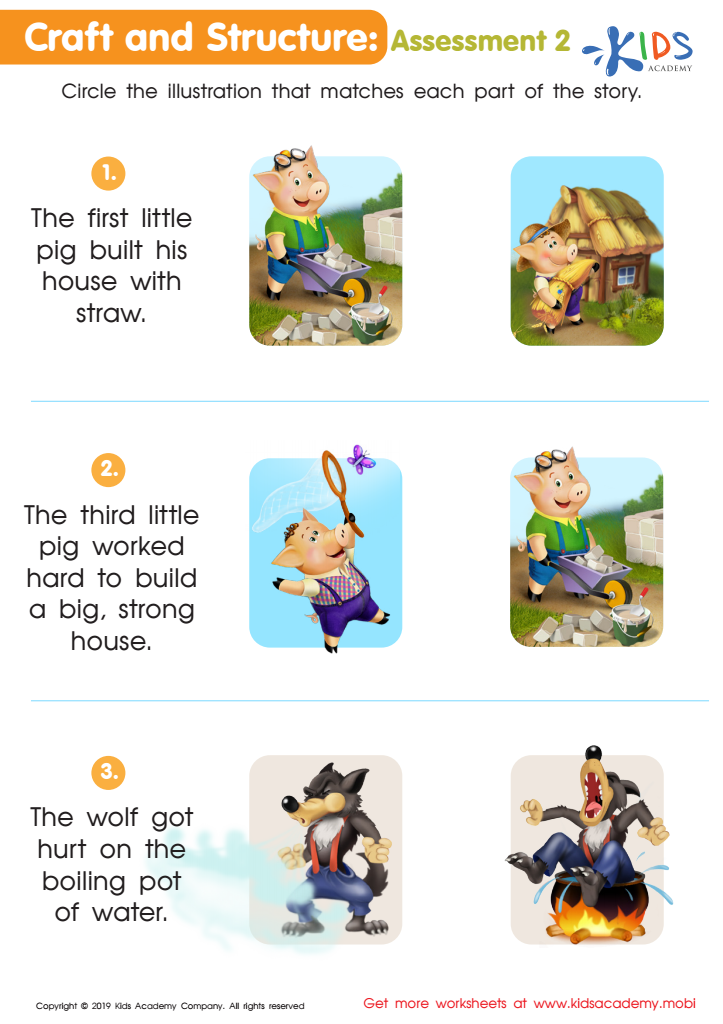
Craft and Structure: Assessment 2 Worksheet 2
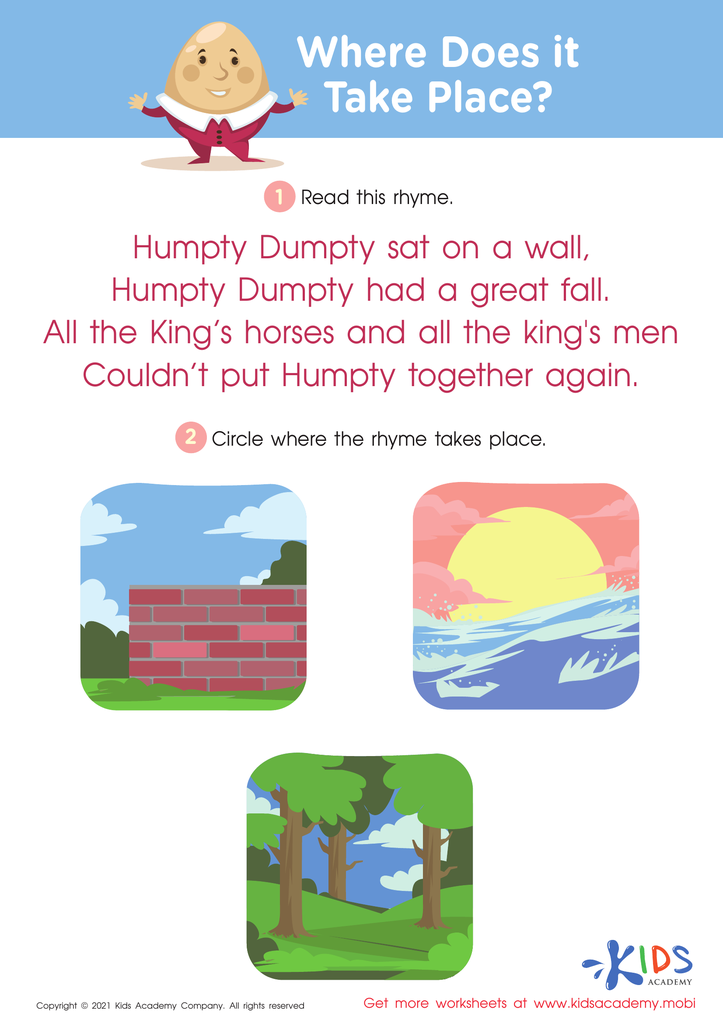
Where Does It Take Place? Worksheet
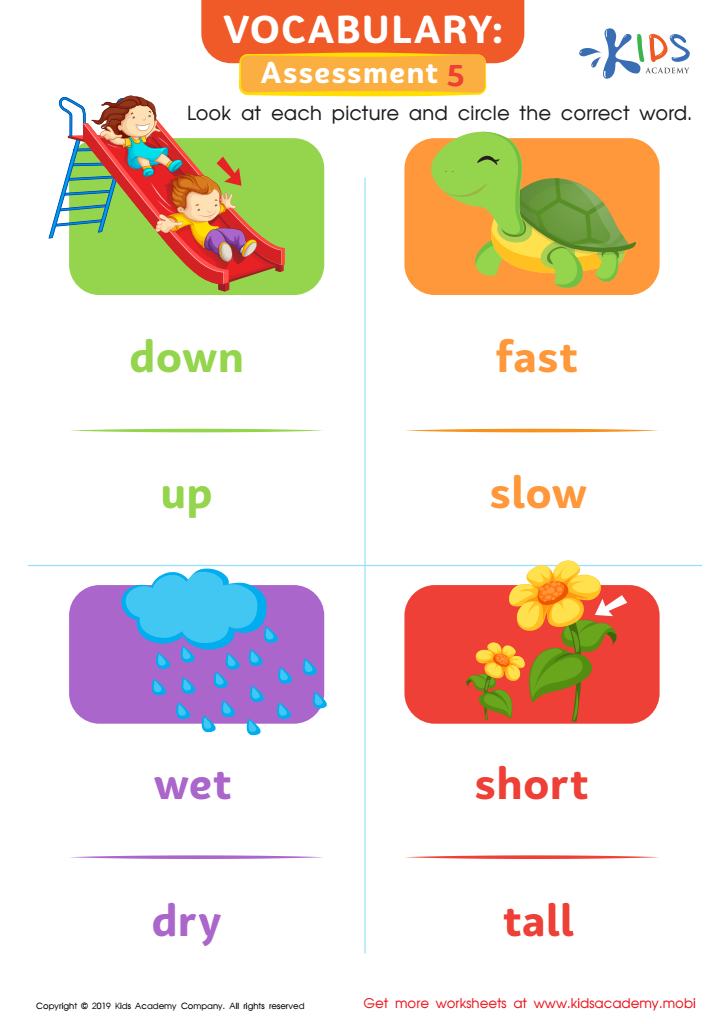
Vocabulary: Assessment 5 Worksheet
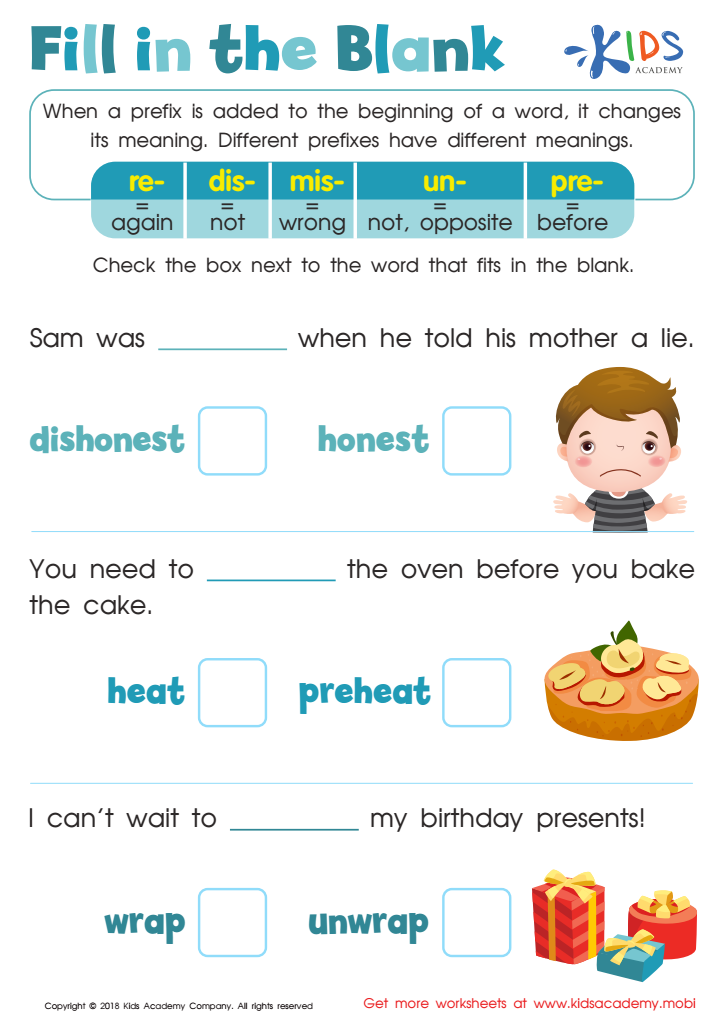
Reading: Fill in the Blank Worksheet
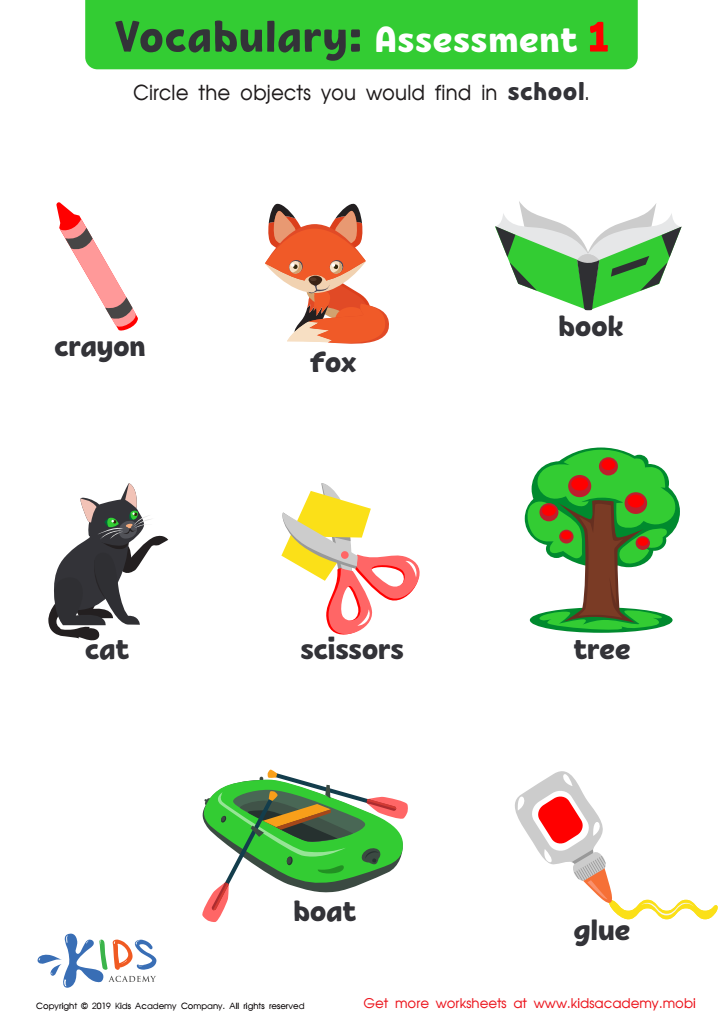
Vocabulary: Assessment 1 Worksheet
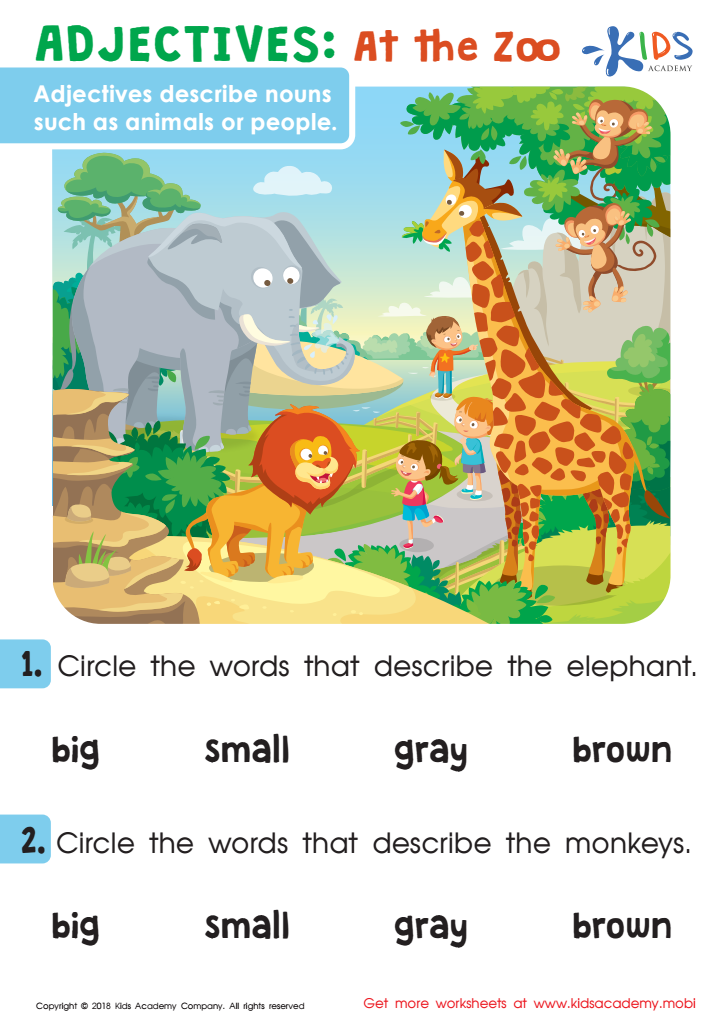
Adjectives: At The Zoo Worksheet
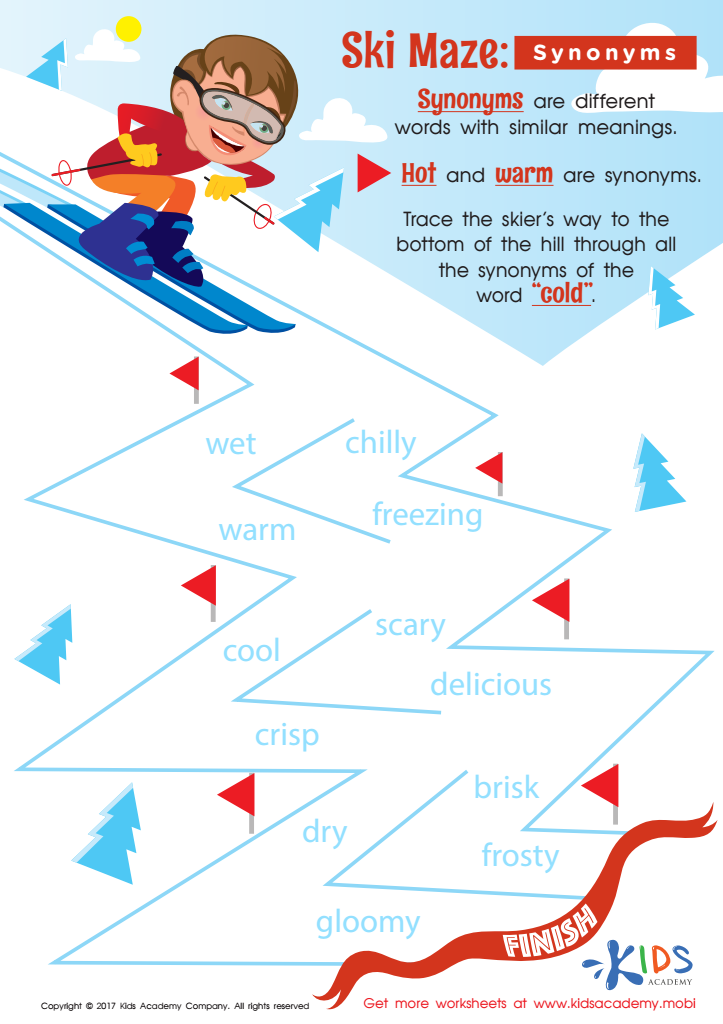
Free Printable Synonym Worksheet
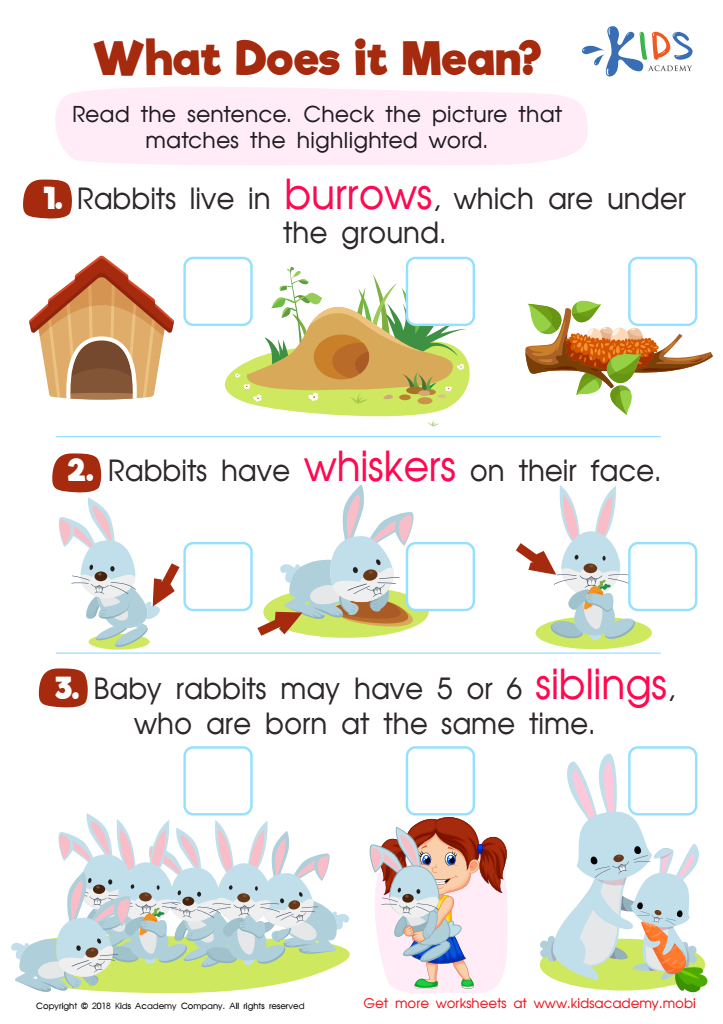
What Does It Mean? Worksheet
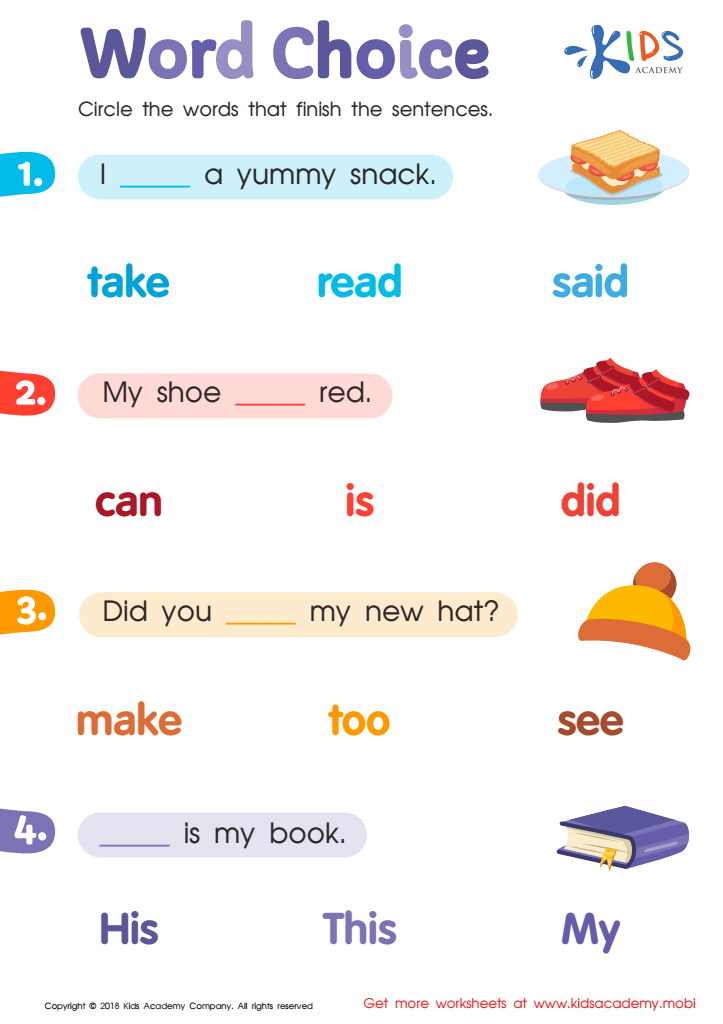
Word Choice Worksheet







Contextual understanding in reading is essential for young learners, particularly those aged 3-7, as it lays the foundation for successful literacy development. During these early years, children are not just learning to decode words but also to grasp meaning and concepts from the surrounding context. This helps them develop critical thinking and comprehension skills, which are important for academic success and lifelong learning.
When parents and teachers emphasize contextual understanding, children become more engaged and motivated readers. They learn to use clues from pictures, sentences, and their own experiences to make sense of new words and ideas. This approach nurtures a love for reading by making it a more enjoyable and meaningful activity, rather than a mechanical decoding process.
Furthermore, strong contextual understanding strengthens children’s vocabulary and language skills. They expand their word knowledge and ability to use language appropriately by encountering words in varied and meaningful contexts. This builds a richer linguistic foundation, enabling them to express themselves more confidently and precisely.
In addition, contextual understanding supports social and emotional development by encouraging empathy and perspective-taking. Stories and texts often present diverse characters and situations, allowing children to understand and relate to experiences different from their own. Overall, fostering contextual understanding in reading equips children with essential cognitive and affective tools, preparing them for future educational challenges and personal growth.








