
Logical thinking Reading Worksheets for Ages 3-7
8 filtered results
Difficulty Level
Grade
Age
-
From - To
Subject
Activity
Standards
Introduce your child to the world of critical thinking with our "Logical Thinking Reading Worksheets for Ages 3-7." Specially designed for young learners, these engaging activities help children develop essential reasoning skills, improve comprehension, and foster a love for reading. Each worksheet combines fun illustrations and age-appropriate challenges, making learning both enjoyable and effective. Our carefully curated exercises encourage kids to think critically, follow patterns, and solve problems creatively. Ideal for early reading practice, these worksheets support cognitive development and academic readiness. Start your child's learning journey today with our stimulating logical thinking worksheets!
Favorites
With answer key
Interactive
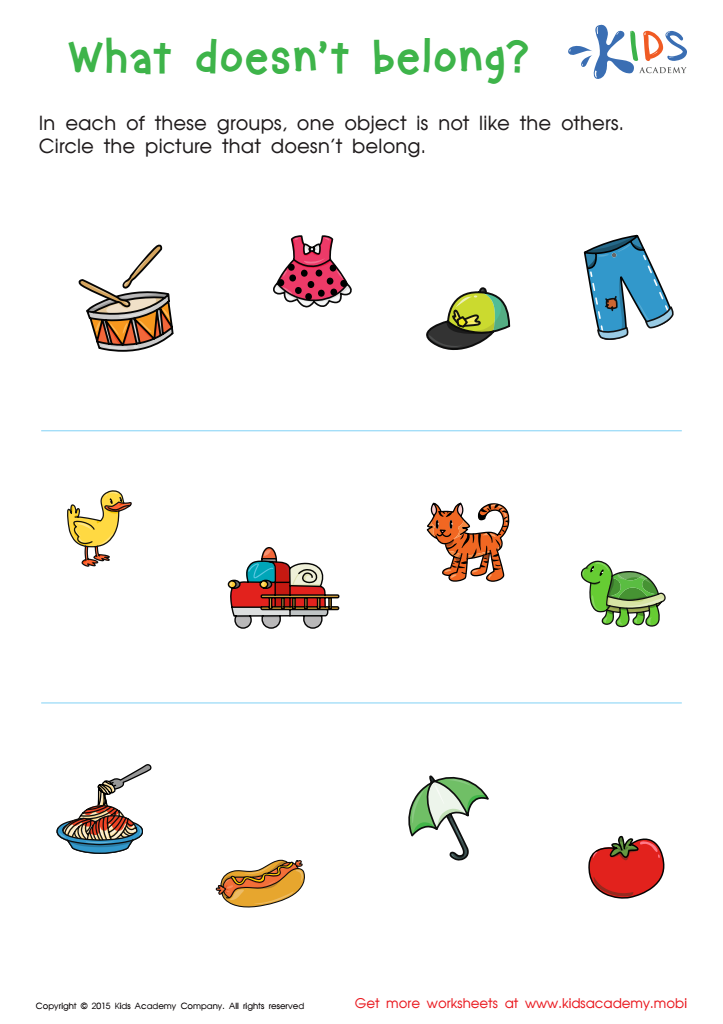
First Words: What Doesn't Belong Worksheet
Categorizing items is an important skill for little learners. Sorting and classifying objects helps kids make sense of the world. With this "what doesn't belong" worksheet, your child will practice problem-solving, strengthen categorization and improve logical reasoning skills. It's perfect for toddlers and preschoolers, with bright and exciting images giving their minds a challenging workout!
 Assign to My Students
First Words: What Doesn't Belong Worksheet
Worksheet
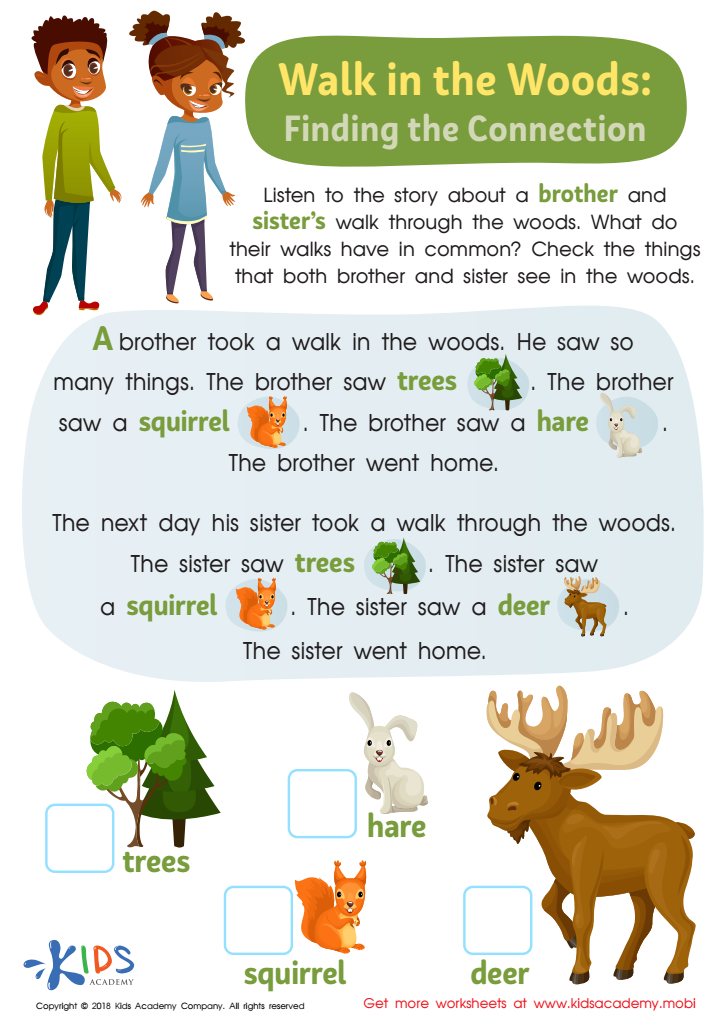
Walk In the Woods: Finding Connections Worksheet
Brother and sister took a walk in the woods to connect with nature and get some exercise. As they went, they noted different things like birds and plants, which they share in this story. Read it to your little ones, and help them check off the items the two saw. It's a great way to learn about nature and enjoy the outdoors.
Walk In the Woods: Finding Connections Worksheet
Worksheet
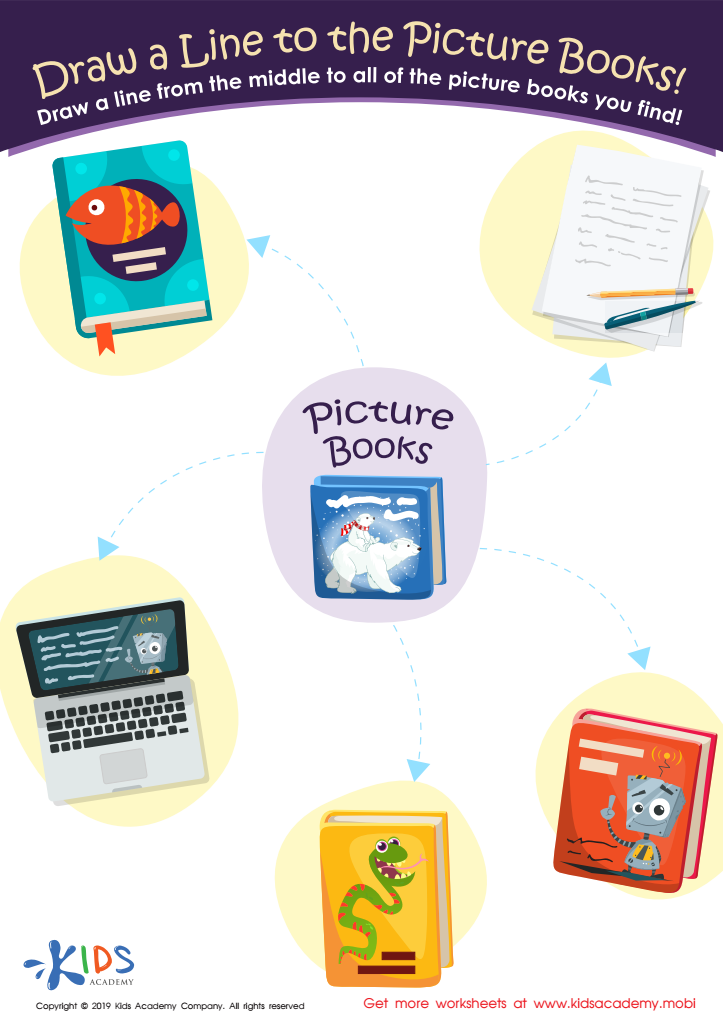
Draw a Line to the Picture Books Worksheet
Encourage your students to read and explore with this fun exercise! They'll draw a line from the word 'picture books' to the five objects. Picture books are exciting, with stories and colorful images. Make story time even more enjoyable with this worksheet!
Draw a Line to the Picture Books Worksheet
Worksheet
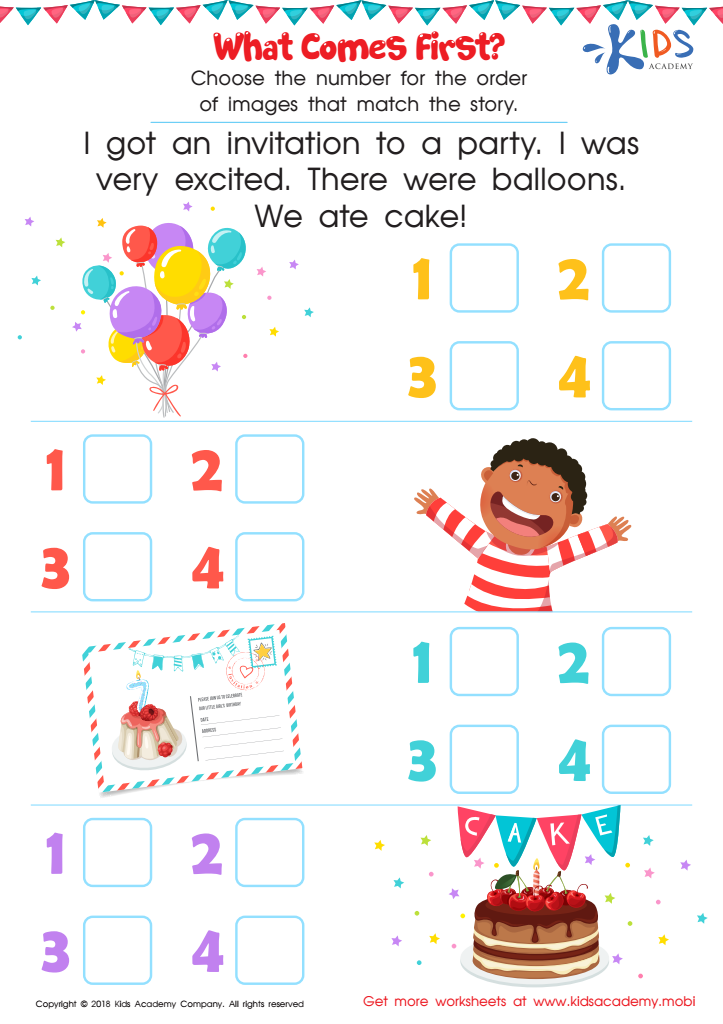
What Comes First Worksheet
Before you start, ask your child what they see in the picture. Read the story aloud together, then show them the images in order, numbered 1-5. Ask them to choose the numbers that match the story. Have fun and enjoy this party worksheet with your little one! (80 words)
What Comes First Worksheet
Worksheet
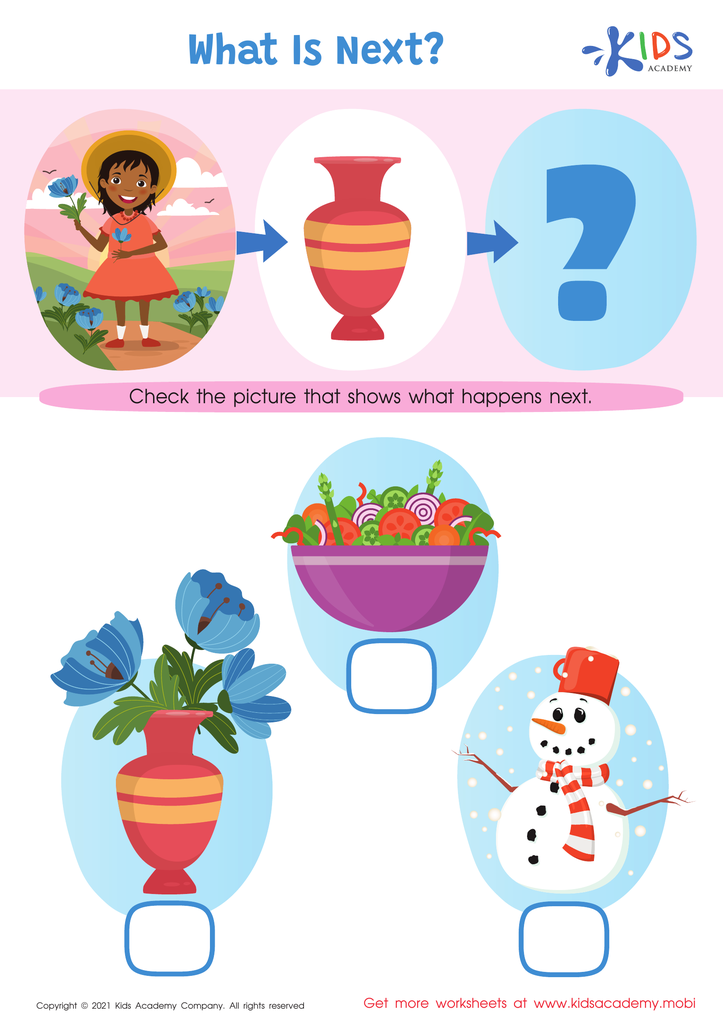
What is Next? Worksheet
The purpose of our company is to provide customers with the highest quality products and the best customer service experience in the industry.
We're committed to providing customers with excellent products and customer service. Our goal is to be the best in the industry.
What is Next? Worksheet
Worksheet
Join Kids Academy for Free
Who is primarily going to use this learning content?








Logical thinking and reading are fundamental skills that form the backbone of a child’s academic and personal development. For children ages 3-7, these skills are particularly crucial as they are in the formative stages of cognitive growth. Parents and teachers have every reason to prioritize these skills because they build the foundation for problem-solving, reasoning, and comprehending abstract concepts, all of which advance more complex learning later on.
First, logical thinking aids in decision-making. A child's ability to evaluate situations critically and make reasoned choices forms their overall analytical abilities. These skills foster independence, boosting a child’s confidence and ability to tackle new challenges without excessive reliance on adults.
Reading, on the other hand, nurtures creativity and expands knowledge. It introduces children to diverse vocabulary, enhancing their language skills, while simultaneously stimulating their imagination. Through reading, children encounter scenarios and characters that help them learn empathy, understand different perspectives, and process emotions — key components of social intelligence.
In essence, promoting logical thinking and reading practices early in life establishes a well-rounded cognitive foundation. This enables children to adapt better to various academic, social, and everyday situations, setting them up for long-term success in all facets of life. Therefore, by fostering these skills, parents and teachers are investing in the holistic growth and future achievements of their children.








