Filters

81 filtered results

Clear all filters
Favorites
With answer key
Interactive

81 filtered results

Difficulty Level

Grade


Check out this FREE Trial Lesson on Reading Fiction for age 3-7!

Identify Characters in a Story

Favorites
With answer key
Interactive
  • 3-7
  • Reading comprehension
  • Reading Fiction
Questions About Stories: Assessment 3 Worksheet

Questions About Stories: Assessment 3 Worksheet

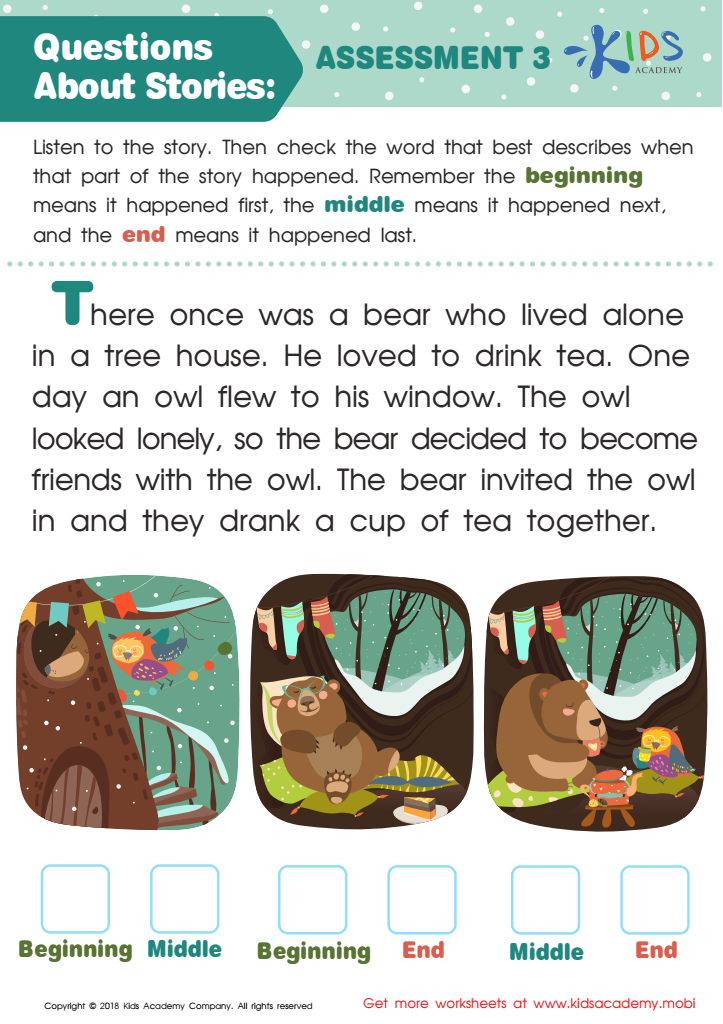
Help kids understand stories by having them listen to a story and check boxes for the beginning, middle, and end. This worksheet makes it fun for even the youngest learners to recall story elements and sequence of events. Let them listen to the story from start to finish, then look at the pictures to check which part of the story they depict.
Questions About Stories: Assessment 3 Worksheet
Worksheet
Questions About Stories: Assessment 2 Worksheet

Questions About Stories: Assessment 2 Worksheet

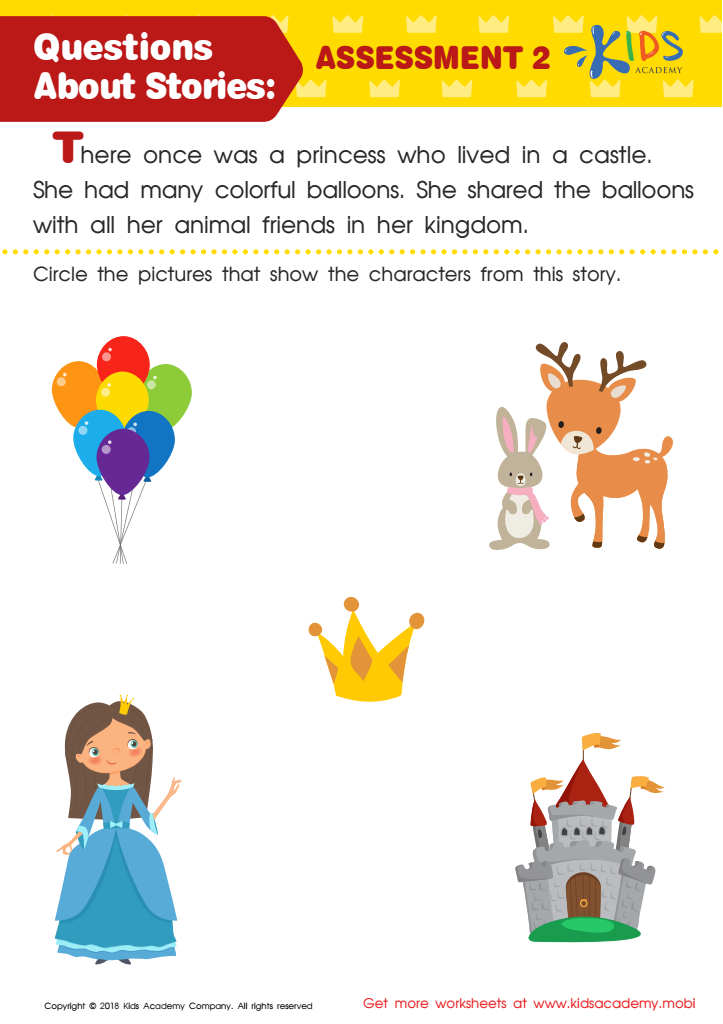
Talk to your child about what a princess is and what activities they associate with that word. Then, read the story to them and help them identify characters in the pictures. Look out for details and ask them questions to ensure they understand.
Questions About Stories: Assessment 2 Worksheet
Worksheet
Fairy Tale Worksheets

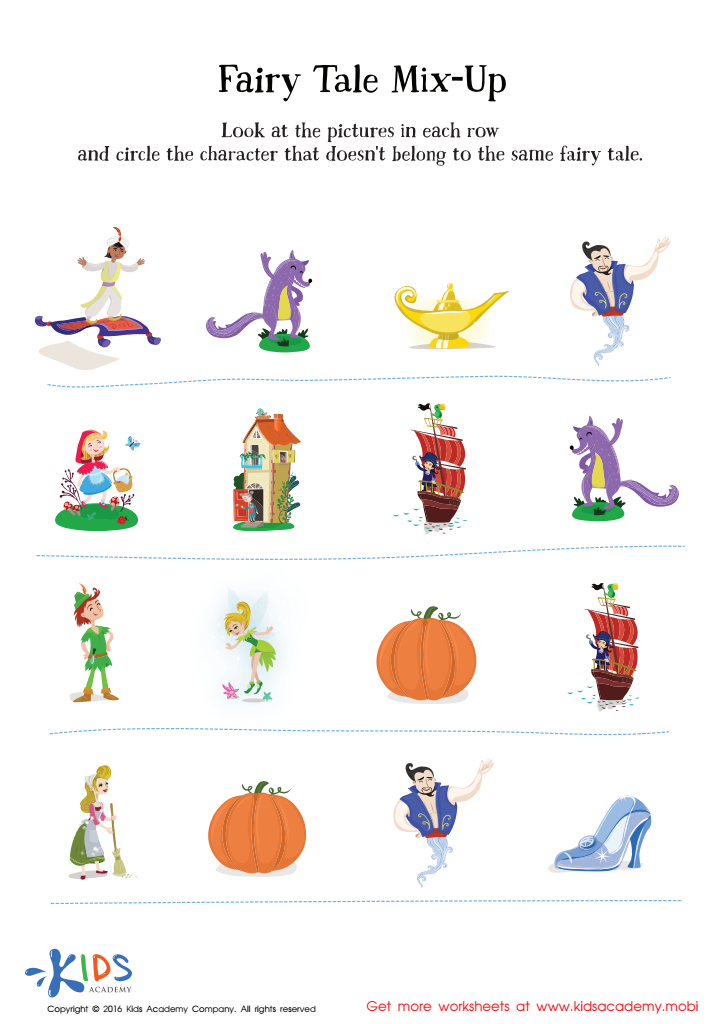
Fairy Tale Worksheet: Story Mix Up

Kids love fairy tales! Encourage your child to engage with their favorite stories using our vibrant worksheet. It'll help sharpen cognitive and comprehension skills, build problem-solving skills, and strengthen classification skills. Beforehand, read or watch the fairy tales and talk about each one's characters and elements. Your child will love the story and time spent together! Print the worksheet and get ready for a magical experience.
Fairy Tale Worksheet: Story Mix Up
Worksheet
Craft and Structure of Stories: Assessment 2 Worksheet

Craft and Structure of Stories: Assessment 2 Worksheet

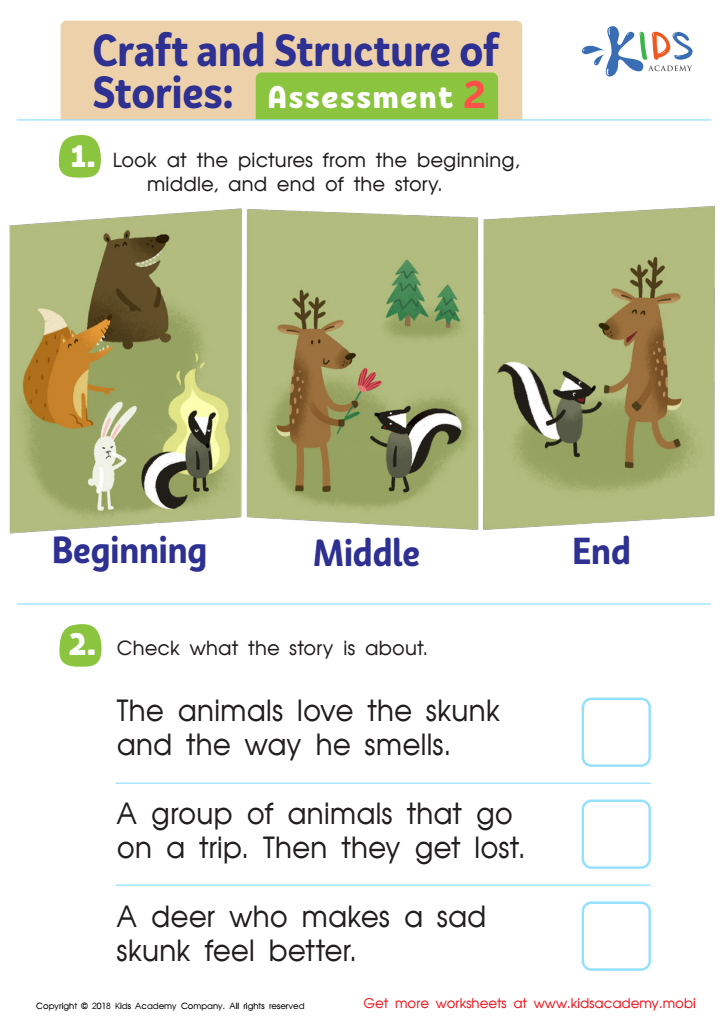
Help your child assess their story sequencing and reading comprehension skills using this cute worksheet! It encourages them to look at the three pictures on the page, each representing a scene from the beginning, middle and end. Ask them what the story is about, then let them check the box next to the correct answer. This is a great way to ensure they understand the main events of a story.
Craft and Structure of Stories: Assessment 2 Worksheet
Worksheet
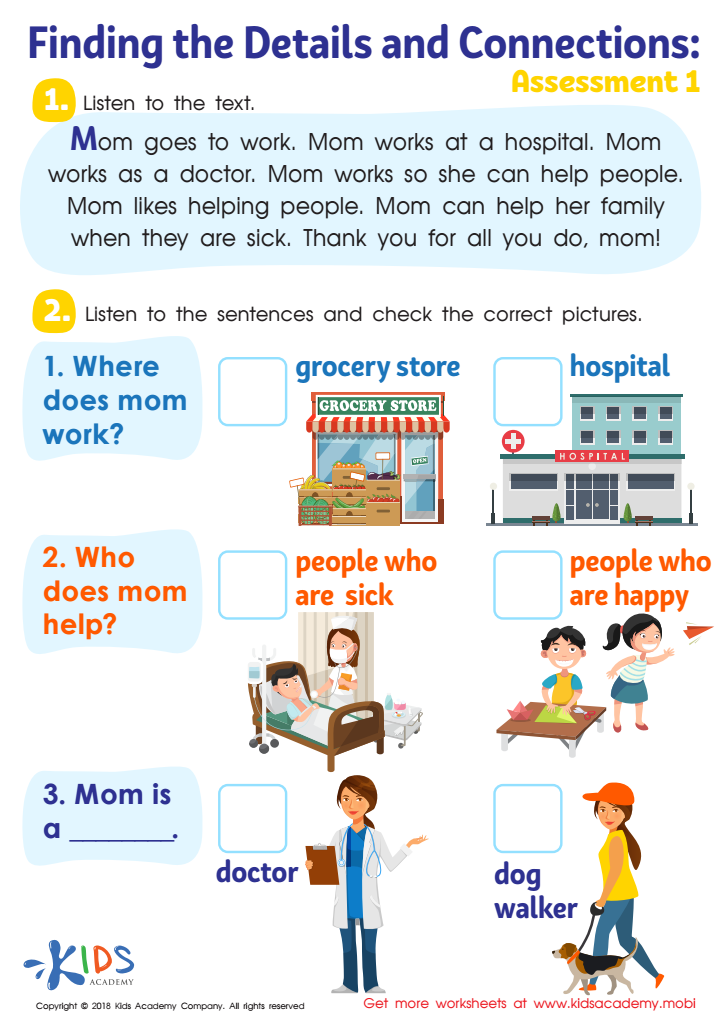
Finding the Details and Connections: Assessment 1 Worksheet

Finding the Details and Connections: Assessment 1 Worksheet

Ask your students what their parents do for a job. Do they know what profession their mom is in and where she works? Professionals have places they go to do their job. In this task, Mom goes to a hospital and is a doctor. Read the text and help them check the right pictures.
Finding the Details and Connections: Assessment 1 Worksheet
Worksheet
Reading Comprehension Worksheet: Cinderella

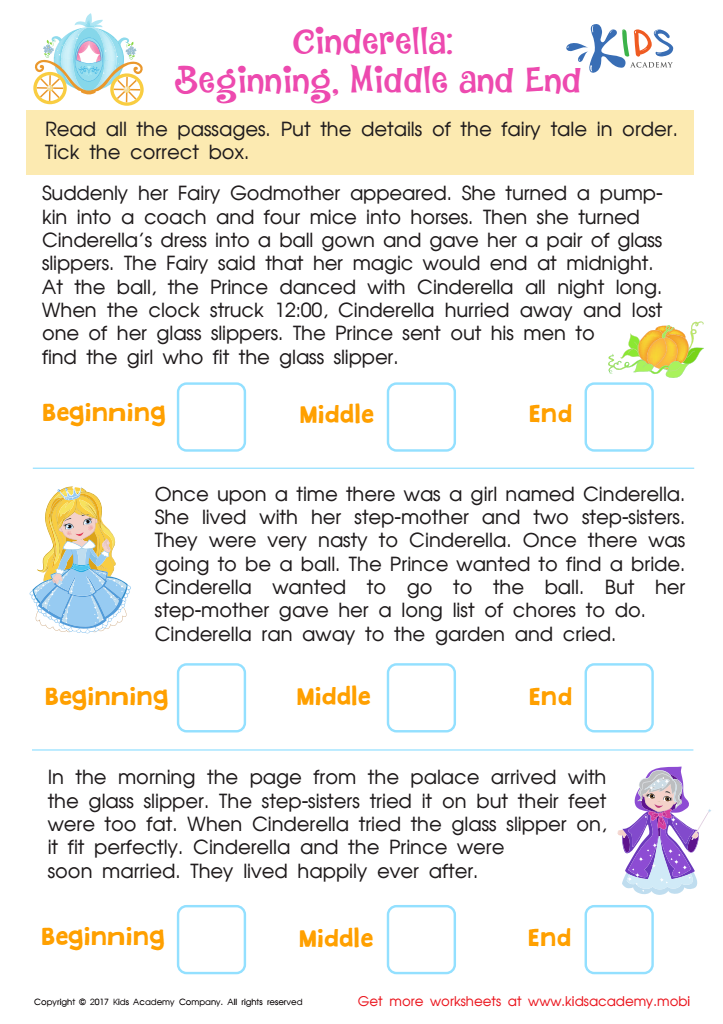
Cinderella: Beginning, Middle and End Worksheet
This Cinderella-themed worksheet provides an excellent opportunity for your child to practice reading comprehension and understanding the basics of story structure. Help your child learn a key story concept with this Cinderella-themed reading comprehension worksheet. It's an excellent way for them to practice understanding the different parts of a story, from the beginning to the end. Kids will love getting to know the beloved fairy tale of Cinderella!
Cinderella: Beginning, Middle and End Worksheet
Worksheet
Puss in Boots Illustrations Worksheet

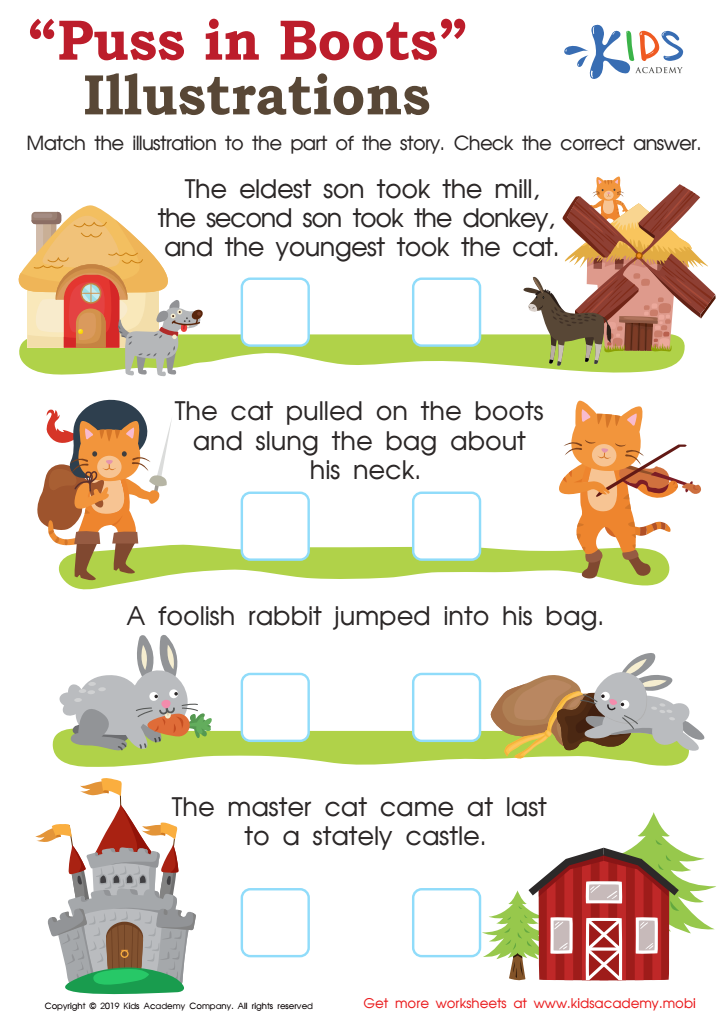
Puss in Boots Illustrations Worksheet

This Puss In Boots Illustrations worksheet is a great way to help kids learn about retelling stories. They'll match images to different parts of the story and check off the correct answer. As they recall events and put them in sequence they'll enjoy this fun and creative activity.
Puss in Boots Illustrations Worksheet
Worksheet
Three Little Pigs / Les Trois Petits Cochons Worksheet

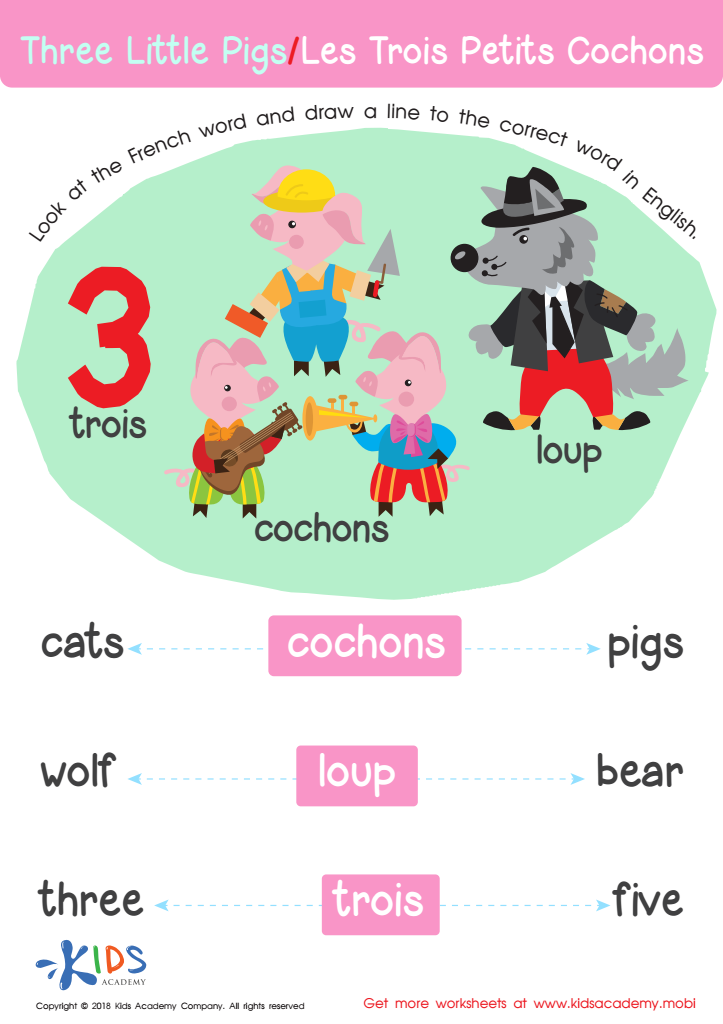
Three Little Pigs / Les Trois Petits Cochons Worksheet

Teaching kids words in foreign tongues? Use picture clues to help them build connections for deeper learning! This PDF worksheet uses the three little pigs story to teach French words for three, pigs and wolf. Kids can make picture-word associations and follow traceable lines to match the French and English words.
Three Little Pigs / Les Trois Petits Cochons Worksheet
Worksheet
Authors and Illustrators Race Worksheet

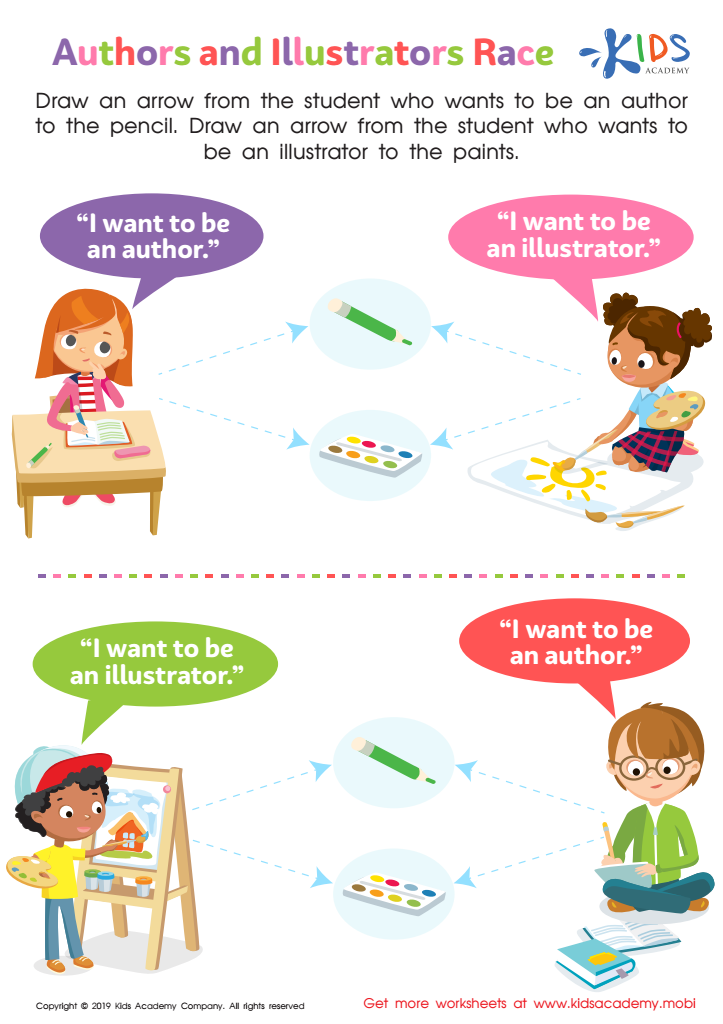
Authors and Illustrators Race Worksheet

Help your child learn about the author and illustrator of a book with this free and colorful worksheet. They'll trace lines to pick the tools used by each and understand the difference between them. It's a great way to introduce fundamental concepts of reading.
Authors and Illustrators Race Worksheet
Worksheet
Three Little Pigs Questions Worksheet

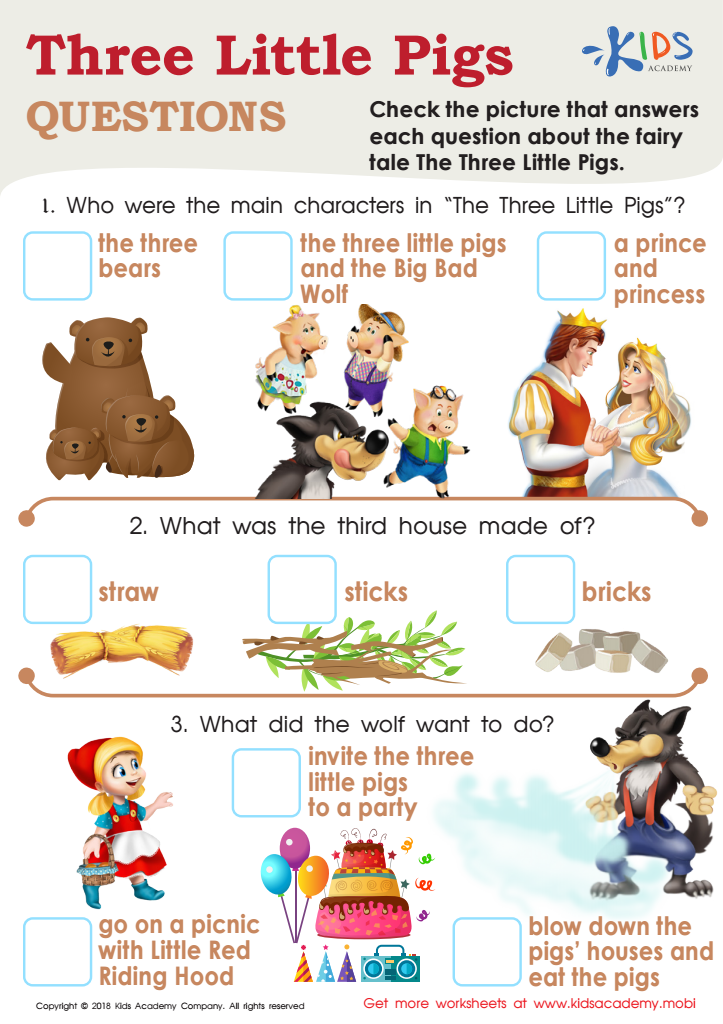
Three Little Pigs Questions Worksheet

Does your kid love bedtime stories? Test their classic fairytale knowledge with this worksheet! If they mention The Three Little Pigs, they're in luck - this pdf has them answering questions based off the classic fairytale. They'll check the picture that answers each question about the story. Is their fairytale knowledge up to scratch?
Three Little Pigs Questions Worksheet
Worksheet
Sight Words: A Day at the Park Worksheet

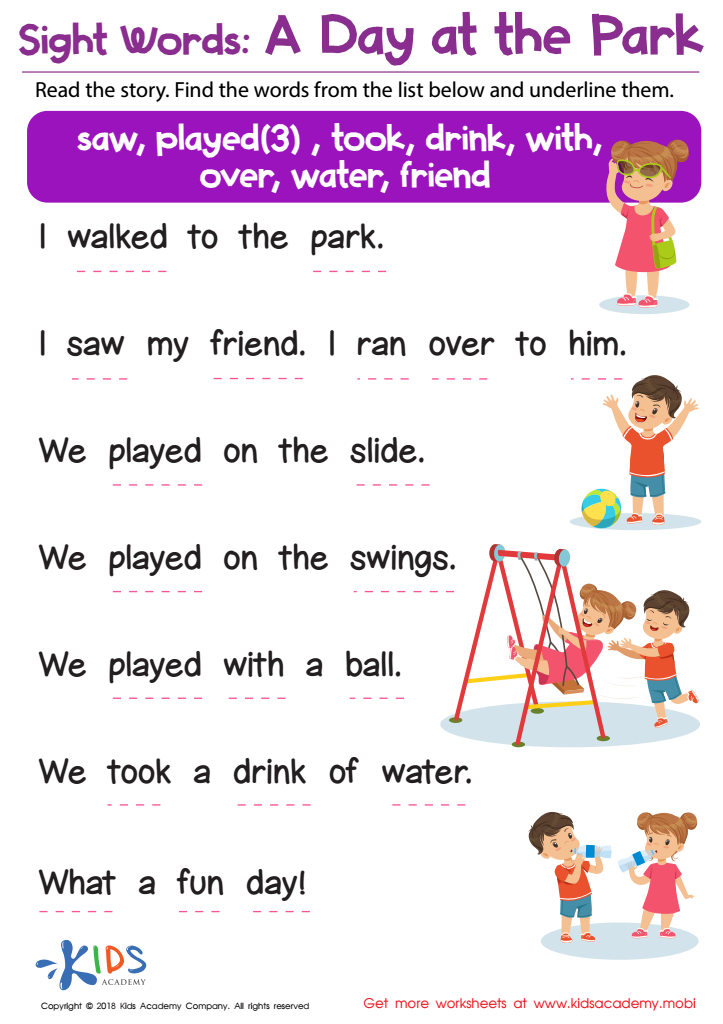
Sight Words: A Day at the Park Worksheet

This worksheet offers kids practice reading sight words in a story. With picture clues and repetitive wording, they'll work with words that can't be sounded out to reinforce their learning. This is an important step in the reading process that helps kids become more confident readers.
Sight Words: A Day at the Park Worksheet
Worksheet
“The Princess and the Pea” or “Cinderella” Worksheet

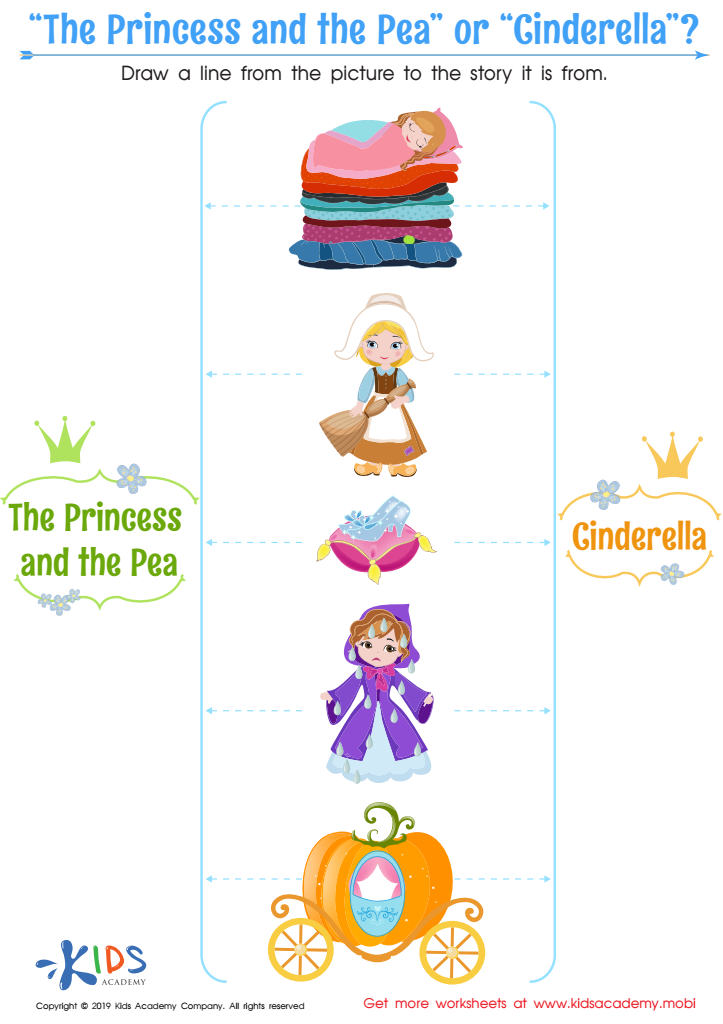
“The Princess and the Pea” or “Cinderella” Worksheet

Help your child identify the characters and objects from both the Princess and the Pea and Cinderella. Ask them to draw a line from the pictures to the story it's from on the tracing sheet. Encourage them to tell you the similarities between the two stories. Enjoy the tale with your daughter and watch her be fascinated by these two classic children's stories.
“The Princess and the Pea” or “Cinderella” Worksheet
Worksheet
Printable nursery rhyme: Rub a Dub Dub

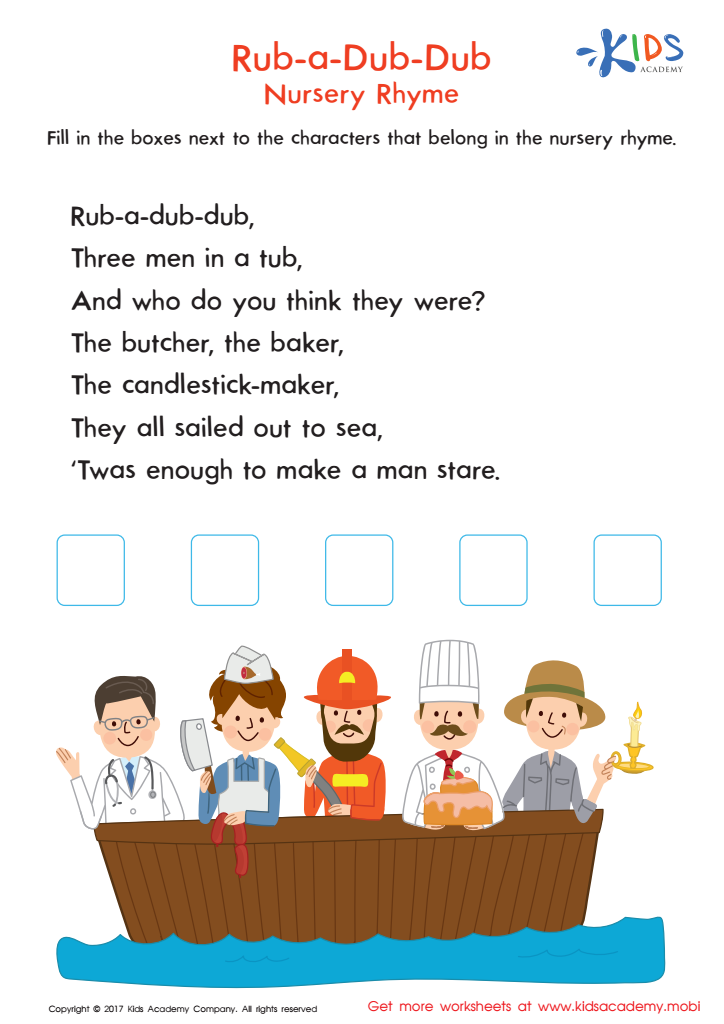
Rub a Dub Dub Printable

Delight your child and foster early reading skills with this printable nursery rhyme, Rub a Dub Dub! Let your little reader select the three men in the tub and practice important reading comprehension skills.
Rub a Dub Dub Printable
Worksheet
The Ant and the Grasshopper worksheet PDF

The Ant and The Grasshopper Worksheet
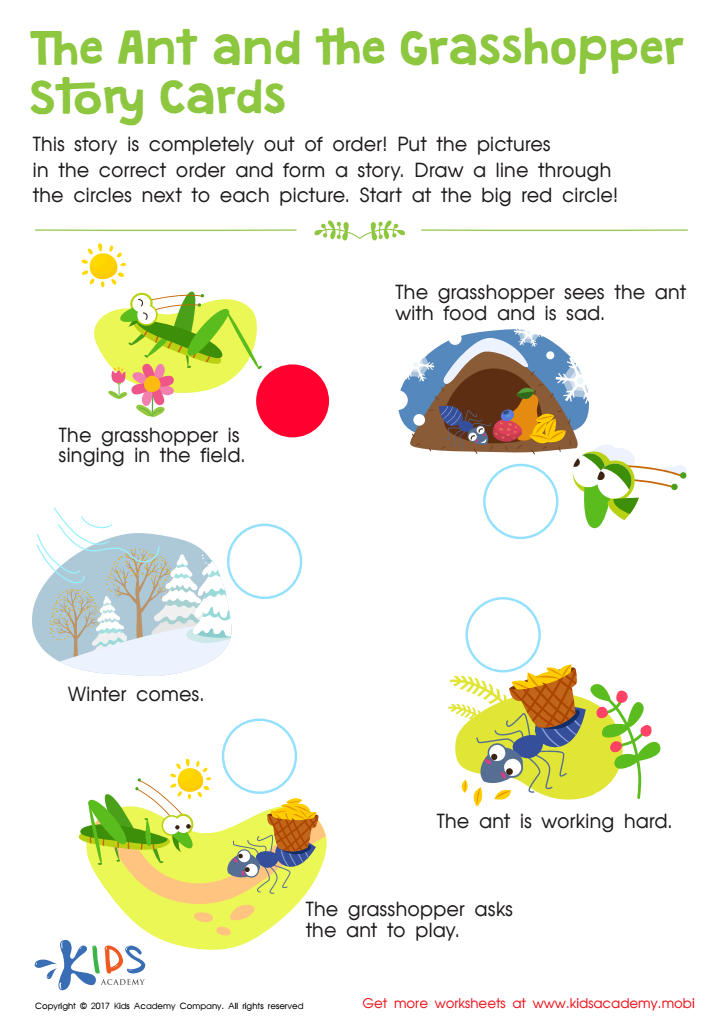
This worksheet uses the beloved childhood fable "The Ant and the Grasshopper" to teach your child about plot and order of events. Your child must read the events and put them in the right order. Once completed, review the story with your child to ensure its accuracy.
The Ant and The Grasshopper Worksheet
Worksheet
Questions About Stories: Assessment 1 Worksheet

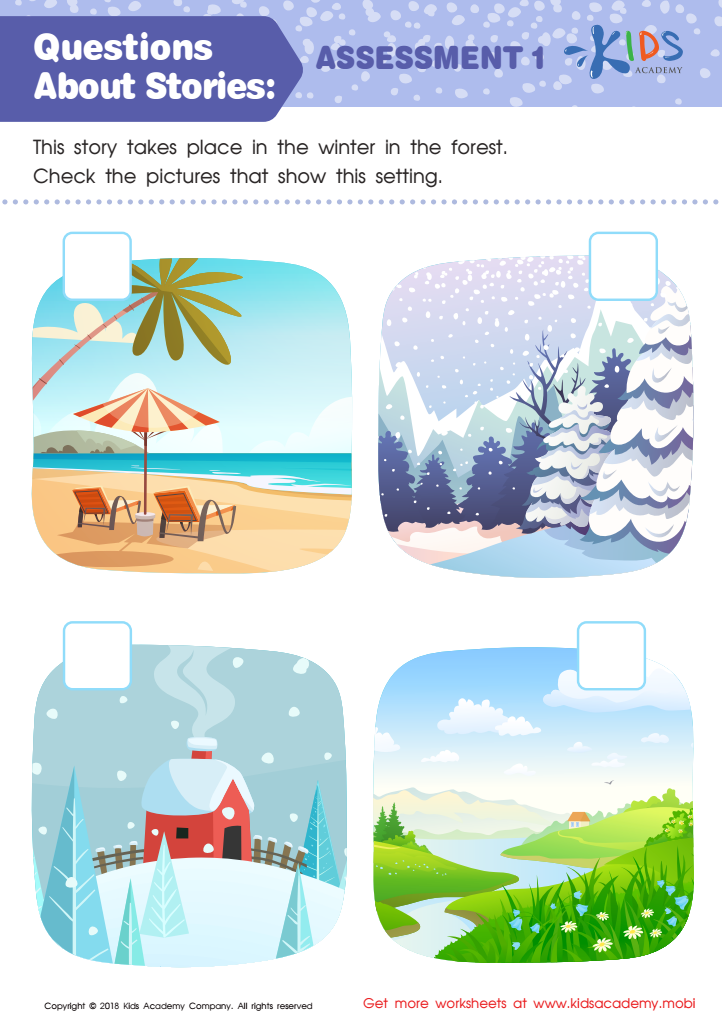
Questions About Stories: Assessment 1 Worksheet

Winter brings snow, cold, short days, and darkness. Schools can even close due to heavy snow. Ask your child what their favourite winter activities are and what color they associate with 'winter'. This worksheet takes place in a winter forest. Look at the 4 pictures with your child, and help them identify which one shows the correct setting.
Questions About Stories: Assessment 1 Worksheet
Worksheet
Cinderella / Cenerentola Worksheet

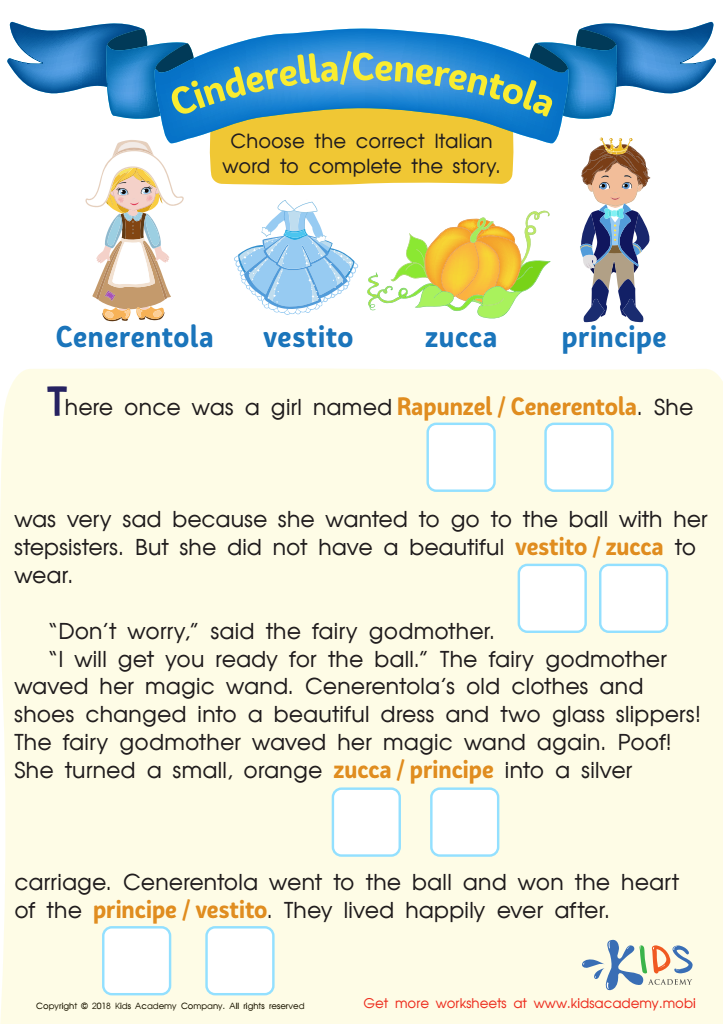
Cinderella / Cenerentola Worksheet

Children will love this fairytale about a princess trying to get to the royal ball. With colorful images and context clues, they'll learn Italian words without even realizing it. They'll fill in the correct boxes and help Cenerentola get to her happily-ever after. This free worksheet will delight and teach at once!
Cinderella / Cenerentola Worksheet
Worksheet
What Does It Mean? Worksheet

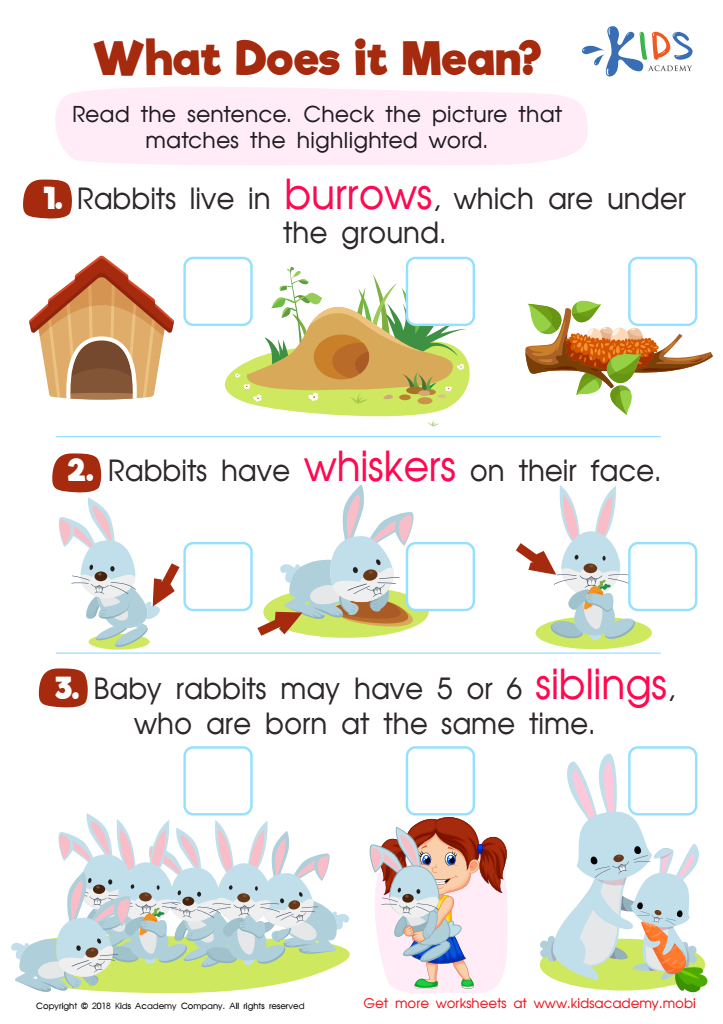
What Does It Mean? Worksheet

Teach your child to use context clues with this engaging Kids Academy worksheet. Read the sentences and find the pink-highlighted word. Use the other words in the sentence to figure out the meaning, then check the box next to the picture that represents it.
What Does It Mean? Worksheet
Worksheet
When Does It Happen? Worksheet

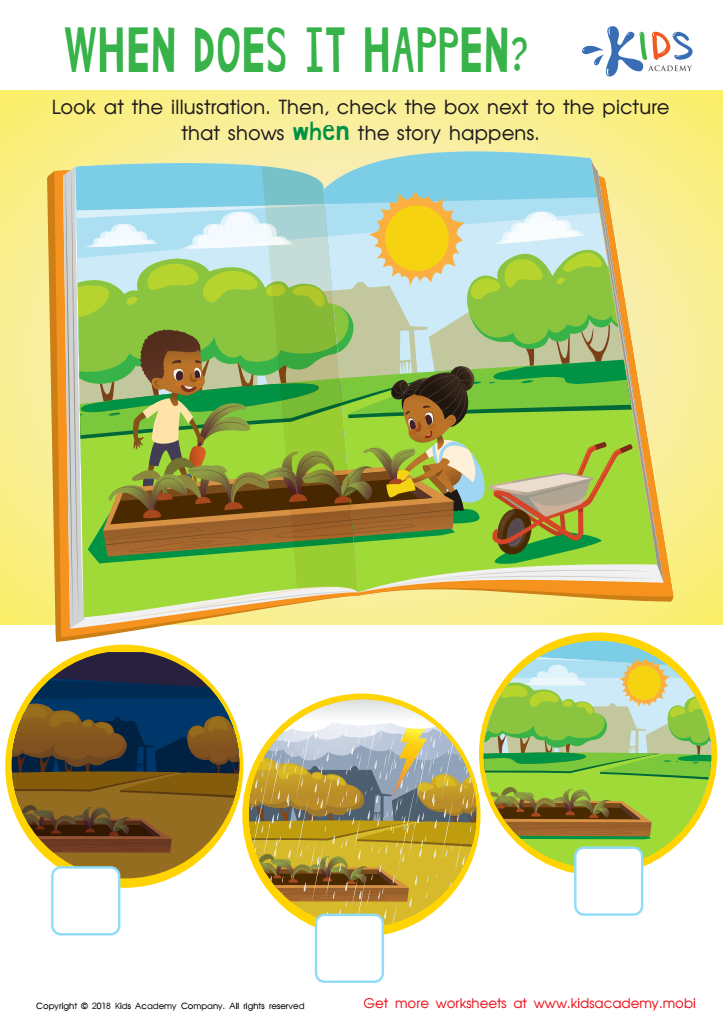
When Does It Happen? Worksheet

Help your kids learn about the different times of day and when events occur using this worksheet. Ask them to look at the pictures and determine which box shows when the story happened. Then, discuss how they can use this knowledge to better describe events that occur.
When Does It Happen? Worksheet
Worksheet
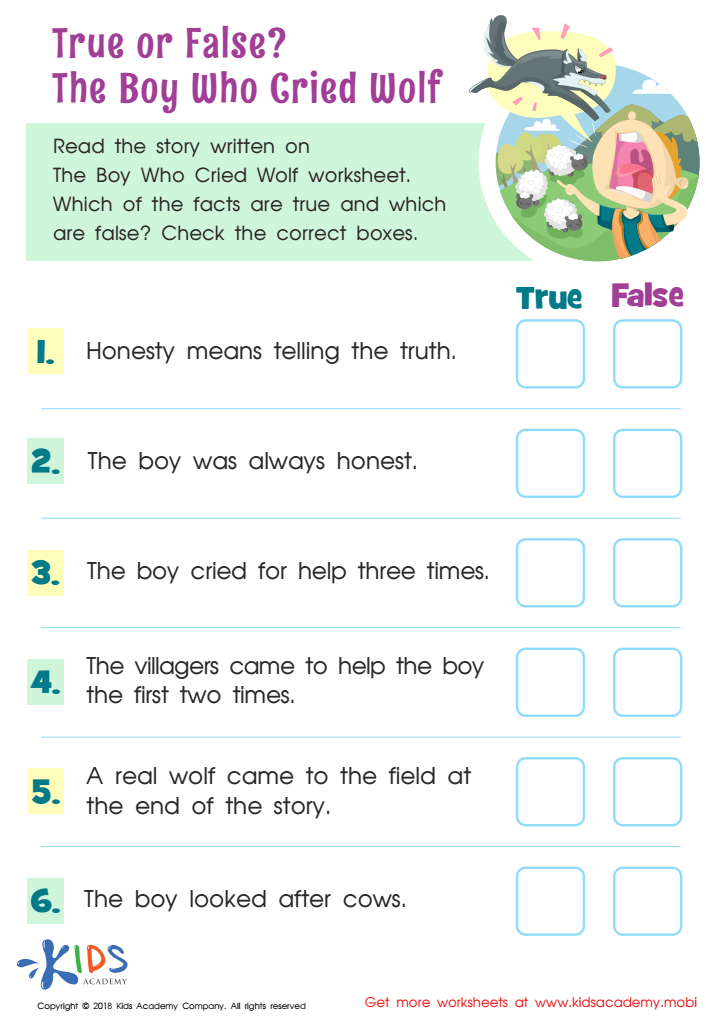
True or False? The Boy Who Cried Wolf Worksheet

True or False? The Boy Who Cried Wolf Worksheet

Test students' understanding of The Boy Who Cried Wolf with this free downloadable worksheet. It contains true/false questions to assess comprehension of key events. Easy to complete, it checks students can recall facts from the story. Try it and see!
True or False? The Boy Who Cried Wolf Worksheet
Worksheet
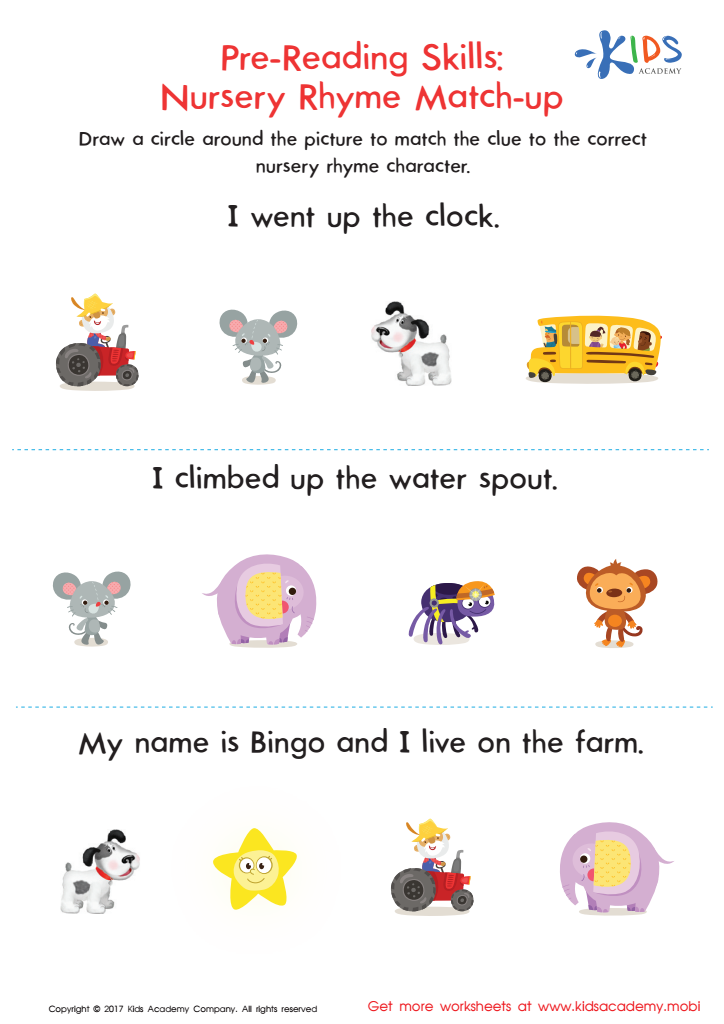
Nursery rhyme match-up worksheet

Nursery Rhyme Match–Up Worksheet
This worksheet helps kids build pre-reading skills using stories they know and love! By connecting with prior knowledge, kids can develop ideas about characters and set the stage for reading strategies.
Nursery Rhyme Match–Up Worksheet
Worksheet
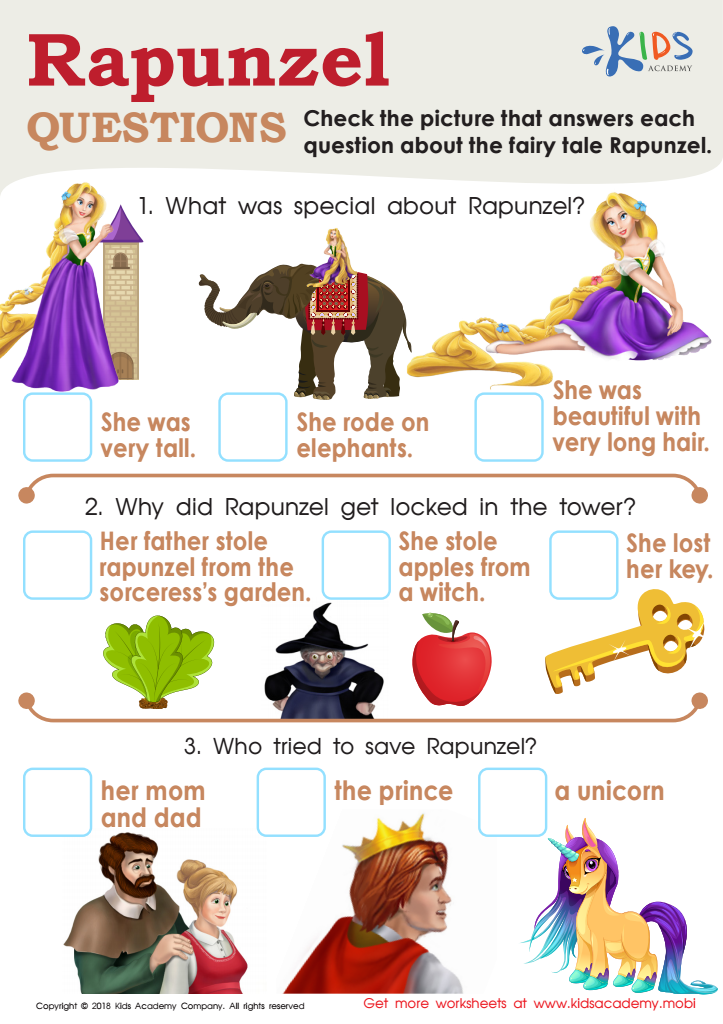
Rapunzel Questions Worksheet

Rapunzel Questions Worksheet

Read the fairy tale 'Rapunzel' to your kids. For those who really enjoyed it, read it twice and ask questions to test their understanding. Then, get them to check the pictures related to the questions to test their comprehension of the story.
Rapunzel Questions Worksheet
Worksheet
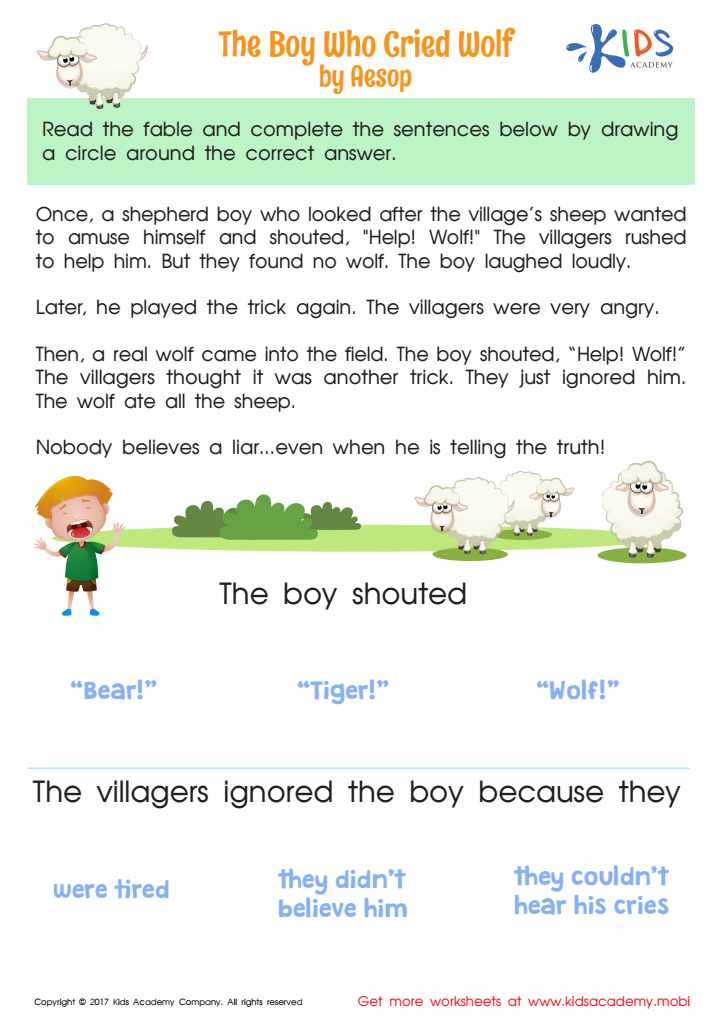
Worksheet: The Boy Who Cried Wolf

The Boy Who Cried Wolf Worksheet

Test your child's reading comprehension with The Boy Who Cried Wolf worksheet. Read the fable, then answer the questions. Use the text to help your child check their answers are correct. Boost reading skills in a fun, interactive way!
The Boy Who Cried Wolf Worksheet
Worksheet
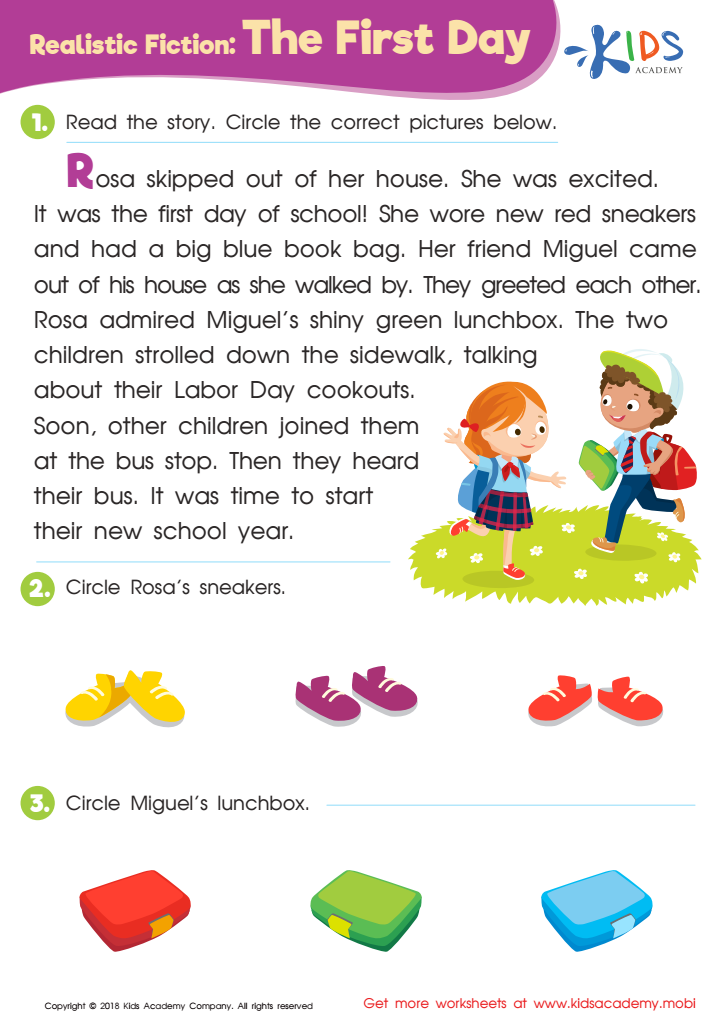
Realistic Fiction: The First Day Worksheet

Realistic Fiction: The First Day Worksheet

Fiction is made-up events, so story-writing is fiction writing. In this worksheet, there's a short story about Rosa, her friend Miguel, and their first day back at school. Read the story aloud to your kids and help them circle the right pictures to the questions. Repeat if needed.
Realistic Fiction: The First Day Worksheet
Worksheet
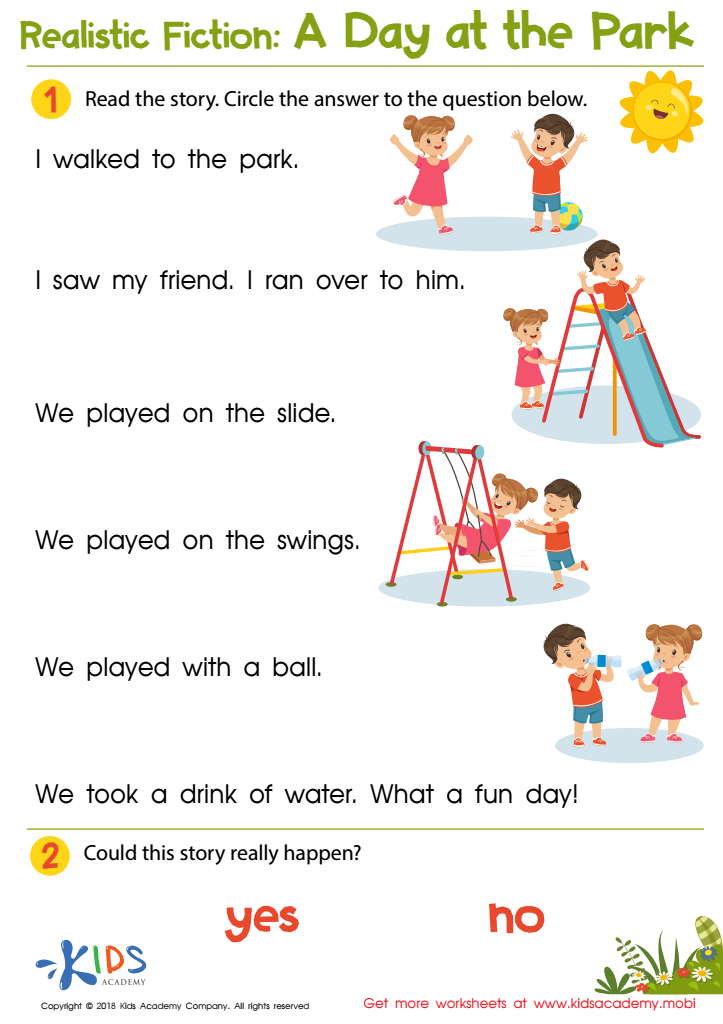
A Day at the Park Worksheet


A Day at the Park Worksheet

Kids as young as preschool-age can be taught to evaluate stories! Use this fun worksheet about a day at the park. Read each sentence aloud, looking at the pictures. Ask your child if the events in the story could happen in real life - if yes, circle yes, otherwise circle no. When finished, discuss with them the genre, realistic fiction.
A Day at the Park Worksheet
Worksheet


Reading comprehension and exposure to fiction for children aged 3-7 are foundational for multiple areas of development. First, reading comprehension is critical because it lays the groundwork for academic success. Understanding stories helps children develop cognitive skills such as memory and critical thinking, which are essential for later learning.

Fiction, in particular, expands a child's imagination and introduces them to new worlds and experiences. This imaginative exploration is important for creative thinking. When children engage with fictional stories, they also learn complex language structures and new vocabulary, improving their language and communication skills.

Furthermore, reading fiction fosters empathy and emotional intelligence. As children identify with characters and navigate through various situations within a story, they begin to understand different perspectives and emotions, which is crucial for social development. This helps them build stronger social bonds and become more empathetic individuals.

Lastly, the routine of reading together strengthens the parent-child or teacher-child bond. Sharing a story can be a comforting and enjoyable activity that deepens relationships.

Investing time in reading fiction and nurturing reading comprehension at these foundational years also instills a lifelong love for reading, which is one of the greatest gifts a parent or teacher can offer a child.