
Problem-Solving Skills Plants and Animals Worksheets for Ages 3-7
4 filtered results
Difficulty Level
Grade
Age
-
From - To
Subject
Activity
Standards
Enhance your child's problem-solving abilities with our engaging Plants and Animals worksheets, designed specifically for ages 3-7. These interactive resources promote critical thinking through fun and educational activities centered around nature. Children will explore the diverse world of plants and animals while practicing essential problem-solving skills. Each worksheet encourages creativity and logical reasoning as kids tackle puzzles, sorting activities, and classification exercises. With vibrant images and age-appropriate challenges, our worksheets make learning enjoyable and impactful. Foster a love for science, nurture curiosity, and help your little ones develop strong problem-solving skills they will use throughout their academic journey!
Favorites
With answer key
Interactive
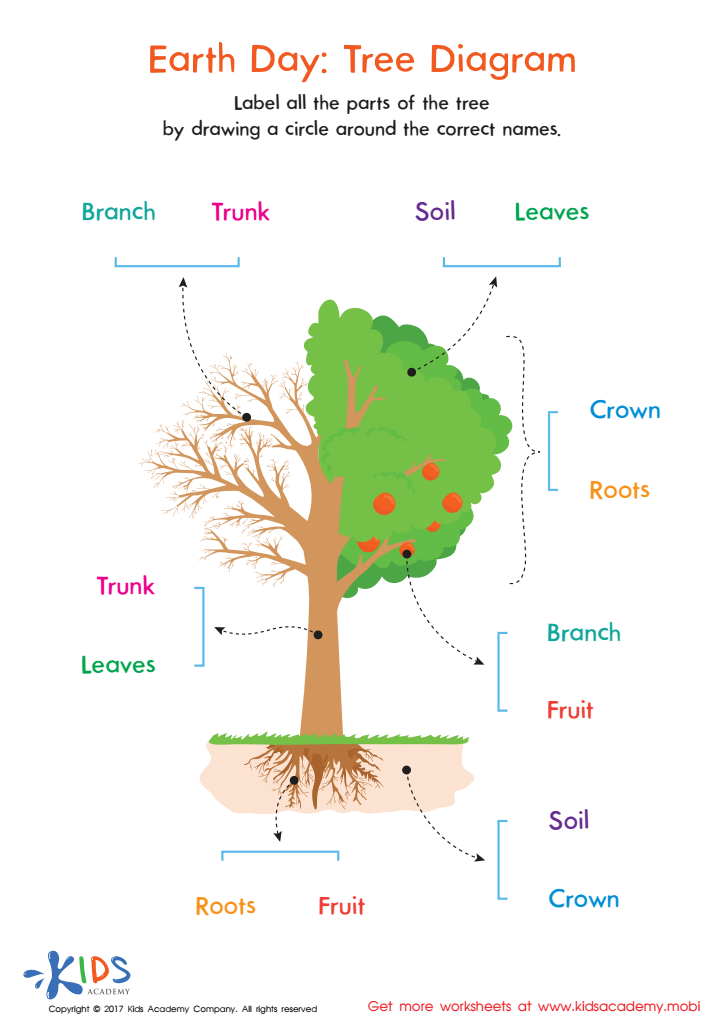
Earth Day: Tree Diagram Worksheet
Teaching our kids about environmental science is essential. Get your child excited about plants and nature with our colorful parts of a tree worksheet! It will help them gain an understanding and appreciation of trees, plants, and the earth. Download it now and open the door to the natural world of your child's everyday!
 Assign to My Students
Earth Day: Tree Diagram Worksheet
Worksheet











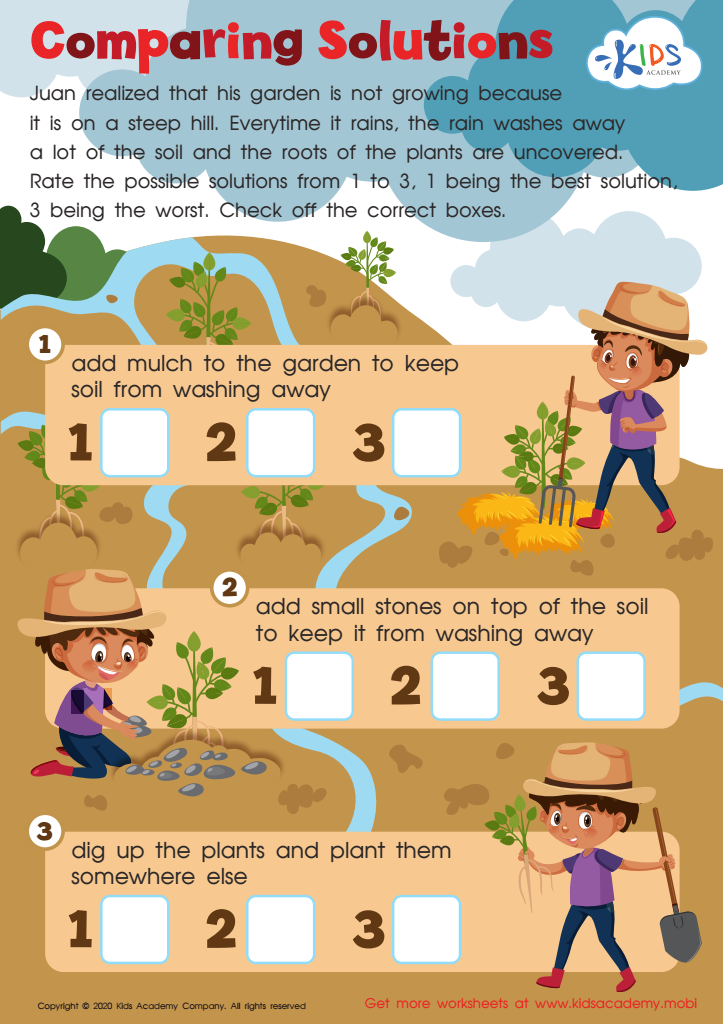
Comparing Solutions Worksheet
Juan can't get his veg garden growing as he'd like, planted on a steep hill. Help your child practice problem-solving by comparing solutions and rating them from most to least effective. With this thought-provoking worksheet, learners can hone the important skill of finding the best solution from a range of options.
Comparing Solutions Worksheet
Worksheet
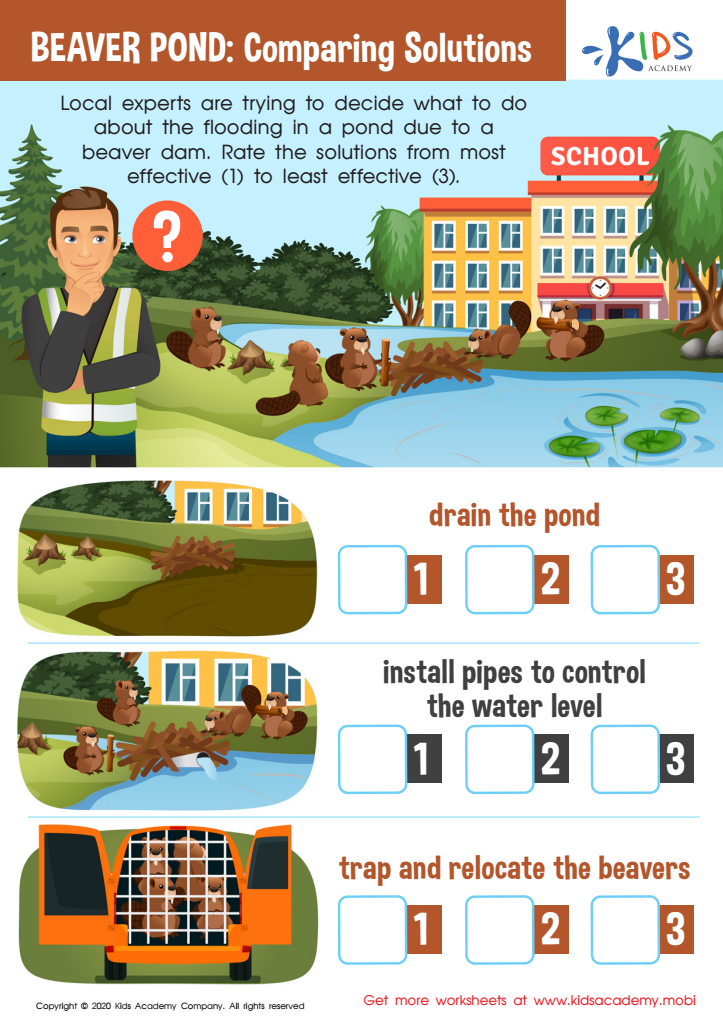
Beaver Pond: Comparing Solutions Worksheet
Got a problem? This science worksheet is great for helping your child compare solutions and pick the best one. Kids get to rate each option's effectiveness by ticking off boxes, from most to least. It's a great way to encourage problem-solving skills, while having fun!
Beaver Pond: Comparing Solutions Worksheet
Worksheet
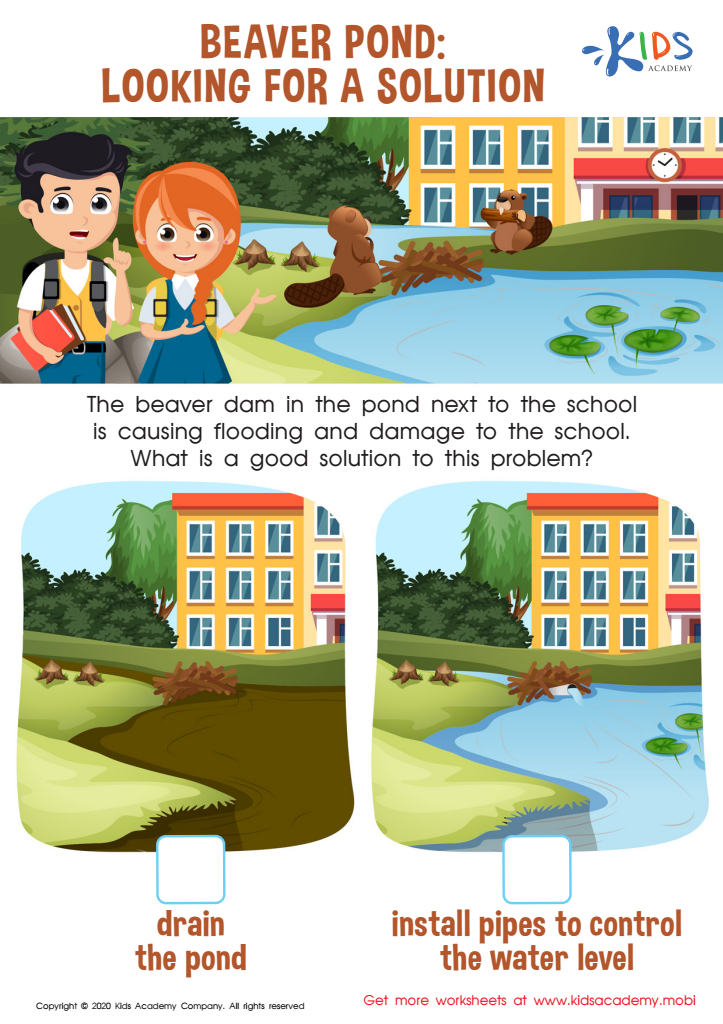
Beaver Pond: Looking for a Solution Worksheet
Beavers are building dams and flooding the local pond! Help your child practice problem-solving skills by reading through and selecting from possible solutions, with this fun PDF worksheet. See how your child's skills are improved!
Beaver Pond: Looking for a Solution Worksheet
Worksheet
Join Kids Academy for Free
Who is primarily going to use this learning content?








Parents and teachers should care about problem-solving skills in young children, particularly in the context of plants and animals, because these foundational abilities promote critical thinking, creativity, and decision-making. By engaging children aged 3-7 in exploration and inquiry about the natural world, they learn to observe, ask questions, and find solutions, which are essential skills for lifelong learning.
Understanding plants and animals fosters curiosity and connection with the environment. For instance, when children identify how plants grow or how animals adapt to different habitats, they start to apply problem-solving strategies such as hypothesizing, experimenting, and drawing conclusions. These experiences enhance cognitive development and encourage children to process information in a meaningful way.
Additionally, problem-solving in this context fosters teamwork and communication skills as children often explore in groups. Collaborative learning nurtures social-emotional skills, making children more empathetic and aware of the world around them.
Finally, integrating nature into problem-solving can contribute to environmental awareness, instilling a sense of responsibility toward conservation among the new generation. By prioritizing these skills, parents and teachers can cultivate a generation equipped to face challenges creatively and thoughtfully, promoting both individual growth and collective well-being.








