
Counting Worksheets for Ages 3-8
48 filtered results
Difficulty Level
Grade
Age
-
From - To
Subject
Activity
Standards
Discover engaging counting worksheets designed for children aged 3-8 at Kids Academy! Our expertly crafted printables support early math skills fundamental for young learners. Each worksheet features fun themes, colorful visuals, and interactive activities to make counting exercises enjoyable and effective. Perfect for preschool to early elementary students, these resources help kids build numeracy, recognize numbers, and understand basic arithmetic. Ideal for both classroom and at-home learning, our counting worksheets ensure children develop a strong mathematical foundation in an entertaining and supportive environment. Start enhancing your child's counting skills today with Kids Academy’s diverse and educational printables!
Favorites
With answer key
Interactive
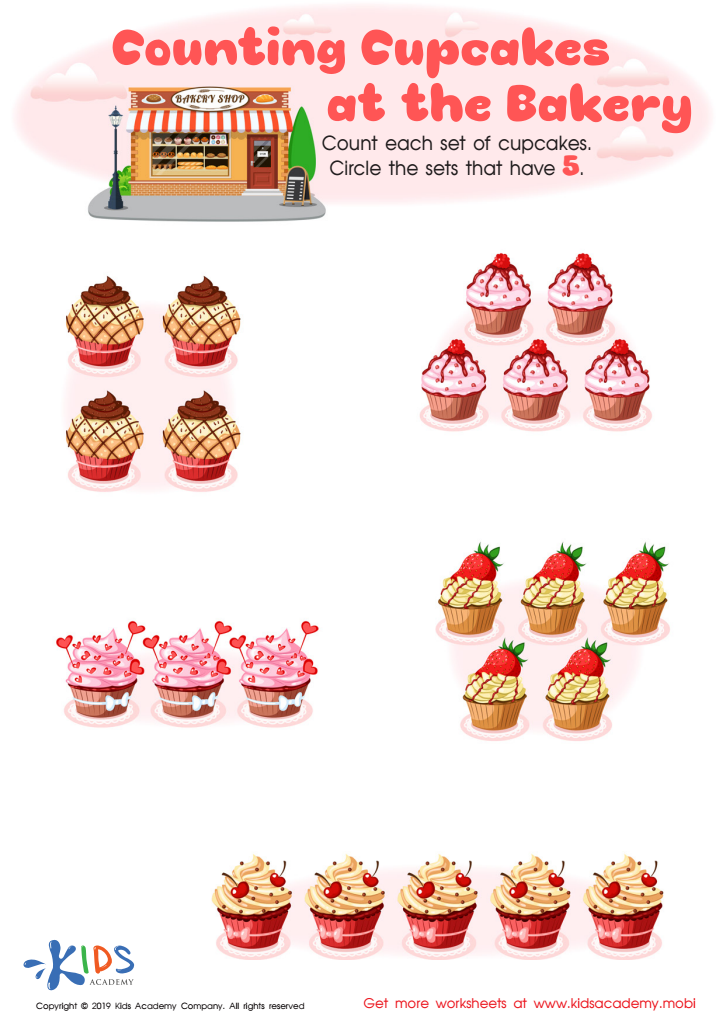
Counting Cupcakes Worksheet
This fun worksheet for preschoolers uses cupcakes to teach counting. Kids must circle the groups of cupcakes that add up to 5. The delicious treats make learning fun and engaging!
 Assign to My Students
Counting Cupcakes Worksheet
Worksheet


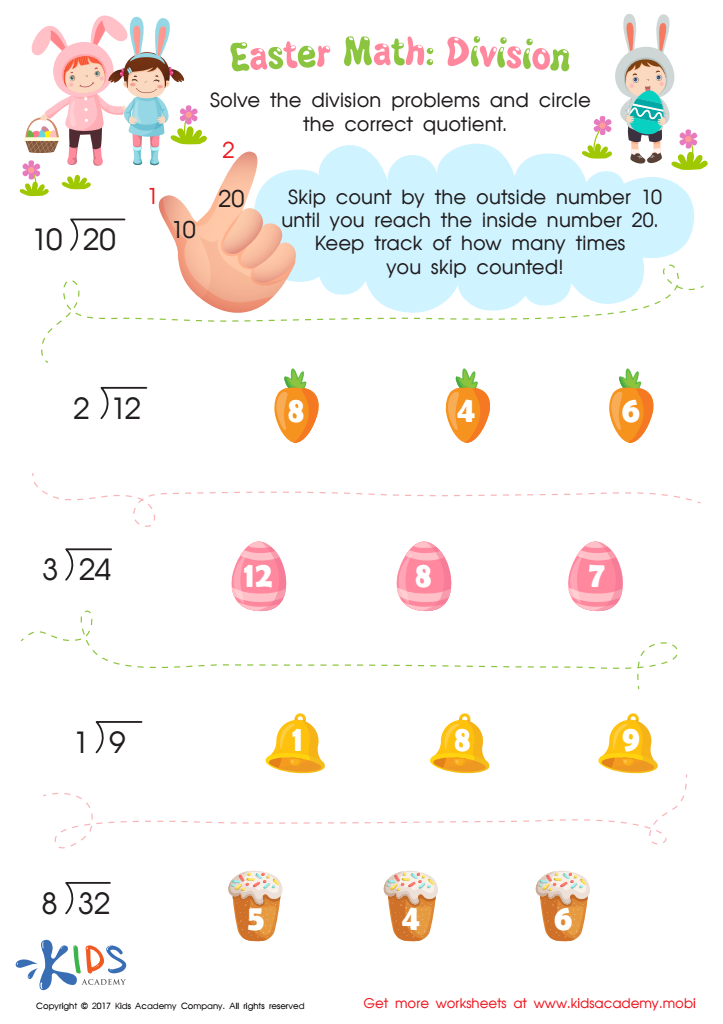
Division Worksheet
Try this Easter-themed PDF worksheet for grade 3: perfect for teaching division with a fun, new trick! It's full of bright, colorful pictures your child will love, and it's as easy as skip counting to solve the problems.
Division Worksheet
Worksheet
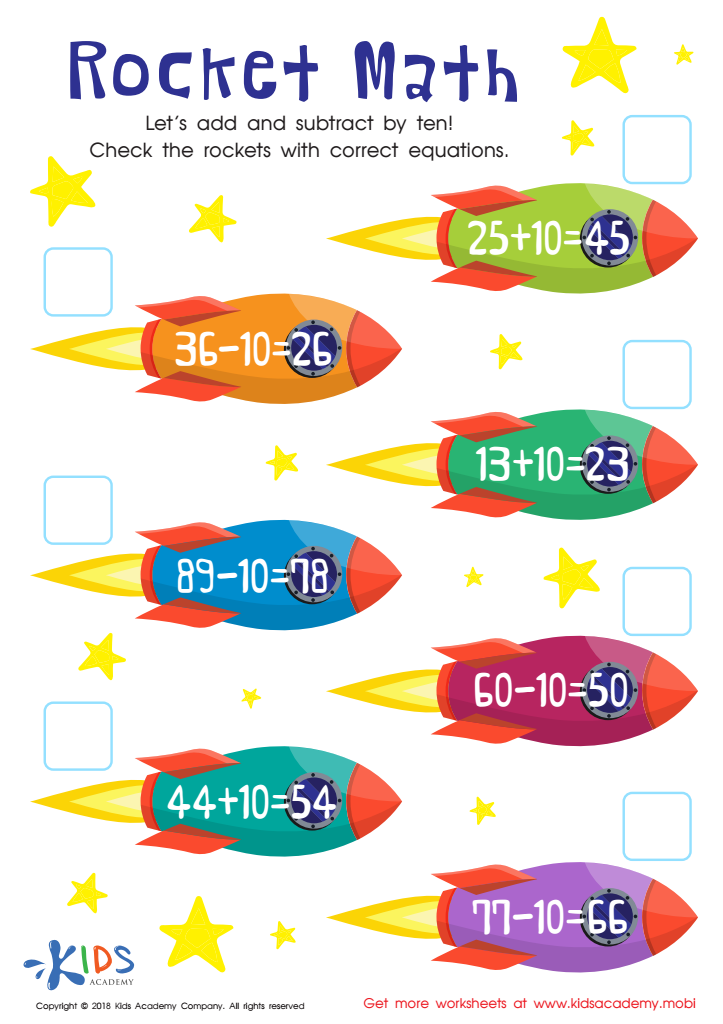
Rocket Math Worksheet
Your students will be math wizards in no time as they blast off on this exciting and colorful PDF worksheet. They'll use the 10s strategy to practice addition and subtraction, and they'll learn to skip count forwards and backwards. Keep them engaged and make learning fun!
Rocket Math Worksheet
Worksheet
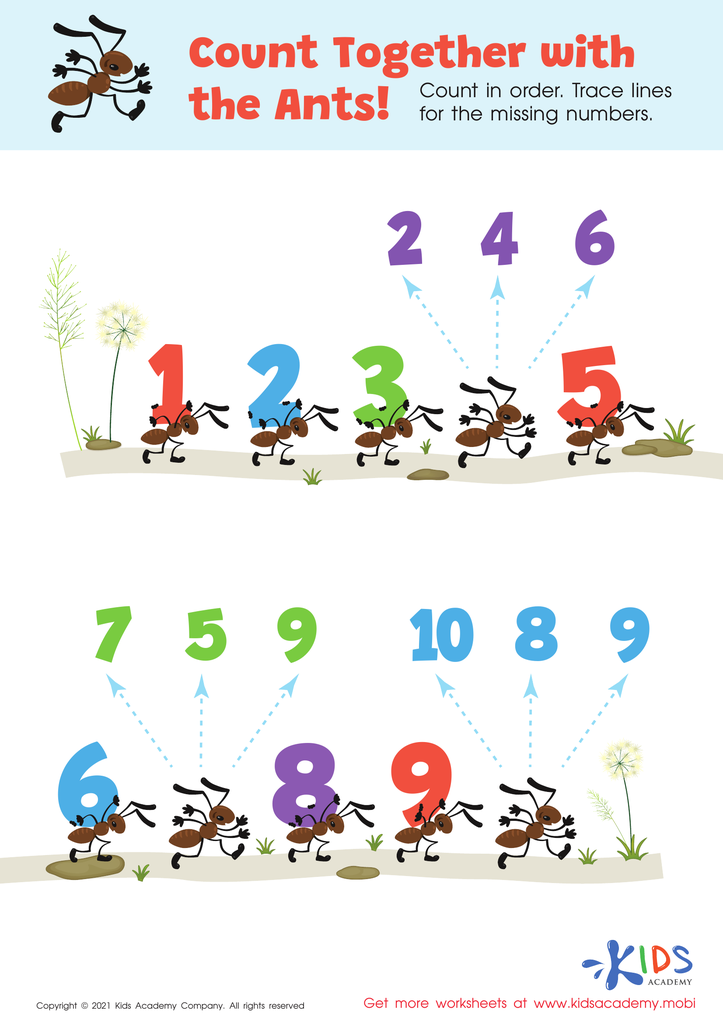
Count Together with the Ants Worksheet
Rather than letting kids get too deep in online games, keep them engaged with learning worksheets. Ask them to identify the insect in the picture, then count the ants. Help them trace lines to the missing numbers. It's simple and straightforward for young children to comprehend.
Count Together with the Ants Worksheet
Worksheet
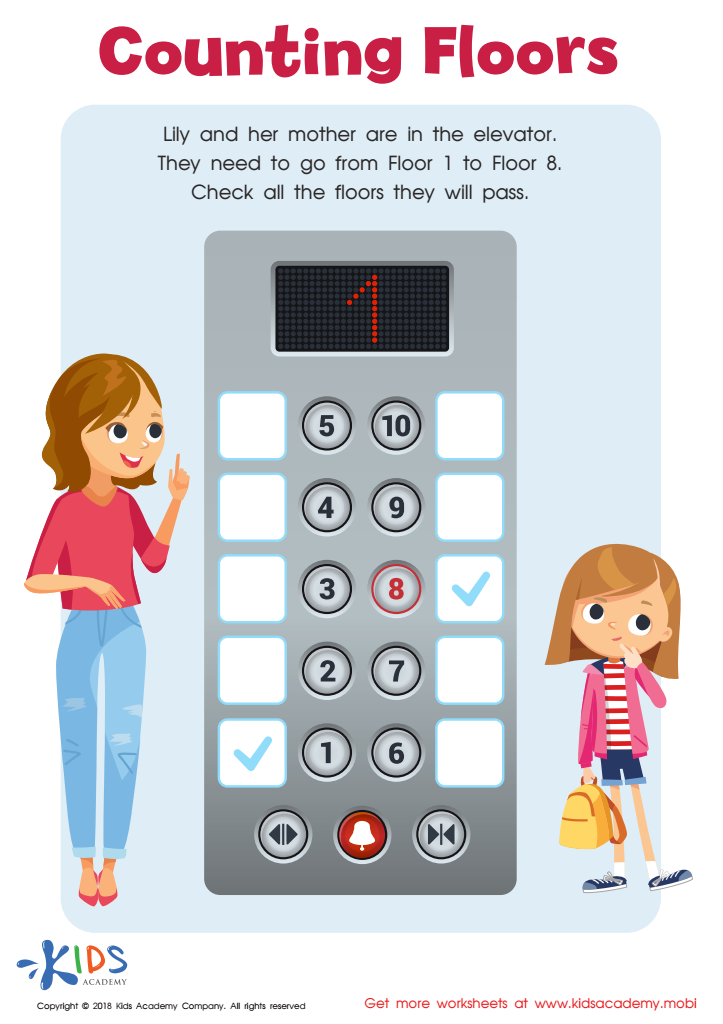
Counting Floors Worksheet
Take your kids on an elevator ride and have them help you. With this worksheet, little ones meet Lily and her mom. They're taking an elevator from Floor 1 to Floor 8. Ask them to check the floors they pass and help the two reach their destination.
Counting Floors Worksheet
Worksheet
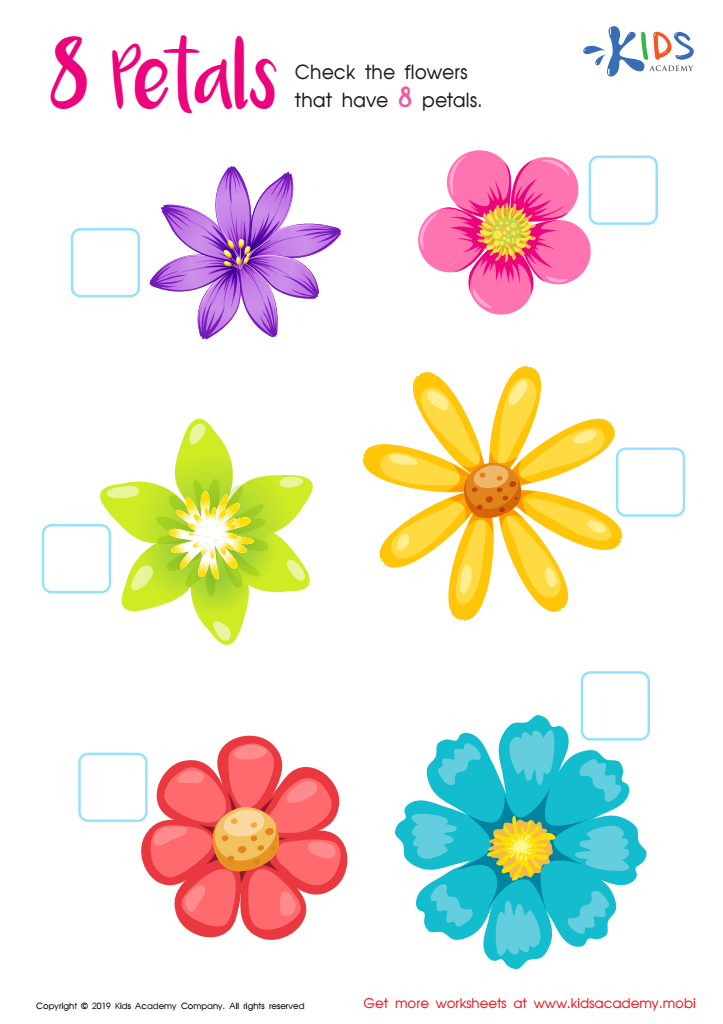
8 Petals Worksheet
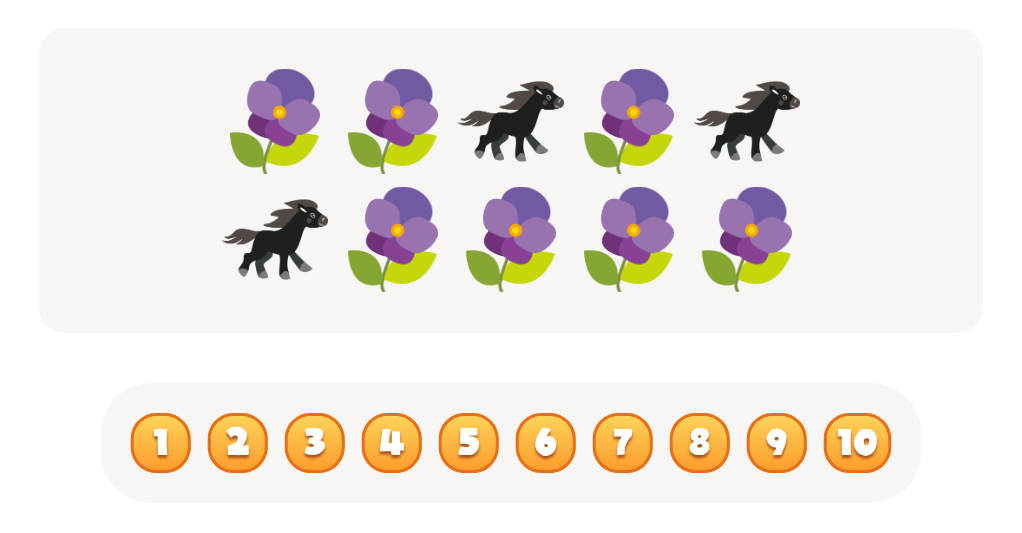
Help your children master counting with this fun worksheet. It's filled with colorful flowers and they must count the petals and check the flowers with 8 petals. It's a great way to practice their counting skills and have some fun too!
8 Petals Worksheet
Worksheet
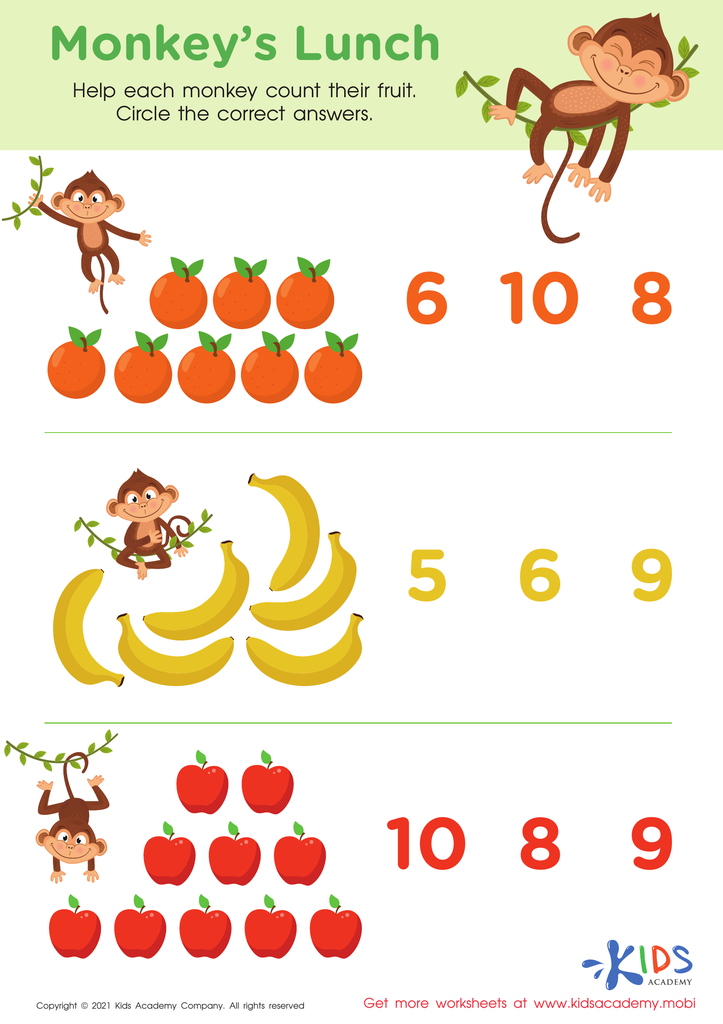
Monkey’s Lunch Worksheet
Download this free worksheet to help your kindergartner perfect their counting skills! Have your child circle the correct answers and count the fruits for the monkeys. It'll seem like fun, but your child is really learning how to count, group objects, and identify numbers.
Monkey’s Lunch Worksheet
Worksheet
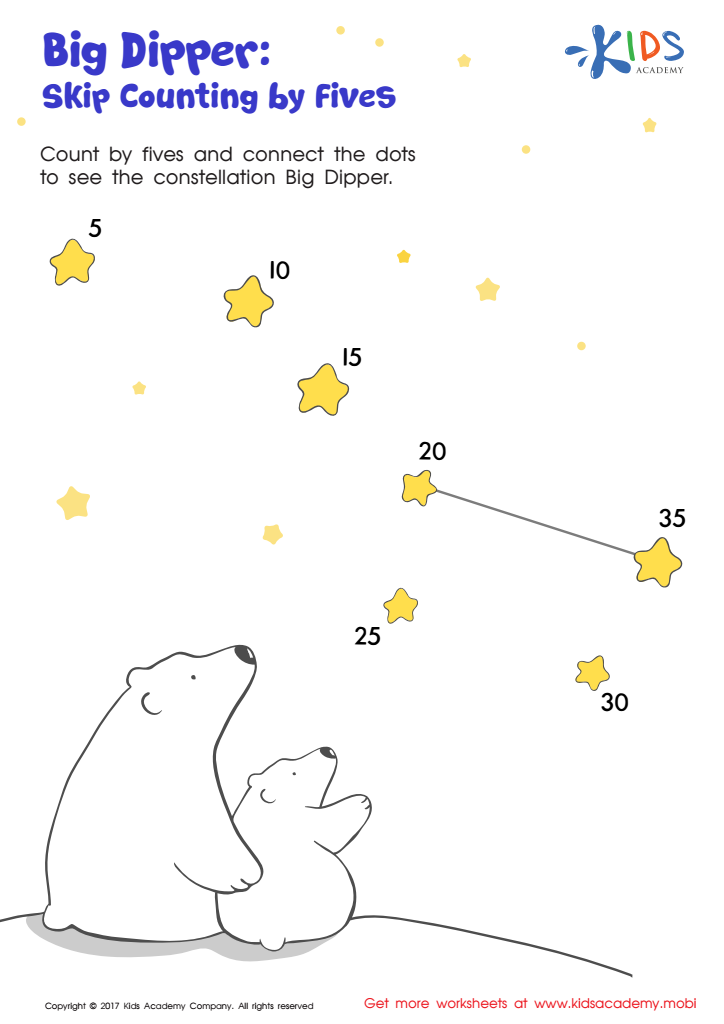
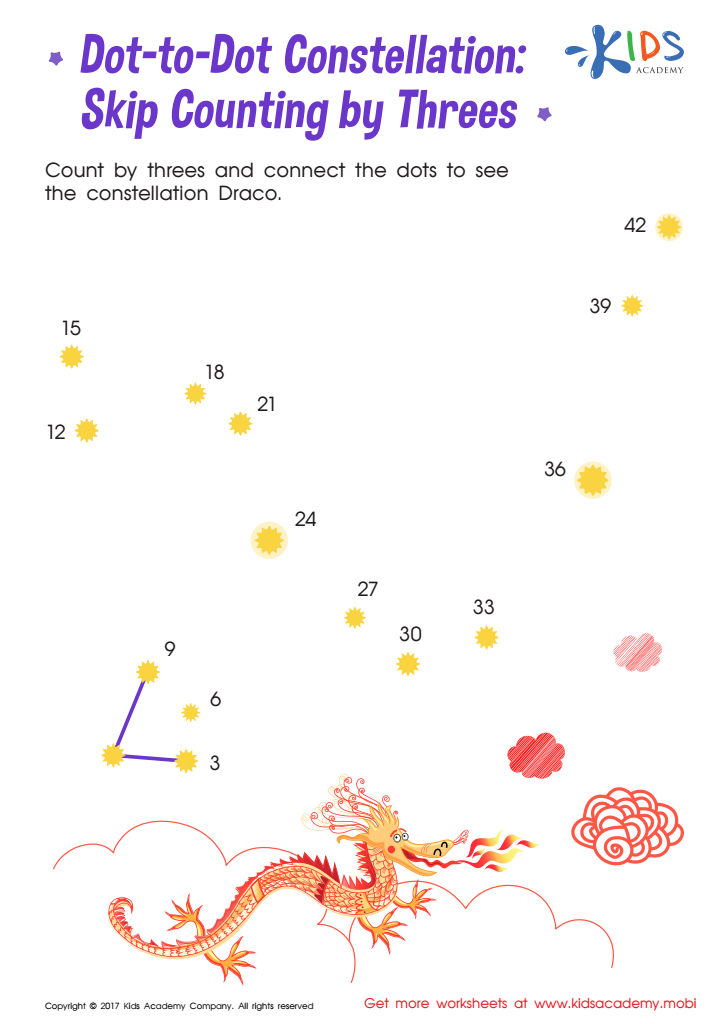
Skip Counting by 3s: Dot–to–Dot Constellation Printable
Worksheet
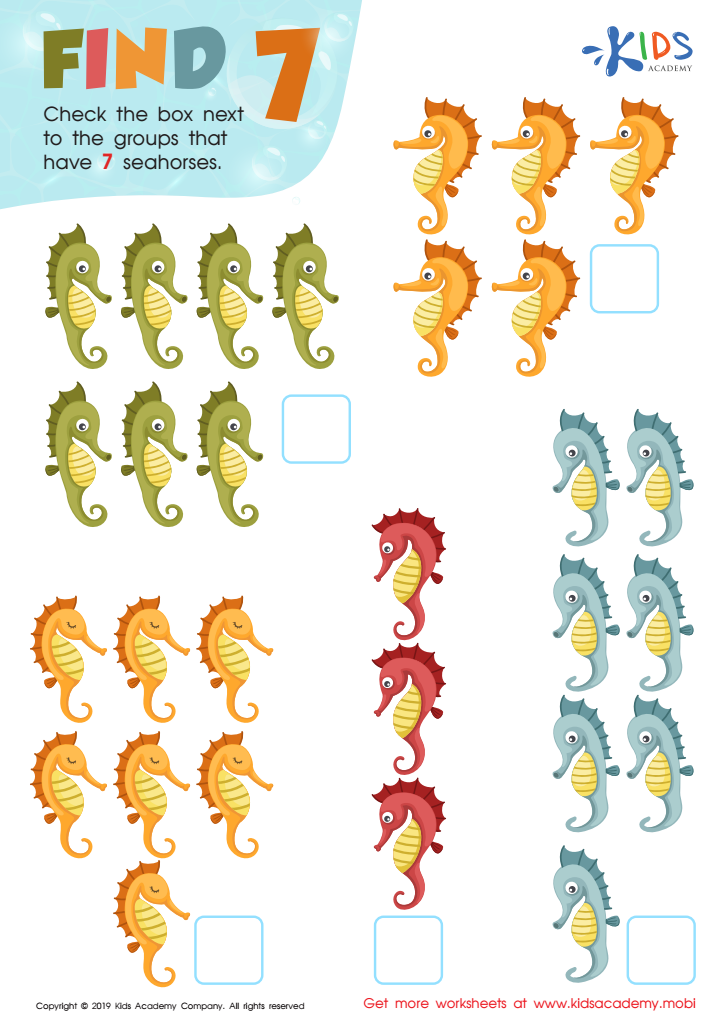
Find 7 Worksheet
Counting seahorses in groups of 7 is fun and educational with this free worksheet. Kids practice counting, one-to-one number representation, and check off the correct answers, all while admiring the brightly colored seahorses. A great way to make learning enjoyable!
Find 7 Worksheet
Worksheet
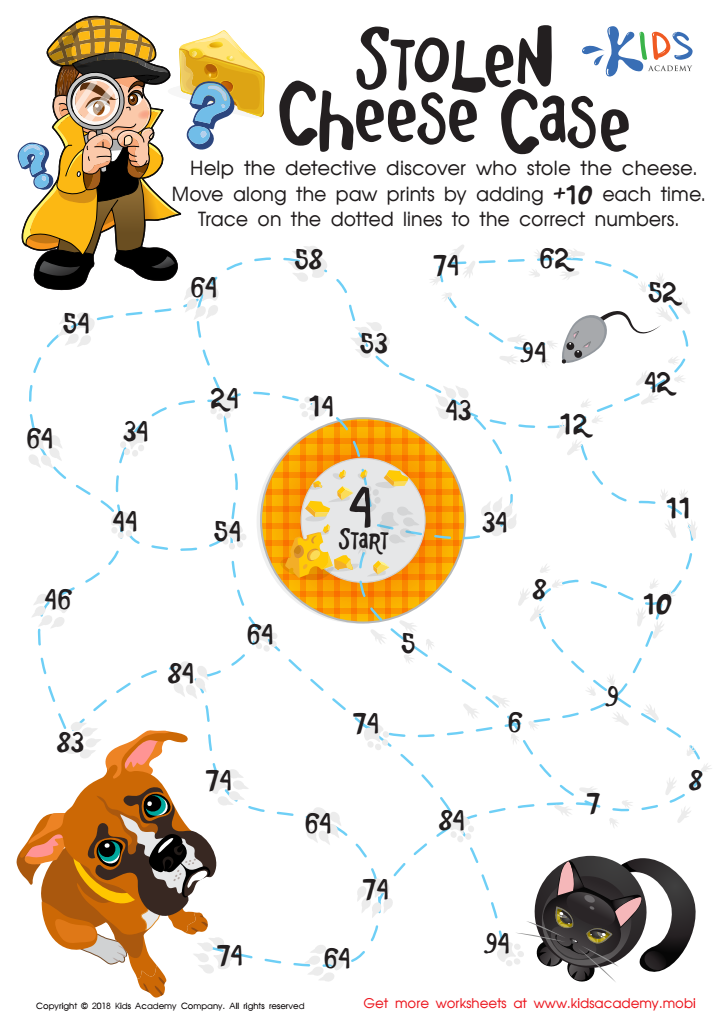
Stolen Cheese Case Maze Worksheet
Someone has stolen the cheese! Can your mathematician detective figure out who it is? Was it the dog, cat or mouse? Have them use traceable lines to skip count by 10 on this free PDF worksheet to solve the case. They'll be having fun and developing their skip-counting strategy at the same time!
Stolen Cheese Case Maze Worksheet
Worksheet
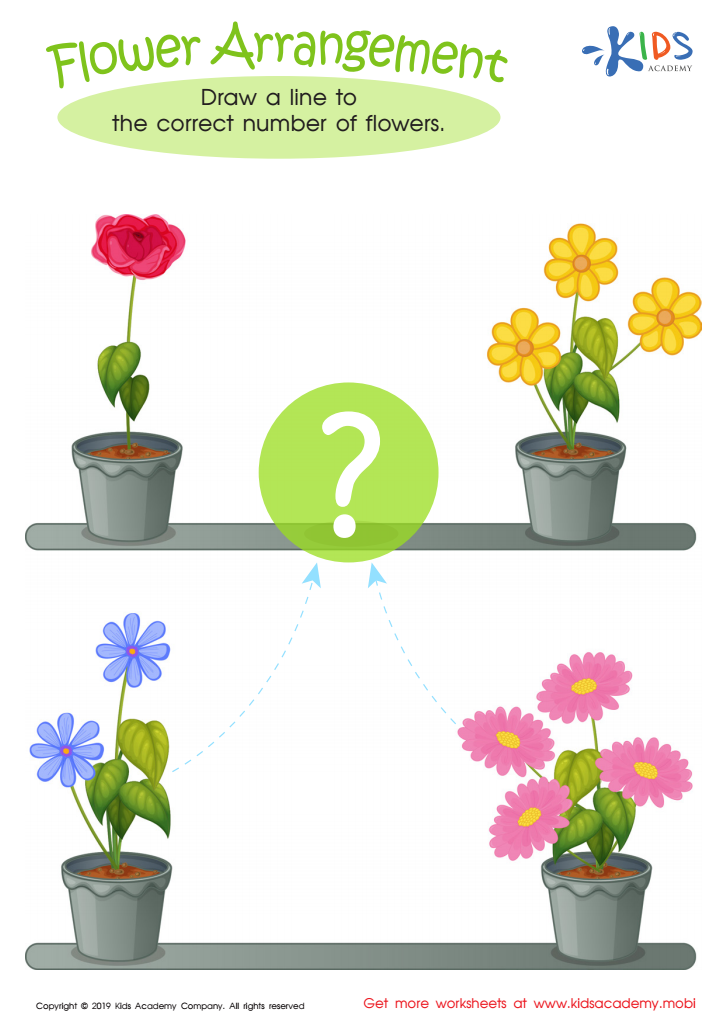
Flower Arrangement Worksheet
Your math whizzes can use flower power to showcase their counting skills with this bright PDF! One-to-one representation in pictures helps children build number sense, which leads to better math and computation efficiencies. This PDF features traceable lines for kids to draw to the correct number of flowers, all while practicing their counting with pretty pictures.
Flower Arrangement Worksheet
Worksheet
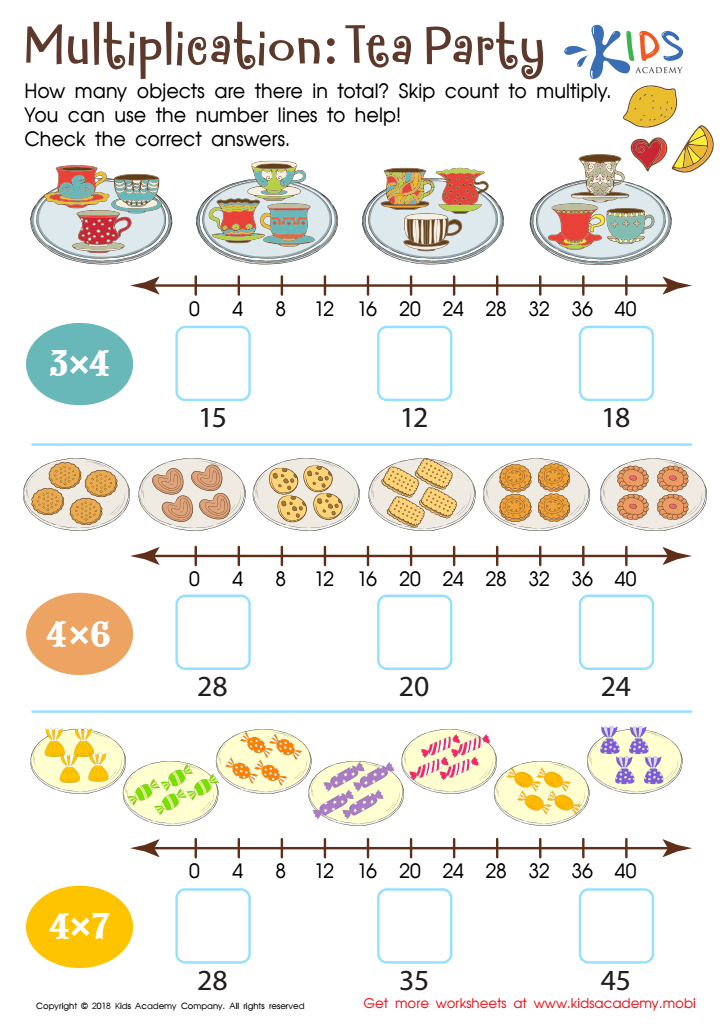
3rd Grade Math Worksheet Multiplication
Our 3rd-grade multiplication math worksheets are great fun! Kids practice using a number line and skip counting, and will feel like throwing a tea party after completing these! Perfect for honing in on multiplication skills.
3rd Grade Math Worksheet Multiplication
Worksheet
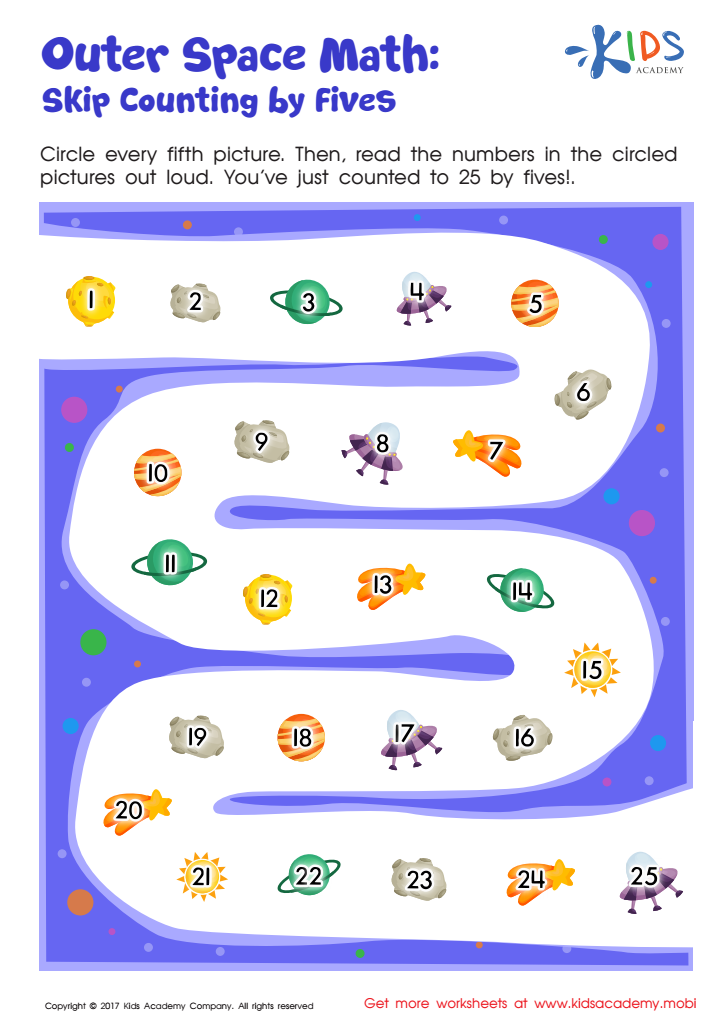
Skip Counting by 5s: Outer Space Math Printable
Let your kid learn skip counting by fives with this fun space-themed worksheet! With simple instructions, cute graphics, and an independent approach, your child will have a blast and gain a key skill for math success. Counting answers and learning numeracy, they'll sharpen cognitive and problem solving skills while having fun! A great way to introduce skip counting, they'll discover the concept through minimal assistance. Blast off!
Skip Counting by 5s: Outer Space Math Printable
Worksheet
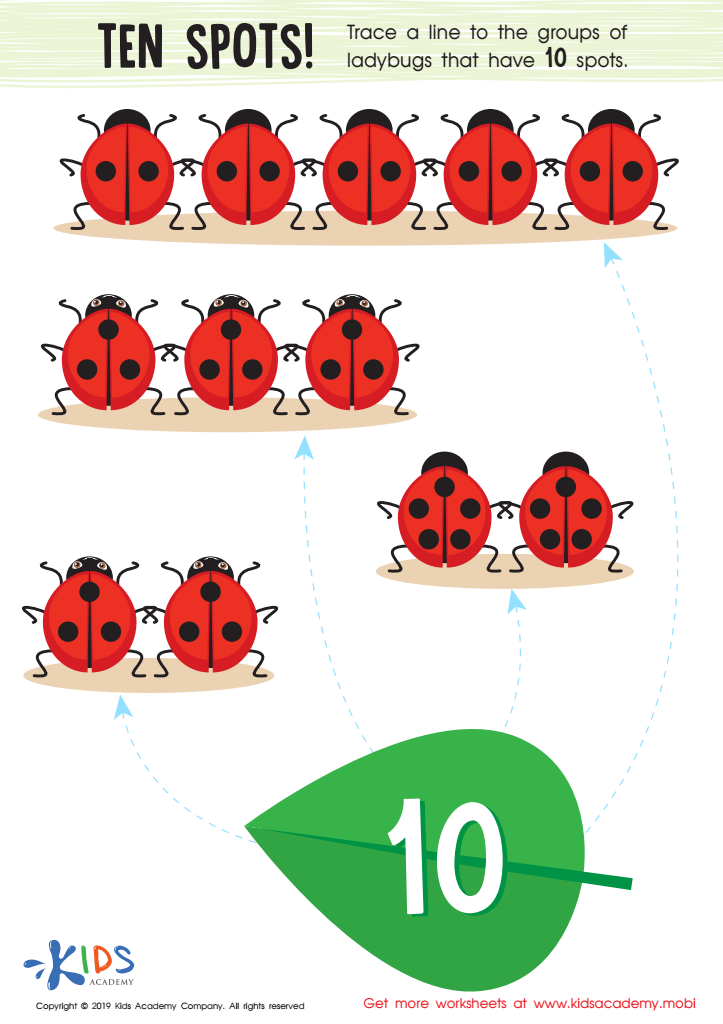
Ten Spots Worksheet
Kids love ladybugs! Ask them to tell you what stands out most--the spots. Show them a picture and help them count the spots. Trace a line to the group with 10 spots for a fun counting lesson.
Ten Spots Worksheet
Worksheet
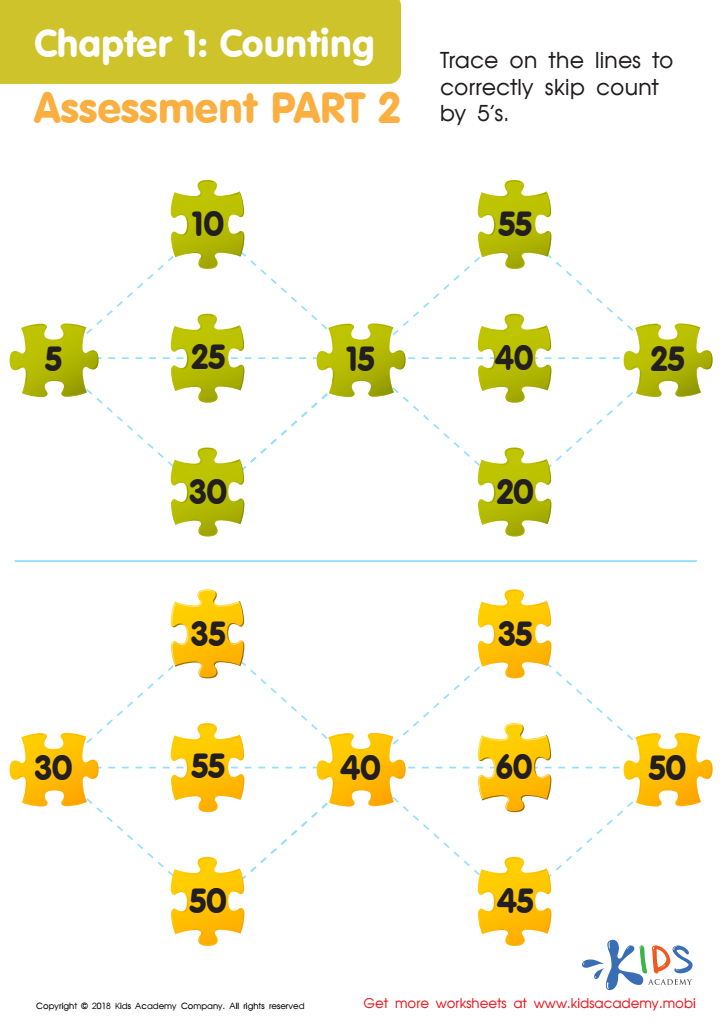
Counting: Assessment 2 Worksheet
By now, your child should be able to count up to the hundreds. If they're still learning the tens, that's okay - as long as they're going at their own pace. This worksheet will be easy if they can count to ten. Ask them to trace the lines and skip count by 5's.
Counting: Assessment 2 Worksheet
Worksheet
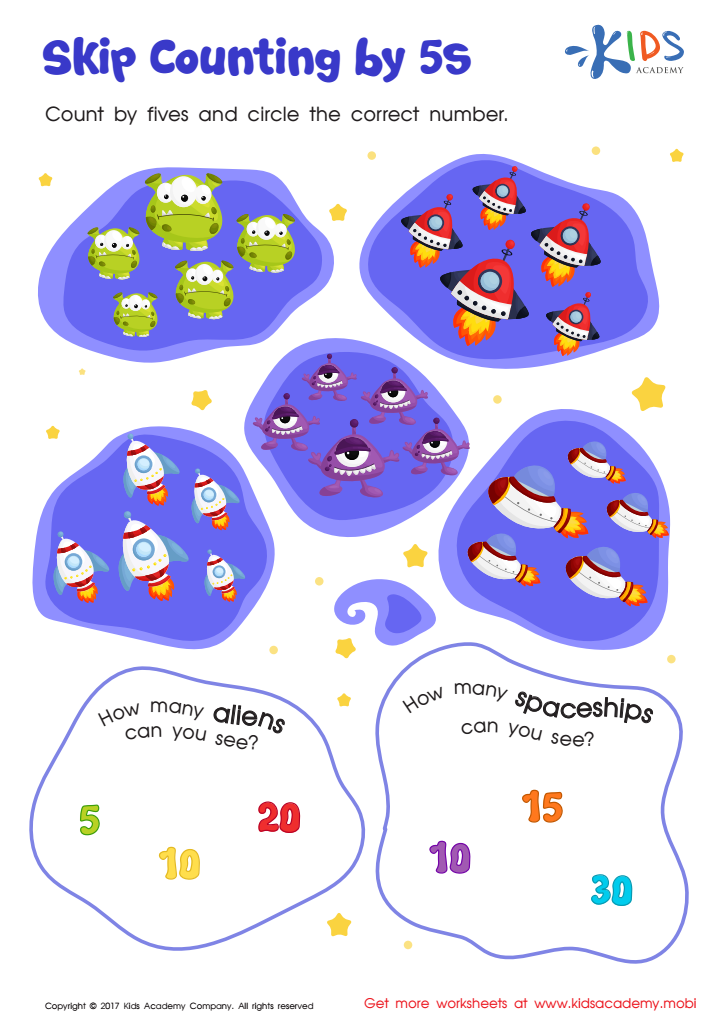
Skip Counting by 5s: Aliens and Spaceships Printable
Your child will love taking an intergalactic adventure as they practice skip counting by 5's with this worksheet! It'll help them identify and recognize large groups of numbers, categorize objects to count them, and prepare them for math concepts like multiplication. And with silly space graphics, they'll be motivated for more practice!
Skip Counting by 5s: Aliens and Spaceships Printable
Worksheet
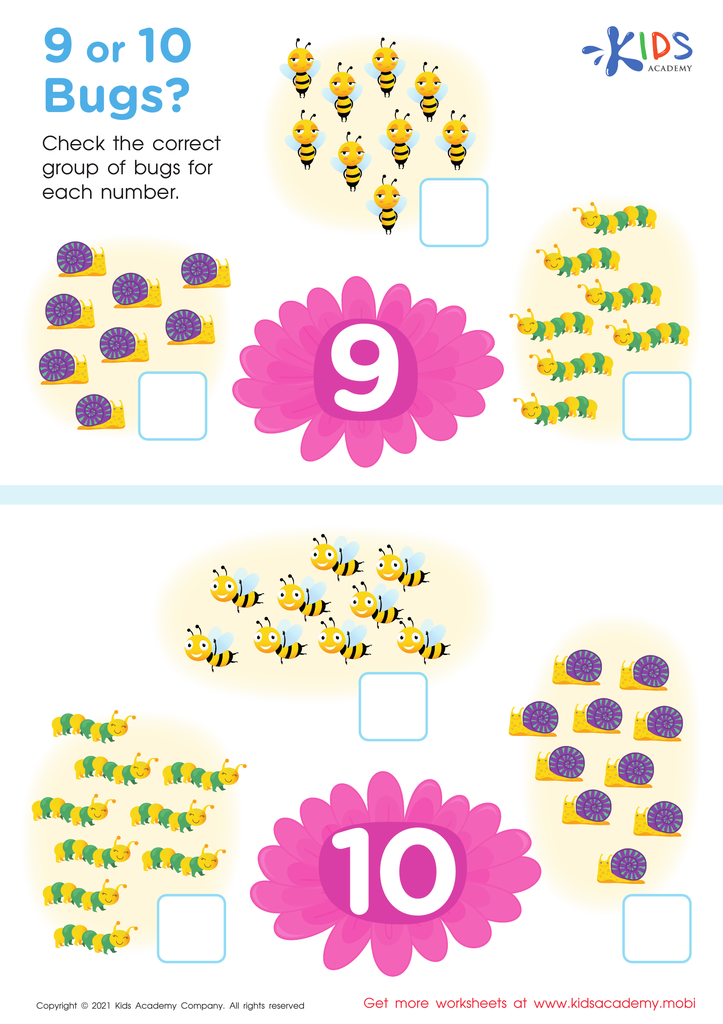
9 or 10 Bugs Worksheet
Help your kids count faster and better by turning everyday tasks into counting lessons. With this worksheet, they'll count and match the group of bugs to the given number. Kids who love insects will have a blast completing the tasks and practicing their counting skills.
9 or 10 Bugs Worksheet
Worksheet
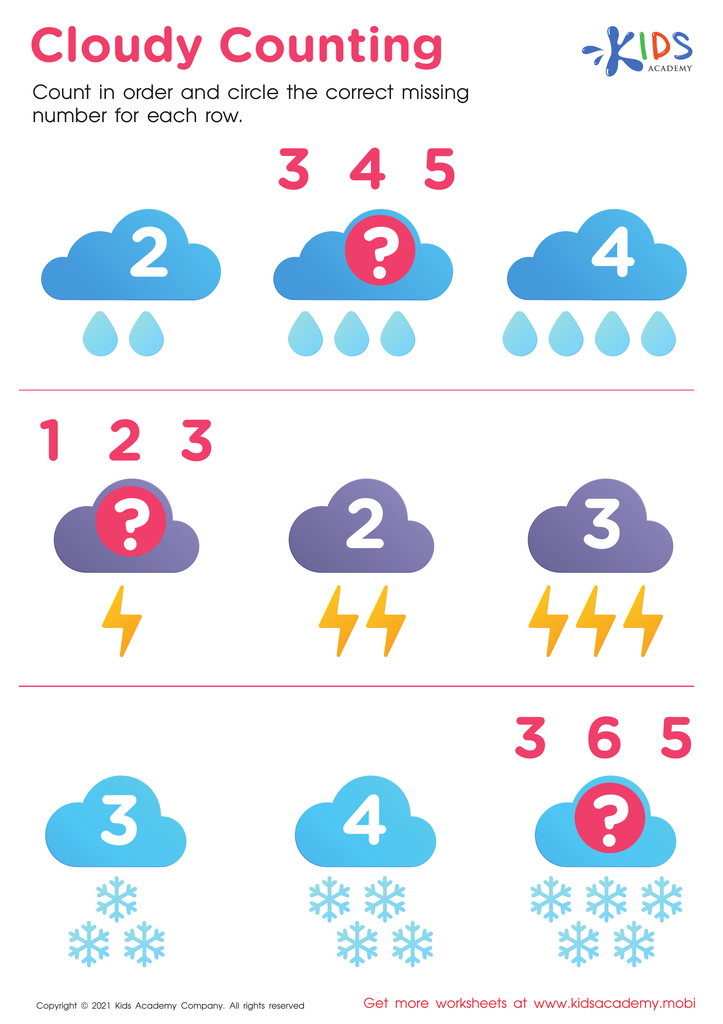
Cloudy Counting Worksheet
This worksheet is a fun way to help your children learn math and weather. Ask your child to identify the weather in the picture before they start counting. Then, help them count the numbers on the clouds and circle the right missing numbers.
Cloudy Counting Worksheet
Worksheet
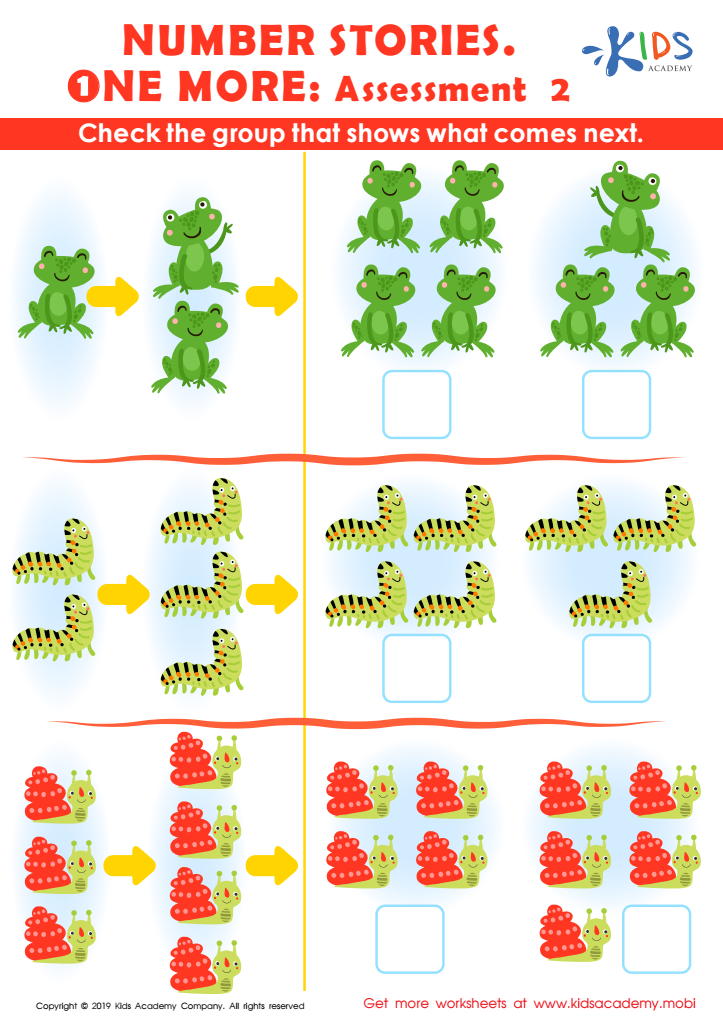
Number Stories One More – Assessment 2 Worksheet
Tracing is a great activity for kids. They can count and trace numbers, recognize animals, and practice drawing on dotted lines. It's entertaining and educational, helping children learn valuable counting skills.
Number Stories One More – Assessment 2 Worksheet
Worksheet
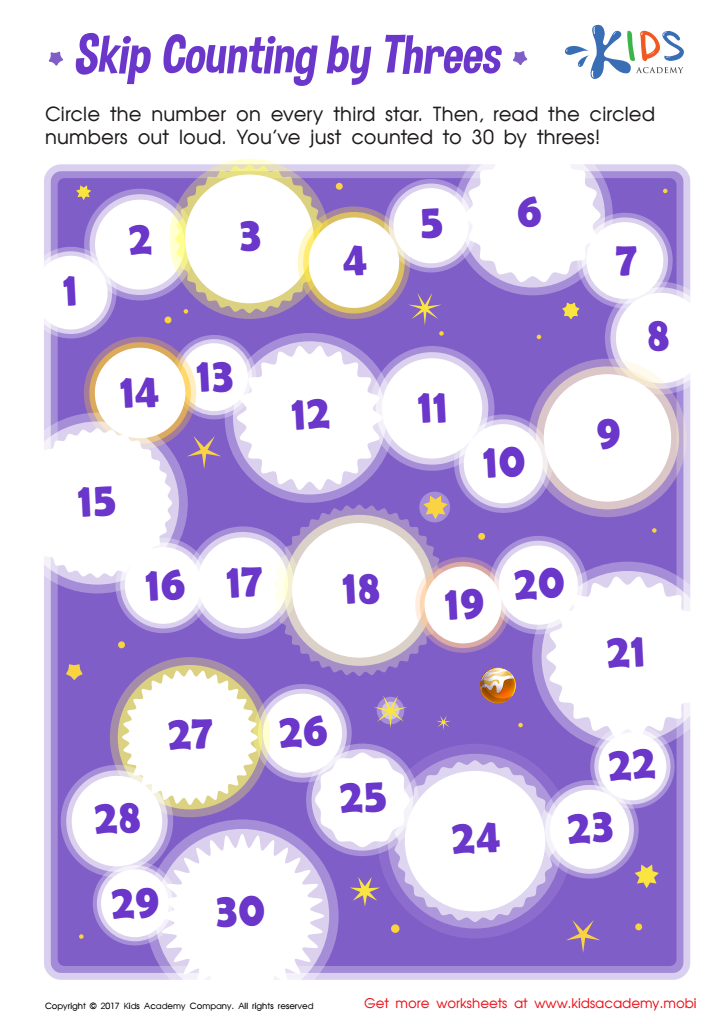
Skip Counting By Three Printable
Inspire your child with this star-themed skip counting worksheet! It offers a fun way to learn while providing a foundation for more advanced math skills, like adding, subtracting, and multiplication. It will help your child gain a sense of numeracy, practice problem solving, and stay ahead in math.
Skip Counting By Three Printable
Worksheet
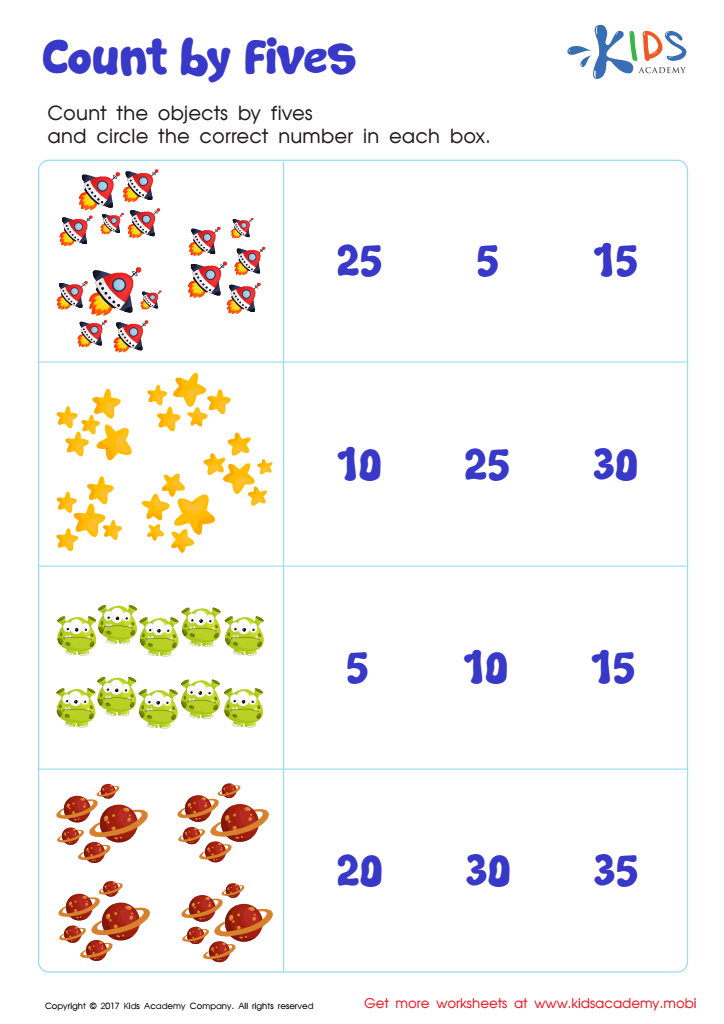
Skip Counting by 5s: Space Math Printable
This worksheet will provide your child with fun and practice counting by 5's. It'll help them visually count numbers, use problem solving skills and make connections between individual and groups of numbers. Counting money and various math concepts will become easier with this invaluable skill. Blast off with this fun and educational worksheet featuring space graphics.
Skip Counting by 5s: Space Math Printable
Worksheet
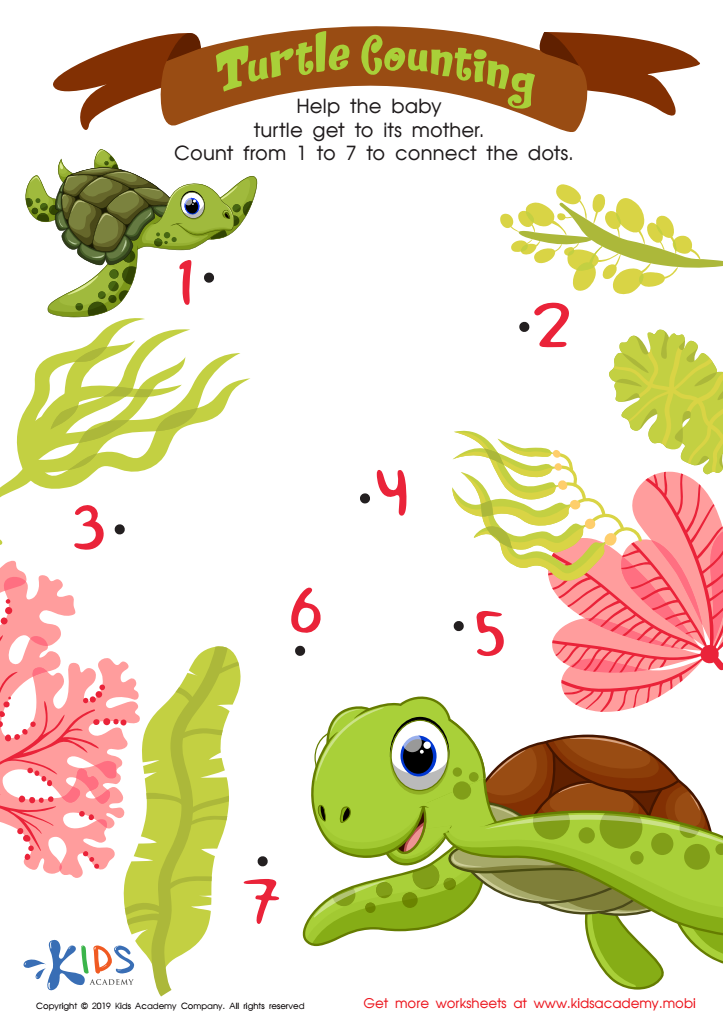
Turtle Counting Worksheet
Help your child identify the turtle in the picture and teach them about turtles. From their diet to the life cycle, they'll learn a lot. Now, help the baby turtle return to its mother. Count from 1 to 7, then connect the dots on the printout.
Turtle Counting Worksheet
Worksheet
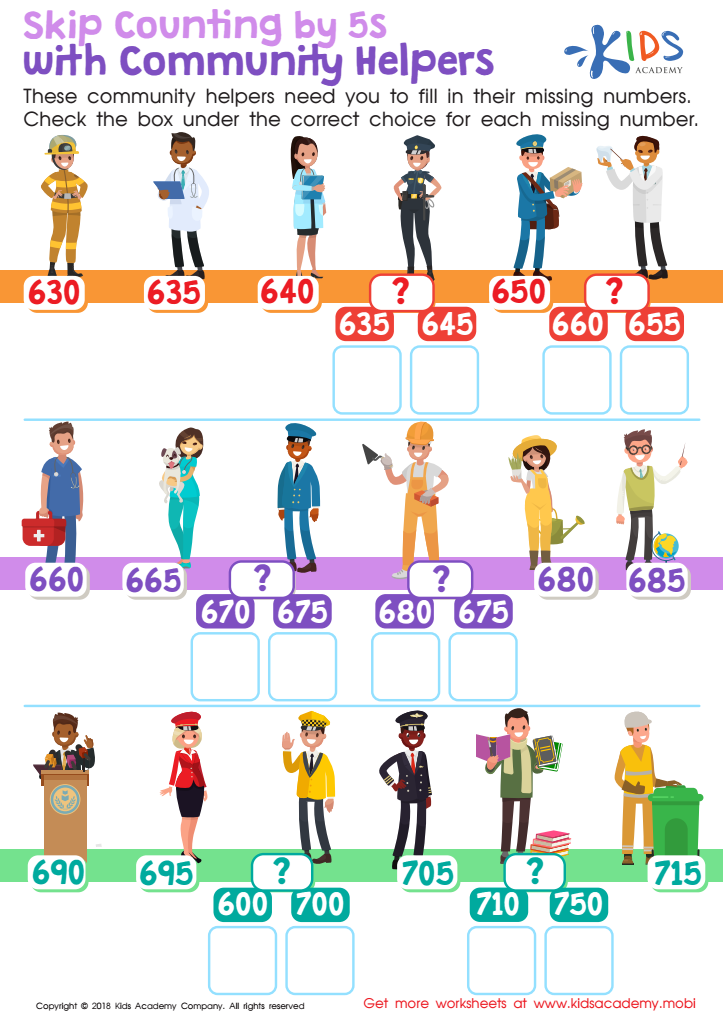
Skip Counting by 5s With Community Helpers Worksheet
This free worksheet combines social studies with math! Kids will practice counting by 5s, rounding numbers and honing their computation skills while also familiarizing themselves with community helpers. Develop your child's number sense and strengthen their math skills - all through a fun and interactive activity.
Skip Counting by 5s With Community Helpers Worksheet
Worksheet
Join Kids Academy for Free
Who is primarily going to use this learning content?








Counting is one of the foundational skills in early childhood education and is critical for children ages 3-8 for a variety of reasons. At its core, counting is the basis for developing number sense—a crucial aspect of mathematics that involves understanding numbers, knowing their relationships, and grasping their operations. For young learners, the ability to count introduces them to patterns, order, and quantification, serving as the building blocks for more complex mathematical concepts like addition, subtraction, and multiplication.
Moreover, counting fosters cognitive development by enhancing memory, attention, and problem-solving skills. When children practice counting, they also engage in logical thinking and develop an understanding of cause-and-effect relationships. This is not just limited to math; these cognitive skills are transferable to other areas of learning and daily life activities.
Socially, counting in groups or with a teacher encourages cooperative learning and verbal communication, helping children articulate their thought processes and understand others. This can boost confidence and social skills, preparing them better for school and societal interactions.
Emotionally, success in counting and other early math skills can provide positive reinforcement, fostering a sense of achievement and curiosity for learning.
Therefore, both parents and teachers should prioritize teaching counting in these formative years, as it lays the groundwork for future academic success and life skills.








