Understanding fractions Geometry Worksheets for Ages 3-8
36 filtered results
-
From - To
Unlock your child's math potential with our "Understanding Fractions Geometry Worksheets" designed for ages 3-8! These fun, engaging worksheets introduce young learners to essential fraction concepts through colorful geometry exercises. Kids will explore halves, thirds, and quarters while enhancing their spatial awareness and critical thinking skills. Perfect for early education, these worksheets foster a love for math by combining visual learning with hands-on practice. Each activity is crafted to align with curriculum standards, making learning seamless and enjoyable. Give your child the tools to excel in mathematics with our easy-to-follow, printable resources. Make fractions fun today!
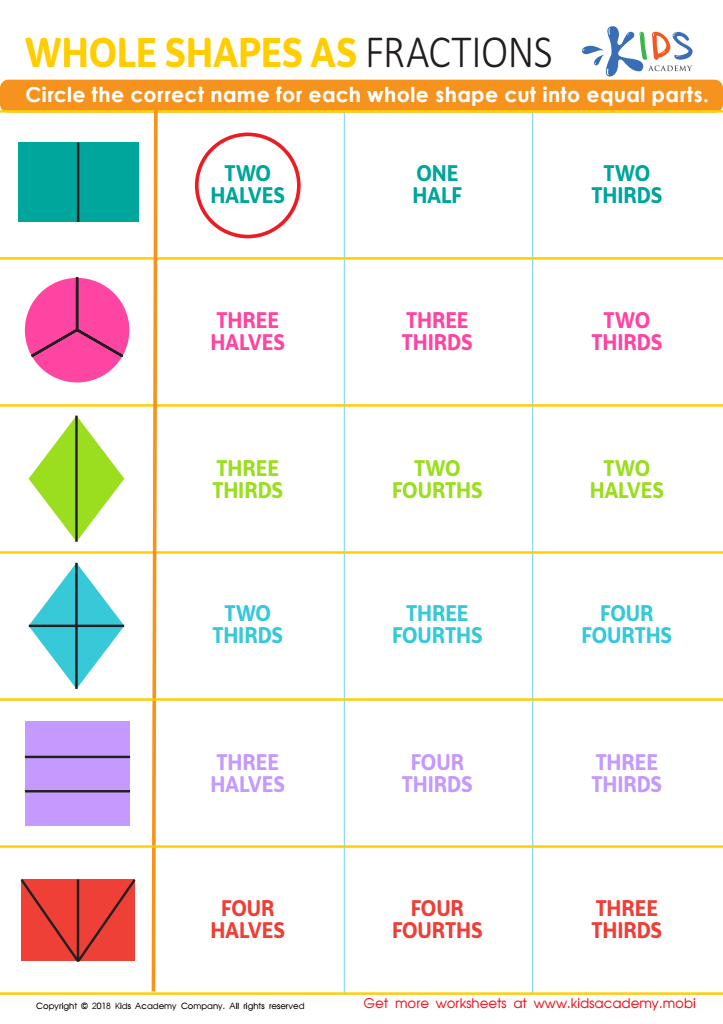
Whole Shapes as Fractions Worksheet
 Assign to My Students











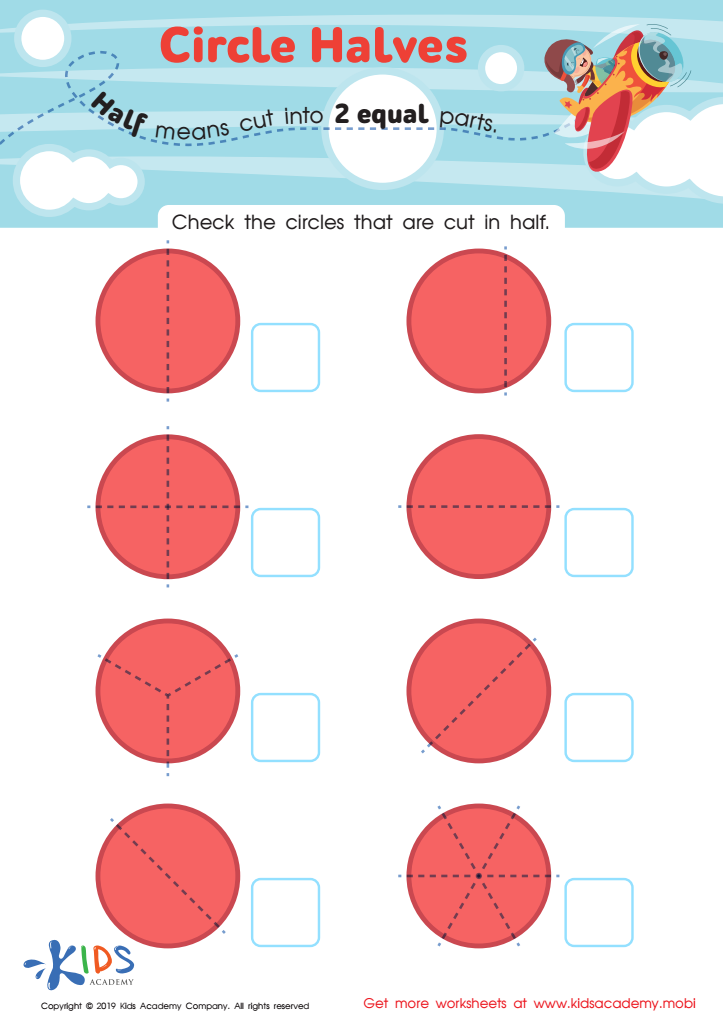
Circle Halves Worksheet
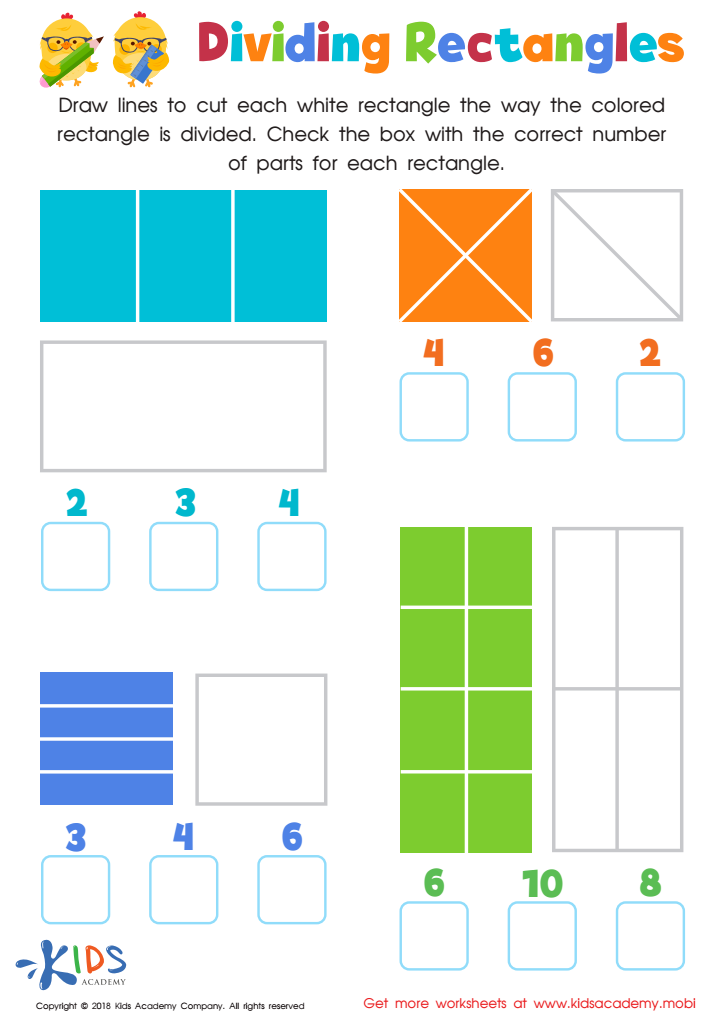
Dividing Rectangles Worksheet
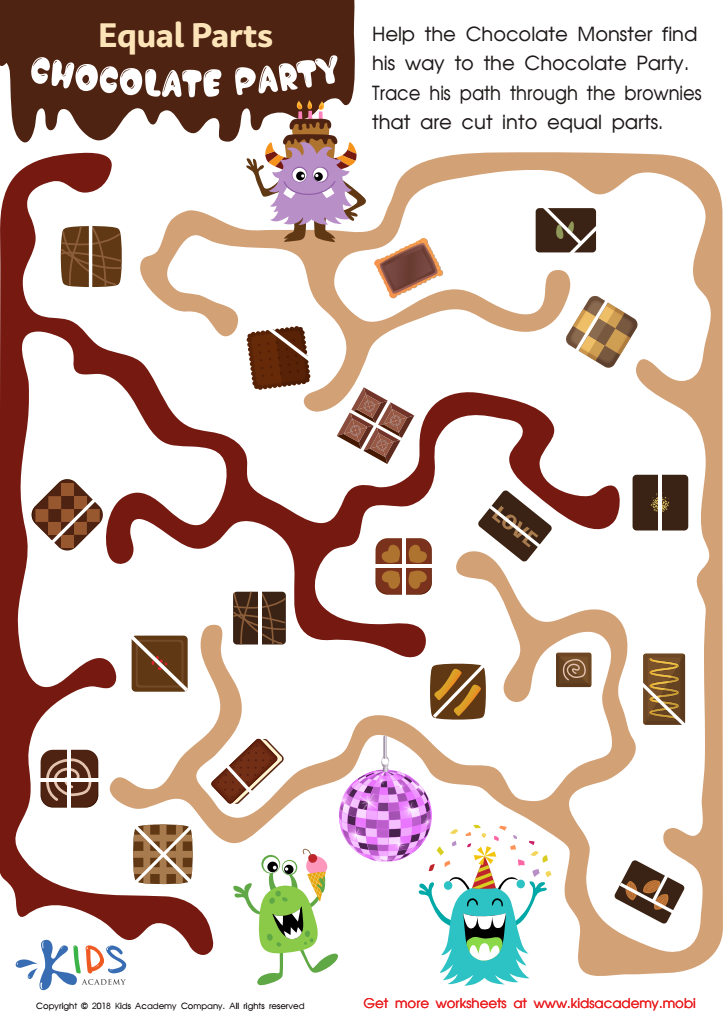
Equal Parts: Chocolate Party Worksheet
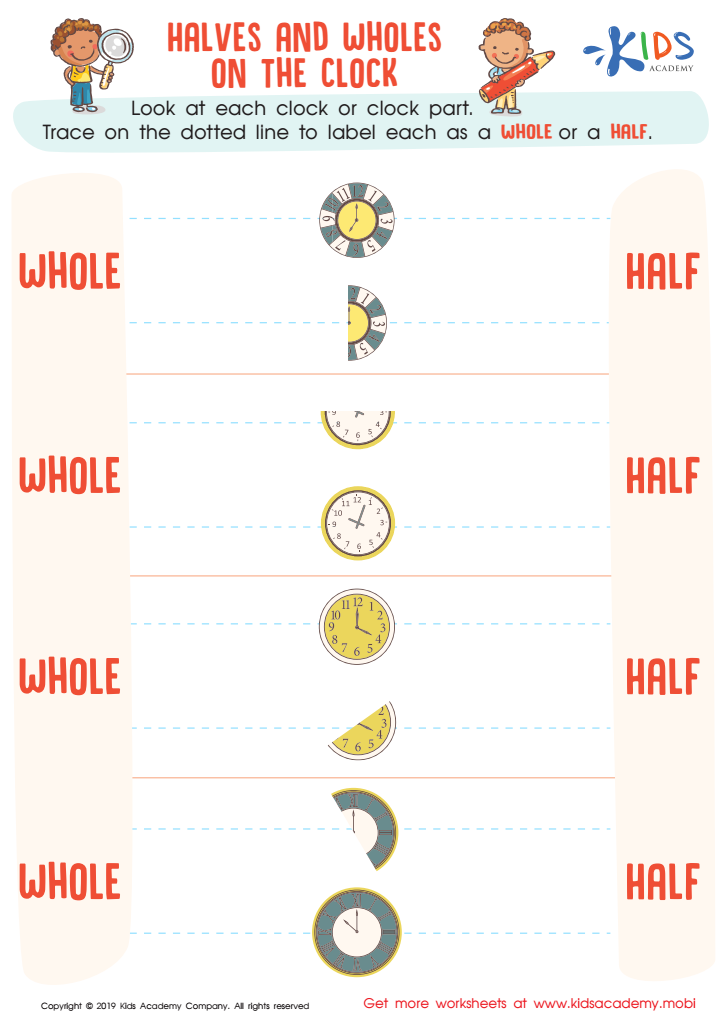
Halves and Wholes on the Clock Worksheet
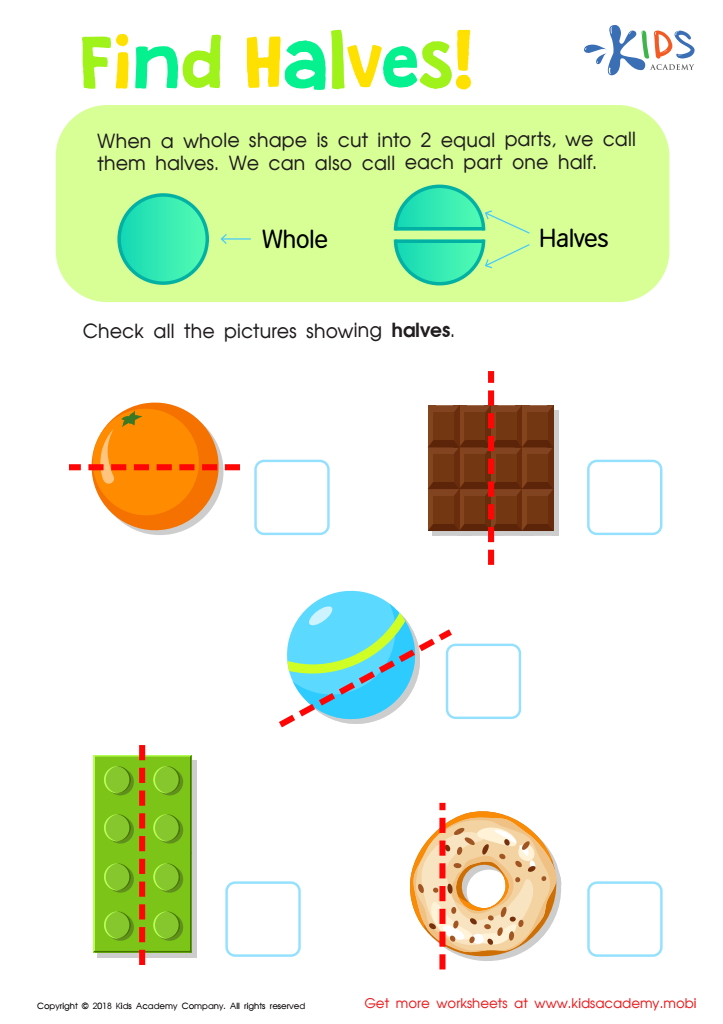
Find Halves Worksheet
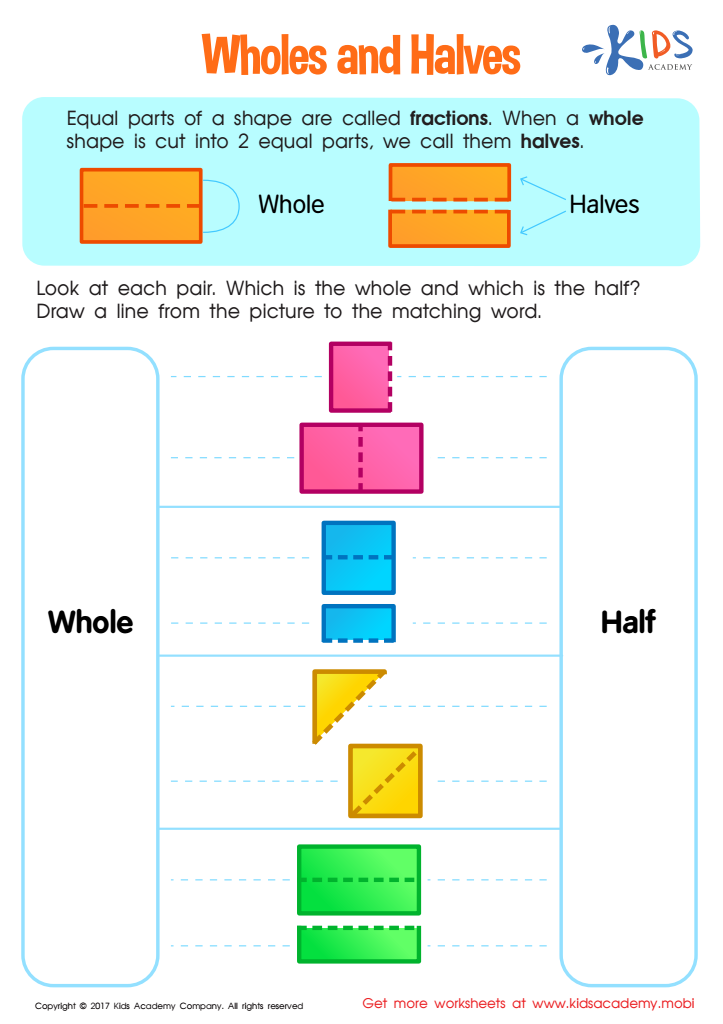
Wholes and Halves Worksheet
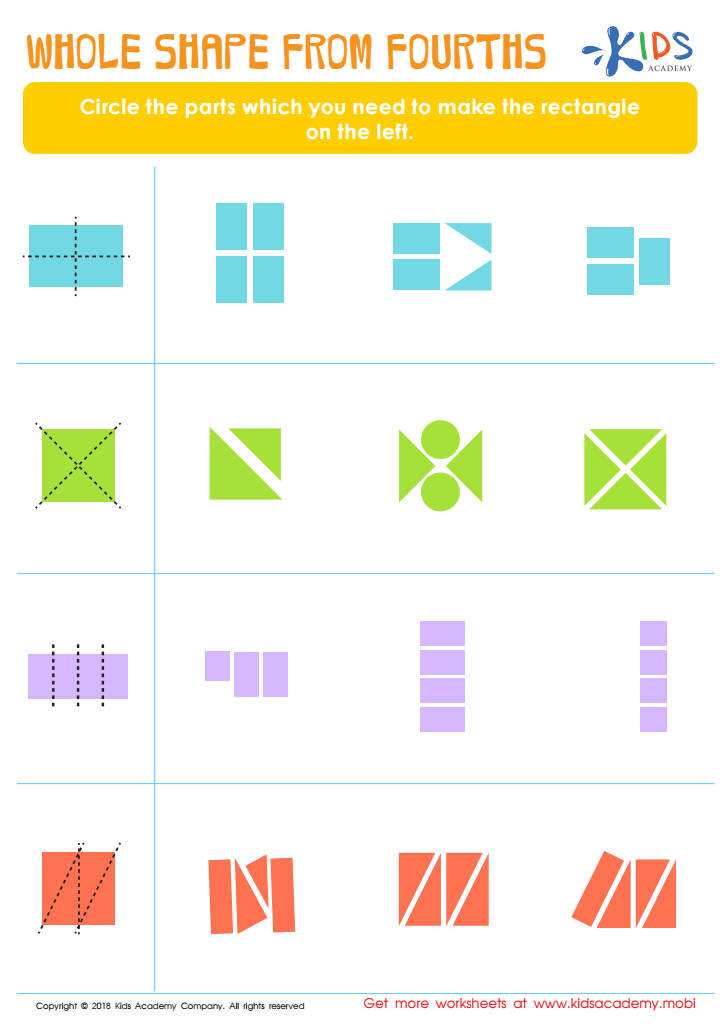
Whole Shape from Fourths Worksheet
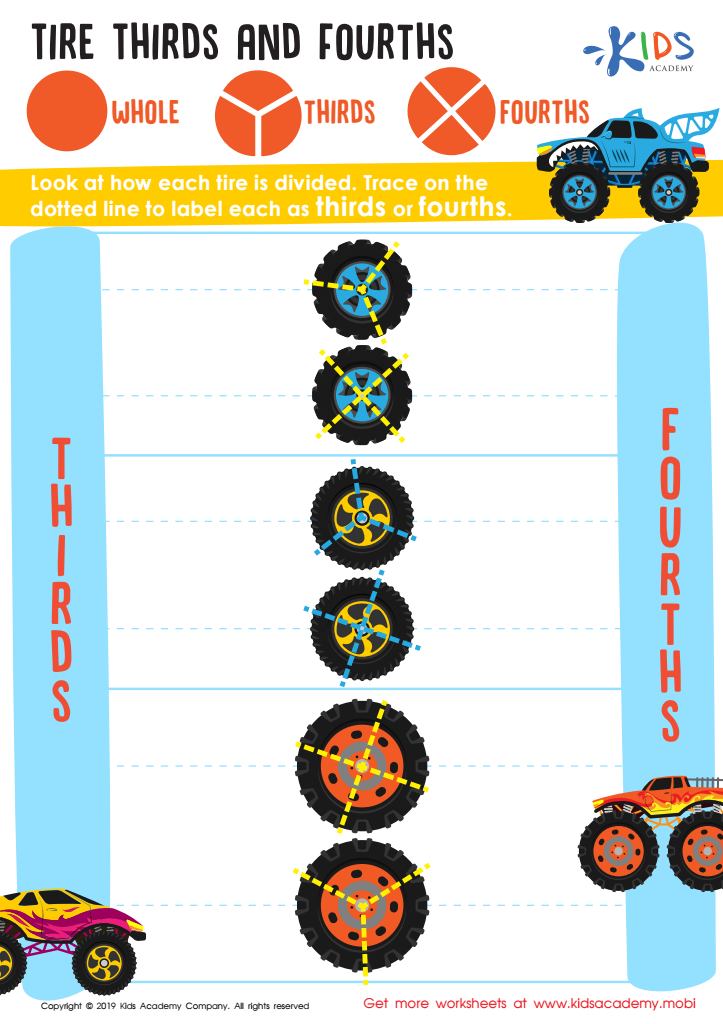
Tire Thirds and Fourths Worksheet
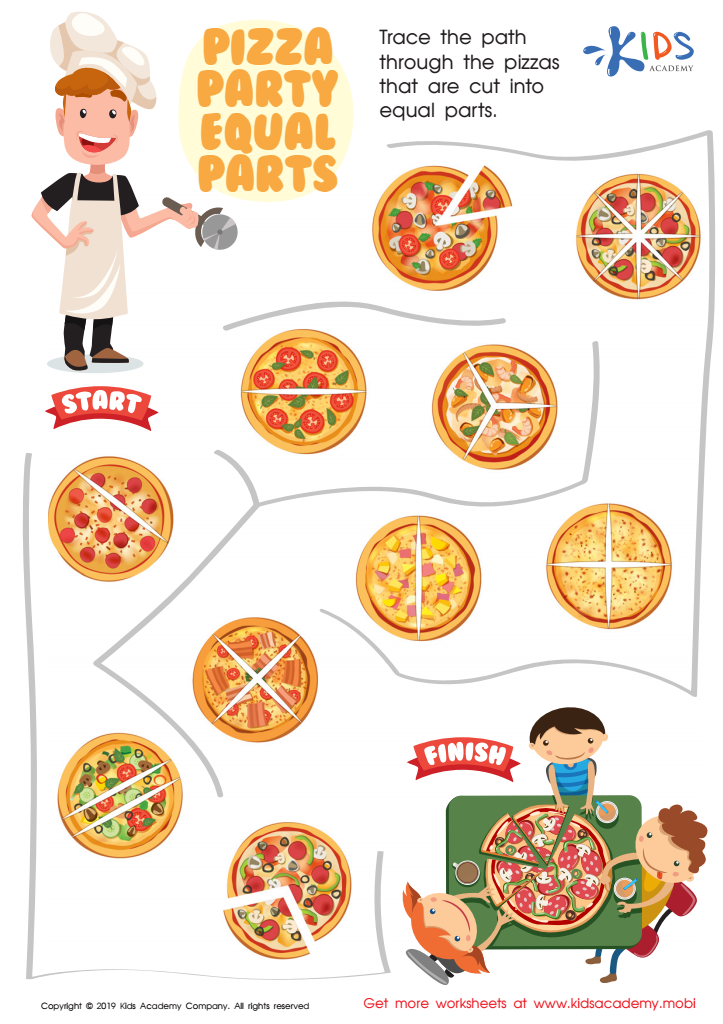
Pizza Party Equal Parts Worksheet
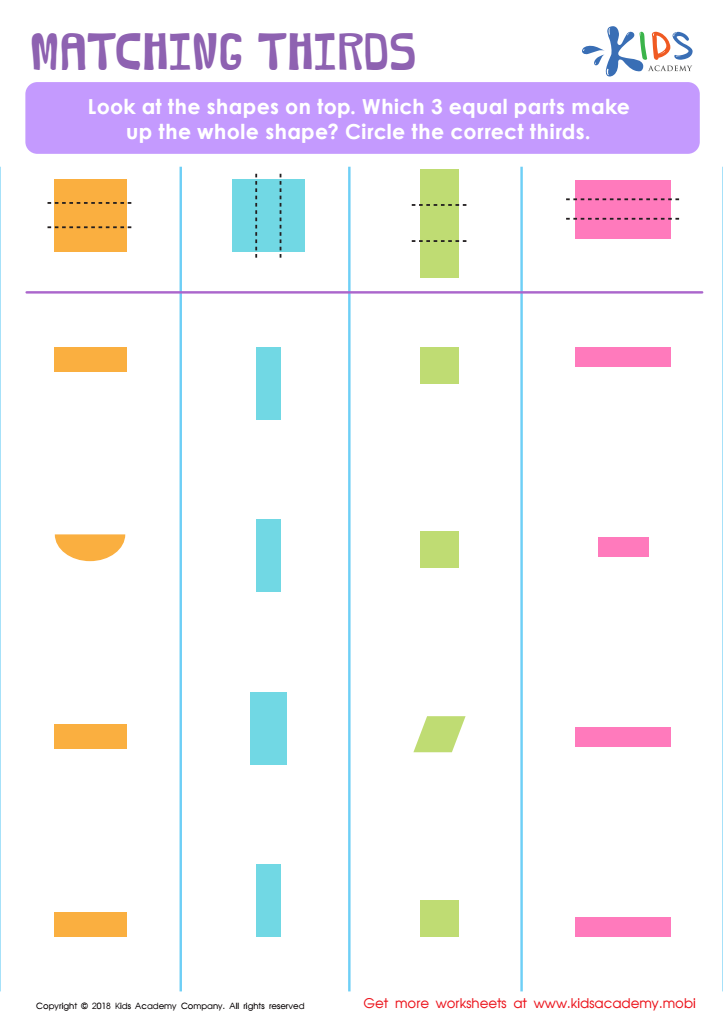
Matching Thirds Worksheet
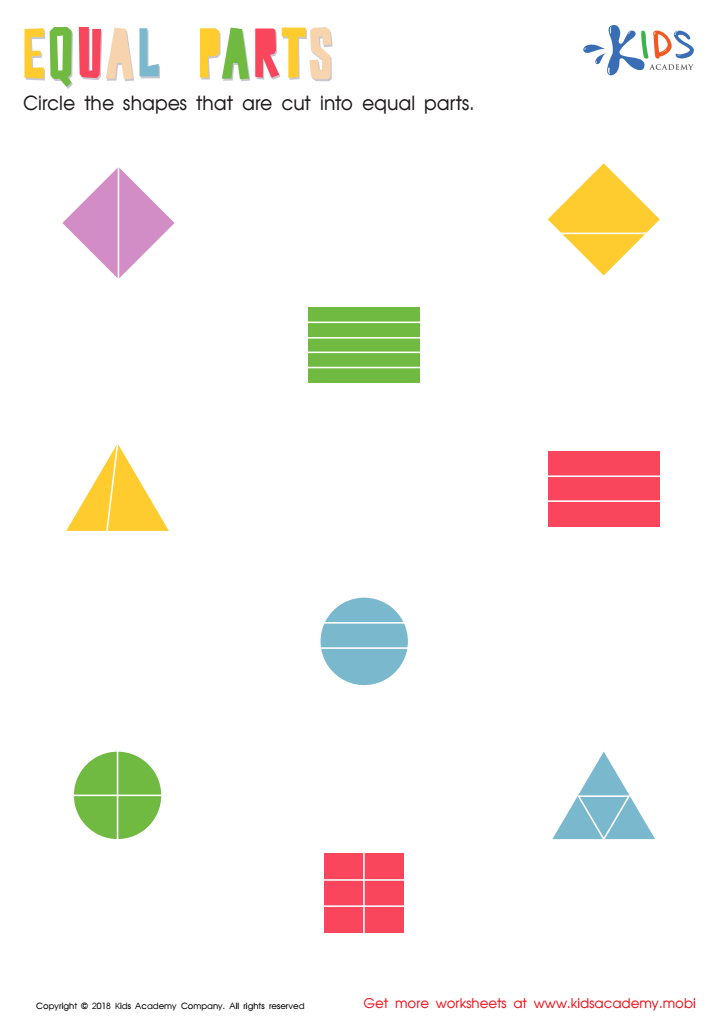
Equal Parts: Shapes Worksheet
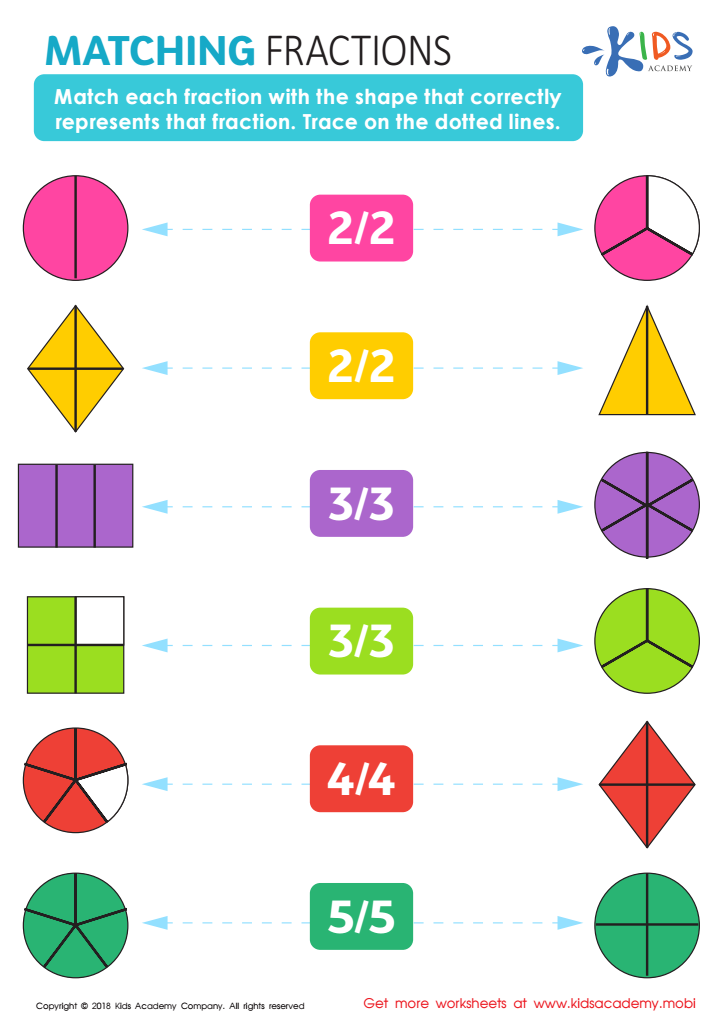
Matching Fractions Worksheet
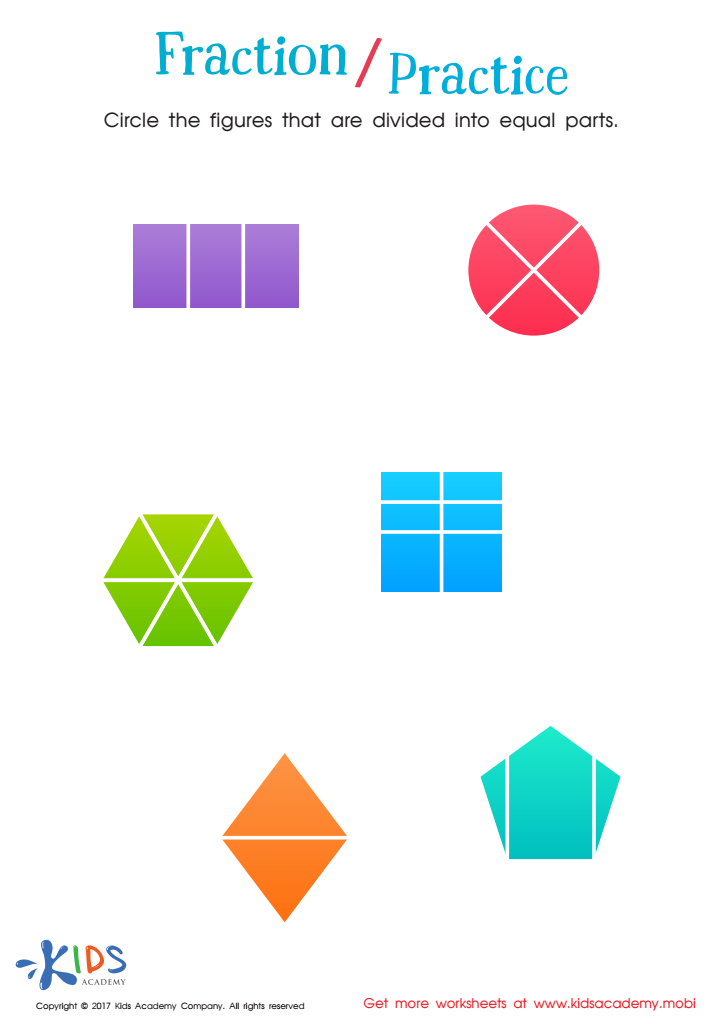
Fractions: Shapes Worksheet
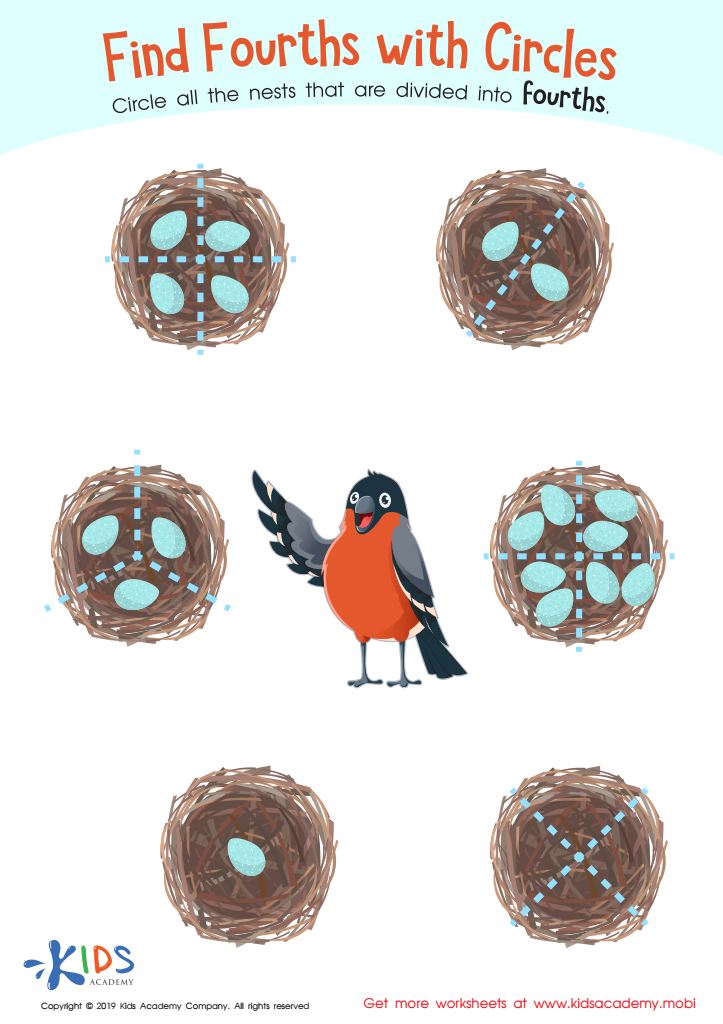
Find Fourths Circles Worksheet
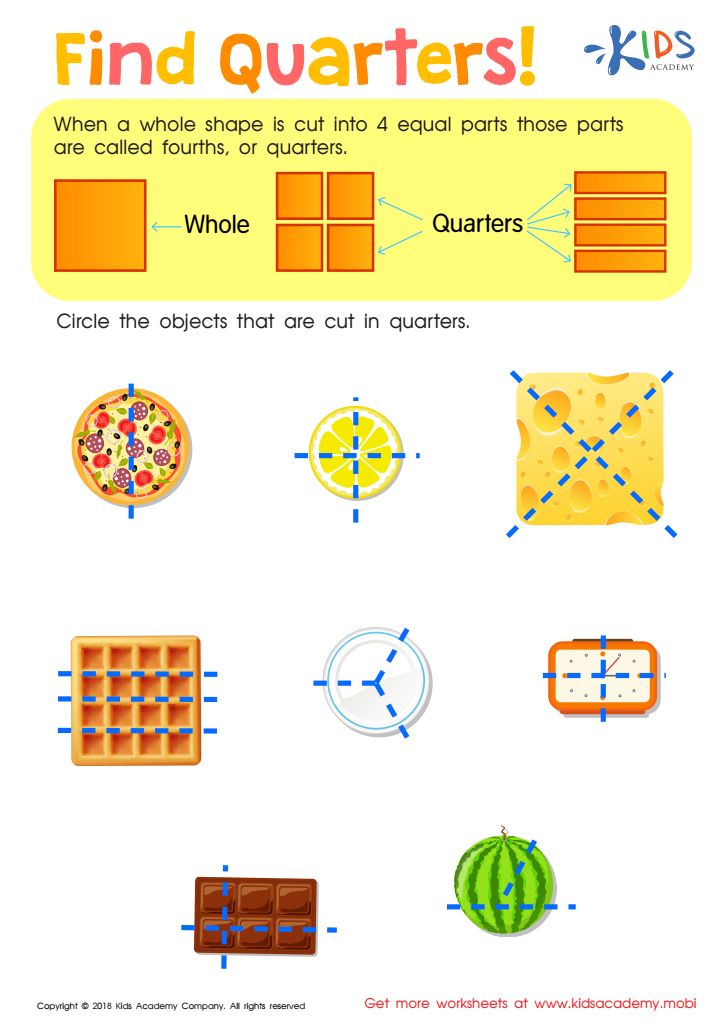
Find Quarters Worksheet
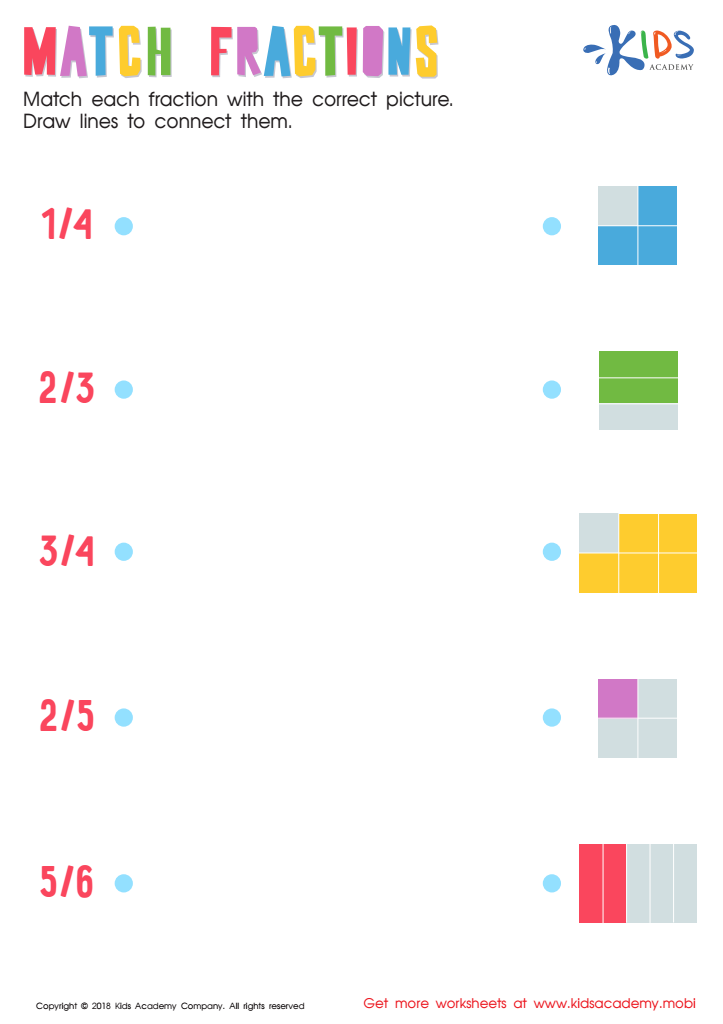
Match Fractions Worksheet
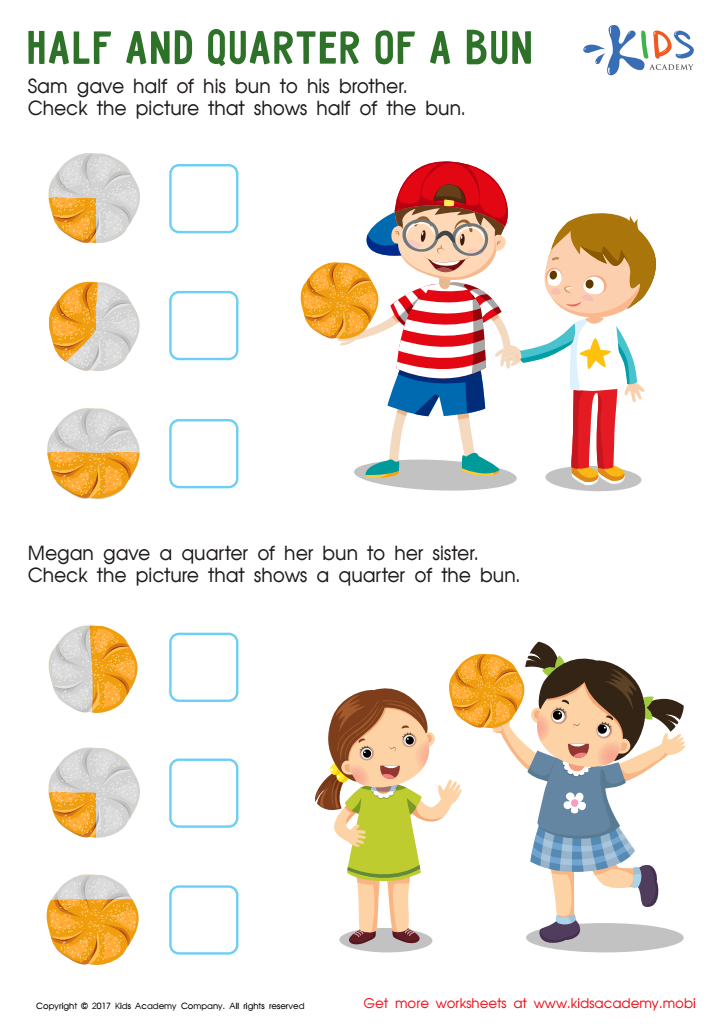
Half and Quarter of a Bun Worksheet
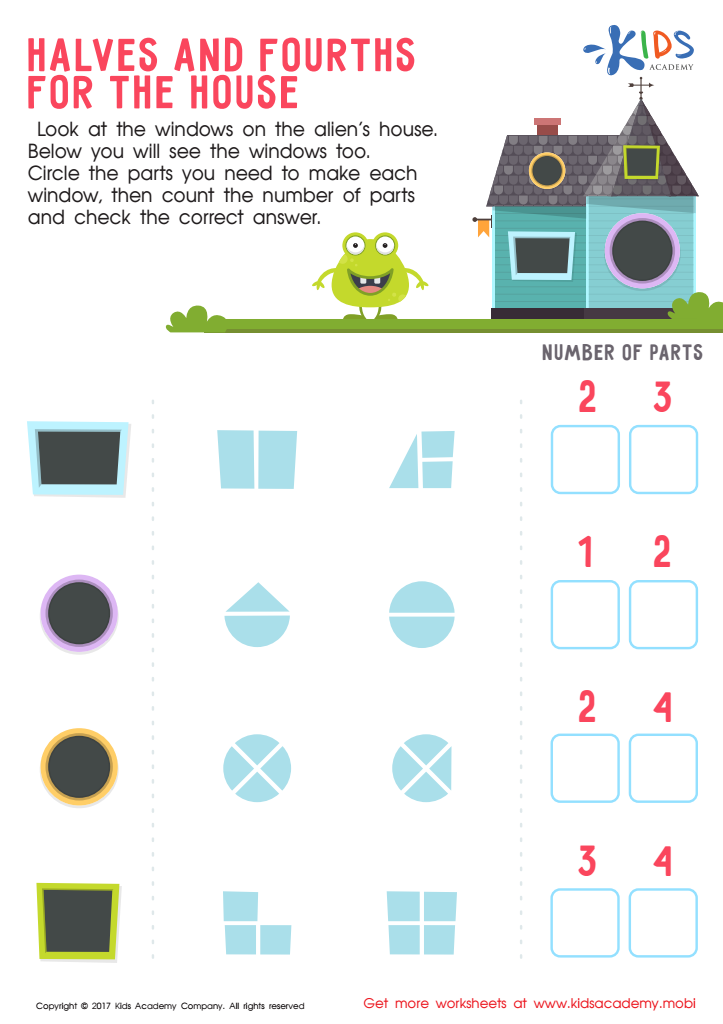
Halves and Fourths for the House Worksheet
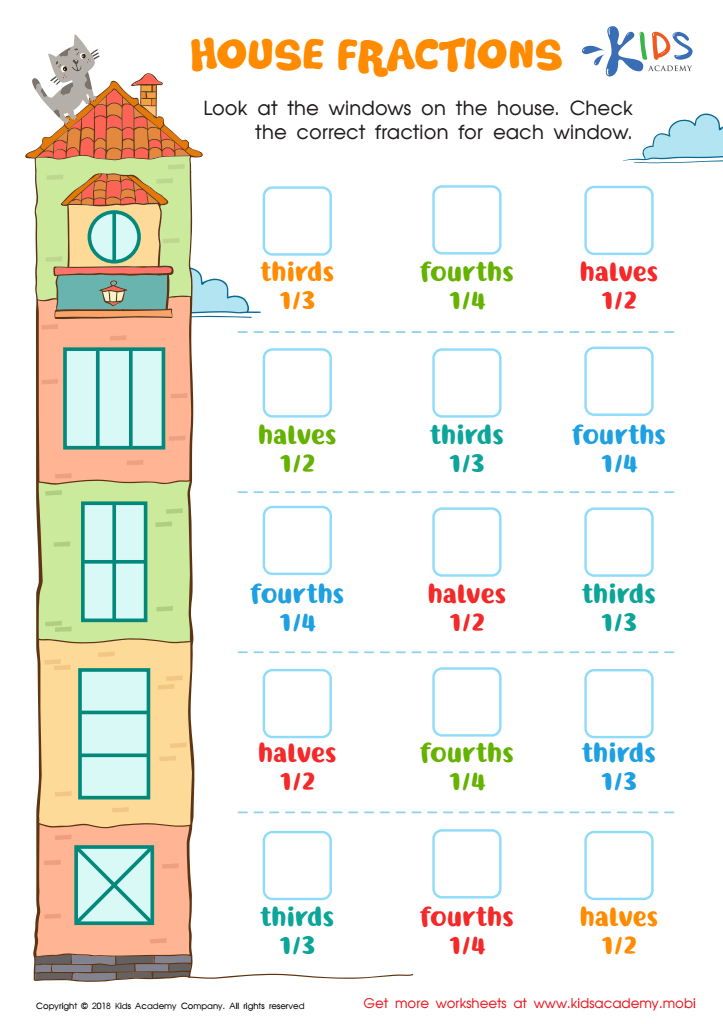
House Fractions Worksheet
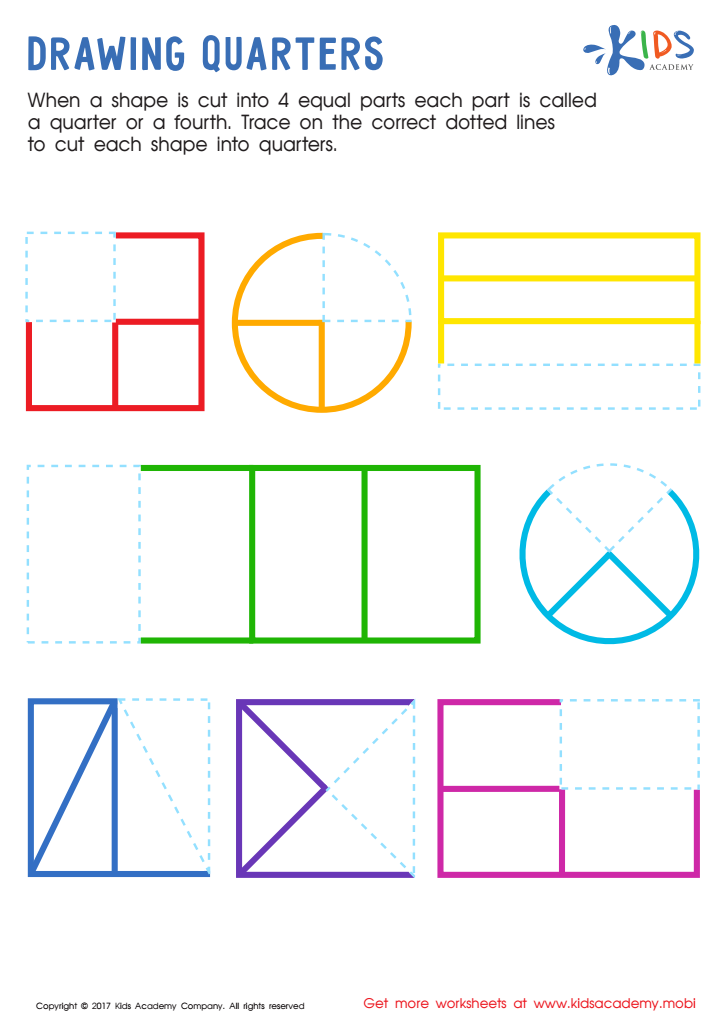
Drawing Quarters Worksheet
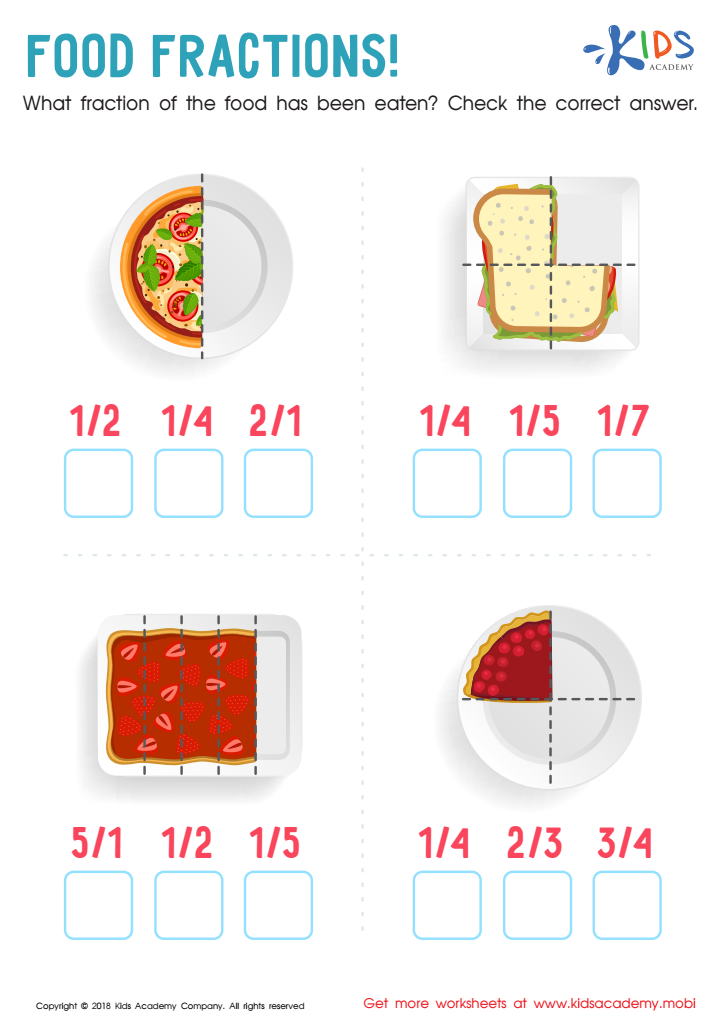
Food Fractions Worksheet
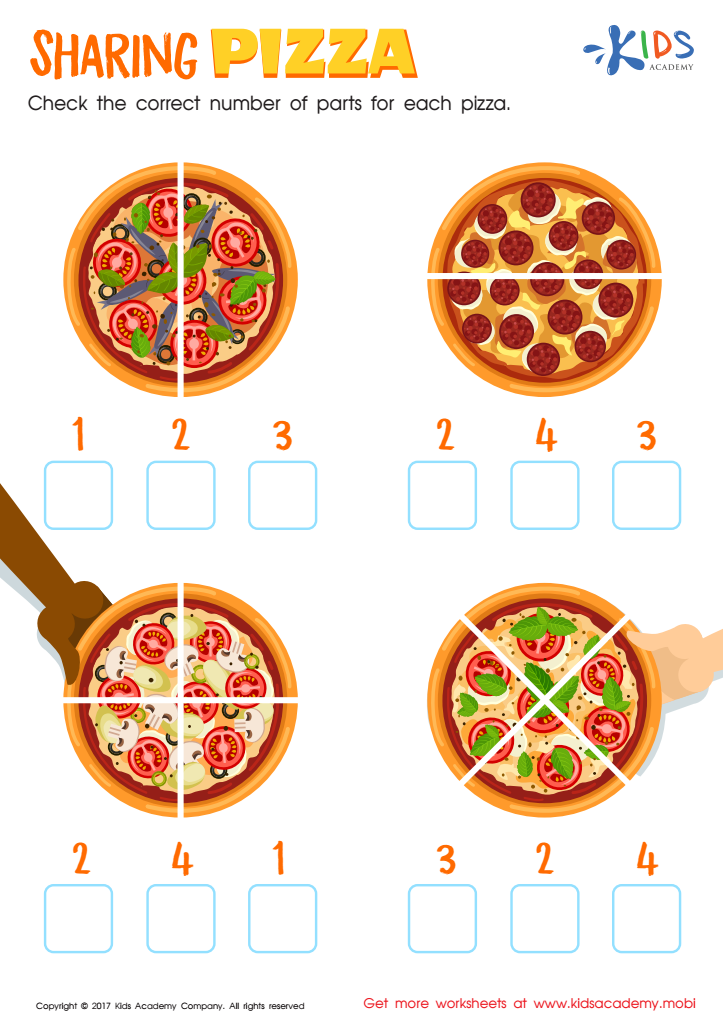
Sharing Pizza Worksheet
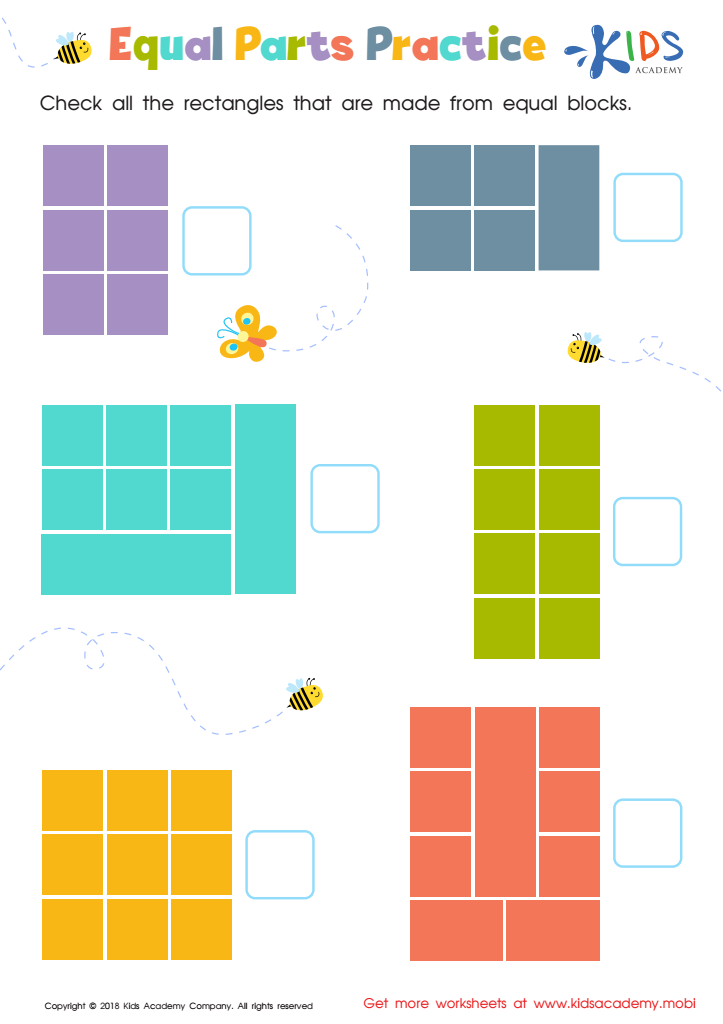
Equal Parts Practice Worksheet








Understanding fractions and geometry at an early age is crucial, as these concepts lay the groundwork for future mathematical proficiency. When children, aged 3-8, engage with fractions, they begin to develop foundational number sense, learning how to partition a whole into equal parts. This understanding is integral to grasping more complex mathematical ideas later on, such as ratios, percentages, and algebra.
Similarly, geometry helps young learners develop spatial reasoning skills. By exploring shapes, sizes, and the relationships between different forms, children enhance their ability to visualize and manipulate objects in space. This spatial awareness is not only essential in mathematics but also in everyday activities and future STEM (Science, Technology, Engineering, and Math) learning.
Moreover, early exposure to fractions and geometry promotes problem-solving skills and critical thinking. These subjects teach children to approach complex problems methodically, breaking them down into simpler parts—a skill that has broad applications beyond mathematics.
Parents and teachers play a pivotal role in fostering a positive and engaging learning environment. By introducing these concepts through play, hands-on activities, and real-life examples, adults can help demystify mathematics, making it accessible and enjoyable. This proactive approach equips children with confidence and a solid foundation to navigate future academic challenges.








