
Word Problems Worksheets for Ages 3-8
123 filtered results
Difficulty Level
Grade
Age
-
From - To
Subject
Activity
Standards
Discover engaging Word Problems Worksheets for children aged 3-8, designed to foster early math skills and critical thinking. Our worksheets feature fun, relatable scenarios that help young learners practice addition, subtraction, and basic problem-solving in an enjoyable way. Tailored for various kindergarten and early elementary levels, these worksheets encourage children to develop their math abilities while enhancing reading comprehension. Let your child explore the world of math through imagination and creativity, making learning an exciting adventure. Perfect for parents and educators, our printable resources provide a valuable tool for nurturing a solid foundation in math for your little ones!
Favorites
With answer key
Interactive
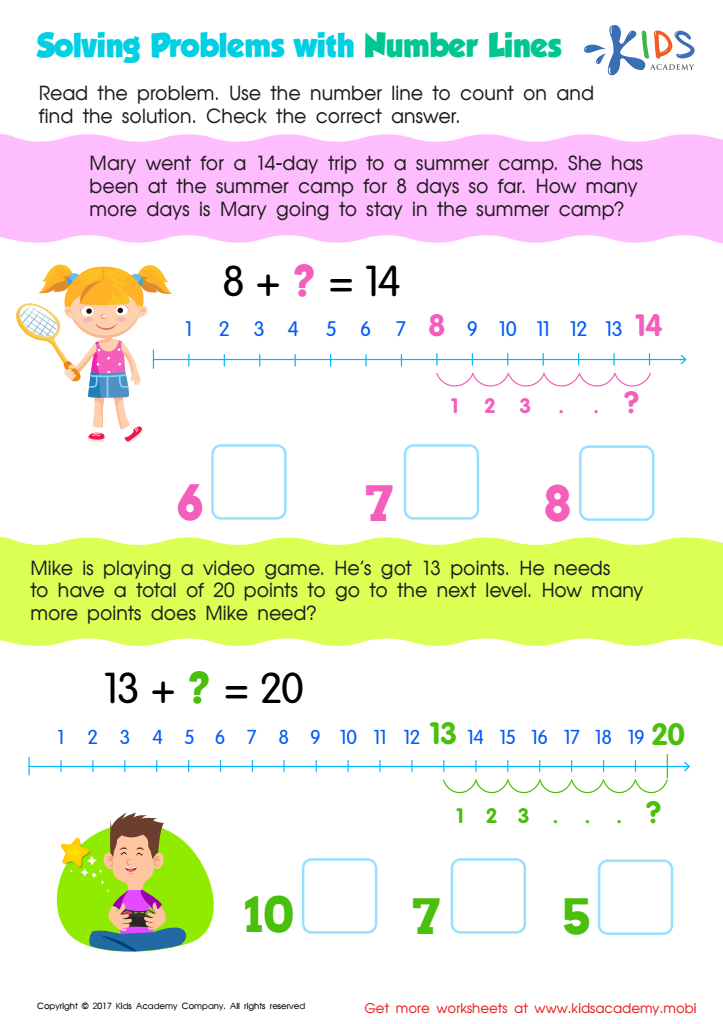
Solving Problems: Number Lines Worksheet
Number lines are fun and help build number sense and reasoning. This worksheet uses them to help students count on to find a solution to an equation. They'll have fun counting with familiar numbers and 10-bases, while also working on algebraic reasoning.
 Assign to My Students
Solving Problems: Number Lines Worksheet
Worksheet
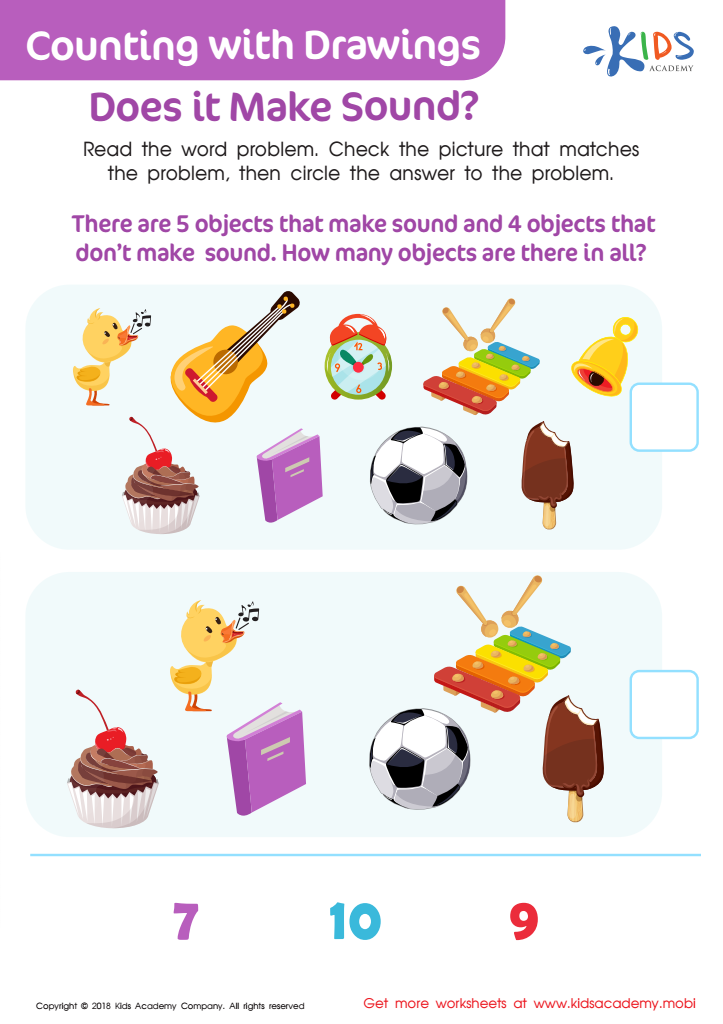
Counting With Drawings. Does It Make Sound? Worksheet
Introduce word problems with this simple worksheet. Ask your students to name the objects pictured, then read the word problem and ask them to circle the answer. With practice, it'll help them scale this challenging area of math.
Counting With Drawings. Does It Make Sound? Worksheet
Worksheet
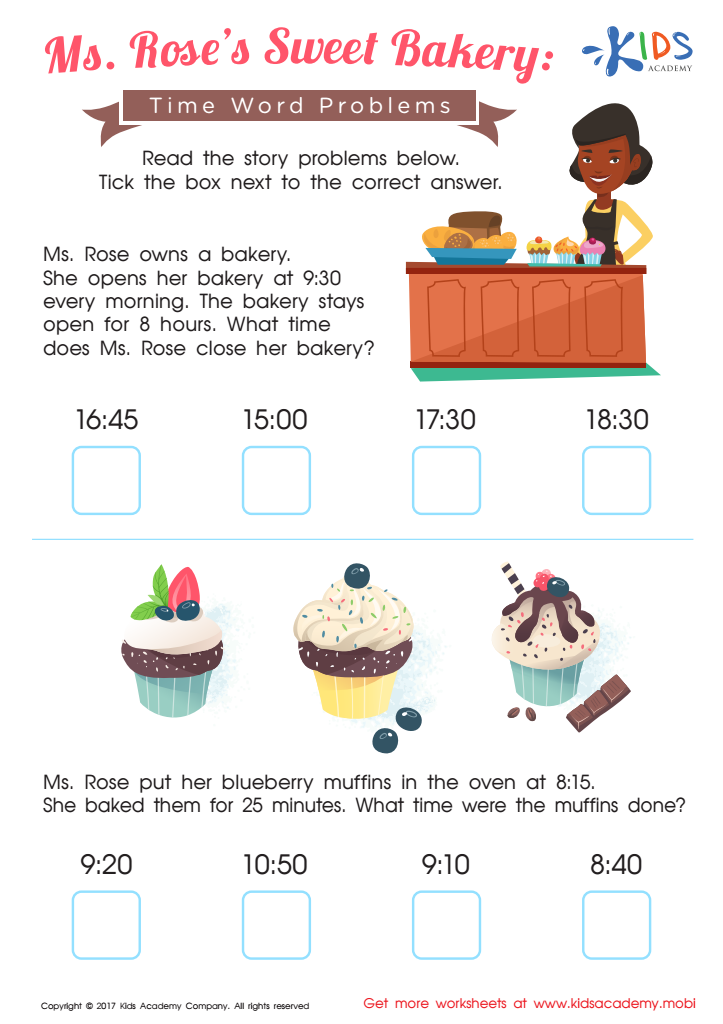
Ms. Roseв's Sweet Bakery Time Worksheet
Help your child understand the 24-hour clock using this fascinating telling time word problems worksheet: Sweet Bakery! Widely known as "military time", this skill isn't taught in school but is important for your kid to master.
Ms. Roseв's Sweet Bakery Time Worksheet
Worksheet
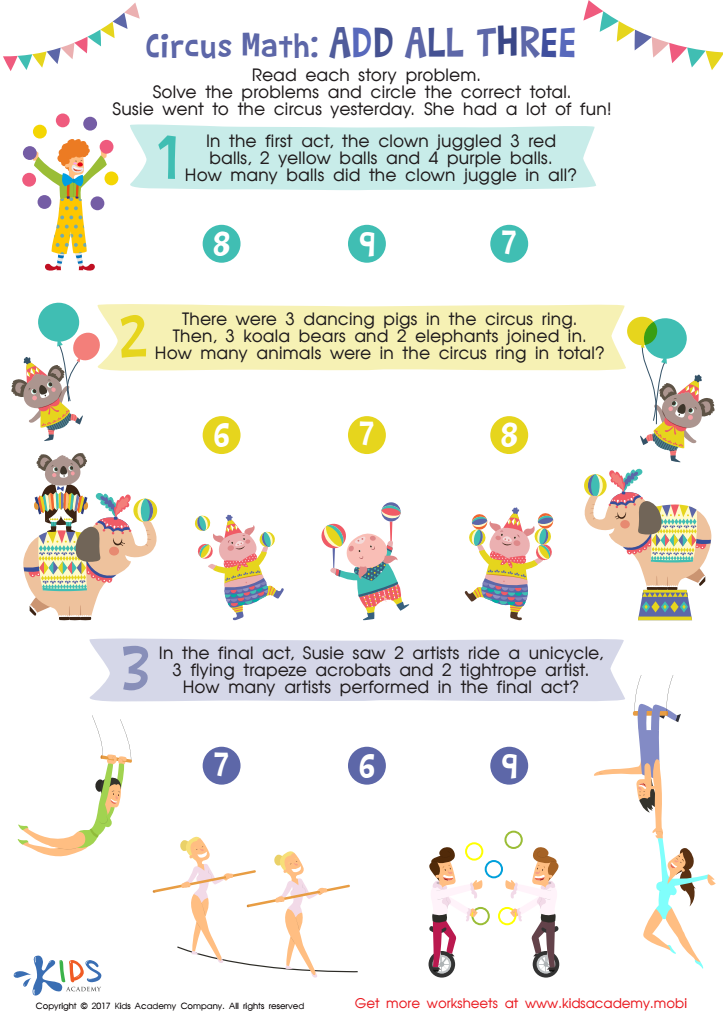
Circus Math Printable
Let's take the kids to the circus and combine literacy and numeracy skills! Our circus math printable worksheet will encourage creativity and higher-order thinking by connecting addition to real-life examples. Kids will learn to love math while they explore the fun, real-life applications of math. Ignite their passion today!
Circus Math Printable
Worksheet
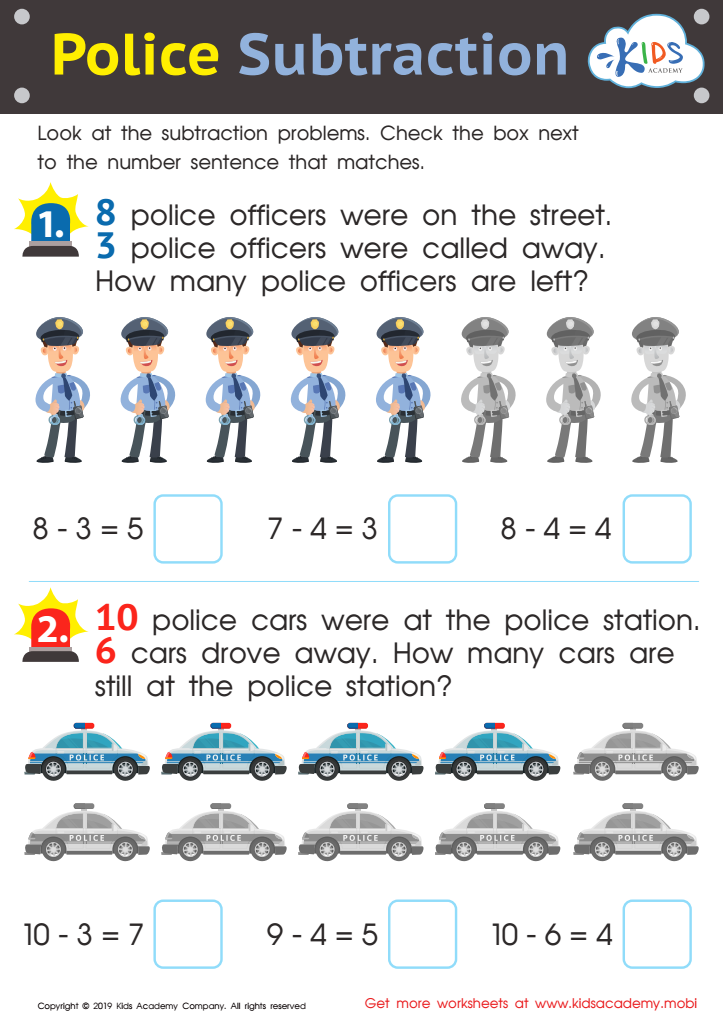
Police Subtraction Worksheet
Police protect citizens and do more in the community. Kids can learn numbers with this math worksheet: two subtraction problems in the downloadable PDF. Read the problems with your kids, then check the box next to the number sentences that are correct.
Police Subtraction Worksheet
Worksheet
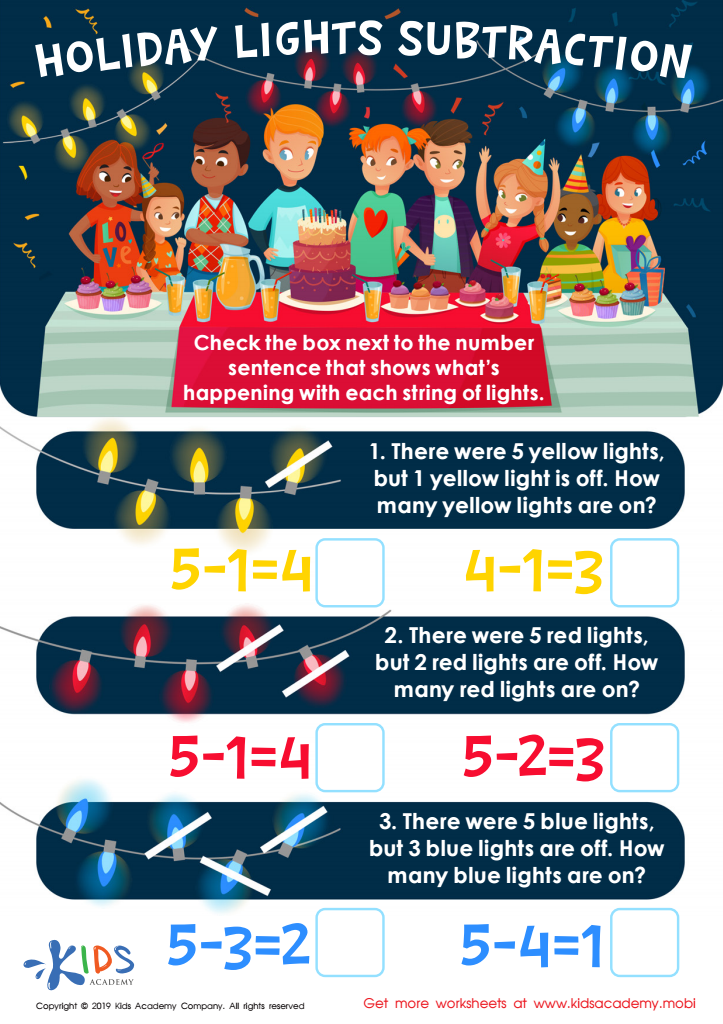
Holiday Lights Subtraction Worksheet
Before tackling the math problem, get your kids ready by asking them to share their favorite holiday and why. Then, look at the picture on the worksheet with them. Help them examine the numbers and problems, and select the number sentence that shows what's happening with each string of light. 80 words.
Holiday Lights Subtraction Worksheet
Worksheet
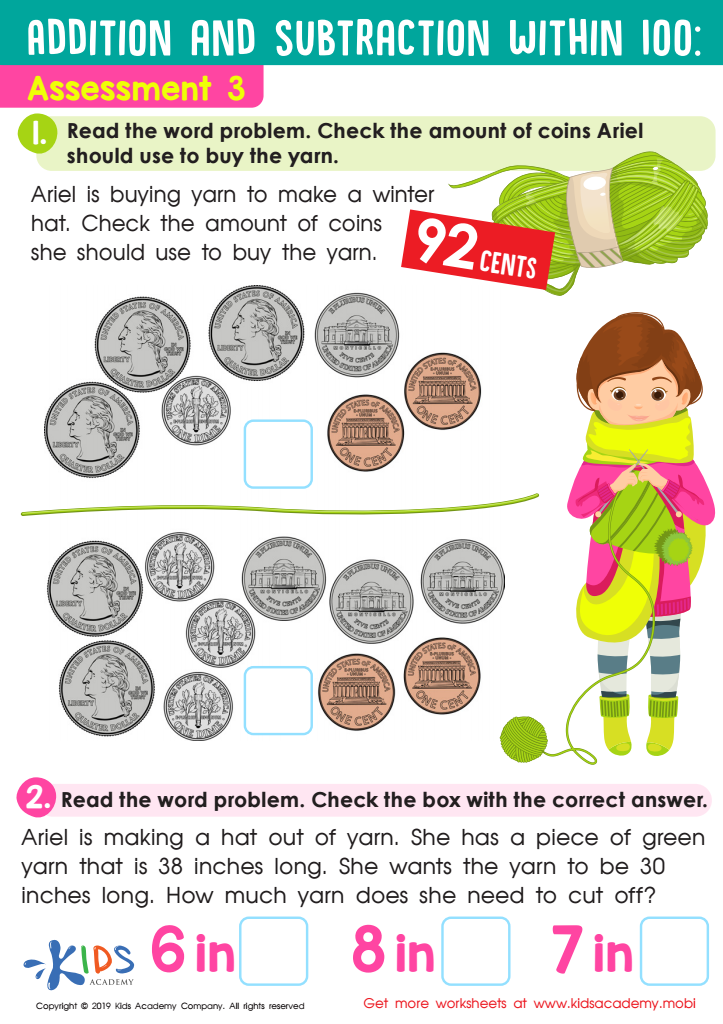
Assessment 3 Math Worksheet
Ariel needs to buy yarn. Do your kids know what yarn is? If they've seen you knit, they will. Help them solve the two word problems to figure out how many coins Ariel needs to buy it.
Assessment 3 Math Worksheet
Worksheet
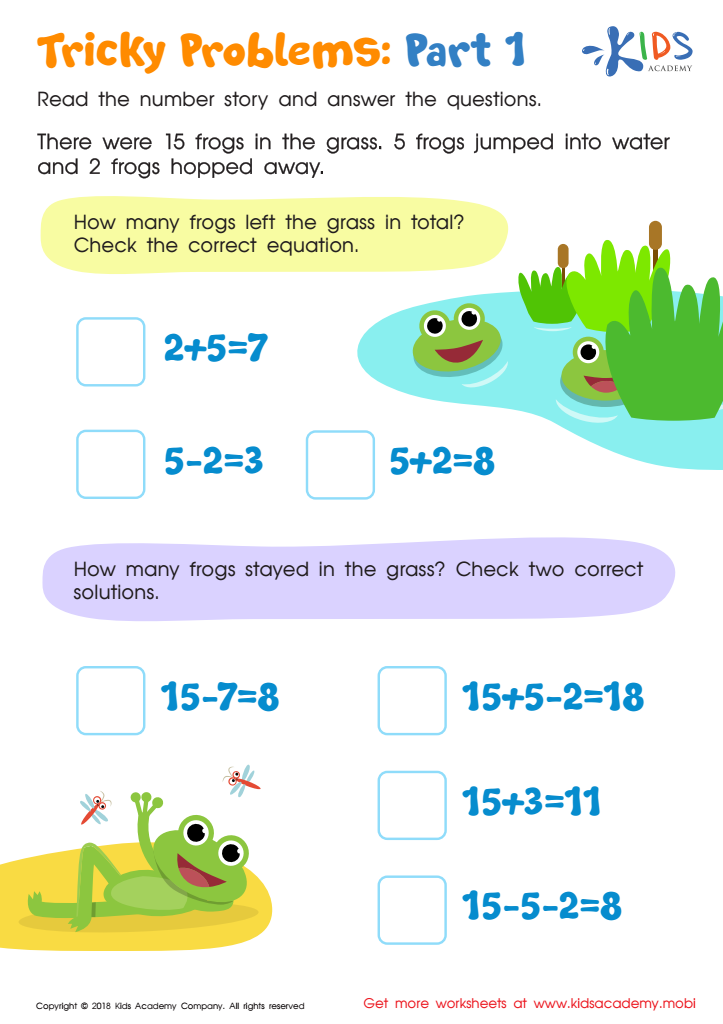
Tricky Problems Worksheet: Part 1
Visualizing word problems can help students solve them. This fun PDF worksheet encourages students to create mental images using math facts, then check boxes to match the equations for basic addition problems. It's a great way to build confidence in solving math.
Tricky Problems Worksheet: Part 1
Worksheet
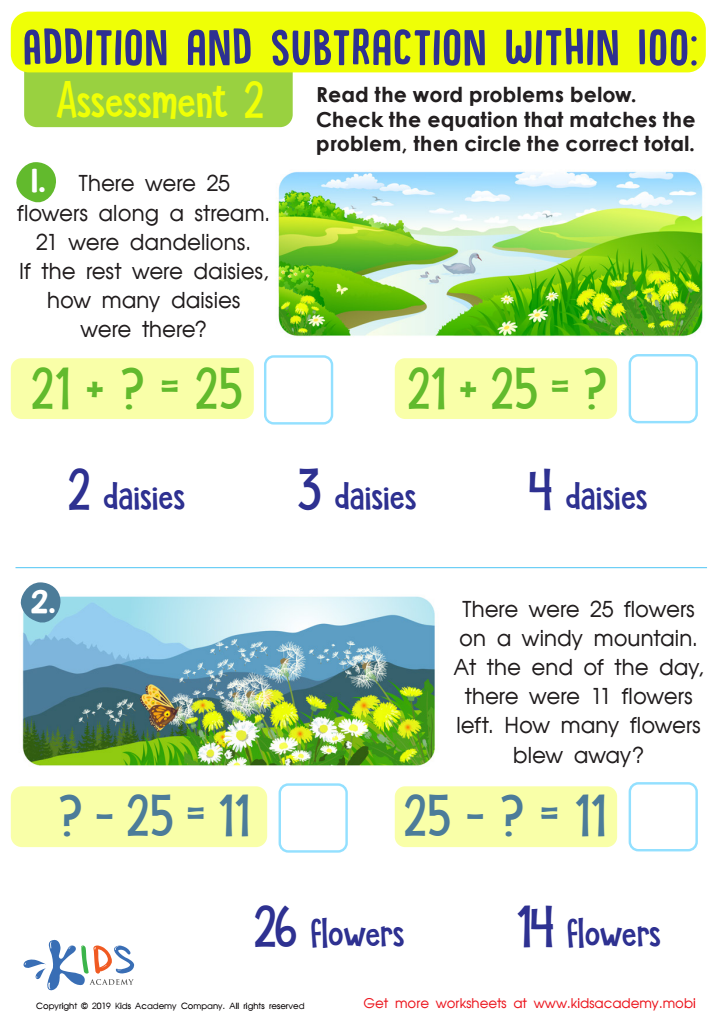
Assessment 2 Math Worksheet
Using fun exercises and pictures, you can get kids excited about math. With practice and reminders of what they've learnt, they'll be solving simple addition and subtraction equations with ease. Read the word problems in the picture to them, then help them check the equation and choose the correct answer.
Assessment 2 Math Worksheet
Worksheet
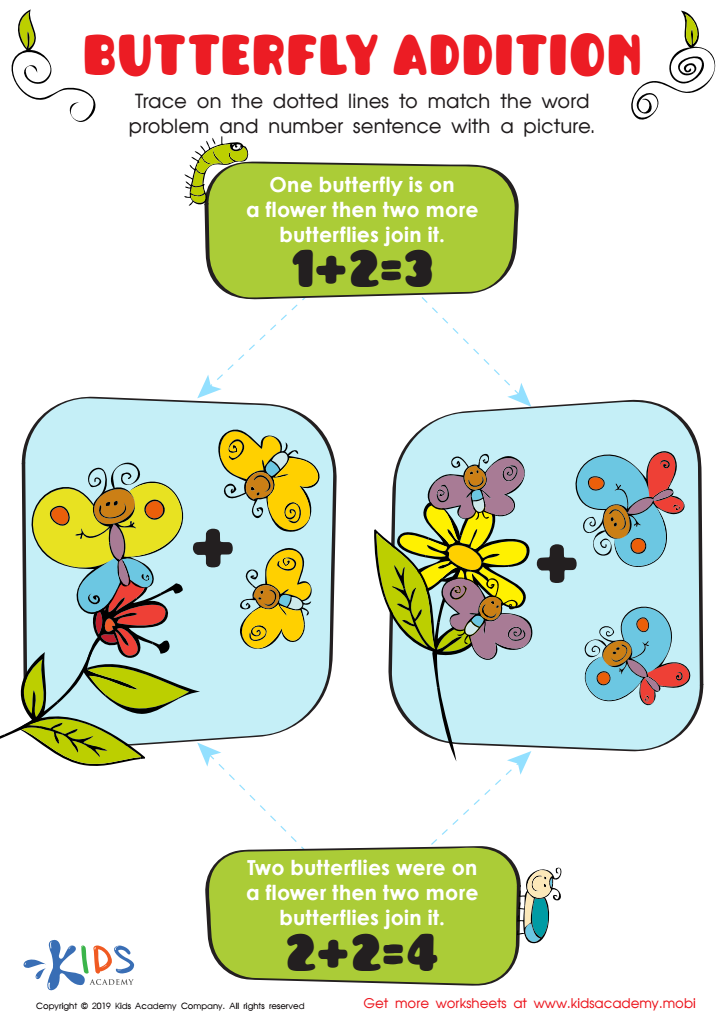
Butterfly Addition Worksheet
This tracing sheet is great for kids to work on math skills and have fun too. Read the word problems to them, then help them trace the dotted lines to match the problem and number sentence to a picture. Not only is it educational, it's beautiful too - your kids will love learning about butterflies!
Butterfly Addition Worksheet
Worksheet
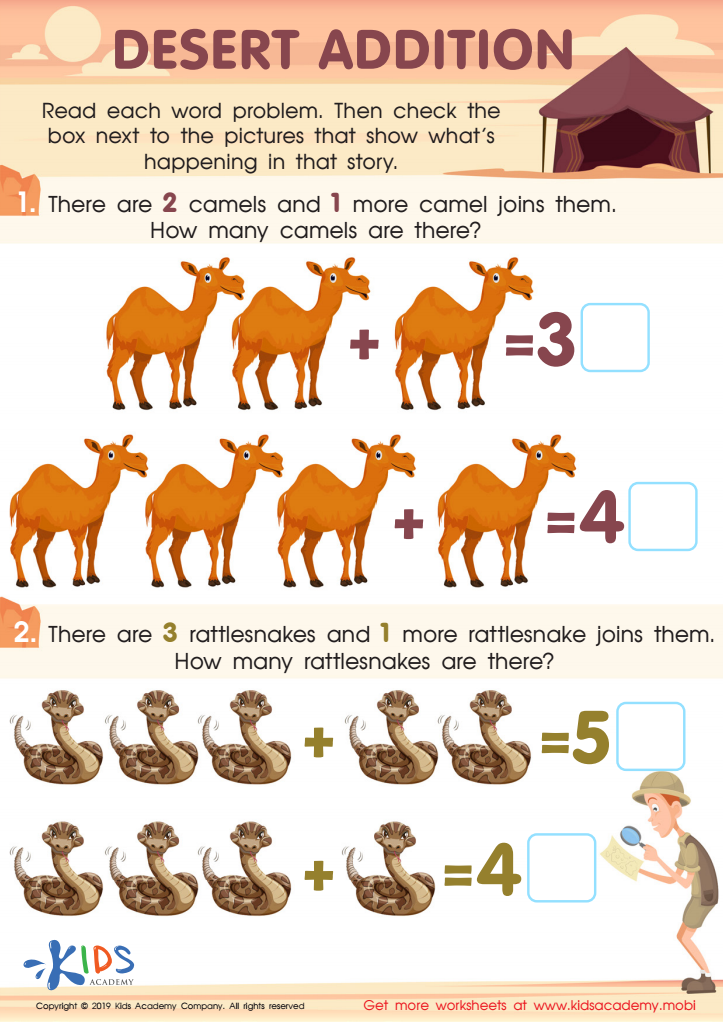
Desert Addition Worksheet
In the desert, scorching heat and little water mean animals must adapt to survive. Show kids pictures of these animals and teach their names. Then, read the word problems in the worksheet, and have them check the box next to the pictures that portray each story. 80 words
Desert Addition Worksheet
Worksheet
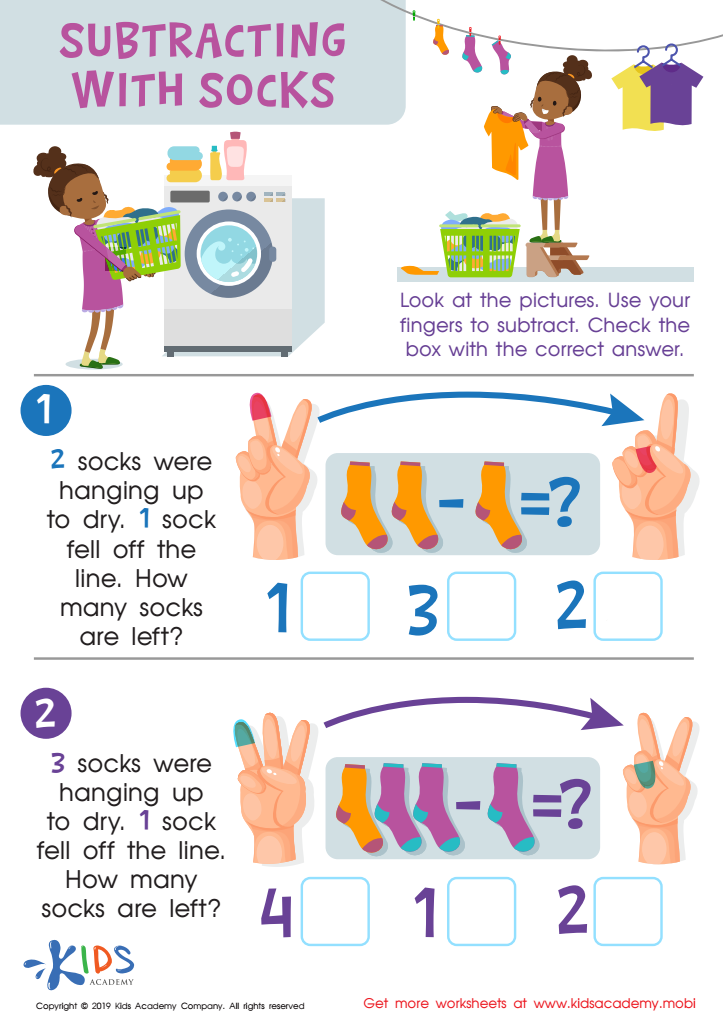
Subtracting Socks Worksheet
Before beginning this exercise with your children, warm them up with a counting game. If math is not their favorite subject, use this worksheet. Help them read the two word problems, then use their fingers to count and subtract. Ask them to select the correct answer and check the box.
Subtracting Socks Worksheet
Worksheet
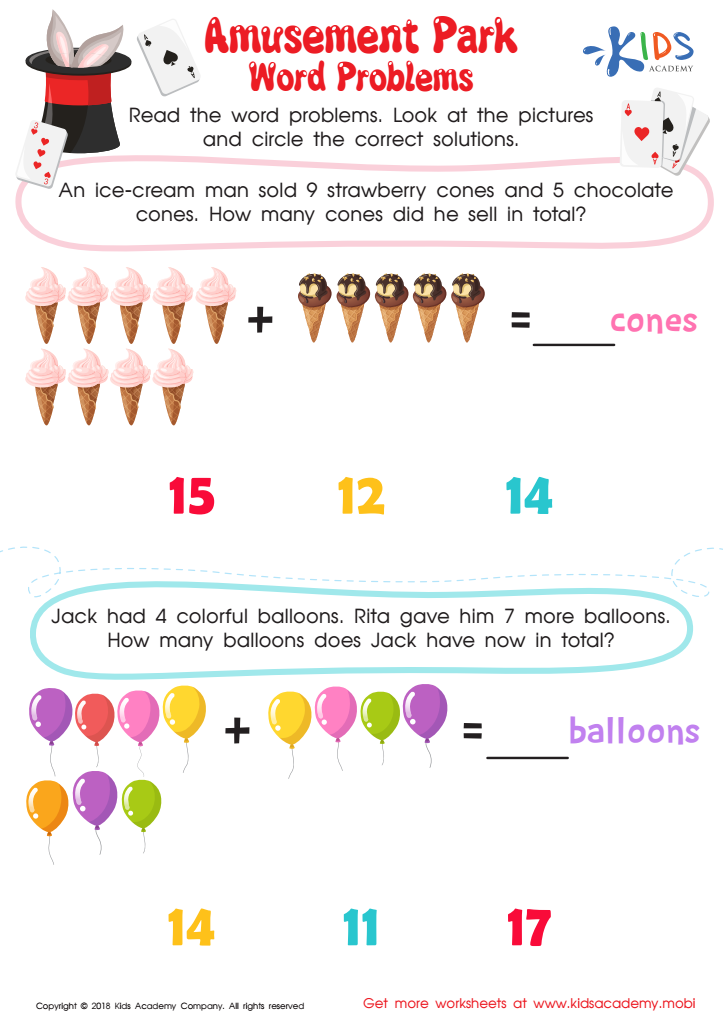
Amusement Park Word Problems Worksheet
Engage kids with math by making it realistic and incorporating manipulatives or pics they like! This worksheet helps kids understand word problems. Read the problem, note numbers and key phrases like "in total," then count the pics to find the total!
Amusement Park Word Problems Worksheet
Worksheet
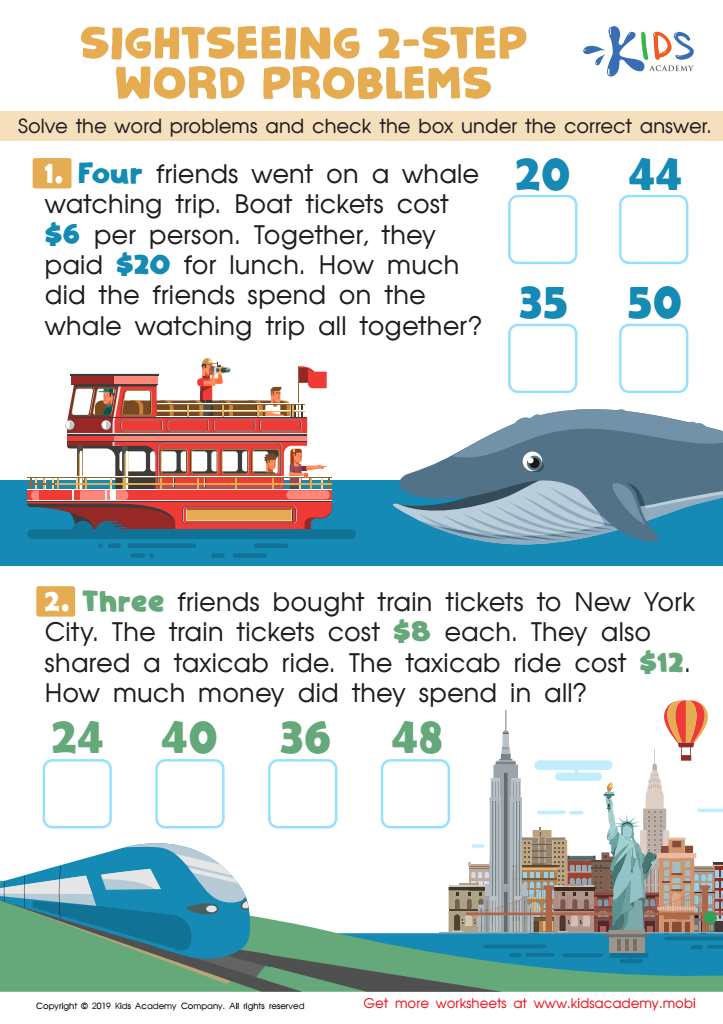
Sightseeing 2-Step Word Problems Worksheet
Help your kids tackle word problems with this PDF! Read aloud two simple problems, have them create equations and solve, then check the box under the right answer. With practice, confusion will be a thing of the past.
Sightseeing 2-Step Word Problems Worksheet
Worksheet
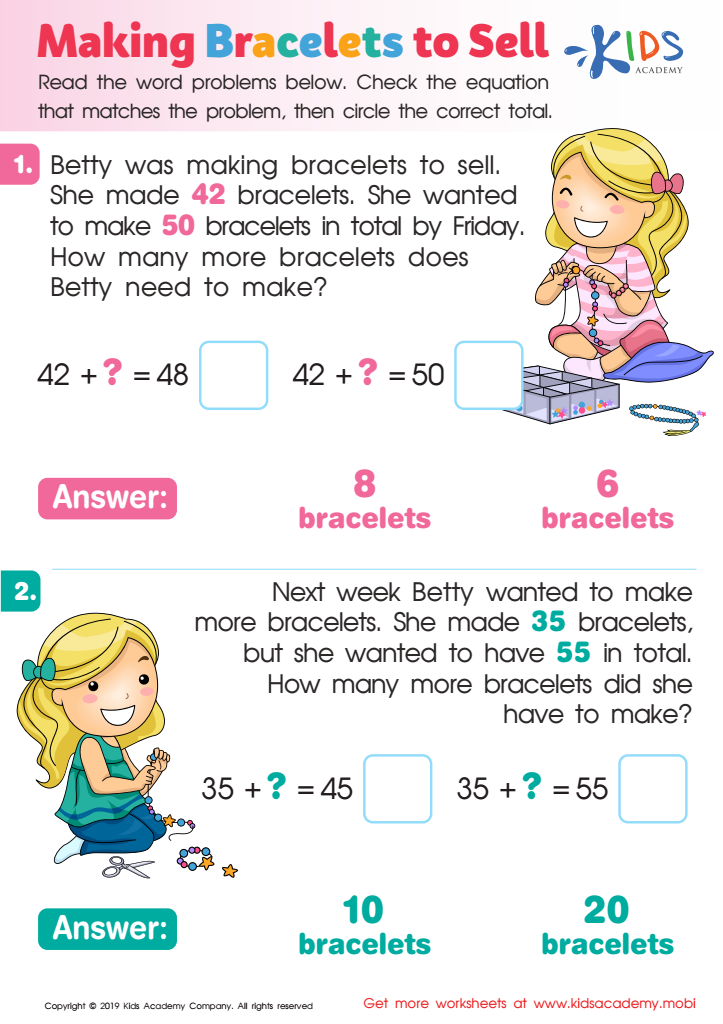
Making Bracelets to Sell Worksheet
Got kids who love crafting? This worksheet will be right up their alley! Let them use their creative and problem-solving skills to check equations and decide the correct total. It's just like making beads into a bracelet but on paper! Print out this downloadable PDF and get ready for a fun craft session.
Making Bracelets to Sell Worksheet
Worksheet
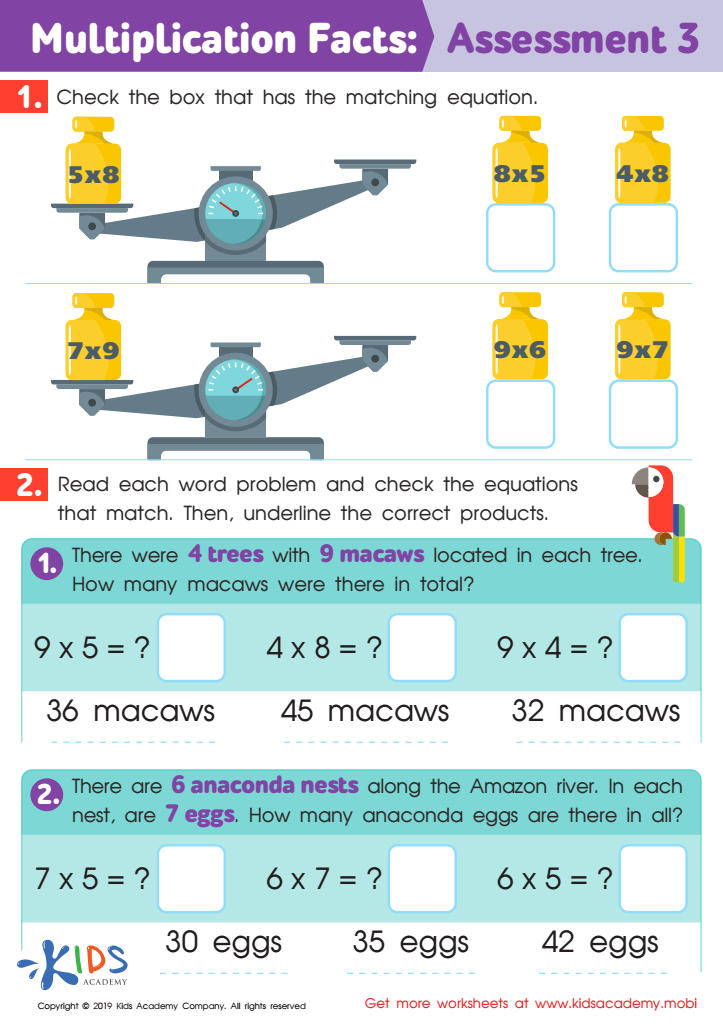
Multiplication Facts: Assessment 3 Worksheet
Test your kid's maths skills with this easy to use worksheet! Help them check the box that matches the equation in the first part, then read each word problem and underline the right answers to the second part. Assess your child's muliplication knowledge and find out where they need extra help.
Multiplication Facts: Assessment 3 Worksheet
Worksheet
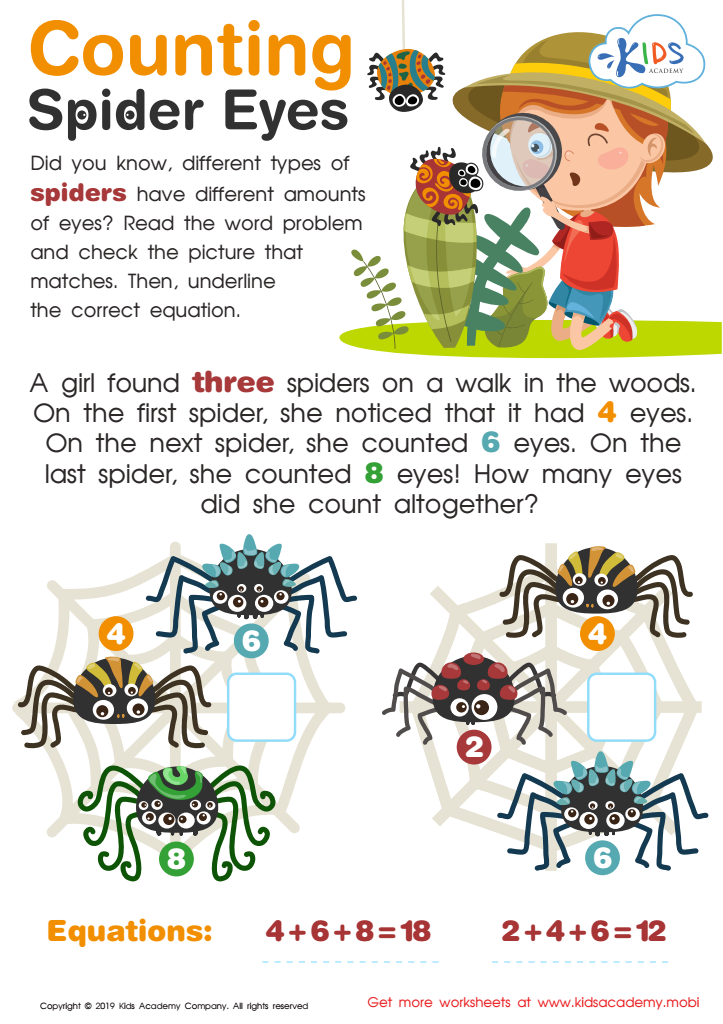
Counting Spider Eyes Worksheet
Did you know different spiders have different eye numbers? Kids will love learning this fact and solving the spider word problems on this free worksheet! Word problems promote a deeper understanding of the concept, plus they get to add up the spiders’ eyes while solving addition problems with more than one addend. Fun and math all in one!
Counting Spider Eyes Worksheet
Worksheet
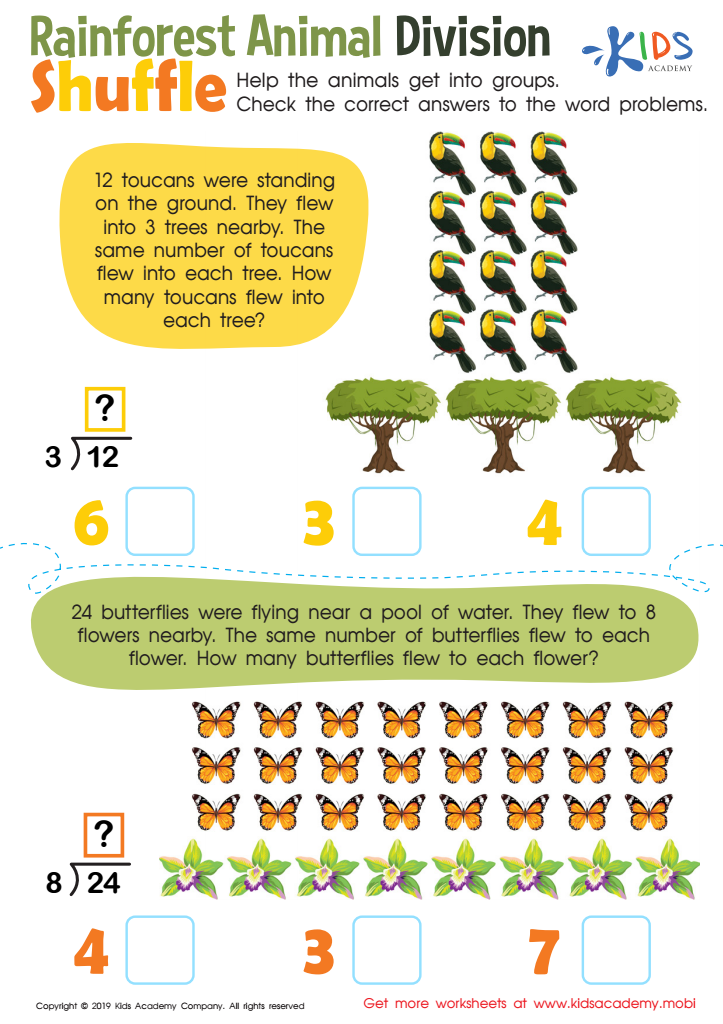
Rainforest Animal Division Worksheet
Children can save the rainforest and learn about division with this worksheet! It helps kids understand that division involves creating equal groups of specific numbers, and with its visual representation, they can grasp the concept more easily. They'll have fun learning about their place in the world and their role in protecting the environment.
Rainforest Animal Division Worksheet
Worksheet
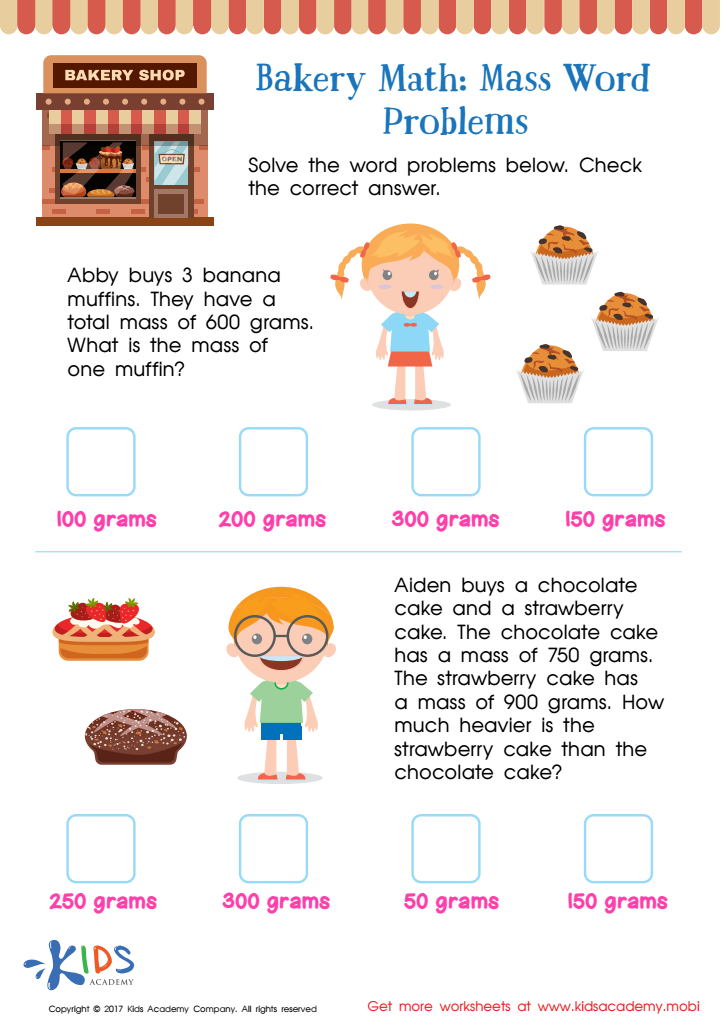
Mass Word Problems Worksheet
This worksheet challenges kids with tricky mass word problems. It offers valuable practice with grams. Through division and subtraction, children gain experience handling mass.
Mass Word Problems Worksheet
Worksheet
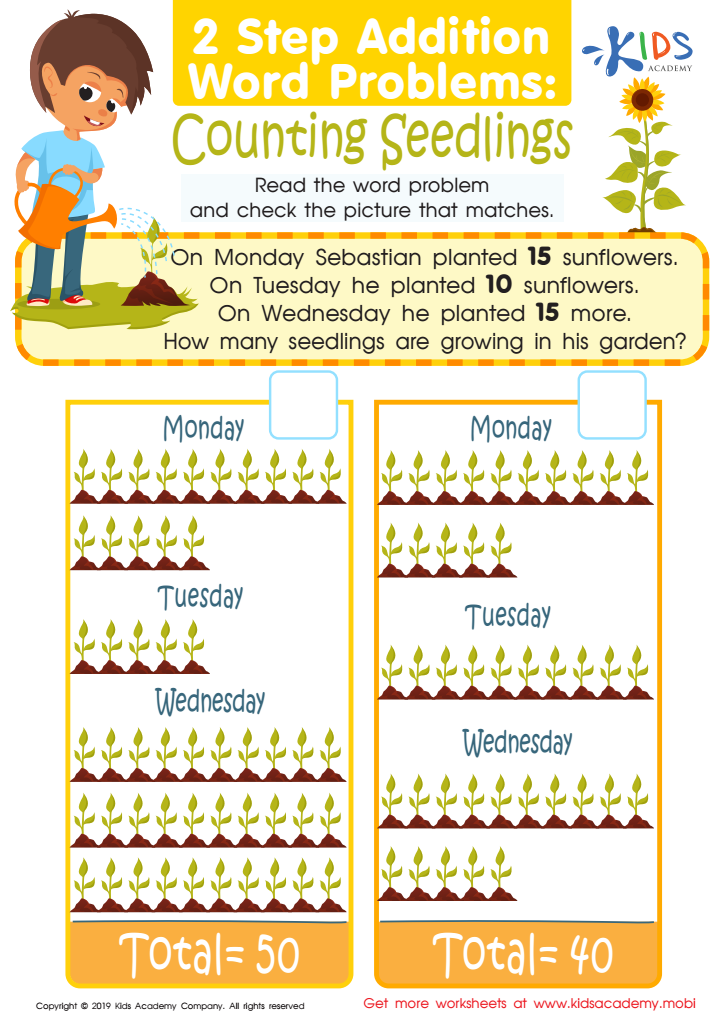
Counting Seedlings Worksheet
Understanding math word problems is key. Multiple steps can prove challenging - this free worksheet provides one-to-one picture representation to help kids solve multi-step addition word problems. Strengthen addition skills by choosing the matching picture to the answer.
Counting Seedlings Worksheet
Worksheet
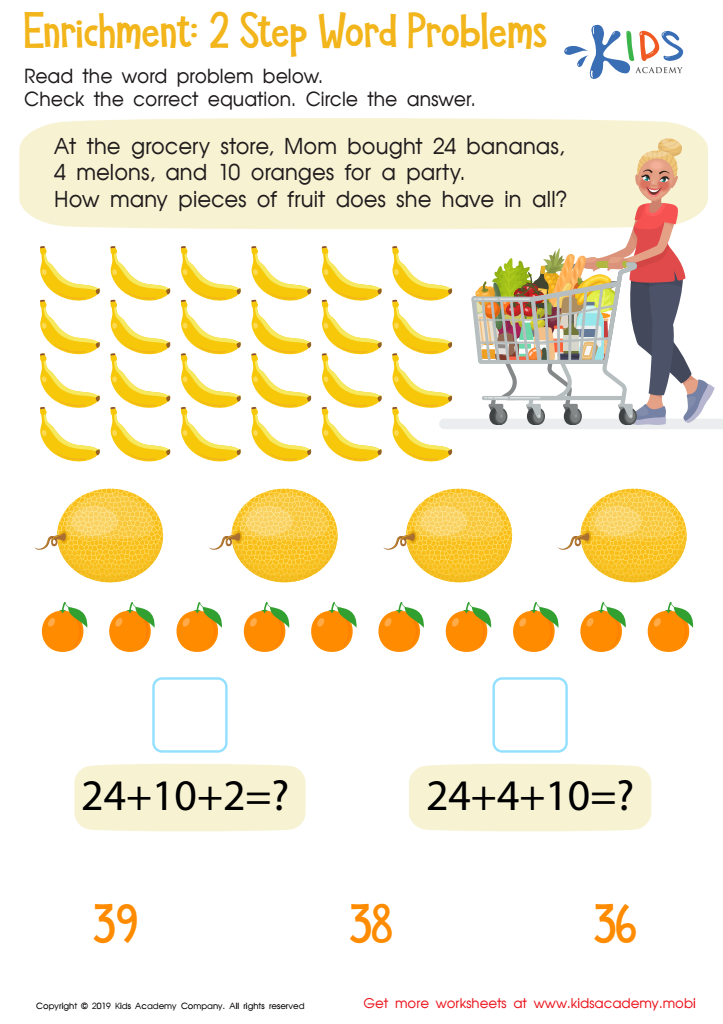
Enrichment -2 Step Word Problems Worksheet
Help your students learn math easier and faster with this colorful worksheet. Read the word problem and then guide them in checking the correct equation and finding the answer. Your students will benefit from the extra help, as they work through new concepts each day.
Enrichment -2 Step Word Problems Worksheet
Worksheet
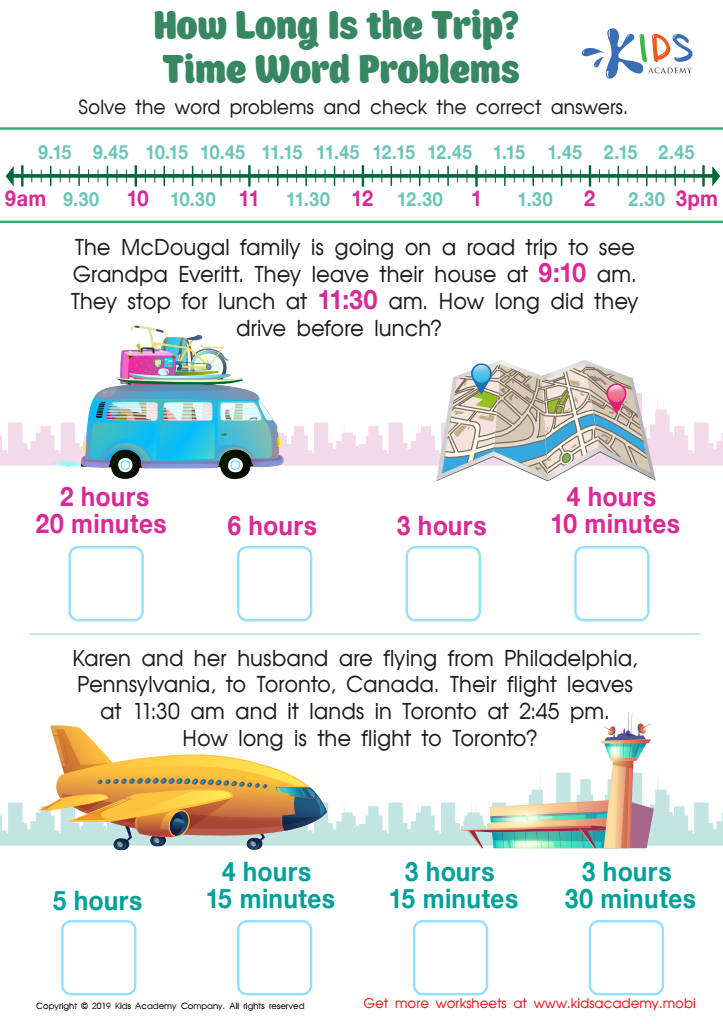
How long is the Trip? Time Word Problems Worksheet
Get your kids in the mood for learning with fun questions about trips. Point at each picture and ask them to identify the mode of transport. Read the word problems, help them solve and check the answers.
How long is the Trip? Time Word Problems Worksheet
Worksheet
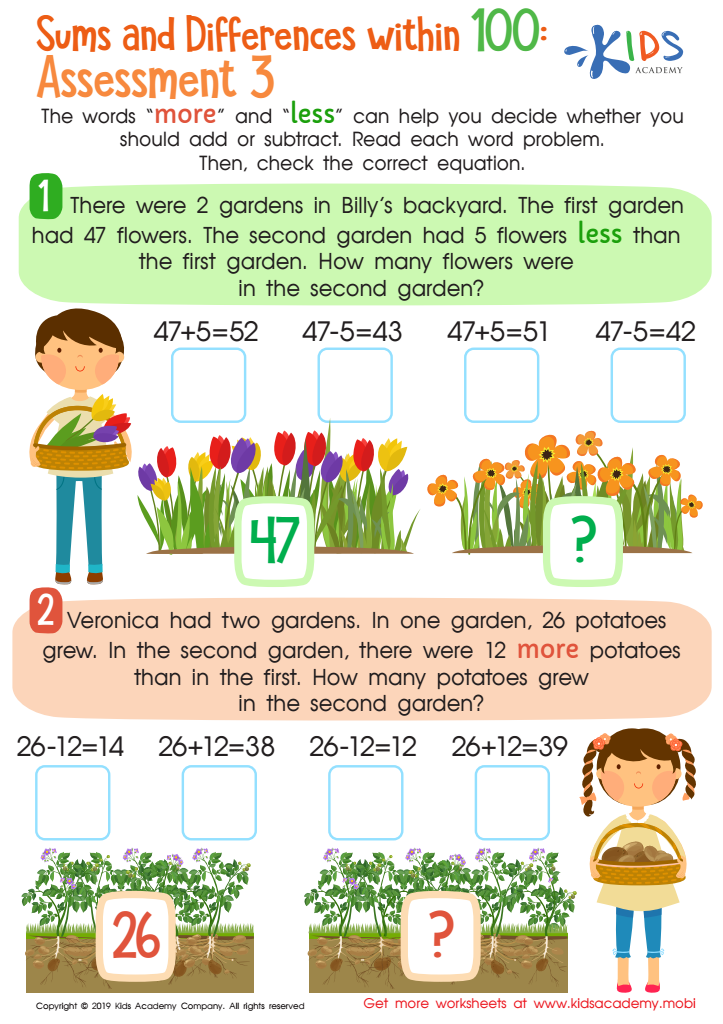
Sums and Differences Within 1 - Assessment 1 Worksheet
Help your child understand school topics better with your assistance. For math, go over their worksheet together and discuss the instructions and text. Solve the questions and check the right equation. This will take their learning to the next level.
Sums and Differences Within 1 - Assessment 1 Worksheet
Worksheet
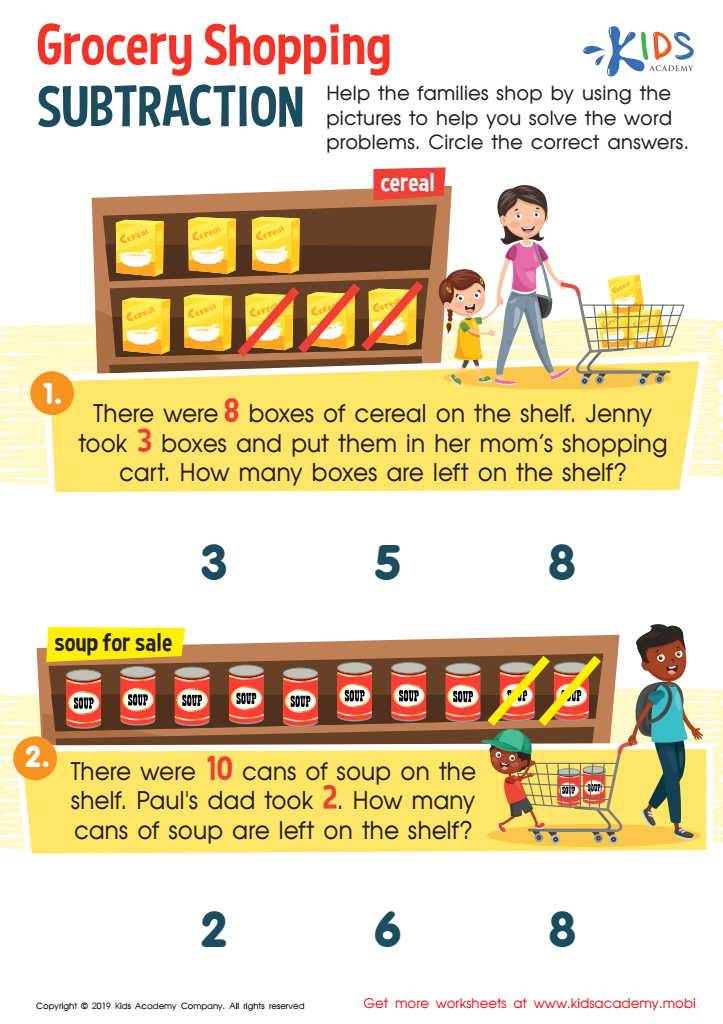
Grocery Shopping Subtraction Worksheet
Take your kids on a virtual grocery trip with this worksheet! Help them read the two word problems and use the pictures to solve them. Then, have them circle the correct answers. It's an easy, fun way to get kids comfortable with math while also getting them excited about grocery shopping!
Grocery Shopping Subtraction Worksheet
Worksheet
Join Kids Academy for Free
Who is primarily going to use this learning content?







Word problems play a crucial role in developing early math skills for children aged 3-8. During these formative years, children are not only learning basic arithmetic but also how to understand and interpret information. Word problems encourage critical thinking and problem-solving abilities, key components of early mathematical understanding.
When parents and teachers engage children with word problems, they help them make connections between abstract numbers and real-world scenarios. This contextual learning makes math more relatable and less intimidating. By articulating problems verbally, children practice important language skills, enhancing both their literacy and mathematical vocabulary.
Furthermore, tackling word problems requires children to visualize scenarios, fostering their ability to reason and strategize. This multi-modal approach—combining reading comprehension, language development, and mathematics—catalyzes a more robust cognitive development. As they solve word problems, children also build confidence in their abilities to approach complex tasks, setting a foundation for lifelong learning.
Incorporating word problems into everyday activities can make math fun and engaging. Ultimately, by fostering an appreciation for problem-solving at an early age, parents and teachers help instill skills necessary for academic success and everyday life. This early exposure lays the groundwork for future mathematical challenges and instills a positive attitude towards math.








