
Text analysis Reading Comprehension Worksheets for Ages 3-8
4 filtered results
Difficulty Level
Grade
Age
-
From - To
Subject
Activity
Standards
Empower your young readers with our Text Analysis Reading Comprehension Worksheets, designed for ages 3-8. These engaging, age-appropriate activities help children develop critical thinking and analytical skills by exploring texts in a fun and interactive manner. Each worksheet focuses on key elements such as main ideas, themes, and character analysis, enhancing reading comprehension. Our expertly crafted exercises support early learners, ensuring they grasp fundamental concepts while enjoying the process. Perfect for both classroom and home use, our worksheets provide a solid foundation for lifelong reading success. Visit us and start your child's journey to becoming a confident, insightful reader today!
Favorites
With answer key
Interactive
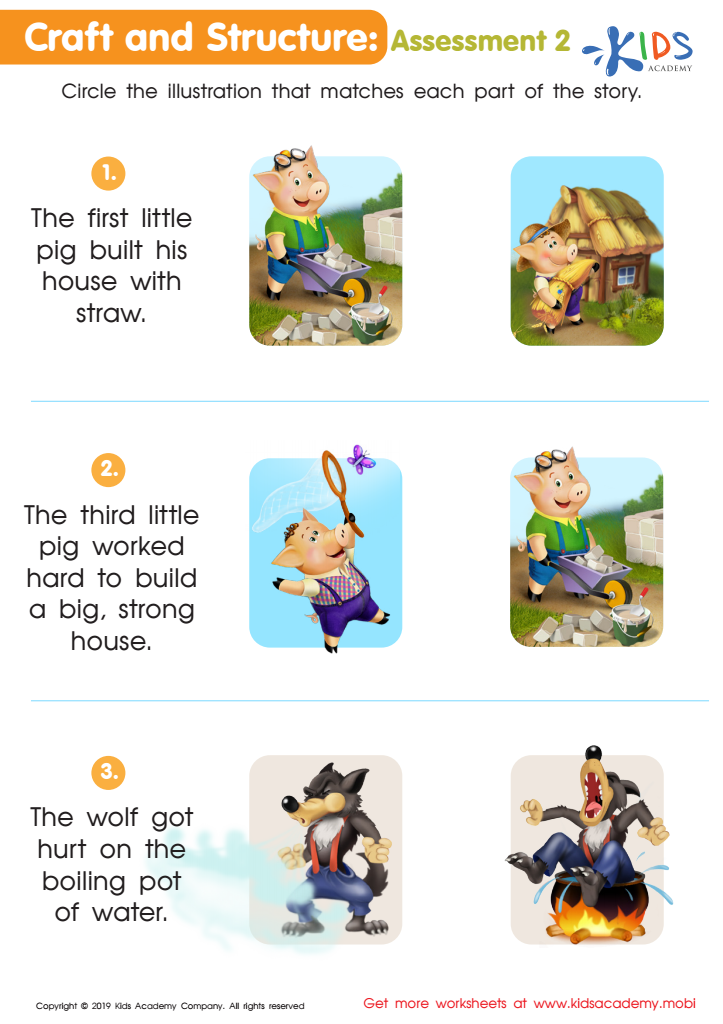
Craft and Structure: Assessment 2 Worksheet 2
This fun printout with colorful illustrations will assess how much your kids pay attention to story time. Go through the pictures and help them circle the ones that match each part of the story. Stimulate their brains and have fun in the process!
 Assign to My Students
Craft and Structure: Assessment 2 Worksheet 2
Worksheet
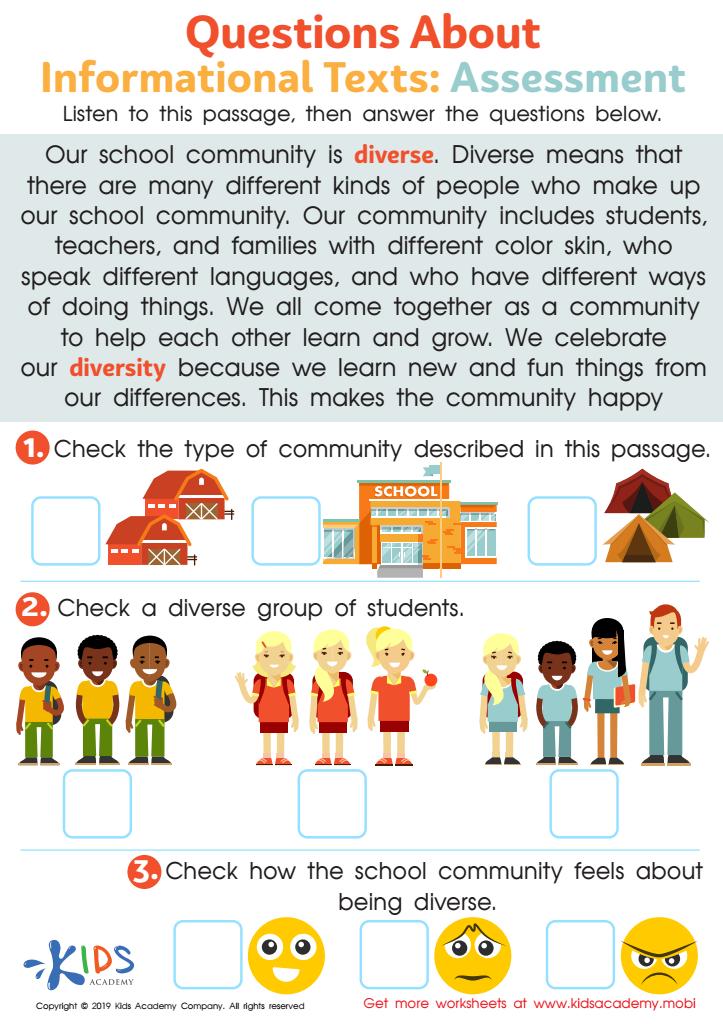
Questions About Informational Texts: Assessment 1 Worksheet
Ask your students: What comes to mind when we talk about a community? What different habits do people practice? What do fellow students do that seems strange? Read this passage aloud to your kindergartners and make sure they understand it. Then, answer the questions at the bottom of the page. (80 words)
Questions About Informational Texts: Assessment 1 Worksheet
Worksheet
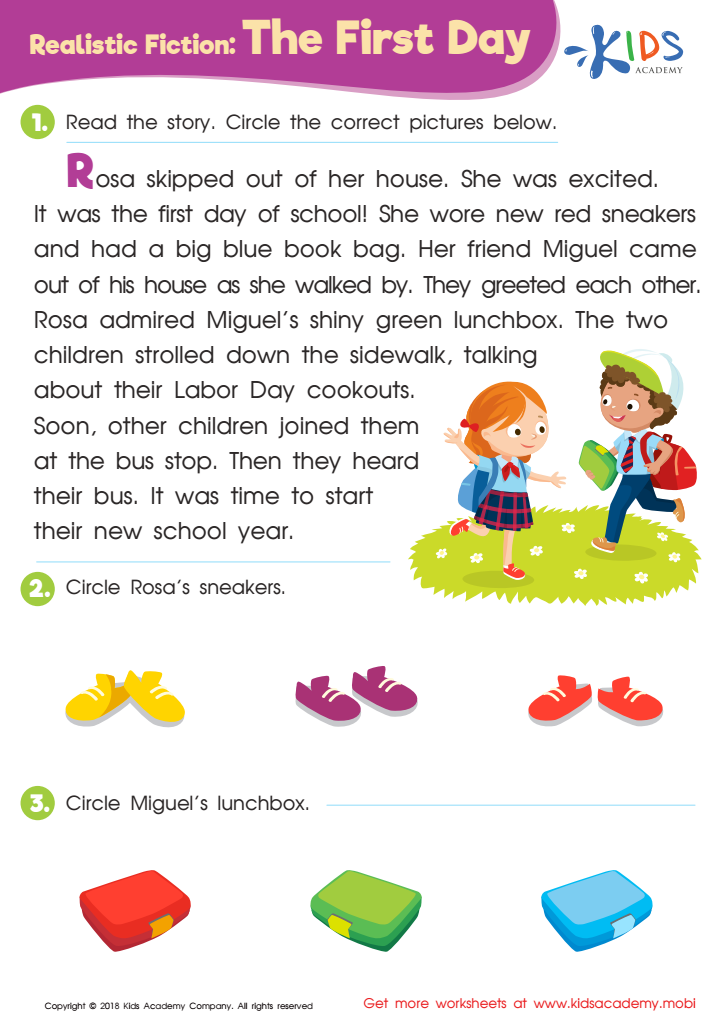
Realistic Fiction: The First Day Worksheet
Fiction is made-up events, so story-writing is fiction writing. In this worksheet, there's a short story about Rosa, her friend Miguel, and their first day back at school. Read the story aloud to your kids and help them circle the right pictures to the questions. Repeat if needed.
Realistic Fiction: The First Day Worksheet
Worksheet
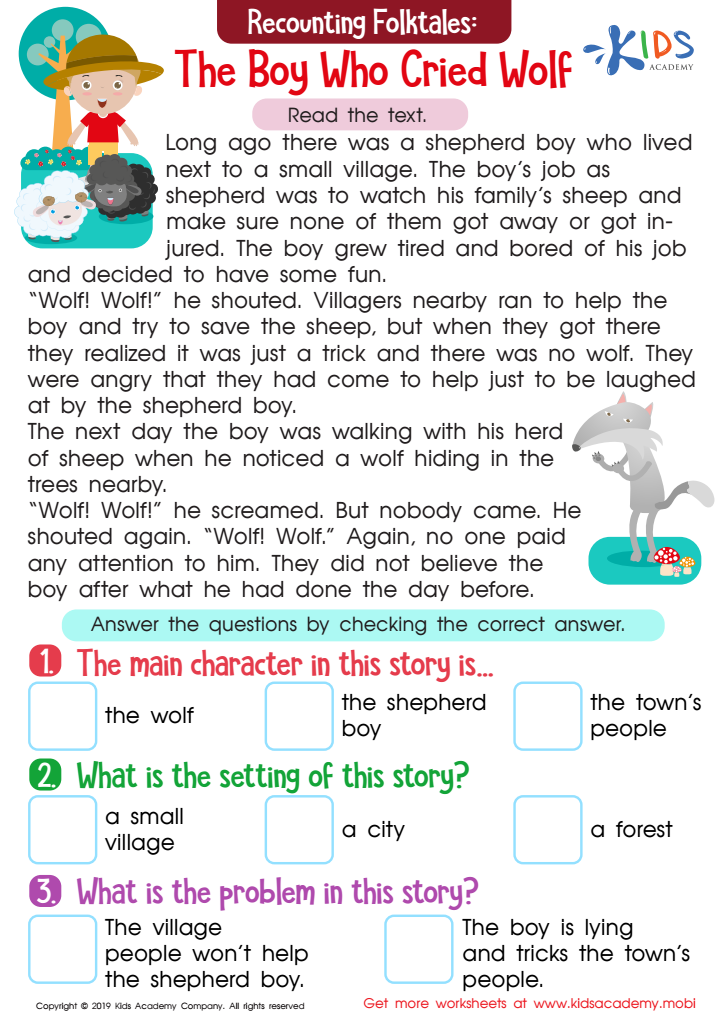
The Boy Who Cried Wolf Part 1 Worksheet
Storytime can be your kid's favorite part of the day. Ask them what their favorite stories are, then read the text in the printout. Read along with them, making sure they understand each word. At the end, go over the questions and have them check the correct answers.
The Boy Who Cried Wolf Part 1 Worksheet
Worksheet
Join Kids Academy for Free
Who is primarily going to use this learning content?



.jpg)




Reading comprehension is fundamental in the early years of a child's education, especially for ages 3-8, as it lays the groundwork for future academic success and lifelong learning. At this crucial stage, young minds are highly impressionable, and fostering an enthusiasm for reading can spark a lasting interest in learning. Parents and teachers play a vital role in this process by focusing on text analysis reading comprehension.
When children learn to analyze texts, they develop critical thinking skills. This means they don’t just decode words, but also understand and interact with the material. They ask questions, make predictions, and connect the stories to their own experiences. Such skills are essential for comprehensive understanding in all subjects, not just literacy, but also math, science, and social studies.
Moreover, early reading proficiency is a strong predictor of later academic success. Children who develop solid reading comprehension skills are more likely to excel in school, have wider vocabularies, and possess stronger problem-solving abilities. Parents and teachers who invest time in text analysis training are directly contributing to building these pivotal skills.
In addition, mastering reading comprehension at a young age boosts children’s confidence. It empowers them to explore new ideas and builds a strong foundation for a positive, lifelong relationship with learning. Consequently, caring about and nurturing text analysis reading comprehension from an early age is essential for helping children develop into well-rounded, competent, and confident learners.








