Long Vowels Worksheets for Ages 3-9 - Page 2
36 filtered results
-
From - To
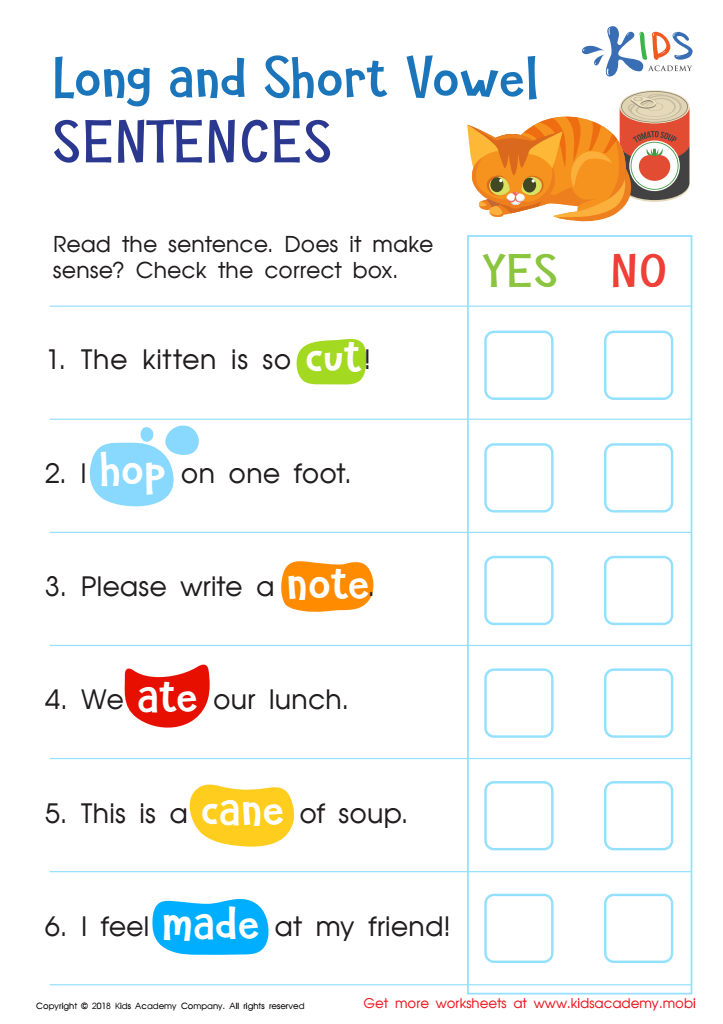
Long and Short Vowel Sentences: Assessment Worksheet
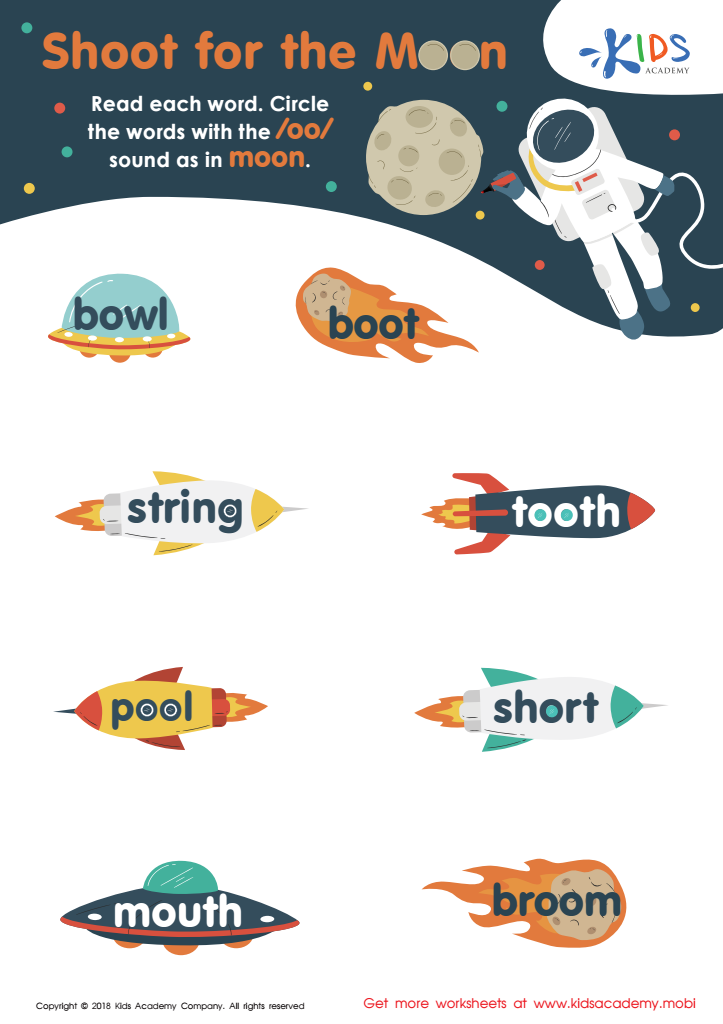
Reading: Shoot for the Moon Worksheet
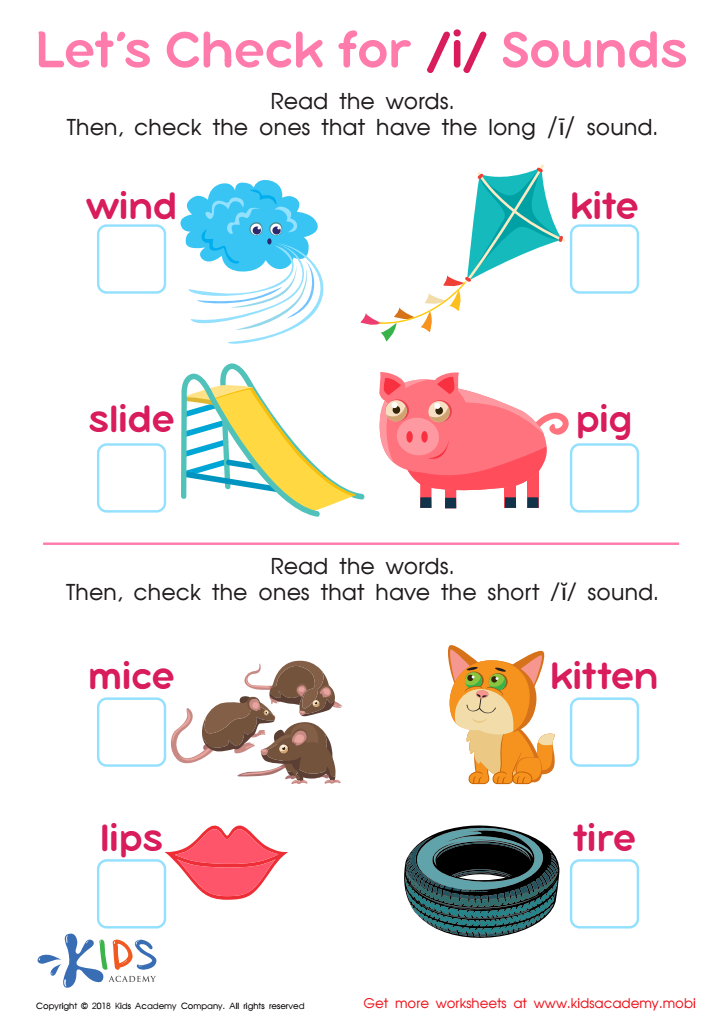
Let's Check for «i» Sounds Worksheet

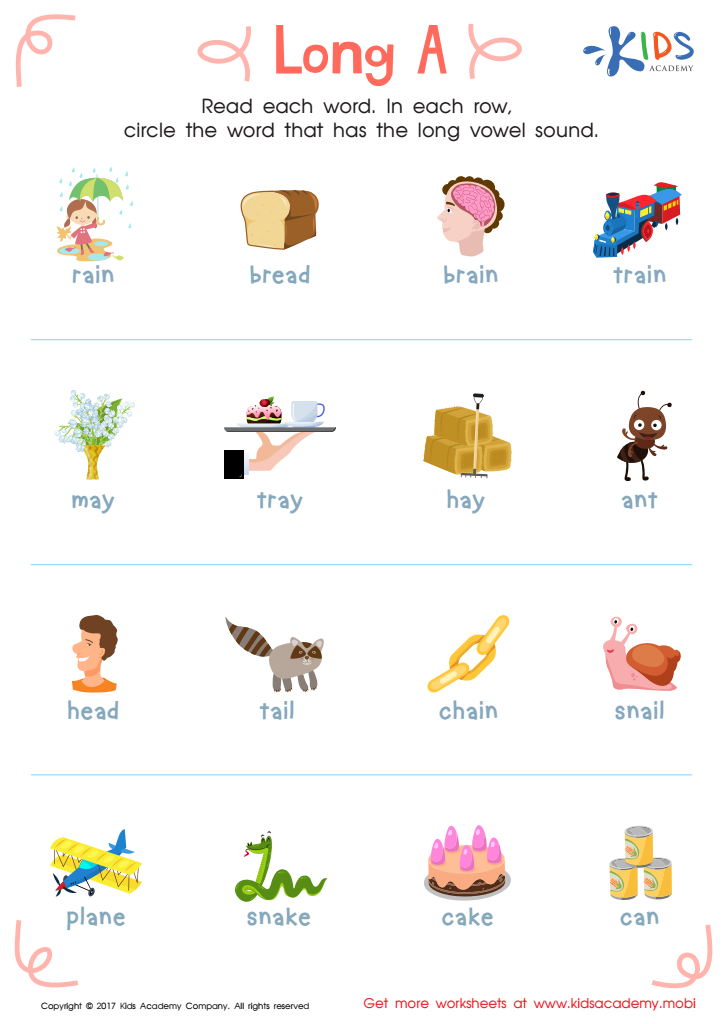
Long and Short E Worksheet
 Assign to My Students
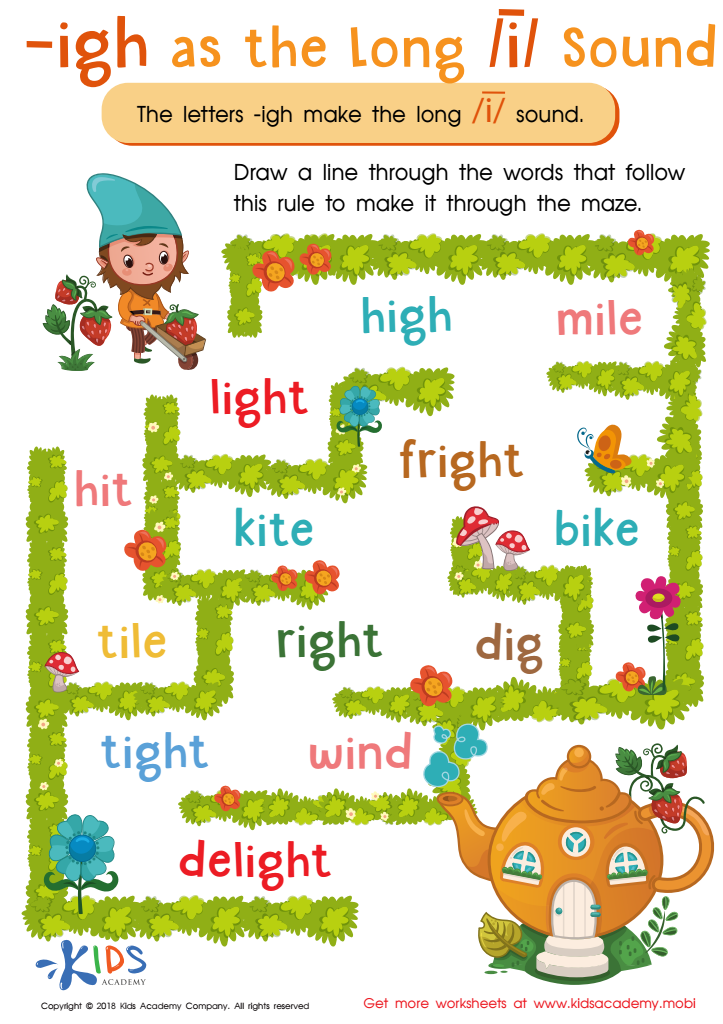
Reading: IGH as Long I Worksheet
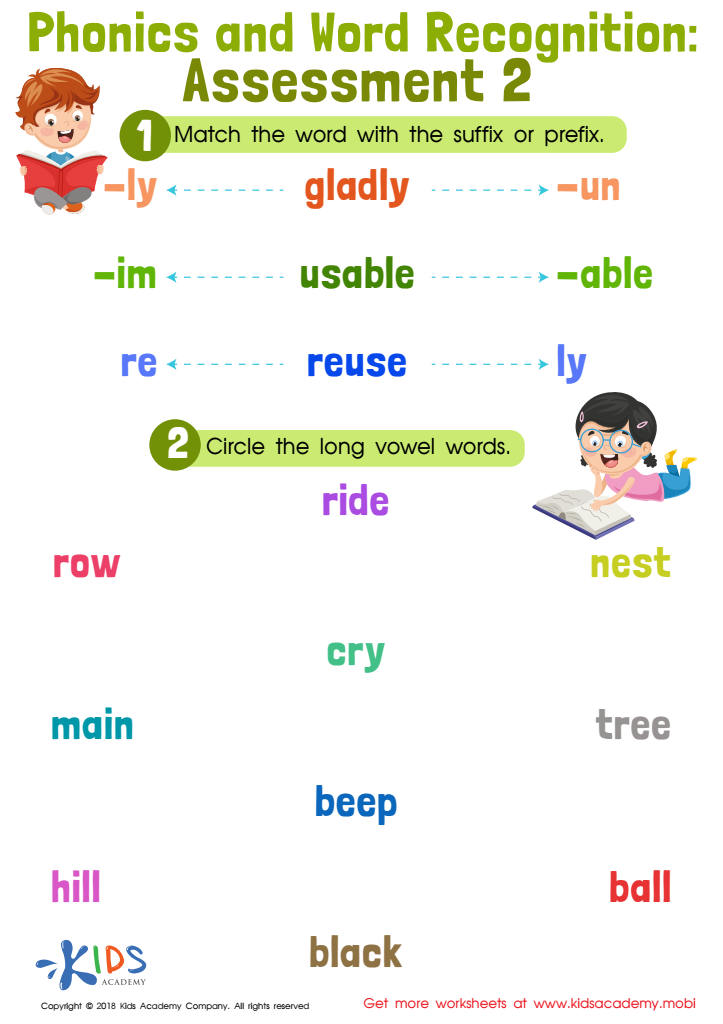
Phonics and Word Recognition: Assessment 2
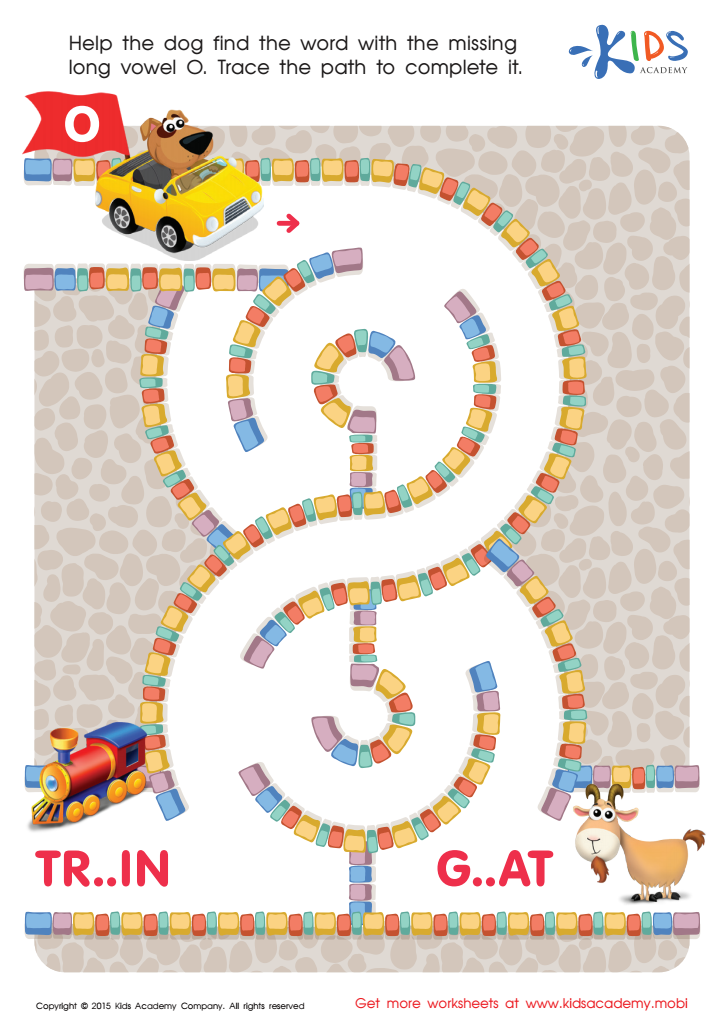
Long Vowel Sound O Worksheet
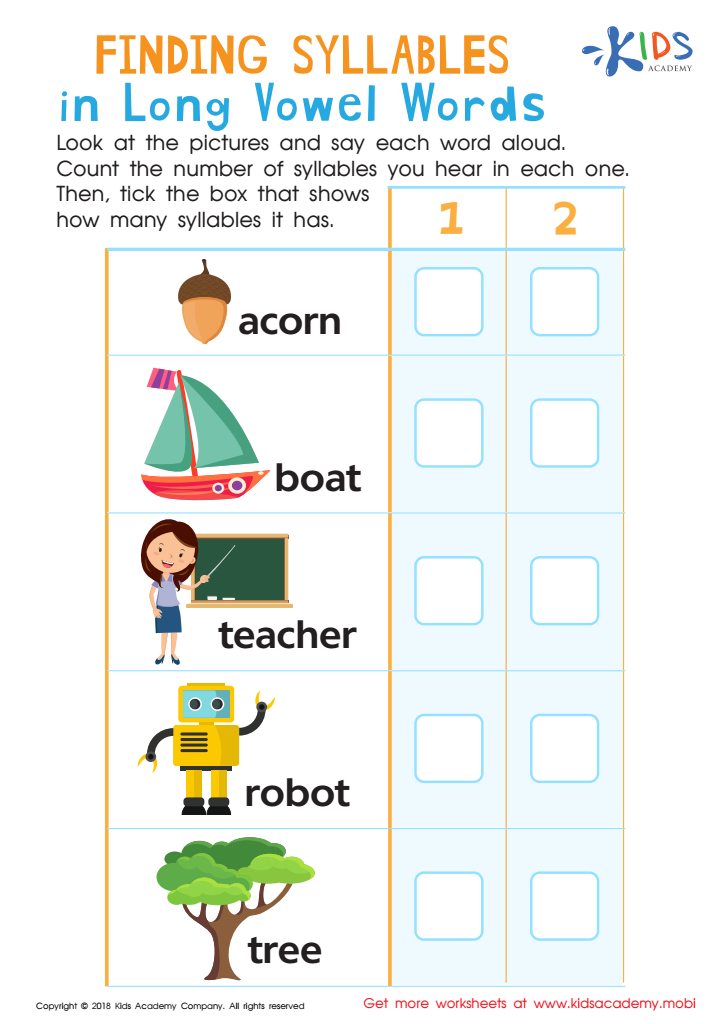
Finding Syllables in Long Vowel Words Worksheet
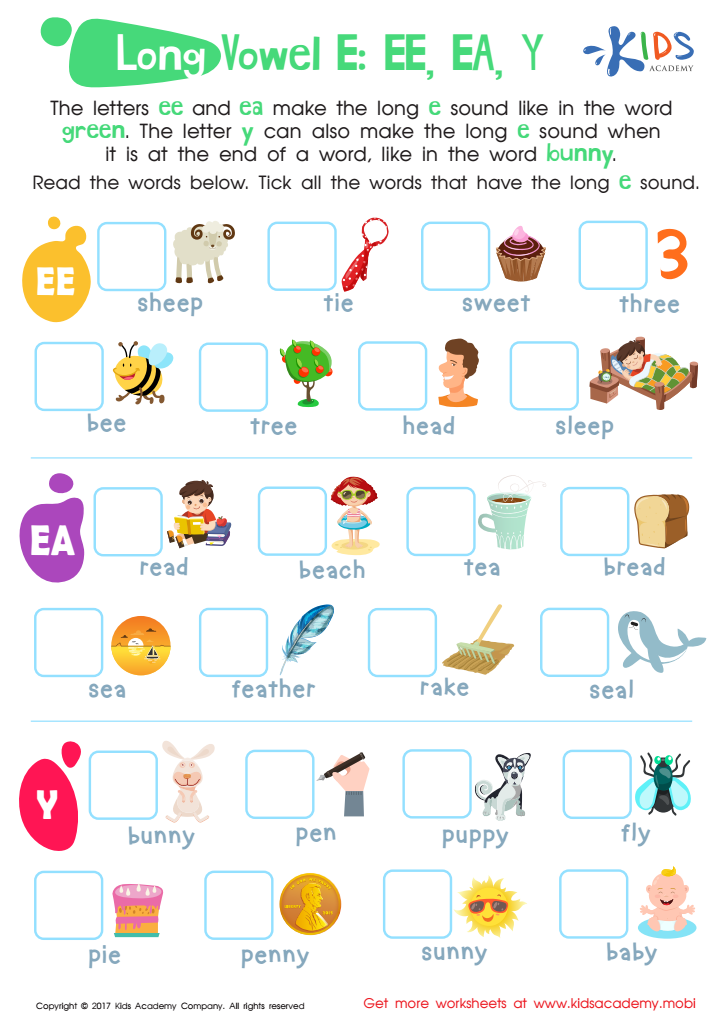
Long Vowel E Printable
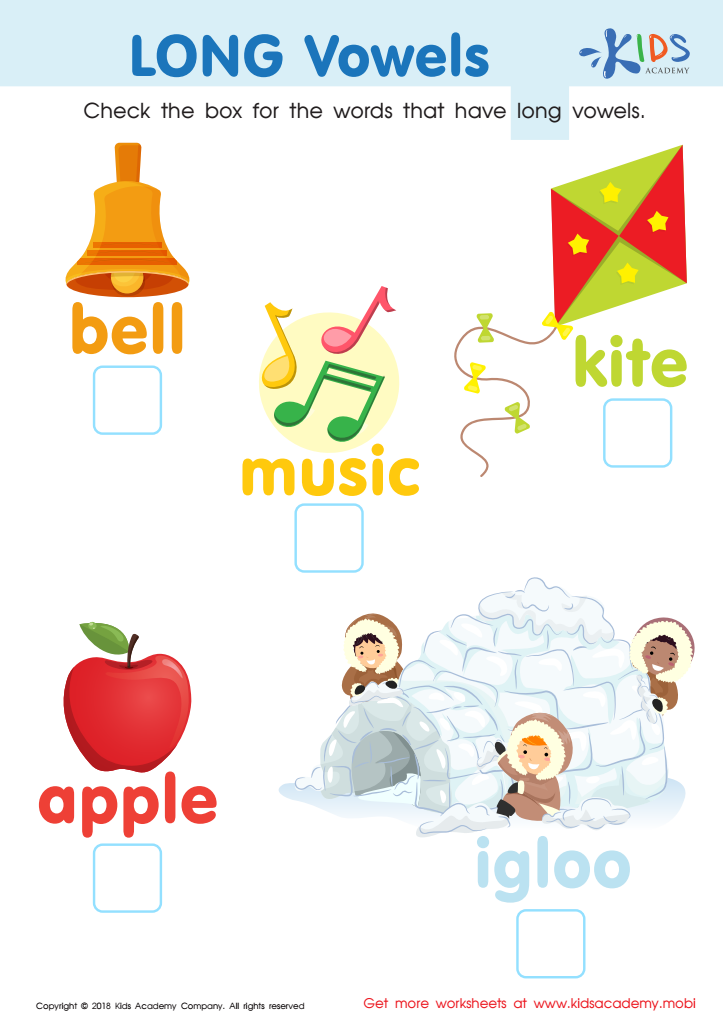
long vowels Worksheet
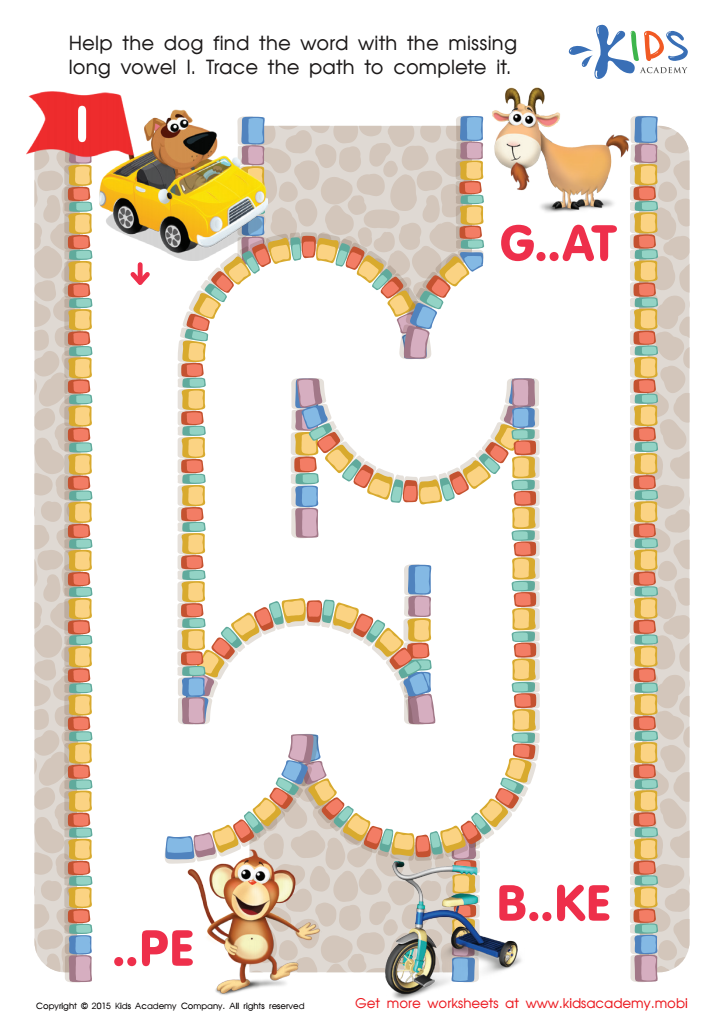
Long Vowel Sound I Worksheet



Long vowels are a fundamental aspect of early literacy, and it's crucial for parents and teachers to emphasize their importance for children ages 3-9. Understanding long vowels helps young learners develop phonemic awareness, which is the ability to hear, identify, and manipulate sounds in spoken language. This skill is foundational for reading and writing, allowing children to decode words more effectively.
As children encounter longer words and more complex texts, recognizing long vowel patterns assists them in predicting pronunciations and meanings. For instance, a child who can differentiate between the long "a" in "cake" and the short "a" in "cat" is better equipped to tackle new vocabulary.
Furthermore, teaching long vowels enhances spelling skills. Children who grasp the concept are more likely to spell words accurately, as they understand how vowel sounds correspond to specific letters.
Engaging with long vowels through games, songs, and reading can also make learning enjoyable, fostering a love for language. Overall, prioritizing long vowel instruction aids in building confident, skilled readers and writers, setting a strong foundation for academic success in later years. It's a vital area that becomes a springboard for further language development and comprehension.