Shape Recognition 2D Shapes Worksheets for Ages 3-9
37 filtered results
-
From - To
Unlock the world of shapes with our engaging Shape Recognition 2D Shapes Worksheets designed for children ages 3-9! These fun, interactive activities help young learners identify and differentiate a variety of 2D shapes, including circles, squares, triangles, and more. Our worksheets are crafted to enhance visual recognition skills, promote critical thinking, and build confidence in early math concepts. Each worksheet offers diverse exercises such as coloring, matching, and tracing, making learning both enjoyable and educational. Perfect for classrooms or at-home learning, our resources are a fantastic way to support your child's cognitive development in a playful, hands-on manner. Explore now and watch them thrive!
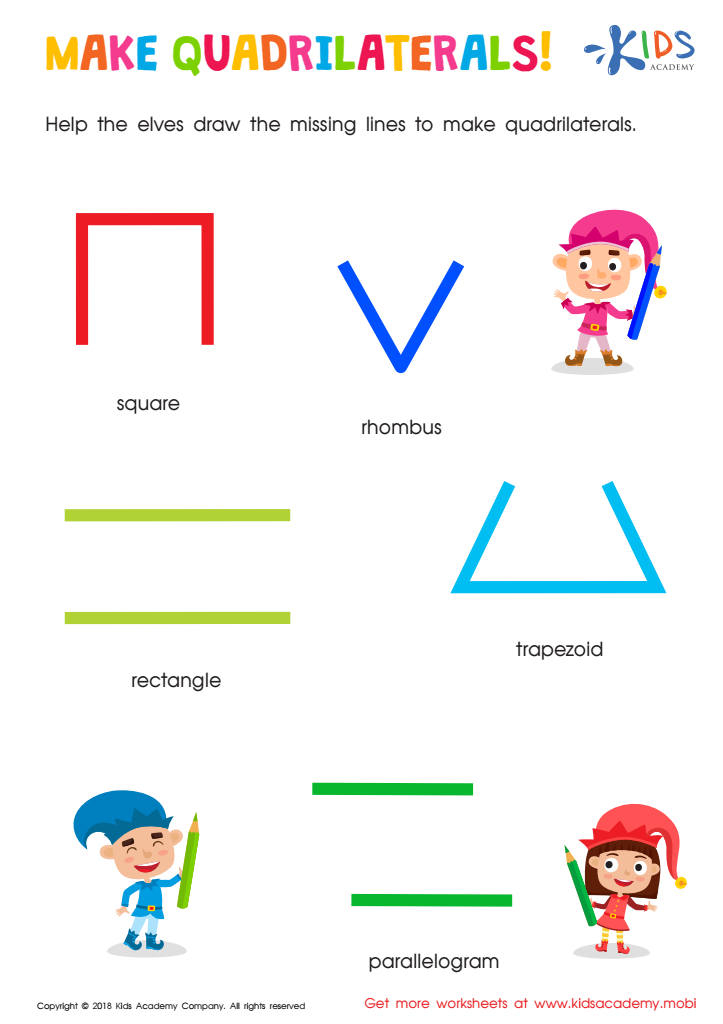
Make Quadrilaterals Worksheet
 Assign to My Students











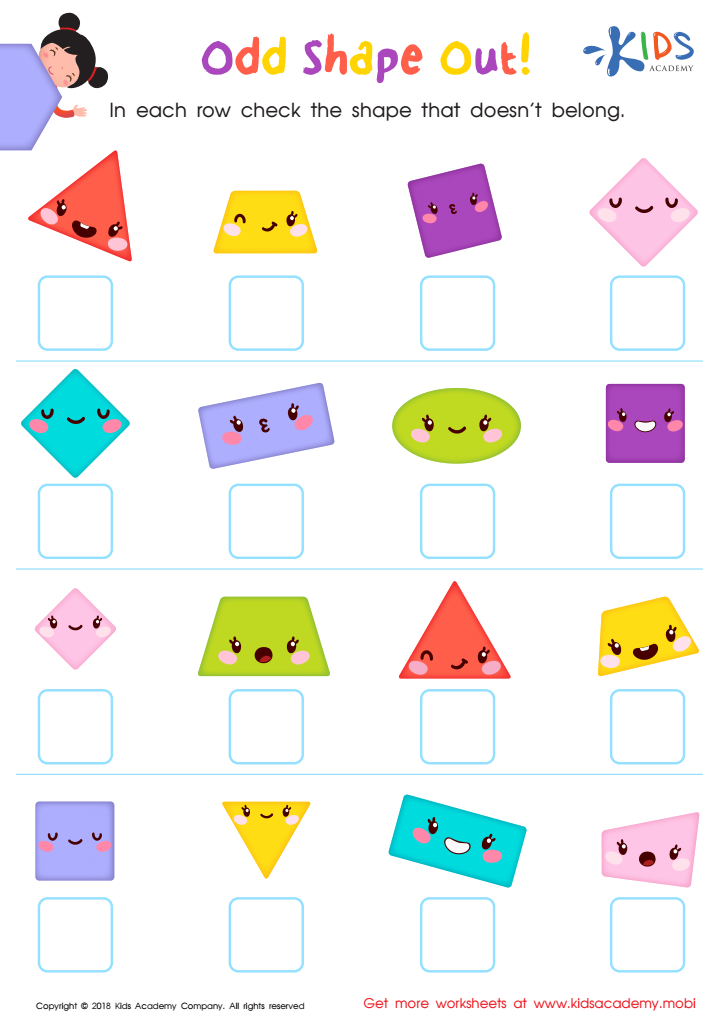
Odd Shape Out Worksheet for Grade 3
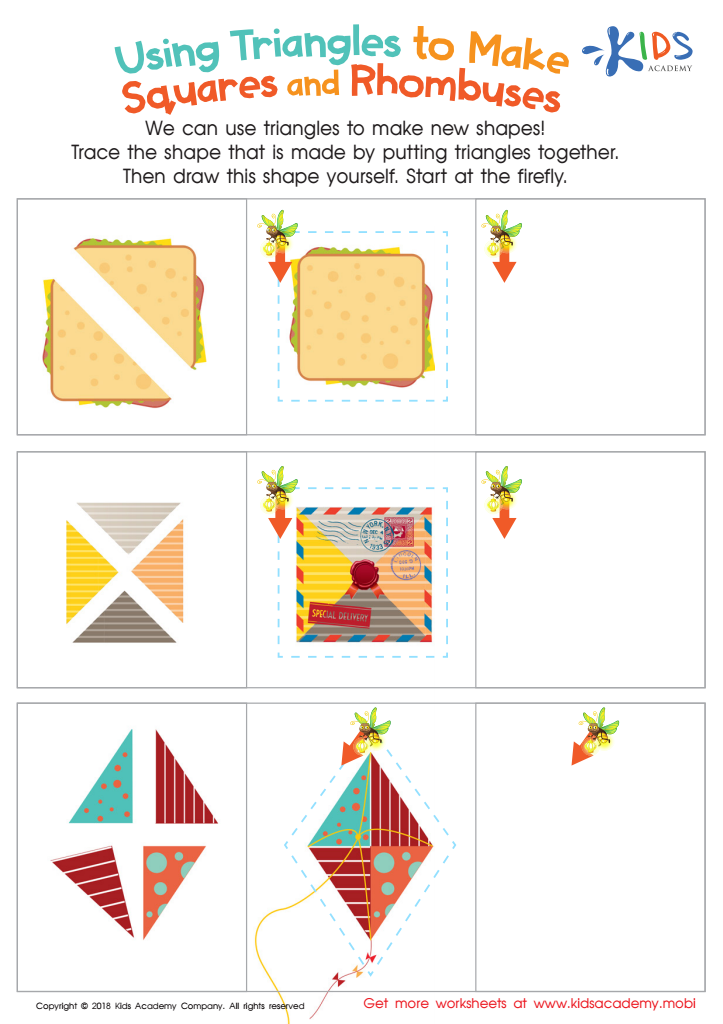
Using Triangles to Make Squares and Rhombuses Worksheet
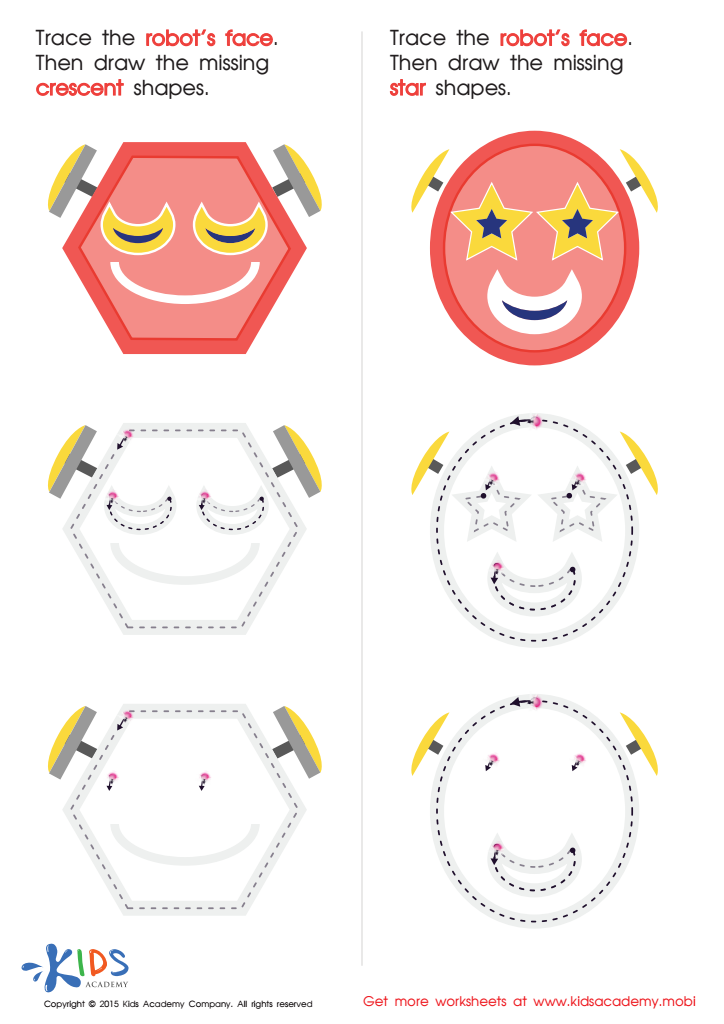
Composing a Robot's Face of Crescents And Stars Worksheet
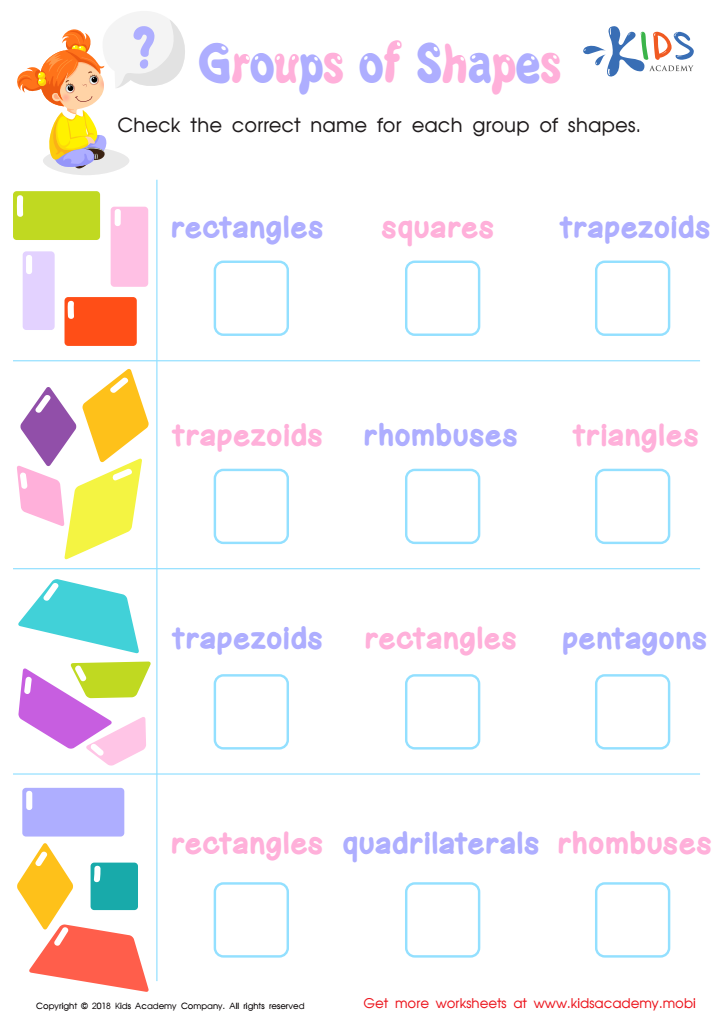
Groups of Shapes Worksheet
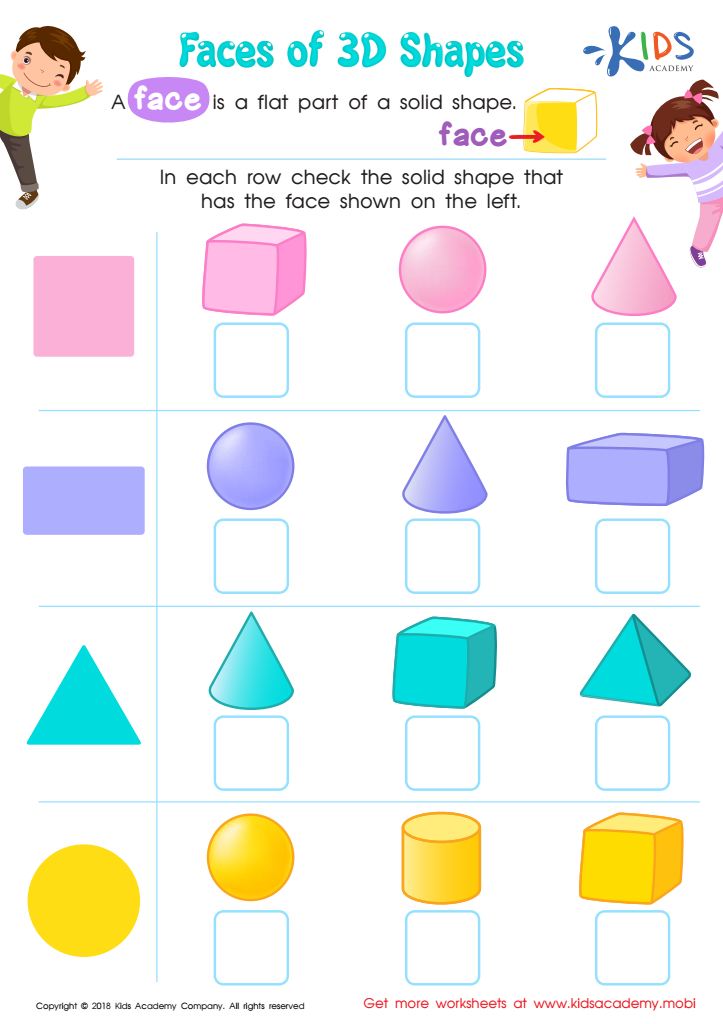
Faces of 3D Shapes Worksheet
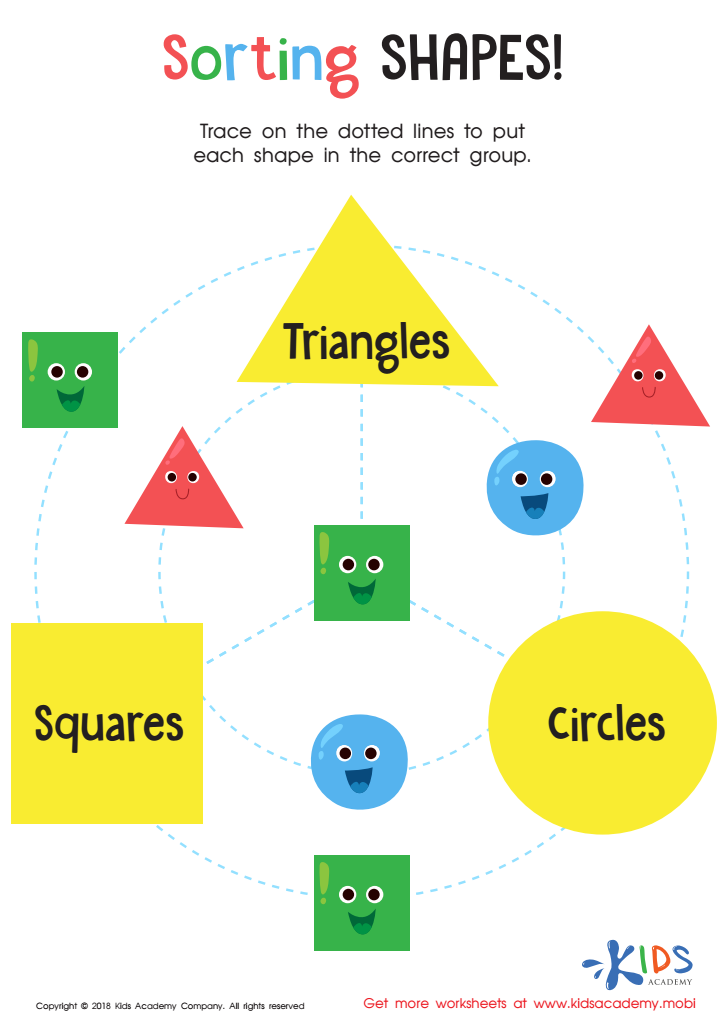
Sorting Shapes - Part 3 Worksheet
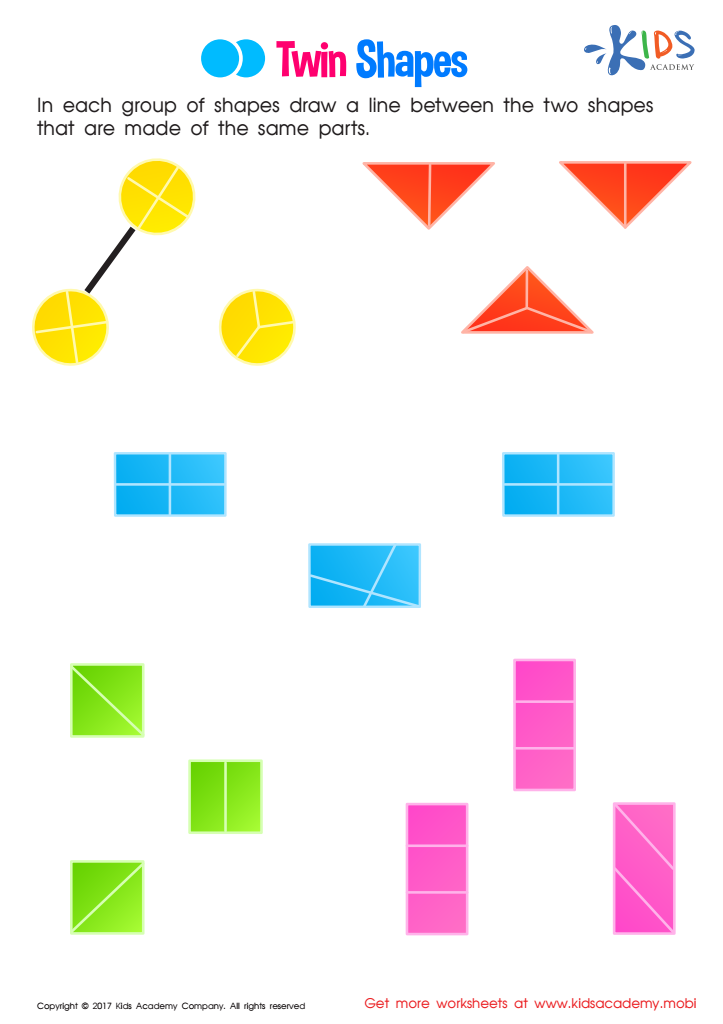
Twin Shapes Worksheet
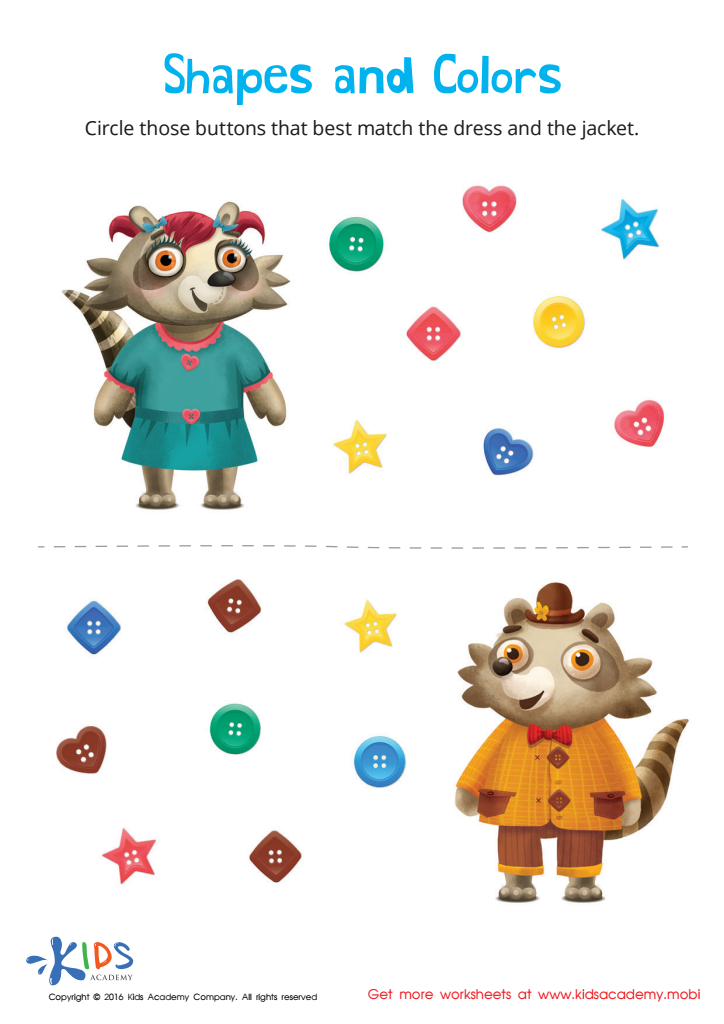
Matching: Shapes and Colors Worksheet
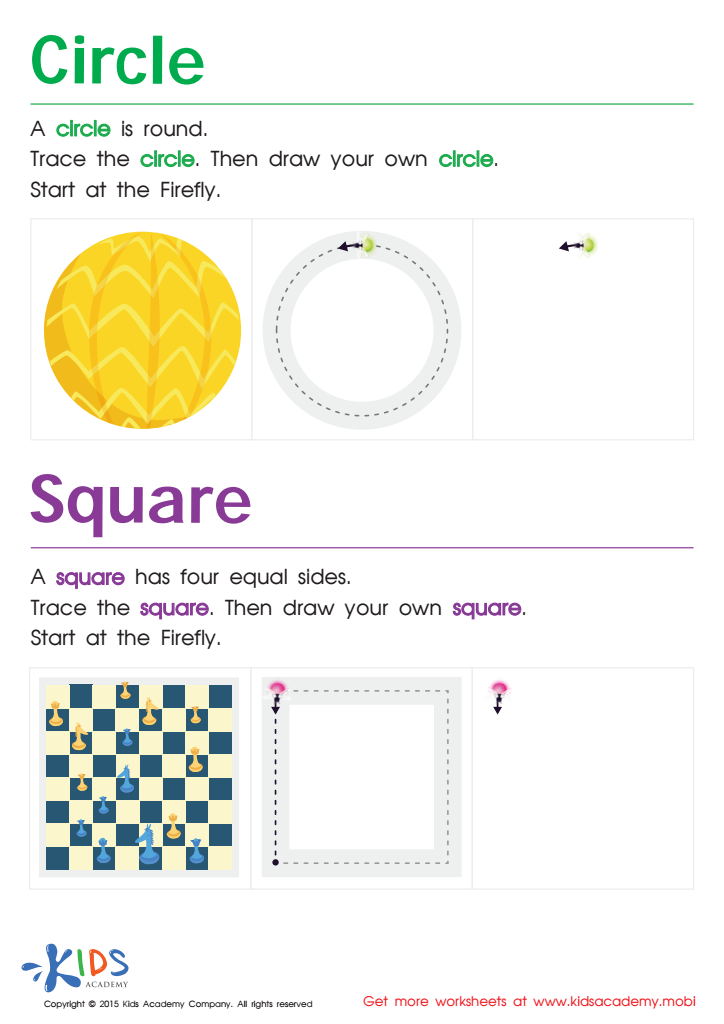
Trace And Draw a Circle And a Square Worksheet
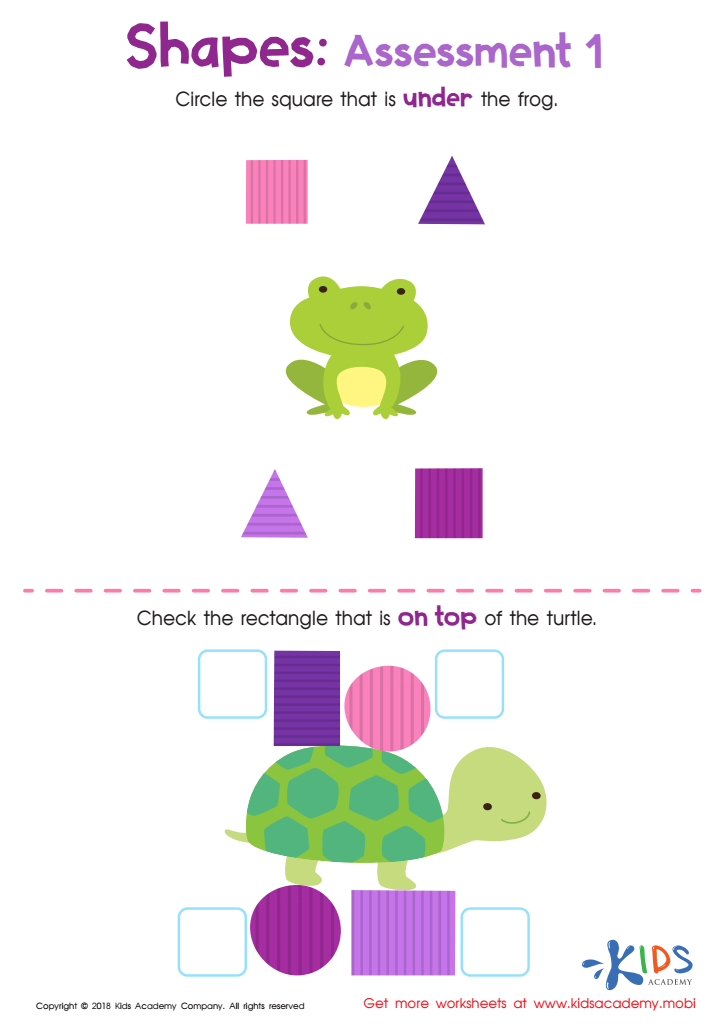
Geometry – Assessment 1 Worksheet
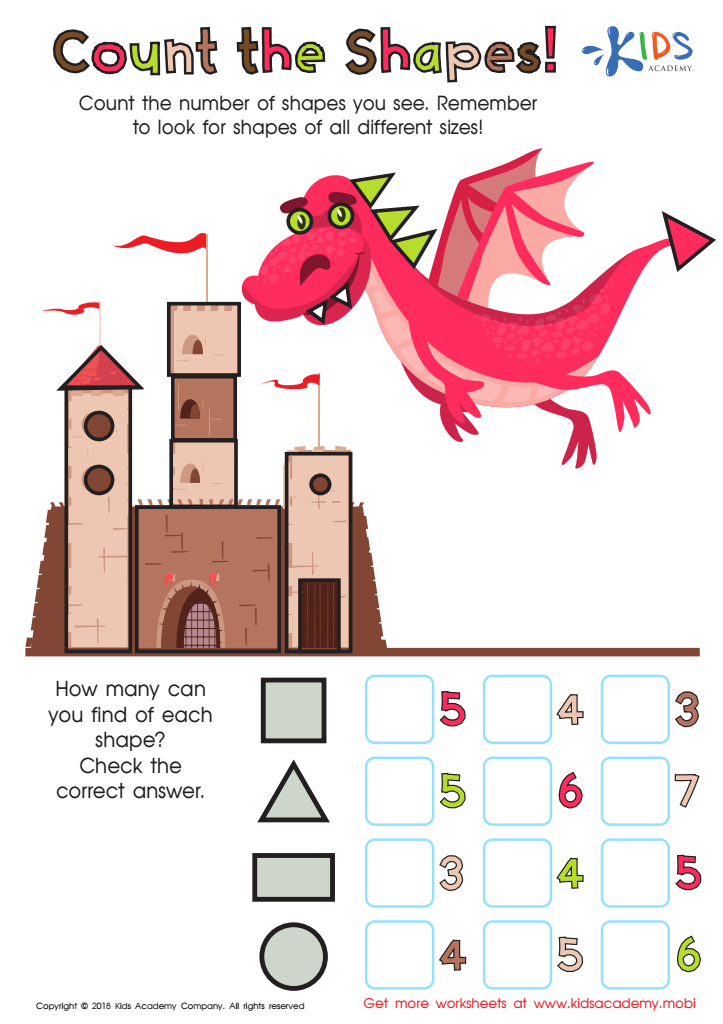
Count the Shapes Worksheet
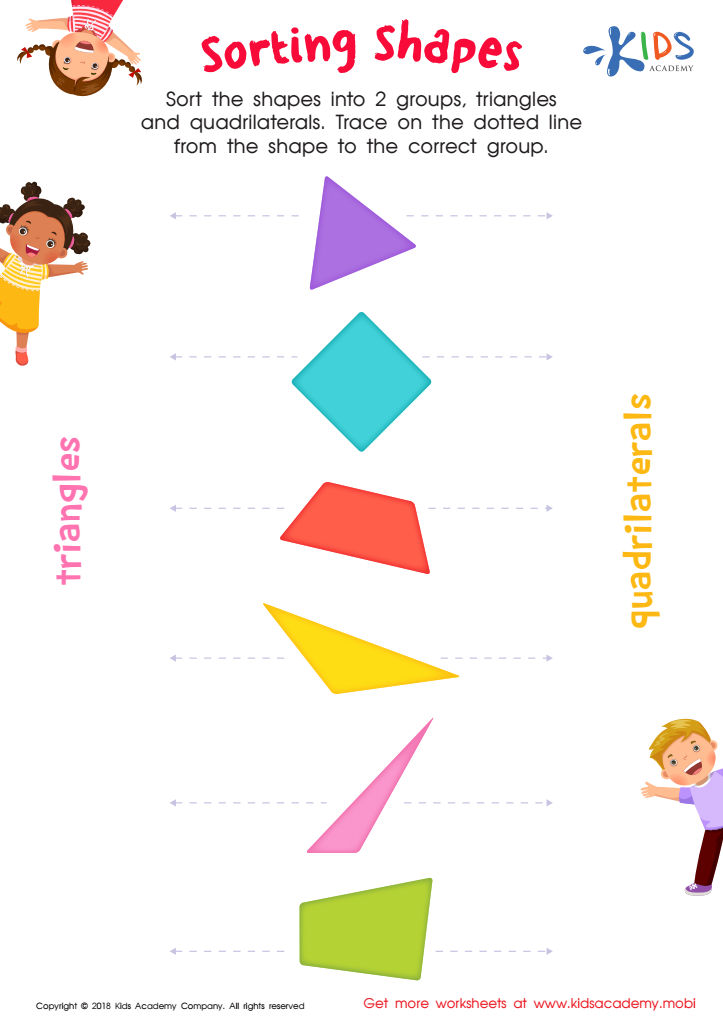
Sorting Shapes Worksheet
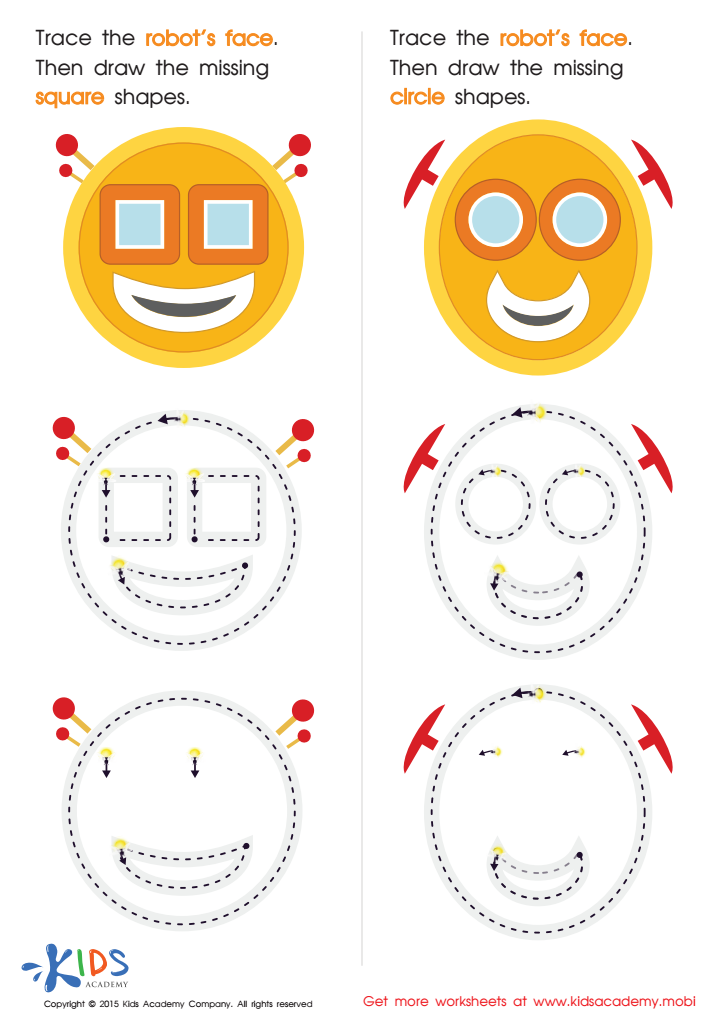
Practicing to Draw Circles And Squares Printable
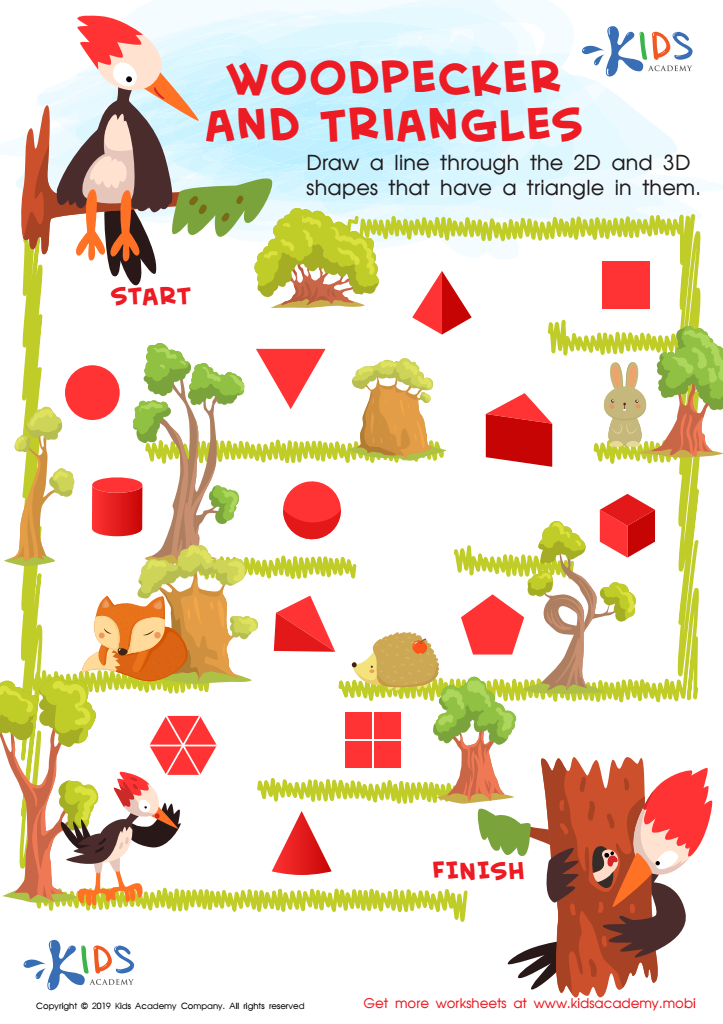
Woodpecker and Triangles Worksheet
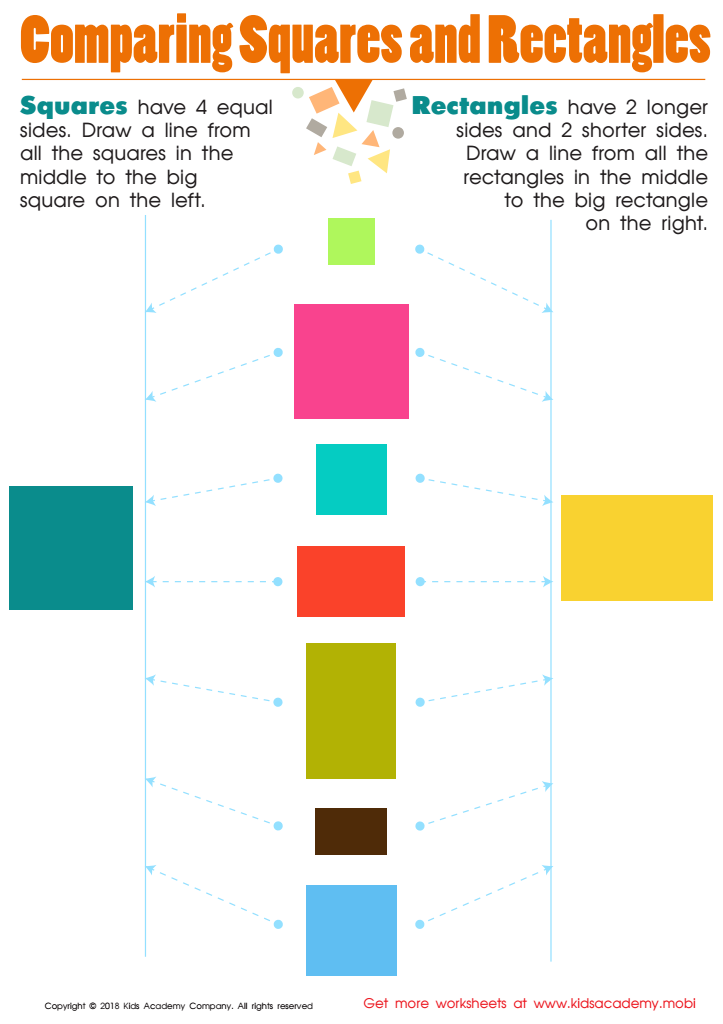
Comparing Squares Rectangles Worksheet
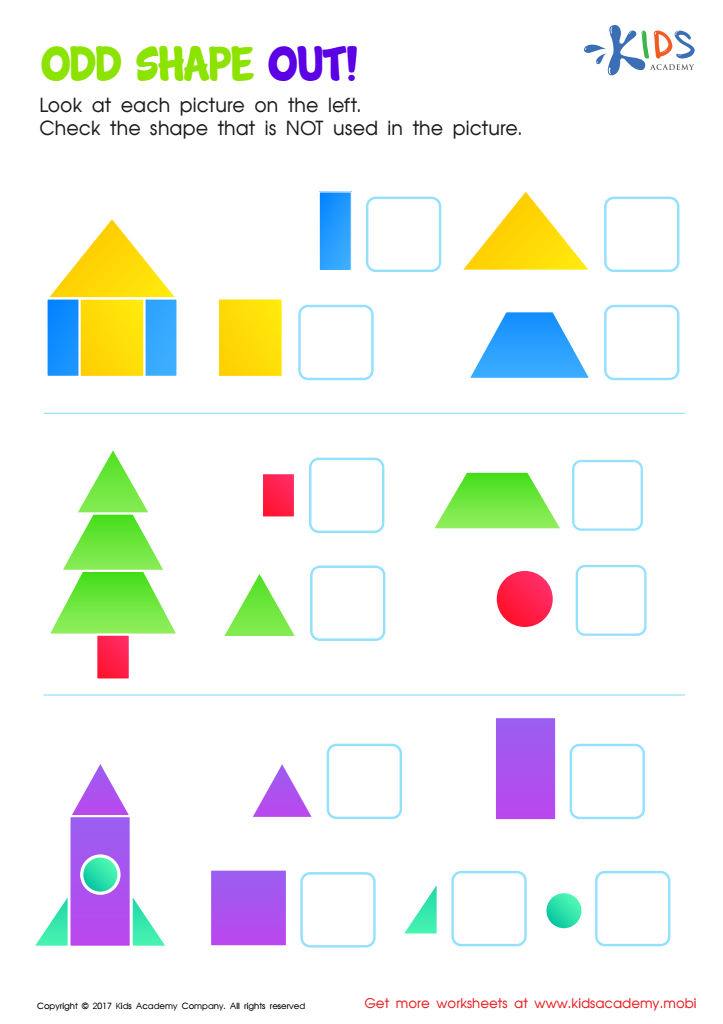
Odd Shape Out Worksheet for Grade 1
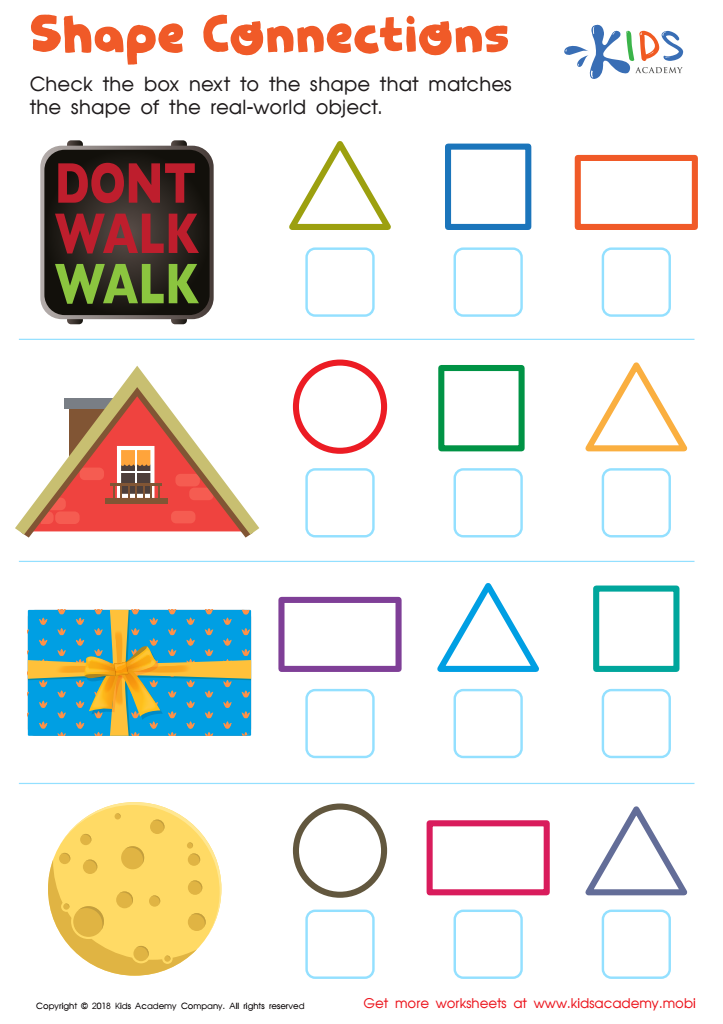
Shape Connections Worksheet
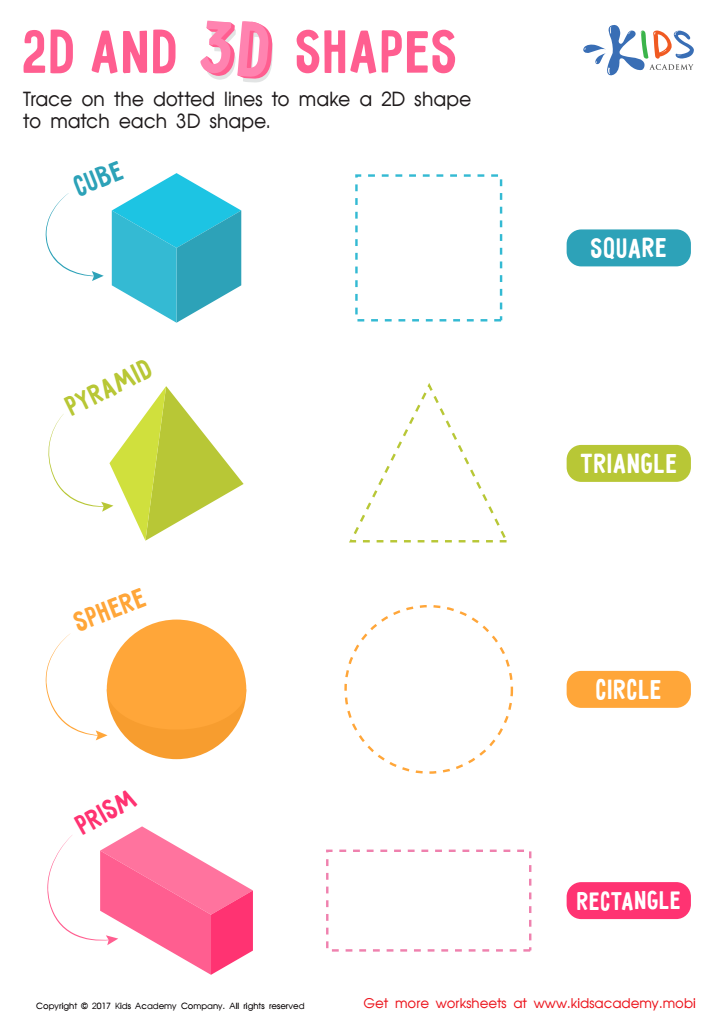
2D and 3D Shapes Worksheet
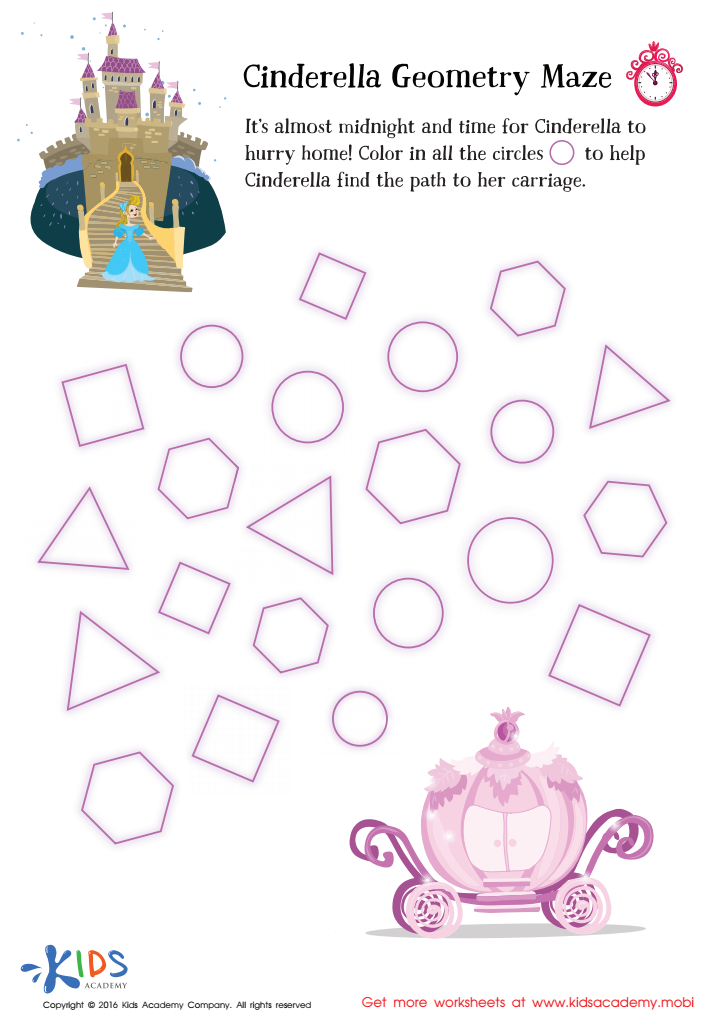
Cinderella Geometry Maze Worksheet
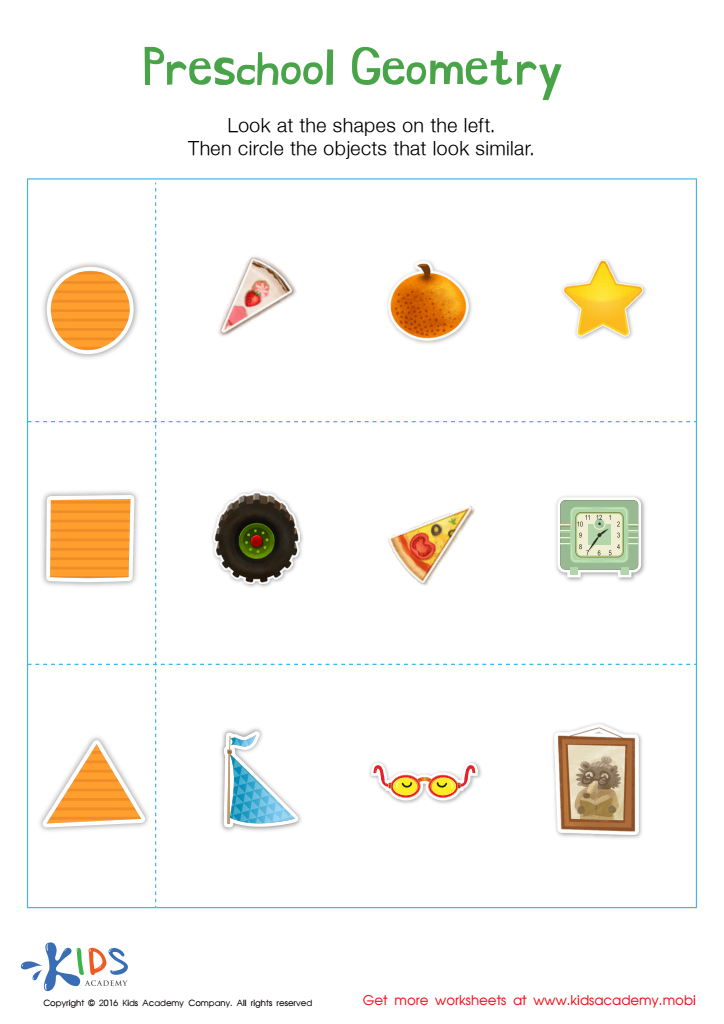
Preschool Geometry Match Up Worksheet
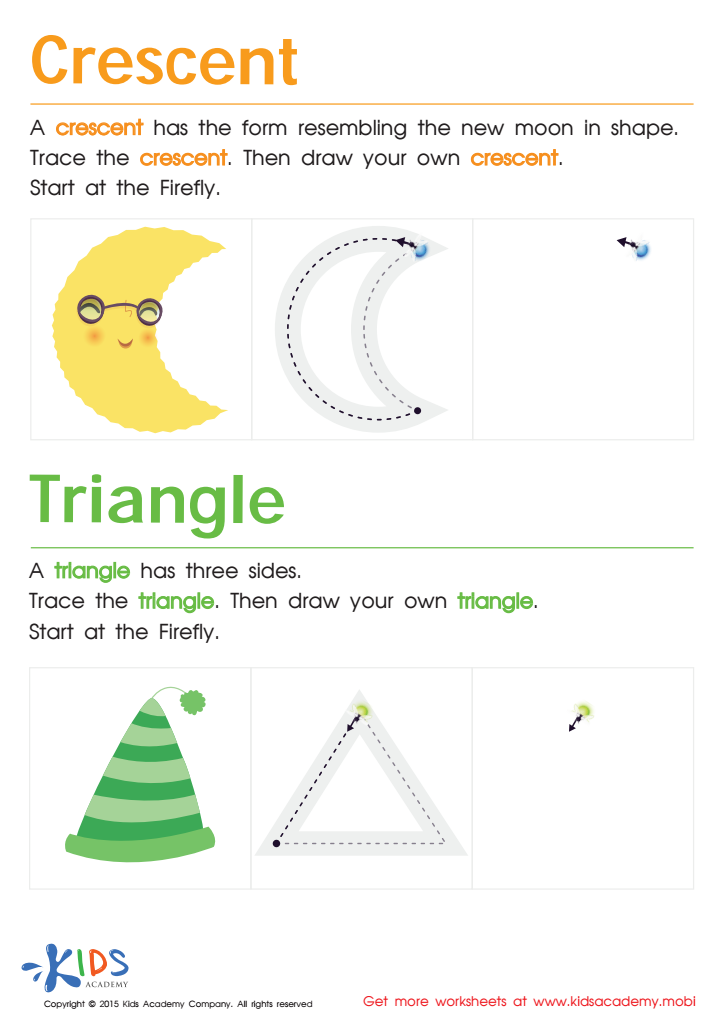
Learning to Draw Crescents And Triangles Worksheet
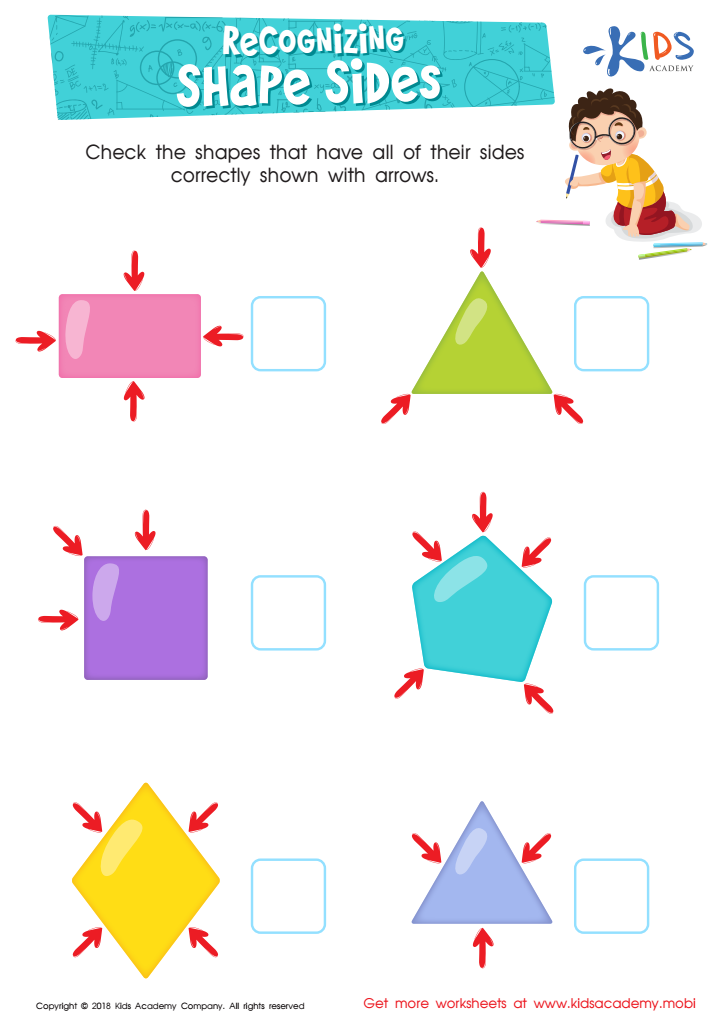
Recognizing Shape Sides Worksheet
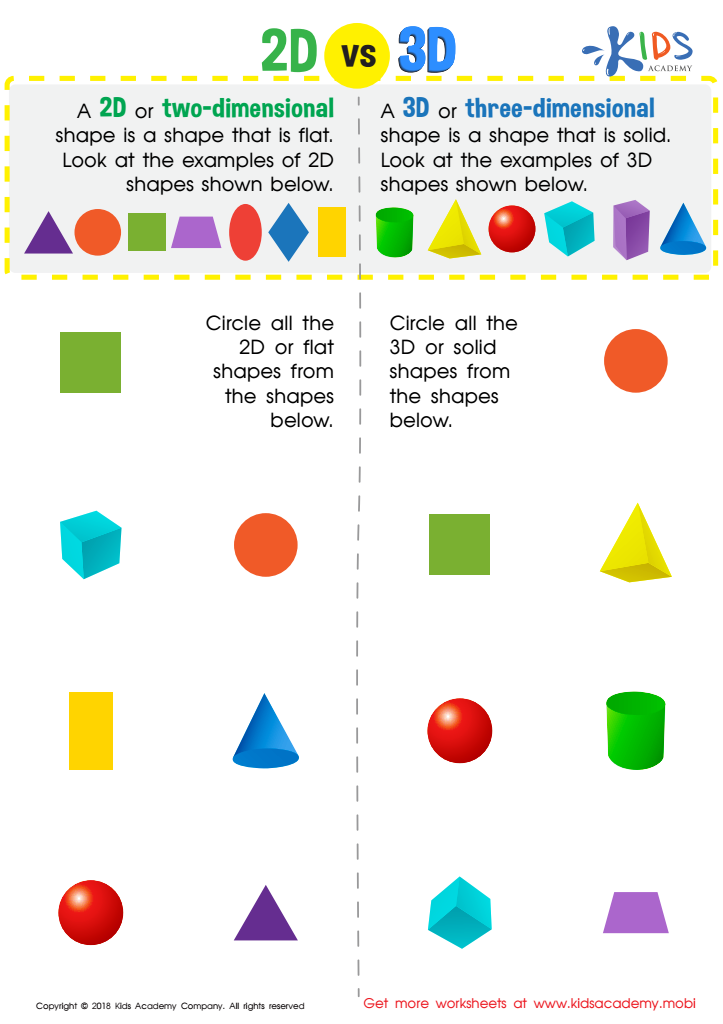
2D vs 3D Shapes Worksheet








Shape recognition is a fundamental skill that provides a foundation for children's cognitive development. For ages 3-9, learning about 2D shapes, such as circles, squares, triangles, and rectangles, is essential for several reasons.
Firstly, it enhances spatial awareness, helping children understand how objects relate to each other in space. This understanding is crucial as they engage in activities involving movement, positioning, and navigation. Secondly, recognizing and categorizing shapes improves problem-solving skills—children learn to identify patterns, distinguish between similar and different objects, and develop critical thinking.
Moreover, shape recognition is integral to math skills. As children learn about shapes, they are also introduced to concepts like measurement and geometry, forming the basis for more advanced mathematical understanding in later years.
Additionally, shape recognition supports language development; as children learn shape names, they enrich their vocabulary and improve communication skills.
Encouraging shape recognition through playful, hands-on activities makes learning fun and interactive. Whether through games, art projects, or real-world explorations, engaging children in shape activities fosters a love for learning, setting the stage for future academic success. This skill not only benefits children in school but also in everyday life as they navigate their environments.