Filters

1537 filtered results

Clear all filters
Favorites
With answer key
Interactive

1537 filtered results

Difficulty Level

Grade


Subject

    Check out this FREE Trial Lesson on Addition & Subtraction for age 3-9!

    Making a Whole from Fractions

    Favorites
    With answer key
    Interactive
    • 3-9
    • Addition & Subtraction
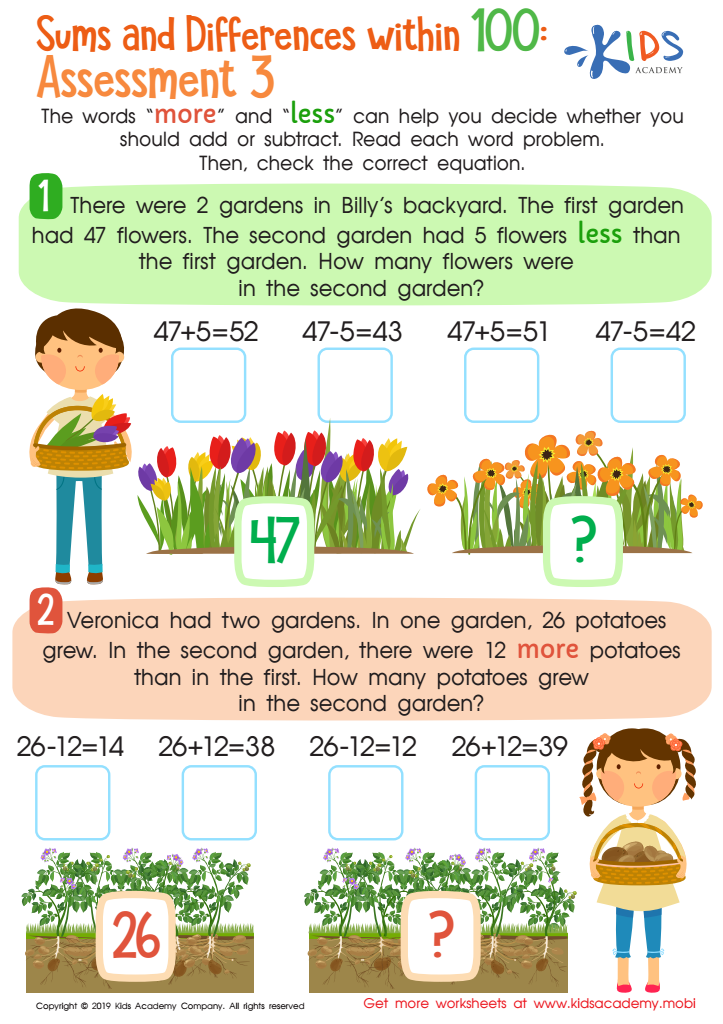
    Sums and Differences Within 1 - Assessment 1 Worksheet
    Sums and Differences Within 1 - Assessment 1 Worksheet

    Sums and Differences Within 1 - Assessment 1 Worksheet

    Help your child understand school topics better with your assistance. For math, go over their worksheet together and discuss the instructions and text. Solve the questions and check the right equation. This will take their learning to the next level.
    Sums and Differences Within 1 - Assessment 1 Worksheet
    Worksheet
    Adding up to 1000 Without Regrouping: Page 25
    Adding up to 1000 Without Regrouping: Page 25
    Adding up to 1000 Without Regrouping: Page 25
    Worksheet
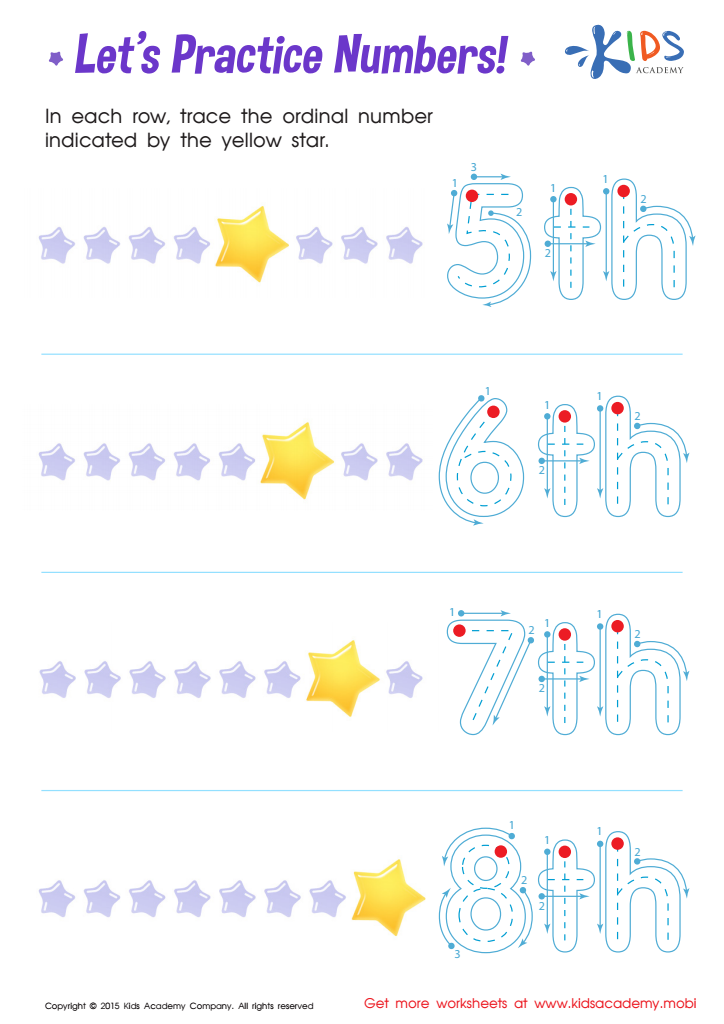
    Practice Ordinal Numbers Worksheets PDF
    Practice Ordinal Numbers Worksheets PDF
    Ordinal Numbers: Let's Practice Numbers Printable
    Worksheet
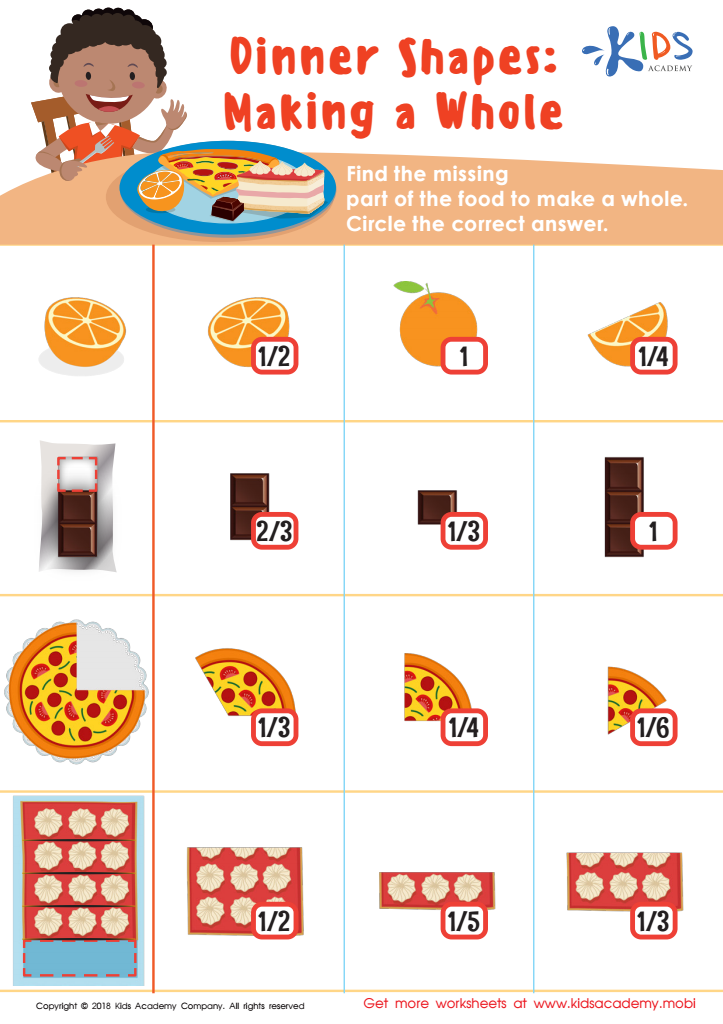
    Dinner Shapes: Making a Whole Worksheet
    Dinner Shapes: Making a Whole Worksheet
    Dinner Shapes: Making a Whole Worksheet
    Using food and snacks to stimulate learning and interest in topics is a great strategy. Fractions can prove tricky, but this worksheet can help your child become an expert. Have them look for the missing parts of the food to make a whole, then circle the answer.
    Dinner Shapes: Making a Whole Worksheet
    Worksheet
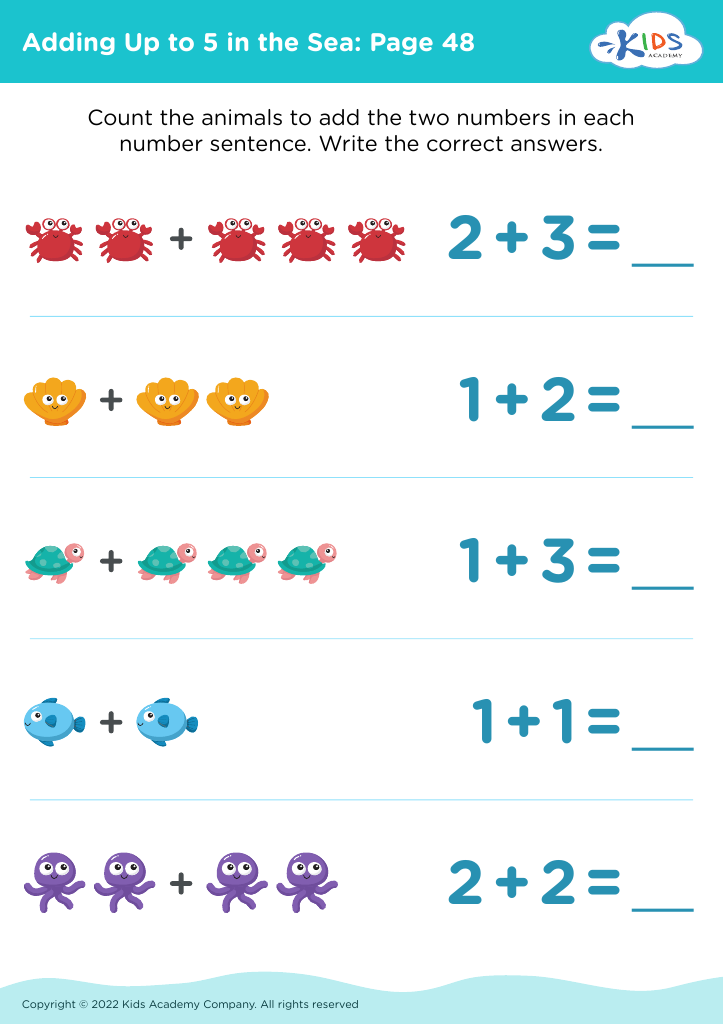
    Adding Up to 5 in the Sea: Page 48
    Adding Up to 5 in the Sea: Page 48
    Adding Up to 5 in the Sea: Page 48
    Worksheet
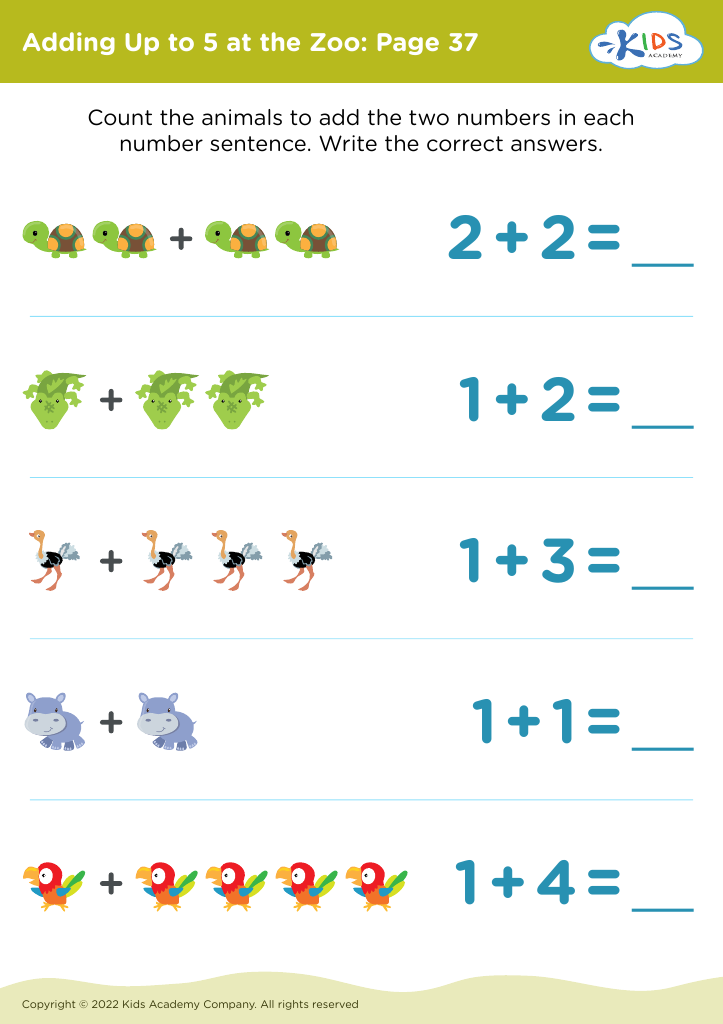
    Adding Up to 5 at the Zoo: Page 37
    Adding Up to 5 at the Zoo: Page 37
    Adding Up to 5 at the Zoo: Page 37
    Worksheet
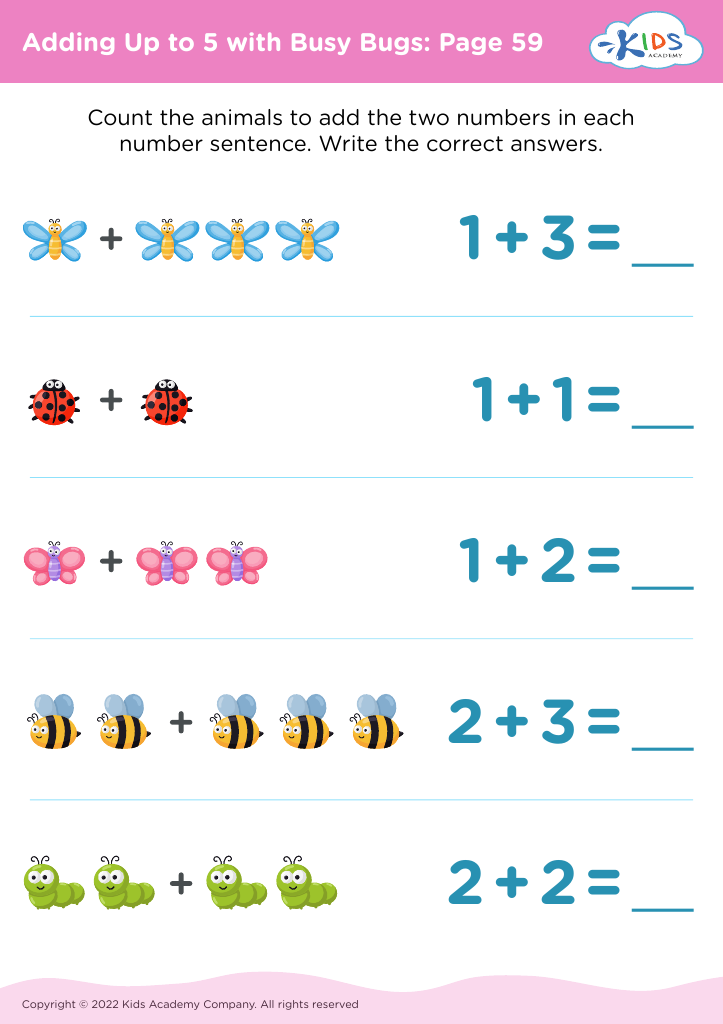
    Adding Up to 5 with Busy Bugs: Page 59
    Adding Up to 5 with Busy Bugs: Page 59
    Adding Up to 5 with Busy Bugs: Page 59
    Worksheet
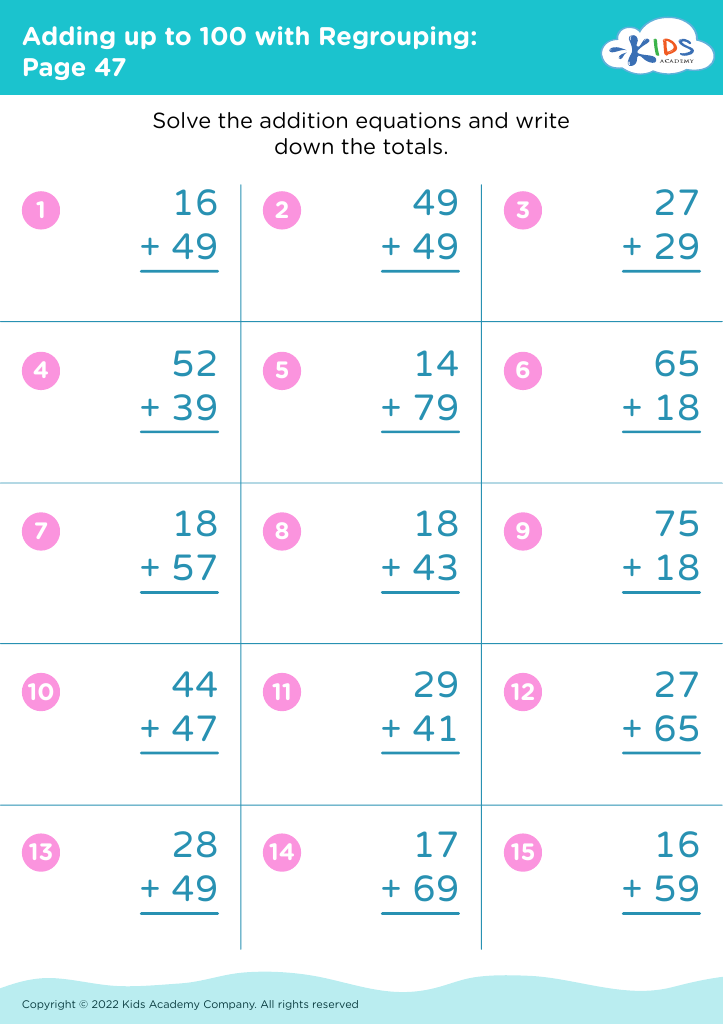
    Adding up to 100 with Regrouping: Page 47
    Adding up to 100 with Regrouping: Page 47
    Adding up to 100 with Regrouping: Page 47
    Worksheet
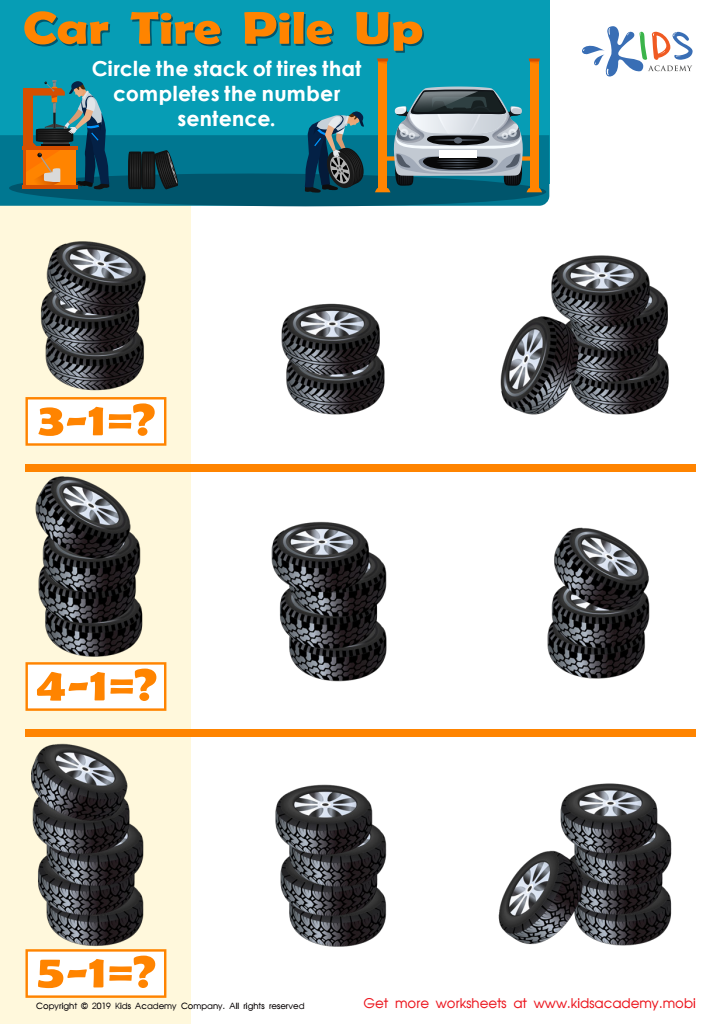
    Car Tire Pile Up Worksheet
    Car Tire Pile Up Worksheet

    Car Tire Pile Up Worksheet

    Examine the pic with your kids. Can they recognize the items piled up? The tires are organized in different quantities. Equations are on the left. Have your children work out the equations, counting the tire stacks to identify the correct answer.
    Car Tire Pile Up Worksheet
    Worksheet
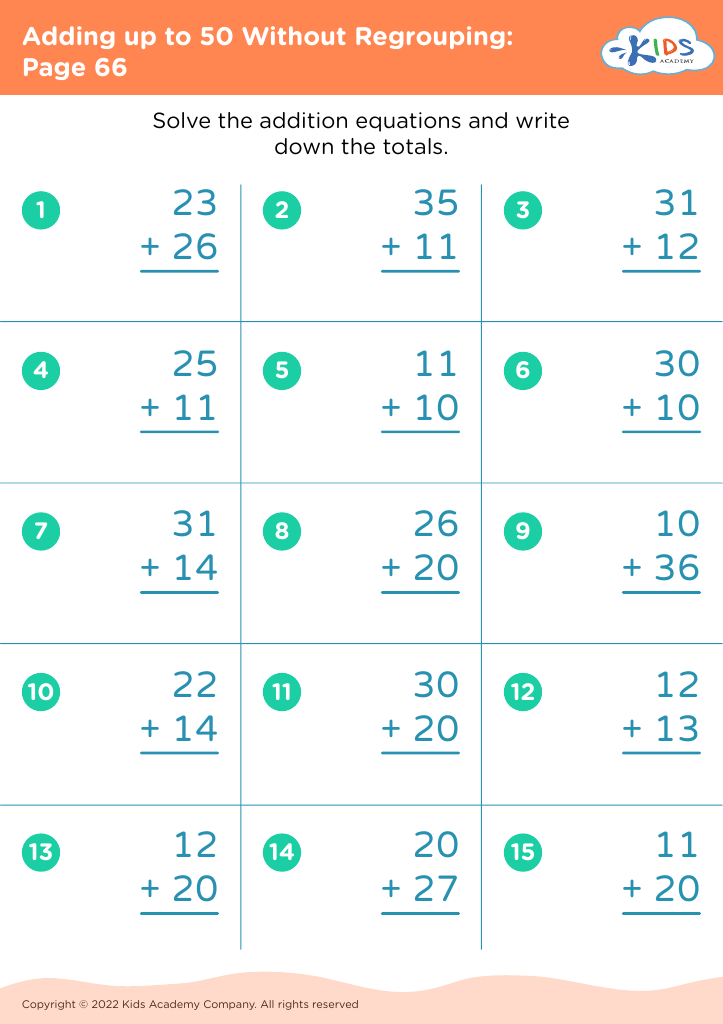
    Adding up to 50 Without Regrouping: Page 66
    Adding up to 50 Without Regrouping: Page 66
    Adding up to 50 Without Regrouping: Page 66
    Worksheet
    Find 10 Worksheet
    Find 10 Worksheet

    Find 10 Worksheet

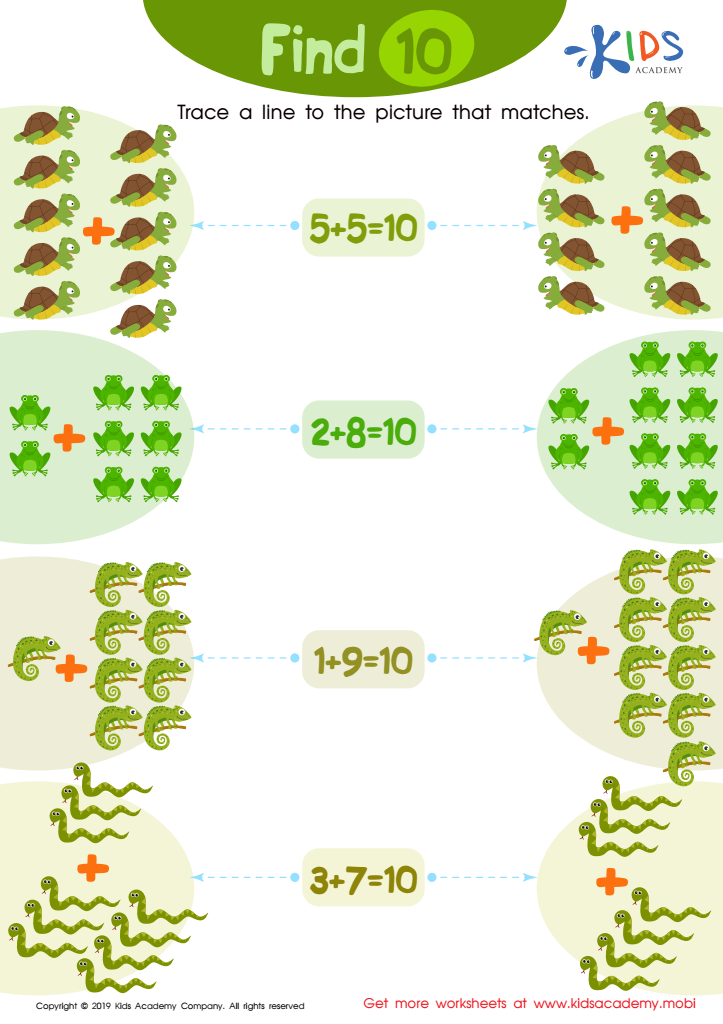
    Counting can be tricky, but your kids can master it with regular practice. Here's a fun activity to help: count the animals, then trace a line to the pictures that matches. With these tips, math will be an easy walk in the park.
    Find 10 Worksheet
    Worksheet
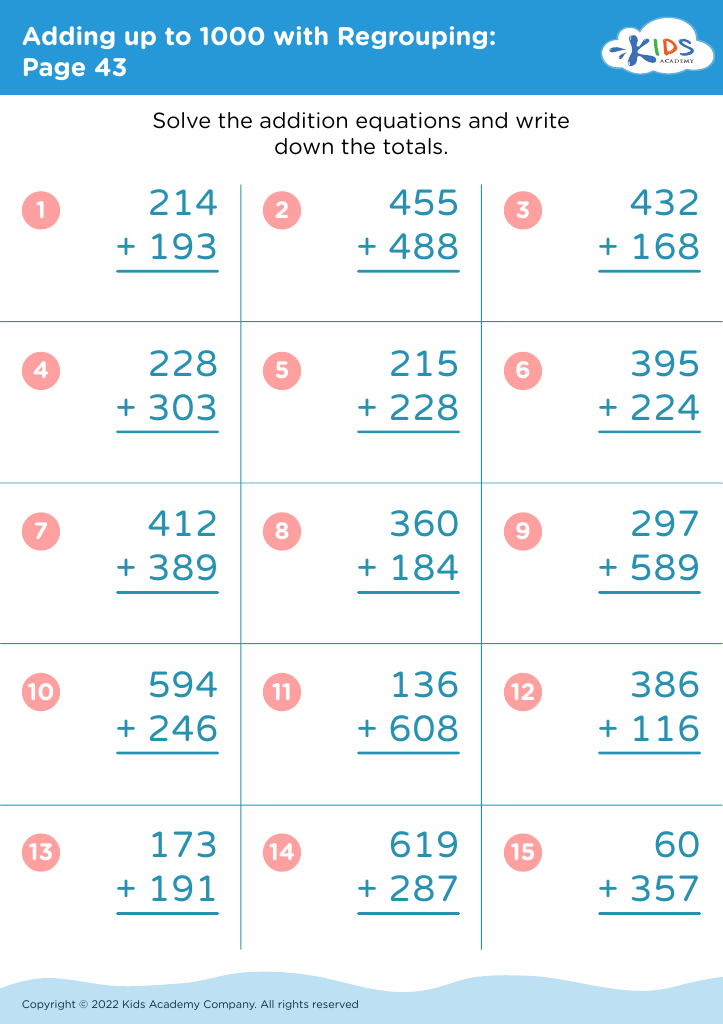
    Adding up to 1000 with Regrouping: Page 43
    Adding up to 1000 with Regrouping: Page 43
    Adding up to 1000 with Regrouping: Page 43
    Worksheet
    Adding 2-digit Numbers: Page 2
    Adding 2-digit Numbers: Page 2

    Adding 2-digit Numbers: Page 2

    Adding 2-digit Numbers: Page 2
    Worksheet
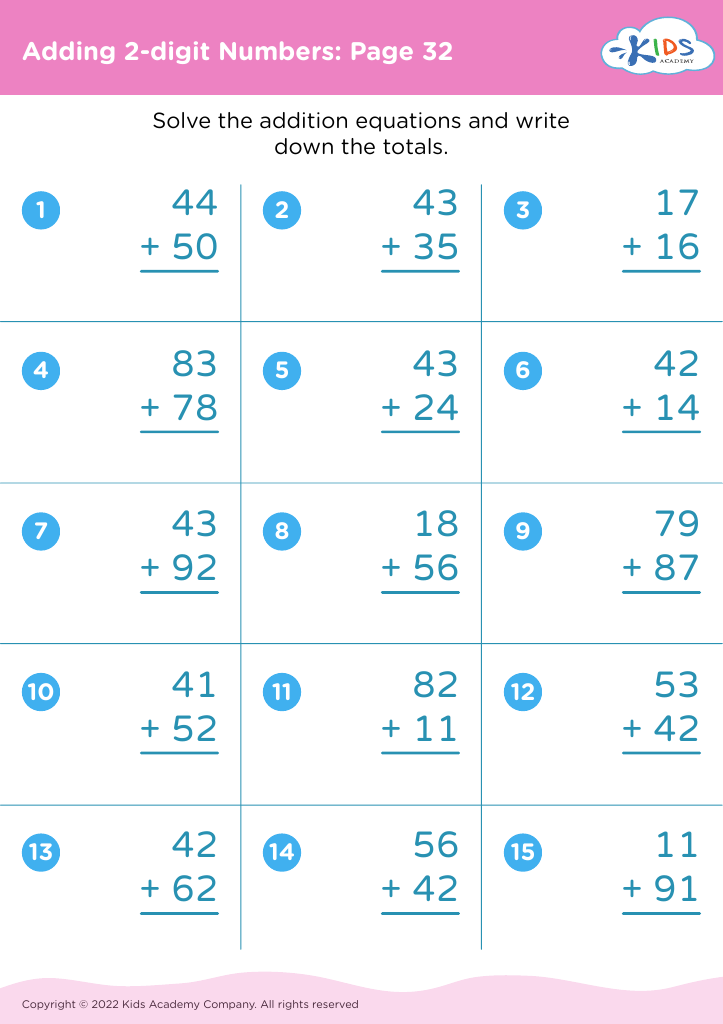
    Adding 2-digit Numbers: Page 32
    Adding 2-digit Numbers: Page 32

    Adding 2-digit Numbers: Page 32

    Adding 2-digit Numbers: Page 32
    Worksheet
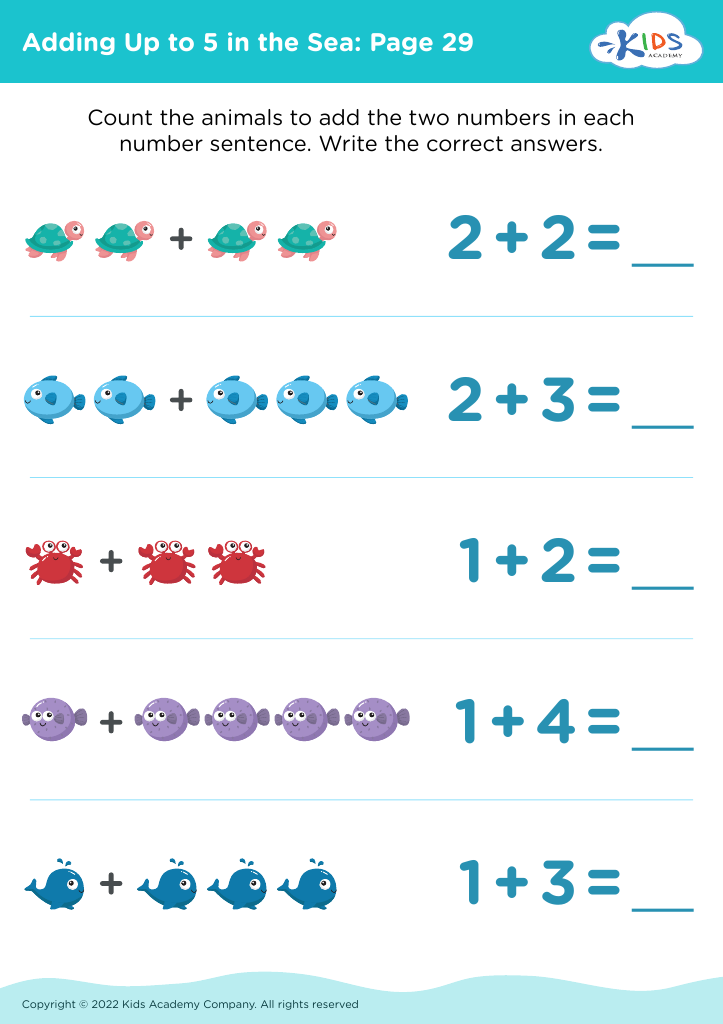
    Adding Up to 5 in the Sea: Page 29
    Adding Up to 5 in the Sea: Page 29
    Adding Up to 5 in the Sea: Page 29
    Worksheet
    Adding up to 100: Page 42
    Adding up to 100: Page 42

    Adding up to 100: Page 42

    Adding up to 100: Page 42
    Worksheet
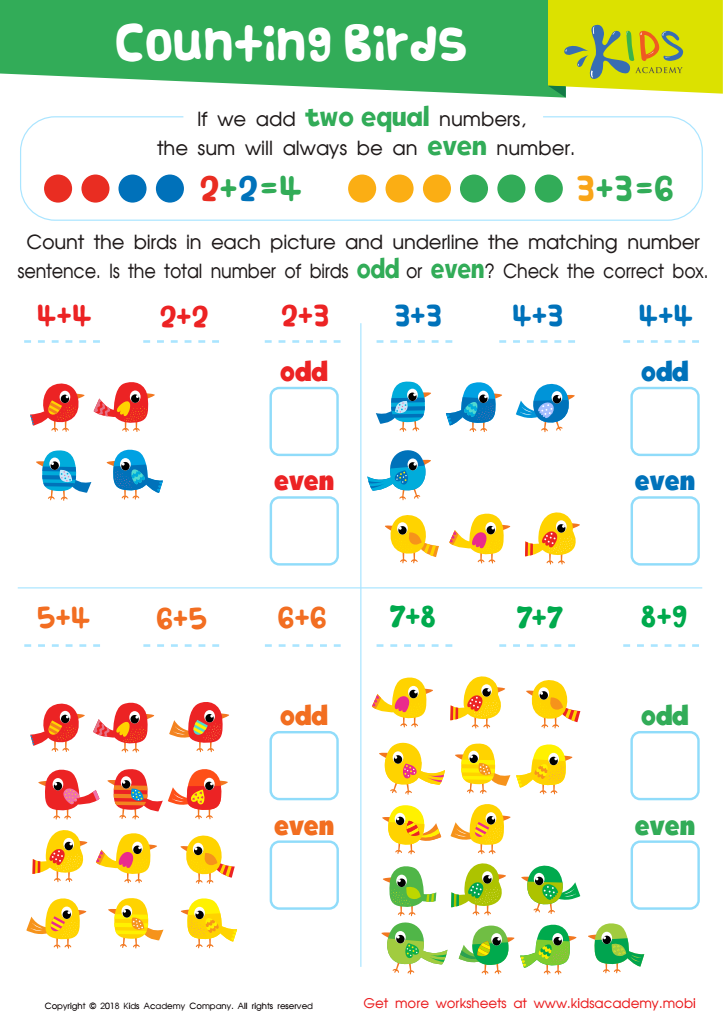
    Counting Birds Worksheet
    Counting Birds Worksheet
    Counting Birds Worksheet
    Help your child count and underline the matching number sentence in the worksheet. Ask them if the total number of birds in each picture is odd or even, then check the correct box. When two equal numbers are added, the sum is always an even number (e.g. 2+2=4, 4+4=8, both divisible by 2).
    Counting Birds Worksheet
    Worksheet
    Adding up to 100 with Regrouping: Page 8
    Adding up to 100 with Regrouping: Page 8
    Adding up to 100 with Regrouping: Page 8
    Worksheet
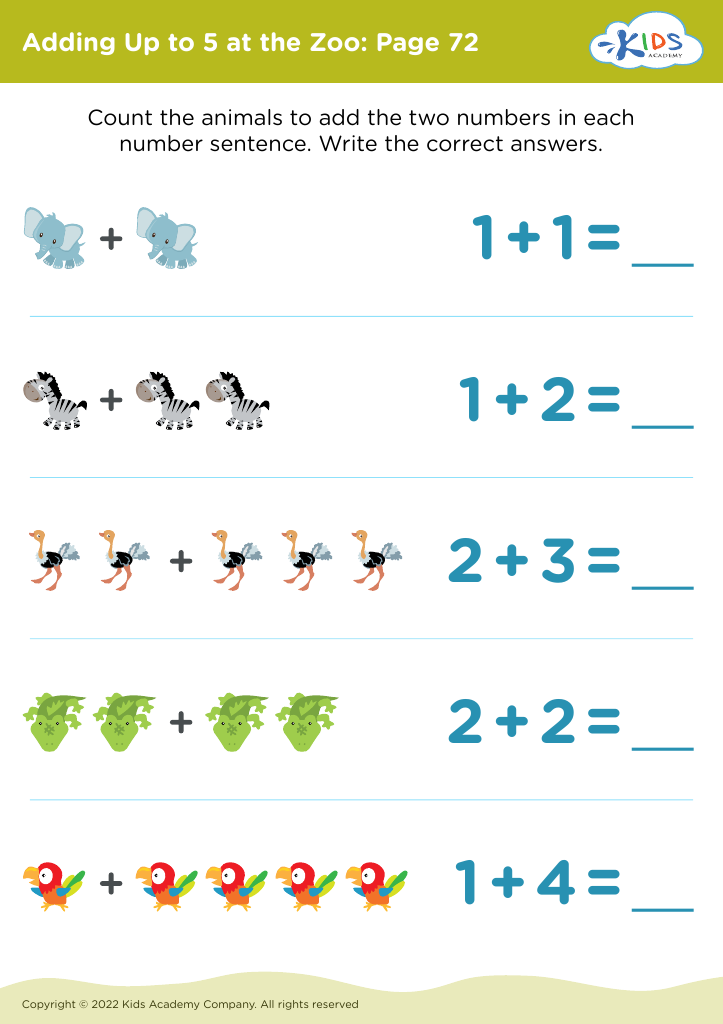
    Adding Up to 5 at the Zoo: Page 72
    Adding Up to 5 at the Zoo: Page 72
    Adding Up to 5 at the Zoo: Page 72
    Worksheet
    Adding Up to 5 in the Forest: Page 60
    Adding Up to 5 in the Forest: Page 60
    Adding Up to 5 in the Forest: Page 60
    Worksheet
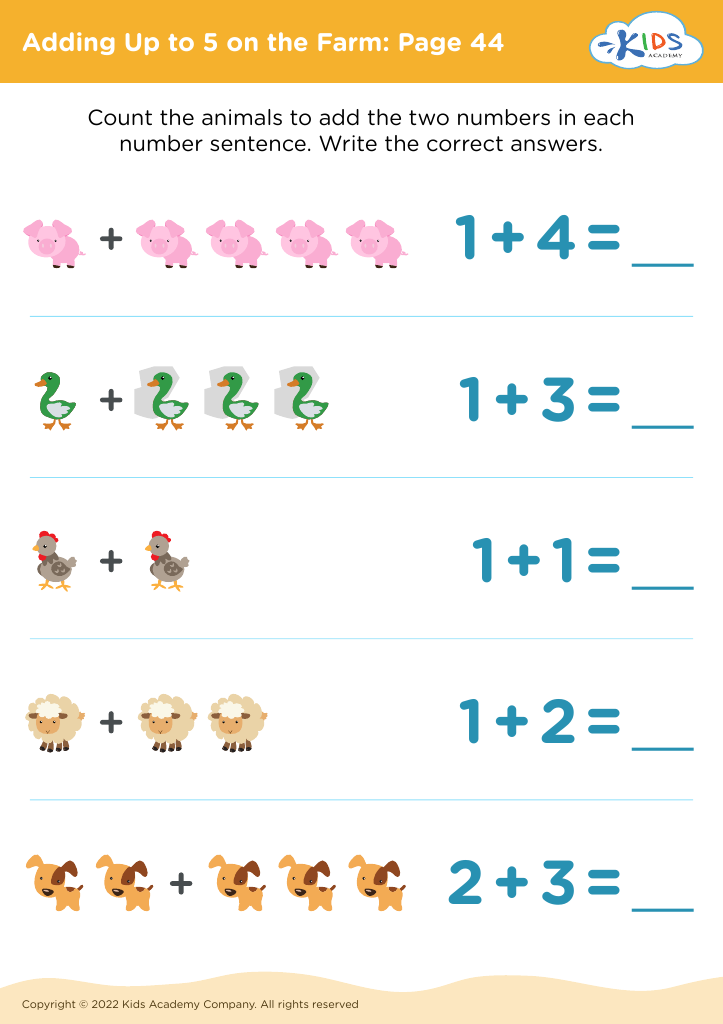
    Adding Up to 5 on the Farm: Page 44
    Adding Up to 5 on the Farm: Page 44
    Adding Up to 5 on the Farm: Page 44
    Worksheet
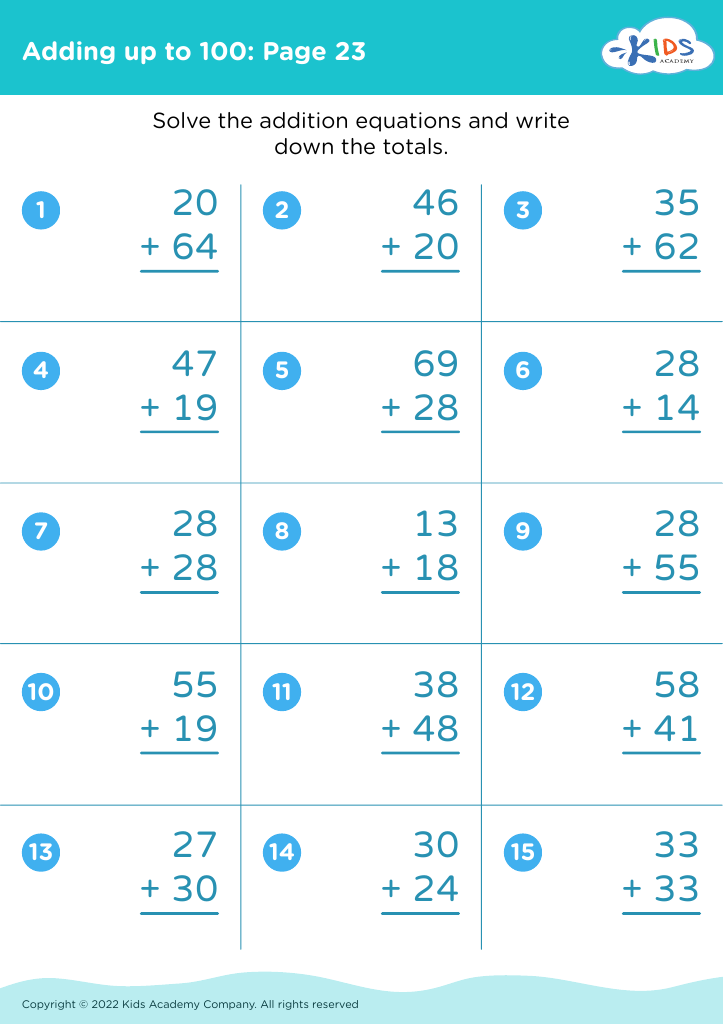
    Adding up to 100: Page 23
    Adding up to 100: Page 23

    Adding up to 100: Page 23

    Adding up to 100: Page 23
    Worksheet
    Adding up to 1000: Page 10
    Adding up to 1000: Page 10

    Adding up to 1000: Page 10

    Adding up to 1000: Page 10
    Worksheet
    Adding up to 50 Without Regrouping: Page 35
    Adding up to 50 Without Regrouping: Page 35
    Adding up to 50 Without Regrouping: Page 35
    Worksheet


    Parents and teachers should care deeply about teaching addition and subtraction to children aged 3-9 because these foundational skills are crucial for their overall mathematical development and daily problem-solving capabilities. At this early age, children’s brains are highly receptive, making it an ideal time to introduce fundamental math concepts. Mastering addition and subtraction helps build a solid mathematical foundation, which is essential for understanding more complex math topics later in life, such as multiplication, division, fractions, and algebra.

    Moreover, these early arithmetic skills promote critical thinking and logical reasoning. When children learn to add and subtract, they engage in problem-solving, learn to make decisions, and recognize patterns, all of which are important cognitive skills.

    Basic adding and subtracting also demonstrate immediate practical value, enabling children to handle real-life situations, such as sharing toys, understanding time, and managing simple financial transactions like counting money.

    Finally, early success in mastering these skills can instill a sense of confidence and a positive attitude towards learning mathematics. Positive early math experiences lay the foundation for academic success and a lifelong appreciation for numbers. This, in turn, can foster improved performance in various subjects, emphasizing the importance of early math education for young learners.