
Text analysis Reading Comprehension Worksheets for Ages 3-9
4 filtered results
Difficulty Level
Grade
Age
-
From - To
Subject
Activity
Standards
Discover engaging Text Analysis Reading Comprehension Worksheets designed for children ages 3-9. Our worksheets foster crucial learning skills, including understanding narratives, identifying main ideas, and recognizing key details. With age-appropriate content, these activities cater to early readers and those advancing in their comprehension abilities. Colorful illustrations and interactive tasks ensure that learning remains fun and motivating. Perfect for both classroom use and homeschooling, these resources help young learners build a solid foundation in reading and critical thinking. Download now and support your child's journey to becoming a skilled and confident reader with Kids Academy’s expertly-crafted reading comprehension worksheets.
Favorites
With answer key
Interactive
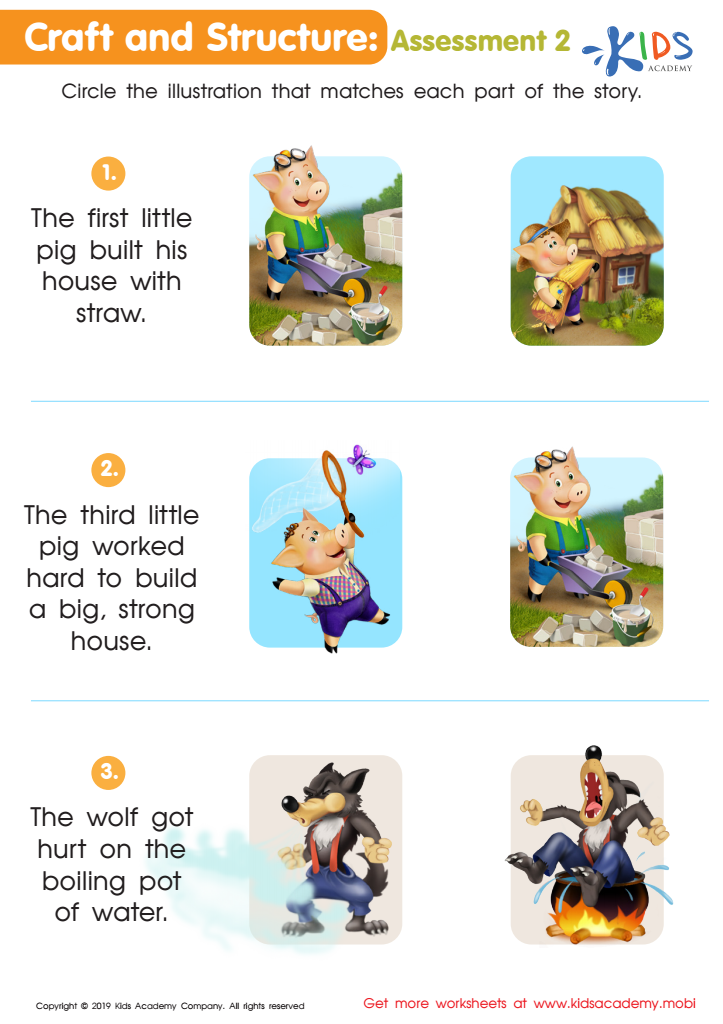
Craft and Structure: Assessment 2 Worksheet 2
This fun printout with colorful illustrations will assess how much your kids pay attention to story time. Go through the pictures and help them circle the ones that match each part of the story. Stimulate their brains and have fun in the process!
 Assign to My Students
Craft and Structure: Assessment 2 Worksheet 2
Worksheet
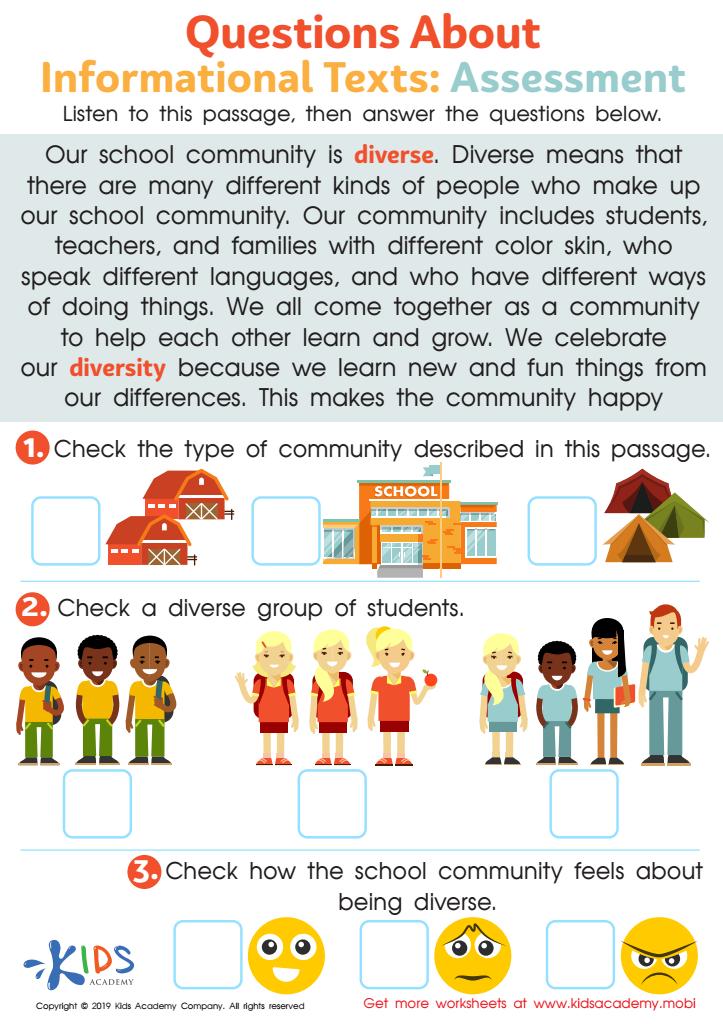
Questions About Informational Texts: Assessment 1 Worksheet
Ask your students: What comes to mind when we talk about a community? What different habits do people practice? What do fellow students do that seems strange? Read this passage aloud to your kindergartners and make sure they understand it. Then, answer the questions at the bottom of the page. (80 words)
Questions About Informational Texts: Assessment 1 Worksheet
Worksheet
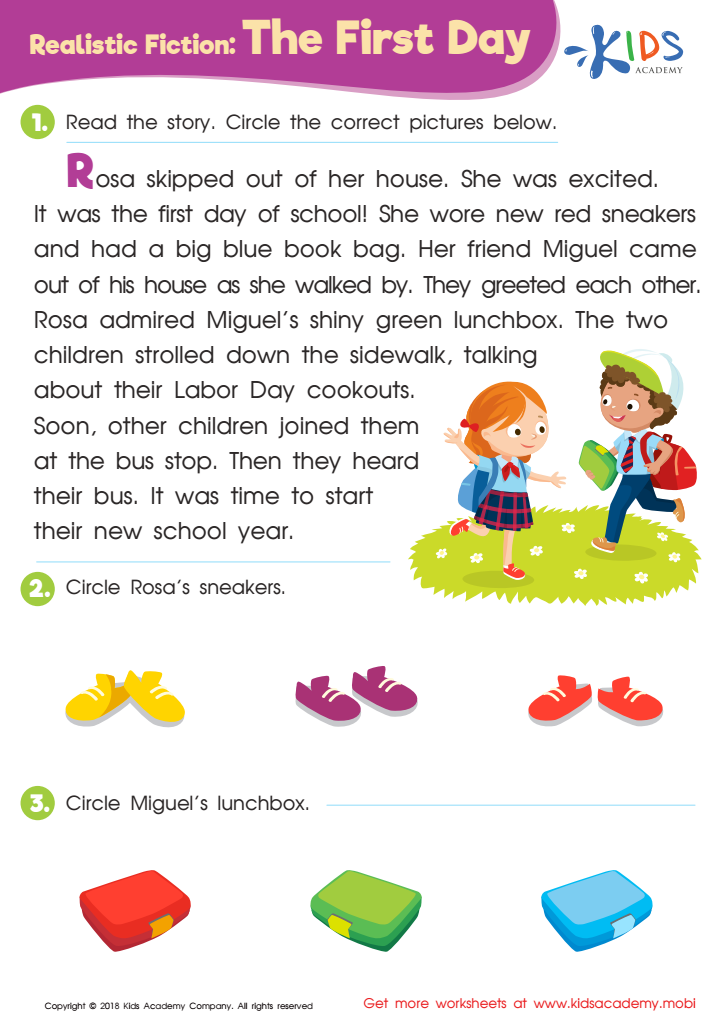
Realistic Fiction: The First Day Worksheet
Fiction is made-up events, so story-writing is fiction writing. In this worksheet, there's a short story about Rosa, her friend Miguel, and their first day back at school. Read the story aloud to your kids and help them circle the right pictures to the questions. Repeat if needed.
Realistic Fiction: The First Day Worksheet
Worksheet
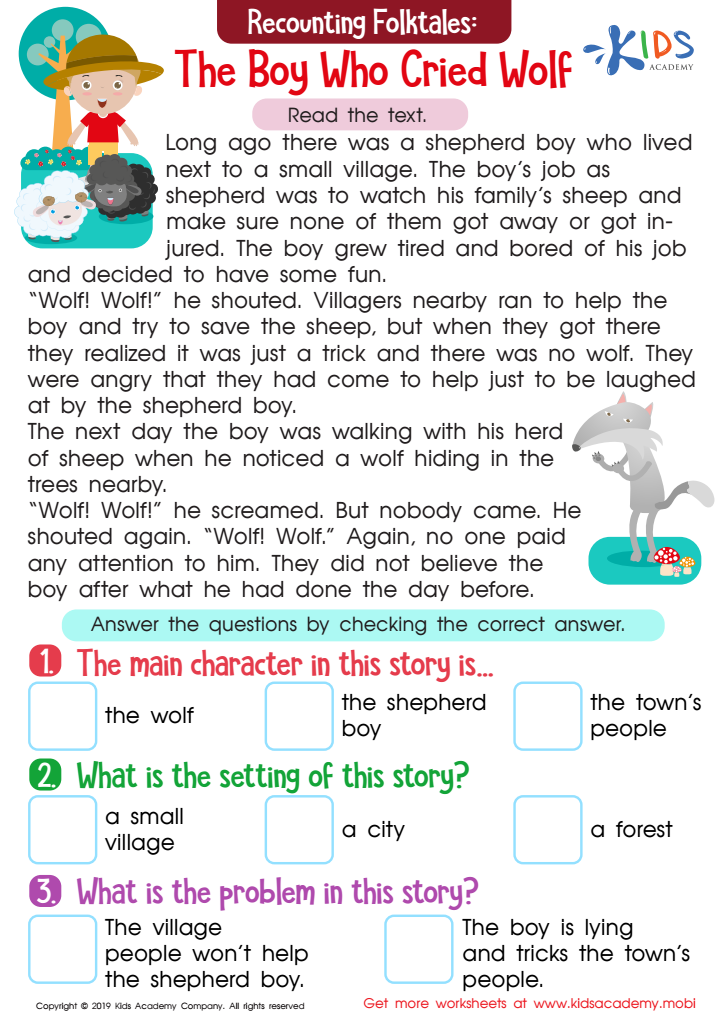
The Boy Who Cried Wolf Part 1 Worksheet
Storytime can be your kid's favorite part of the day. Ask them what their favorite stories are, then read the text in the printout. Read along with them, making sure they understand each word. At the end, go over the questions and have them check the correct answers.
The Boy Who Cried Wolf Part 1 Worksheet
Worksheet
Join Kids Academy for Free
Who is primarily going to use this learning content?








Text analysis reading comprehension is crucial for young learners or children in early grades, ages 3-9, as it forms the foundation of their future academic success and overall cognitive development. This period is prime for language acquisition, where children are beginning to connect sounds to words and words to meaningful concepts. By enhancing reading comprehension, parents and teachers help children improve their vocabulary, enhance their ability to interpret and think critically about what they read, and stimulate imagination.
Understanding and analyzing text fosters not only academic skills but also social and emotional growth. Children develop empathy by reading stories from diverse perspectives, which bolsters their social skills. Successful engagement with text also builds confidence, motivating them to explore more complex texts and subjects.
Moreover, early proficiency in reading comprehension has long-term implications. Educational research underscores that children who do not develop competent reading skills in early childhood are likely to struggle academically in later years, affecting everything from math to science. Effective text analysis reading practices at this age prepare children for the more sophisticated texts they will encounter as they progress through their education.
Therefore, providing support in text analysis and reading comprehension early on equips children with essential tools for lifelong learning, thus fostering a generation of more literate and analytical thinkers.








