Cursive Writing Worksheets for Ages 3-9 - Page 2
26 filtered results
-
From - To
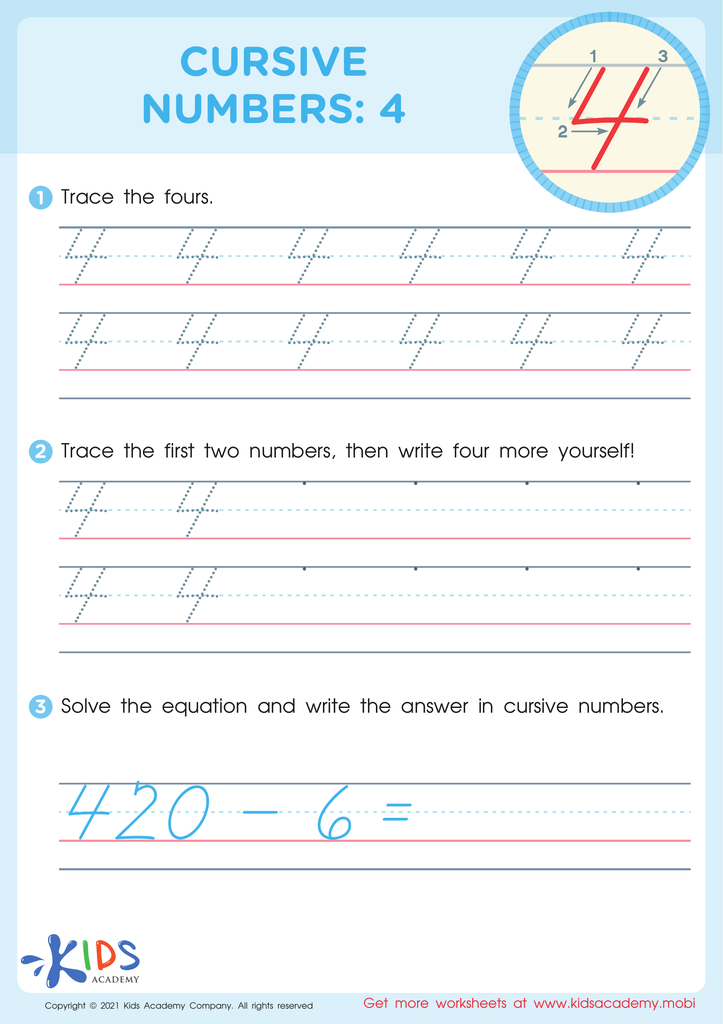
Cursive Numbers: 4 Worksheet
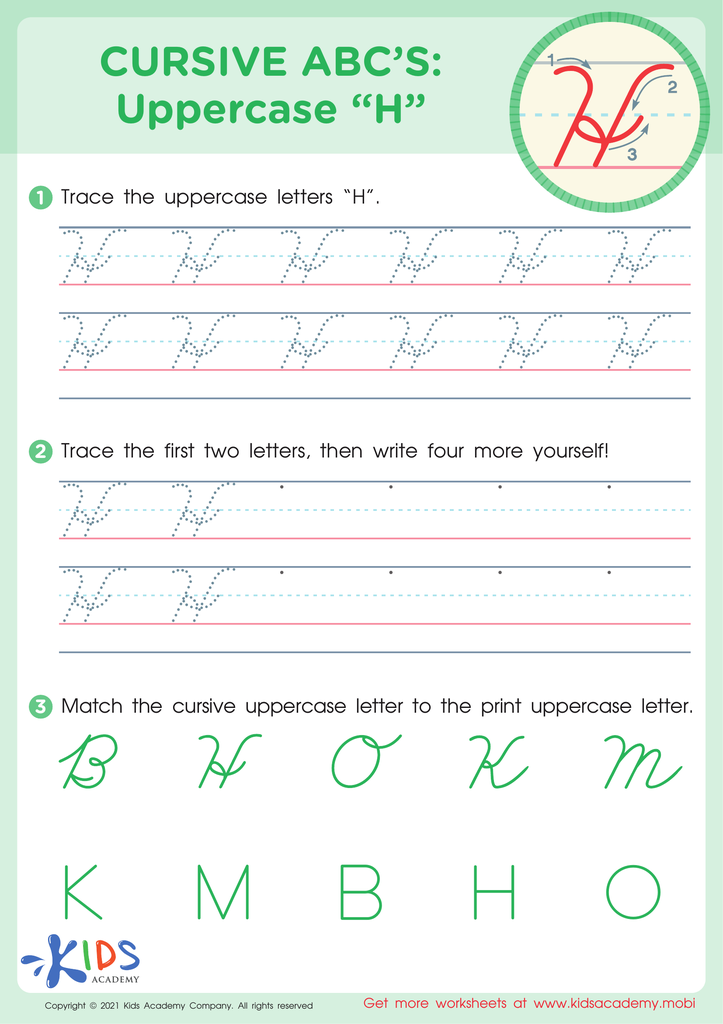
Cursive ABCs: Uppercase H







Cursive writing, despite being less emphasized in the digital age, holds significant developmental benefits for children aged 3-9 that parents and teachers should consider. Firstly, it enhances fine motor skills and hand-eye coordination due to the continuous and fluid motion required. This improved dexterity can assist in other everyday tasks and creative activities. Secondly, cursive writing strengthens cognitive development by engaging parts of the brain involved in thinking, working memory, and language—linking writing with learning processes.
Furthermore, cursive helps children with spelling and reading as the connected letters illustrate the concept of words as entire units rather than disparate parts, aiding in word recognition. For children with learning difficulties such as dyslexia, cursive can be especially beneficial as the connected letters and unique letter shapes reduce letter reversals and confusion.
On a cultural level, learning cursive exposes children to essential historical documents, like the Declaration of Independence, in their original form. It institutes a sense of continuity with past traditions and heritage, fostering a greater appreciation and understanding.
Lastly, developing a personal cursive style can boost confidence and pride in one's writing. Thus, integrating cursive in early childhood education can provide enduring academic, cognitive, and developmental benefits that are worth the effort for parents and teachers.








