Filters

107 filtered results

Clear all filters
Favorites
With answer key
Interactive

107 filtered results

Difficulty Level

Grade


Discover our engaging Cognitive Development Addition & Subtraction Worksheets designed specifically for children aged 4-5! These worksheets are perfect for nurturing early mathematical skills while encouraging critical thinking and problem-solving abilities. Featuring colorful illustrations and interactive activities, children will enjoy mastering basic addition and subtraction concepts in a fun, supportive environment. Each worksheet is crafted to promote cognitive development, helping young learners build a strong mathematical foundation as they prepare for more advanced concepts. These resourceful activities will not only enhance their arithmetic skills but also foster concentration and logical reasoning. Start your child's math journey today!

Check out this FREE Trial Lesson on Addition & Subtraction for age 4-5!

My Family

Favorites
With answer key
Interactive
  • 4-5
  • Cognitive Development
  • Addition & Subtraction
Addition worksheet for kindergarten pdf

Addition Worksheet for Kindergarten

Addition Worksheet for Kindergarten
Worksheet
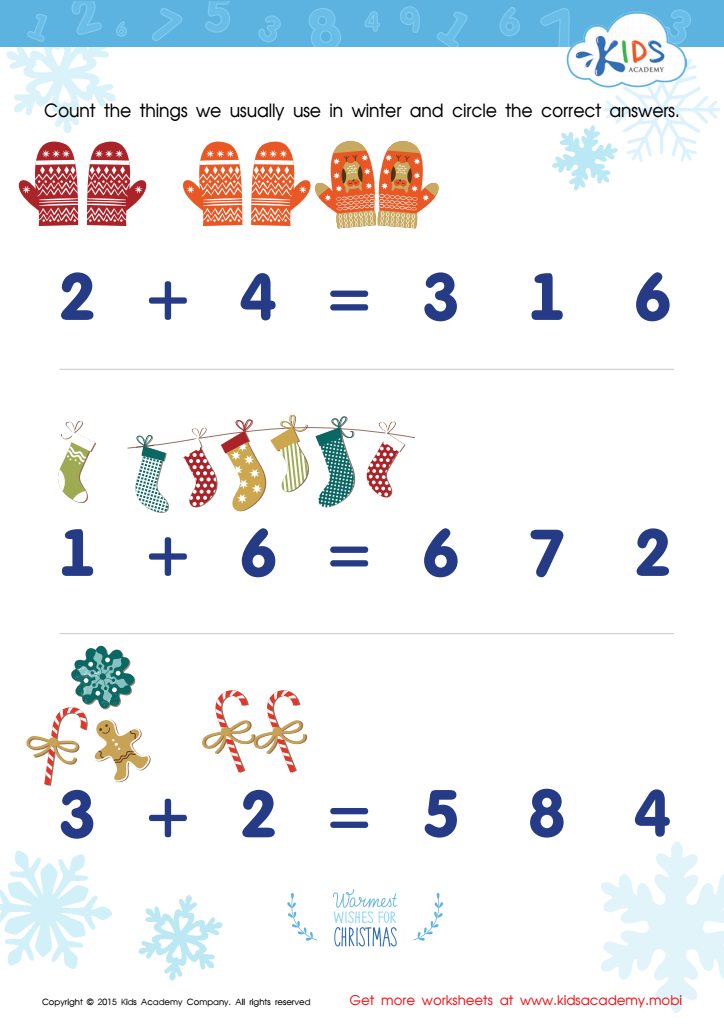
Math PDF Worksheet: Count Winter Things

Count Winter Things Worksheet

This chilly winter afternoon, help your kid warm up with Kids Academy's free math worksheet - full of bright pictures and addition practice. Let them count the things and write in the numbers for a great brain training and math head start. Get more free math worksheets here. (80 words)
Count Winter Things Worksheet
Worksheet
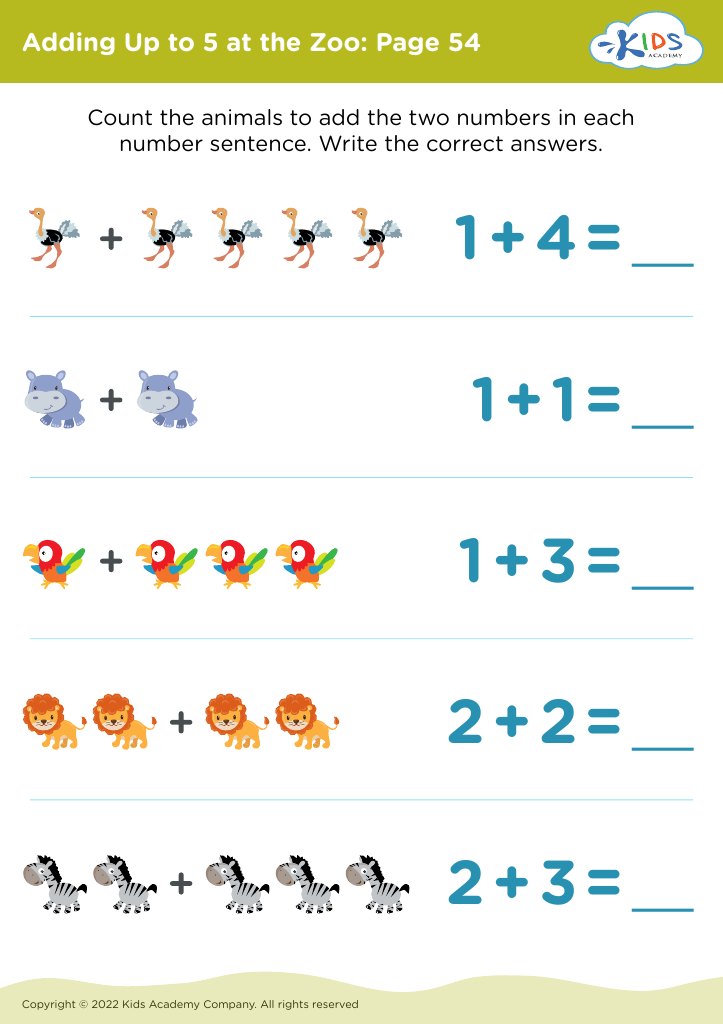
Adding Up to 5 at the Zoo: Page 54
Worksheet
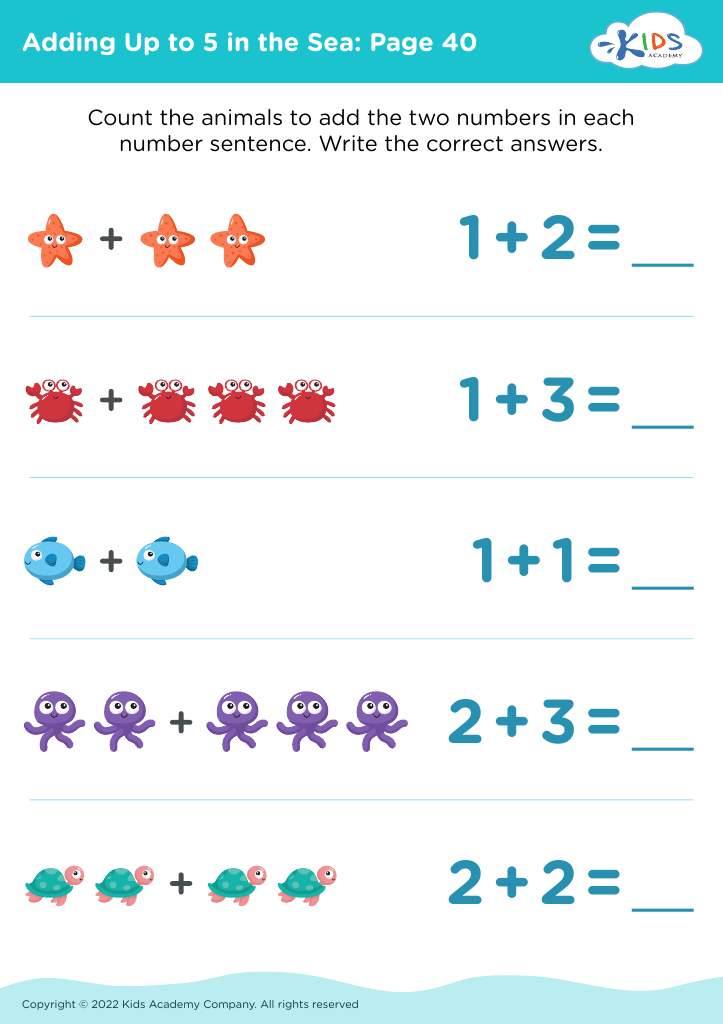
Adding Up to 5 in the Sea: Page 40
Worksheet
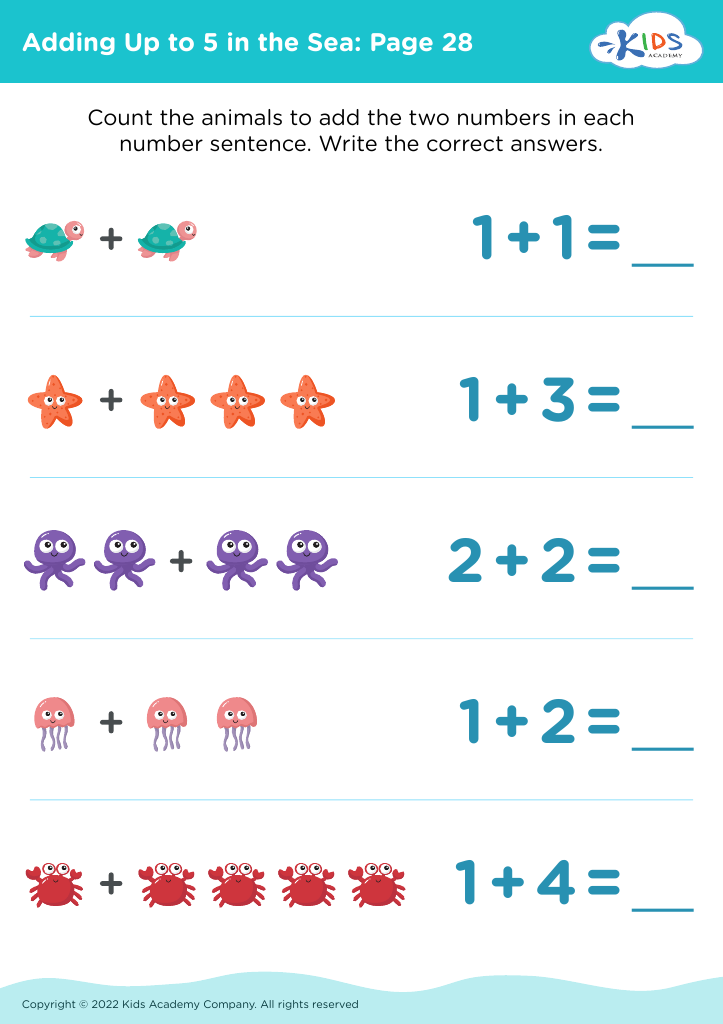
Adding Up to 5 in the Sea: Page 28
Worksheet
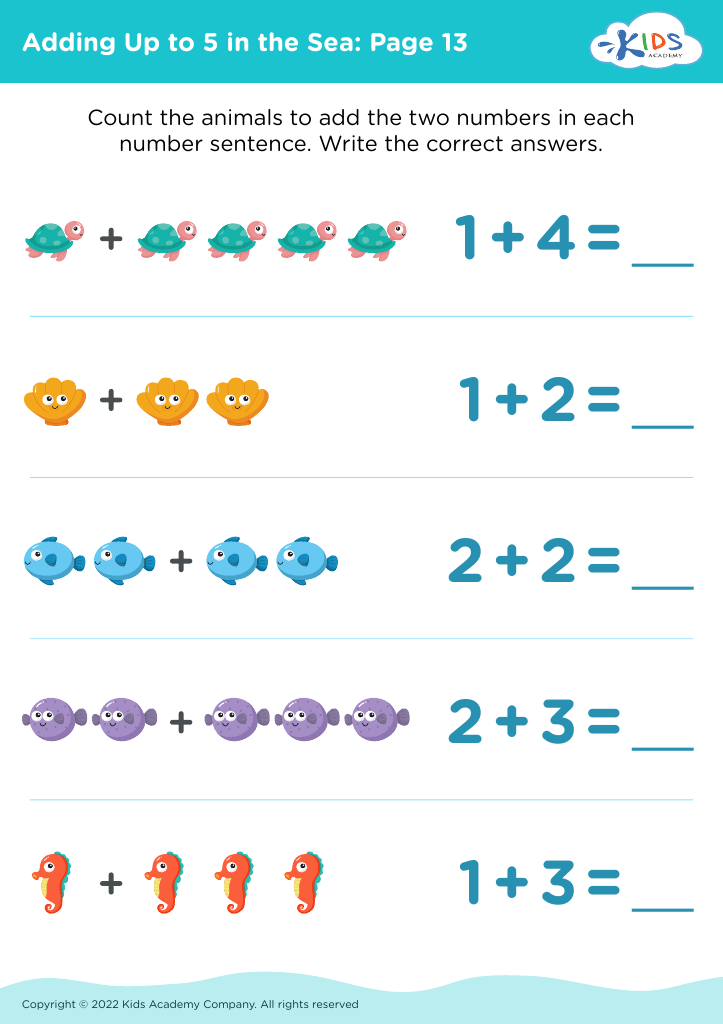
Adding Up to 5 in the Sea: Page 13
Worksheet
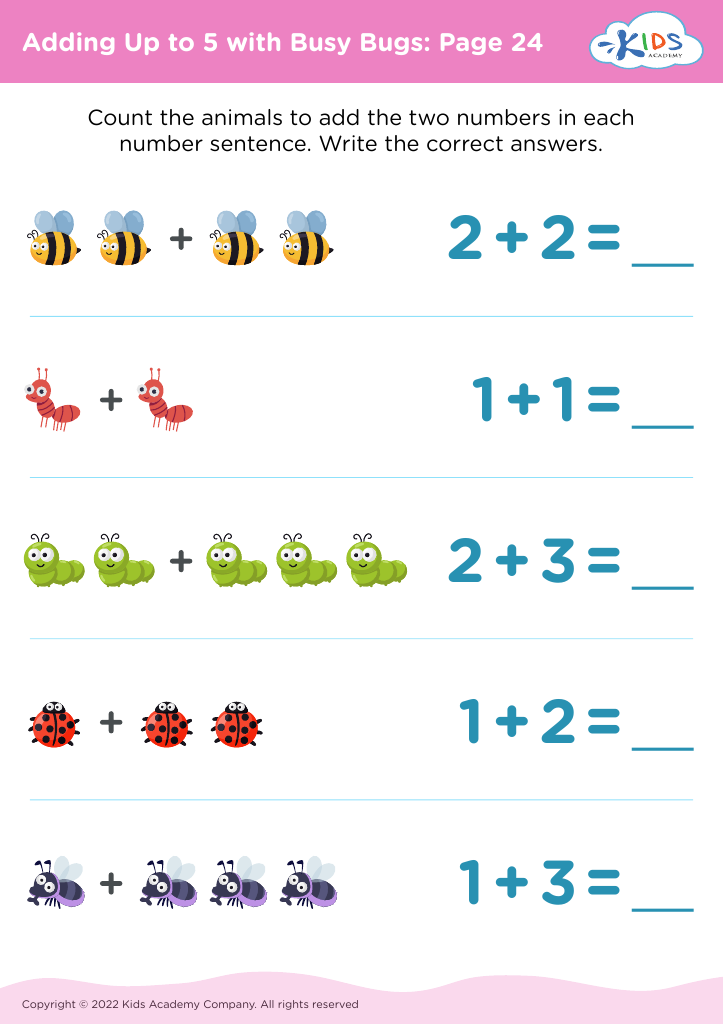
Adding Up to 5 with Busy Bugs: Page 24
Worksheet
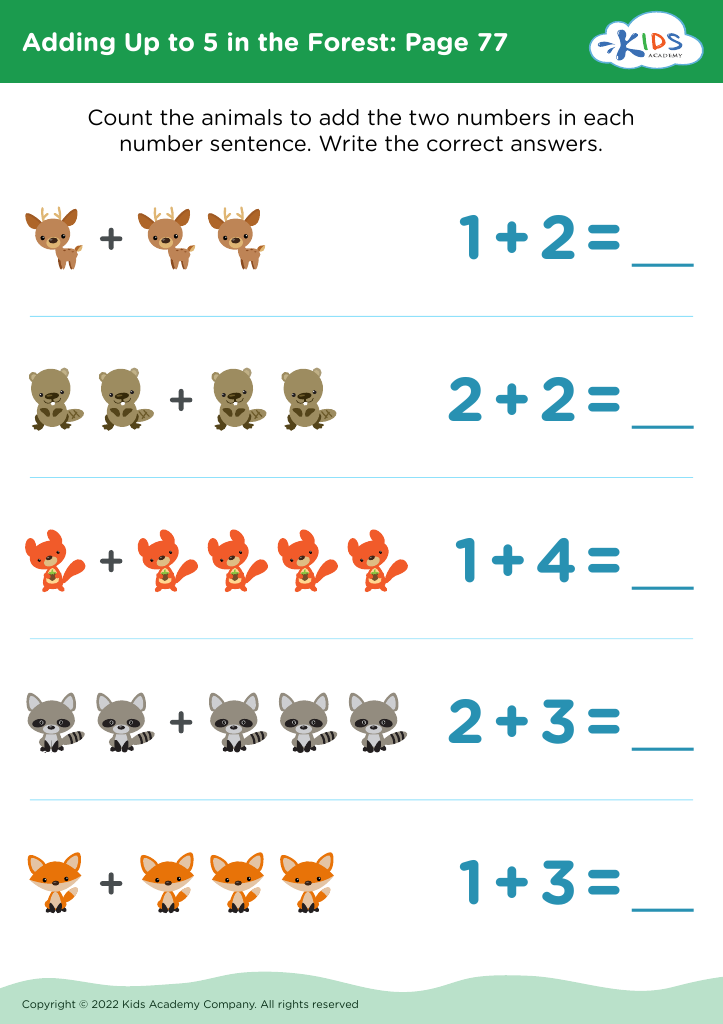
Adding Up to 5 in the Forest: Page 77
Worksheet
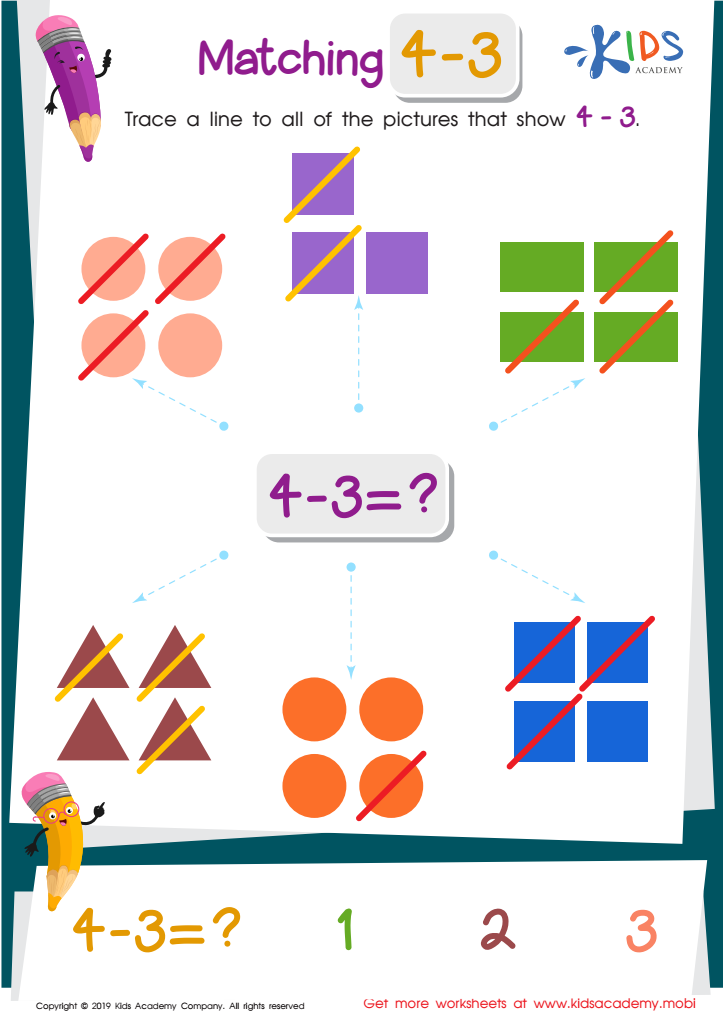
Matching 4 – 3 Worksheet
Matching 4 – 3 Worksheet
Help your kids master basic math concepts like addition and subtraction with fun exercises. Test their understanding with simple problems. For example, in this worksheet, ask them to count the objects in each picture and draw a line to the pictures that show 4 - 3 = 1. This will help them get better at solving equations.
Matching 4 – 3 Worksheet
Worksheet
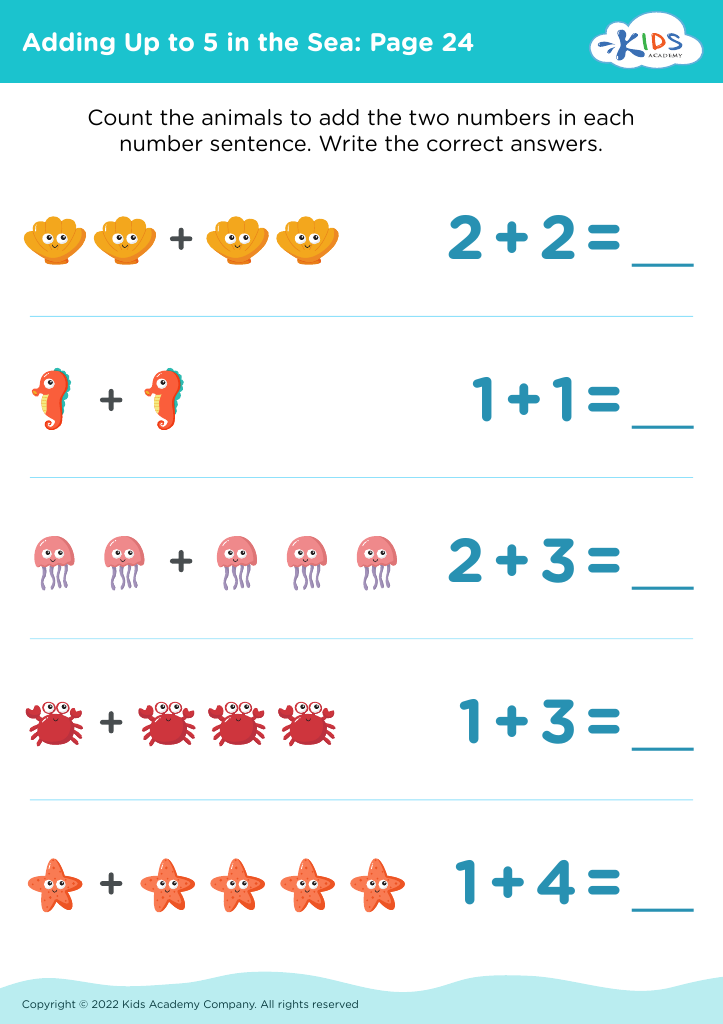
Adding Up to 5 in the Sea: Page 24
Worksheet
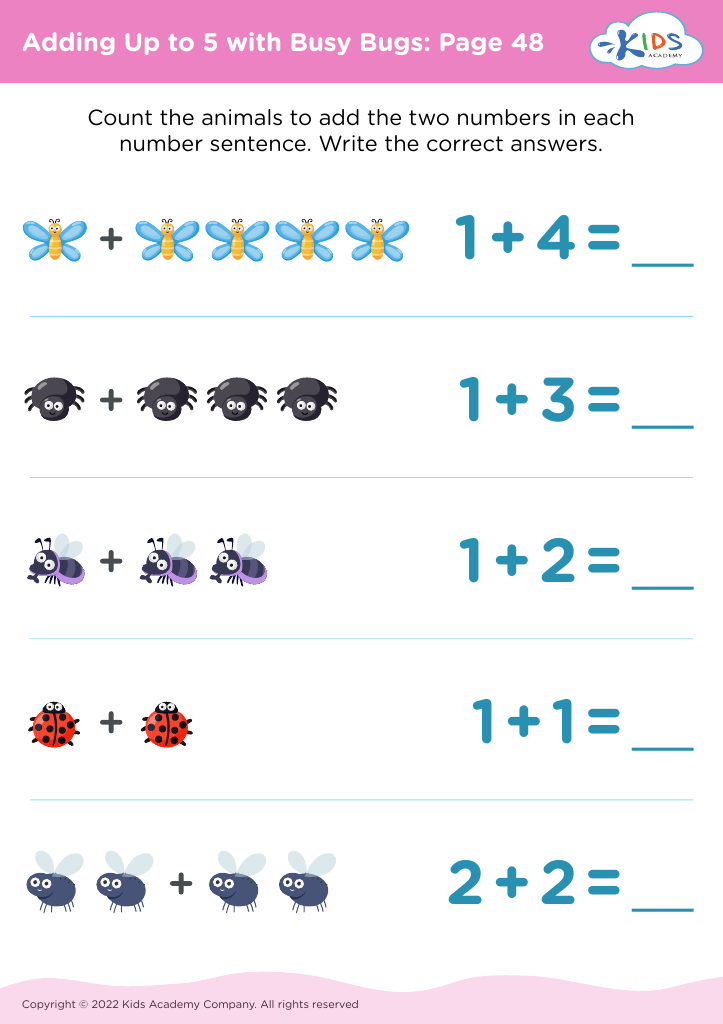
Adding Up to 5 with Busy Bugs: Page 48
Worksheet
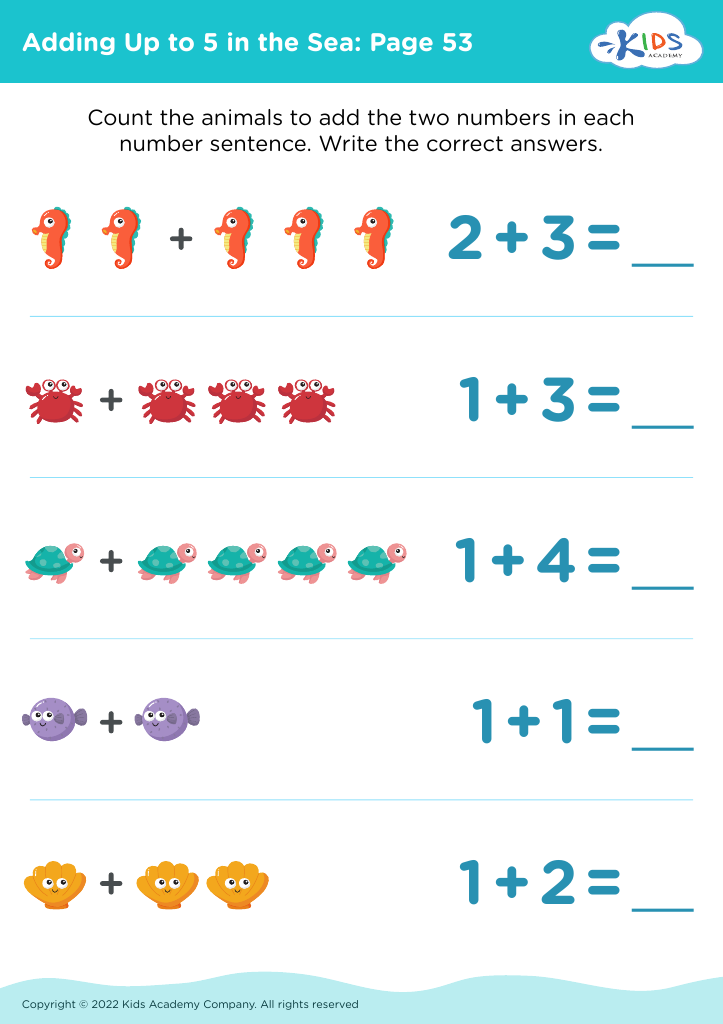
Adding Up to 5 in the Sea: Page 53
Worksheet
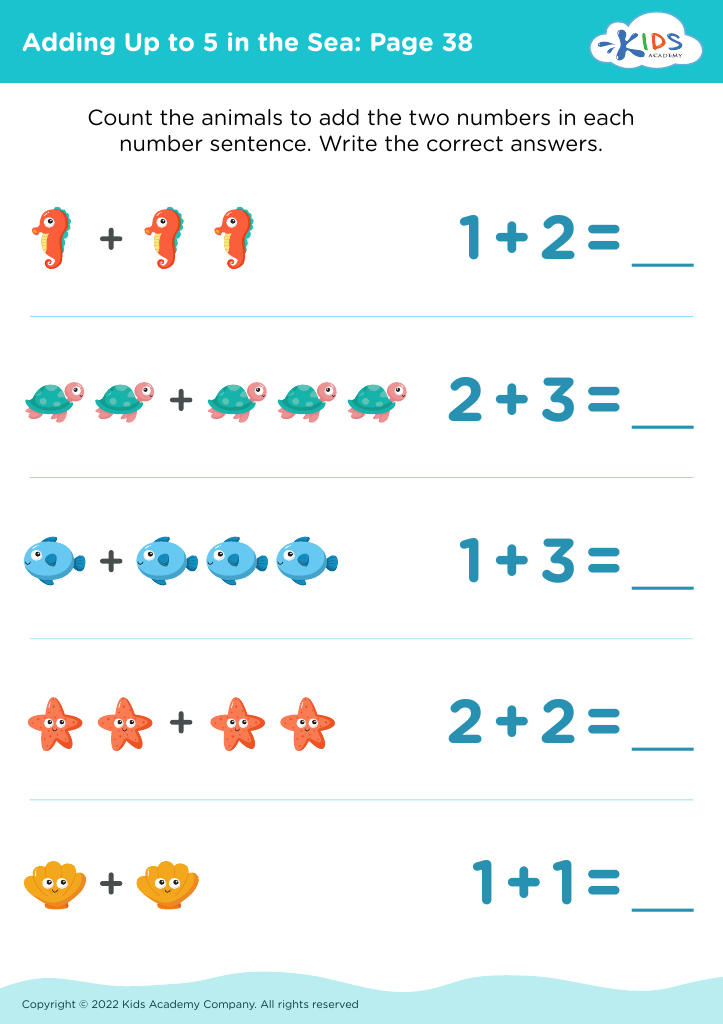
Adding Up to 5 in the Sea: Page 38
Worksheet
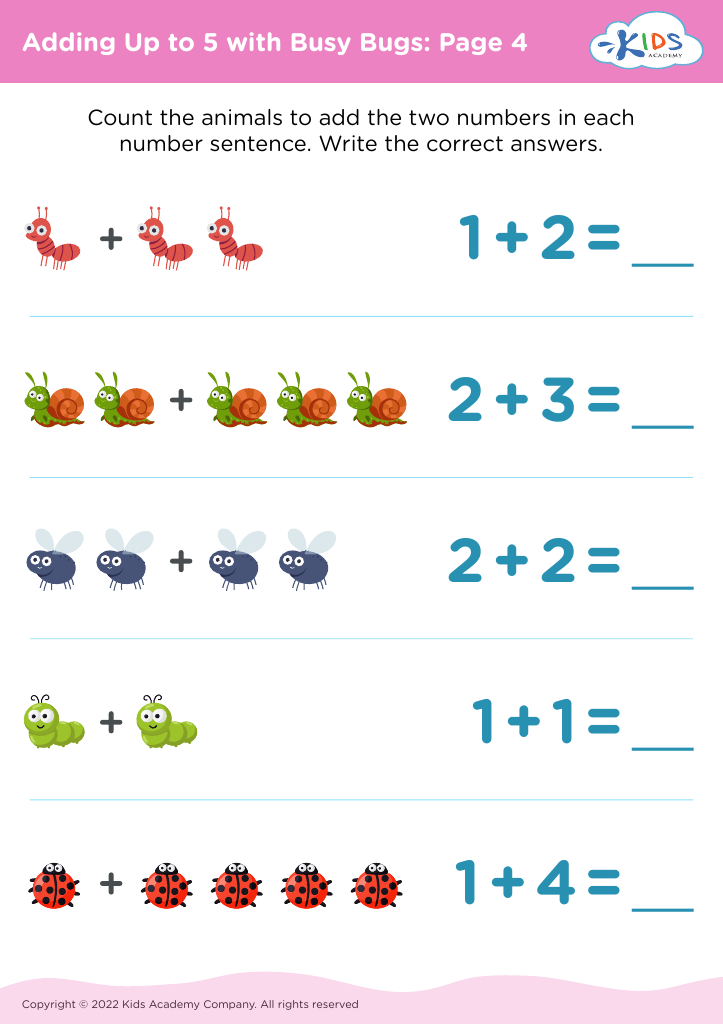
Adding Up to 5 with Busy Bugs: Page 4
Worksheet
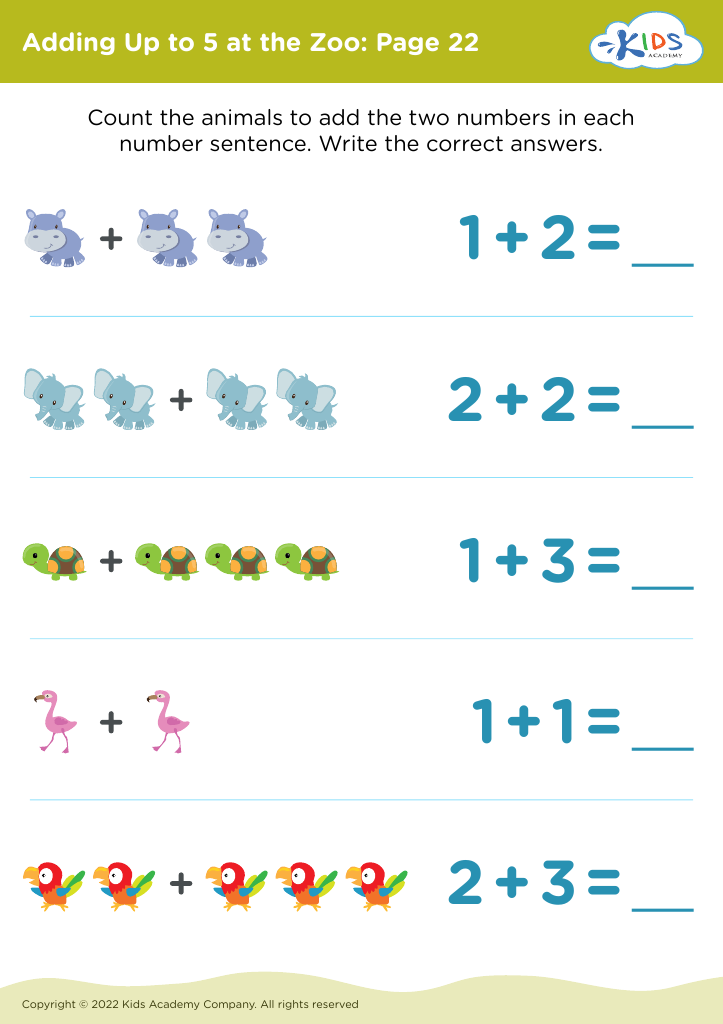
Adding Up to 5 at the Zoo: Page 22
Worksheet
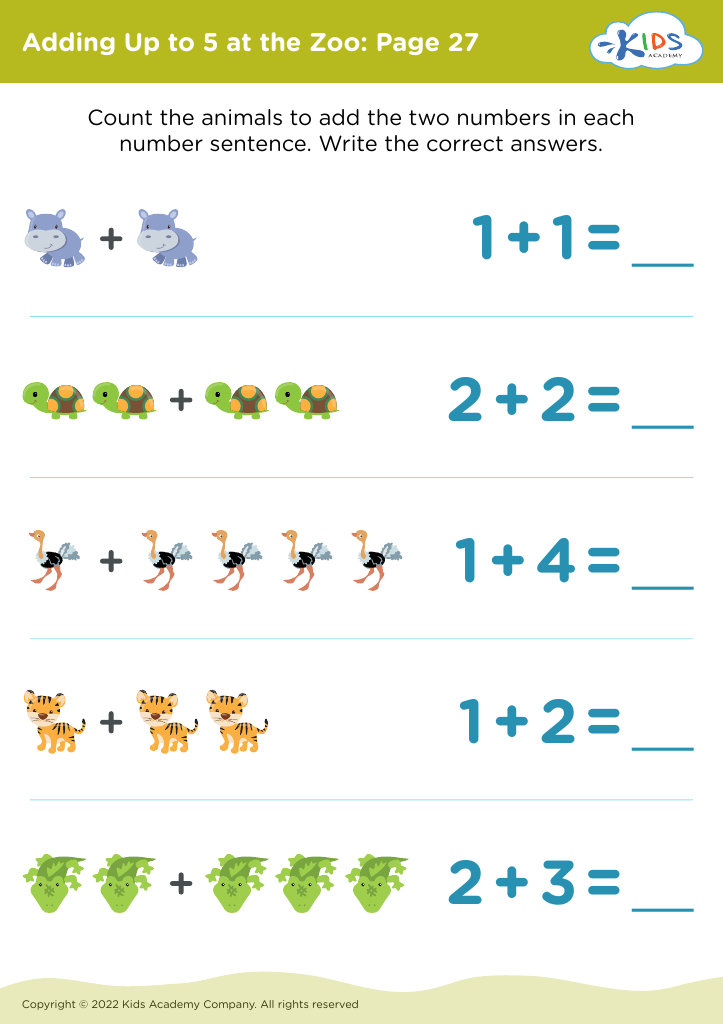
Adding Up to 5 at the Zoo: Page 27
Worksheet
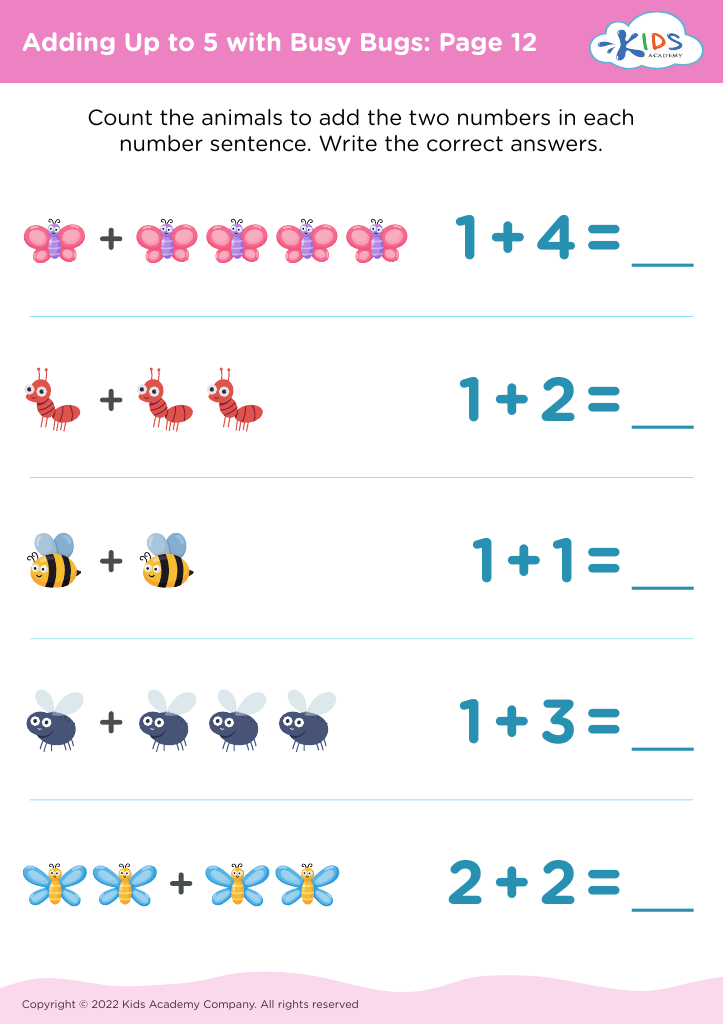
Adding Up to 5 with Busy Bugs: Page 12
Worksheet
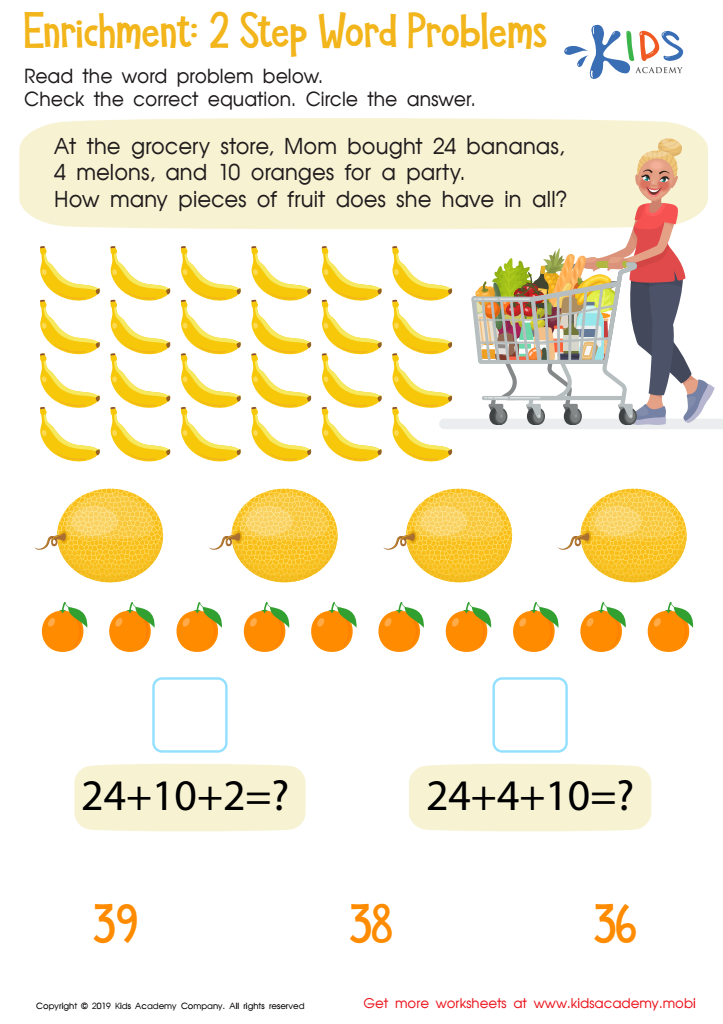
Enrichment -2 Step Word Problems Worksheet
Enrichment -2 Step Word Problems Worksheet
Help your students learn math easier and faster with this colorful worksheet. Read the word problem and then guide them in checking the correct equation and finding the answer. Your students will benefit from the extra help, as they work through new concepts each day.
Enrichment -2 Step Word Problems Worksheet
Worksheet
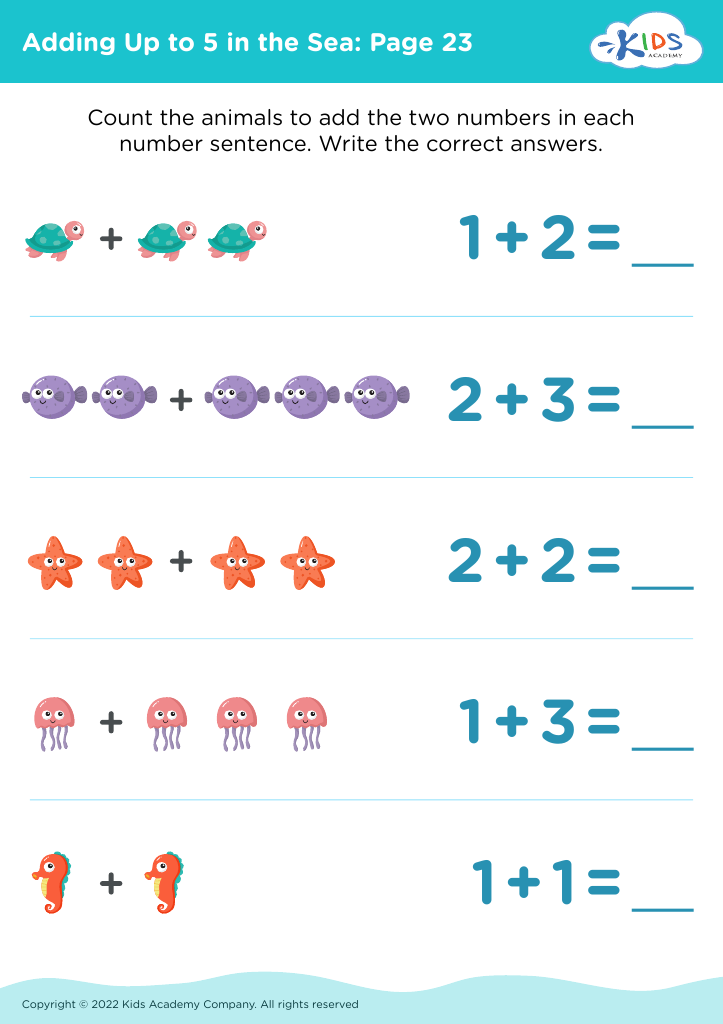
Adding Up to 5 in the Sea: Page 23
Worksheet
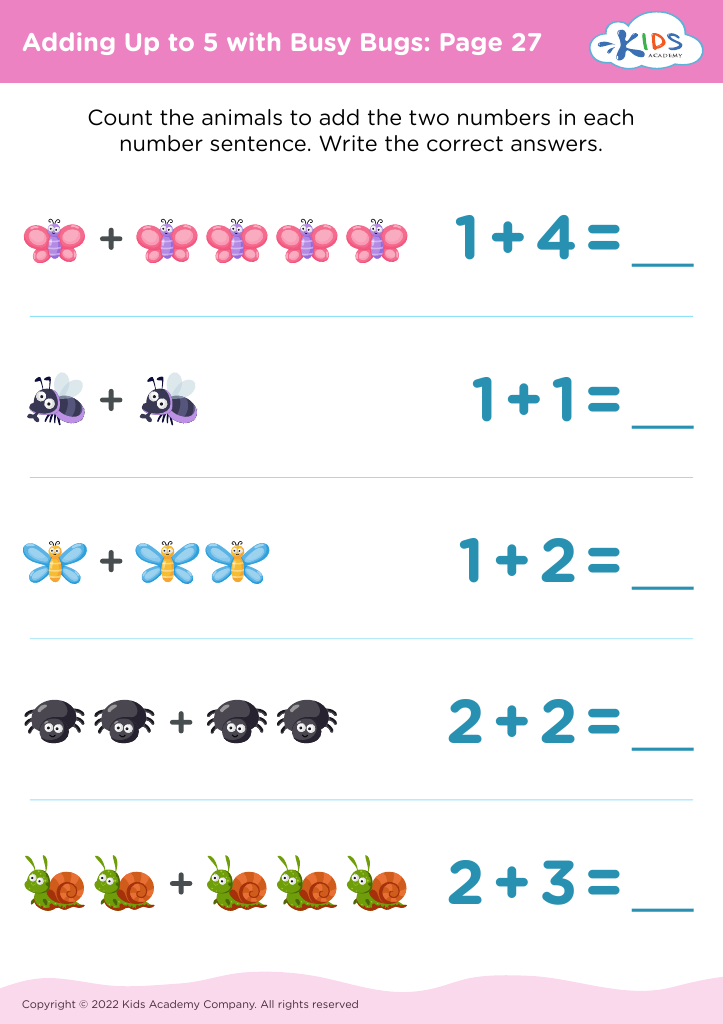
Adding Up to 5 with Busy Bugs: Page 27
Worksheet
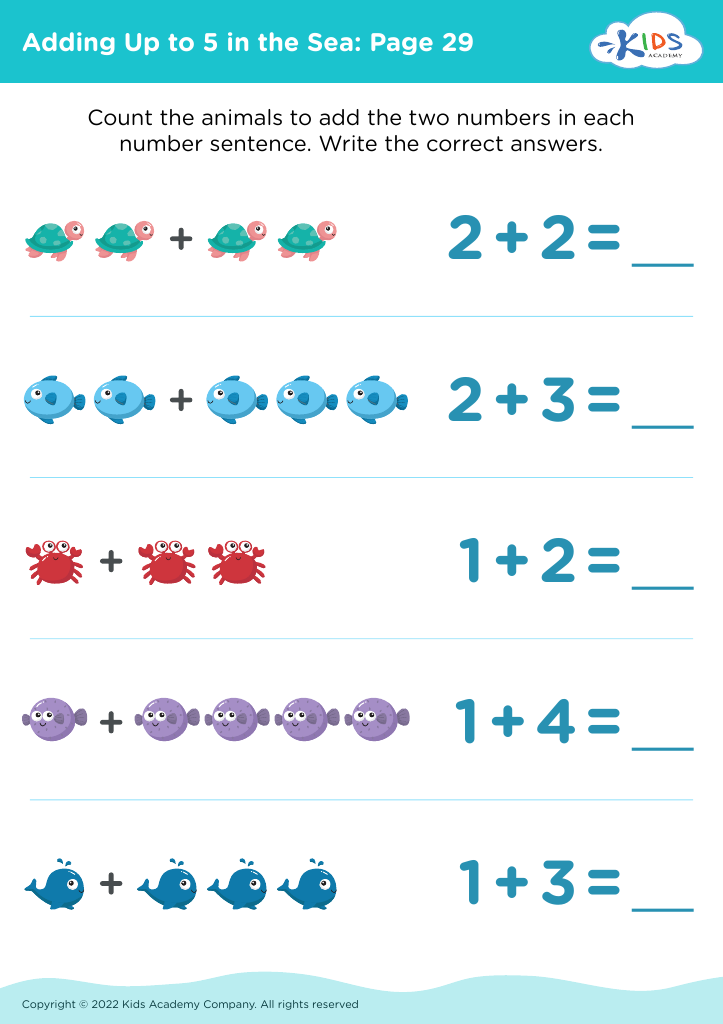
Adding Up to 5 in the Sea: Page 29
Worksheet
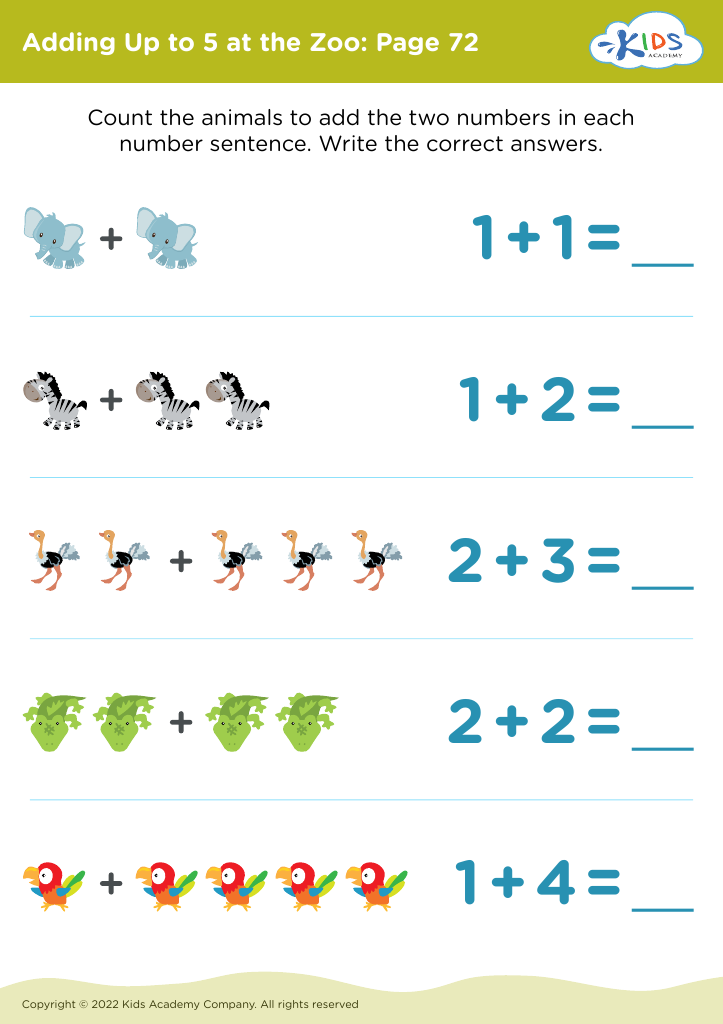
Adding Up to 5 at the Zoo: Page 72
Worksheet
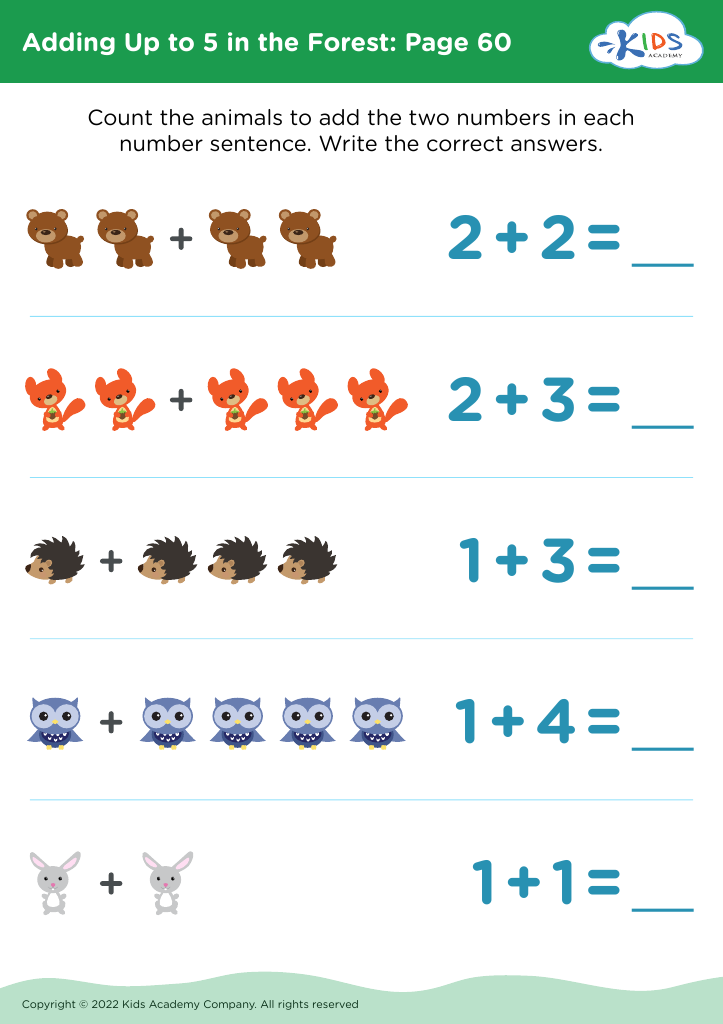
Adding Up to 5 in the Forest: Page 60
Worksheet
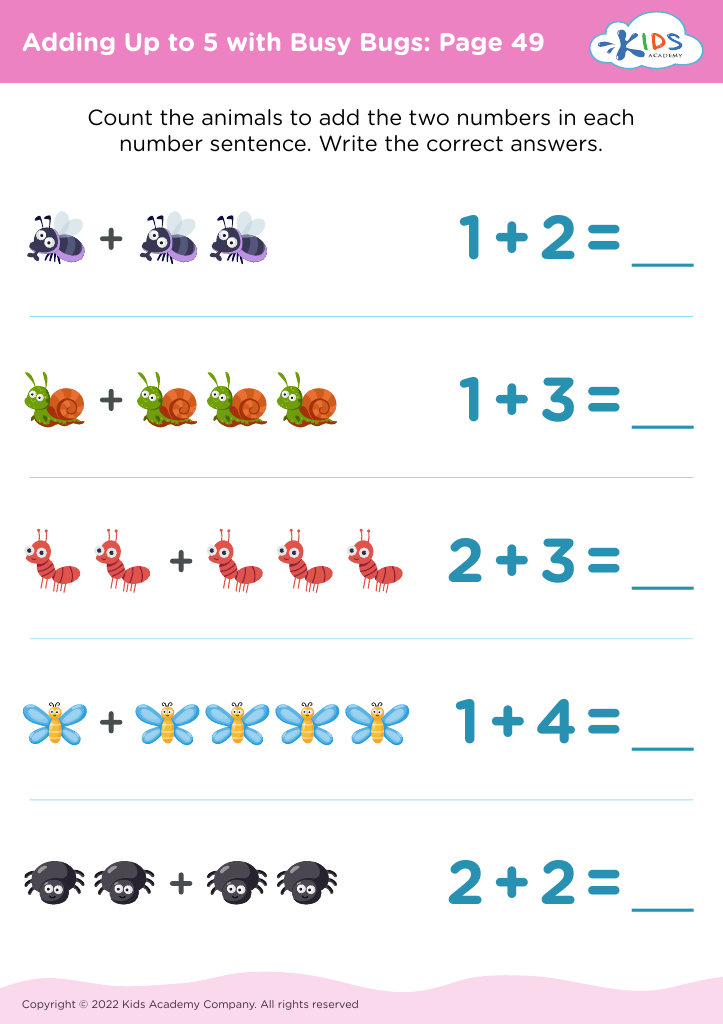
Adding Up to 5 with Busy Bugs: Page 49
Worksheet


Cognitive development in early childhood is foundational for a child's future learning and academic success. For children aged 4-5, mastering basic addition and subtraction fosters critical thinking and problem-solving skills, essential components of cognitive development. Engaging in these mathematical concepts enhances children's ability to recognize patterns and make connections between numbers, ultimately supporting their overall understanding of math.

Parents and teachers should prioritize this stage of learning as it sets the groundwork for more complex mathematical operations later on. It also promotes essential skills like counting, number recognition, and the understanding of quantity. Additionally, practicing addition and subtraction can improve a child's confidence in their abilities, encouraging a positive attitude toward learning and reducing math anxiety.

Moreover, incorporating these activities into daily routines can enrich a child's vocabulary and communication skills, as they learn to articulate their thought processes and reasoning. Ultimately, by investing time and resources in teaching addition and subtraction, parents and teachers help foster a love for learning, lay the groundwork for academic achievement, and equip children with the cognitive tools they need for future challenges in both mathematics and beyond.