
Following instructions Geometry Worksheets for Ages 4-5
5 filtered results
Difficulty Level
Grade
Age
-
From - To
Subject
Activity
Standards
Introduce young learners to the fundamentals of geometry while enhancing their ability to follow instructions with our "Following Instructions Geometry Worksheets for Ages 4-5". These engaging and educational worksheets are specially designed to help children grasp basic shapes, patterns, and spatial awareness. Through fun, hands-on activities, kids will develop crucial skills for academic success. Each worksheet promotes attention to detail and problem-solving abilities, fostering a love for learning. Suitable for classroom and home use, our geometry worksheets provide a solid foundation for early math skills in a supportive and enjoyable environment. Download today and watch your child's confidence grow!
Favorites
With answer key
Interactive
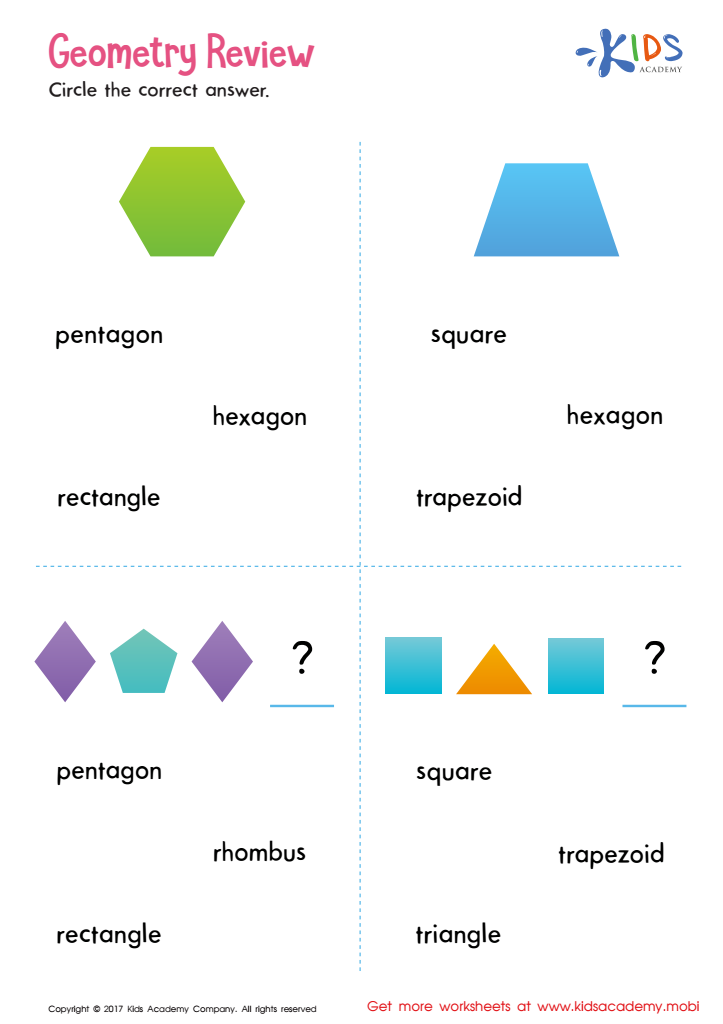
Geometry Review Printable
Repetition is key to success; give your child the practice they need with this geometry worksheet.
Geometry Review Printable
Worksheet











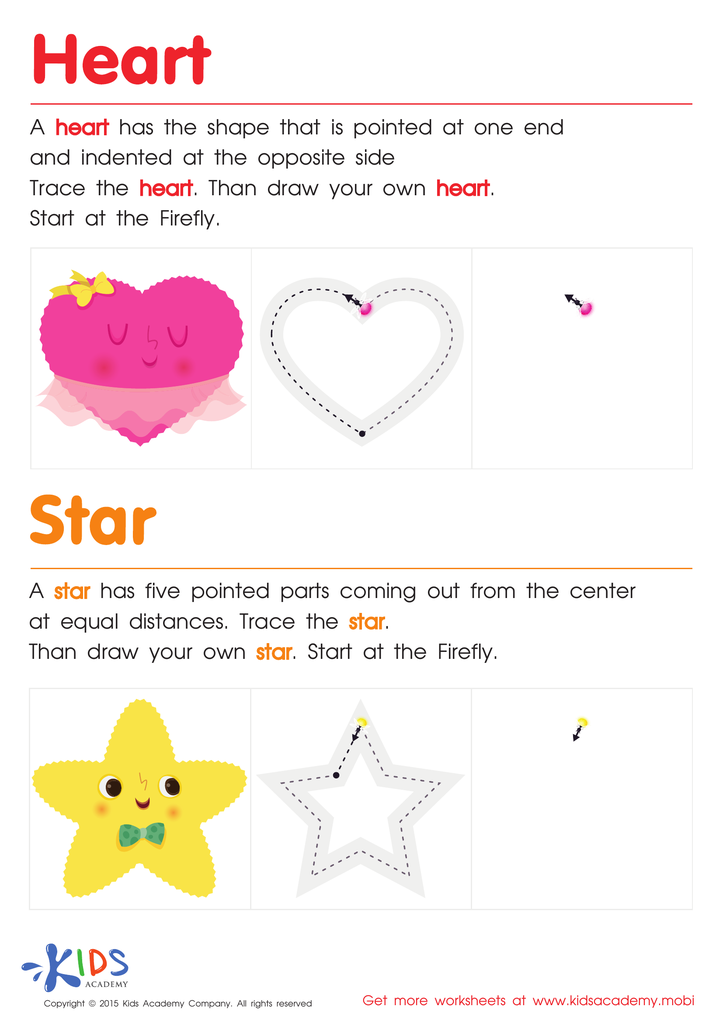
Let's Learn to Draw Hearts And Stars Printable
Trace and draw hearts and stars, learn their names and use them in your drawings. Start with the firefly and be creative!
Let's Learn to Draw Hearts And Stars Printable
Worksheet
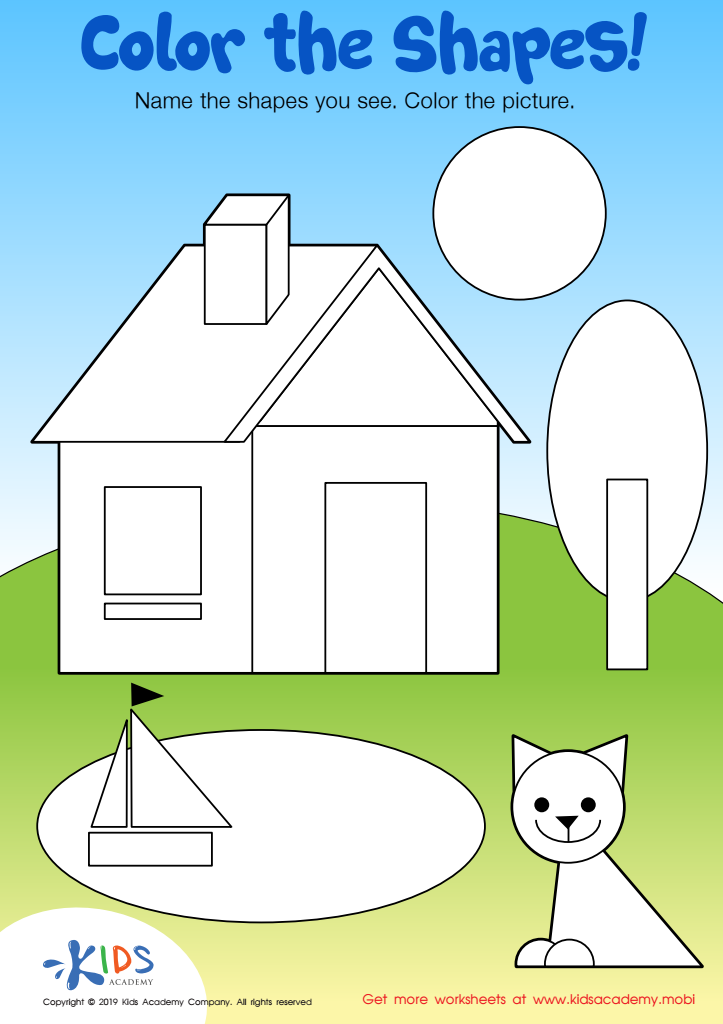
Color the Shapes Worksheet
Help your student master shape identification with this fun worksheet. Ask them to name the shapes in the picture, then color it! Ask questions like "How many squares do you see?" and "How many triangles?" to extend the learning. Identify squares, circles, triangles and rectangles with this enjoyable coloring page.
Download (PDF)
 Assign to My Students
Assign to My Students
Color the Shapes Worksheet
Worksheet
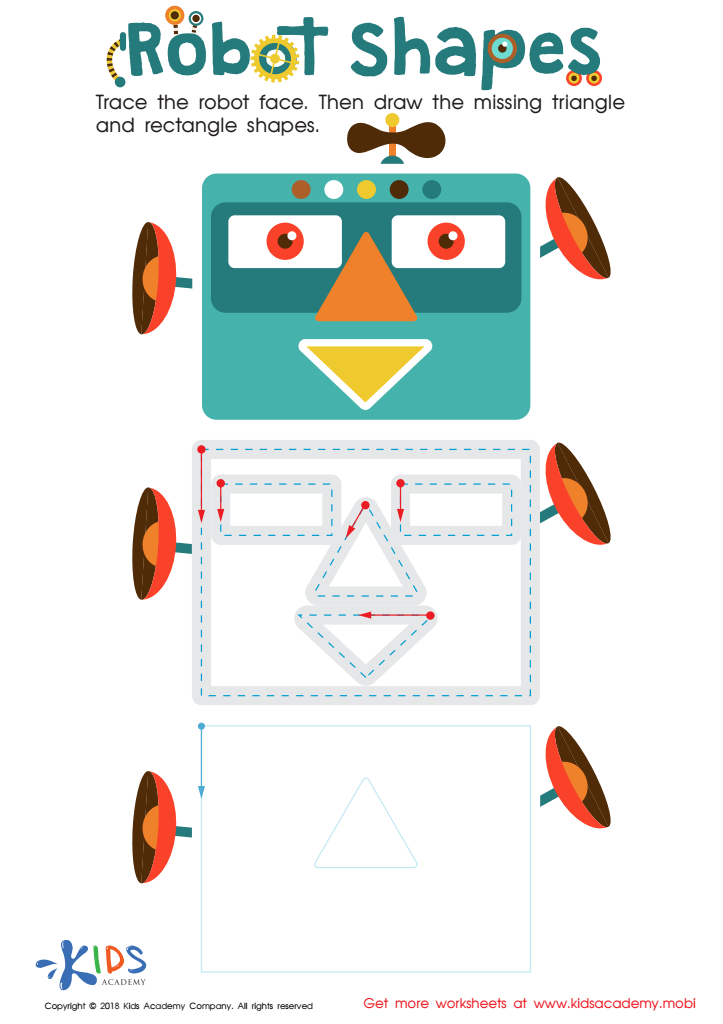
Robot Shapes Worksheet
Help your preschooler get started with math skills while having fun with this shape tracing worksheet featuring a cute robot! Ask them to study the first image, trace the dotted lines to draw the shapes in the second, and color the third. With this activity, they'll learn shapes while enjoying the funny robot pictures!
Robot Shapes Worksheet
Worksheet
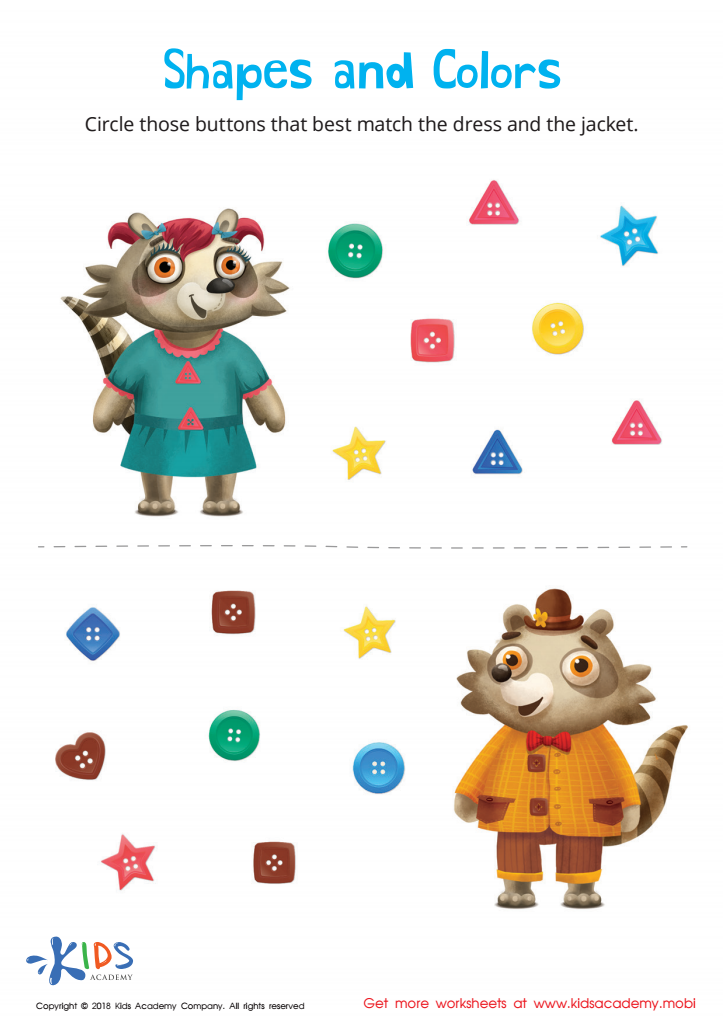
Shapes and Colors Worksheet
This worksheet is a fun way to teach toddlers shapes and colors! It has them match buttons on adorable racoon characters. Encourage your child to note the shape and color of the buttons then sort through and circle the matches. This helps build important attention to detail skills!
Shapes and Colors Worksheet
Worksheet
Join Kids Academy for Free
Who is primarily going to use this learning content?








Parents and teachers should care about teaching geometry and following instructions for children aged 4-5 because these foundational skills offer numerous long-term benefits in cognitive and social development. At this formative stage, children's brains are exceptionally receptive to new concepts, and activities that involve shapes help improve their spatial awareness and critical thinking skills. Learning to recognize shapes such as circles, squares, and triangles forms a fundamental base for problem-solving and logical reasoning capabilities necessary for future academic success.
Following instructions is equally important. It teaches children to listen, process, and execute tasks in a systematic way. This skill is crucial for their future learning and adherence to classroom rules. When children learn to follow instructions in the context of geometric activities, it combines cognitive development with educational play. This dual-focus approach enhances their attention to detail, memory, and ability to follow multi-step processes.
Moreover, engaging students in structured geometric tasks helps them develop fine motor skills through drawing and manipulating shapes. Parental and teacher involvement in these activities also promotes bonding and instills a positive attitude toward learning. Essentially, integrating geometry and instruction-following exercises can lay the groundwork for better academic performance, enhanced behavioral skills, and a lifelong love of learning.








