
Understanding suffixes Reading Worksheets for Ages 4-5
3 filtered results
Difficulty Level
Grade
Age
-
From - To
Subject
Activity
Standards
Explore our "Understanding Suffixes Reading Worksheets for Ages 4-5" designed to enhance early literacy skills. These engaging worksheets introduce young learners to the concept of suffixes, helping them recognize how word endings can change meanings. With colorful designs and age-appropriate activities, children will enjoy connecting words, completing sentences, and identifying suffixes in fun, interactive ways. These resources not only promote reading comprehension but also build foundational language skills essential for future learning. Perfect for at-home learning or classroom use, our worksheets make mastering suffixes an enjoyable adventure. Begin your child’s journey to becoming a confident reader today!
Favorites
With answer key
Interactive
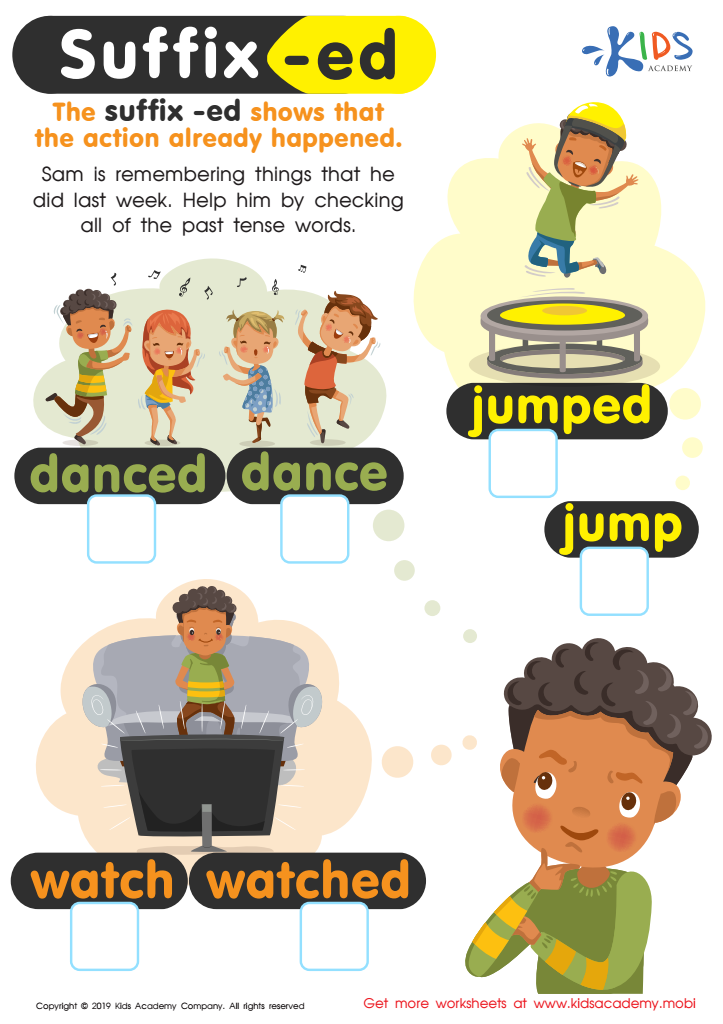
Suffix-ed Worksheet
Ask your kids if they know what suffixes are, and explain they are words added to the end of another word which changes the meaning. This worksheet focuses on the suffix -ed which shows something already happened. Help the kid in the picture find the past tense words.
 Assign to My Students
Suffix-ed Worksheet
Worksheet
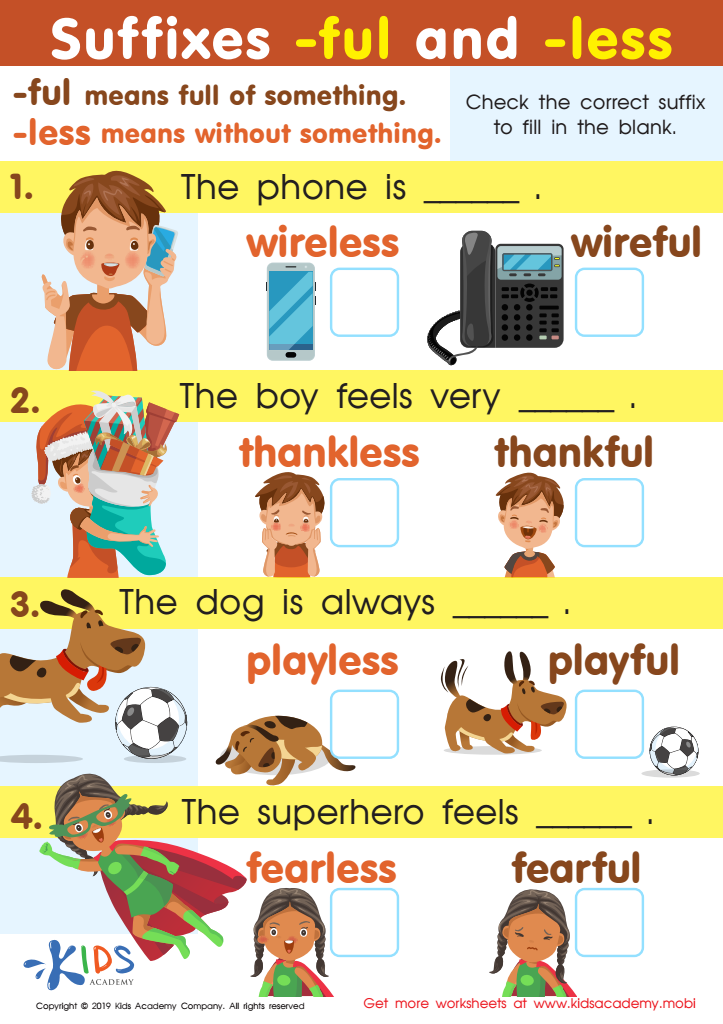
Suffixes –ful and –less Worksheet
Before you start this worksheet, make sure your kids know about suffixes. Explain that they're added to the end of words to change their meaning. In the worksheet, kids will learn about the suffixes –ful and –less. Look at the sentences in the picture with them, and help them to choose the right one for each blank.
Suffixes –ful and –less Worksheet
Worksheet
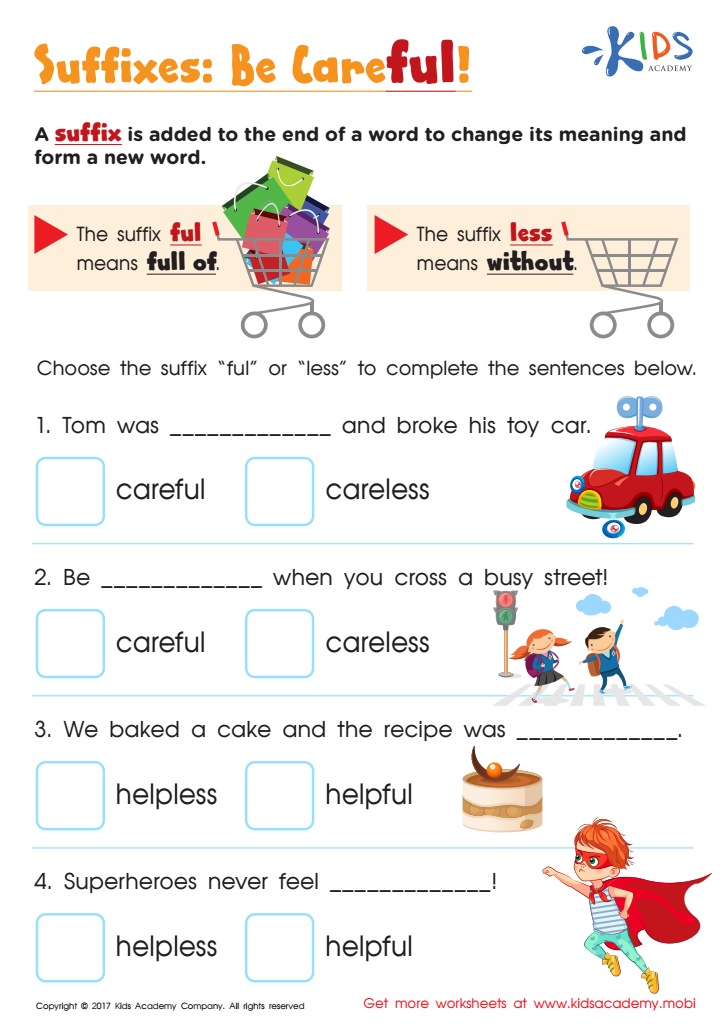
Suffixes Ful and Less Worksheet
Uh oh! Careful and careless might look similar, but have very different meanings. To avoid mix-ups, learn to spot and use the right suffixes. Use this suffixes ful and less worksheet to help your child master common suffixes!
Suffixes Ful and Less Worksheet
Worksheet
Join Kids Academy for Free
Who is primarily going to use this learning content?








Understanding suffixes is crucial for young readers aged 4-5, as it lays a foundational skill for language development and literacy. Suffixes are the letters or groups of letters added to the end of words, altering their meanings and functions. By introducing suffixes at an early age, parents and teachers can enhance children's vocabulary and comprehension skills.
When children recognize common suffixes, such as "-ing," "-ed," or "-s," they can connect new words to familiar ones, cultivating a more extensive vocabulary. This aids in better understanding and constructing sentences, enabling kids to express themselves more effectively. Moreover, recognizing suffixes fosters phonetic awareness, making it easier for children to decode unfamiliar words as they practice reading.
Additionally, teaching suffixes contributes to children’s cognitive development. It encourages them to think analytically about language, enabling them to classify and categorize words. This understanding also helps build their interest in reading as they engage with texts more confidently.
In conclusion, focusing on suffixes helps cultivate essential literacy skills, hones vocabulary acquisition, and nurtures a love for reading, all of which are vital components for children’s educational success as they progress.








