Color recognition Writing Worksheets for Ages 4-5
12 filtered results
-
From - To
Enhance your child's learning experience with our engaging Color Recognition Writing Worksheets designed for ages 4-5. These printable resources help young learners identify and name colors through fun activities that encourage creativity and fine motor skills. Each worksheet features colorful illustrations and simple prompts, making learning both enjoyable and effective. As children practice their writing while focusing on color recognition, they build confidence and develop essential early literacy skills. Perfect for parents and teachers alike, our worksheets provide a fantastic way to introduce foundational concepts in a playful manner. Download these worksheets today and ignite your child's passion for learning!
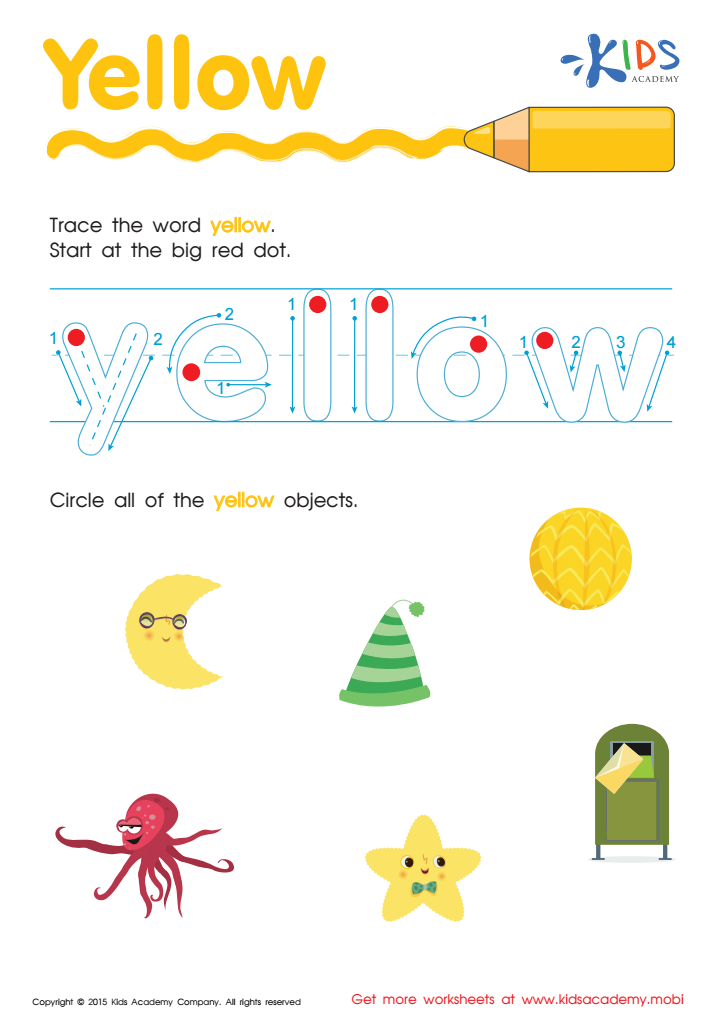
Yellow Tracing Color Words Worksheet
 Assign to My Students
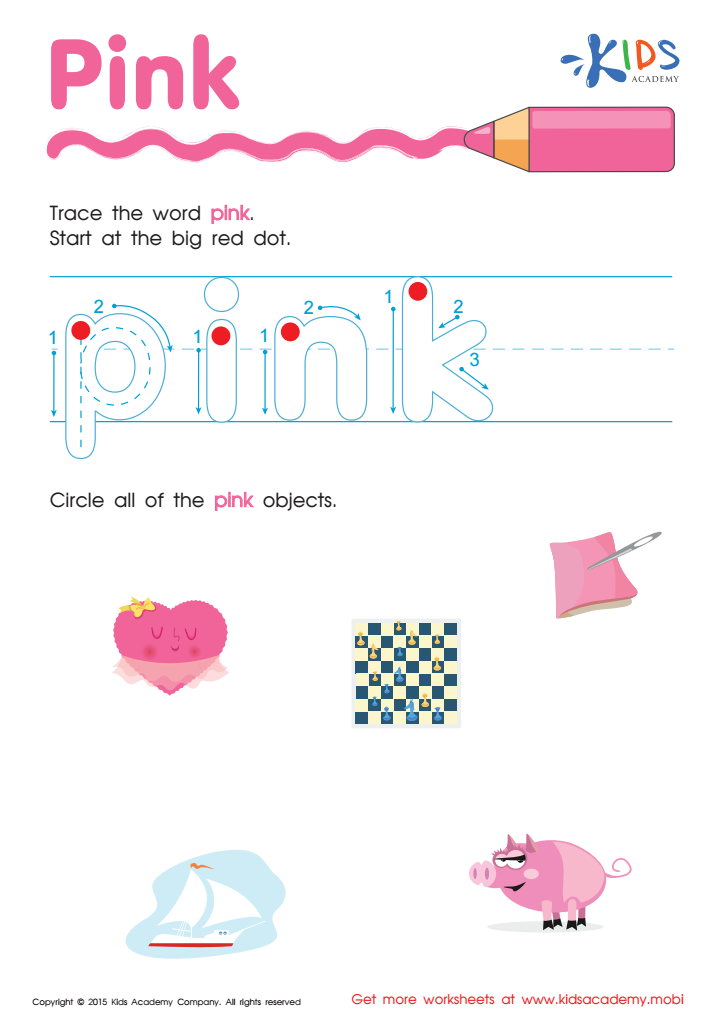
Pink Tracing Color Words Worksheet
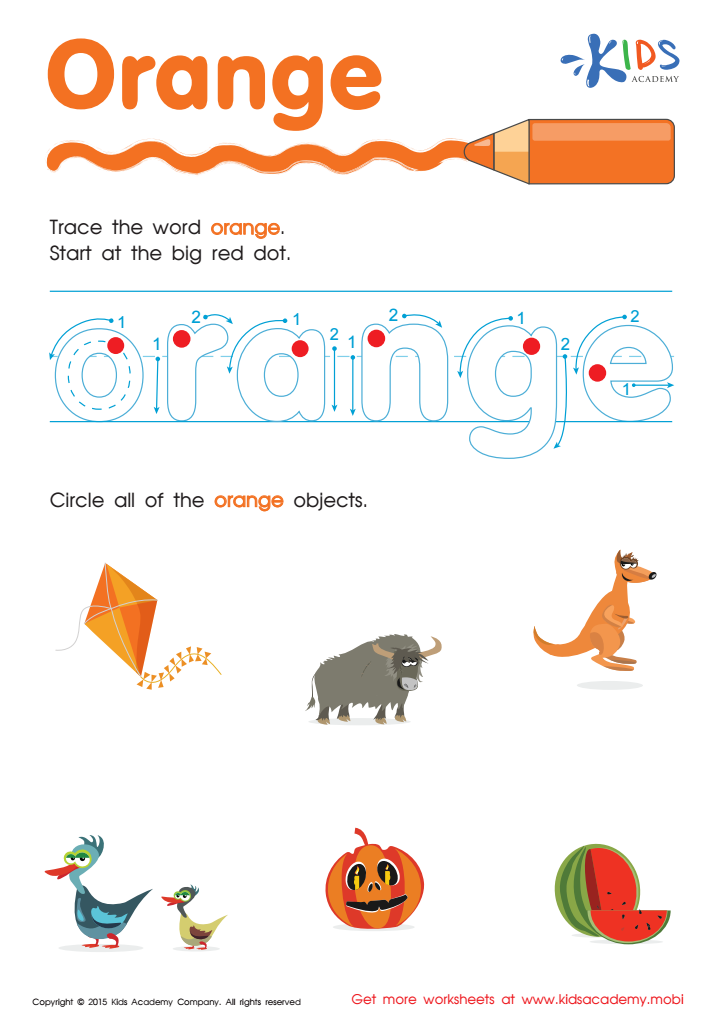
Orange Tracing Color Words Worksheet
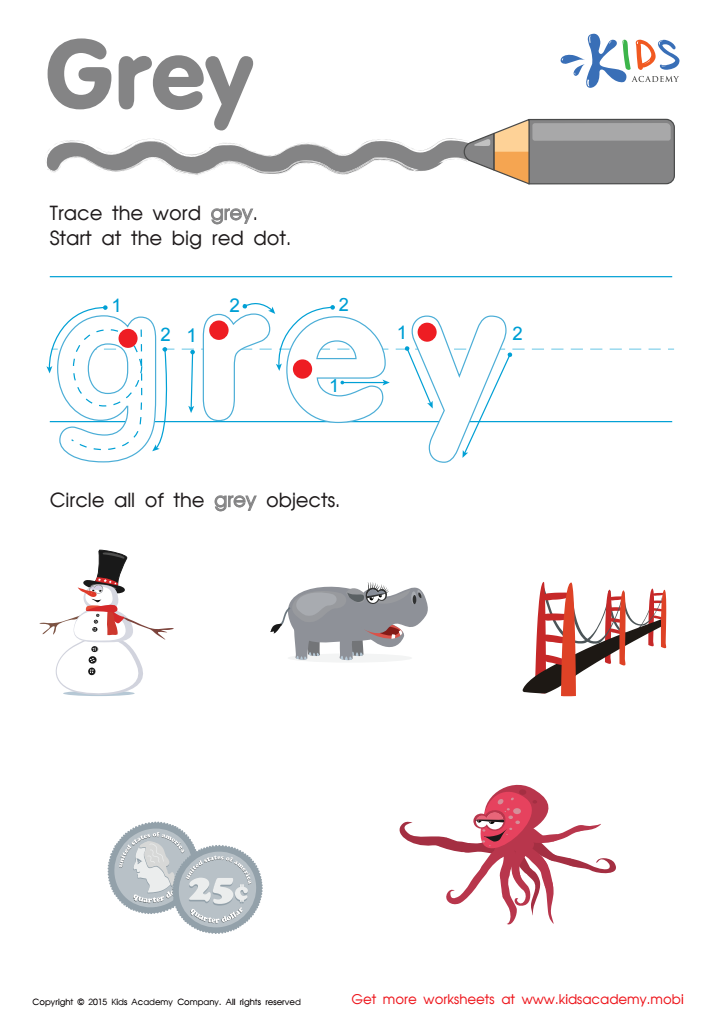
Grey Tracing Color Words Worksheet
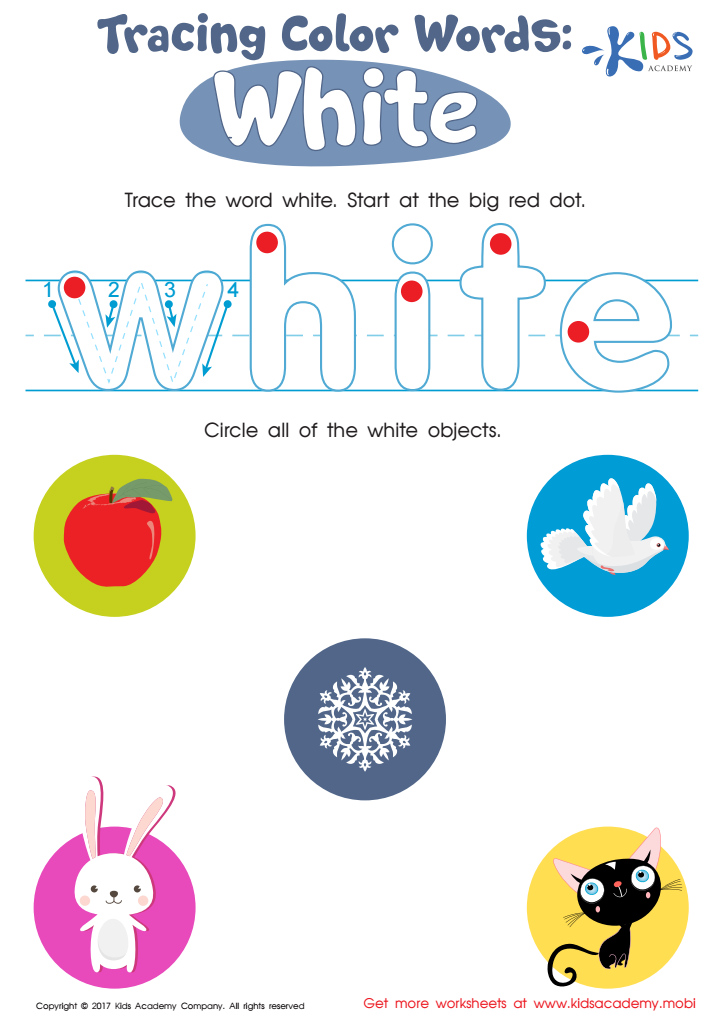
White Tracing Color Words Worksheet
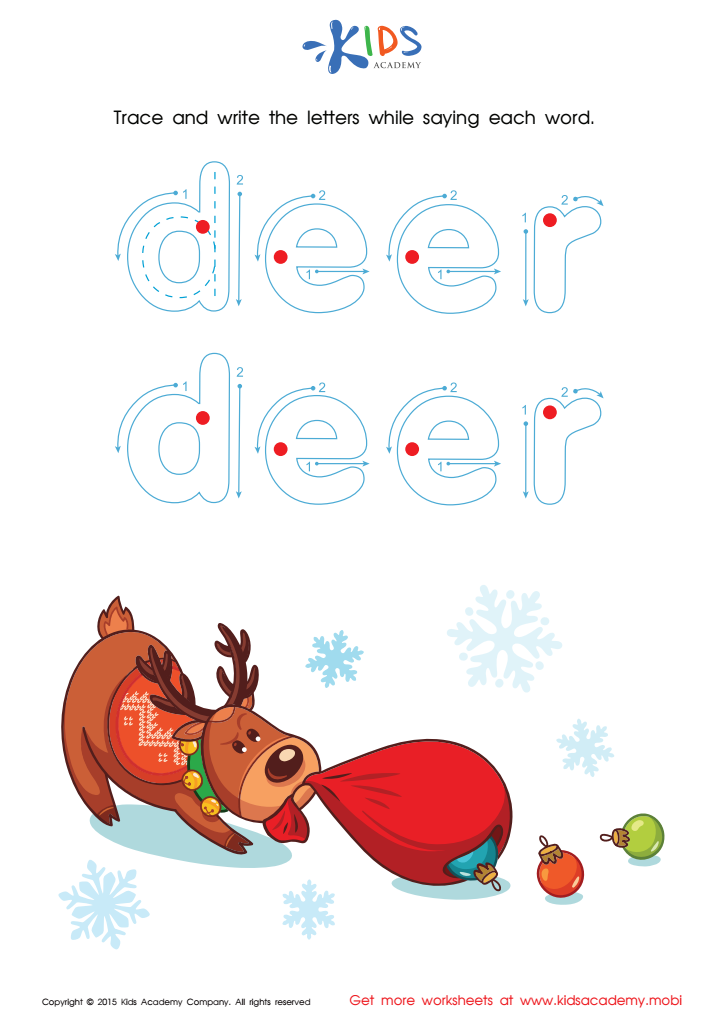
Deer Tracing Winter Words Worksheet
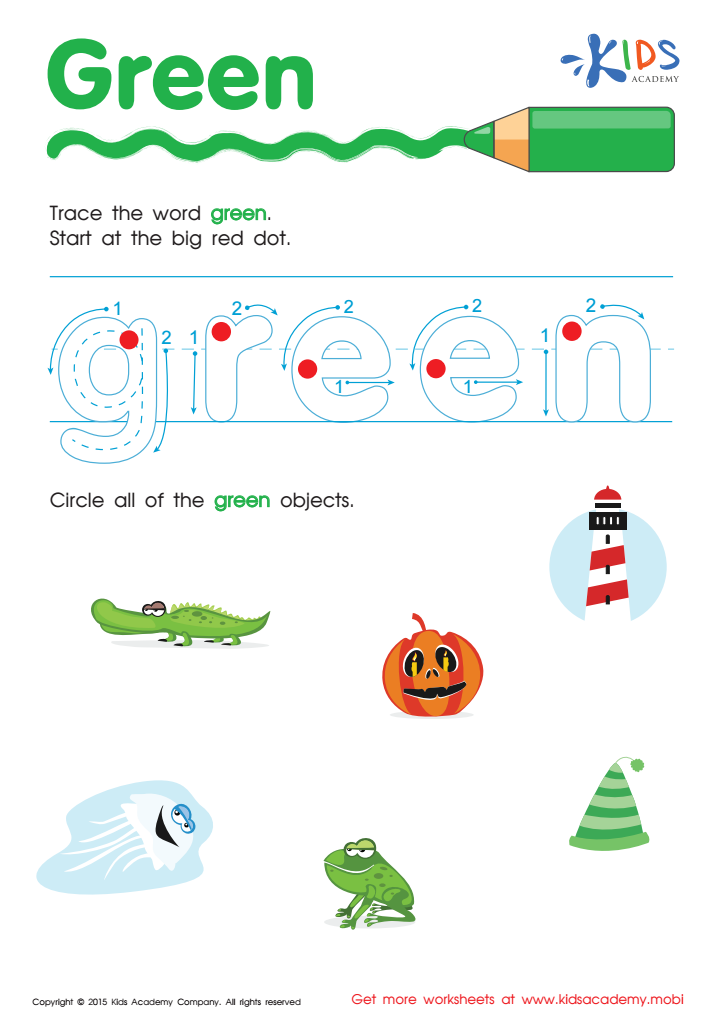
Green Tracing Color Words Worksheet
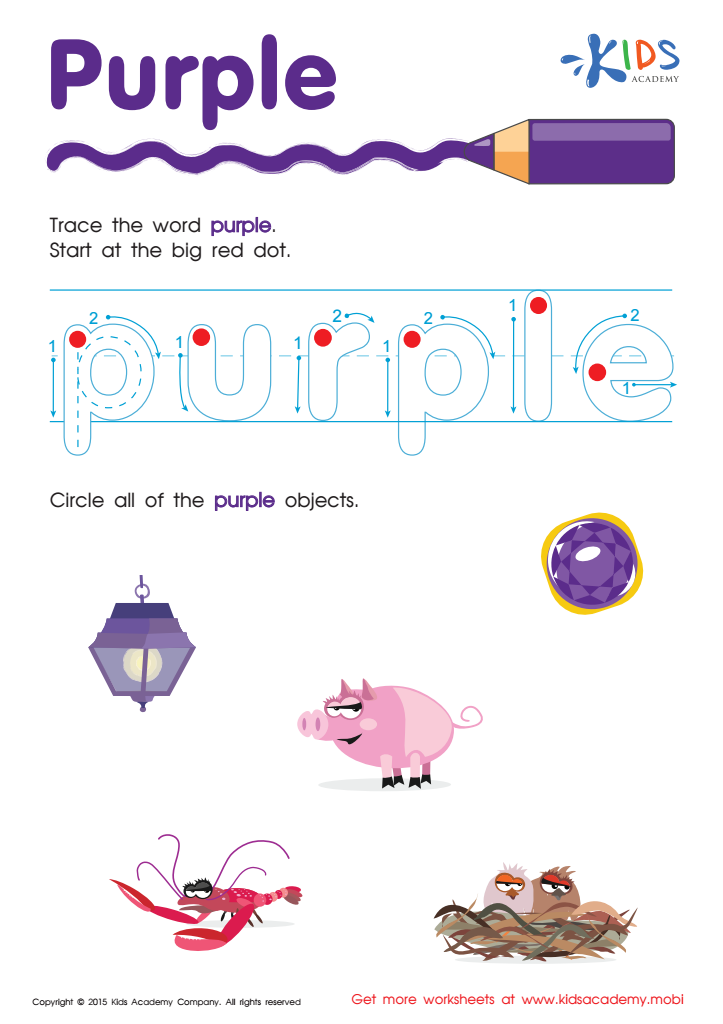
Purple Tracing Color Words Worksheet

Santa Claus Tracing Winter Words Worksheet
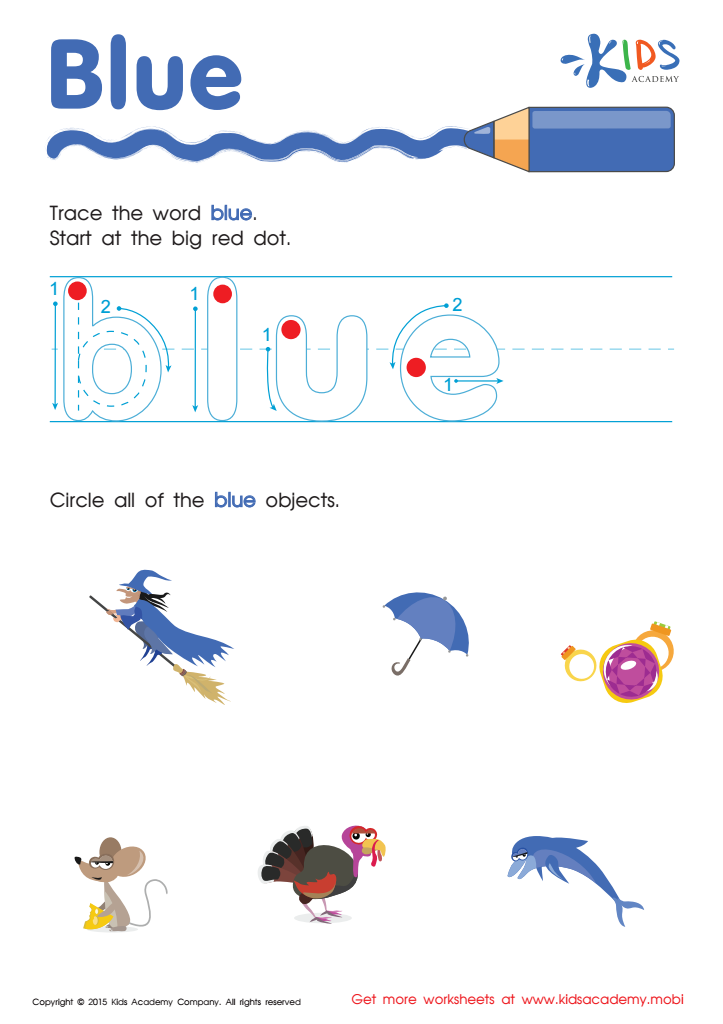
Blue Tracing Color Words Printable
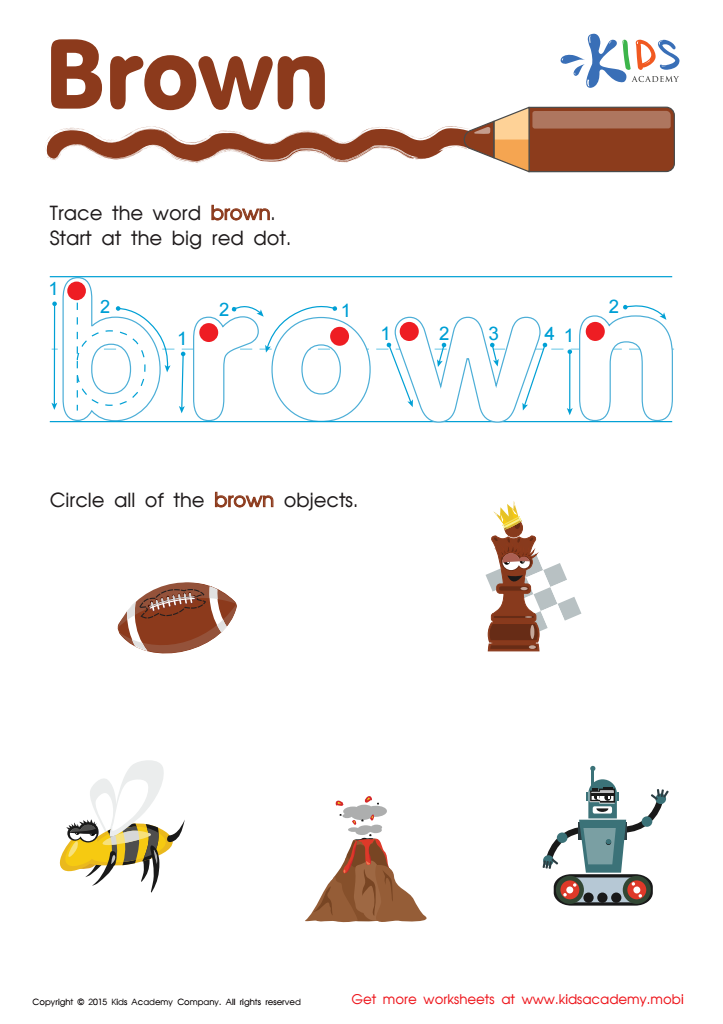
Brown Tracing Color Words Worksheet
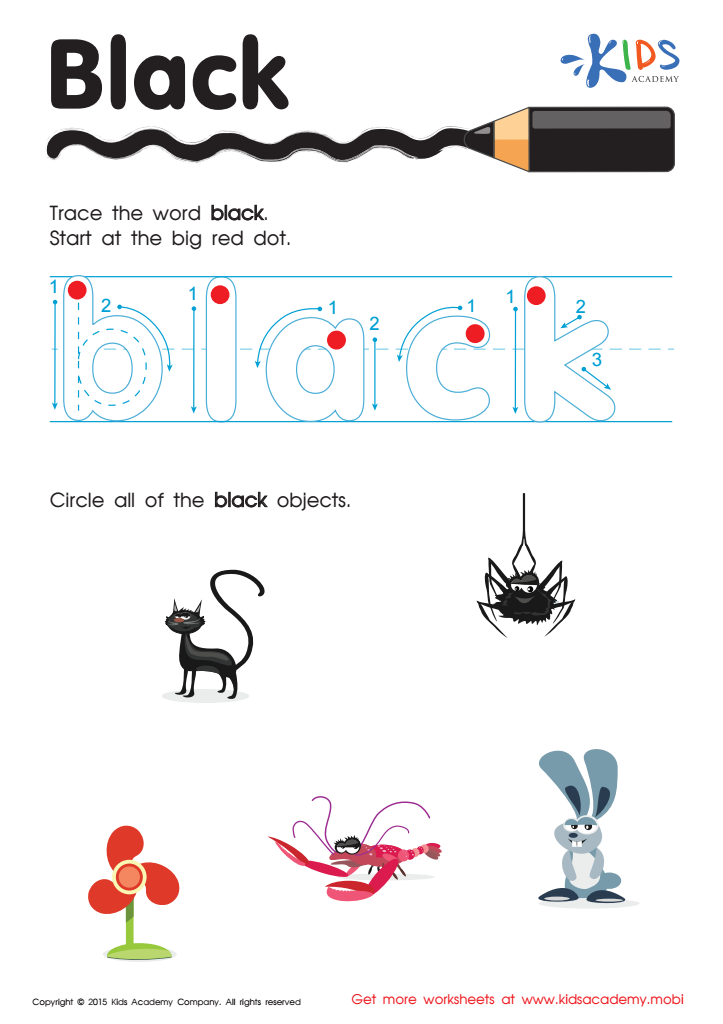
Black Tracing Color Words Printable


.jpg)





Color recognition is a fundamental skill for children aged 4-5 that significantly aids their cognitive development and learning. For parents and teachers, fostering color recognition is vital because it lays the groundwork for more complex concepts in literacy, mathematics, and science. Understanding colors enhances a child's vocabulary and comprehension skills as they learn to describe their surroundings.
Furthermore, color identification supports artistic expression and creativity, allowing kids to explore the world visually and emotionally. This skill is often intertwined with social development, as children engage in activities where they share and discuss their choices with peers, learning essential teamwork and communication skills.
Incorporating color activities into early education, such as color sorting, painting, or coloring books, makes learning engaging and fun. Studies show that children who recognize colors tend to excel in following instructions and demonstrating focus, which are crucial skills for academic success.
Additionally, color recognition can boost a child's confidence and self-expression, encouraging them to participate more openly in group settings. Ultimately, emphasizing color recognition in early childhood education equips children with the tools they need for future learning and supports their overall development and readiness for school.








