Understanding fractions Geometry Worksheets for Ages 4-7
31 filtered results
-
From - To
Welcome to our "Understanding Fractions Geometry Worksheets" page designed specifically for children ages 4-7! These engaging and interactive worksheets introduce young learners to the fundamental concepts of fractions through geometric shapes. With colorful visuals and easy-to-follow exercises, kids will develop critical skills in identifying, comparing, and understanding fractions in a fun way. Our materials empower teachers and parents to support children’s early math journey, fostering a solid foundation for future learning. Start exploring our diverse range of worksheets that cater to different learning styles and ensure your child gains confidence in understanding and using fractions! Ideal for classroom and home use.
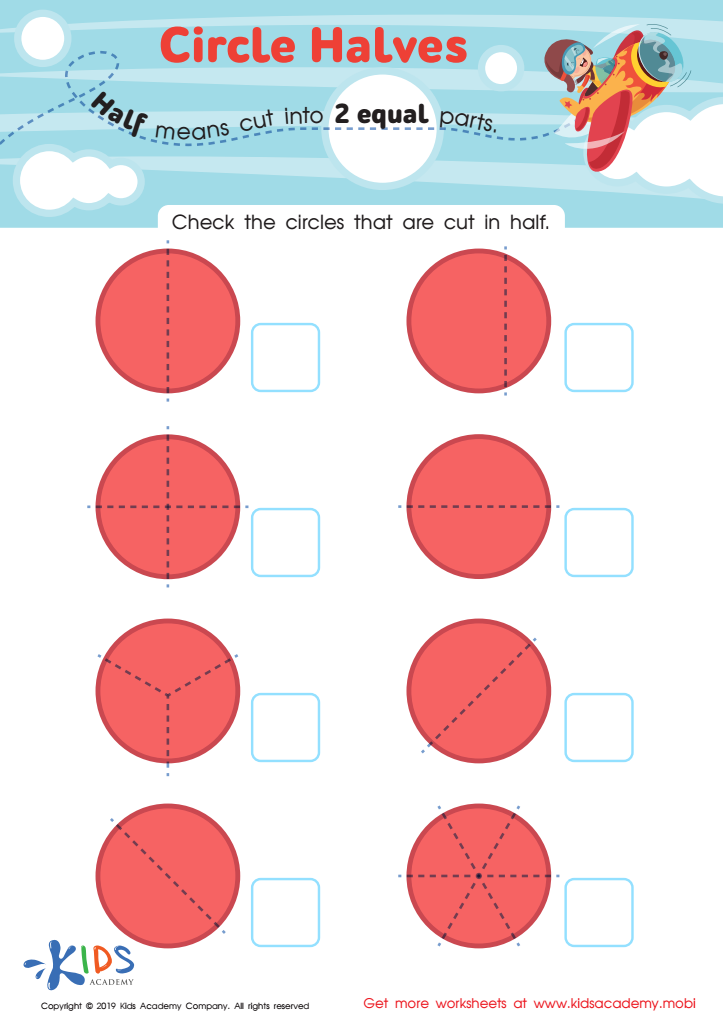
Circle Halves Worksheet
 Assign to My Students











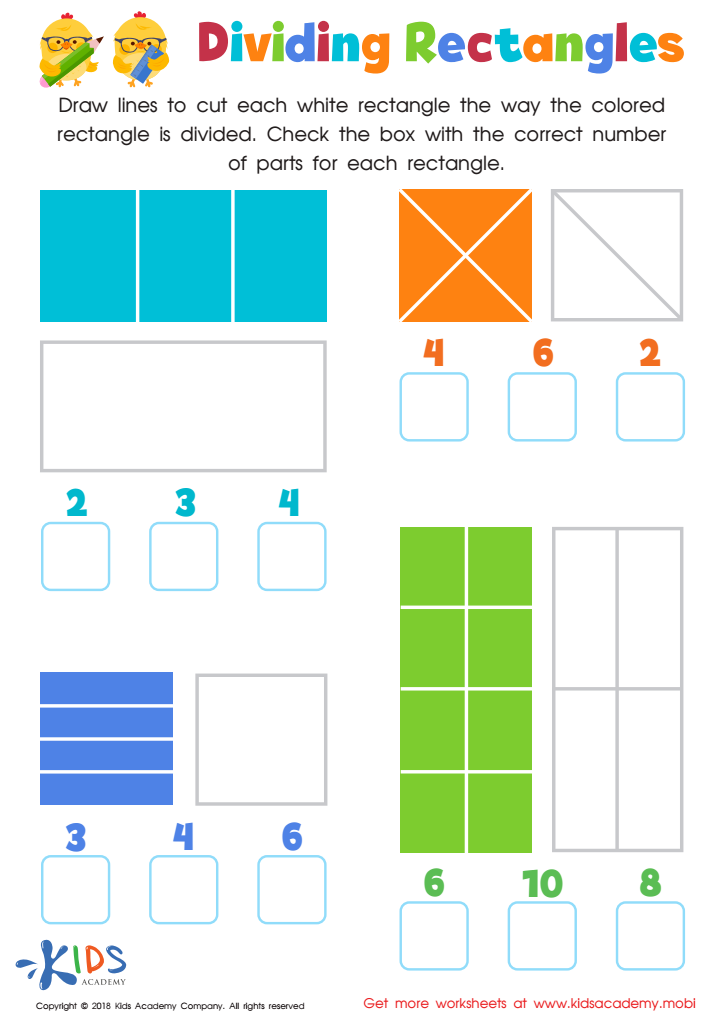
Dividing Rectangles Worksheet
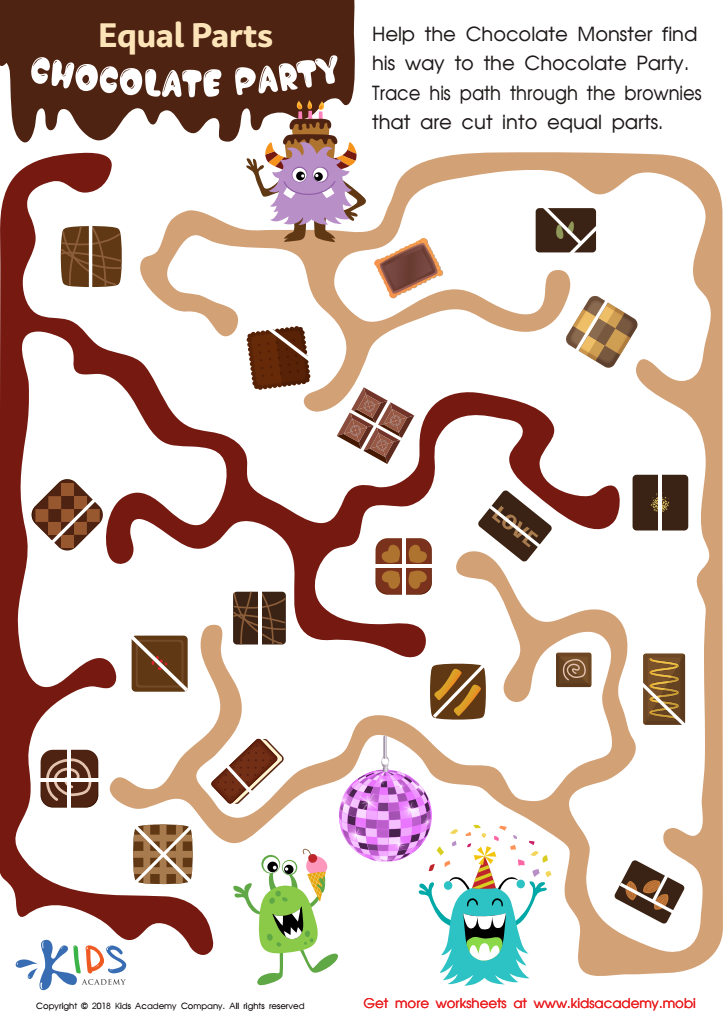
Equal Parts: Chocolate Party Worksheet
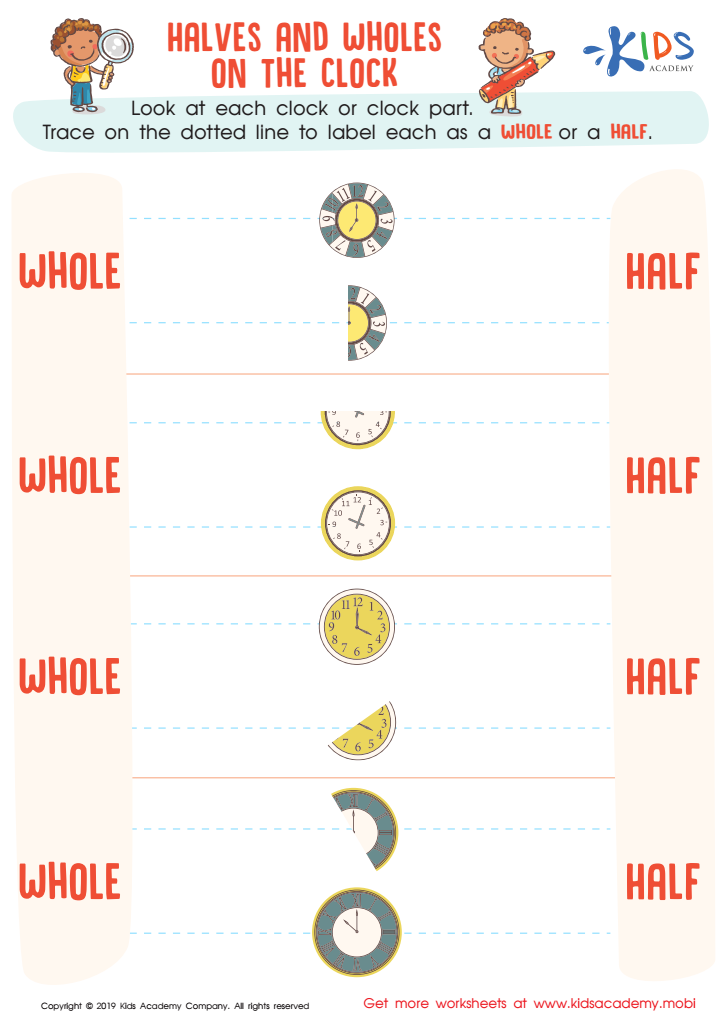
Halves and Wholes on the Clock Worksheet
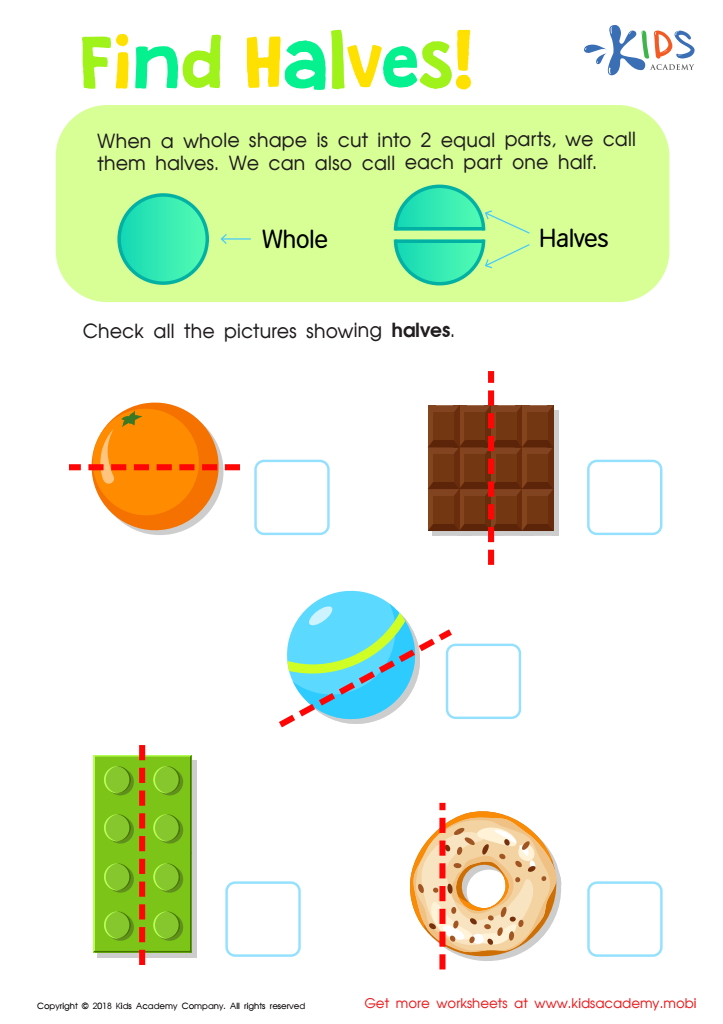
Find Halves Worksheet
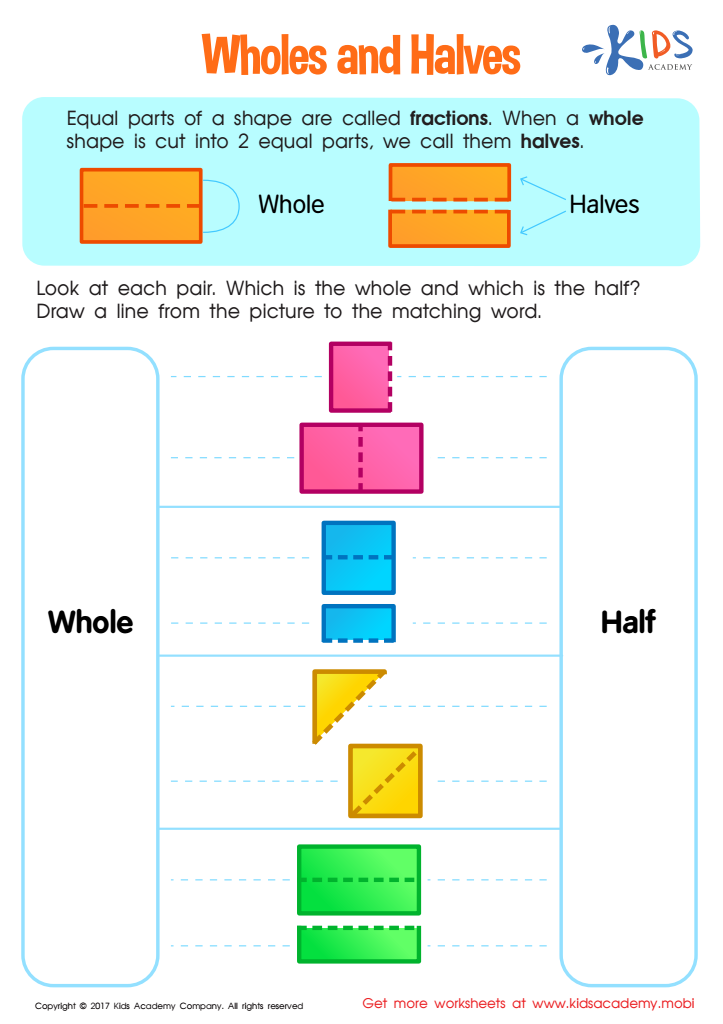
Wholes and Halves Worksheet
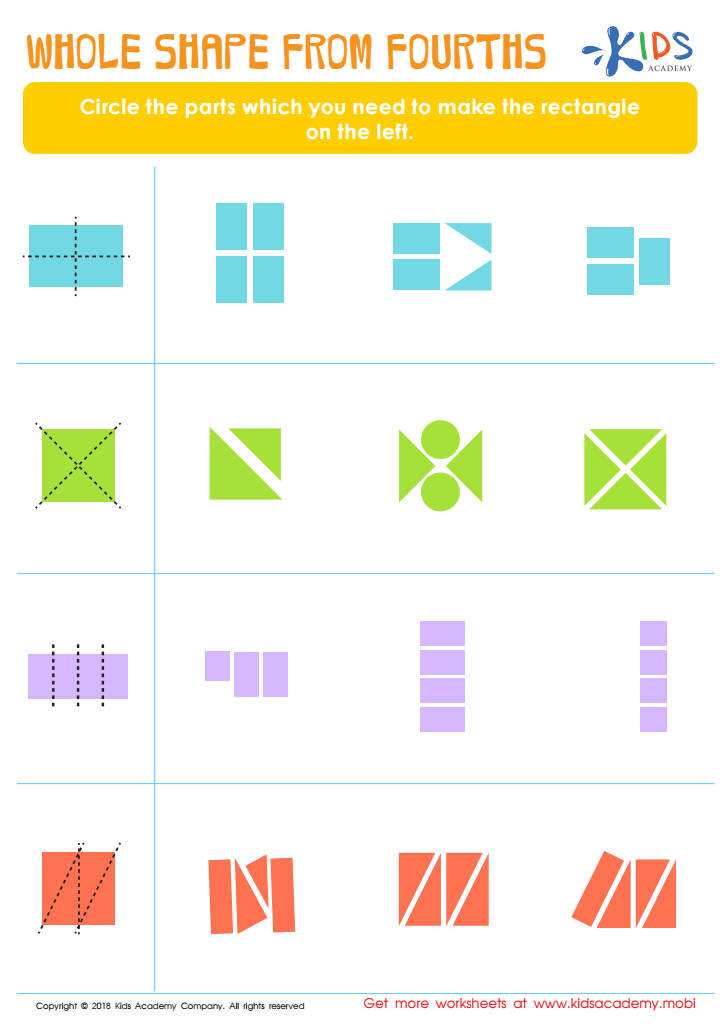
Whole Shape from Fourths Worksheet
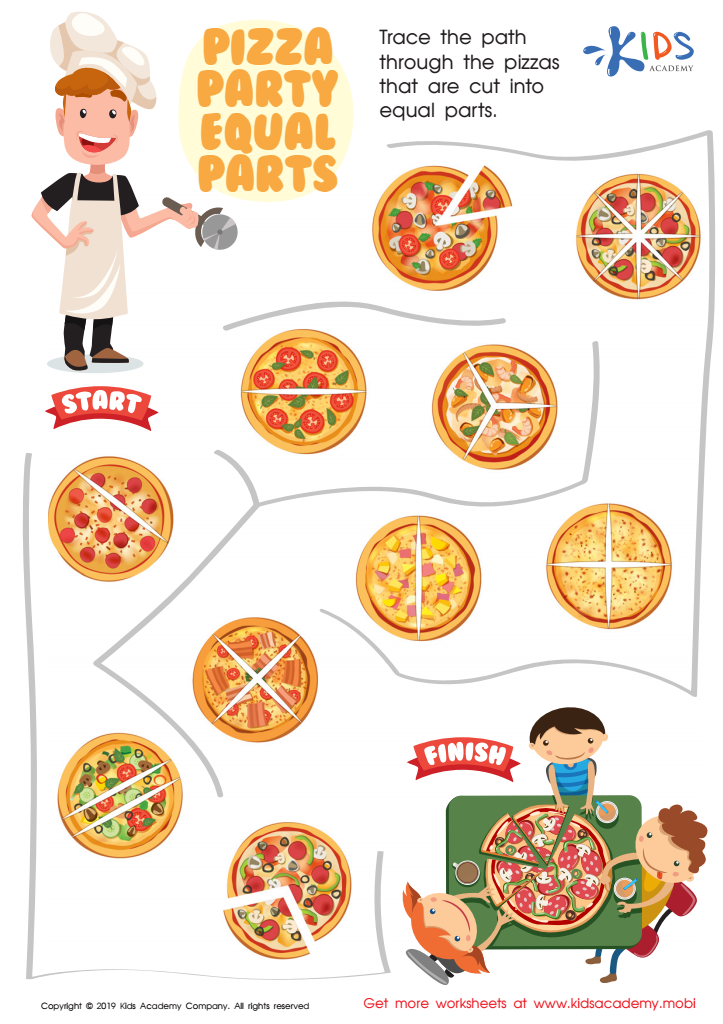
Pizza Party Equal Parts Worksheet
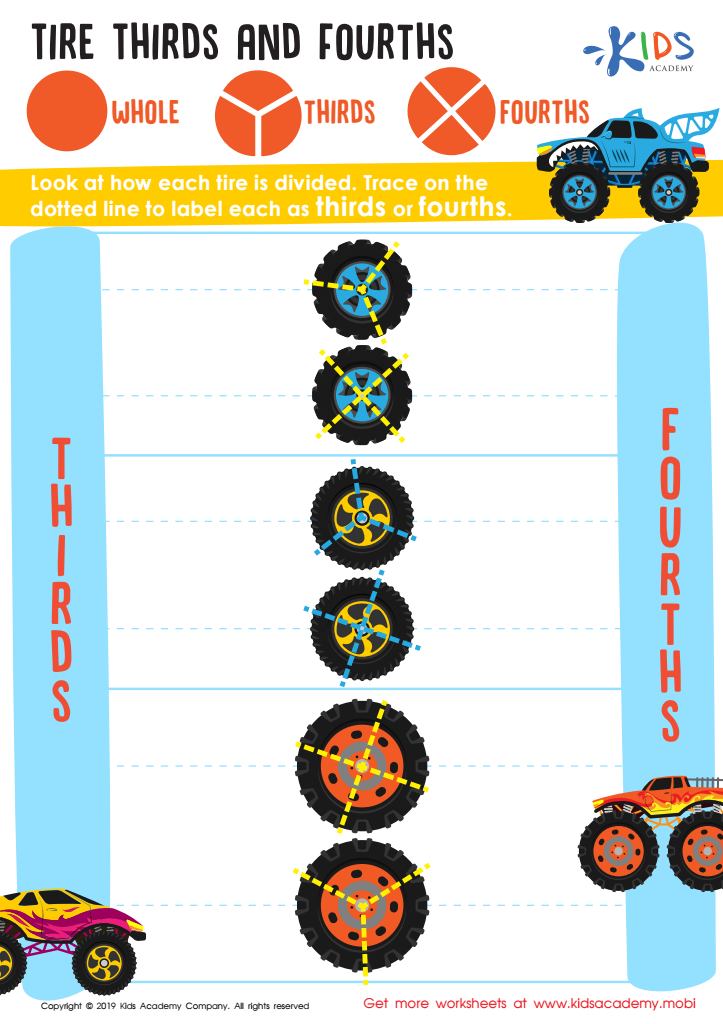
Tire Thirds and Fourths Worksheet
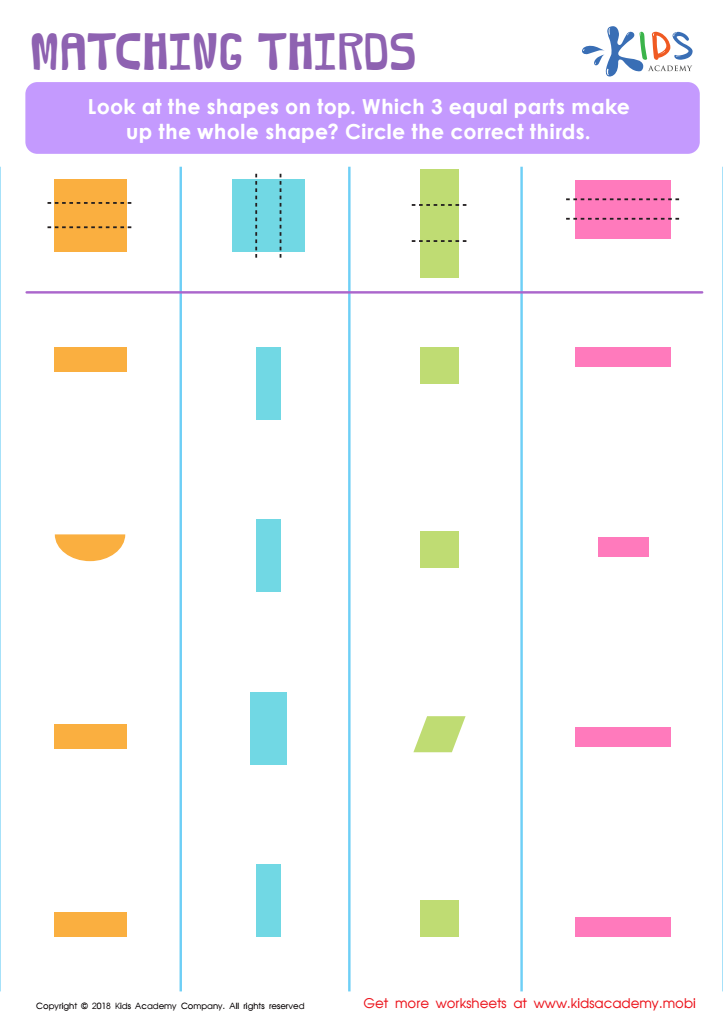
Matching Thirds Worksheet
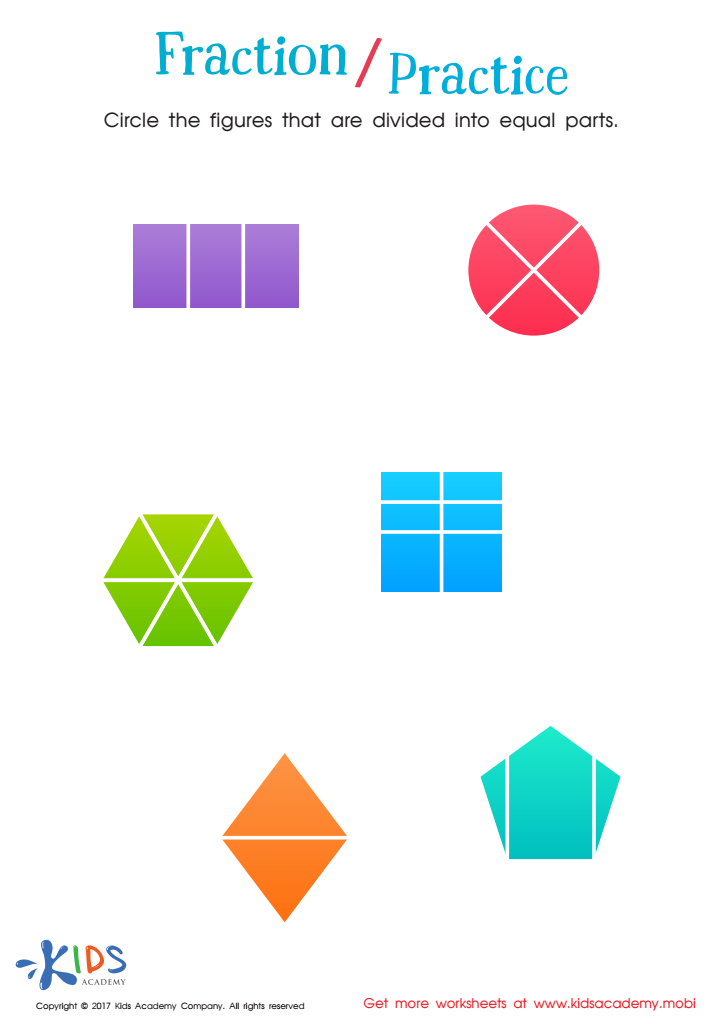
Fractions: Shapes Worksheet
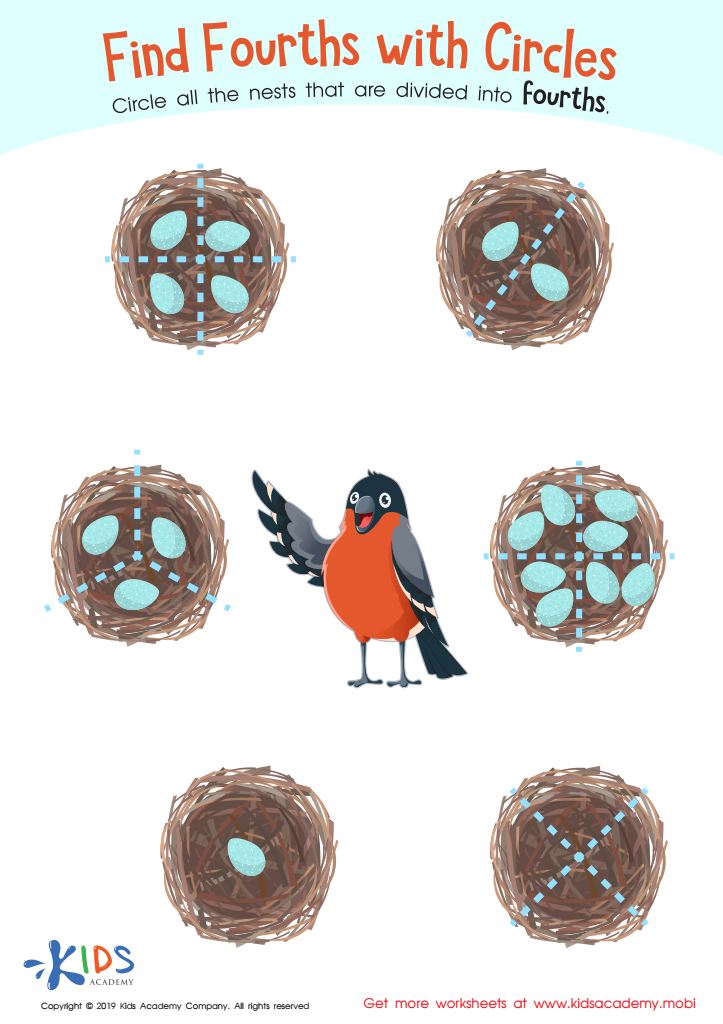
Find Fourths Circles Worksheet
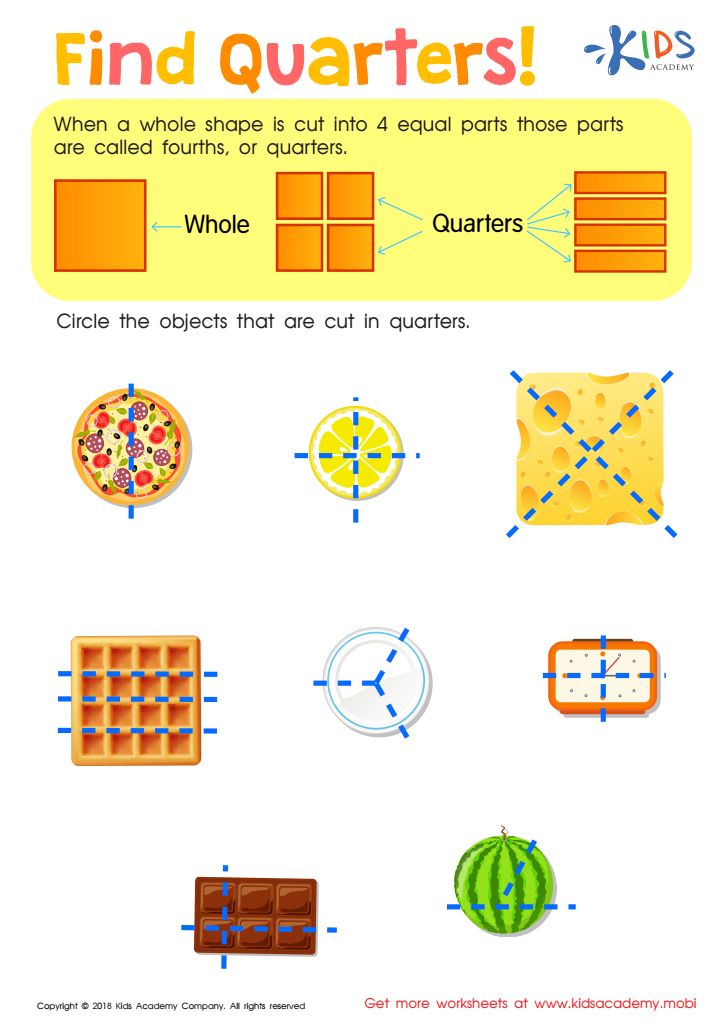
Find Quarters Worksheet
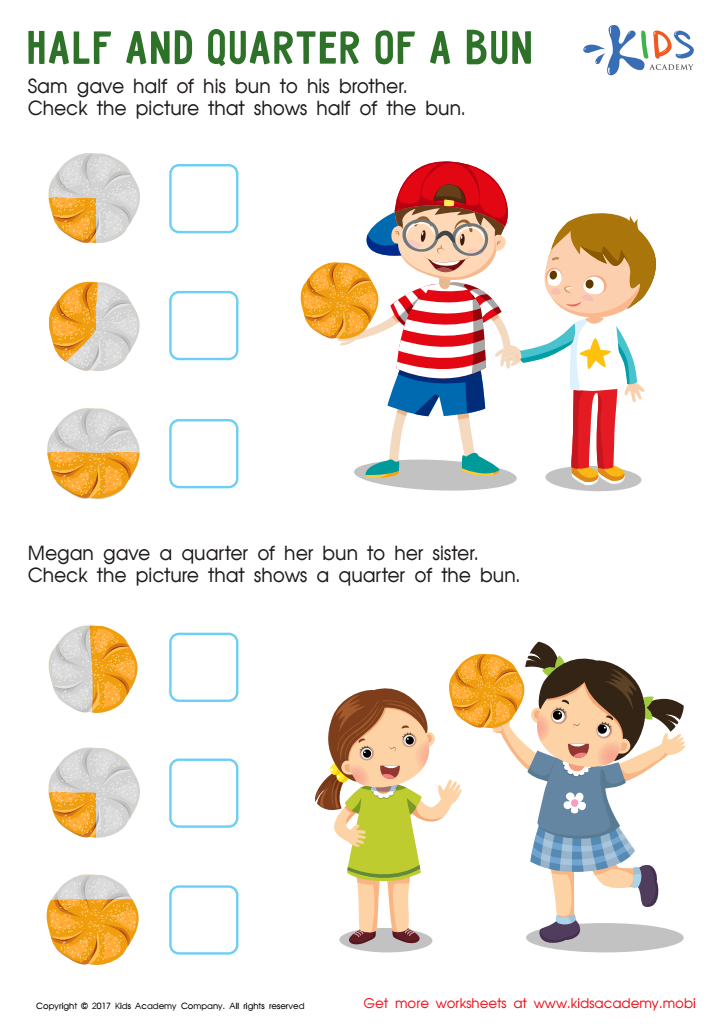
Half and Quarter of a Bun Worksheet
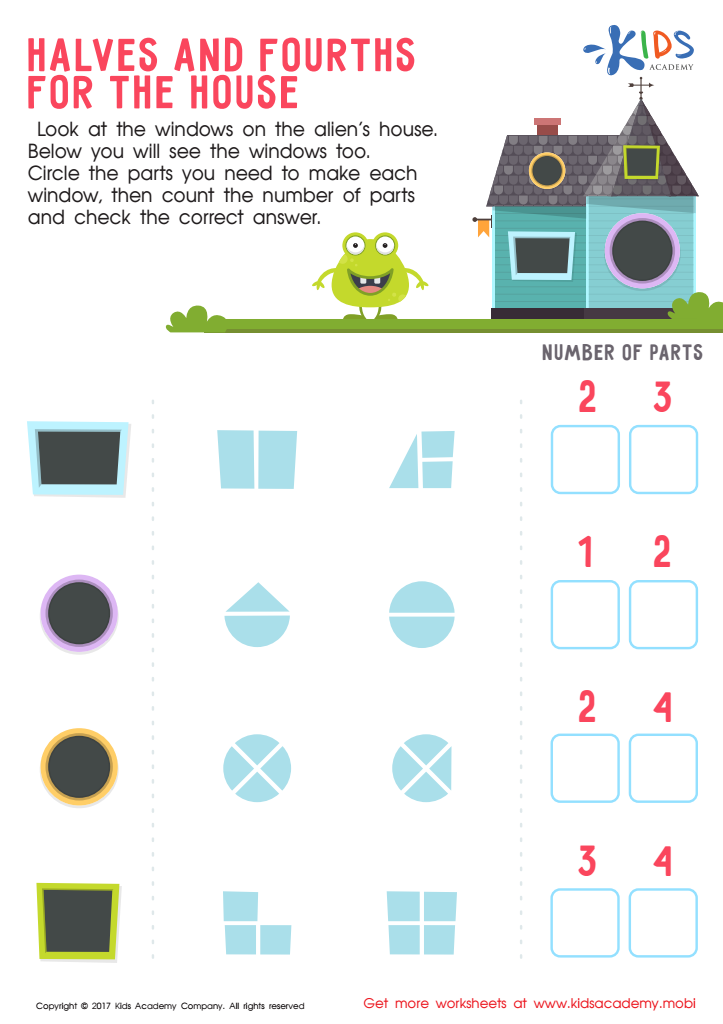
Halves and Fourths for the House Worksheet
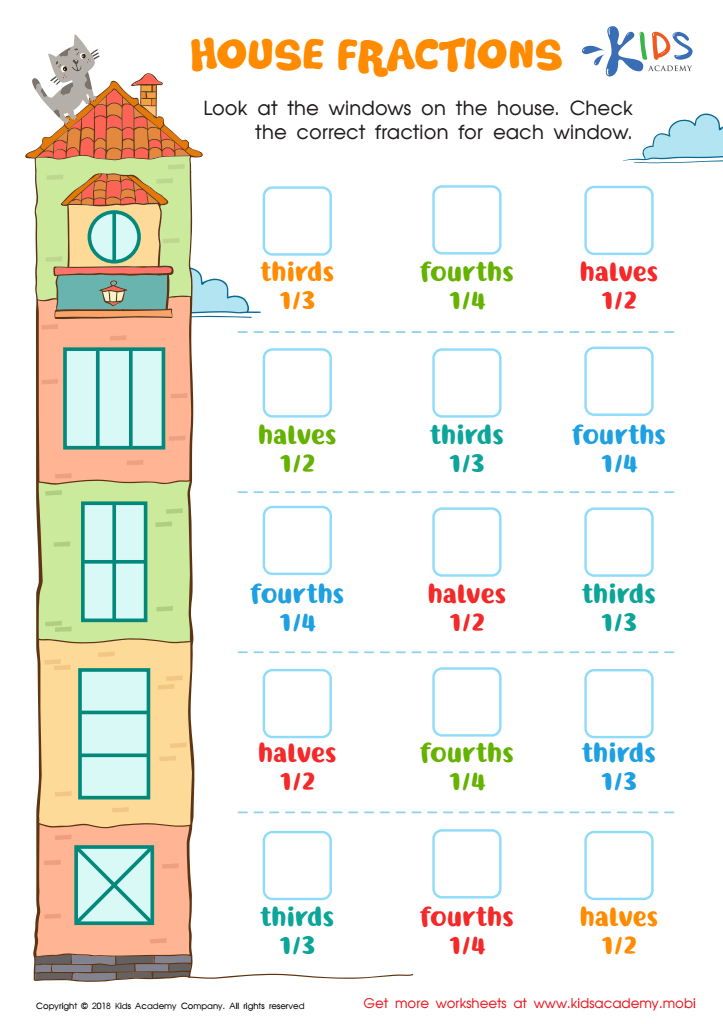
House Fractions Worksheet
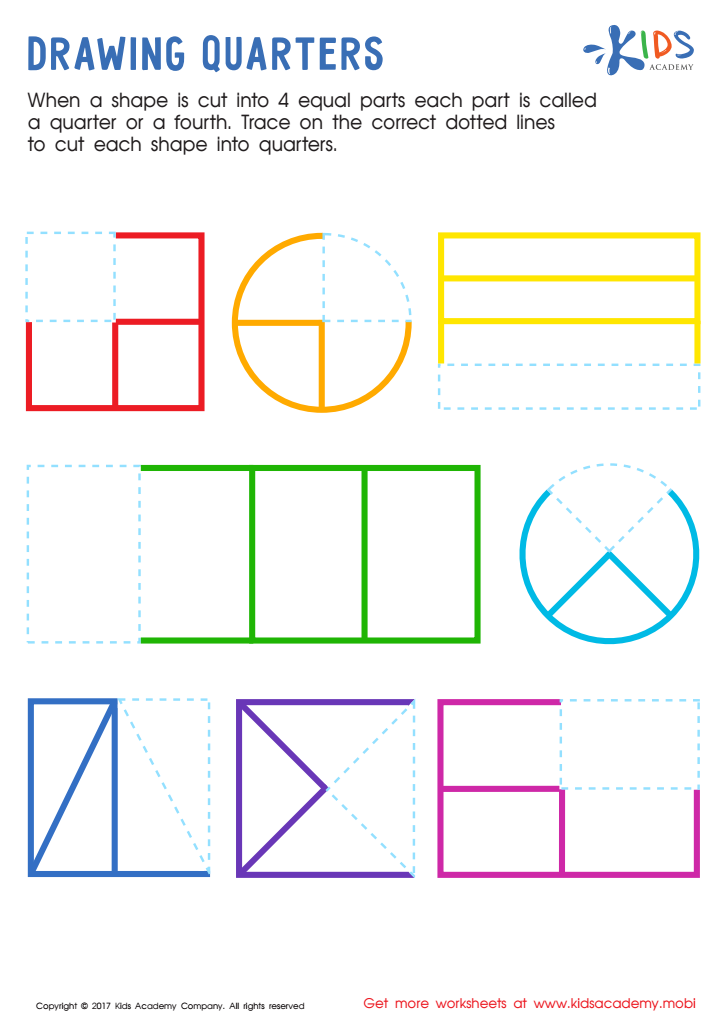
Drawing Quarters Worksheet
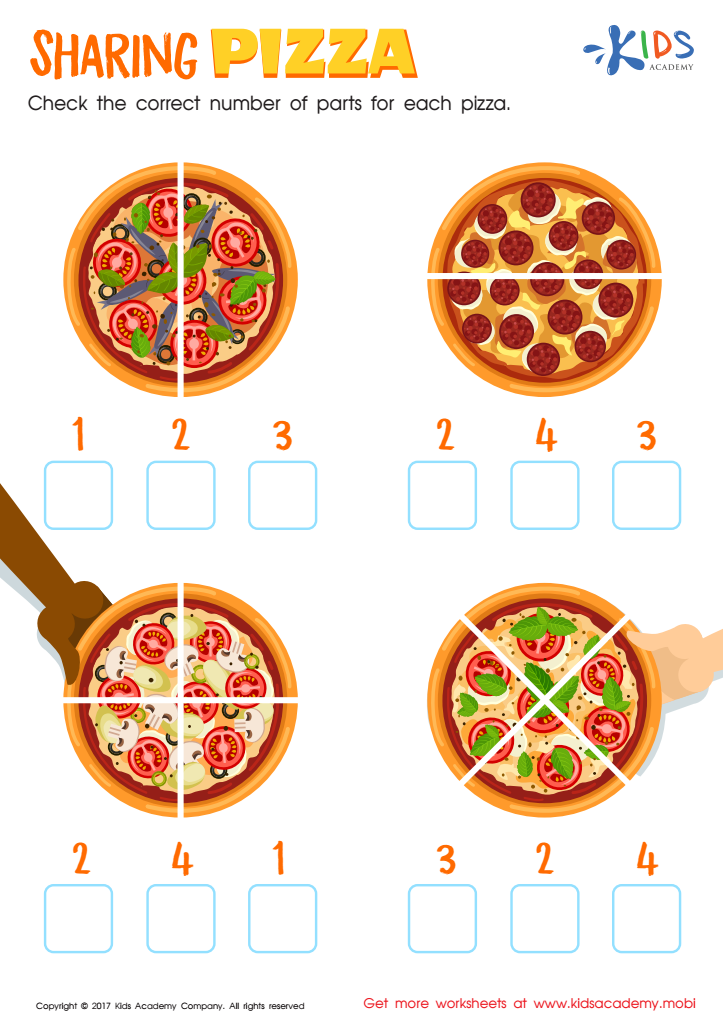
Sharing Pizza Worksheet
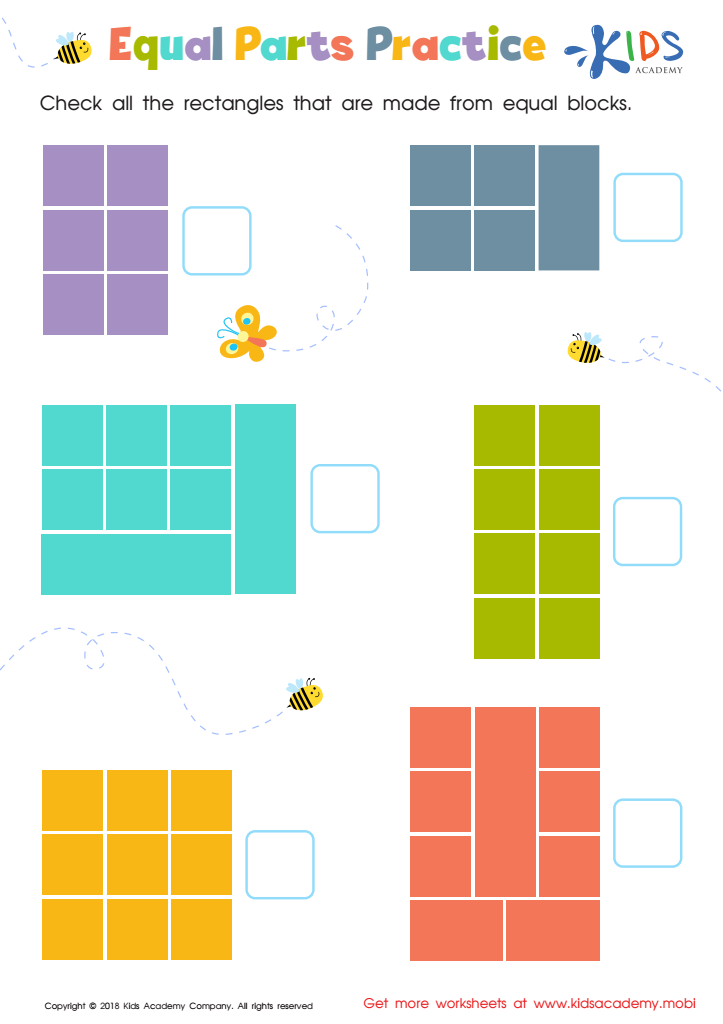
Equal Parts Practice Worksheet
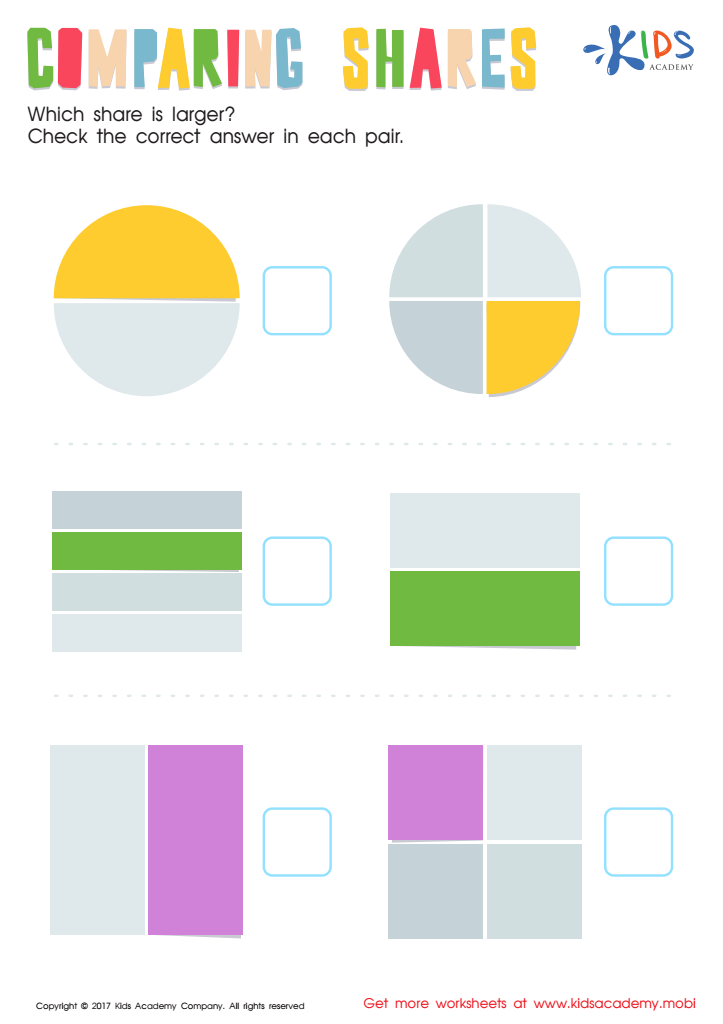
Comparing Shares Worksheet
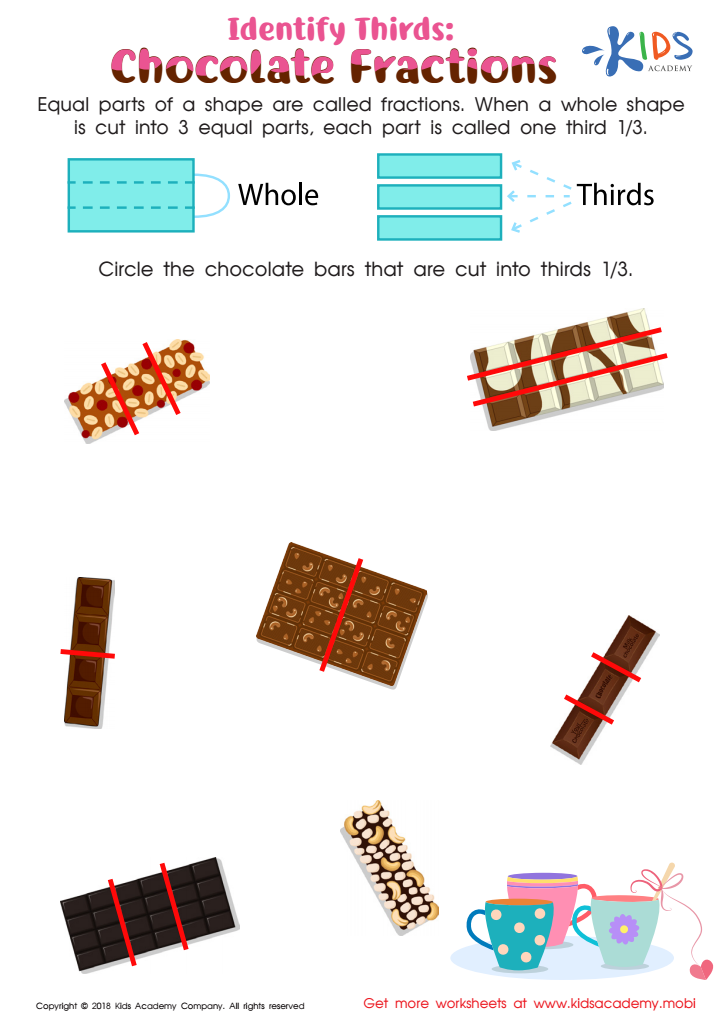
Identify Thirds: Chocolate Fractions Worksheet
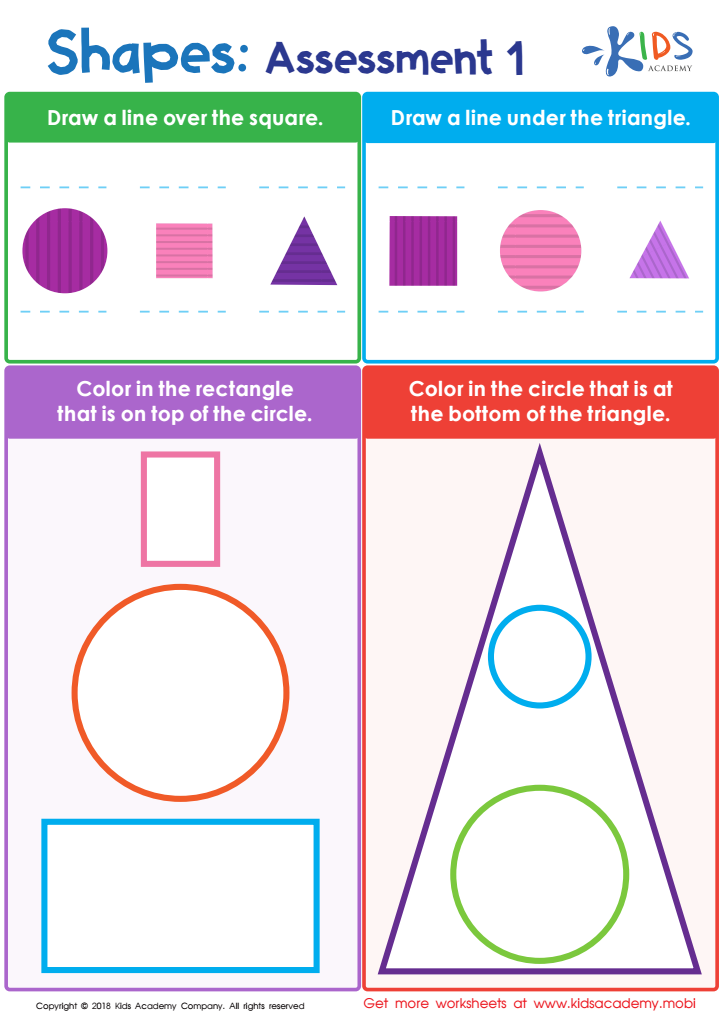
Shapes: Assessment 1 Worksheet
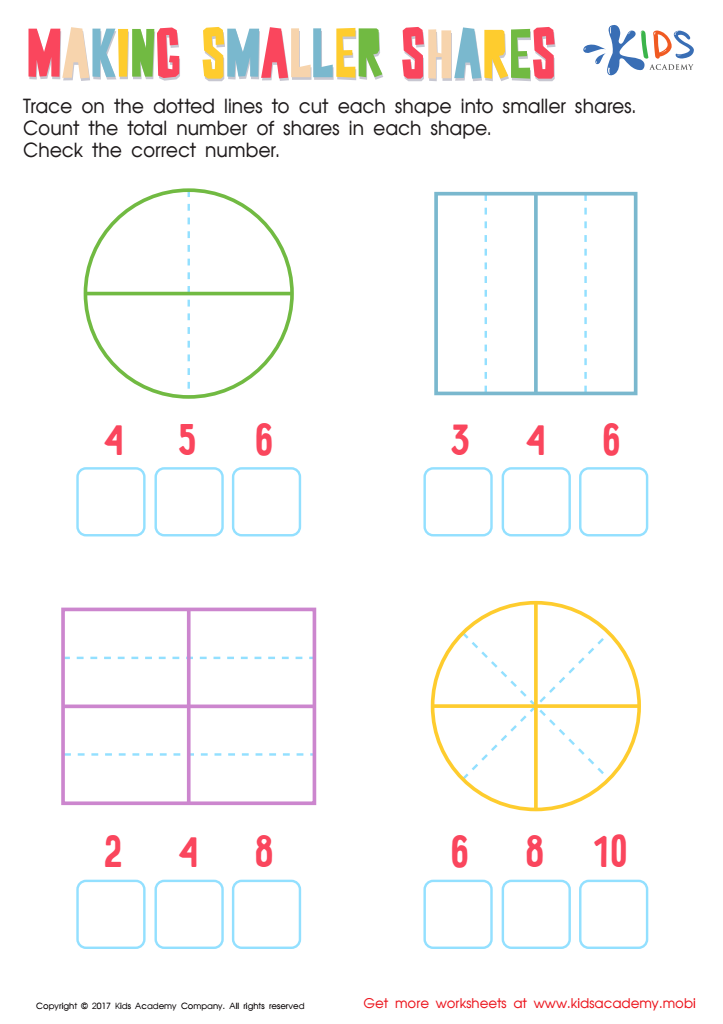
Making Smaller Shares Worksheet
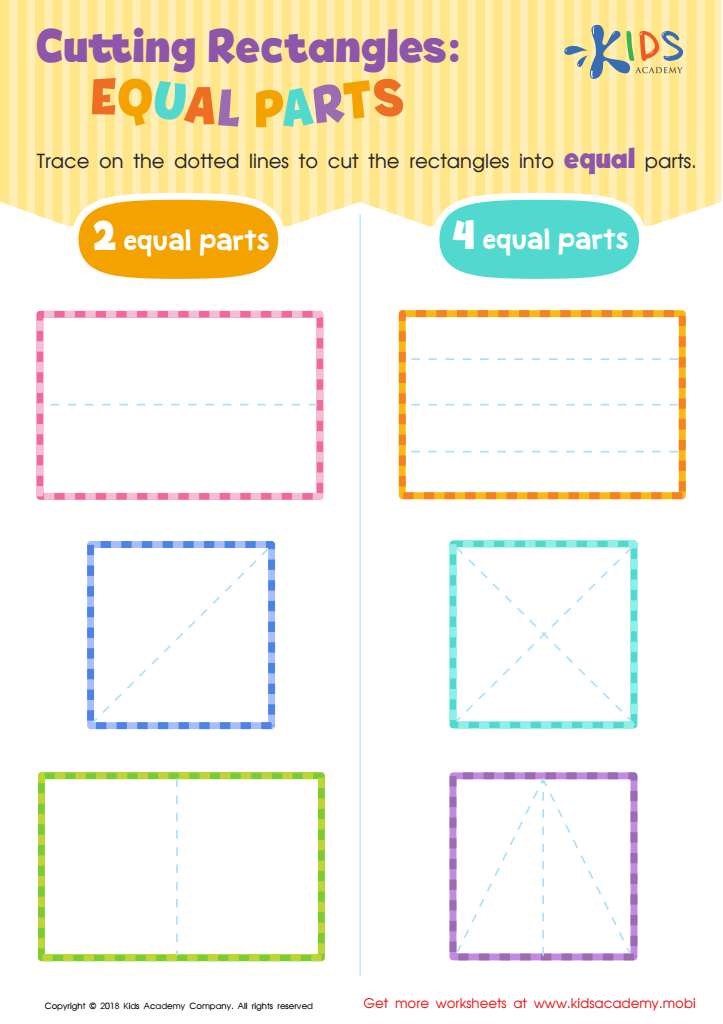
Cutting Rectangles: Equal Parts Worksheet








Understanding fractions and geometry is essential for children ages 4-7, as these mathematical concepts offer foundational skills that support future learning. For parents and teachers, fostering early familiarity with fractions and geometry nurtures essential cognitive and problem-solving abilities. At this age, students develop critical thinking skills that enhance their overall math proficiency.
Fractions, even in simple forms, introduce children to concepts of part-whole relationships. This understanding is vital for everyday tasks, such as sharing food or dividing objects, helping children grasp equitable distributions and enhancing their social interactions.
Geometry broadens children's spatial awareness, allowing them to recognize shapes, understand sizes, and grasp orientations. Observing and categorizing geometric forms in their environment reinforces their ability to visualize and manipulate objects cognitively, a skill integral to advanced mathematical learning.
Moreover, mastering these concepts early on fosters a positive attitude toward mathematics. It builds confidence and encourages curiosity, making them more enthusiastic learners. Therefore, investing time in teaching fractions and geometry not only bolsters a child's mathematical foundation but also equips them with skills they'll utilize throughout life, enhancing academic and personal success. In essence, understanding these fundamental concepts is key to unlocking a child's potential.








