Filters

27 filtered results

Clear all filters
Favorites
With answer key
Interactive

27 filtered results

Difficulty Level

Grade


Subject

    Check out this FREE Trial Lesson on Rhyming Words for age 4-7!

    Poem Text Features

    Favorites
    With answer key
    Interactive
    • 4-7
    • Rhyming Words
    Beginning Sounds Match-up Printable
    Beginning Sounds Match-up Printable

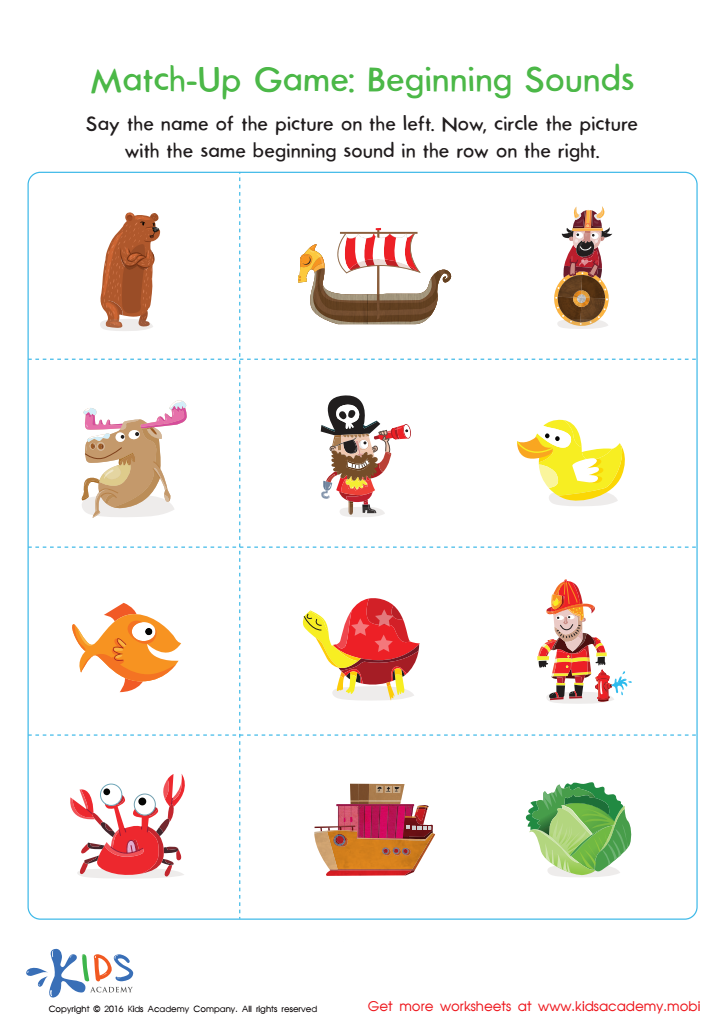
    Match–Up Game: Beginning Sounds Worksheet

    Start today with this beginning sounds match-up printable! Teach your child to solve problems mentally with this beginning sounds match-up printable. They'll learn to categorize pictures based on phonics rules, developing mental stamina and focus. It's an important step for recognizing sounds and letters in print, building a foundation for reading and spelling. Start today and take your child's skills to the next level!
    Match–Up Game: Beginning Sounds Worksheet
    Worksheet
    Rhyming Words PDF Worksheets, Pen
    Rhyming Words PDF Worksheets, Pen

    Pen Rhyming Words Worksheet

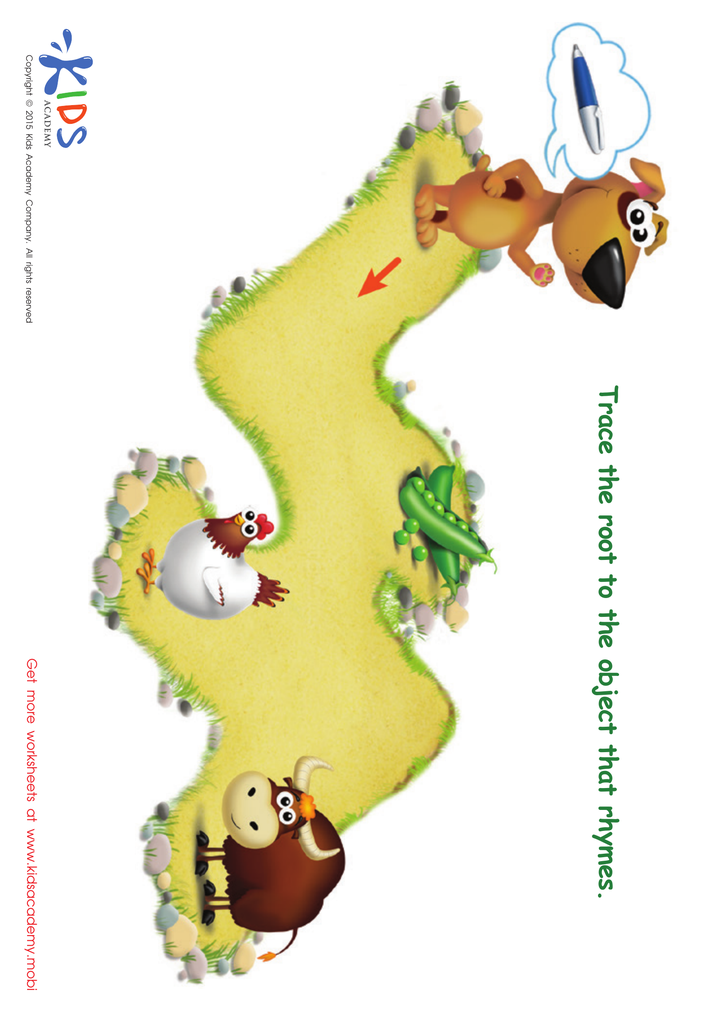
    Check out the cute pup, pondering away. He's thinking of a root word - no suffix or prefix. Now check the hen, green beans, and the cow. Can you find the word that rhymes with pen? Draw a line from the root word to its rhyme for this simple yet beneficial worksheet. It helps young learners practice hearing and recognizing rhymes.
    Pen Rhyming Words Worksheet
    Worksheet
    Finish Rhyming Poem Worksheet

    Finish Rhyming Poem Worksheet

    Finish Rhyming Poem Worksheet

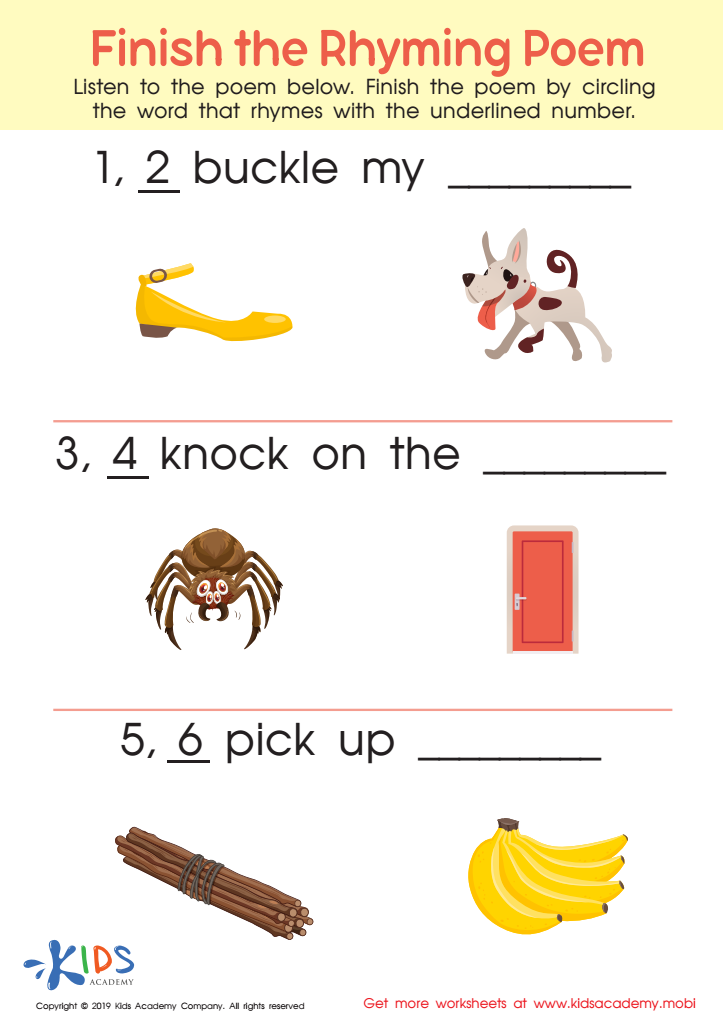
    Poems are a great way to express emotions and spark imagination. Does your child enjoy poetry and even have their own creations? If so, they'll love this worksheet. It's a great way to develop their rhyming skills. Challenge them to find and circle the words that rhyme with the ones underlined.
    Finish Rhyming Poem Worksheet
    Worksheet


    Rhyming words play a crucial role in the early literacy development of children aged 4-7. Introducing rhymes during these formative years enhances phonemic awareness, a foundational skill for reading. When children recognize and produce rhyming words, they develop an ability to hear and manipulate sounds, which is essential for decoding words later on.

    Furthermore, rhymes make learning fun and engaging. They capture children's attention through melodies and rhythms, reinforcing their memory. This playful approach helps to build a positive attitude towards reading and learning. Using rhymes in songs, poems, and stories also enriches vocabulary development, exposing children to new words in a memorable context.

    Parents and teachers should also consider that the social aspect of learning rhymes fosters communication skills and promotes cooperative play among peers. Singing and reciting rhymes together encourages bonding and creates a joyful learning environment.

    Additionally, repeated exposure to rhyming enhances spelling skills, as children begin to recognize patterns in words. By incorporating rhyming activities into daily routines, parents and teachers can support a child's readiness for reading, paving the way for academic success and a lifelong love for literature.