
Lowercase identification Alphabet Worksheets for Ages 4-8
5 filtered results
Difficulty Level
Grade
Age
-
From - To
Subject
Activity
Standards
Explore our engaging and educational Lowercase Identification Alphabet Worksheets designed for children ages 4-8! These printable worksheets are tailored to help young learners recognize and identify lowercase letters through fun activities. With vibrant illustrations and interactive exercises, kids will develop essential literacy skills while enhancing their letter recognition. Each worksheet is designed to foster creativity and encourage independent learning, making it perfect for use at home or in the classroom. Equip your child with the tools they need to succeed in reading and writing as they embark on their alphabet journey. Start their learning adventure today with our colorful and engaging resources!
Favorites
With answer key
Interactive
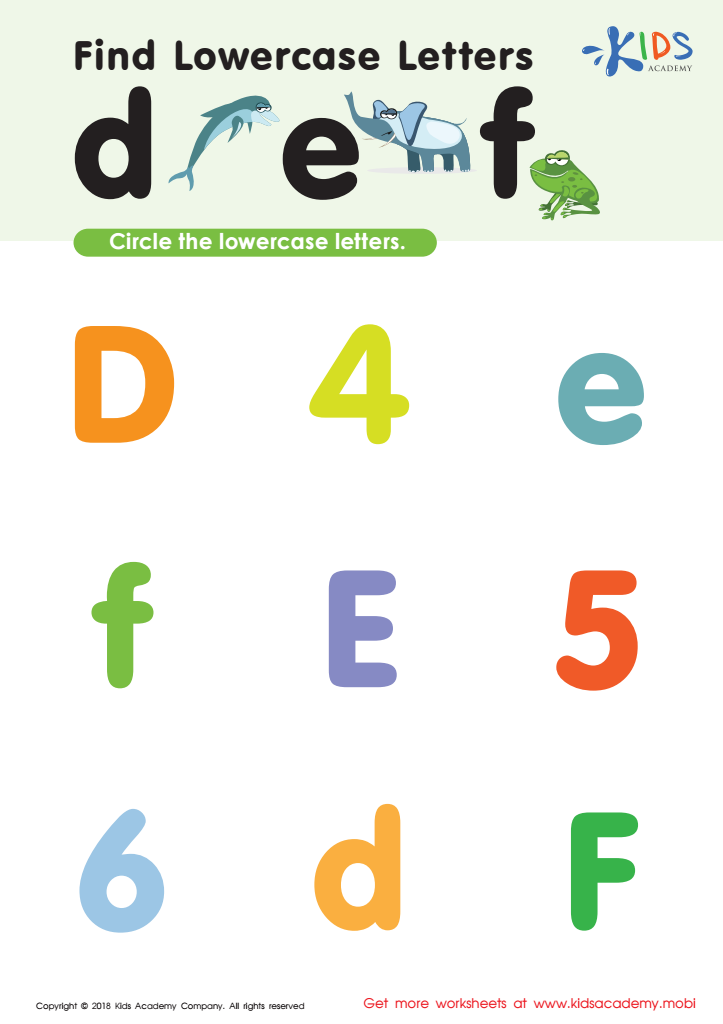
Find Lowercase Letters d e f Worksheet
Engage your child's brain with this fun, colorful worksheet. They'll identify and circle lowercase letters among other numbers and uppercase letters in bright colors. This will keep their attention as they learn, and can be downloaded in PDF form!
 Assign to My Students
Find Lowercase Letters d e f Worksheet
Worksheet
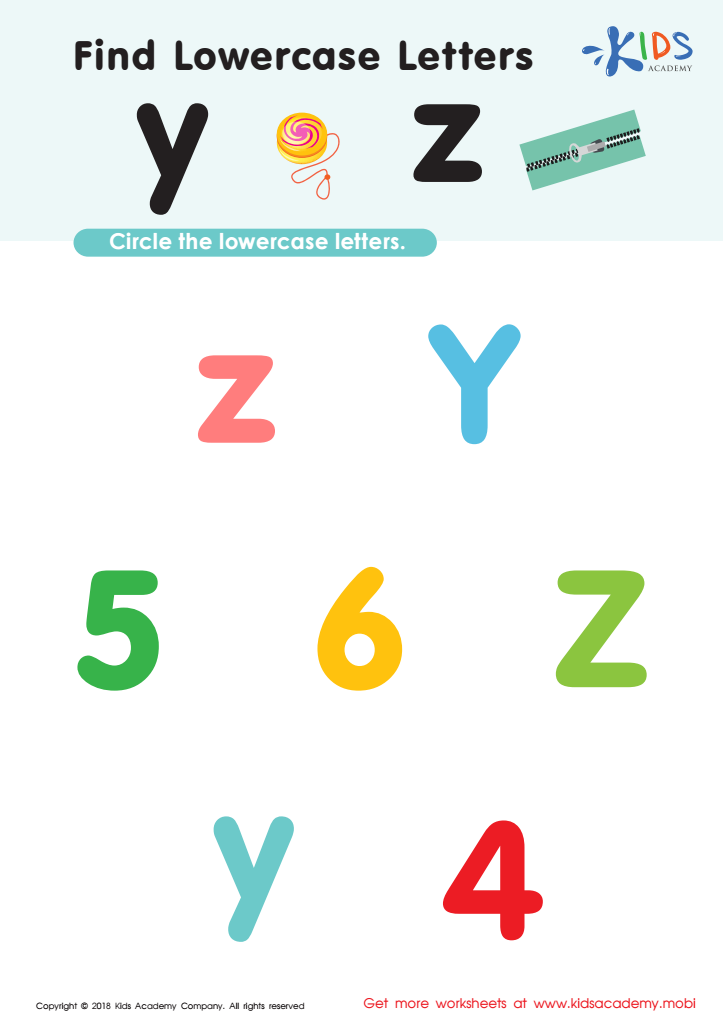
Find Lowercase Letters y z Worksheet
Help your kid learn the alphabet. Before they can move on to words and reading, they must first know the lower and uppercase letters. Show them how to find the letters y and z in this worksheet, which is filled with uppercase letters and numbers. Together, find and circle them.
Find Lowercase Letters y z Worksheet
Worksheet
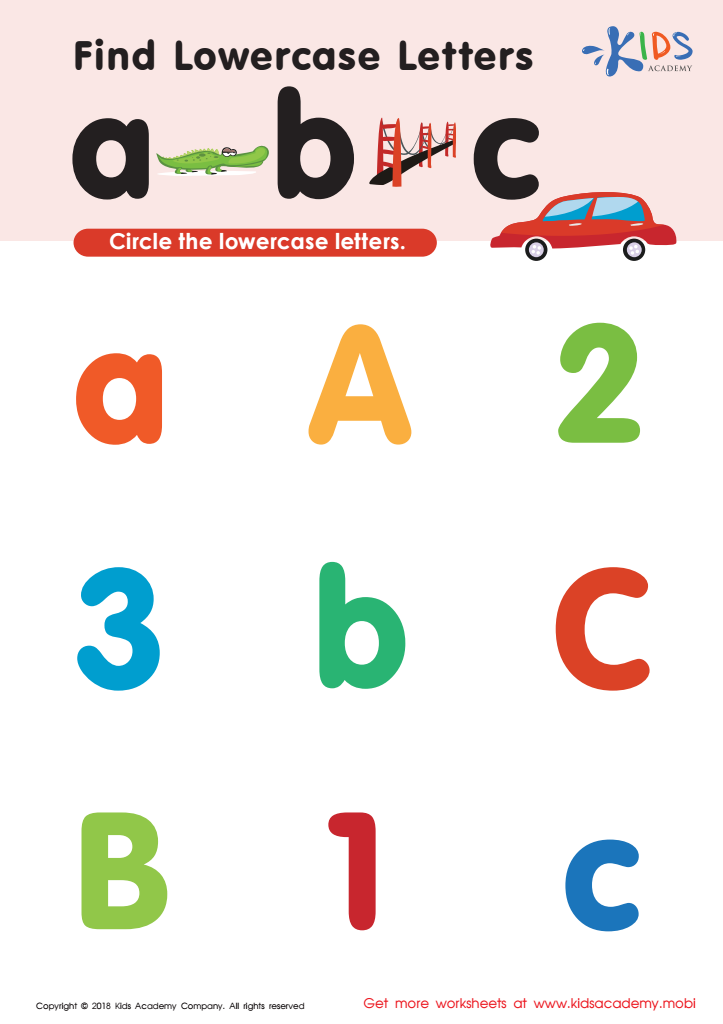
Find lowercase letters a b c Worksheet
Help your child identify lowercase letters with this worksheet. Carefully look at each letter and have your child circle the lowercase ones. This exercise is vital in helping them understand the alphabet and the difference between lower and uppercase letters.
Find lowercase letters a b c Worksheet
Worksheet
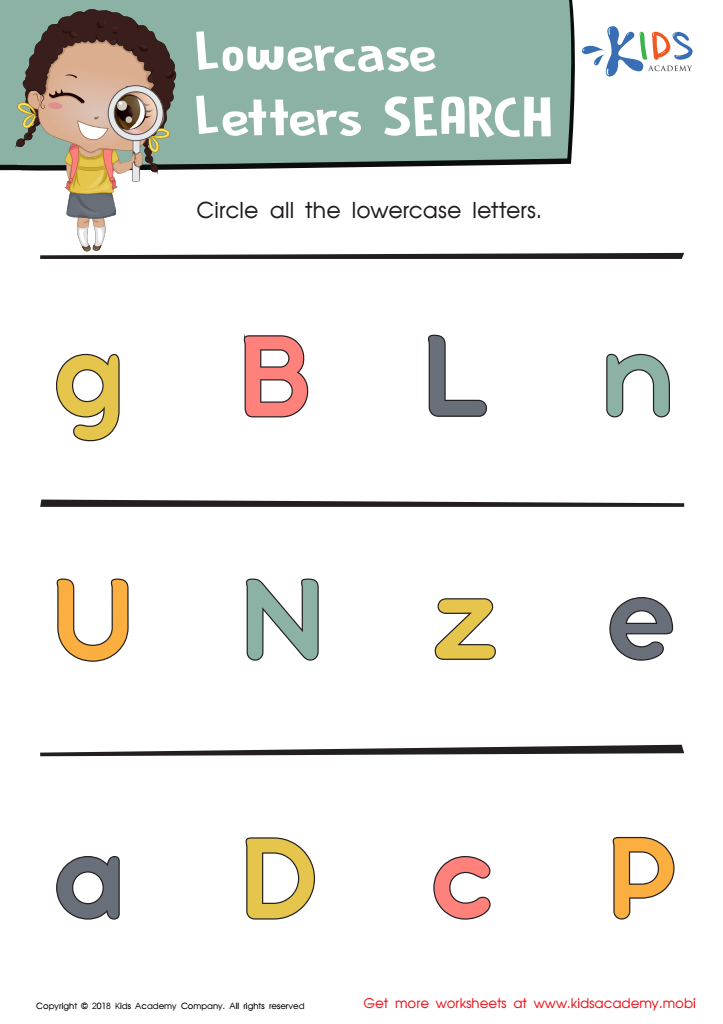
Lowercase Letters Search: Assessment Worksheet
Circle all the lowercase letters in this worksheet. Identify them among a mix of uppercase and lowercase letters. Your child will have fun with this exercise thanks to its bright primary colors. Enjoyment and learning go hand-in-hand!
Lowercase Letters Search: Assessment Worksheet
Worksheet
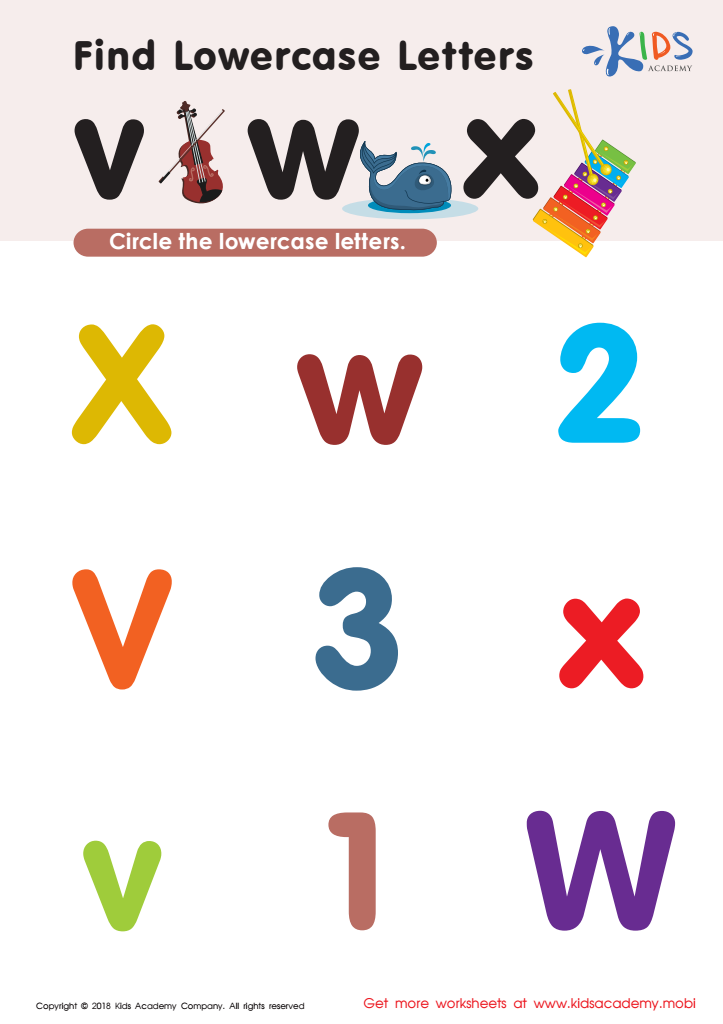
Find Lowercase Letters v w x Worksheet
If your child doesn't know the alphabet, get them this helpful worksheet. It's an easy exercise to build their understanding of the alphabet and lowercase letters. Find the letters v, w, and x among other uppercase letters and numbers in the downloadable PDF.
Find Lowercase Letters v w x Worksheet
Worksheet
Join Kids Academy for Free
Who is primarily going to use this learning content?








Parents and teachers should prioritize lowercase alphabet identification for children aged 4-8 because it serves as a foundational skill in literacy development. Mastery of lowercase letters is crucial, as these letters are predominant in reading and writing. Unlike uppercase letters, which are often only used at the beginning of sentences or for proper nouns, lowercase letters appear throughout texts, making their recognition vital for fluency and comprehension.
Understanding lowercase letters helps children decode words more easily, enhancing their reading skills. This recognition is closely linked to spelling and writing, as children need to differentiate between letter cases to express themselves properly. Furthermore, familiarizing children with lowercase letters fosters their confidence when they encounter print in various contexts, such as books, menus, and signs.
Engagement with lowercase alphabet activities stimulates intellectual curiosity and encourages play-based learning. When parents and teachers incorporate fun games and interactive practices, it nurtures a positive attitude toward reading and writing. Overall, devotion to lowercase identification is essential for building literacy skills, laying the groundwork for future academic success, and promoting a lifelong love for reading. By focusing on this crucial aspect, adults can immensely contribute to a child’s educational journey.







