Counting skills Geometry Worksheets for Ages 4-8
15 filtered results
-
From - To
Discover our engaging Counting Skills Geometry Worksheets designed specifically for children aged 4-8! These fun and interactive worksheets combine essential counting skills with foundational geometry concepts, helping young learners develop a strong mathematical foundation. Featuring colorful illustrations and age-appropriate activities, children will enjoy practicing counting shapes, identifying geometric patterns, and enhancing their spatial awareness. Our worksheets are perfect for both classroom use and at-home learning, making them a valuable resource for teachers and parents alike. Foster a love for math and geometry in your child while improving their counting abilities with our expertly crafted worksheets! Get started today!
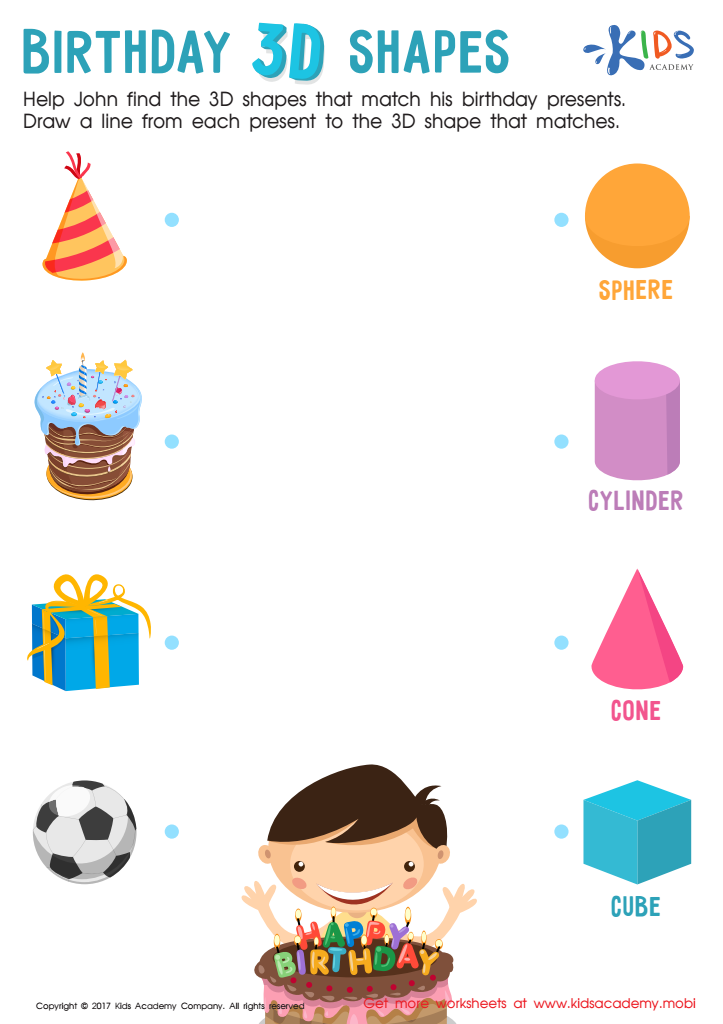
Birthday 3D Shapes Worksheet
 Assign to My Students











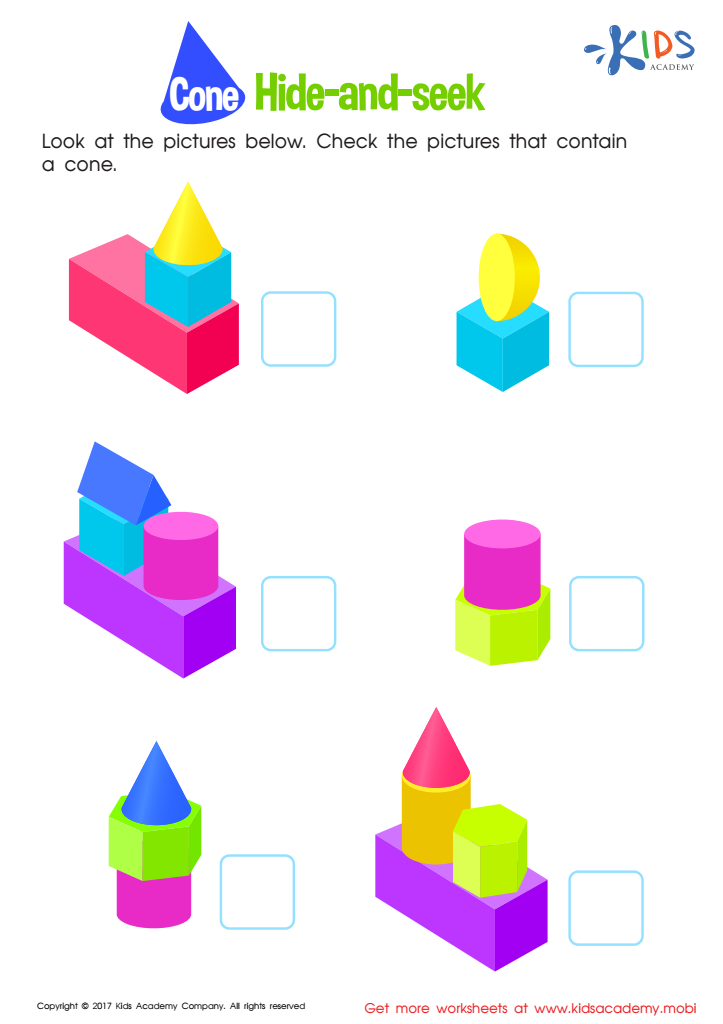
Cone Hide-and-Seek Worksheet
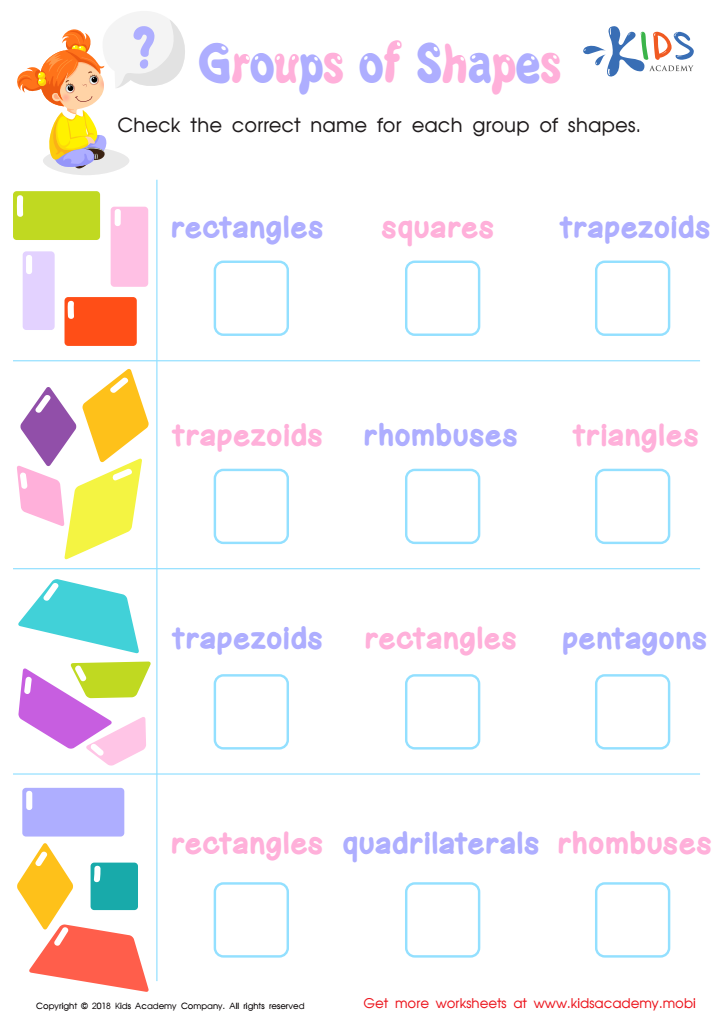
Groups of Shapes Worksheet
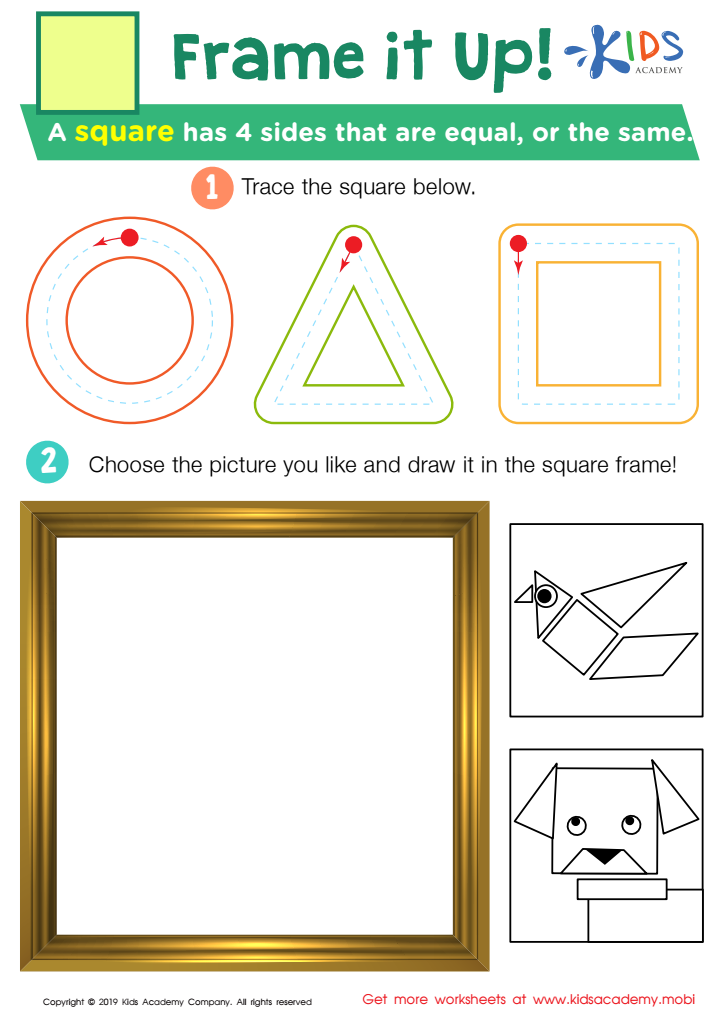
Frame it Up Worksheet
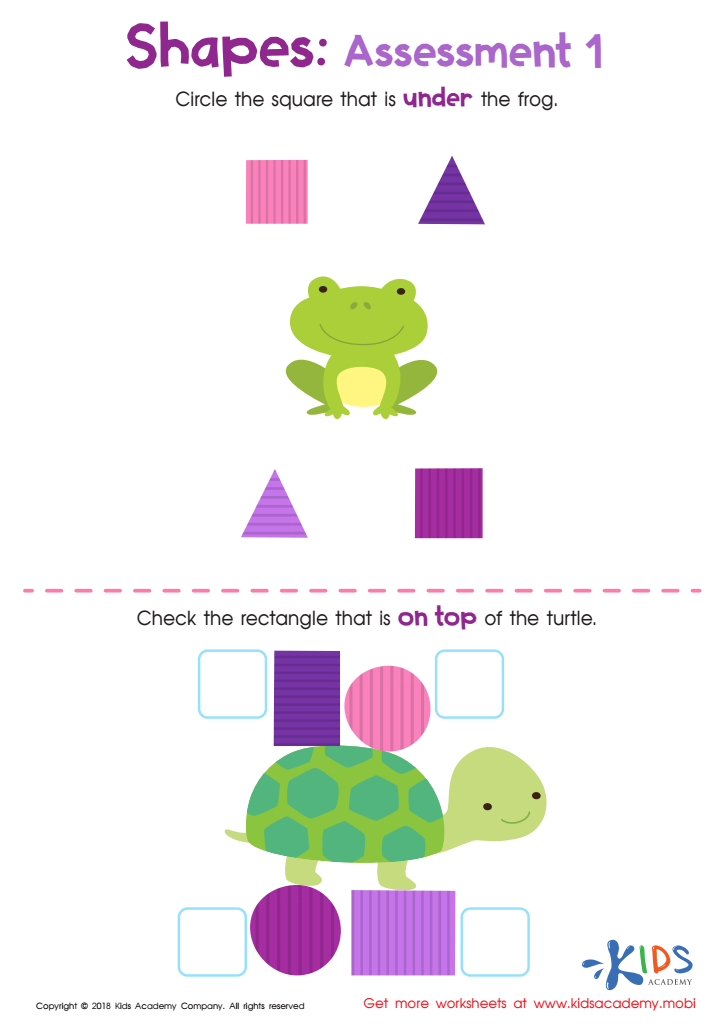
Geometry – Assessment 1 Worksheet
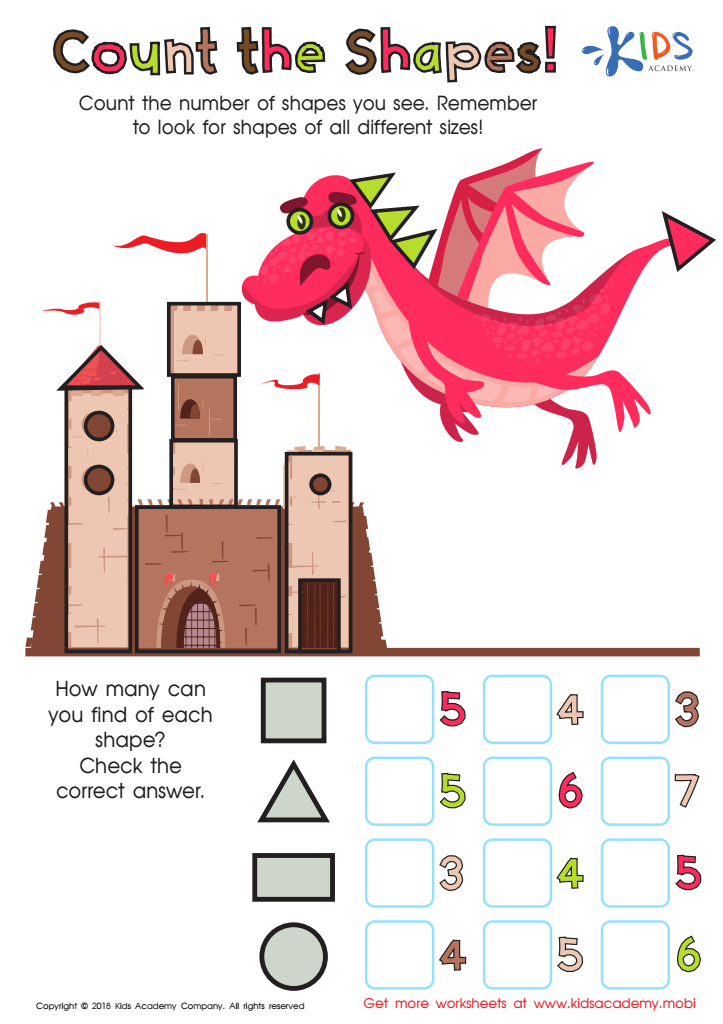
Count the Shapes Worksheet
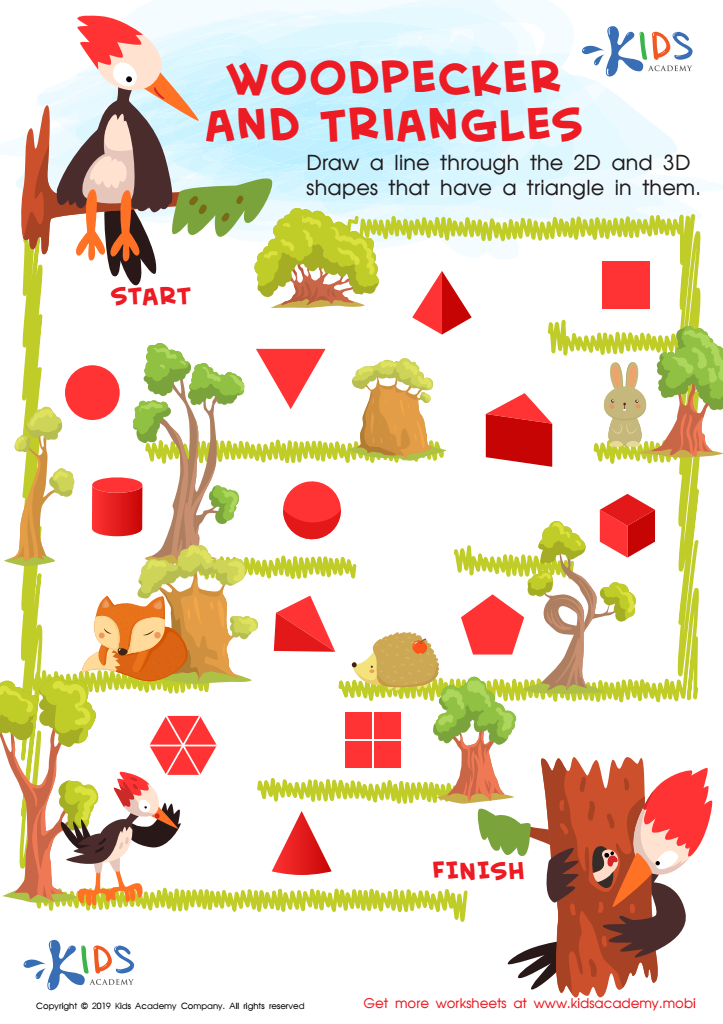
Woodpecker and Triangles Worksheet
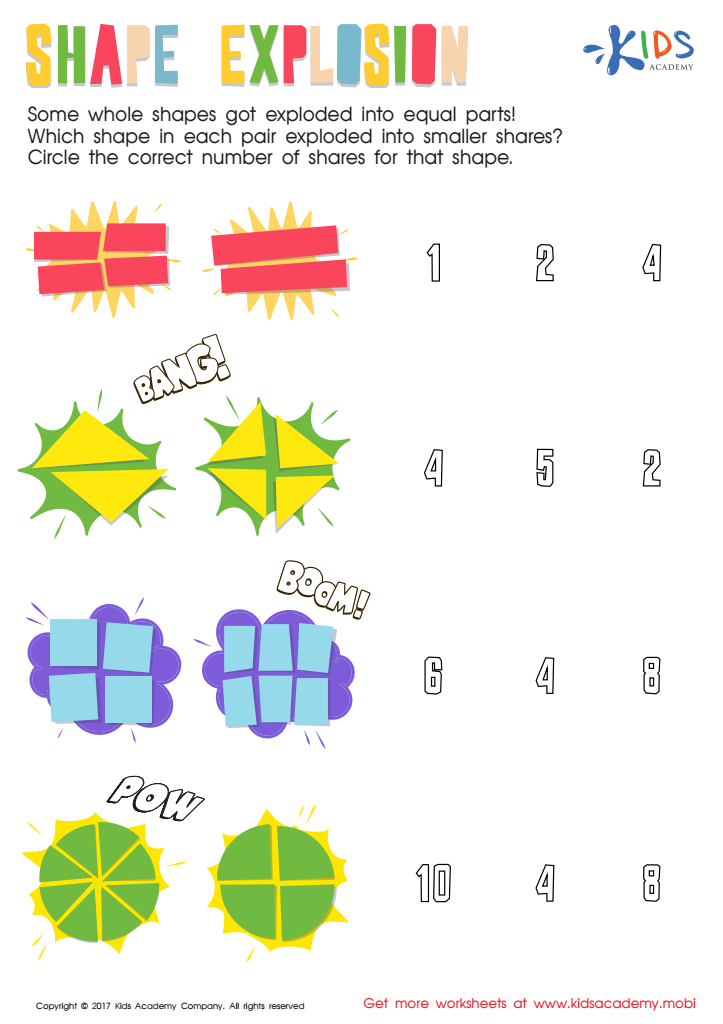
Shape Explosion Worksheet
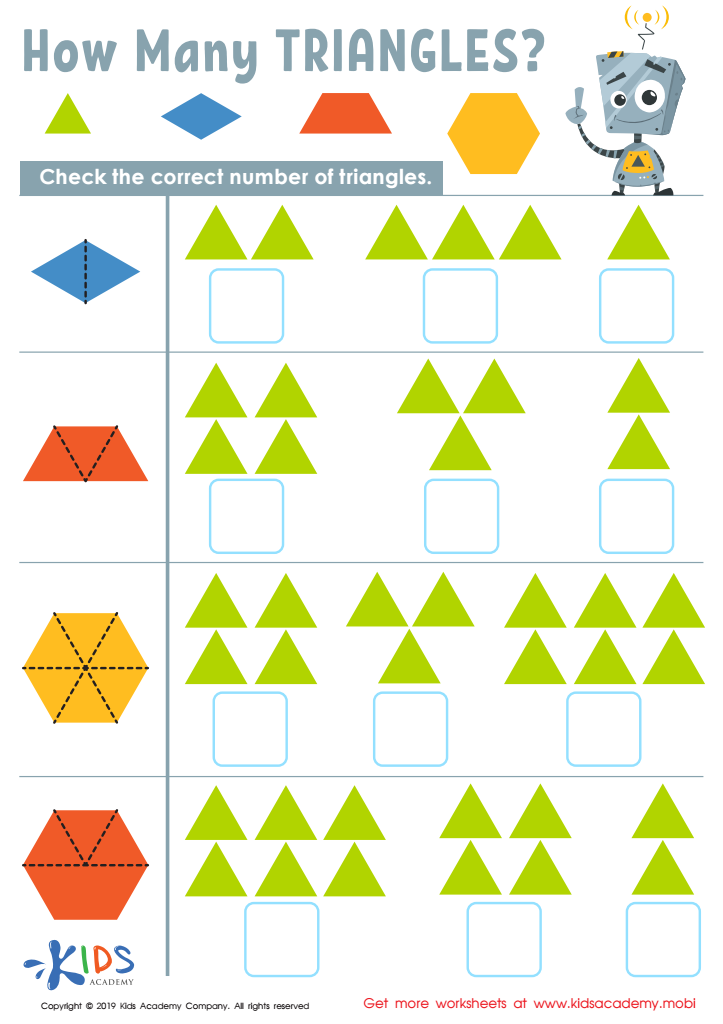
How Many Triangles Worksheet
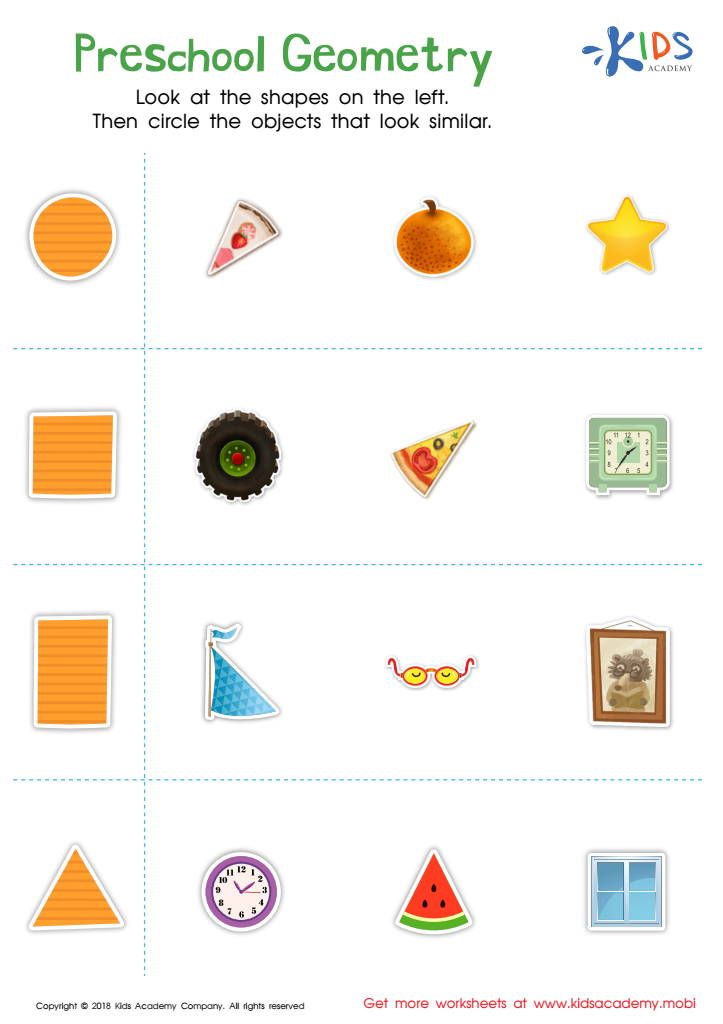
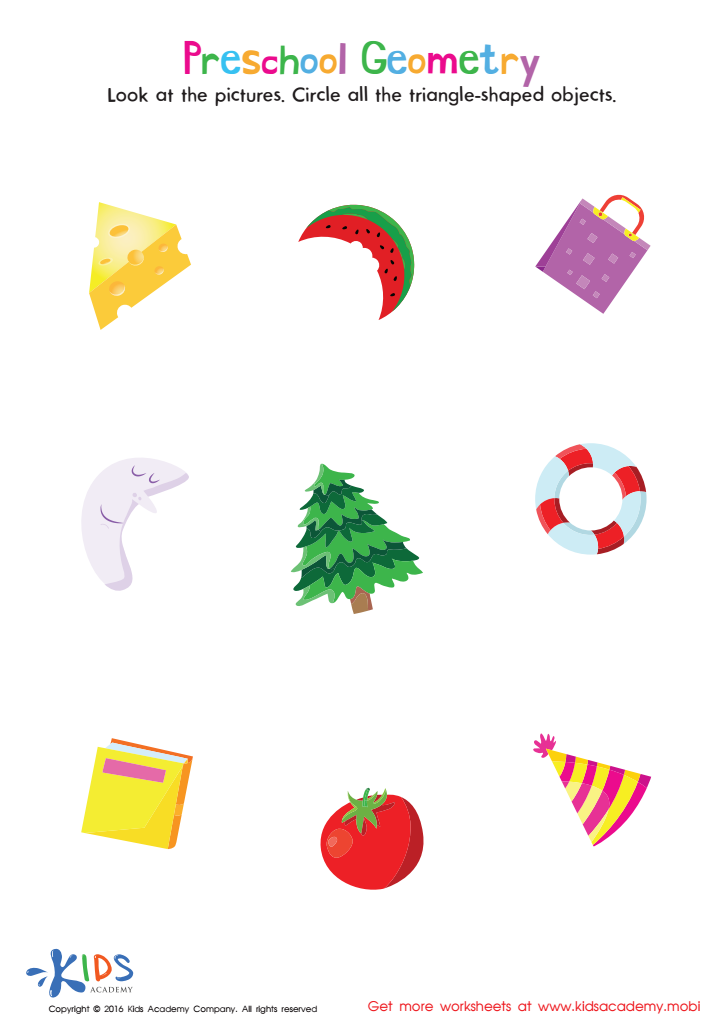
Preschool Geometry Worksheet
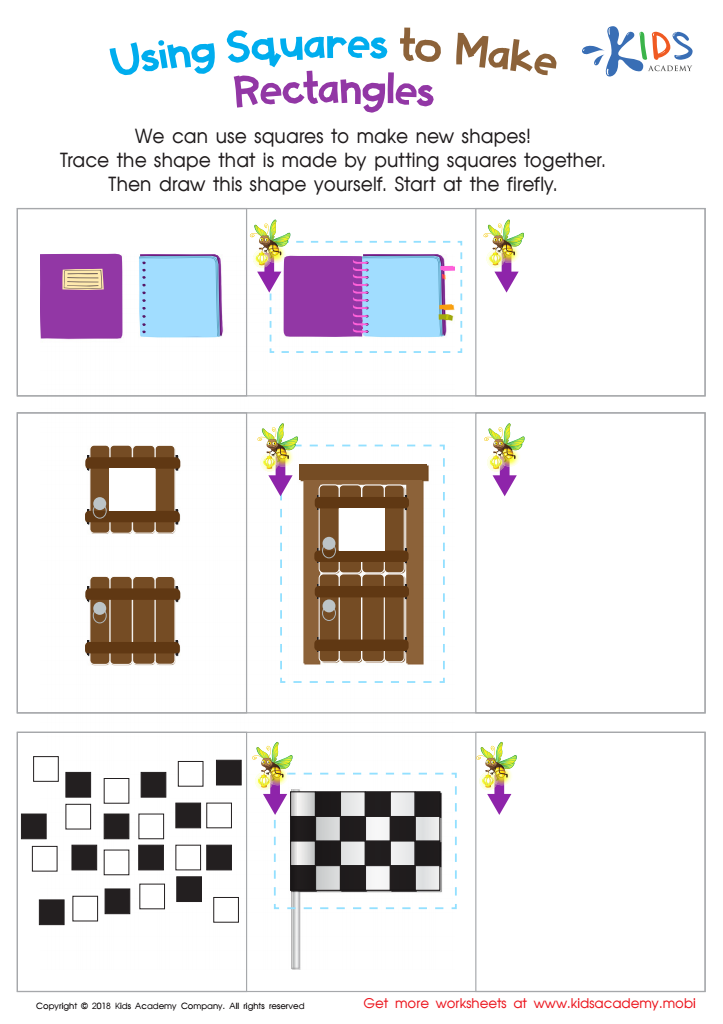
Using Squares to Make Rectangles Worksheet
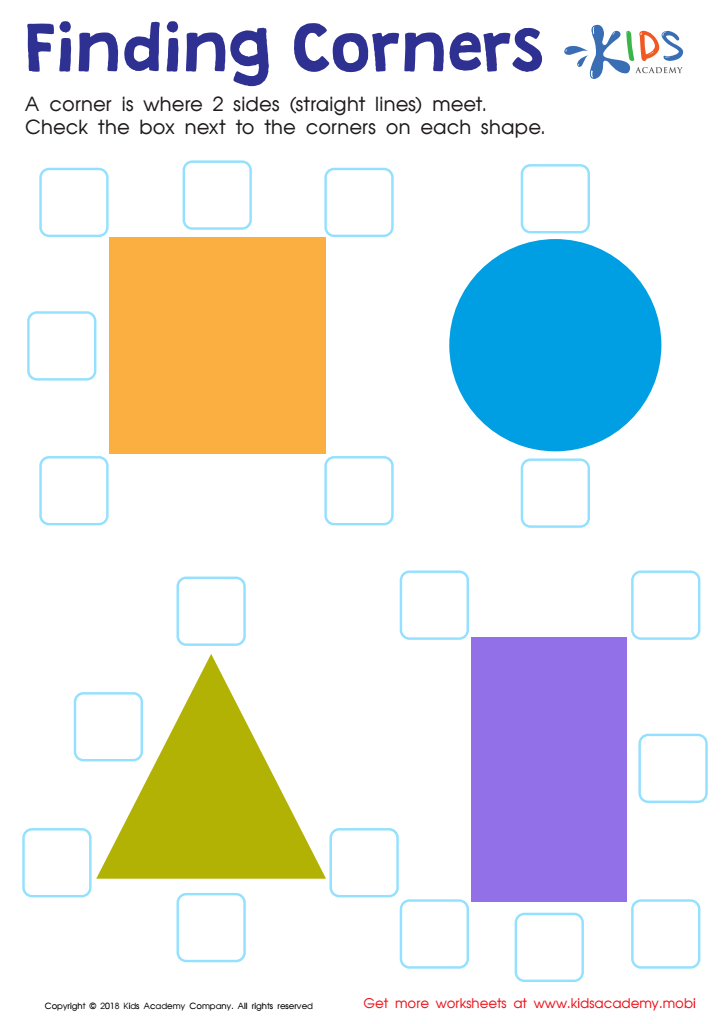
Finding Corners Worksheet
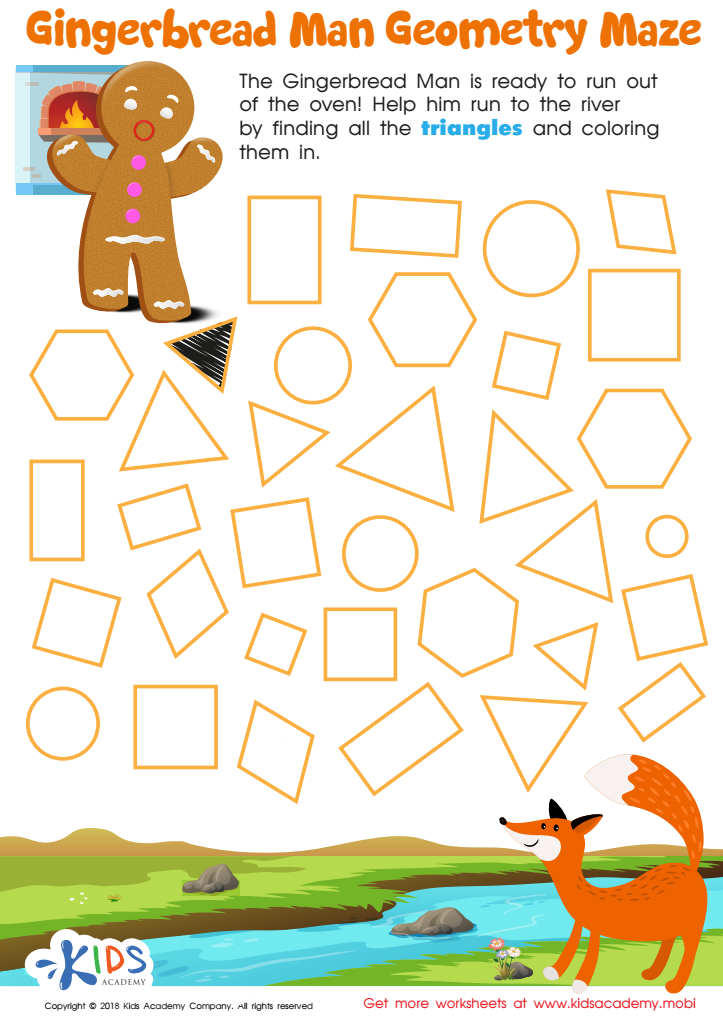
Gingerbread Man Geometry Maze Worksheet
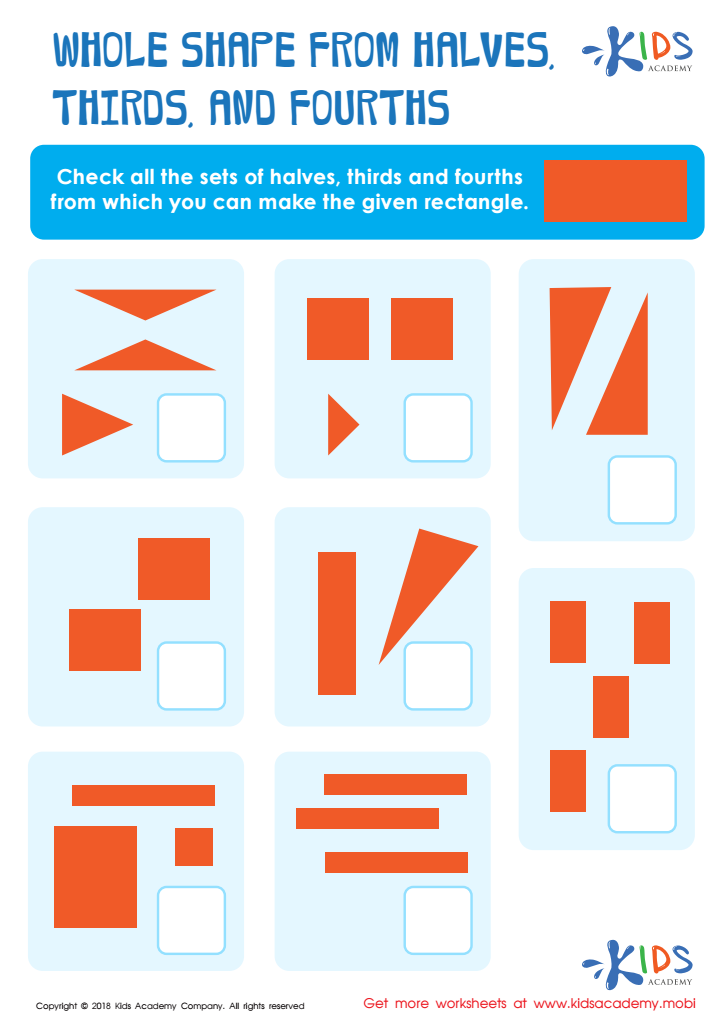
Whole Shape from Halves, Thirds and Fourths Worksheet








Counting skills and geometry are foundational elements of early mathematics education for children aged 4-8. First and foremost, developing strong counting skills is crucial because they provide the basis for understanding numerical concepts, promoting logical reasoning, and building problem-solving abilities. When children learn to count, they not only recognize numbers but also learn about patterns, sequencing, and the relationship between numbers. These skills encourage mathematical fluency, essential for later academic success.
Geometry is equally important, as it helps children understand shapes, spatial relationships, and measurements. By exploring various geometric concepts, children begin to make sense of the world around them. They learn to identify shapes in their environment, understand how to classify objects, and even develop crucial skills for visual problem-solving. Integrating counting skills with geometry fosters a holistic approach to learning, enhancing cognitive development and critical thinking.
Parents and teachers should care about these skills because they are instrumental in setting a positive foundation for lifelong learning. Engaging children in playful activities, such as counting games and shape-hunting, can ignite their interest in mathematics, making learning enjoyable and intuitive while preparing them for future academic challenges. Early intervention in these crucial skills paves the way for better performance in later grades.








