Critical Thinking Geometry Worksheets for Ages 4-8
5 filtered results
-
From - To
Ignite your child's curiosity and enhance their problem-solving skills with our Critical Thinking Geometry Worksheets for ages 4-8. Specially crafted to nurture young minds, these engaging worksheets blend fun and learning through shapes, patterns, and spatial recognition exercises. Perfect for early learners, each activity encourages independent thinking and boosts confidence in geometry concepts. Designed to be both challenging and enjoyable, our worksheets ensure your little one grasps foundational math skills while enjoying the learning process. Empower your young thinker today, and watch them thrive in a world of shapes and symmetry!
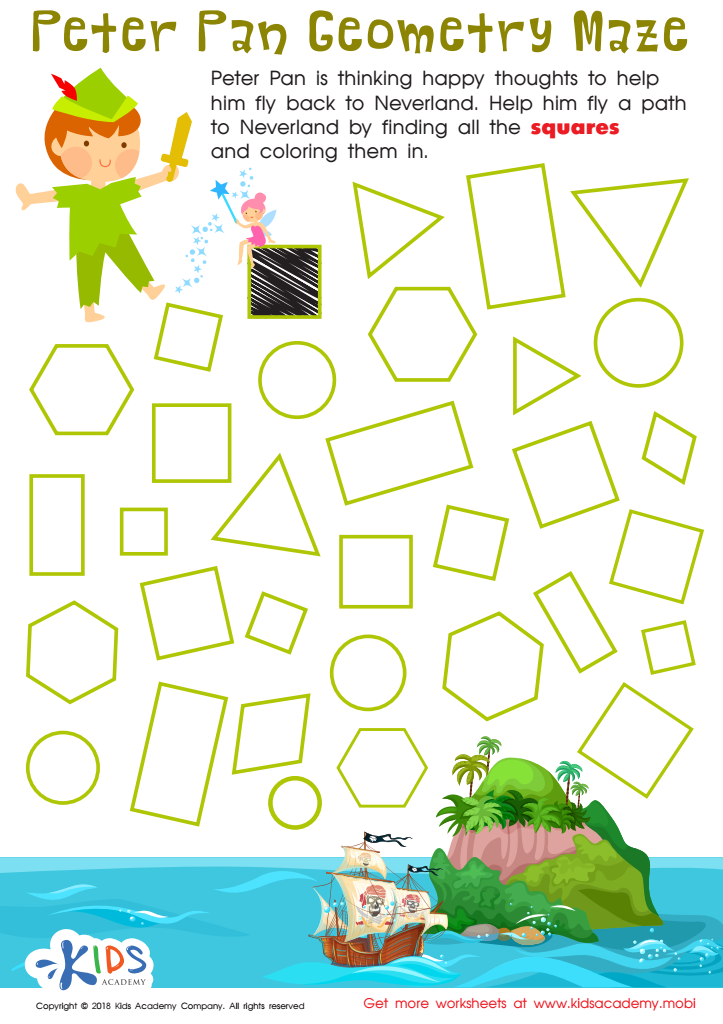
Peter Pan Worksheet
 Assign to My Students











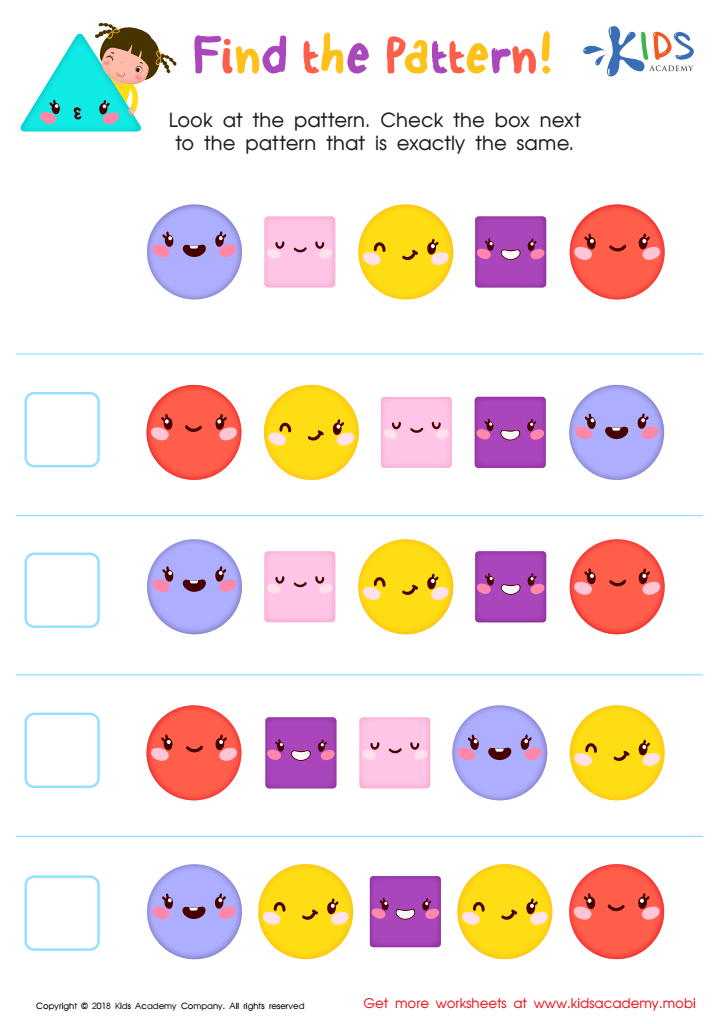
Find the Pattern Worksheet
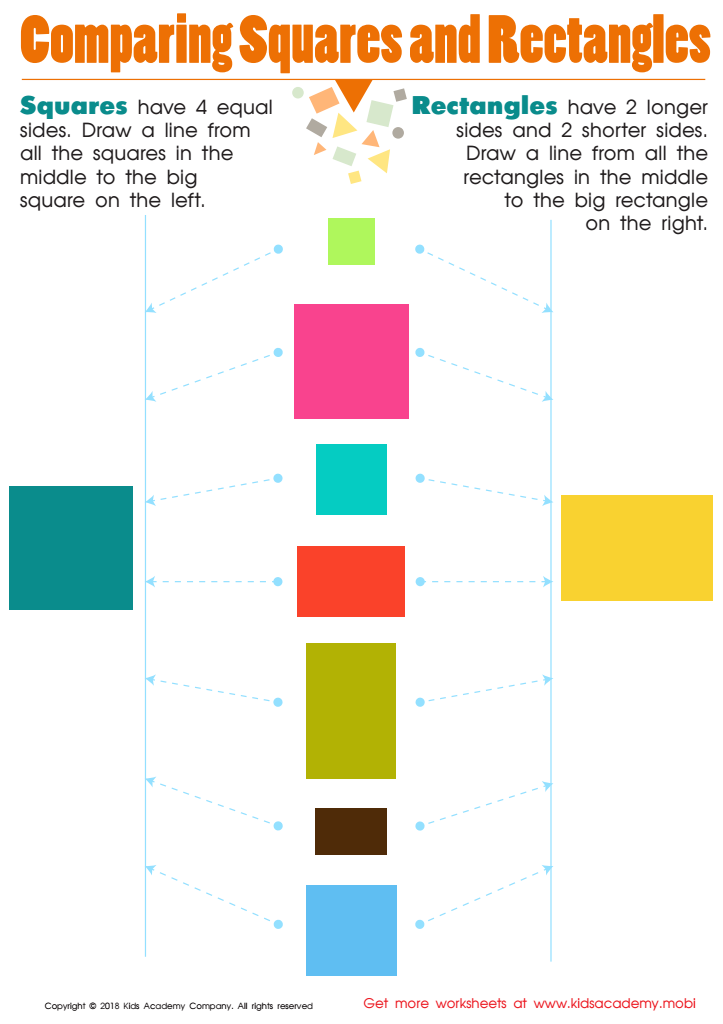
Comparing Squares Rectangles Worksheet
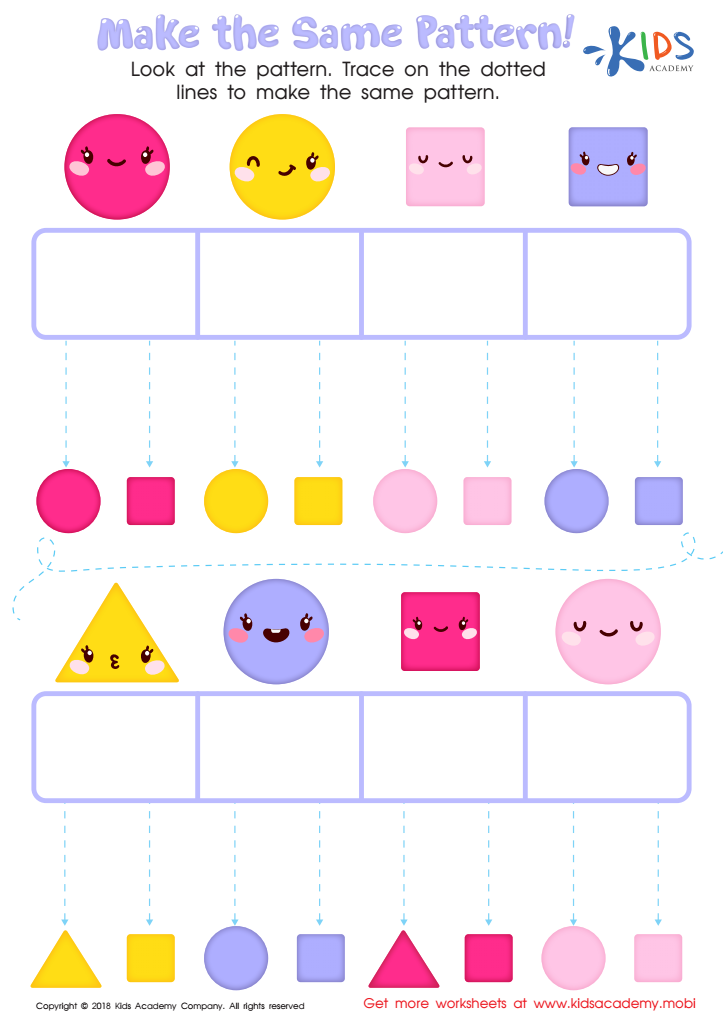
Make the Same Pattern Worksheet
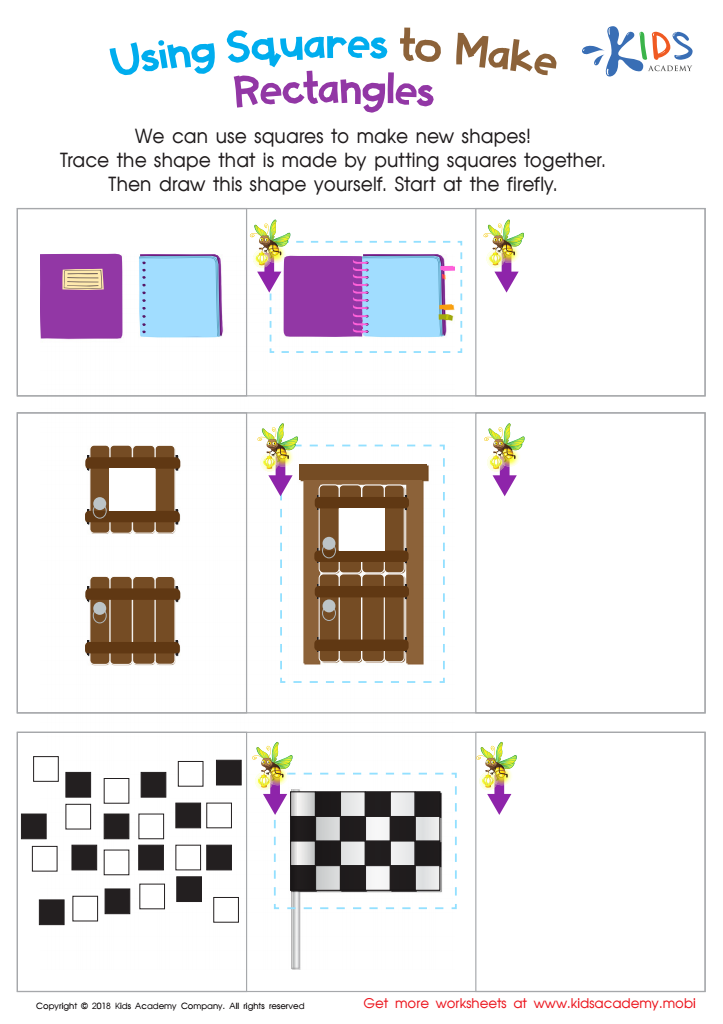
Using Squares to Make Rectangles Worksheet








Critical thinking in geometry for ages 4-8 is crucial as it fosters essential cognitive skills foundational for children's future academic success and everyday problem-solving. Engaging young minds in geometry helps develop spatial awareness, which is the ability to understand, reason, and remember the spatial relations among objects or space. This skill is not only crucial in advanced math and sciences but also in various everyday activities like reading maps, assembling puzzles, or organizing a space efficiently.
Additionally, introducing geometry to young learners enhances their critical thinking abilities. When children interact with geometric shapes, measure lengths, or observe patterns, they're prompted to analyze, reflect, and make decisions based on their observations. These activities teach children to approach problems methodically, evaluate their reasoning, and learn from mistakes—traits that are invaluable throughout life.
Moreover, early geometry education is linked to improved fine motor skills, as children often draw shapes, build structures, or manipulate objects. These activities are vital in improving hand-eye coordination and dexterity, impacting their ability to write and perform everyday tasks.
By prioritizing geometry and critical thinking in early education, parents and teachers lay a robust foundation for lifelong learning, nurturing curious, confident, and capable individuals. This early investment pays dividends in broadening their intellectual and practical capabilities, preparing them for future challenges creatively and efficiently.








