Check out this FREE Trial Lesson on Math for age 4-8!

Exactly the Same, or Not

Favorites
With answer key
Interactive
  • 4-8
  • Understanding fractions
  • Math
Making Smaller Shares Worksheet

Making Smaller Shares Worksheet

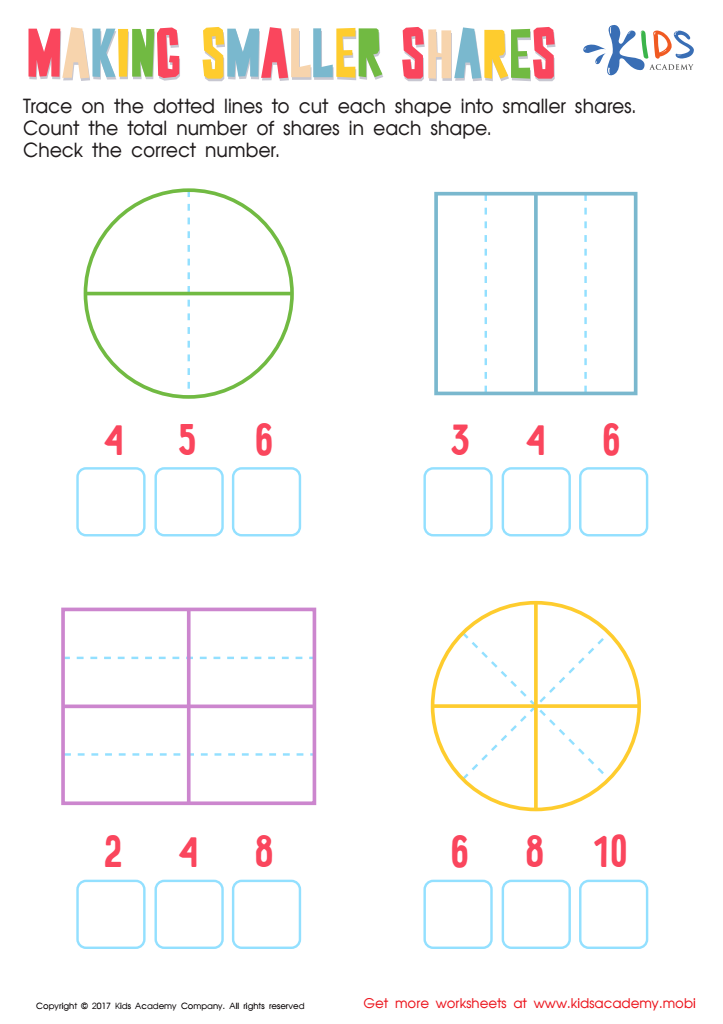
Help your kids learn shapes by having them cut out shapes on this tracing sheet. Point out the dotted lines, then guide their hand as they trace them, breaking shapes into smaller parts. Ask your children to count the number of parts and check the answers given.
Making Smaller Shares Worksheet
Worksheet
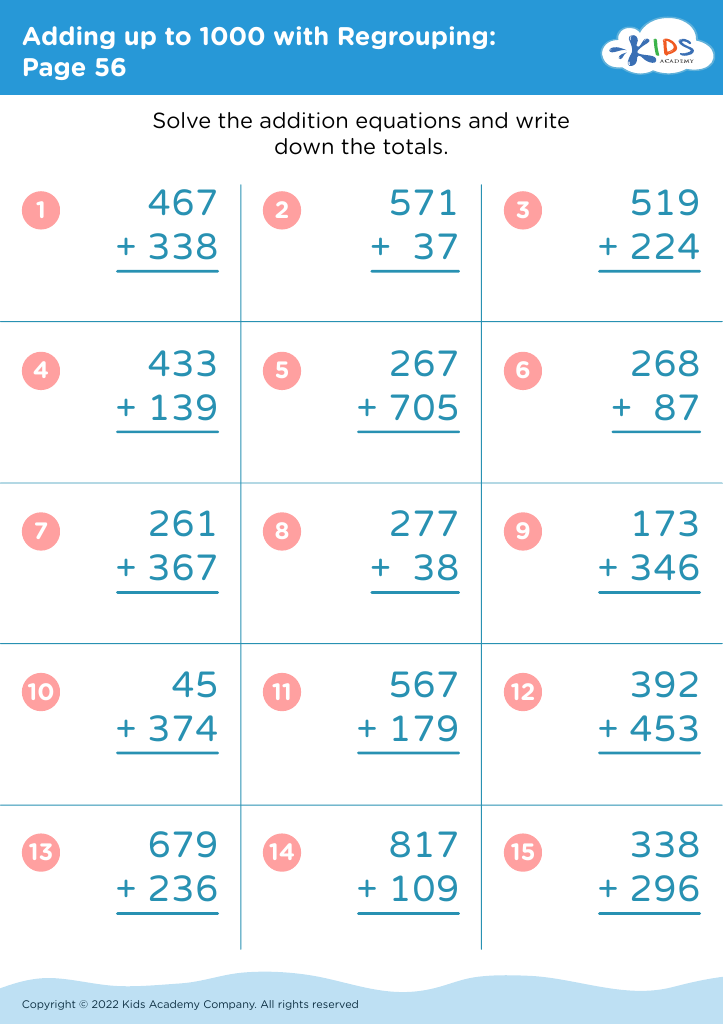
Adding up to 1000 with Regrouping: Page 56
Worksheet
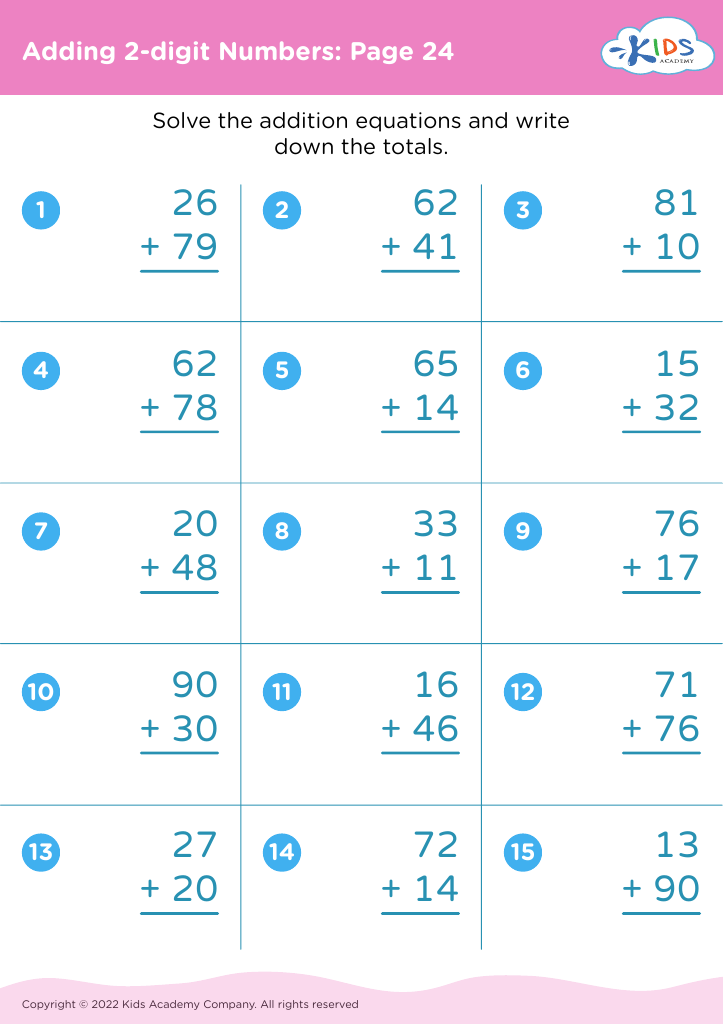
Adding 2-digit Numbers: Page 24

Adding 2-digit Numbers: Page 24

Adding 2-digit Numbers: Page 24
Worksheet
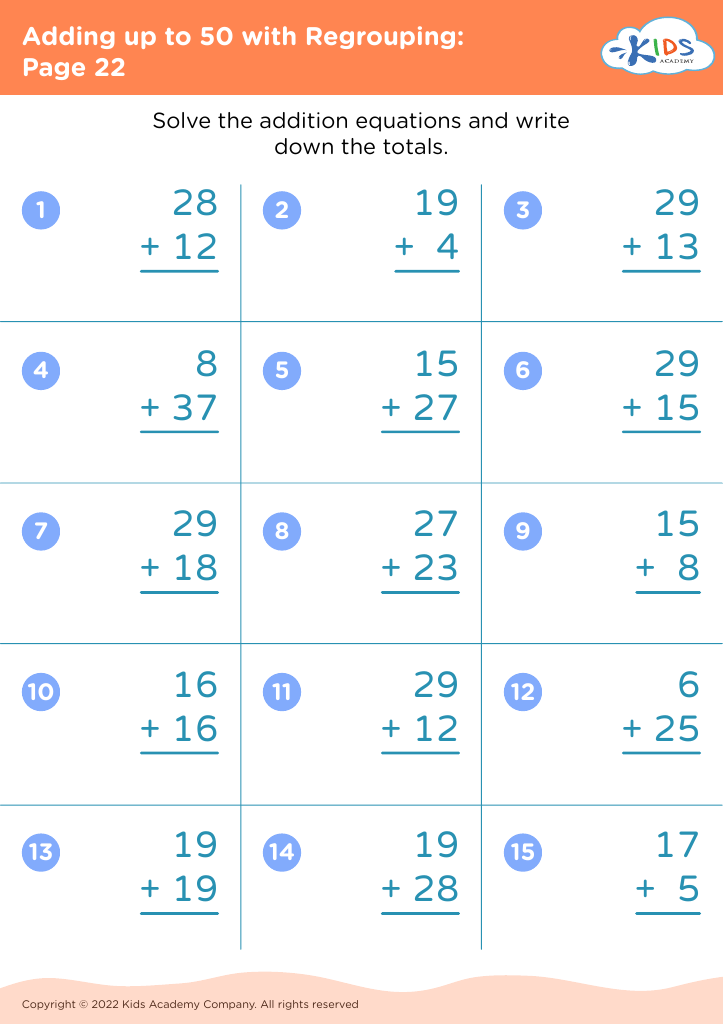
Adding up to 50 with Regrouping: Page 22
Worksheet
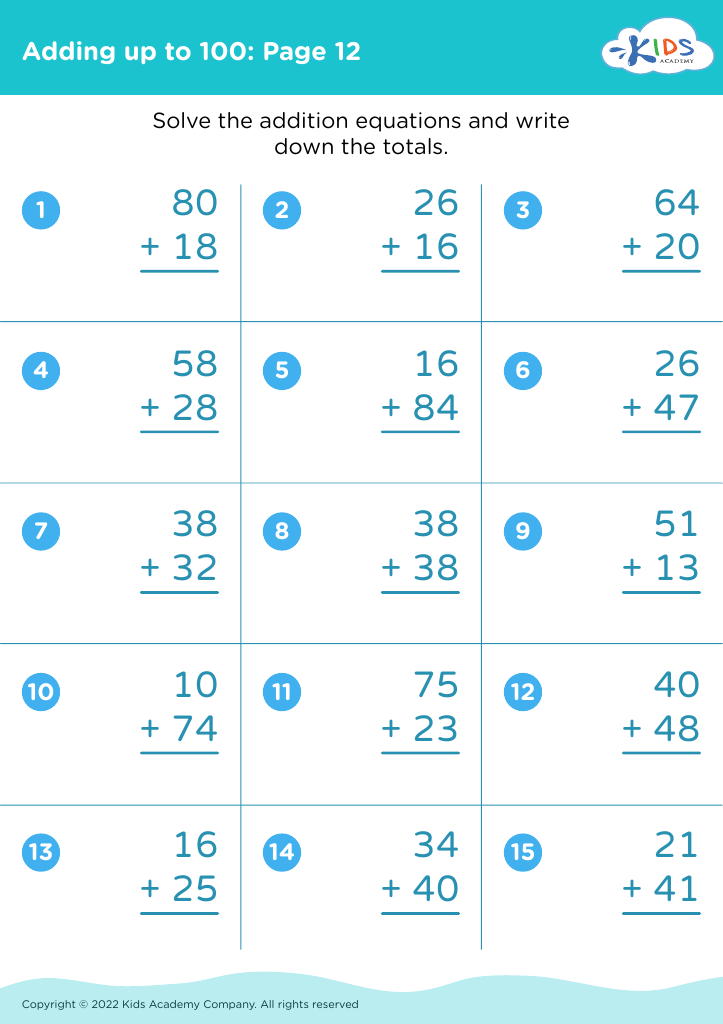
Adding up to 100: Page 12

Adding up to 100: Page 12

Adding up to 100: Page 12
Worksheet
Equal Fractions Maze Worksheet
Equal Fractions Maze Worksheet
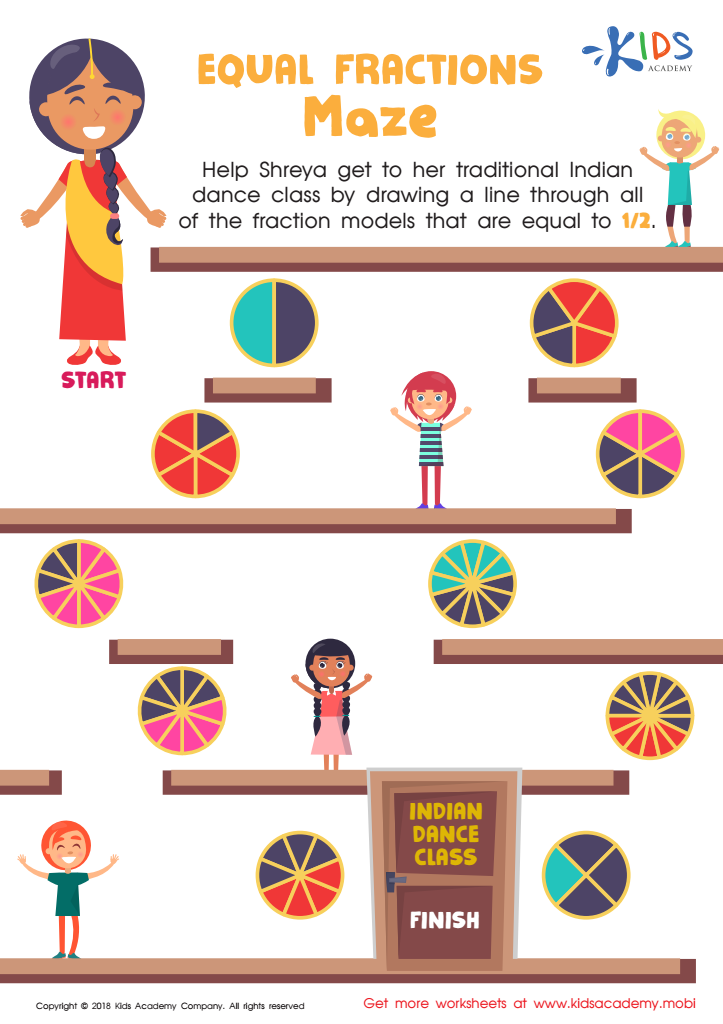
Help Shreya get to dance class! Draw a line through all fraction models that are equal to ½, starting at the entrance marked 'start'. Guide your kids through the maze paths and help Shreya -- she's an Indian girl who practices her cultures and traditions -- reach the door to her class.
Equal Fractions Maze Worksheet
Worksheet
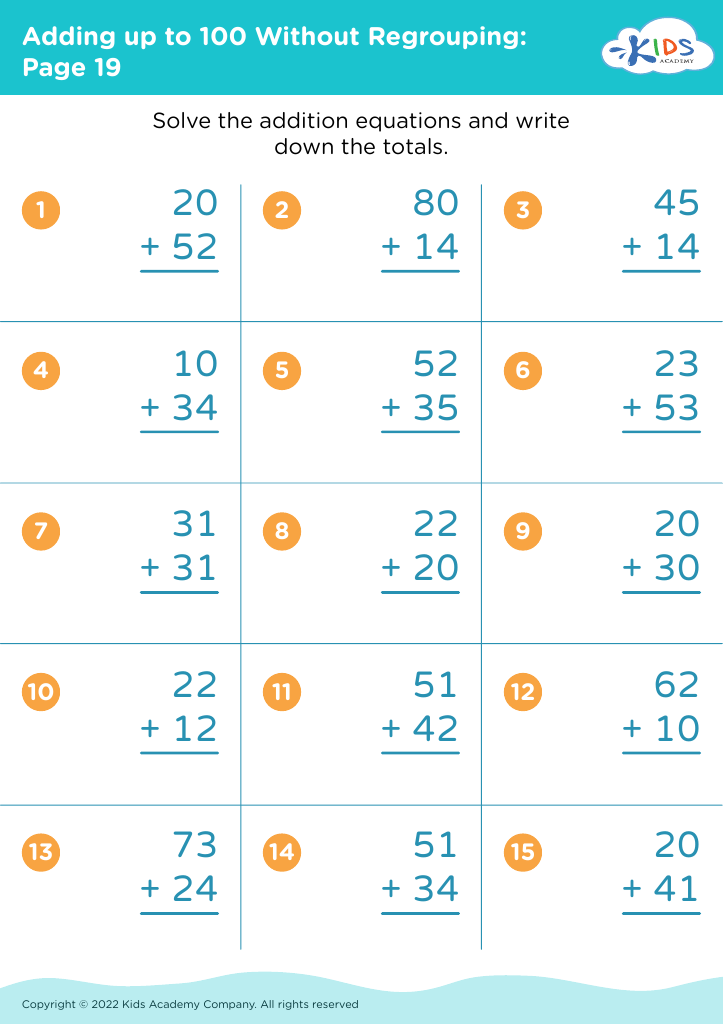
Adding up to 100 Without Regrouping: Page 19
Worksheet
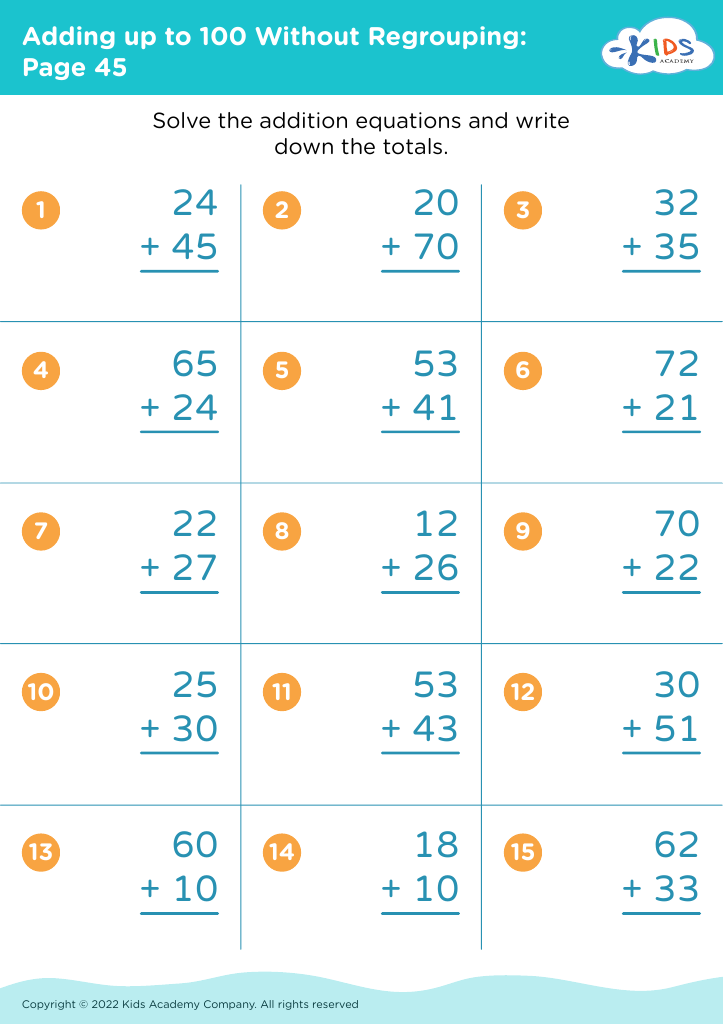
Adding up to 100 Without Regrouping: Page 45
Worksheet
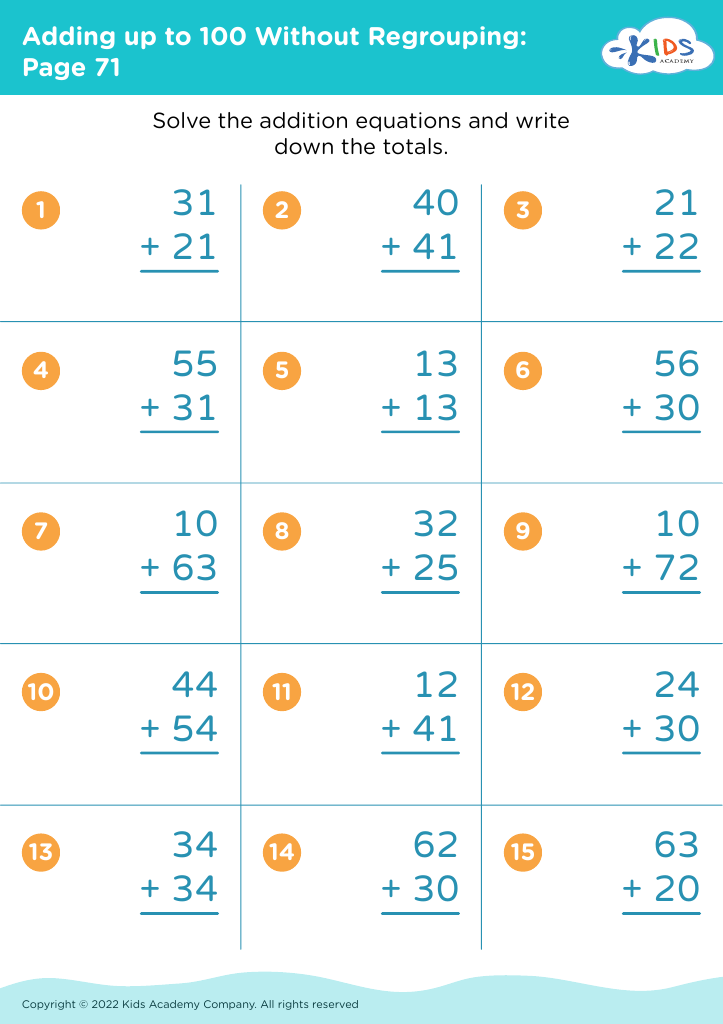
Adding up to 100 Without Regrouping: Page 71
Worksheet
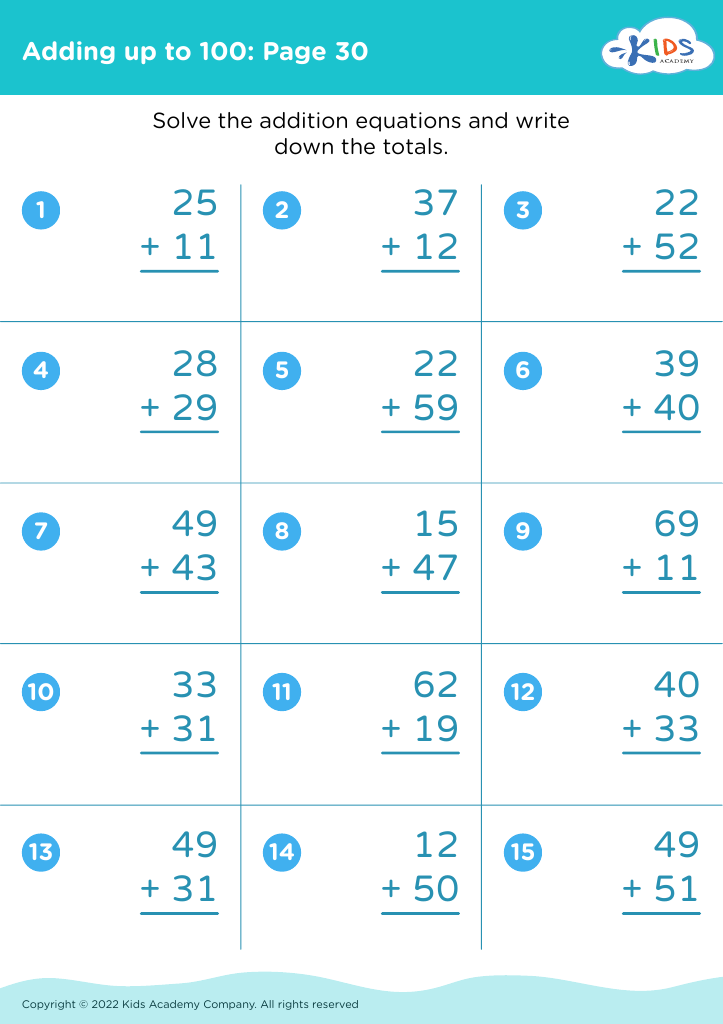
Adding up to 100: Page 30

Adding up to 100: Page 30

Adding up to 100: Page 30
Worksheet
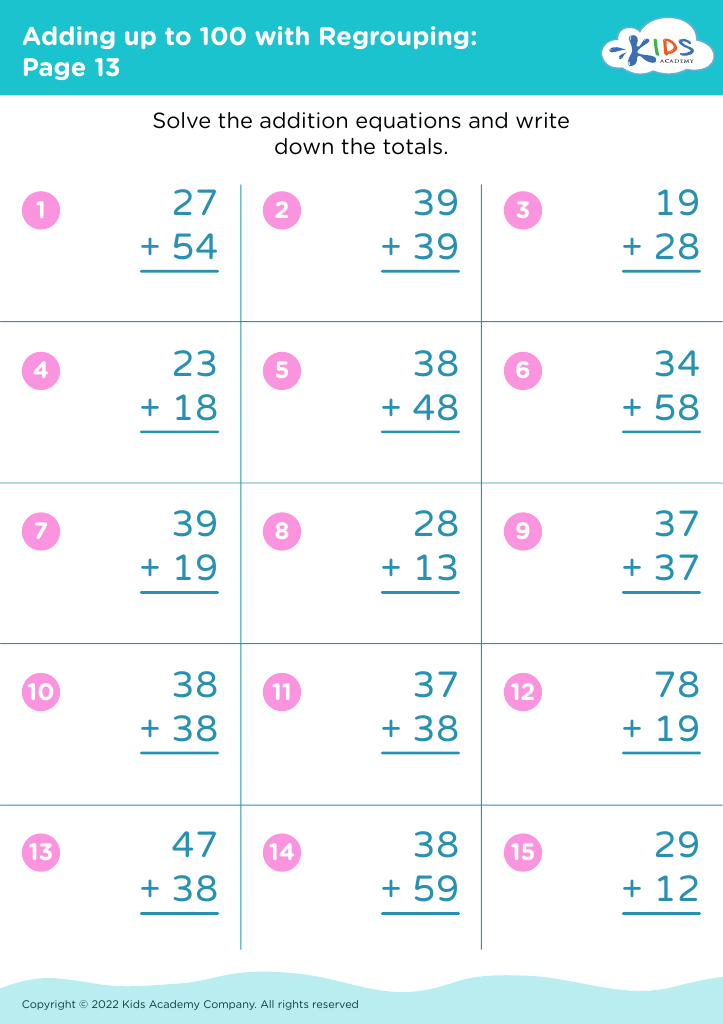
Adding up to 100 with Regrouping: Page 13
Worksheet
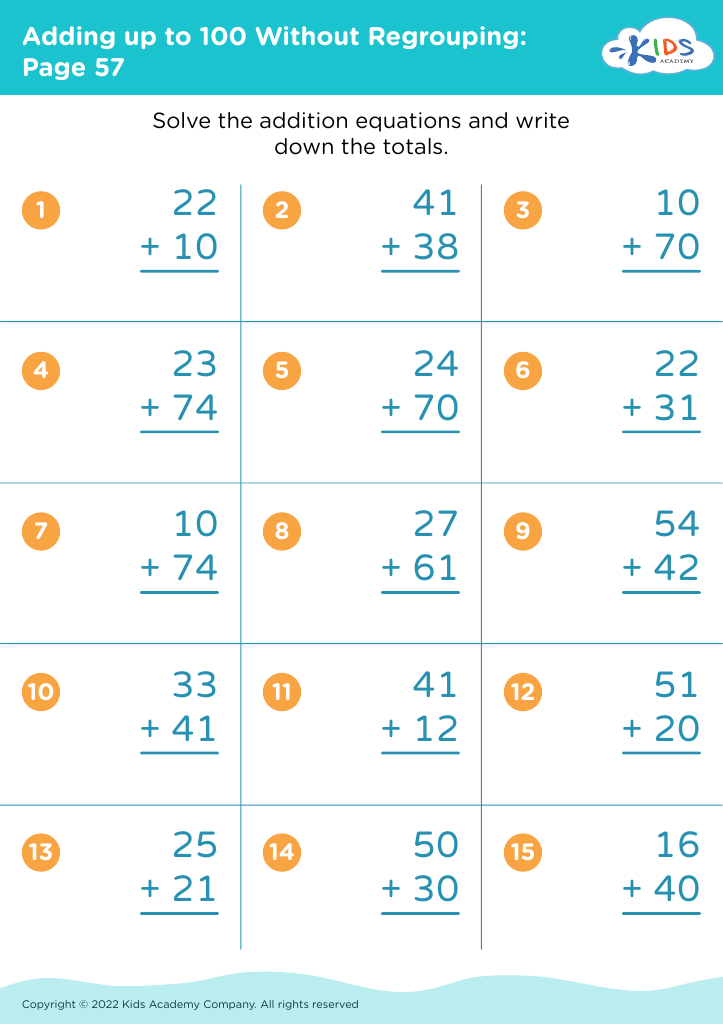
Adding up to 100 Without Regrouping: Page 57
Worksheet
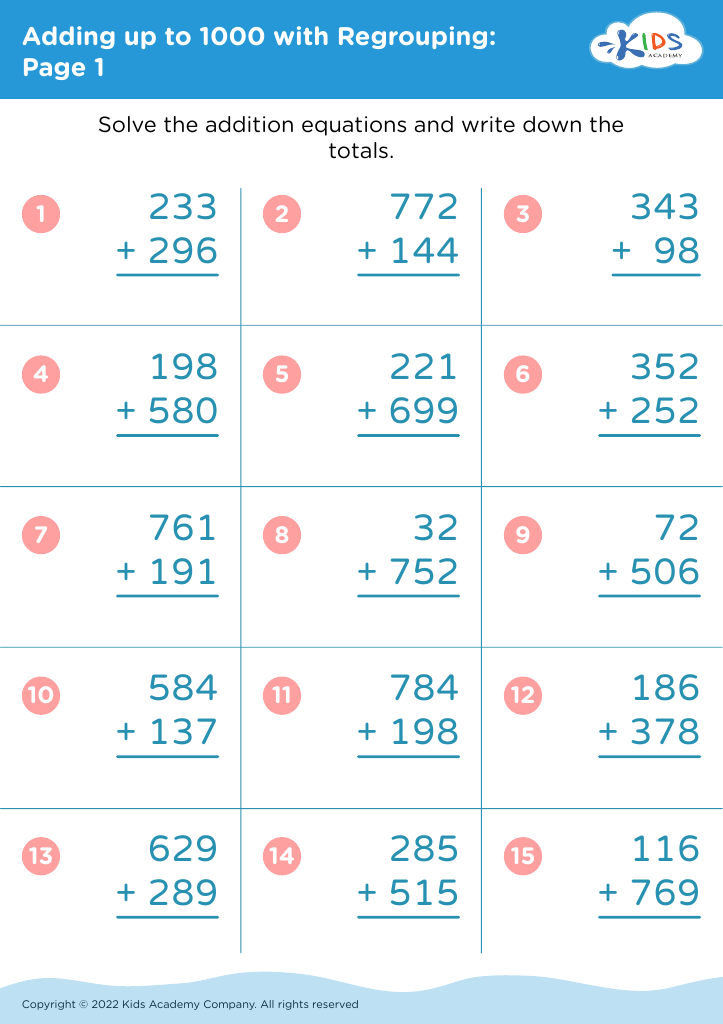
Adding up to 1000 with Regrouping: Page 1
Worksheet
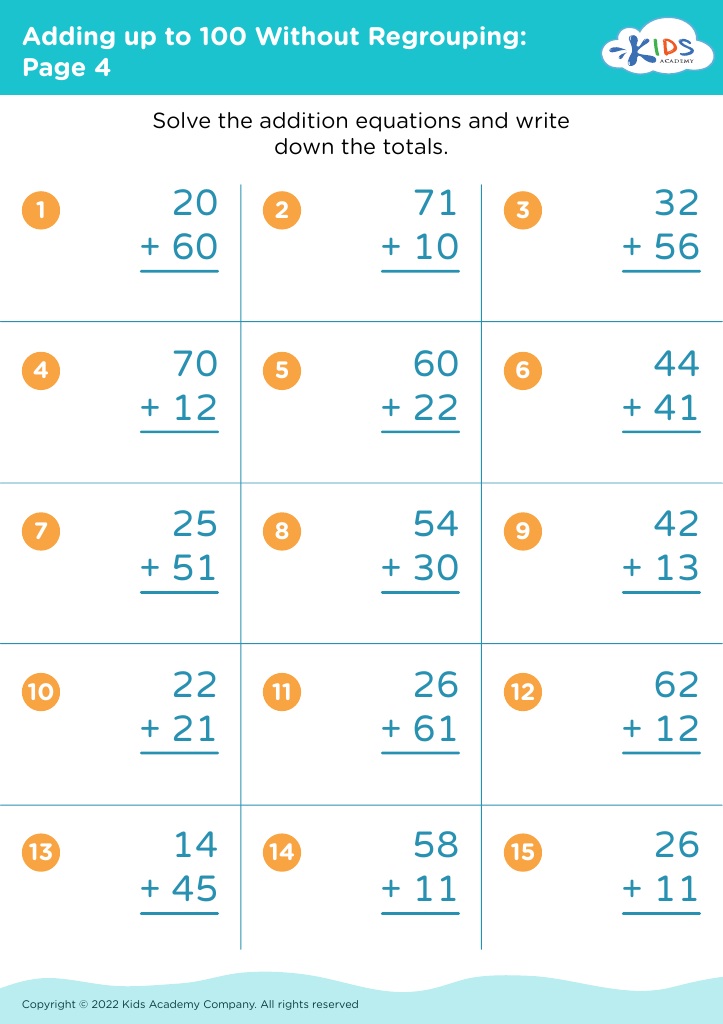
Adding up to 100 Without Regrouping: Page 4
Worksheet
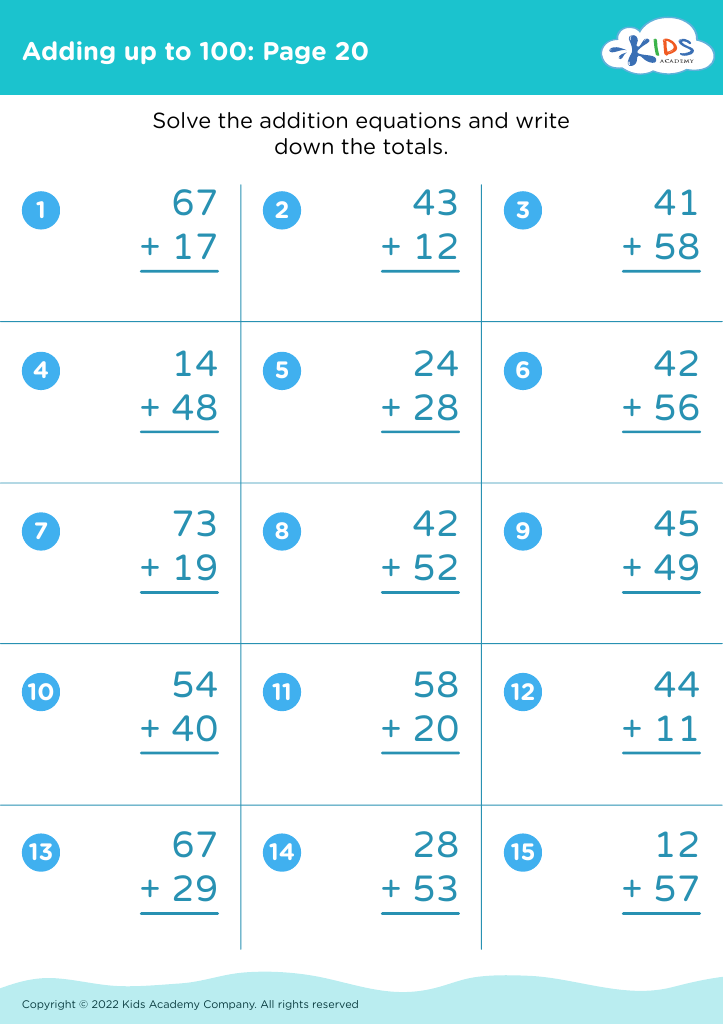
Adding up to 100: Page 20

Adding up to 100: Page 20

Adding up to 100: Page 20
Worksheet
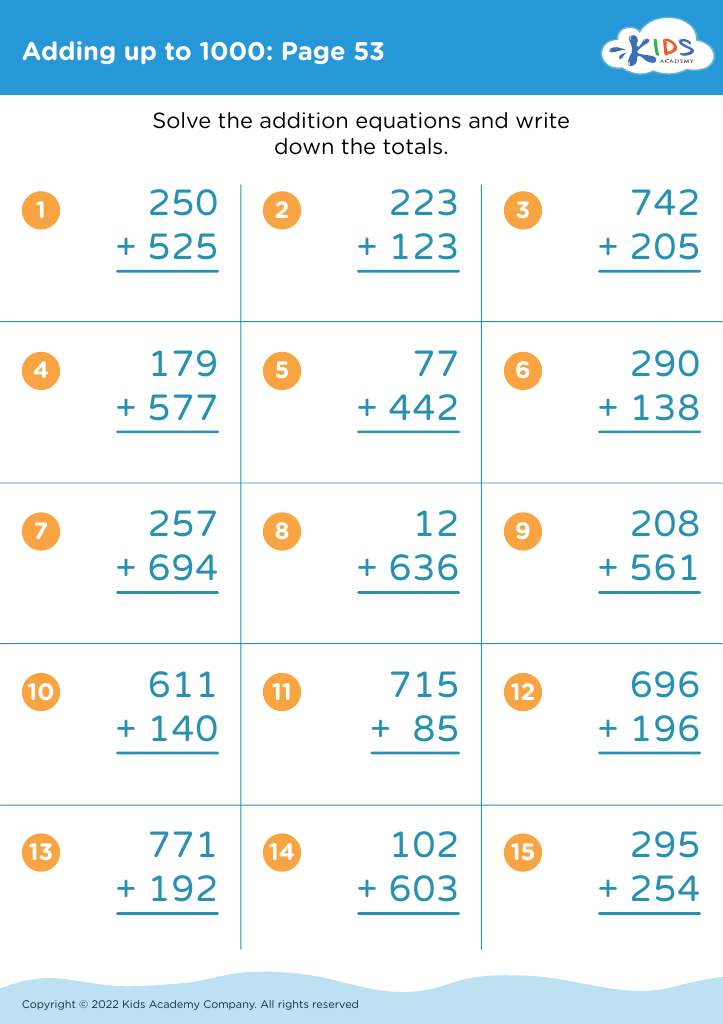
Adding up to 1000: Page 53

Adding up to 1000: Page 53

Adding up to 1000: Page 53
Worksheet
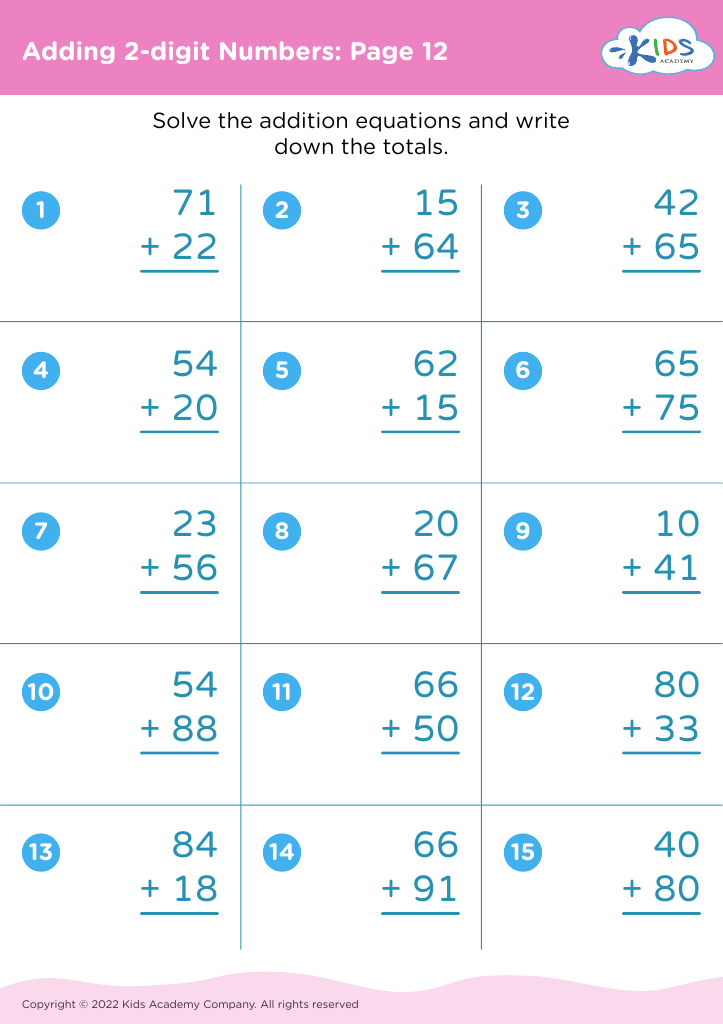
Adding 2-digit Numbers: Page 12

Adding 2-digit Numbers: Page 12

Adding 2-digit Numbers: Page 12
Worksheet
Piecing Together 11 Worksheet
Piecing Together 11 Worksheet

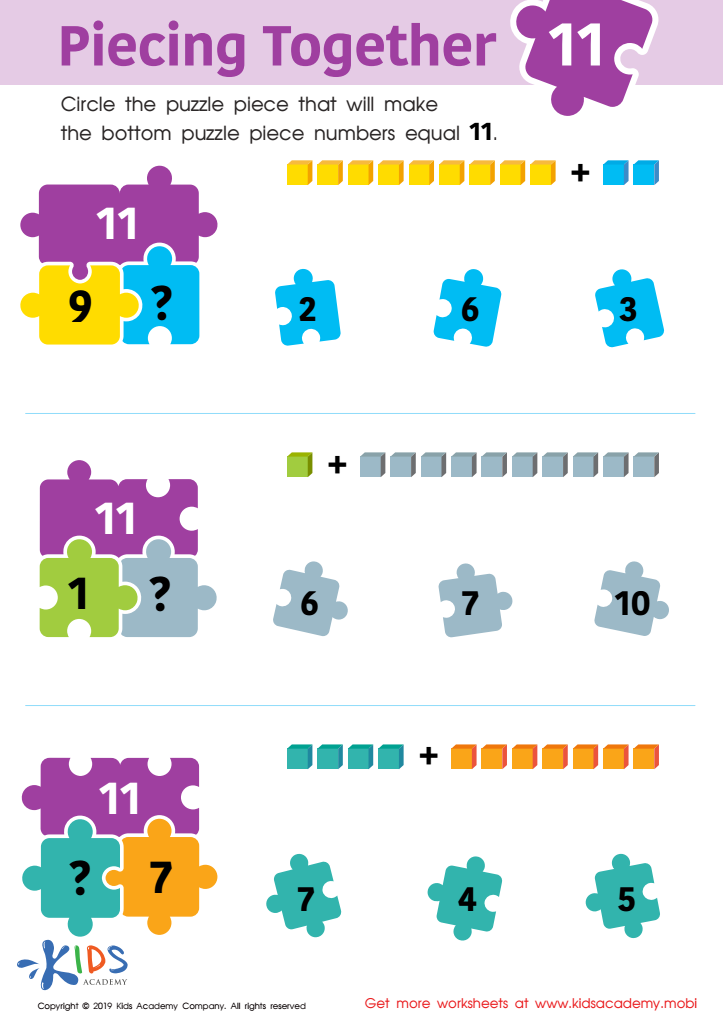
Engage your preschoolers with learning-filled fun! Show them this colorful worksheet, and ask them to identify the figures. Each puzzle piece features an equation, except one which is missing. Help the kids solve the problems and circle the piece that'll make the numbers equal 11. It's a surefire way to make learning enjoyable!
Piecing Together 11 Worksheet
Worksheet
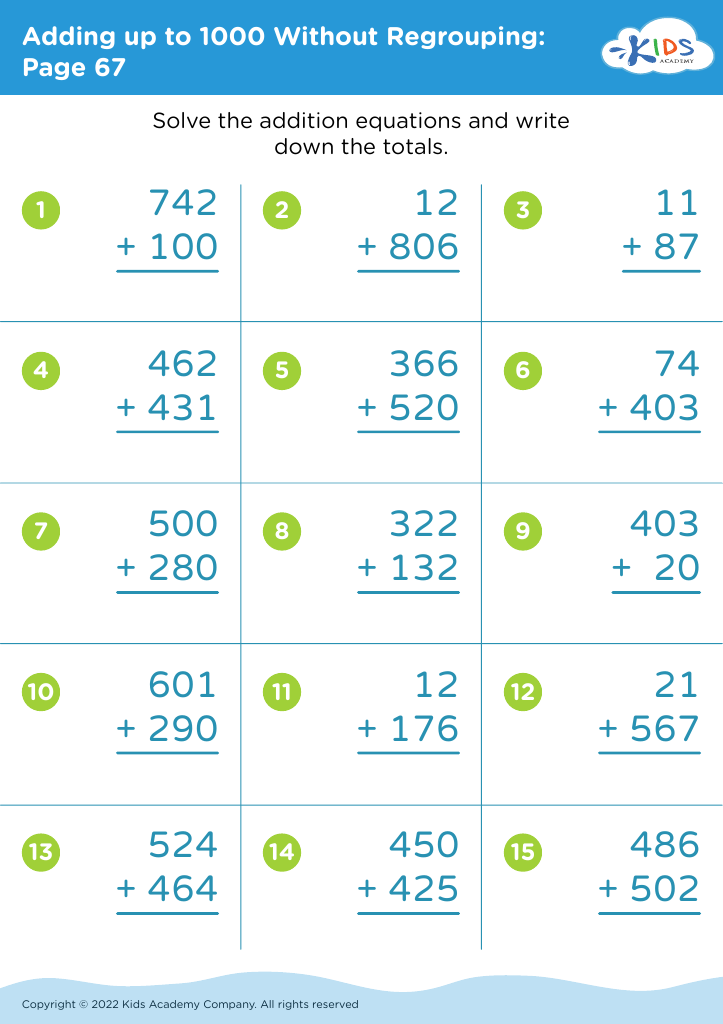
Adding up to 1000 Without Regrouping: Page 67
Worksheet
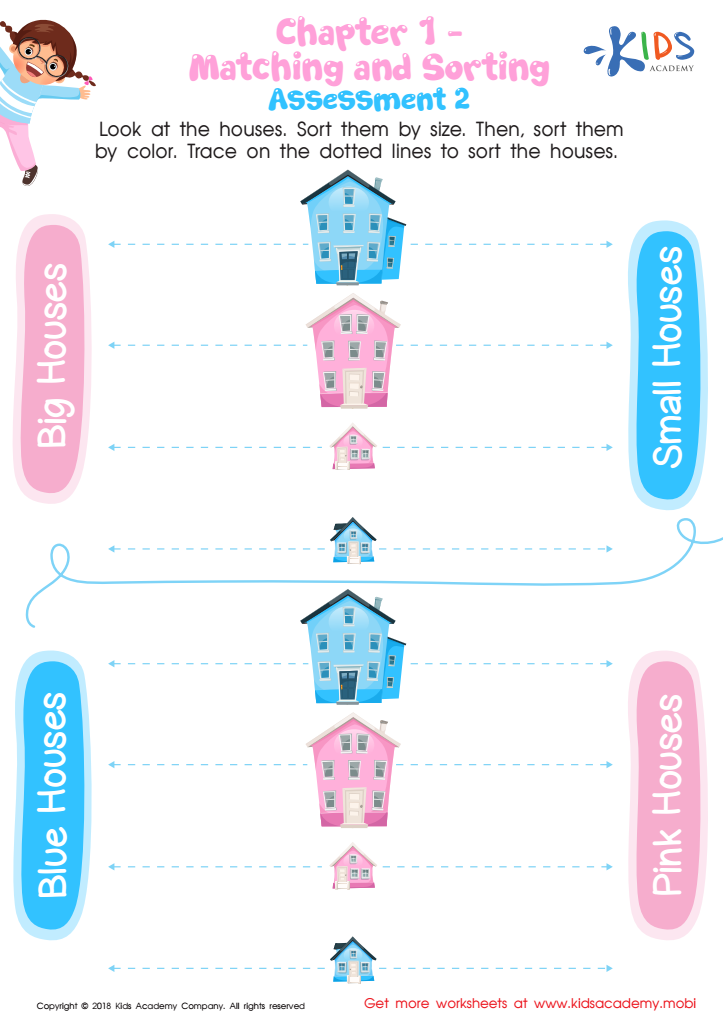
Matching and Sorting  for Preschool: Assessment 2 Worksheet
Matching and Sorting for Preschool: Assessment 2 Worksheet
Encourage your kids to take a look at the colorful pictures. Ask them to name the objects. Next, point out any differences between the houses and let them sort them according to color and size. Finally, help them trace the houses on the dotted lines.
Matching and Sorting for Preschool: Assessment 2 Worksheet
Worksheet
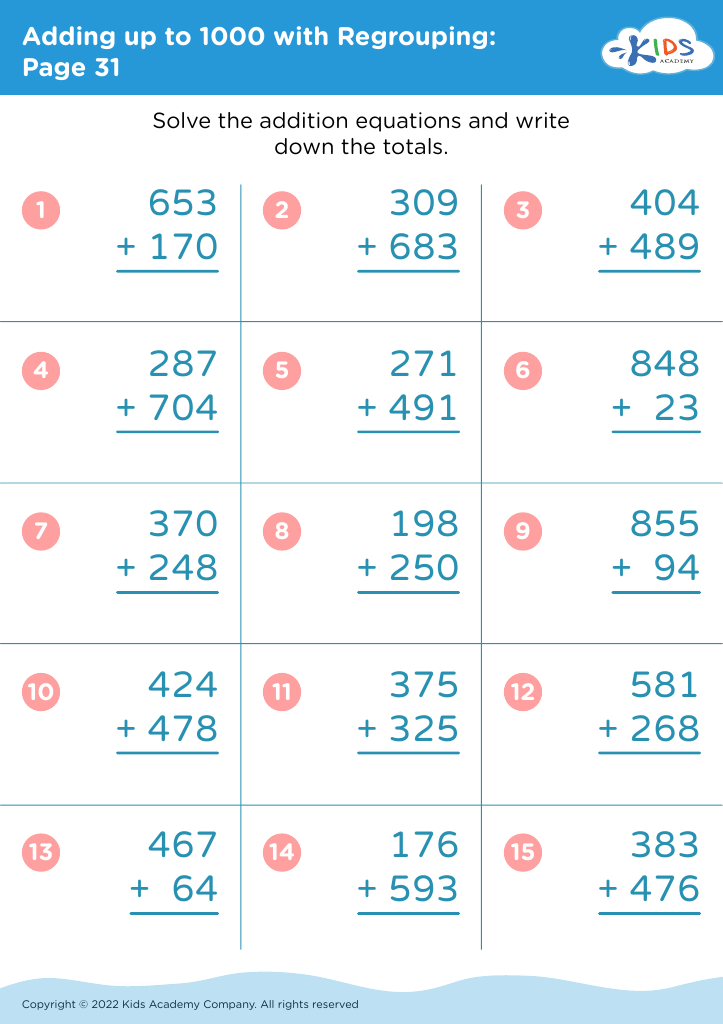
Adding up to 1000 with Regrouping: Page 31
Worksheet
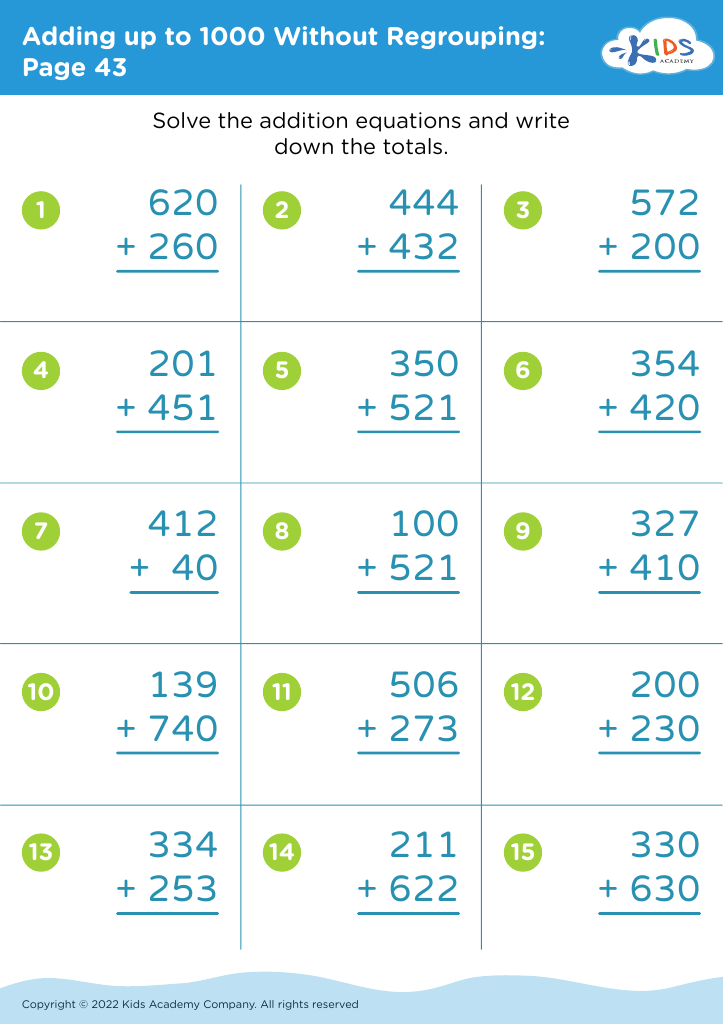
Adding up to 1000 Without Regrouping: Page 43
Worksheet
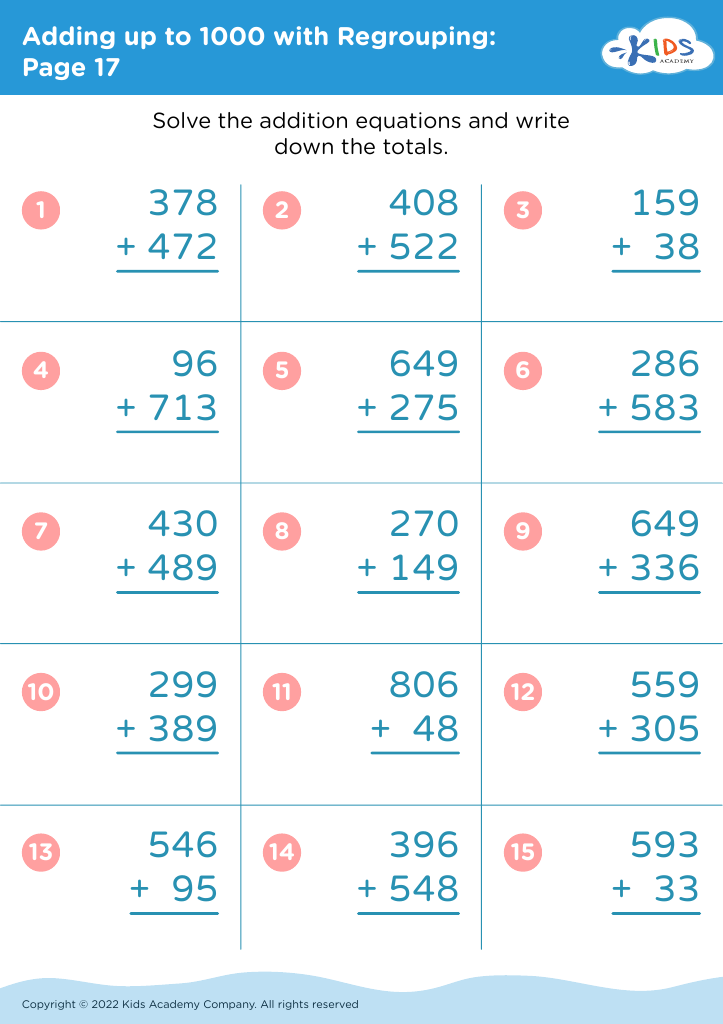
Adding up to 1000 with Regrouping: Page 17
Worksheet
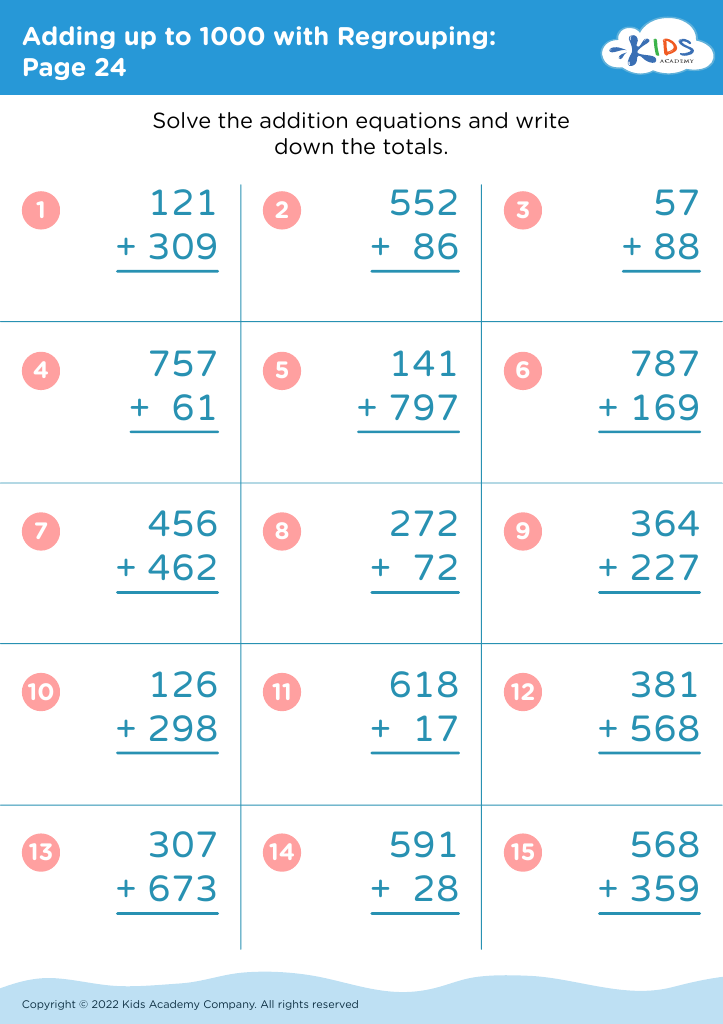
Adding up to 1000 with Regrouping: Page 24
Worksheet


Understanding fractions is crucial for children aged 4-8 as it lays the foundation for essential mathematical concepts. At this age, children are naturally curious and eager to explore numbers and their relationships. Introducing fractions develops their understanding of part-whole relationships, which is fundamental in mathematical reasoning. By grasping fractions, children learn to compare sizes, partition shapes, and work with sets, skills that are vital not just in math but also in everyday situations.

Moreover, mastering fractions can enhance a child’s problem-solving and critical thinking abilities. It encourages them to visualize and manipulate quantities, fostering a growth mindset and resilience in tackling challenging concepts. Early exposure to fractions can help dispel math anxiety in later years, as they will have a more robust mathematical foundation.

For teachers and parents, understanding fractions helps them guide children through activities that promote hands-on learning, like measuring ingredients in cooking or dividing items among friends. These real-life applications make math relatable and enjoyable, thus increasing engagement and retention. In today's world, where quantitative literacy is increasingly important, helping young learners understand fractions is not only an educational responsibility but an investment in their future success.