Critical thinking development Science Worksheets for Ages 4-8
7 filtered results
-
From - To
Unlock your child's potential with our Critical Thinking Development Science Worksheets, specially designed for ages 4-8. At Kids Academy, we believe in nurturing young minds through engaging and educational experiences. Our worksheets are thoughtfully crafted to stimulate curiosity and enhance problem-solving skills. Each activity encourages children to ask questions, analyze information, and make thoughtful decisions. Perfect for at-home learning or classroom enrichment, our resources are fun and educational, helping kids develop crucial critical thinking abilities while exploring the wonders of science. Empower your child today with tools for a bright academic future!
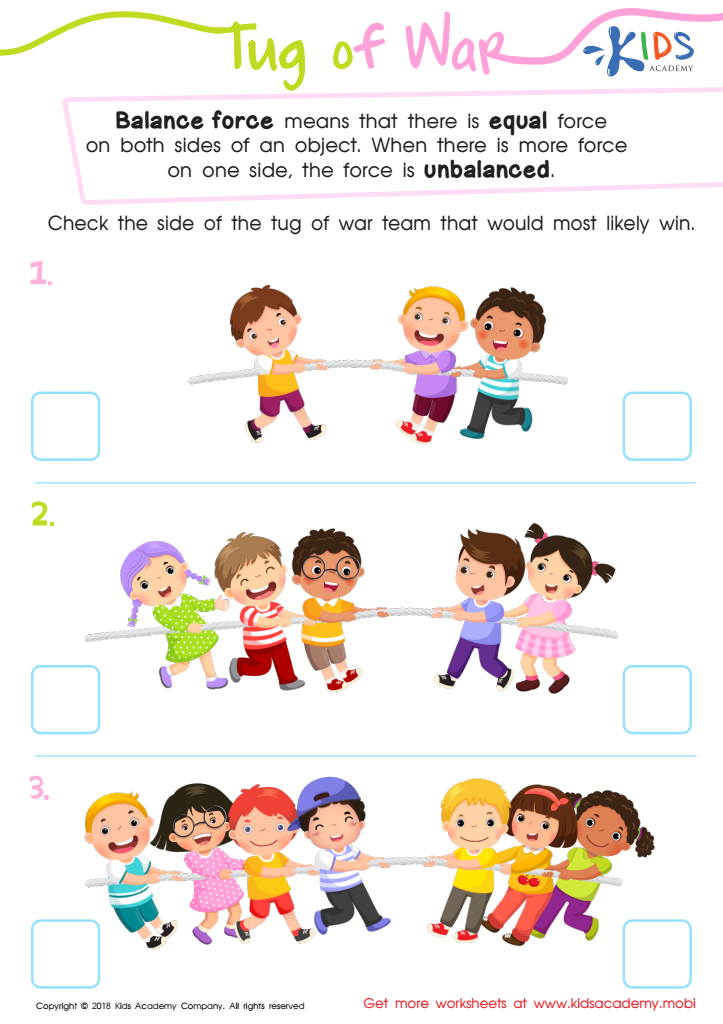
Balanced Forces Worksheet
 Assign to My Students
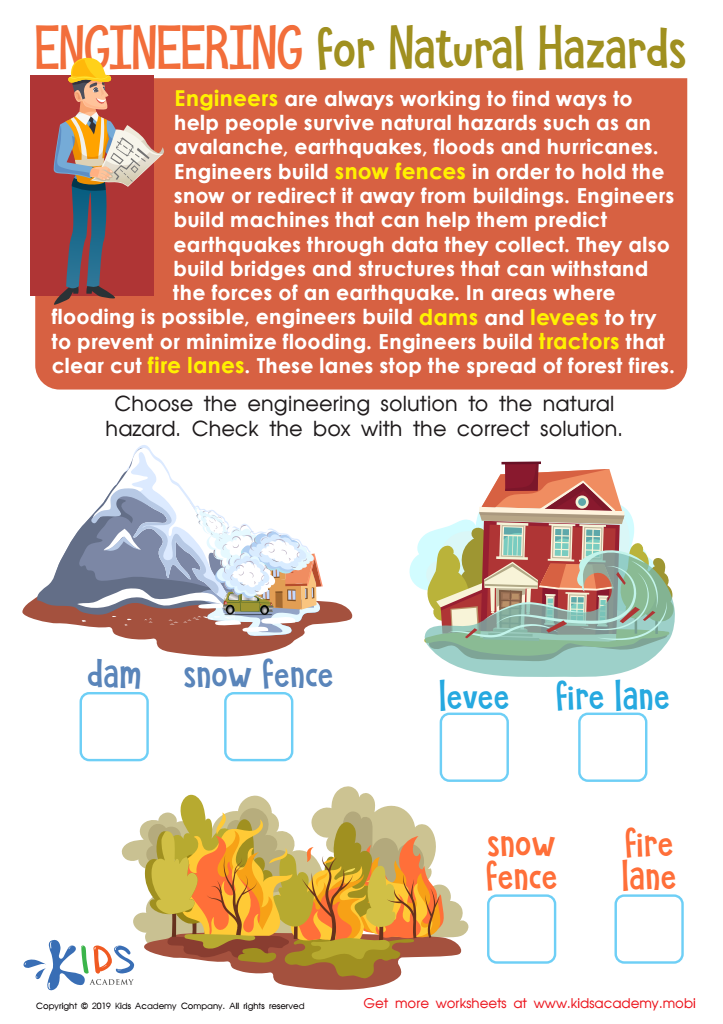
Engineering Natural Hazards Worksheet
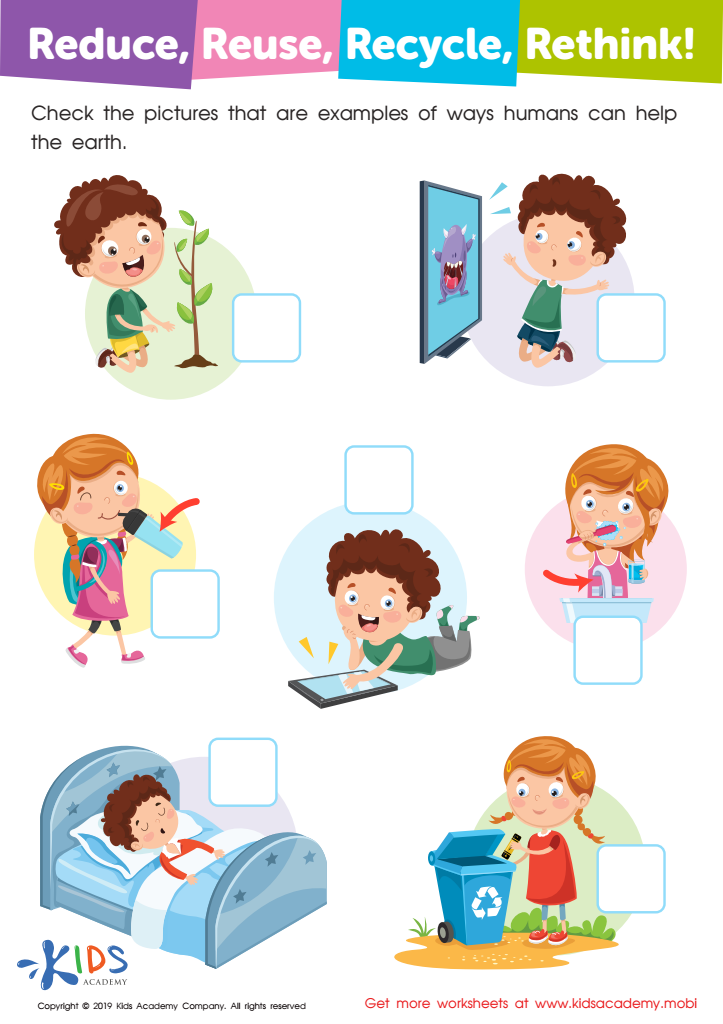
Reduce, Reuse, Recycle, Rethink Worksheet
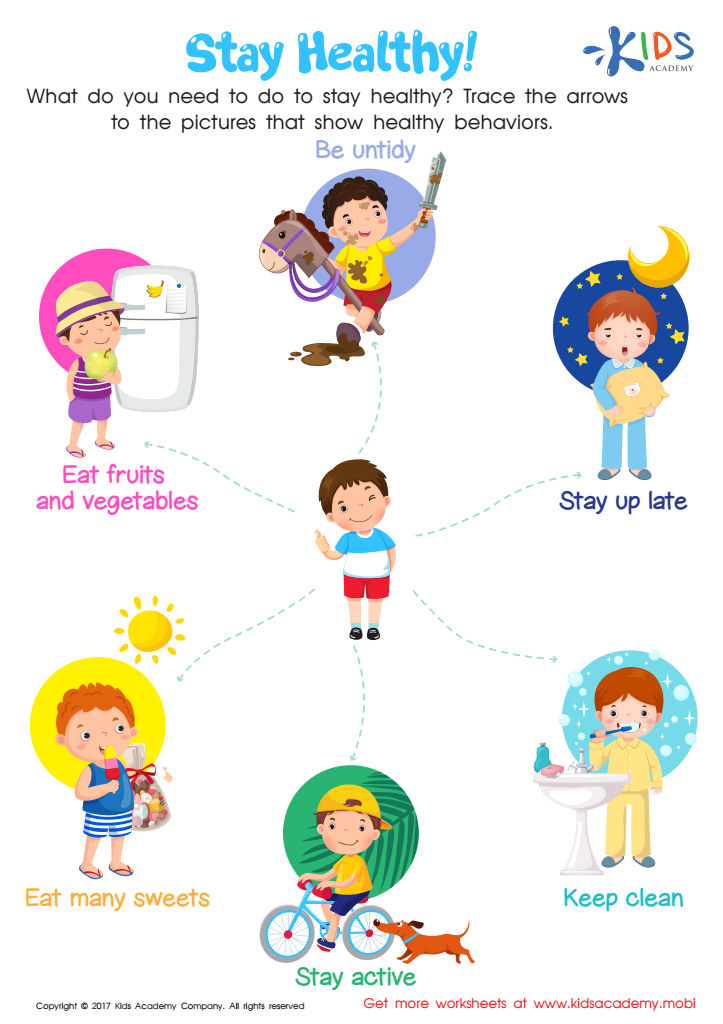
Healthy and Unhealthy Behaviors Worksheet
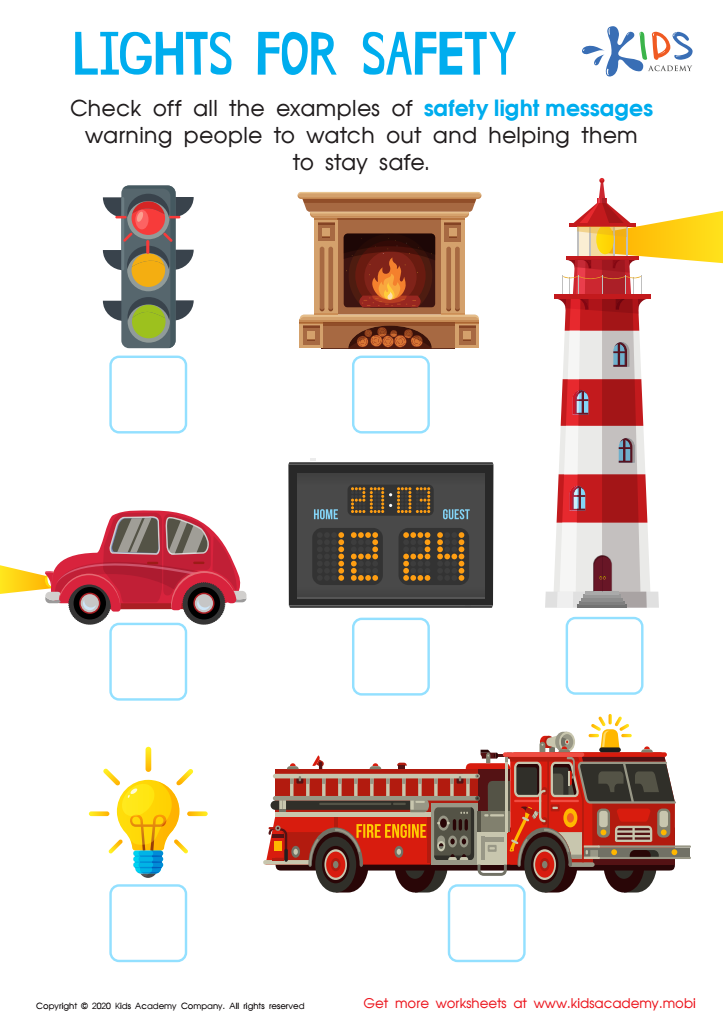
Lights for Safety Worksheet
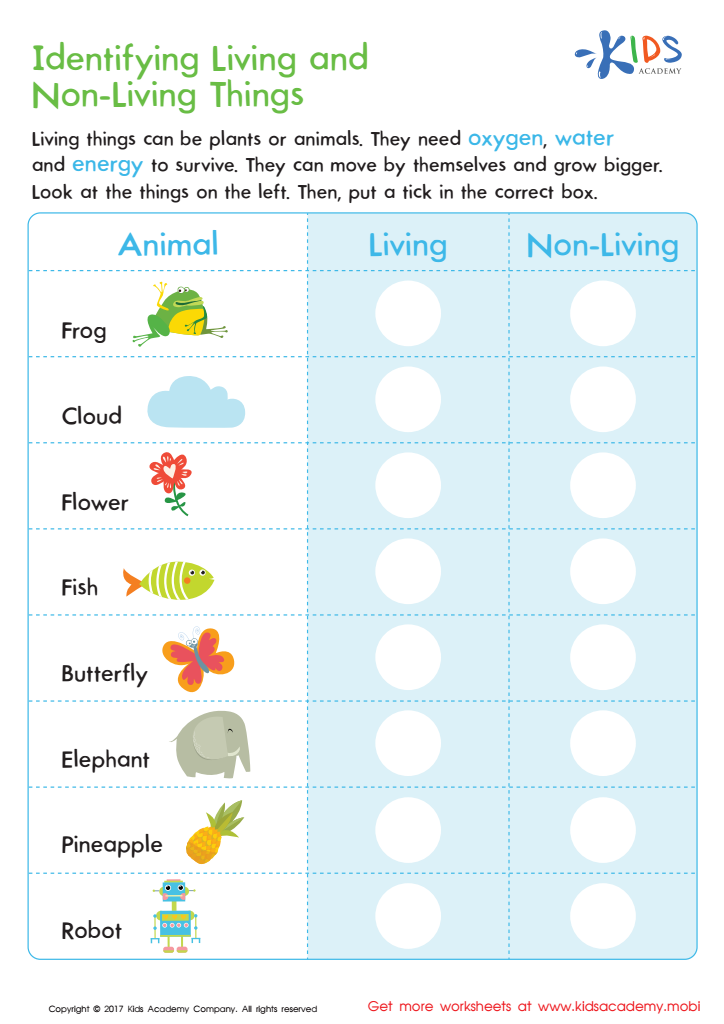
Identifying Living or Non–living Worksheet
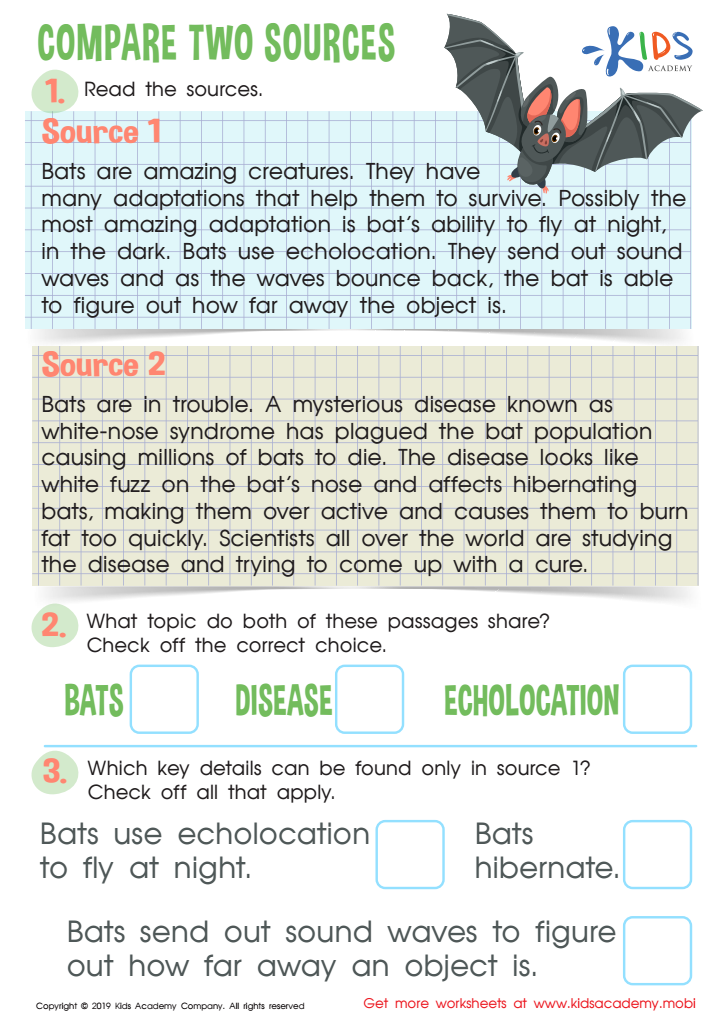
Compare Two Sources Worksheet








Critical thinking is fundamental to early childhood development, serving as a cornerstone for lifelong learning and problem-solving abilities. Teaching science from ages 4 to 8 plays a crucial role in nurturing critical thinking skills, and parents and teachers should prioritize this for several reasons.
First, exposure to science fosters curiosity and inquisitiveness. When children ask questions and explore natural phenomena, they learn to think deeply about the world around them. This sets the groundwork for analytical thinking, allowing them to understand cause and effect, make predictions, and draw conclusions.
Second, early engagement with scientific principles encourages children to develop problem-solving skills. Activities like simple experiments and observations teach them to identify problems, hypothesize solutions, and test their ideas, fostering resilience and adaptability.
Third, developing critical thinking at a young age positively influences academic performance across subjects. Skills honed through scientific inquiry, such as reasoning and evidence-based thinking, are transferable to reading comprehension, mathematical problem-solving, and more.
Finally, fostering critical thinking through science nurtures a love for learning. When children experience the joy of discovery, they become motivated learners, ready to tackle future educational challenges.
By valuing critical thinking in early science education, parents and teachers equip children with essential tools for academic success and thoughtful engagement with the world throughout their lives.







