
Improving comprehension Science Worksheets for Ages 4-8
4 filtered results
Difficulty Level
Grade
Age
-
From - To
Subject
Activity
Standards
Enhance your child's understanding of essential scientific concepts with our "Improving Comprehension Science Worksheets for Ages 4-8." These engaging, age-appropriate resources are specifically designed to develop critical thinking, vocabulary, and reading comprehension skills. Our worksheets cover various topics, including nature, animals, weather, and simple physics, making learning both fun and educational. With colorful illustrations and interactive exercises, children will stay motivated and enjoy exploring the world of science. Perfect for parents and teachers looking to support early academic success, our worksheets provide a solid foundation for future learning in a lively, engaging way.
Favorites
With answer key
Interactive
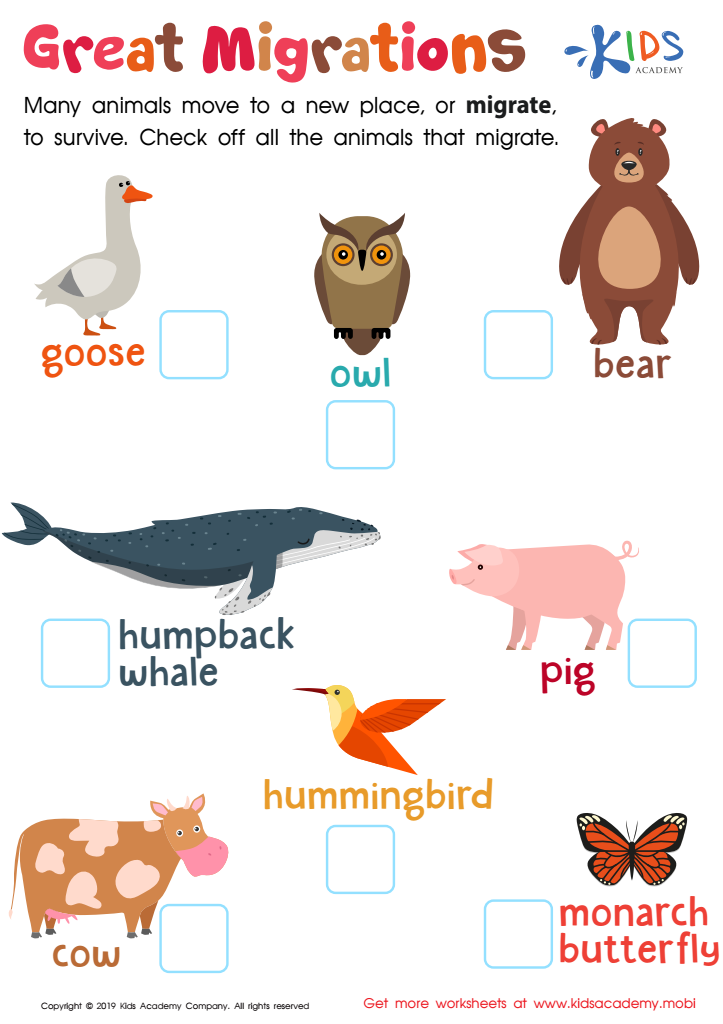
Great Migrations Worksheet
Identify animals in the worksheet with your kids. See which ones migrate: check the boxes! Migration is when birds and other animals only appear for certain seasons or long periods, then come back when the weather changes.
 Assign to My Students
Great Migrations Worksheet
Worksheet
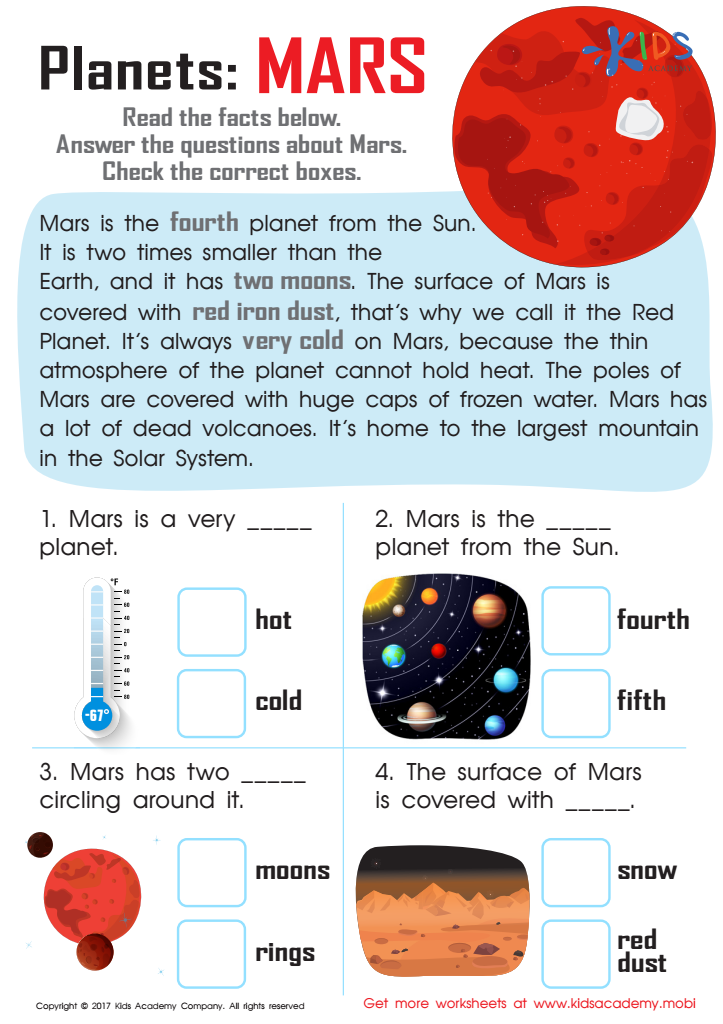
Mars Fact Printable Worksheet
Want to learn about Mars? Get this fun printable worksheet - it's packed with information about the red planet. Discover facts about its temperature, terrain and position in the solar system. It's a great way for kids to explore the wonders of our universe.
Mars Fact Printable Worksheet
Worksheet
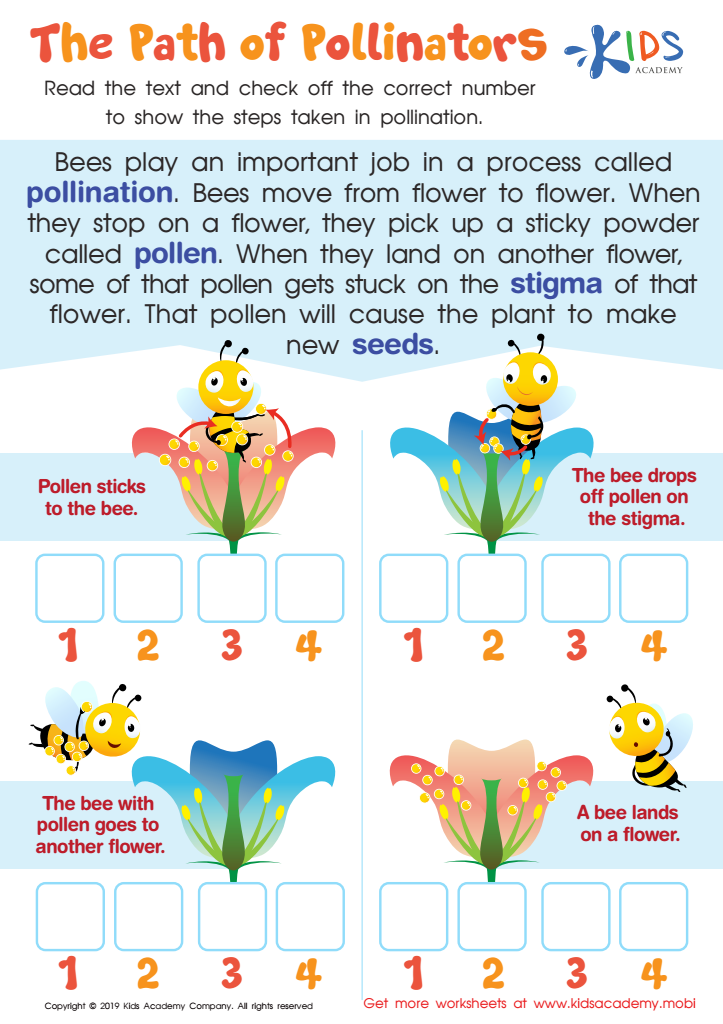
The Path of Pollinators Worksheet
Bees play a vital role in pollination: they transfer pollen between flowers, allowing them to produce new seeds. Without bees, we'd have less flowers and vegetation. Explain the process to your students and have them check off the right number to show the steps in pollination.
The Path of Pollinators Worksheet
Worksheet
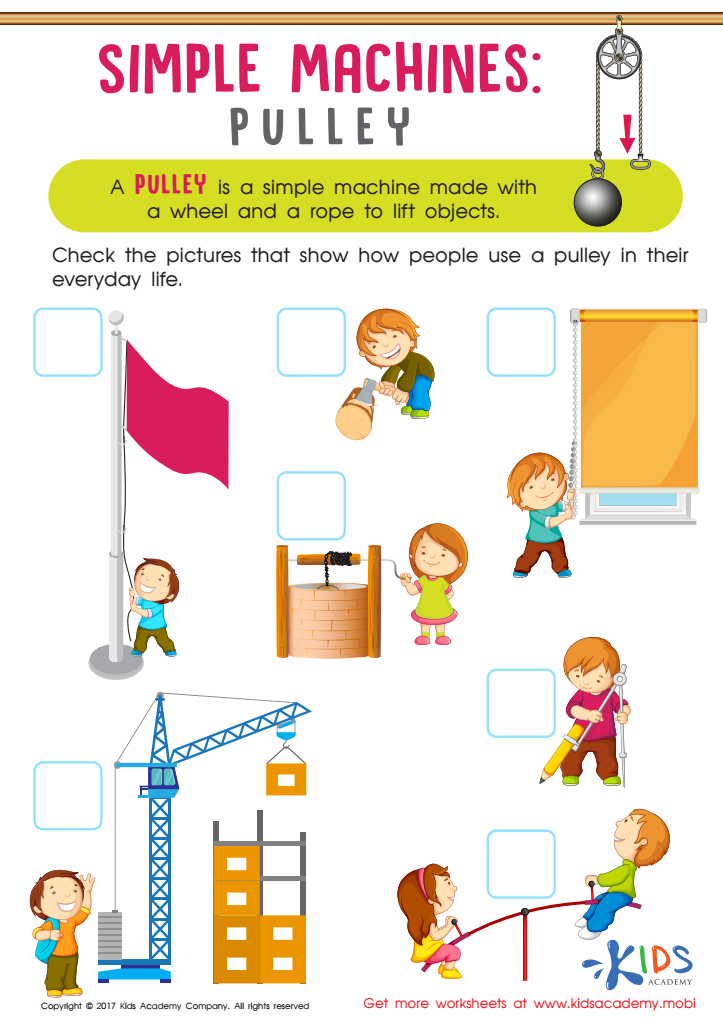
Simple Machines Pulley Worksheet
Pulleys make everyday life easier, from flag poles to elevators. This worksheet helps kids recognize and appreciate how pulleys simplify our lives. They'll learn about the many practical uses for these simple rope and wheel systems.
Simple Machines Pulley Worksheet
Worksheet
Join Kids Academy for Free
Who is primarily going to use this learning content?








Improving science comprehension in children aged 4-8 is crucial for several reasons. During this developmental stage, children are incredibly curious and have a natural inclination for exploration. By nurturing their interest in science, parents and teachers can channel this curiosity constructively. Early exposure to scientific concepts fosters critical thinking and problem-solving skills that are essential for academic success and everyday life.
Furthermore, early science education helps children develop a foundational understanding of the world around them. This foundation not only prepares them for more advanced scientific learning but also enhances their overall cognitive development. Learning science nurtures inquiry, observation, and analytical skills that are transferable to other subjects, making children more versatile learners.
Additionally, early engagement with science can spark a lifelong interest in the subject, potentially guiding future educational and career choices. In a world increasingly driven by technology and scientific discovery, fostering an early interest in these fields ensures that children are better prepared for the demands of the future workforce.
Parents and teachers play a pivotal role in this developmental phase. Through activities, experiments, and everyday discussions, they can make science fun and accessible. By prioritizing science comprehension, they contribute positively to a child’s intellectual growth and curiosity, setting them on a path to lifelong learning and success.







