Governance and Civics Worksheets for Ages 4-8 - Page 3
51 filtered results
-
From - To
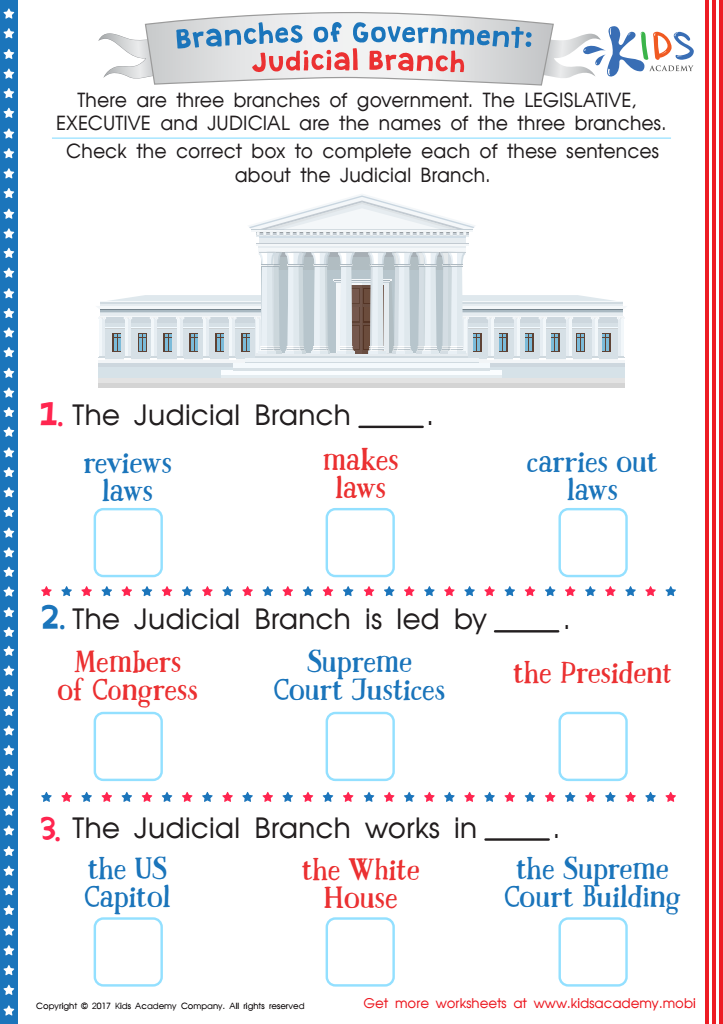
Braches of the Government: Judicial Branch Worksheet
 Assign to My Students
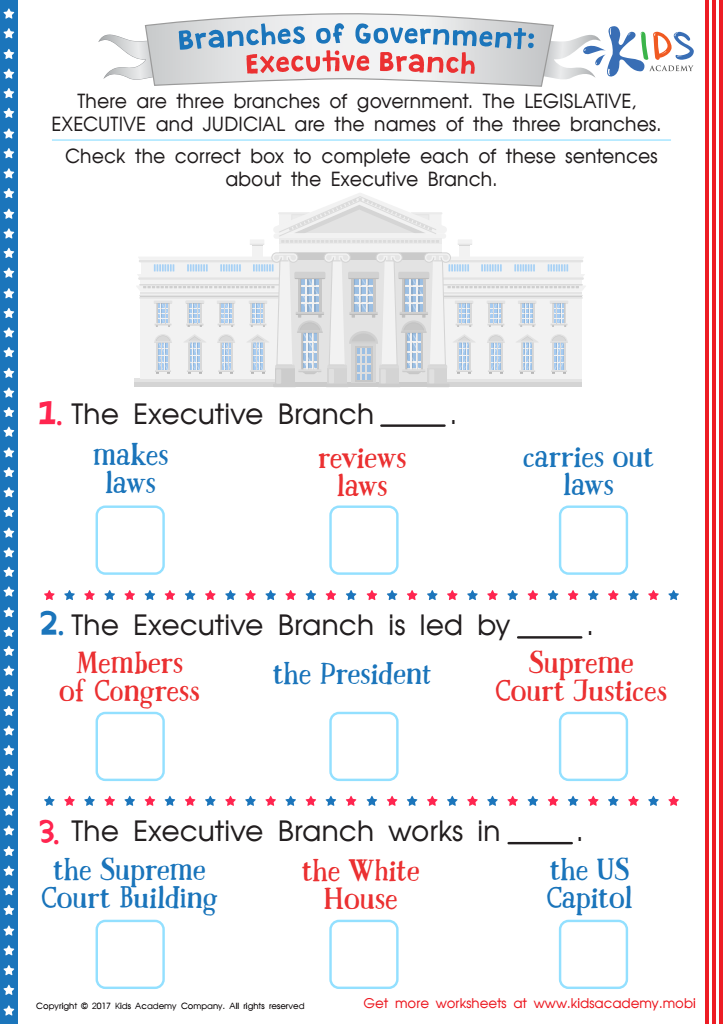
Branches of the Government: Executive Branch Printable
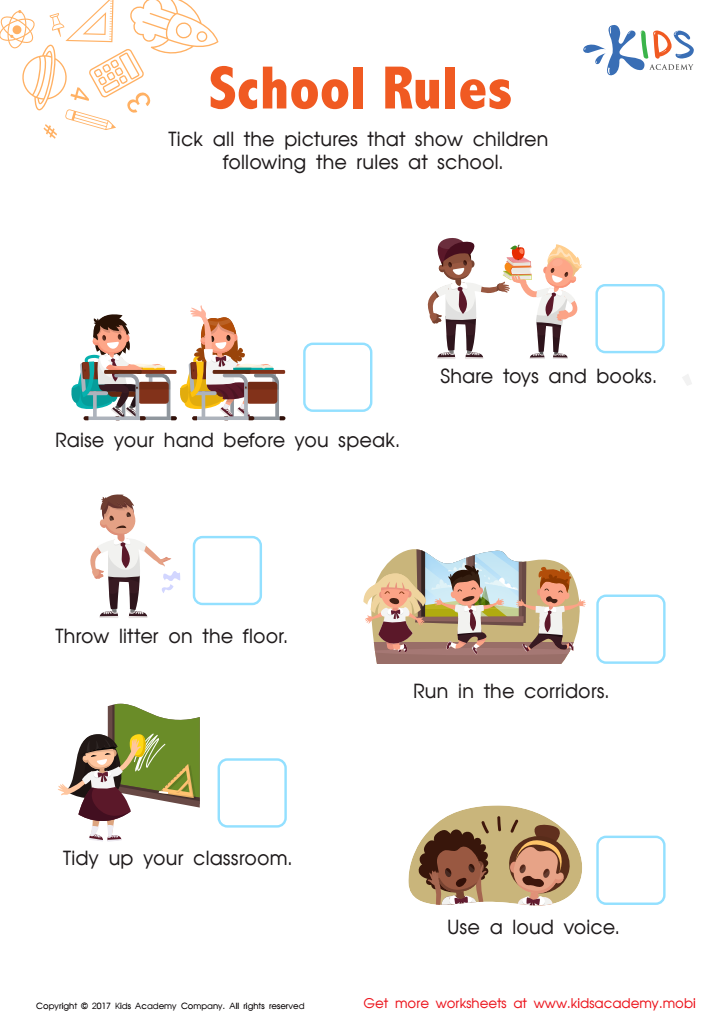
School Rules Worksheet


Governance and Civics, even for children aged 4-8, form a fundamental part of their education and overall development. Teaching young children about governance introduces them to the concepts of rules, cooperation, fairness, and authority. Understanding why rules exist and how they are made helps children develop respect for classroom and community regulations, fostering a sense of responsibility and security.
Civics education imparts essential values such as empathy, social justice, and participatory citizenship. It's never too early to begin encouraging children to think about what it means to be part of a community. When children understand civic concepts, such as voting, representation, and the importance of community engagement, they are more likely to grow into informed and active citizens.
Moreover, teaching civics aids in character development. Children learn to appreciate diversity, voice their opinions respectfully, and listen to others. This contributes to better conflict resolution and communication skills, both crucial for personal and social success.
In addition, early exposure to civics and governance ensures that children understand the importance of their role in society, laying a groundwork for informed and engaged citizenship from an early age. By instilling these concepts early, teachers and parents empower children to be thoughtful, responsible, and active participants in shaping their world.








