Text analysis Worksheets for Ages 4-9
4 filtered results
-
From - To
Unlock your child's potential with our Text Analysis Worksheets for Ages 4-9! Designed to nurture early reading and comprehension skills, these engaging activities introduce young learners to identifying keywords, understanding context, and making inferences. Our fun and interactive worksheets guide kids through analyzing short passages, stories, and texts, fostering critical thinking and enhancing literacy. Perfect for classroom or at-home learning, our expertly crafted resources promote academic success and a lifelong love of reading. Visit Kids Academy and equip your young reader with the tools they need to excel!
Discover our comprehensive collection now and see your child flourish!
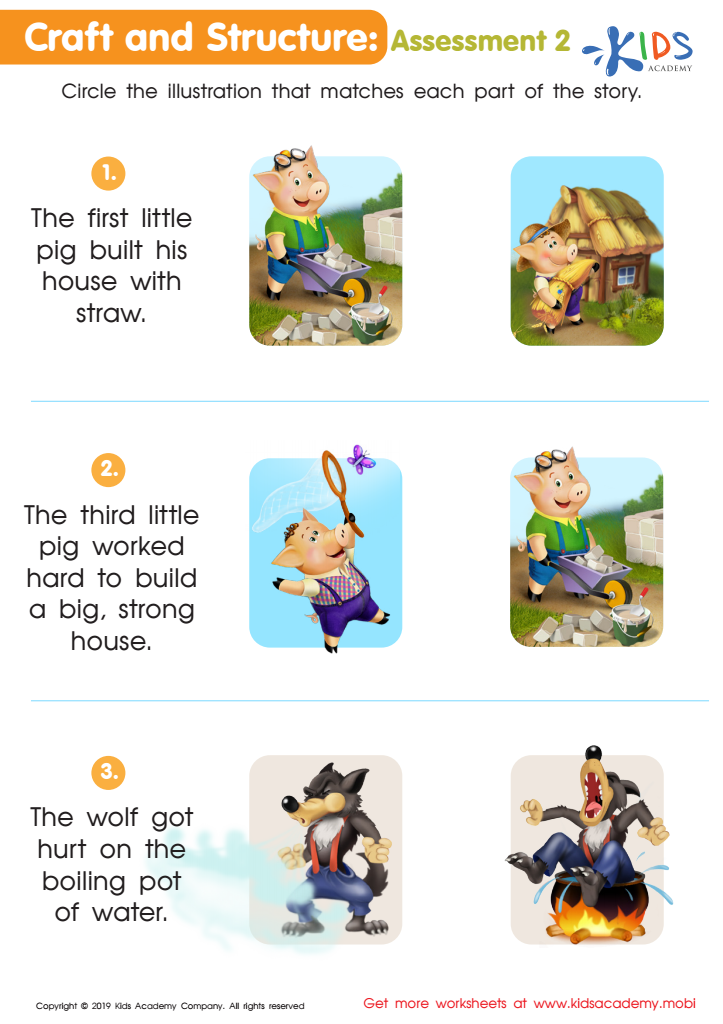
Craft and Structure: Assessment 2 Worksheet 2
 Assign to My Students
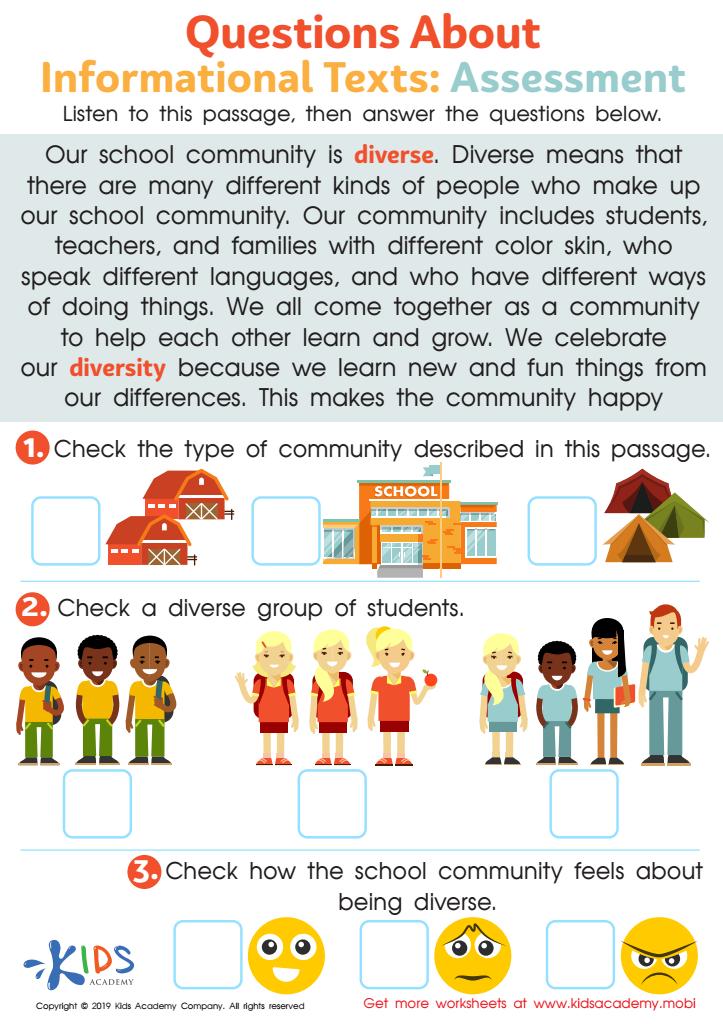
Questions About Informational Texts: Assessment 1 Worksheet
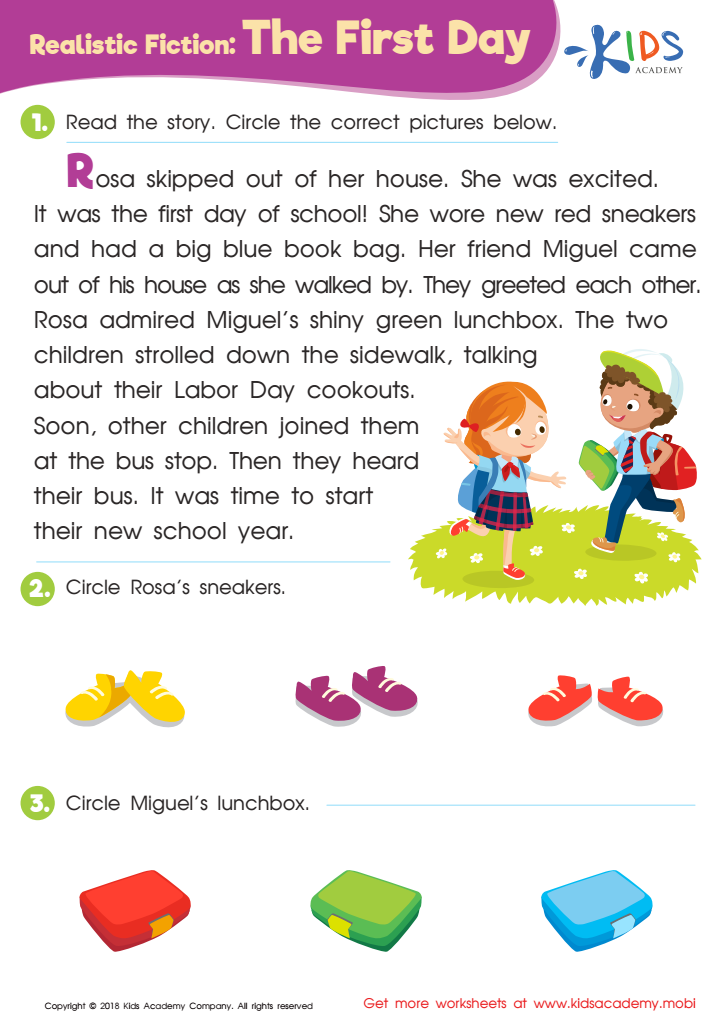
Realistic Fiction: The First Day Worksheet
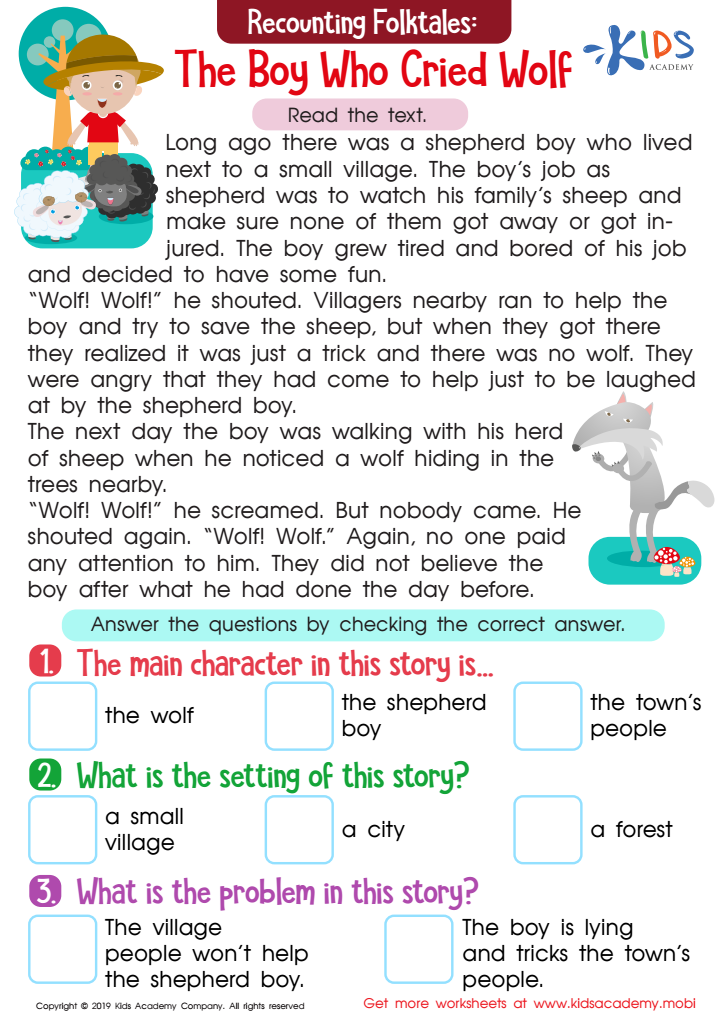
The Boy Who Cried Wolf Part 1 Worksheet




.jpg)

Text analysis for children ages 4-9 is vitally important for their literacy and cognitive development. For parents and teachers, understanding the components of text analysis helps in the selection of appropriate reading materials and in fostering a love for reading early on.
At this young age, children are developing crucial language skills such as phonemic awareness, vocabulary, comprehension, and narrative understanding. Text analysis enables caregivers and educators to choose texts that match the child's developmental stage, providing the right balance of challenge and accessibility. For example, books with repetitive patterns and clear illustrations can support early readers in recognizing word patterns and building confidence.
Additionally, analyzing text complexity helps ensure that children are exposed to a variety of sentence structures, new words, and diverse storytelling techniques. This exposure enriches their language comprehension and encourages critical thinking. Engaging with well-chosen texts can spark curiosity, fostering a lifelong interest in reading and learning.
Moreover, by paying attention to the themes and messages in children's books, parents and teachers can guide children in developing social-emotional skills, empathy, and positive values. Through thoughtful text analysis, adults can select stories that reflect diverse experiences and perspectives, helping young readers build a more inclusive understanding of the world around them. Thus, text analysis is an essential tool in nurturing well-rounded, literate individuals.








