Understanding fractions Worksheets for Ages 4-9
275 filtered results
-
From - To
Discover our engaging "Understanding Fractions Worksheets" designed specifically for children ages 4-9! These interactive resources make learning fractions fun and accessible, featuring vibrant visuals and hands-on activities. Our worksheets help reinforce crucial skills such as recognizing fractions, comparing sizes, and calculating simple fractional parts. The activities are tailored to accommodate different learning styles, ensuring every child builds confidence in their mathematical abilities. Perfect for both classroom and home use, these worksheets aim to provide a solid foundation in understanding fractions, preparing young learners for future math success. Explore the adventure of fractions through creativity and play today!
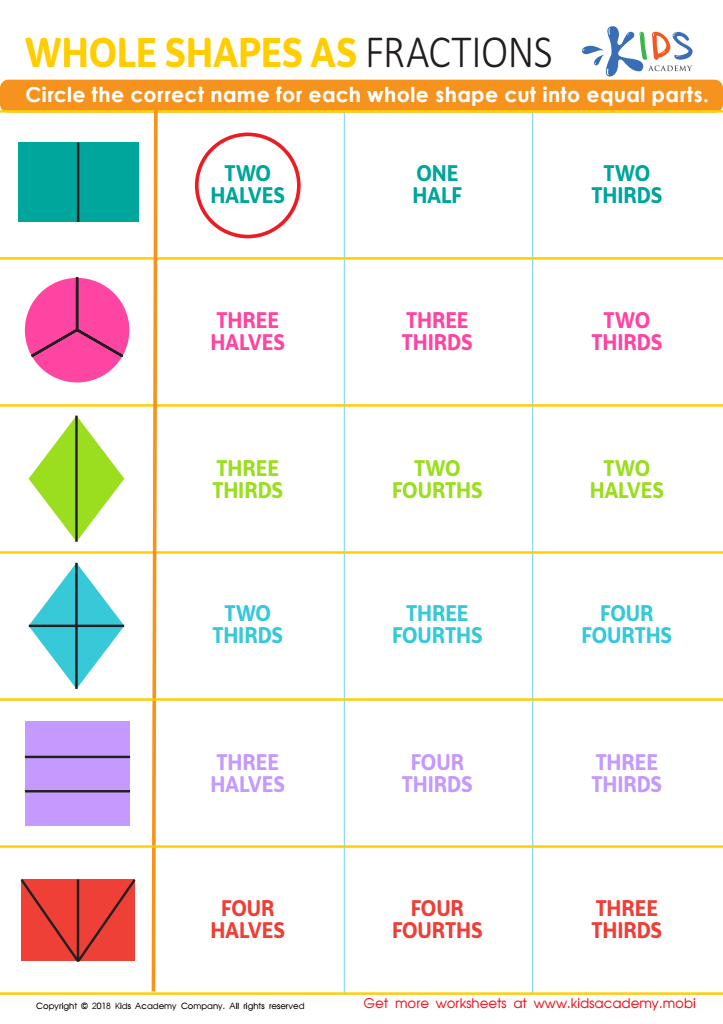
Whole Shapes as Fractions Worksheet
 Assign to My Students
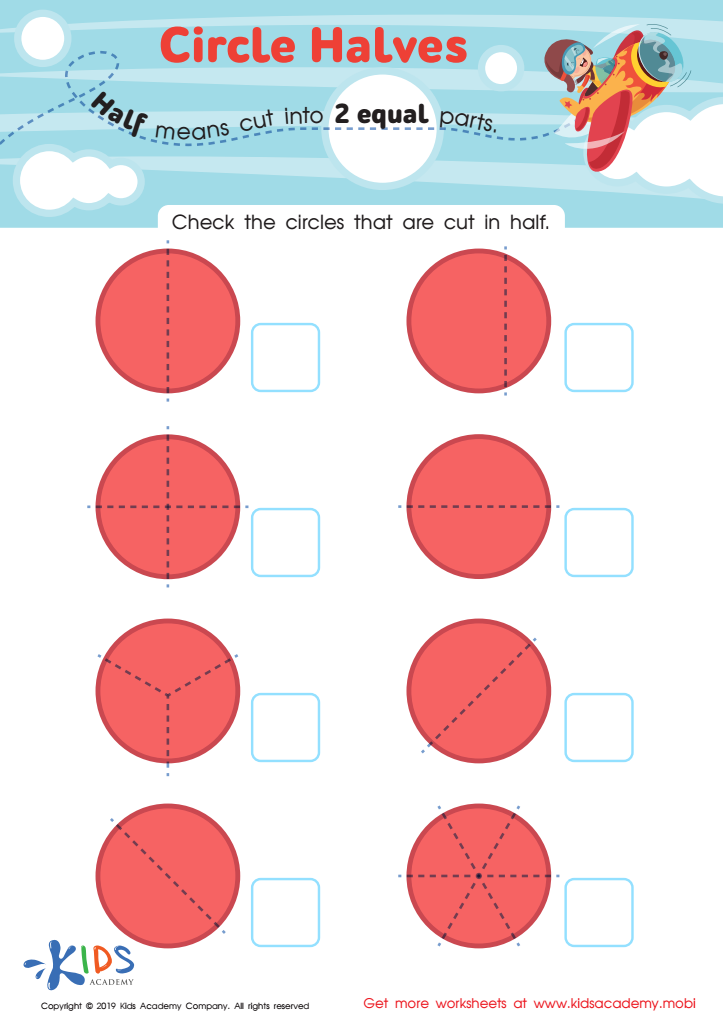
Circle Halves Worksheet
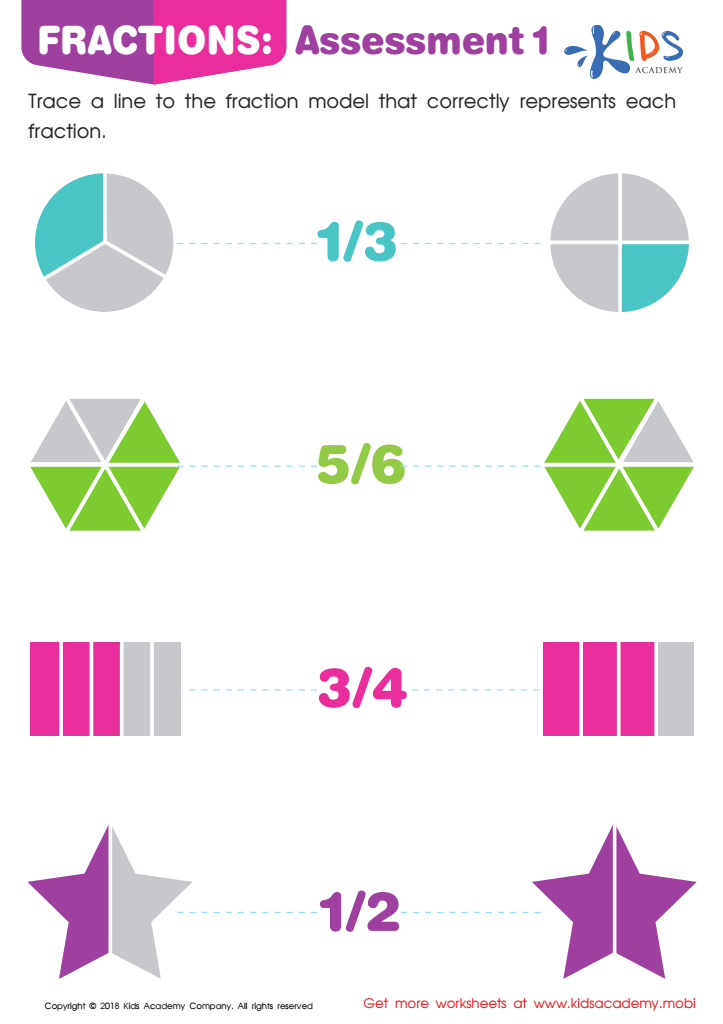
Fractions: Assessment 1 Worksheet
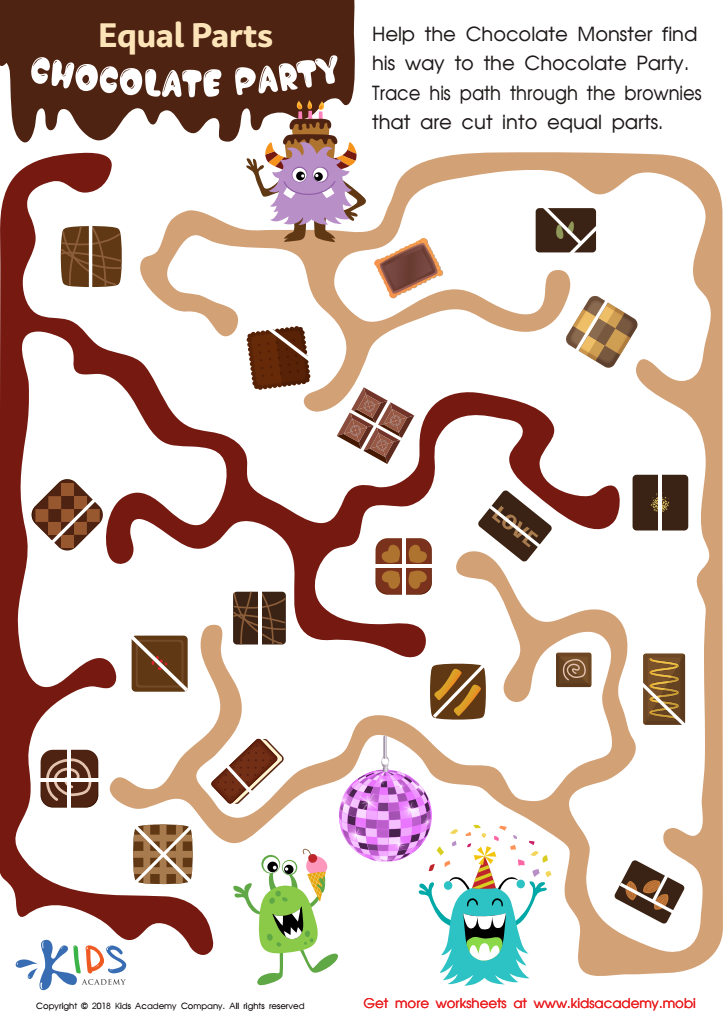
Equal Parts: Chocolate Party Worksheet
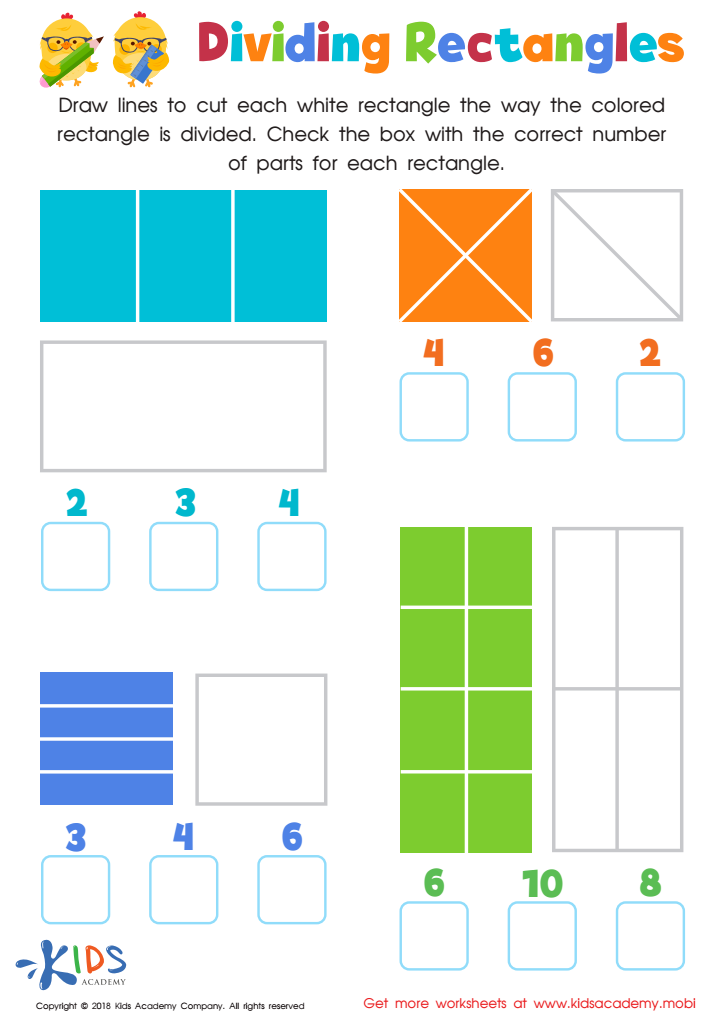
Dividing Rectangles Worksheet
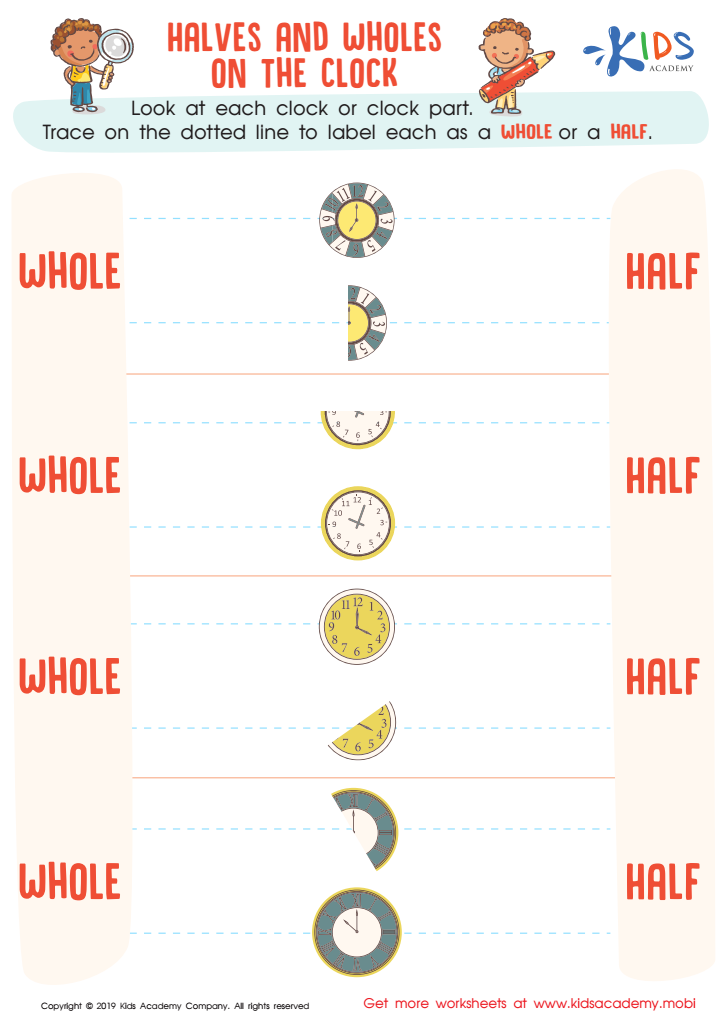
Halves and Wholes on the Clock Worksheet
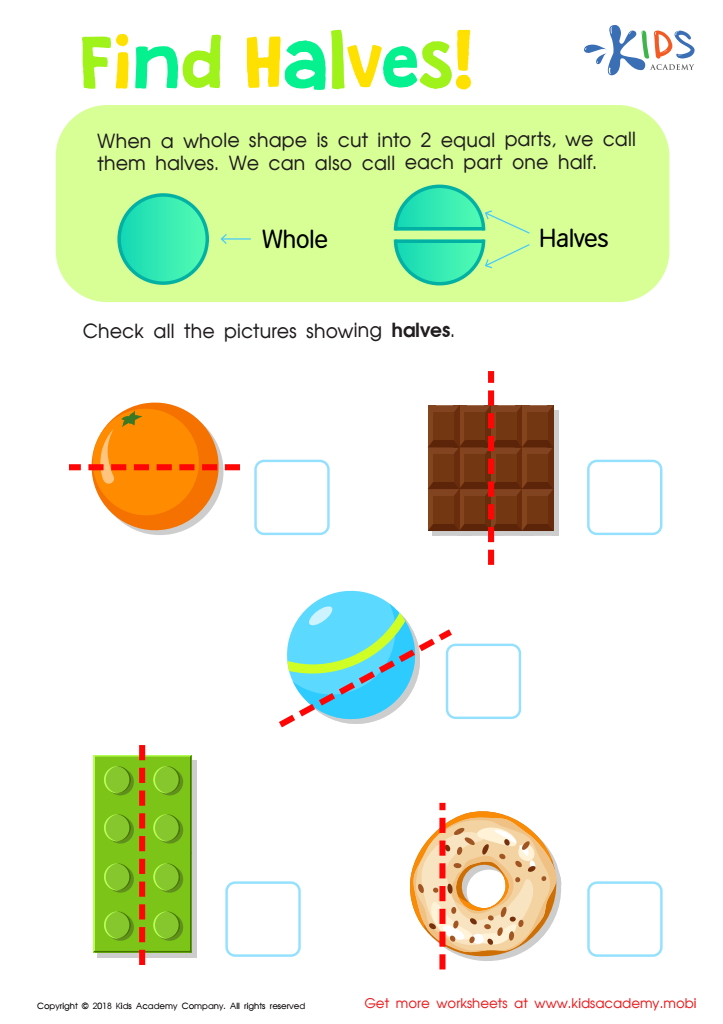
Find Halves Worksheet
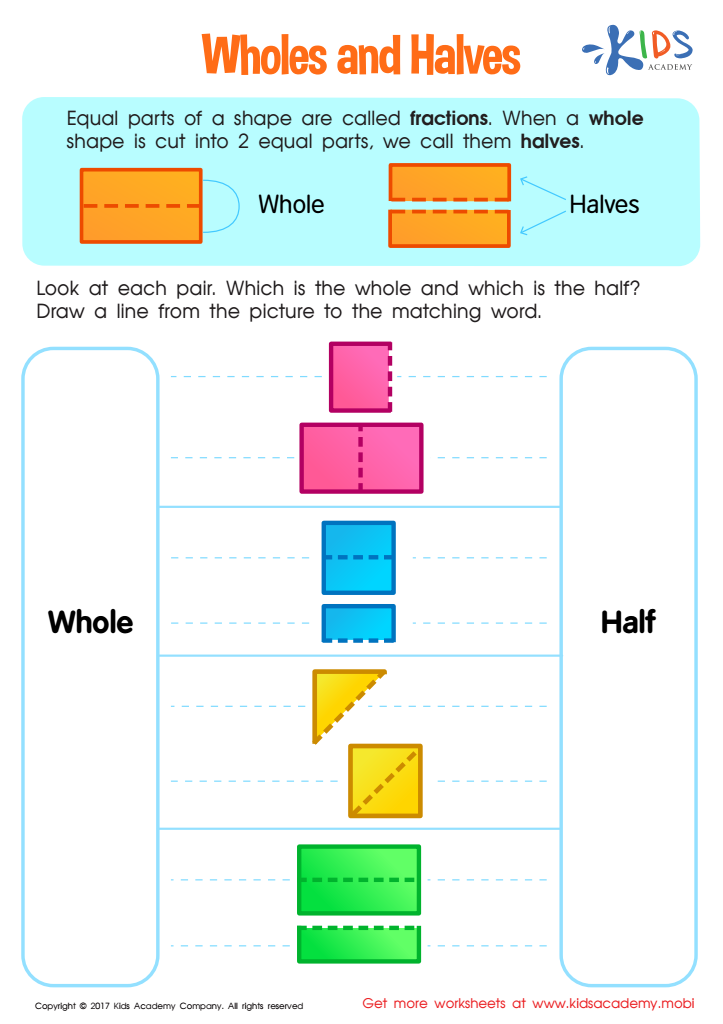
Wholes and Halves Worksheet
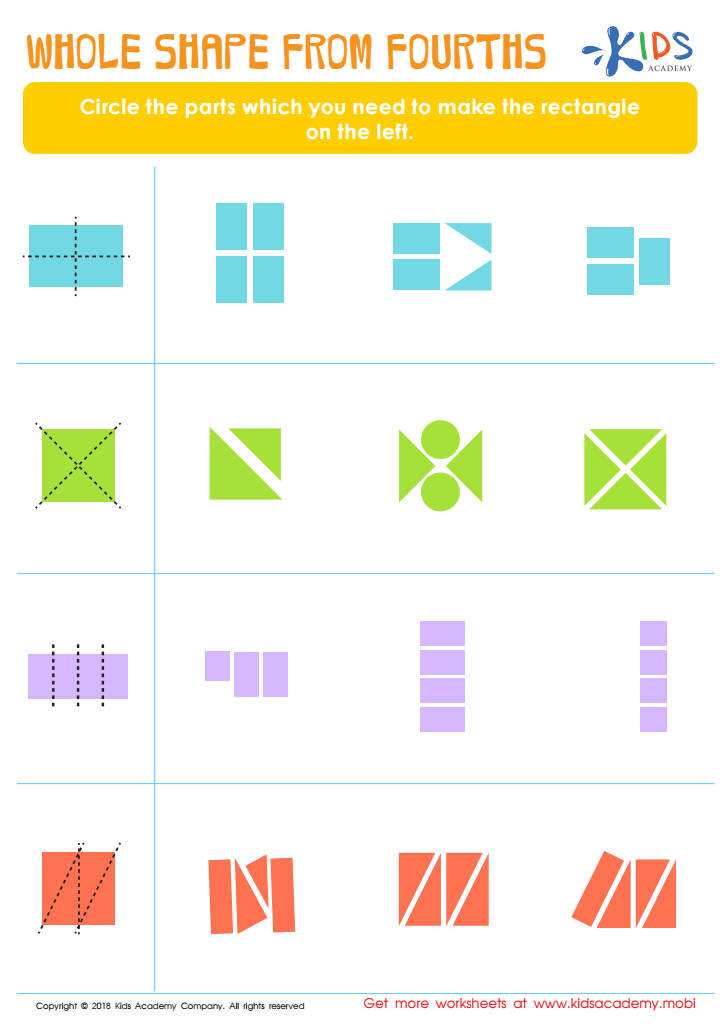
Whole Shape from Fourths Worksheet
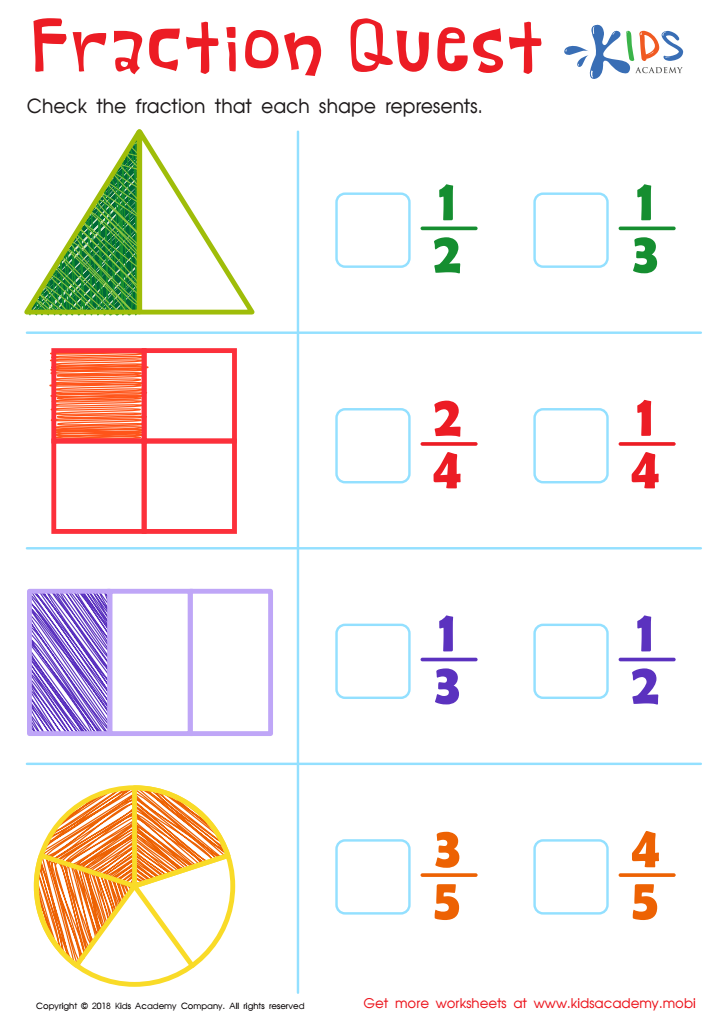
Fraction Quest Worksheet
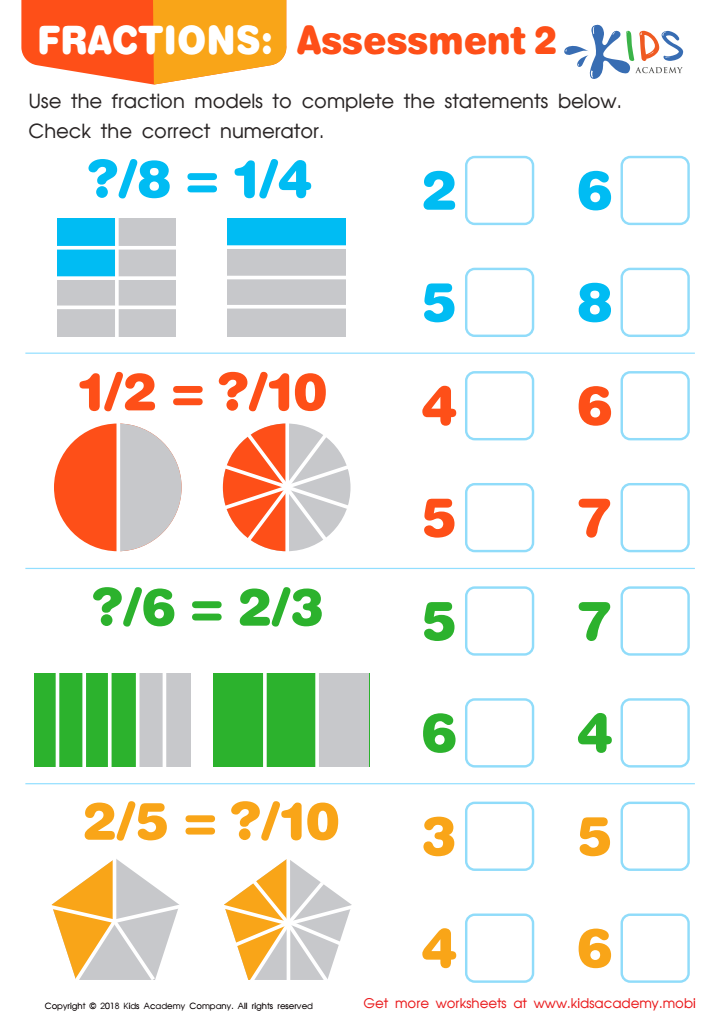
Fractions: Assessment 2 Worksheet






Understanding fractions is crucial for children aged 4-9 as it lays the foundation for their mathematical development and critical thinking skills. At this age, children are beginning to grasp core concepts in mathematics, and early exposure to fractions can build their confidence and engagement in the subject. Fractions help children learn about parts of a whole, comparison, and estimation, enabling them to make sense of the world around them.
Parents and teachers play a vital role in shaping children's attitudes toward math and can facilitate learning through everyday experiences. For example, cooking can be a fun way to demonstrate fractions when measuring ingredients. Additionally, understanding fractions promotes problem-solving skills that translate to real-life scenarios, such as understanding sharing, dividing resources, and budgeting.
Moreover, fostering an early understanding of fractions can help prevent later difficulties in more advanced math topics like algebra and ratios. As these concepts become more complex, a strong fraction foundation can ease the progression into higher-level mathematics. Thus, nurturing a child's comprehension of fractions empowers them with essential life skills and encourages a positive relationship with learning. This makes it imperative for parents and teachers to prioritize and care about teaching these concepts early on.








