Graphs Worksheets for Ages 4-9 - Page 2
27 filtered results
-
From - To
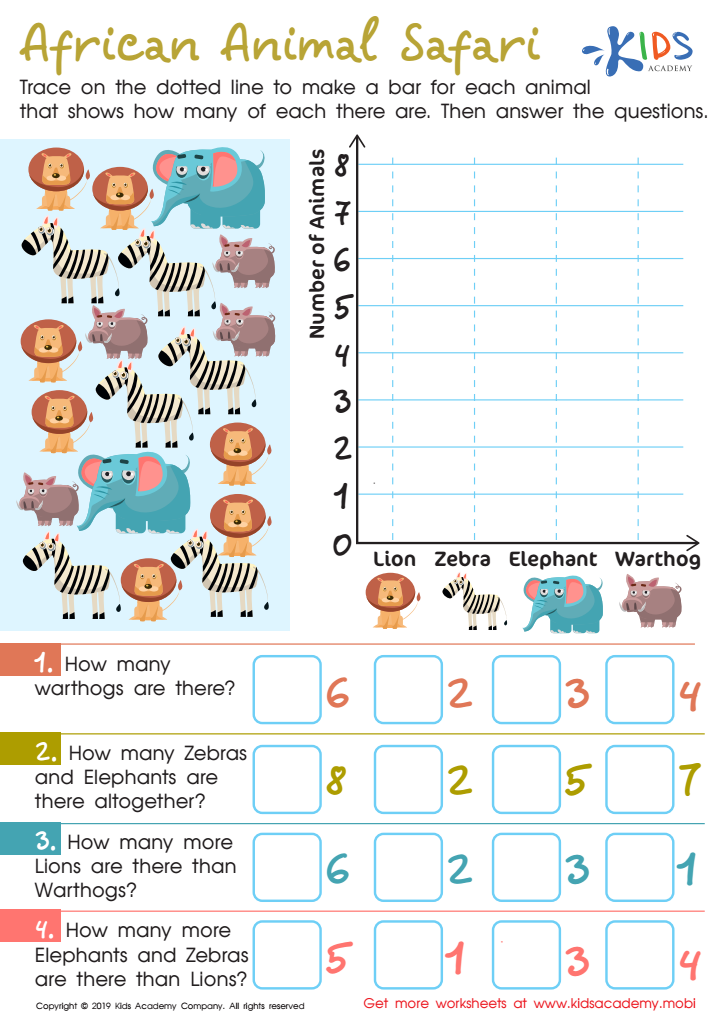
African Animal Safari Worksheet
 Assign to My Students
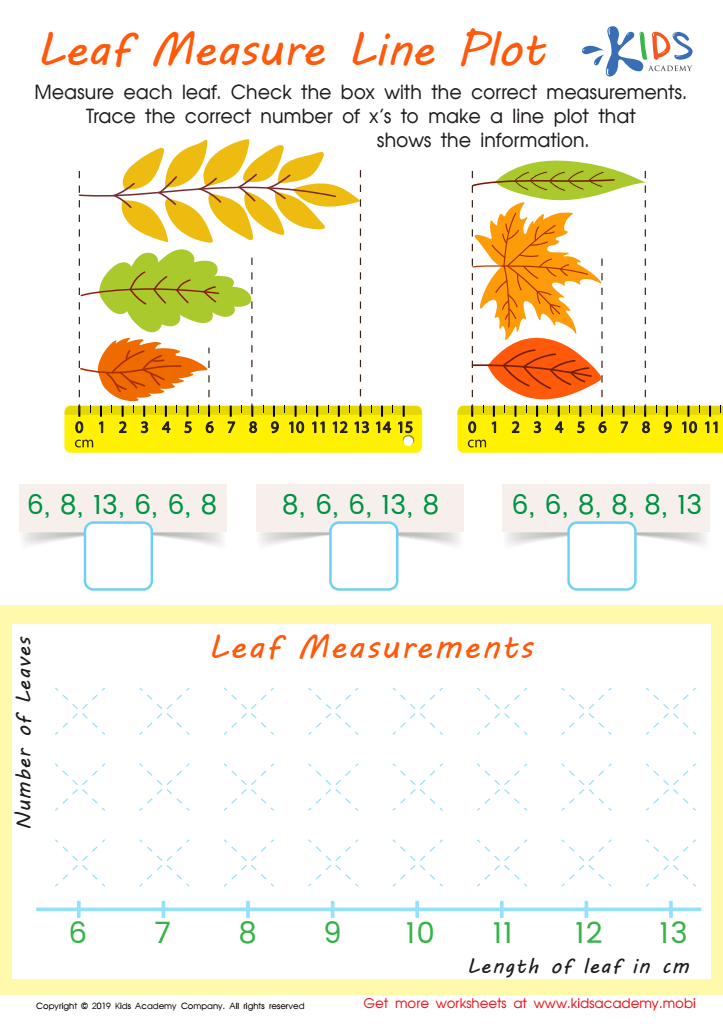
Leaf Measure Line Plot Worksheet
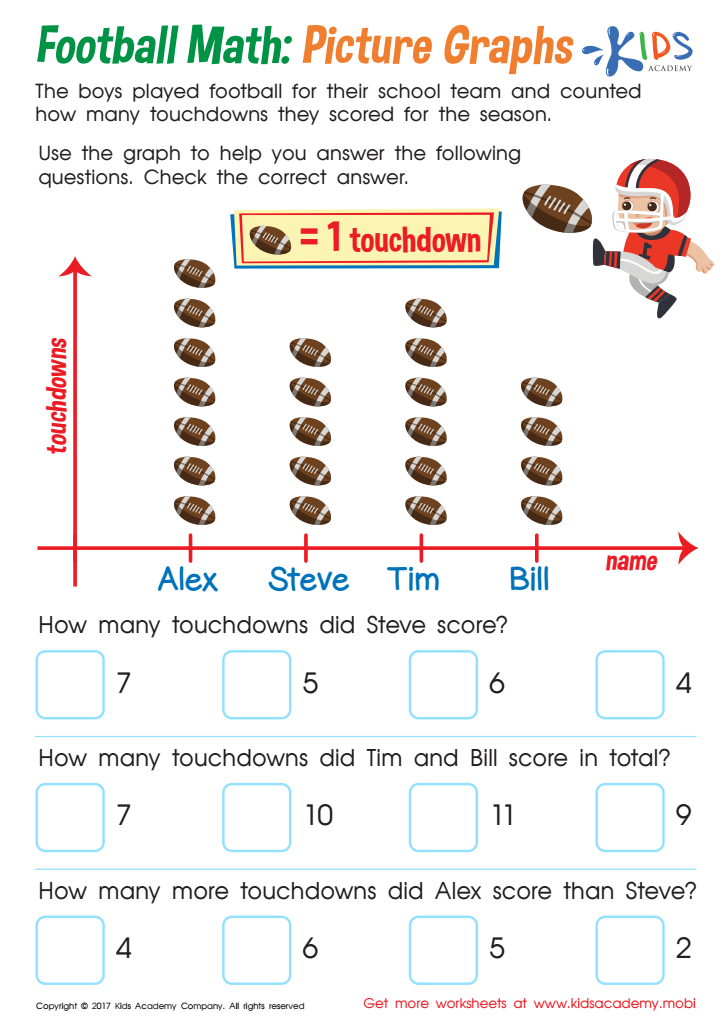
Football Math Worksheet








Graphs are a vital tool for young learners aged 4-9, and both parents and teachers should care about their importance for several reasons. Firstly, graphs help children visualize and comprehend information, making abstract data tangible. For instance, a bar graph depicting favorite fruits enables children to see the differences in quantities at a glance, fostering observational skills and comparative thinking.
Furthermore, introducing graphs at an early age aids in developing critical mathematical concepts. Basic data representation aligns with early math skills, such as counting and addition. Children learn to interpret data, identify patterns, and make informed decisions, laying a strong foundation for future analytical skills.
Additionally, using graphs encourages communication. When kids discuss their findings or create visual representations, they enhance their verbal skills and become more confident in expressing their thoughts. It also promotes teamwork during collaborative graphing activities, fostering social skills.
Lastly, familiarity with graphs prepares children for their academic journey. As they progress in school, data interpretation becomes increasingly significant across various subjects. By integrating graph activities and discussions into play and learning, parents and teachers can equip children with essential skills that will serve them well throughout their education and beyond.








