Filters

9 filtered results

Clear all filters
Favorites
With answer key
Interactive

9 filtered results

Difficulty Level

Grade


Unlock your child's problem-solving potential with our specially designed Problem-Solving Skills Measurement Worksheets tailored for ages 4-9. These engaging, age-appropriate activities help young learners develop critical thinking and analytical abilities through fun and educational math challenges. Each worksheet is crafted by educational experts to ensure alignment with key learning milestones, from basic counting to advanced reasoning tasks. Enhance your child’s interactive learning experience and boost their confidence in tackling real-world problems. Visit Kids Academy to explore our extensive library of printable resources and support your child's journey toward mastering essential problem-solving skills today.

Check out this FREE Trial Lesson on Measurement for age 4-9!

Size Word Problems

Favorites
With answer key
Interactive
  • 4-9
  • Problem-Solving Skills
  • Measurement
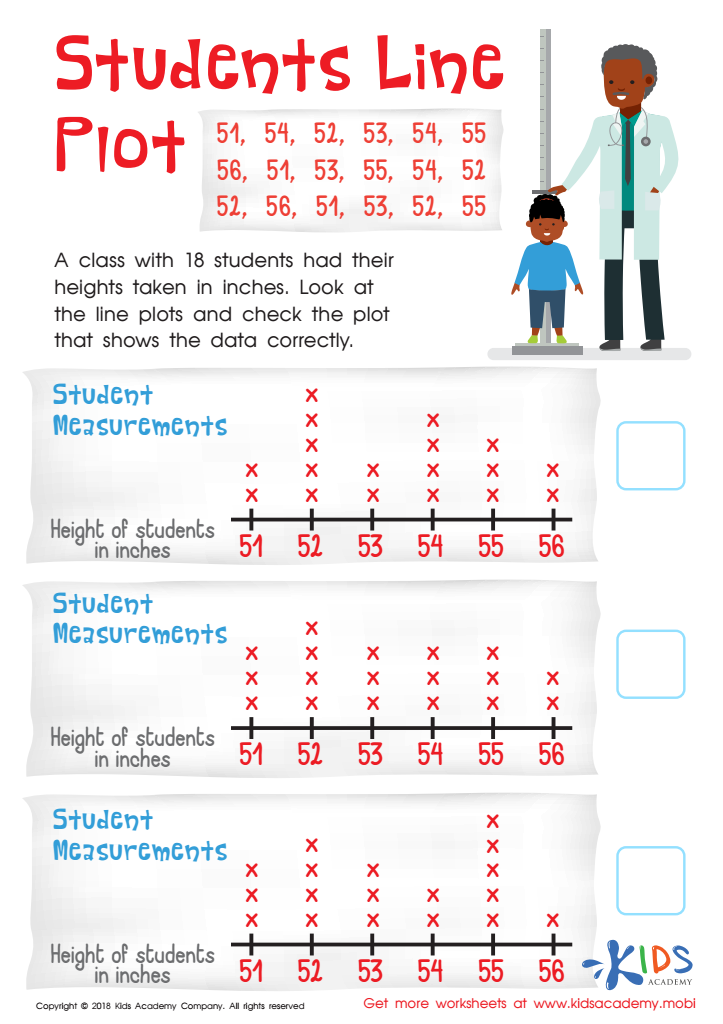
Students Line Plot Worksheet

Students Line Plot Worksheet

Help your students learn to draw a line plot correctly by giving real examples. In this exercise, they must check the data of a class of 18 students' heights (in inches). Have them compare two line plots and figure out which one is correct.
Students Line Plot Worksheet
Worksheet
Estimating Length: Magician's Maze Worksheet

Estimating Length: Magician's Maze Worksheet

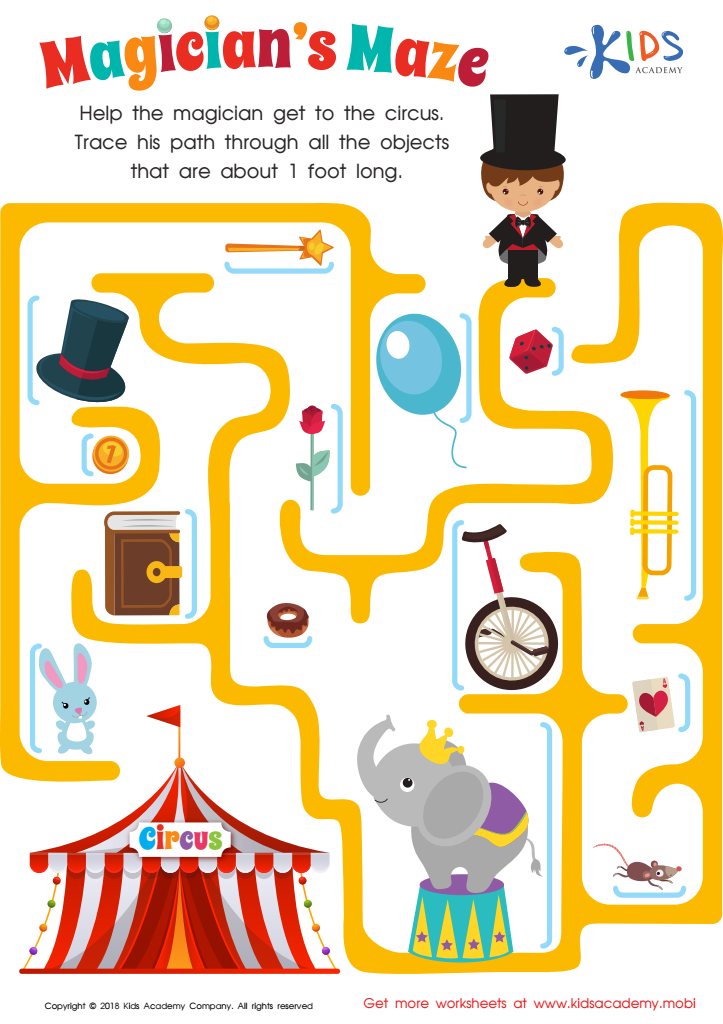
Does your kid want to practice magic and have a blast? This exercise will be a great way to help them do so! In the worksheet, they'll need to guide the magician to the circus. How? By tracing his path through the 1-foot long obstacles in the maze. Once they help him get through the objects, the circus will be just a few steps away!
Estimating Length: Magician's Maze Worksheet
Worksheet
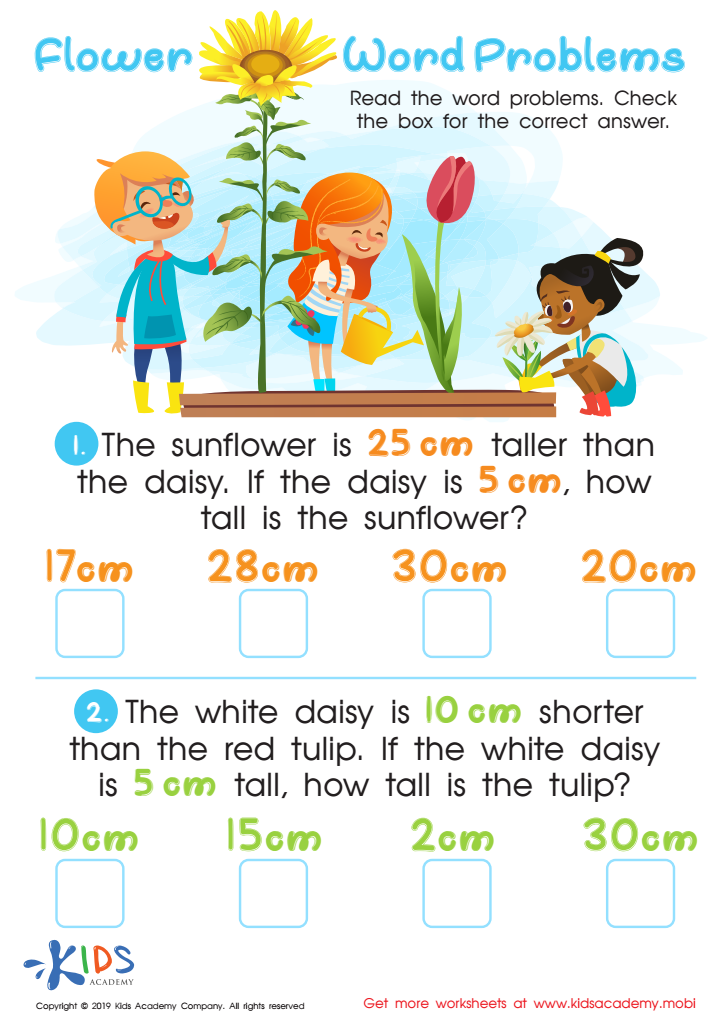
Flower Word Problems Worksheet

Flower Word Problems Worksheet

Practice measuring with word problems on this worksheet. Read the two sentences to your kids, interpret them, and have them check the correct answer. Equations can be presented in various ways; sentences or numbers. Help your kids understand the different forms.
Flower Word Problems Worksheet
Worksheet
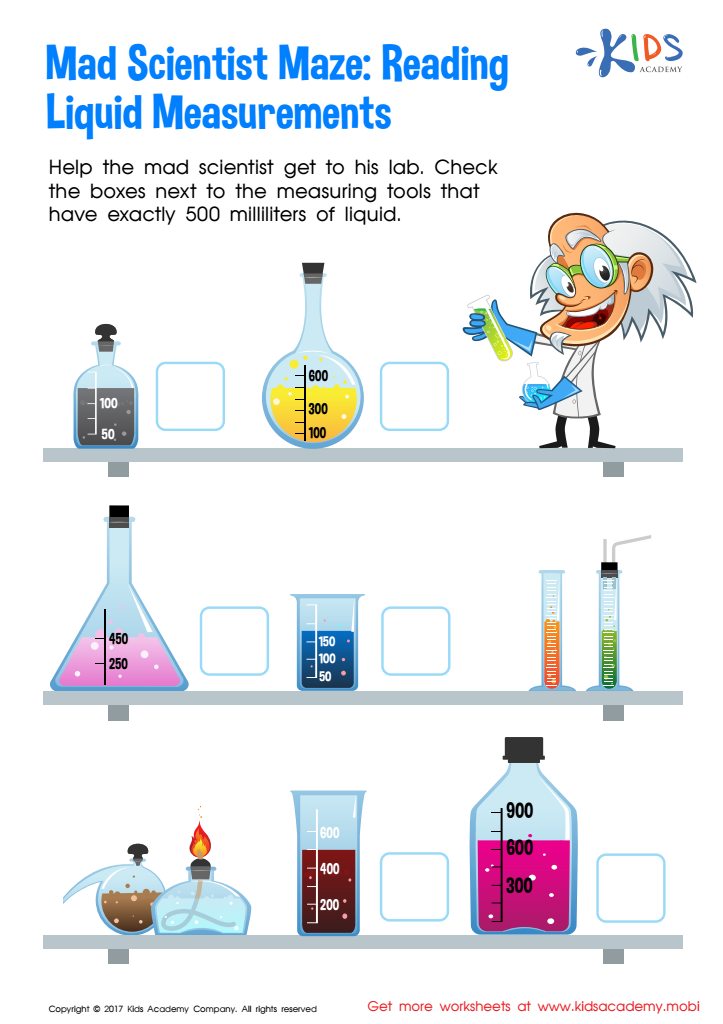
Reading Liquid Measurement Worksheet

Reading Liquid Measurement Worksheet

Help a mad scientist return to his lab by having your child measure the liquid in each flask. Their results will determine his fate! Help a mad scientist return to his lab! Kids can practice reading liquid measurements to the millimeter on this worksheet. Determine the amount of liquid in each flask and let your child's results decide the scientist's fate!
Reading Liquid Measurement Worksheet
Worksheet
Measure It Twice: Feet and Yards Worksheet

Measure It Twice: Feet and Yards Worksheet

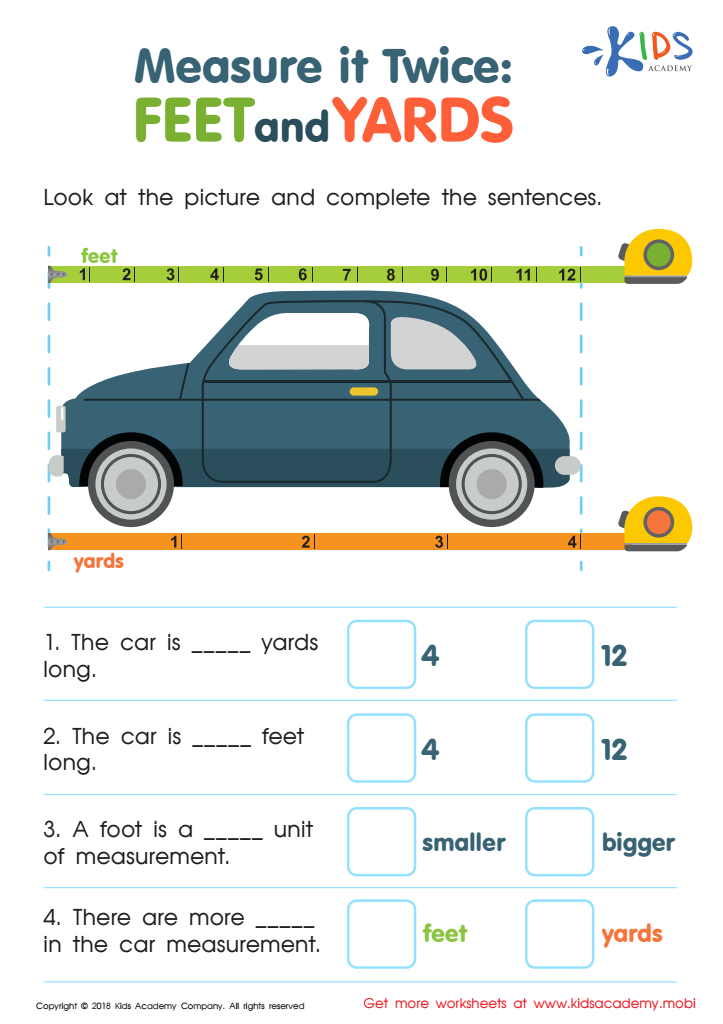
A car is pictured with a metric ruler in feet at the top and a yard ruler at the bottom. Get your child to look at the picture and complete sentences about it; for example, how many yards long is the car? Is a foot a bigger or smaller unit of measurement? It'll teach them that 1 yard is equal to 3 feet.
Measure It Twice: Feet and Yards Worksheet
Worksheet
Line plot worksheet for 2nd grade

Line Plot Worksheet

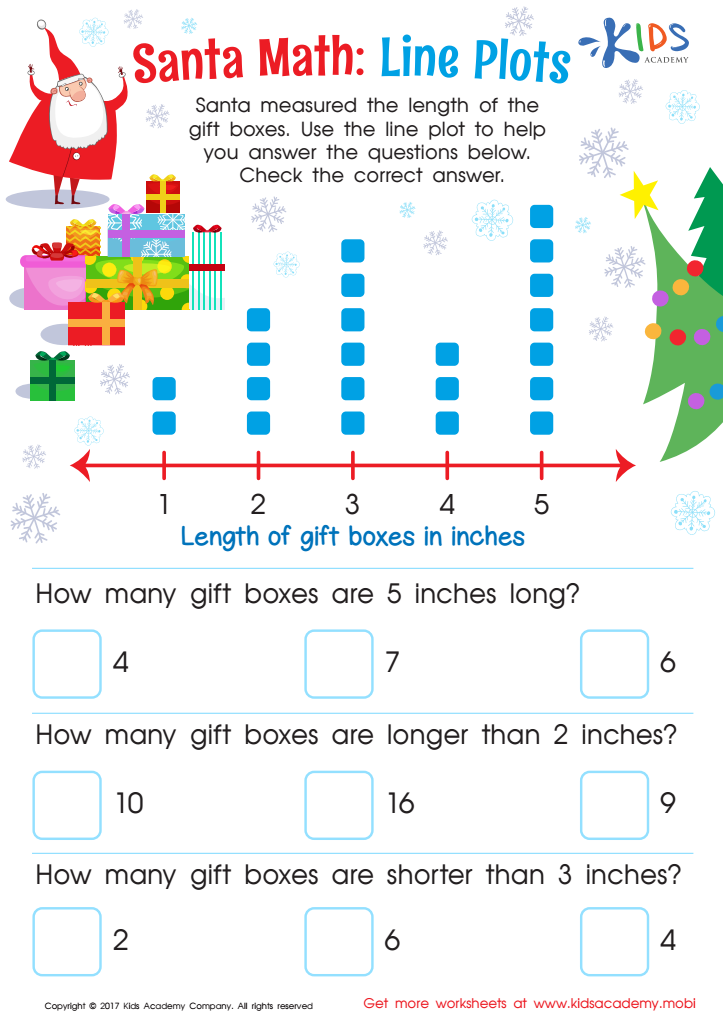
Help your child measure presents with Santa using this 2nd grade line plot worksheet! It's a fun way to boost math skills and analyze data. Plus, it's sure to delight your child!
Line Plot Worksheet
Worksheet
Math puzzle worksheet for kindergarten

Math Puzzle Worksheet

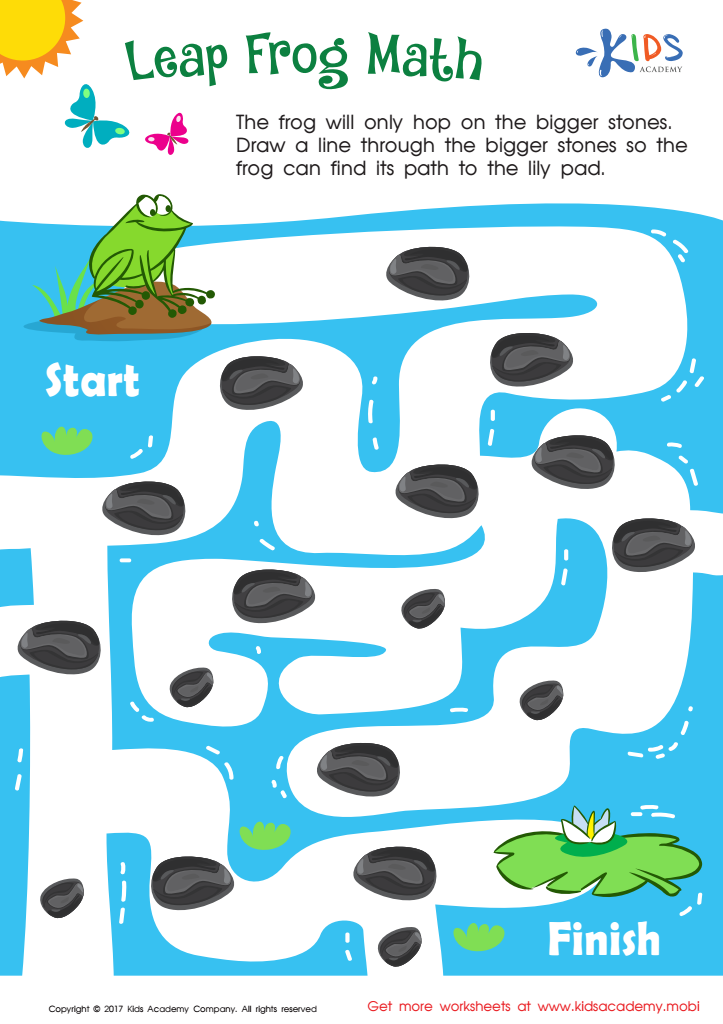
Kids will use their math skills to help the frog get through the maze by selecting the larger stones. Perfect for kindergarteners, it develops the ability to identify size differences.
Math Puzzle Worksheet
Worksheet
Time to Catch the Train Part 1 Worksheet

Time to Catch the Train Part 1 Worksheet

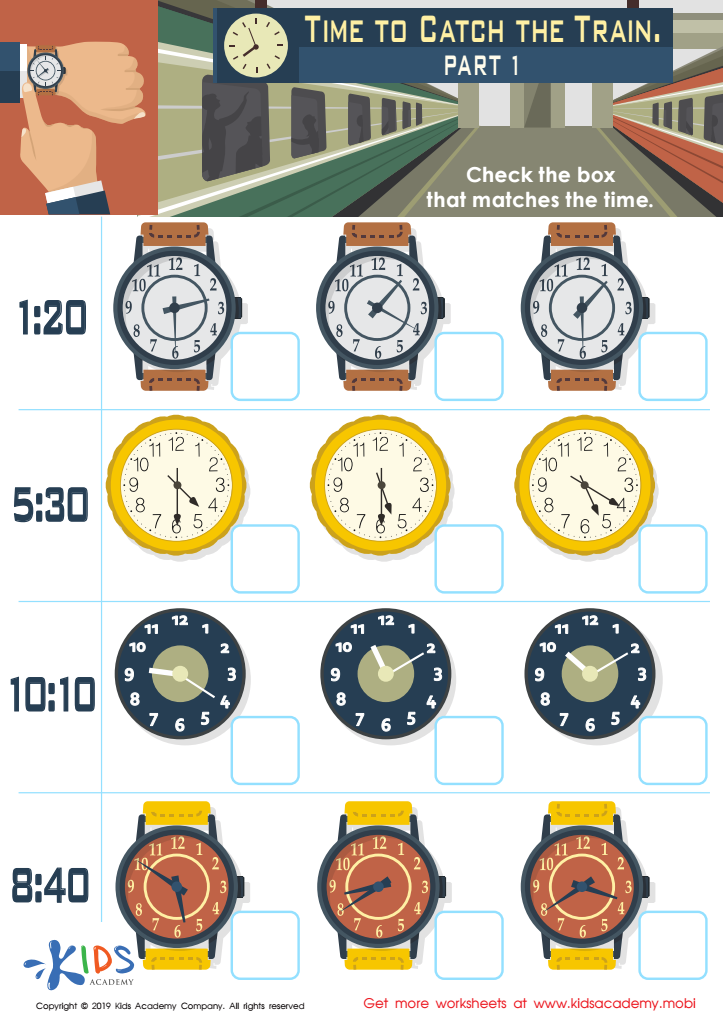
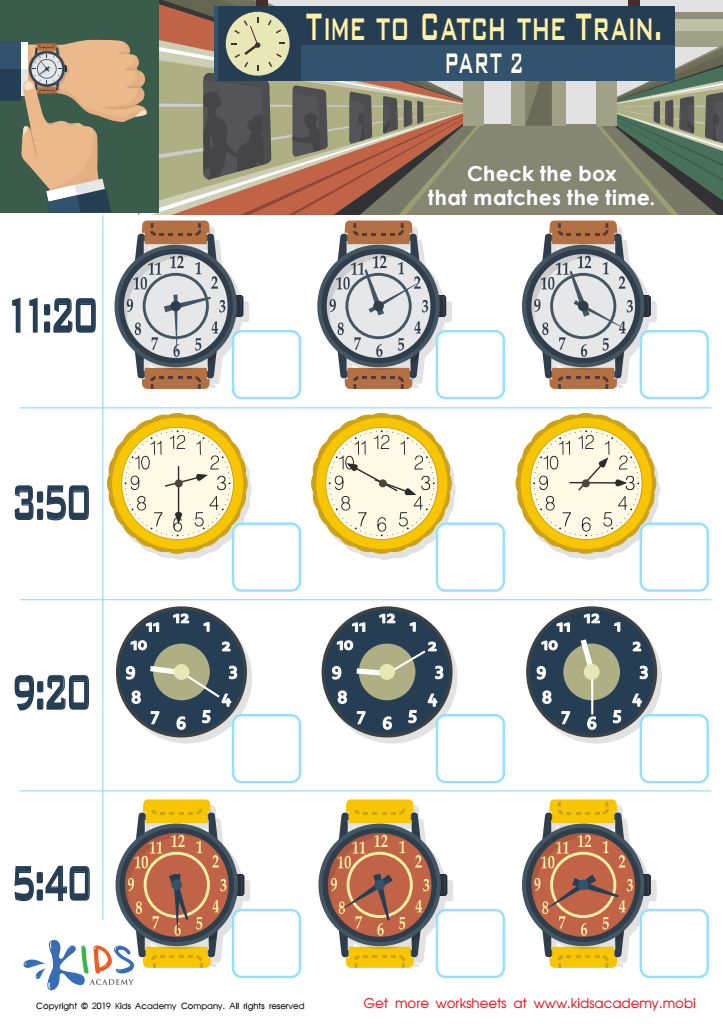
Time is essential for us; it lets us know when to do various things. Your kids likely wake up at a specified hour and prepare for the school bus. Demonstrate to them that time-telling is vital, and show them there are multiple ways to show time. Point to the time written on the left and the watches in the picture. Assist your children to check the box that corresponds to the time.
Time to Catch the Train Part 1 Worksheet
Worksheet
Time to Catch the Train Part 2 Worksheet


Time to Catch the Train Part 2 Worksheet

Teach your kids the importance of telling time and how to do it. Explain that there are multiple ways to show the time, such as written on the left side or watches in the picture. Guide them to check the box that matches the time. Knowing the time is essential to get things done and create order. Ensure your kids understand this and they will reap the benefits.
Time to Catch the Train Part 2 Worksheet

Worksheet


Parents and teachers should care deeply about problem-solving skills measurement for children ages 4-9 because these skills are foundational for future learning and personal development. During early childhood, the brain is highly adaptable and capable of rapid growth, meaning that the skills learned and reinforced during this period set the stage for later academic success and everyday life challenges.

Problem-solving skills are more than just dealing with mathematical or logical puzzles; they encompass critical thinking, creativity, and resilience. By measuring these skills, parents and teachers can identify areas where a child excels and where they may need additional support. Early identification of strengths and weaknesses allows for timely interventions that can guide a child's growth more effectively.

Additionally, problem-solving skills are pivotal for social development. They equip children with tools to navigate interpersonal relationships, collaborate with peers, and handle conflicts constructively. These skills contribute to a child's emotional intelligence, which is crucial for developing empathy and understanding different perspectives.

Overall, measuring problem-solving skills equips educators and parents with the data needed to foster an environment where children develop into well-rounded individuals, capable of facing future challenges with confidence and adaptability. Ignoring this measurement is a missed opportunity to influence a child’s development positively from a young age.