Counting practice Science Worksheets for Ages 4-9
6 filtered results
-
From - To
Explore our Counting Practice Science Worksheets for ages 4-9, designed to seamlessly blend math and science fun. These engaging, printable worksheets help young learners master counting skills while discovering exciting scientific concepts. Your child will enhance their STEM foundations through hands-on exercises such as counting colorful scientific objects, joining dot-to-dot activities, and solving fun puzzles. Tailored to capture curiosity and foster a love for learning, our worksheets are perfect for classroom use or extra practice at home. Click to download and let the counting and discovery begin with Kids Academy's expert-crafted resources!
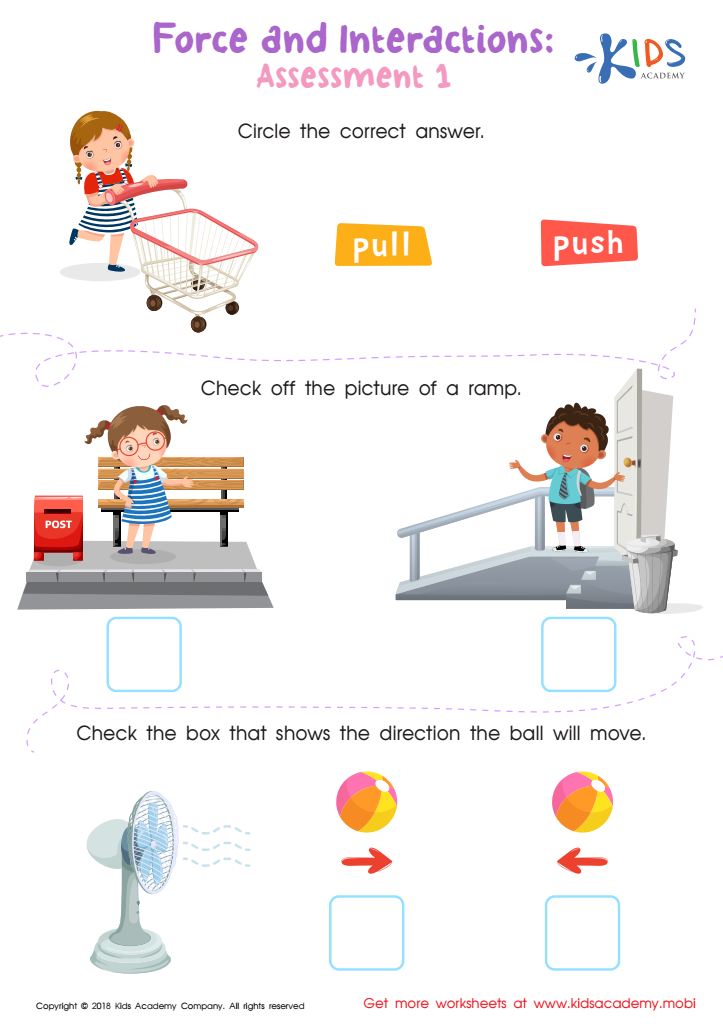
Force and Interactions: Assessment 1 Worksheet
 Assign to My Students
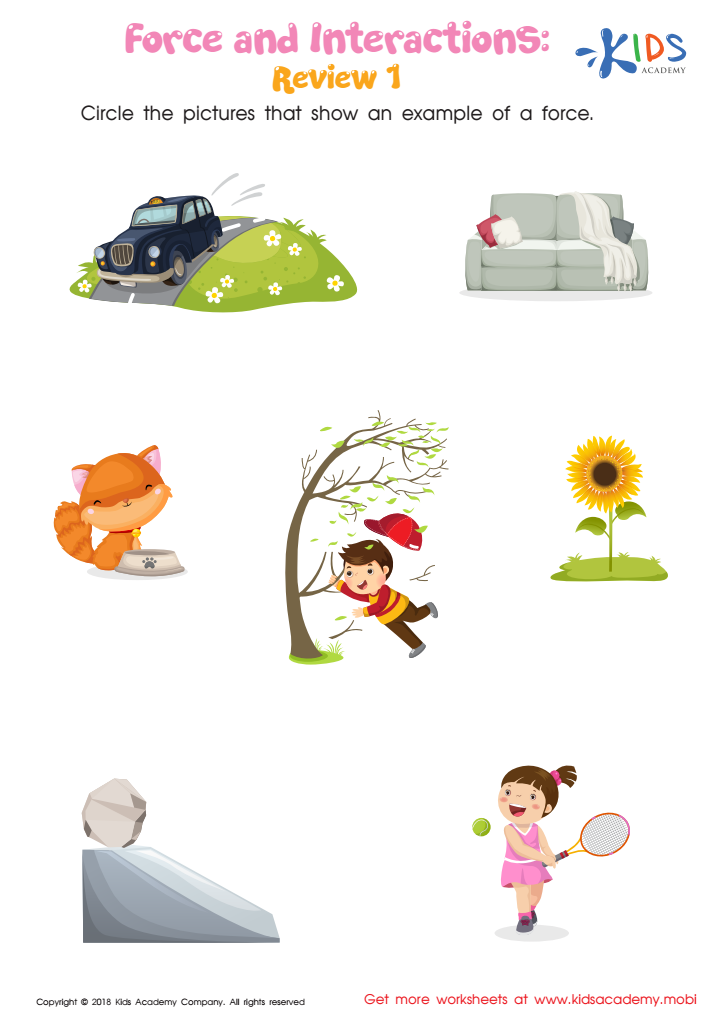
Force and Interactions: Review 1 Worksheet
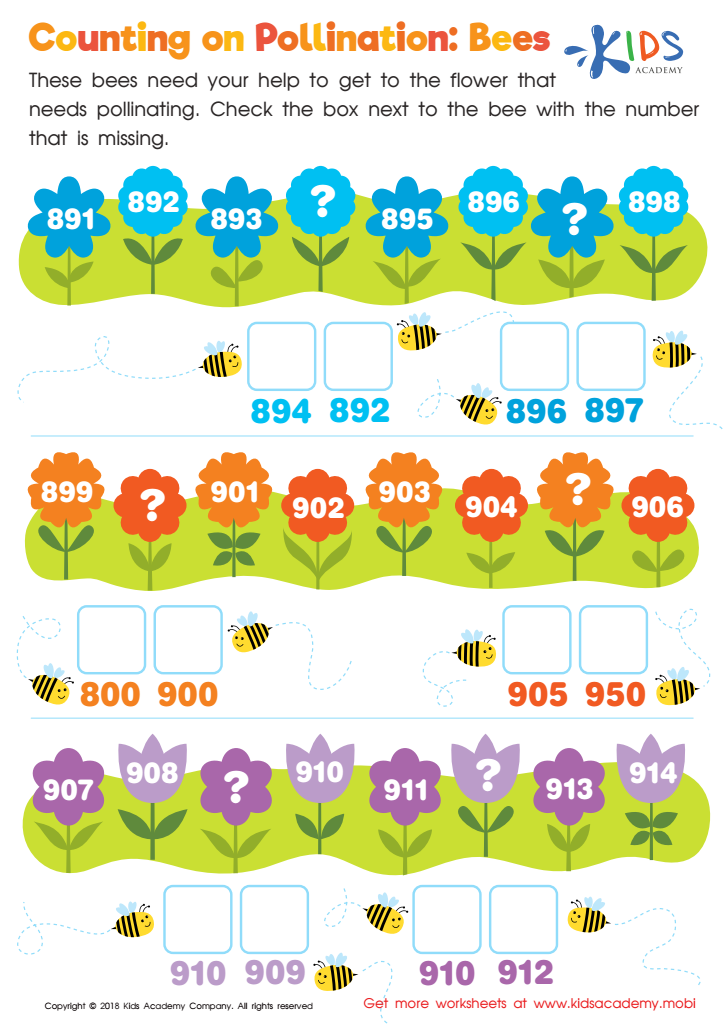
Counting on Pollination: Bees Worksheet
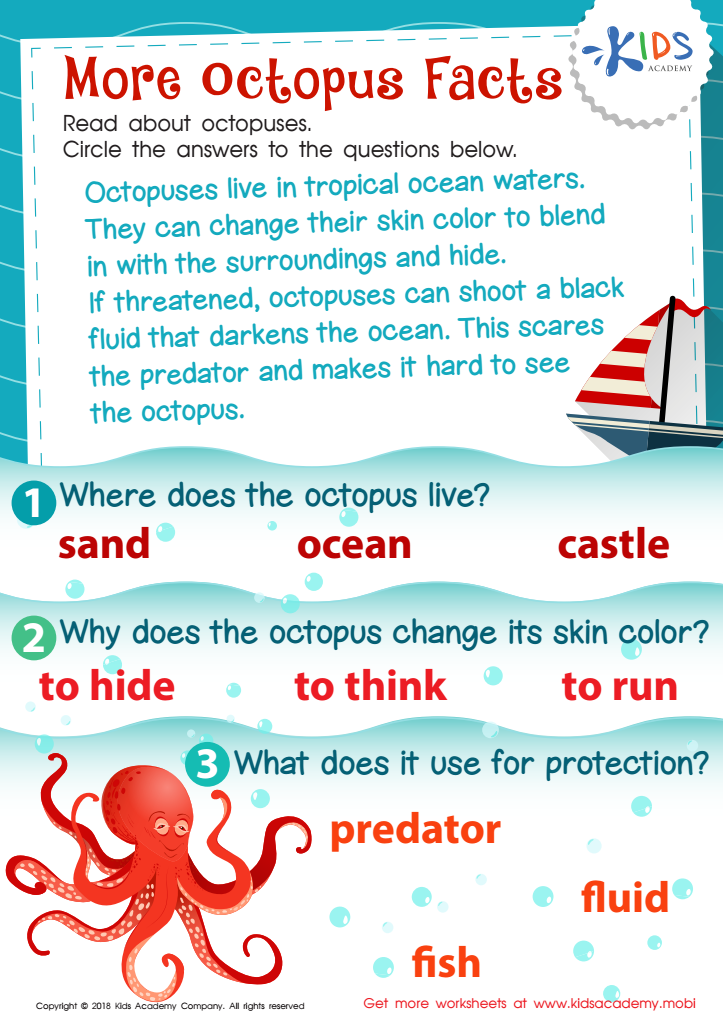
More Octopus Facts Worksheet
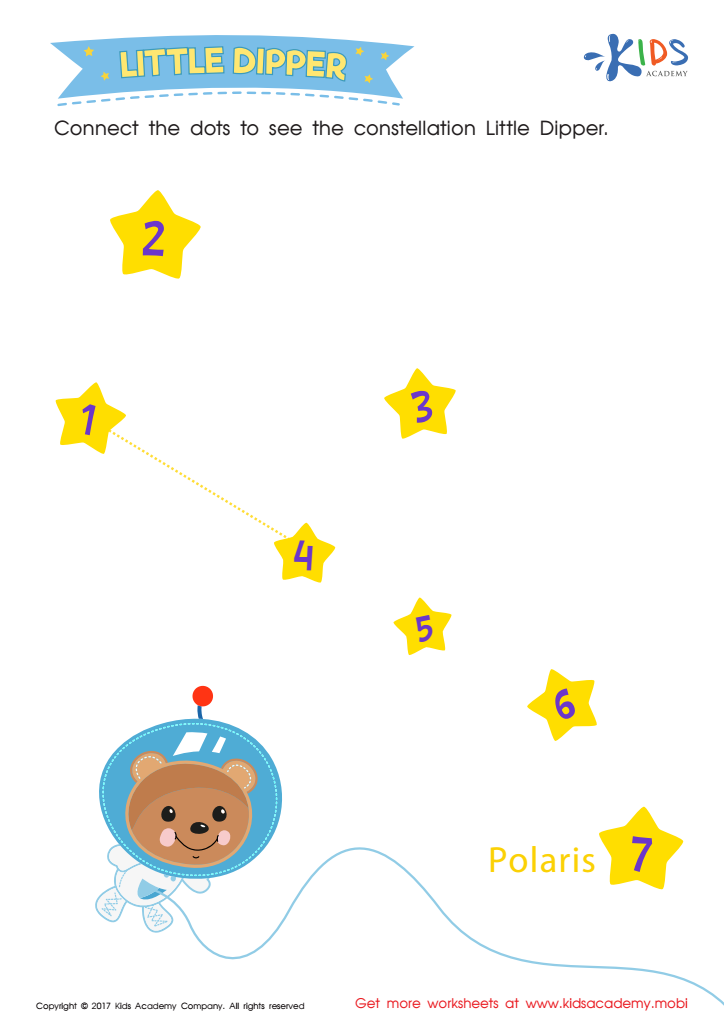
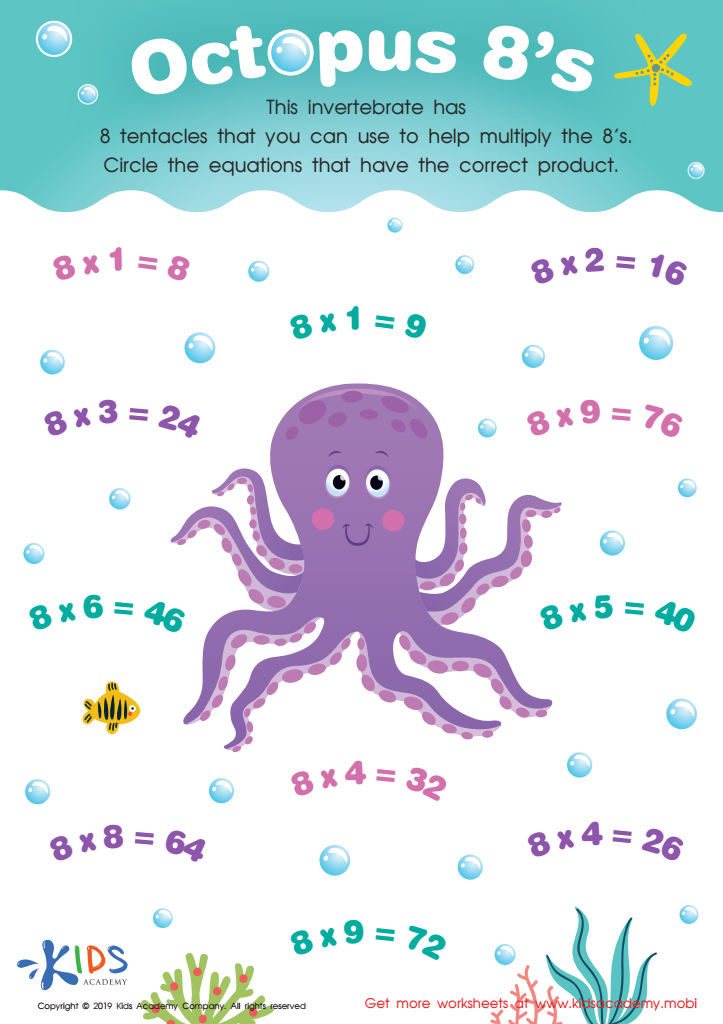
Octopus 8’s Worksheet







Counting practice is vital for young children aged 4-9 as it lays the foundation for their mathematical development and overall cognitive growth. Parents and teachers should prioritize this practice for several reasons.
First, counting enhances number sense, which is the ability to understand and work with numbers. This skill is essential for more advanced mathematical concepts that children will encounter in later grades. Early counting practice helps children grasp the concepts of quantity, order, and value.
Second, counting activities promote fine motor skills and hand-eye coordination, especially when involving physical counting objects like blocks or beads. Handling these objects improves dexterity and spatial awareness.
Third, counting fosters problem-solving abilities and critical thinking. Children learn to recognize patterns, make predictions, and engage in logical reasoning through counting exercises.
Moreover, counting practice can boost language development as children learn new vocabulary and improve their communication skills by discussing numbers and counting methods. Additionally, counting activities can be socially engaging, encouraging teamwork and cooperation when done in group settings.
In summary, counting practice in early childhood education builds a solid academic foundation, enhances cognitive and motor development, and promotes social and linguistic growth, making it a key focus for both parents and teachers.







