
Understanding moon phases Science Worksheets for Ages 4-9
3 filtered results
Difficulty Level
Grade
Age
-
From - To
Subject
Activity
Standards
Explore our engaging "Understanding Moon Phases" science worksheets designed for children ages 4-9! With colorful activities and easy-to-understand explanations, these worksheets challenge young learners to discover the different phases of the moon, from Full Moon to New Moon. Kids will enjoy drawing, labeling, and matching tasks that reinforce essential science concepts while boosting their creativity and critical thinking skills. Each worksheet is crafted to make astronomy accessible and fun, fostering curiosity about the night sky. Perfect for classrooms or at-home learning, our resources support educators and parents in bringing science to life! Download now and ignite a passion for learning about space!
Favorites
With answer key
Interactive
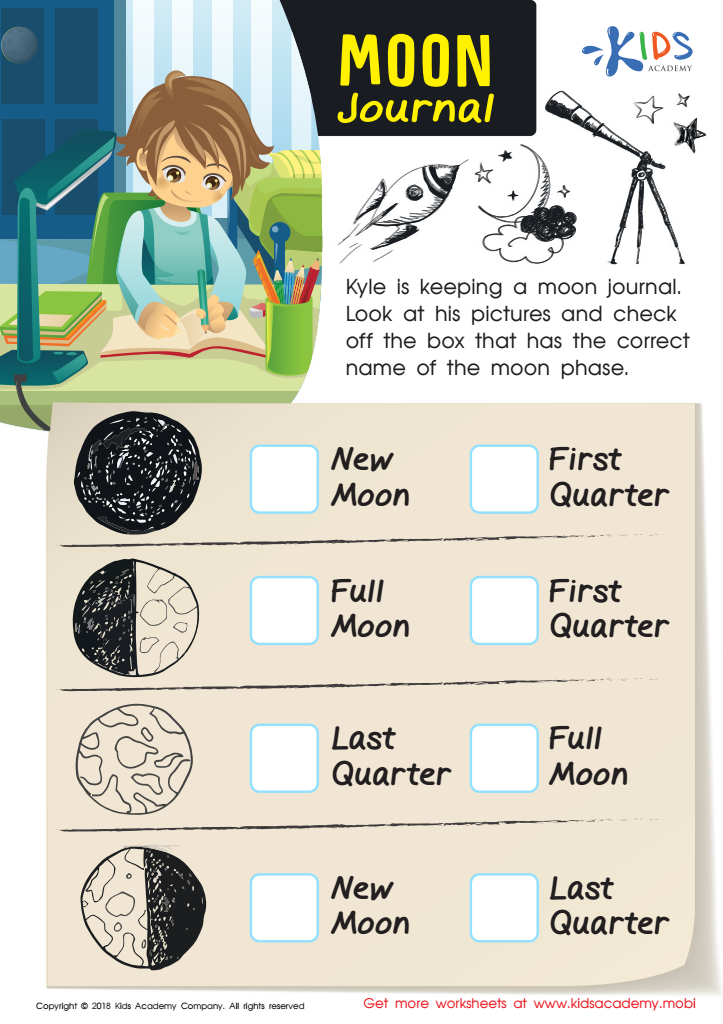
Moon Journal Worksheet
Observe the moon and its 8 phases with your child by downloading this free PDF worksheet from Kids Academy! Review the moon phases with them then help them label Kyle's moon journal. Select the right moon phase for each picture to complete the page!
 Assign to My Students
Moon Journal Worksheet
Worksheet
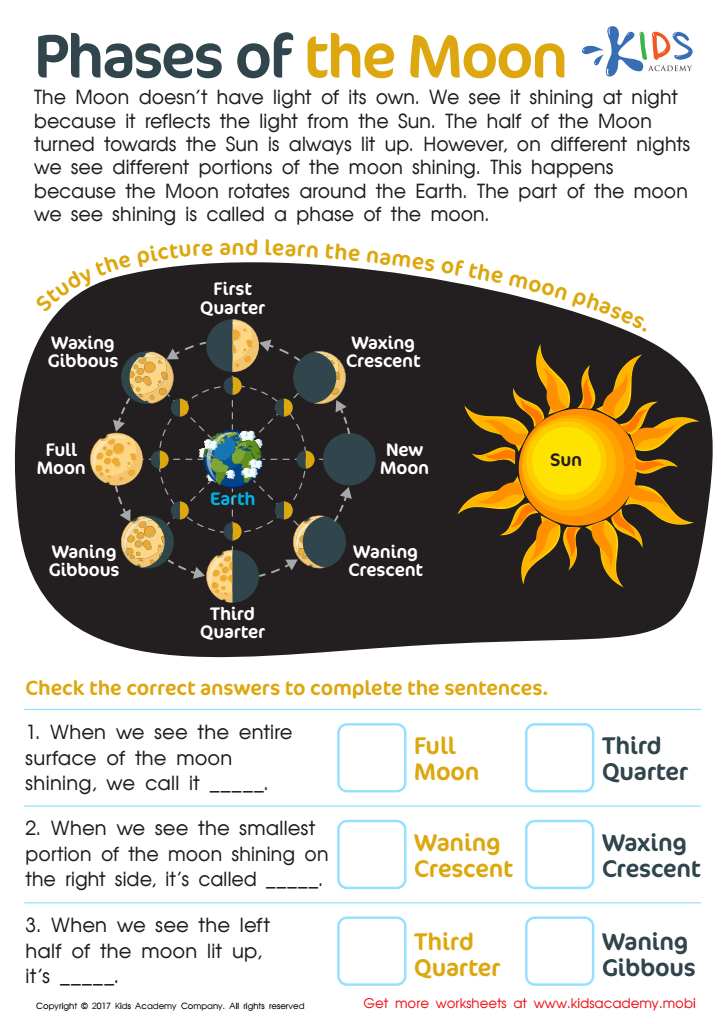
Phases of The Moon Worksheet
It'll show kids the fascinating phases and journey the moon takes around Earth. They'll be amazed to learn it's not always shining!
Phases of The Moon Worksheet
Worksheet
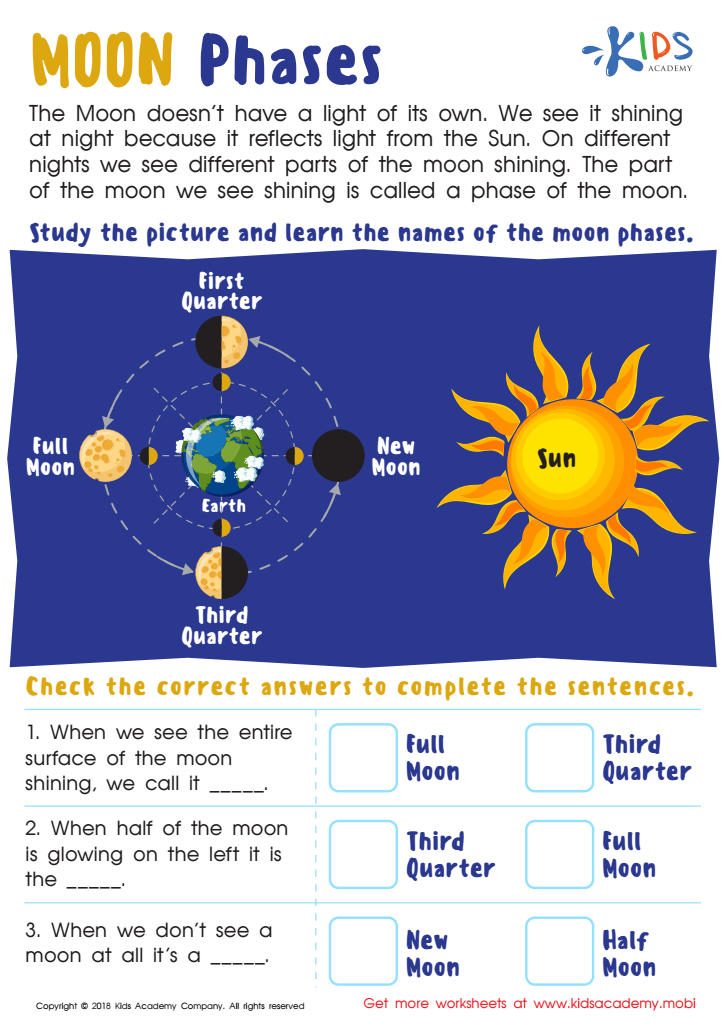
Moon Phases Worksheet
Gaze up at the night sky and the moon's appearance may change from night to night. Encourage your child to learn more about the sun, the moon, and space with this science worksheet. Have them read the text then study the picture. Finally, read the sentences and check the answers to identify the moon's phases.
Moon Phases Worksheet
Worksheet
Join Kids Academy for Free
Who is primarily going to use this learning content?







Understanding moon phases is essential for children aged 4-9 as it lays a foundation for various scientific concepts and fosters curiosity about the world. At this young age, children are naturally inquisitive, and learning about the moon can spark their interest in astronomy and teach them to observe nature critically. Recognizing moon phases introduces them to cycles and patterns, crucial elements in science, mathematics, and environmental studies.
Moreover, knowledge of moon phases enhances children's awareness of how celestial bodies influence our planet and daily life. For example, discussing the moon's effects on tides can help them grasp cause-and-effect relationships. This topic is also relatable; children often see the moon in the sky and can connect their learning to real-life experiences, helping to reinforce memory retention.
Additionally, moon phases provide opportunities for interdisciplinary learning. Although it's a science topic, it can be integrated with art through moon-themed crafts, literacy by reading stories about the moon, and even geography when discussing myths and cultures related to it. By engaging with this subject, educators and parents can encourage critical thinking and a lifelong love for learning in young children. Understanding the moon is not just scientific; it's part of our shared human experience.







