Weather Vocabulary Weather Worksheets for Ages 4-9
4 filtered results
-
From - To
Discover our engaging "Weather Vocabulary Weather Worksheets for Ages 4-9"! Designed to make learning fun, these worksheets help kids explore weather concepts and vocabulary through interactive activities. Enhance your child's understanding of weather patterns, seasons, and related terms with vibrant illustrations that capture their imagination. Ideal for both classroom and at-home learning, these printable worksheets support early language skills and scientific curiosity. Fuel your child's love for learning with our expertly crafted materials, tailored for young learners aged 4-9. Start your weather adventure today with our educational resources!
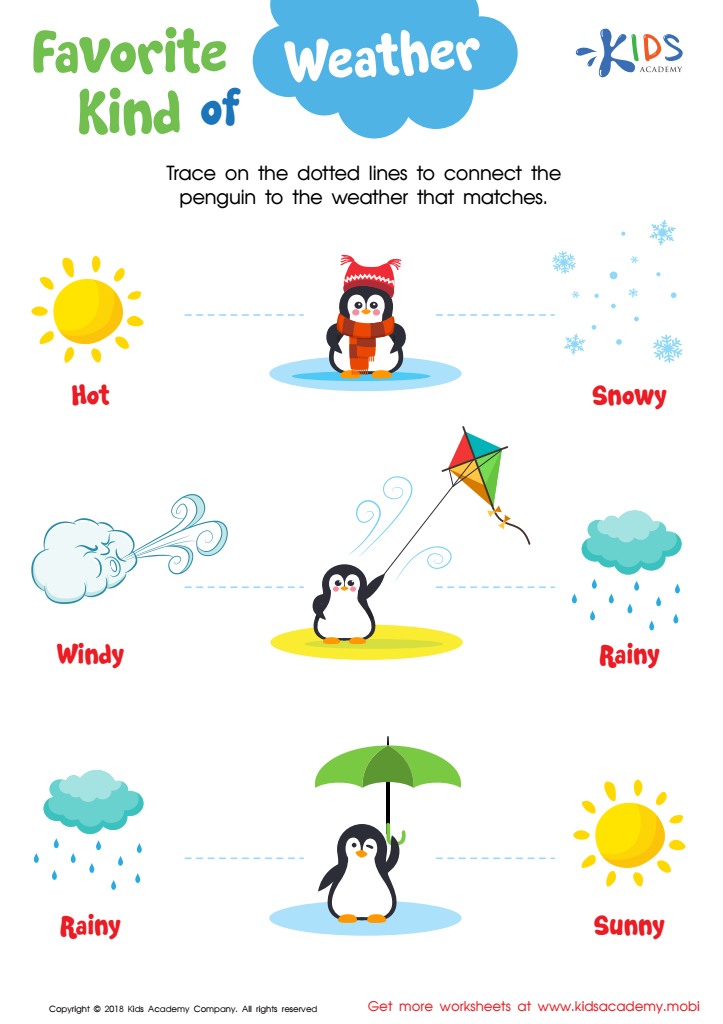
Favorite Kind of Weather Worksheet
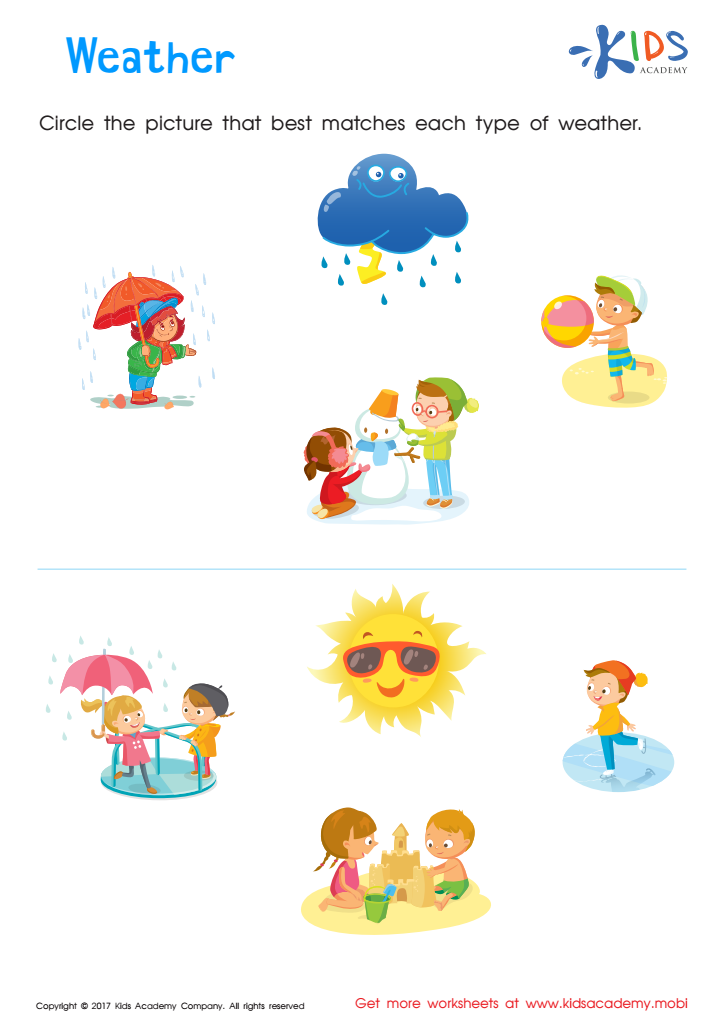
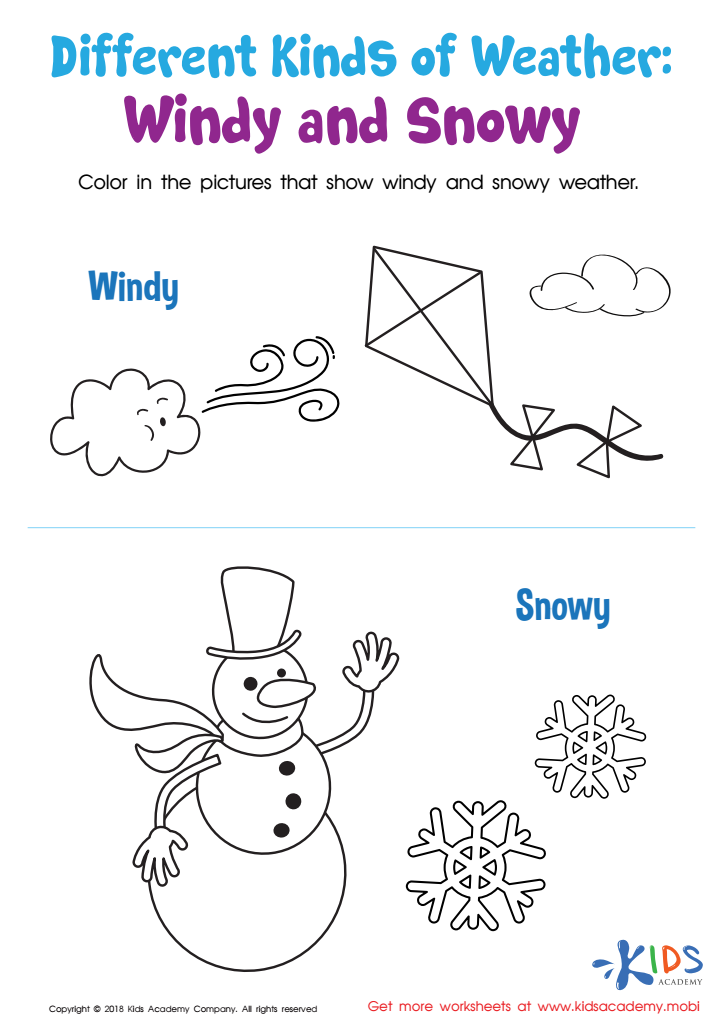
Different Kinds of Weather: Windy and Snowy Worksheet
 Assign to My Students
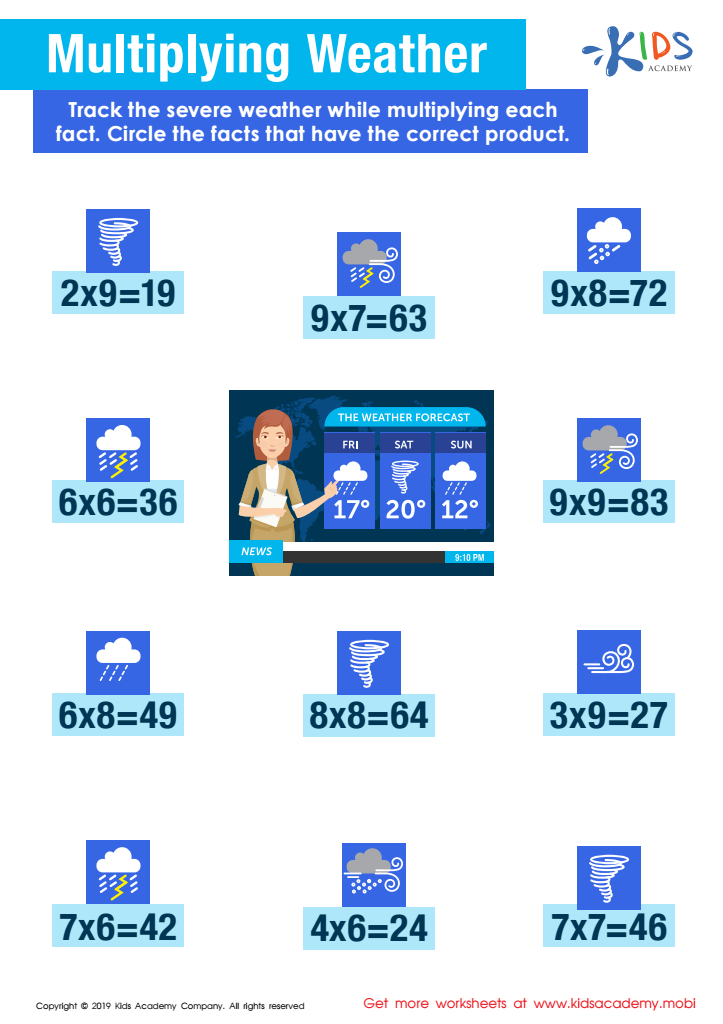
Multiplying Weather Worksheet








Understanding weather vocabulary is essential for children ages 4-9 because it equips them with the language and concepts necessary to comprehend their environment and ensures their safety. At this impressionable age, children are naturally curious about the world, including weather phenomena such as rain, snow, wind, and sunshine. By learning specific terms like "forecast," "temperature," and "humidity," children can better interpret and react to weather conditions they encounter daily.
From a safety perspective, kids who understand weather vocabulary are more likely to grasp the importance of weather warnings and precautions. For instance, knowing what a "storm warning" means can help them understand when it's important to seek shelter. This awareness can be critical in preventing accidents and ensuring that children follow necessary safety protocols during severe weather events, such as thunderstorms or extreme heat.
Furthermore, knowledge about weather fosters a child's natural curiosity about science, promoting early STEM education. Teachers and parents can use weather discussions to introduce basic scientific concepts, like how clouds form or why seasons change, making learning interactive and engaging. Integrating weather vocabulary into daily conversations lays the foundation for lifelong learning and critical thinking skills, thereby supporting their overall intellectual development.







