Basic geometry understanding Math Worksheets for 4-Year-Olds
8 filtered results
-
From - To
Unlock the magic of shapes and spatial awareness with our Basic Geometry Understanding Math Worksheets for 4-Year-Olds! Specially designed to capture young imaginations, these worksheets introduce your little one to fundamental geometry concepts through fun, engaging activities. Children will explore shapes, patterns, and simple spatial relationships, all while enhancing their problem-solving skills. Perfect for home or classroom use, these printable sheets provide a solid foundation in early math education, promoting both learning and creativity. Make geometry exciting and accessible for your child today with our expertly crafted, developmentally appropriate worksheets!
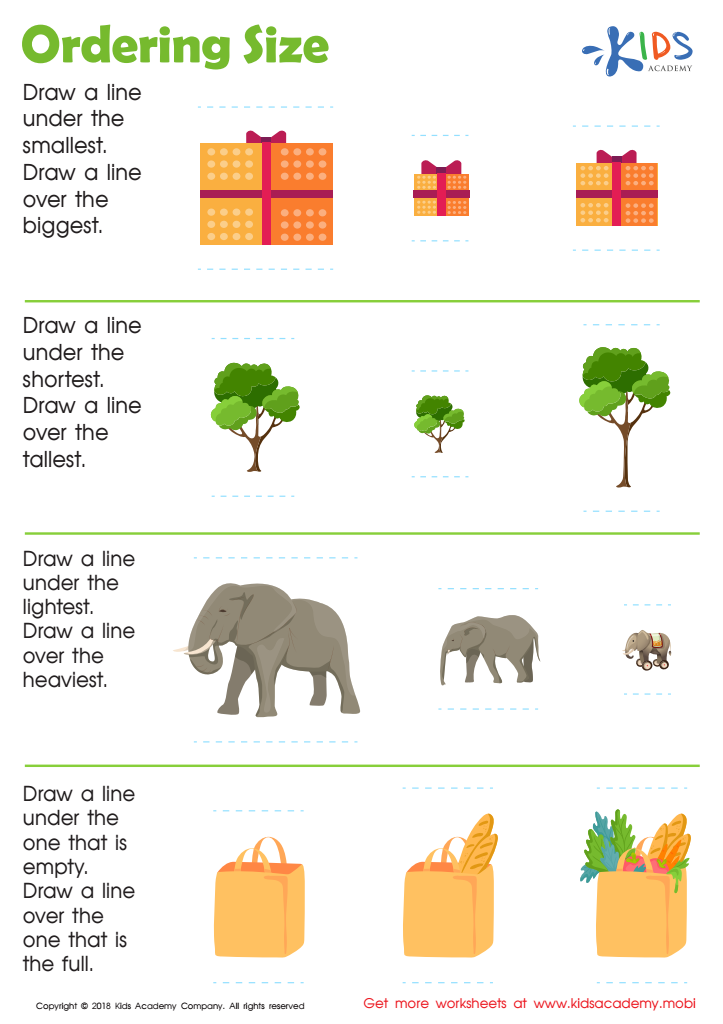
Ordering Size Worksheet
 Assign to My Students
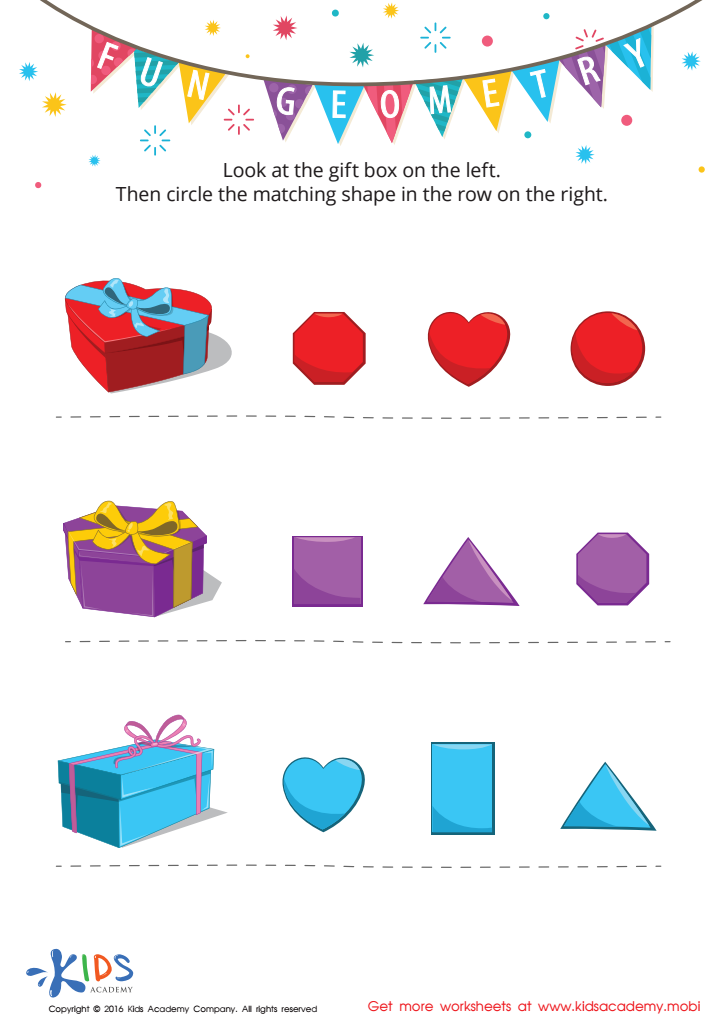
Fun Geometry Worksheet
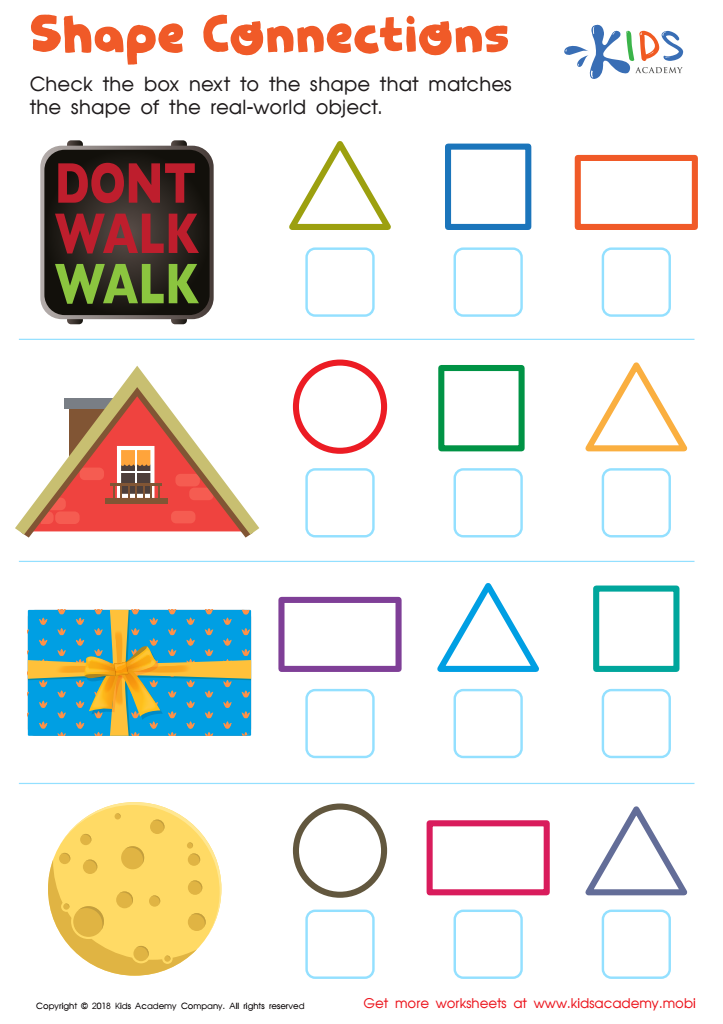
Shape Connections Worksheet
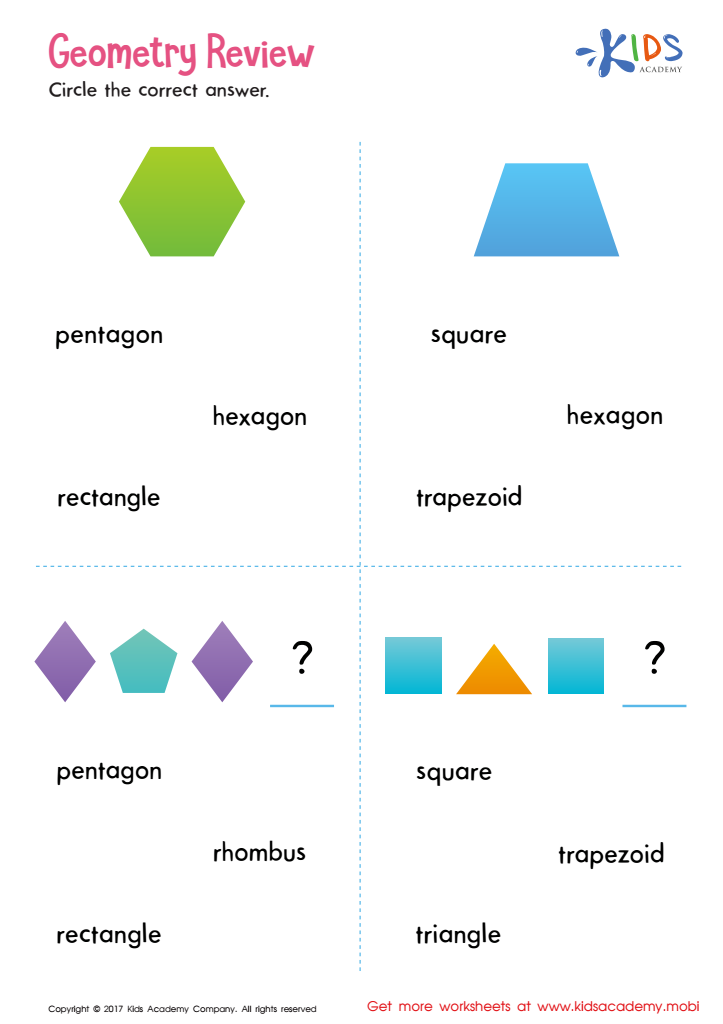
Geometry Review Printable
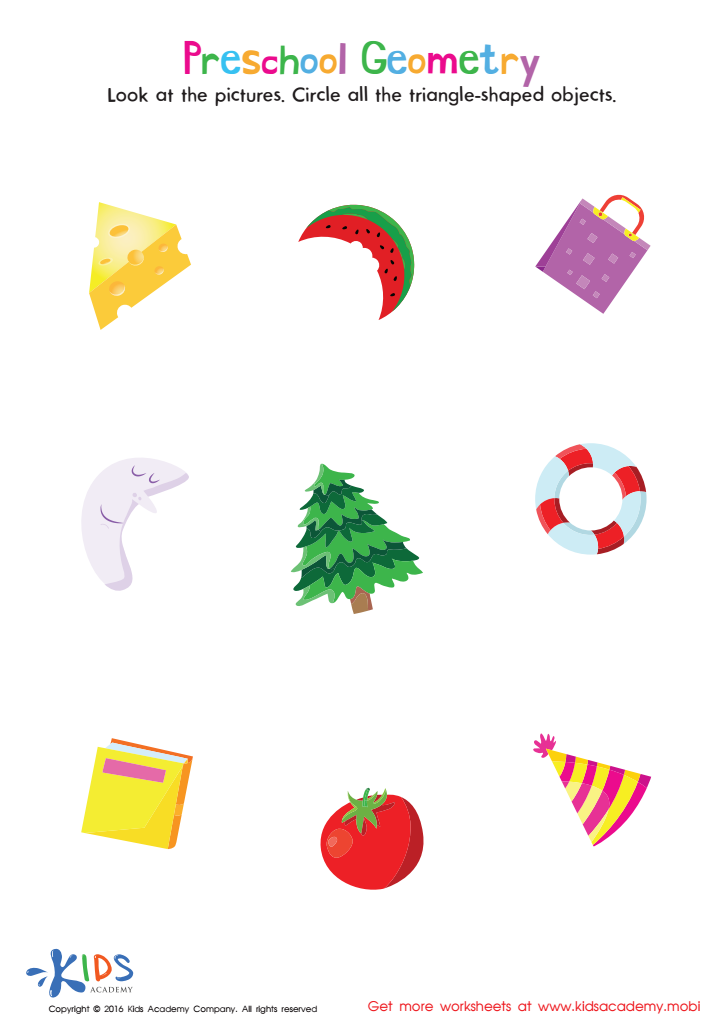
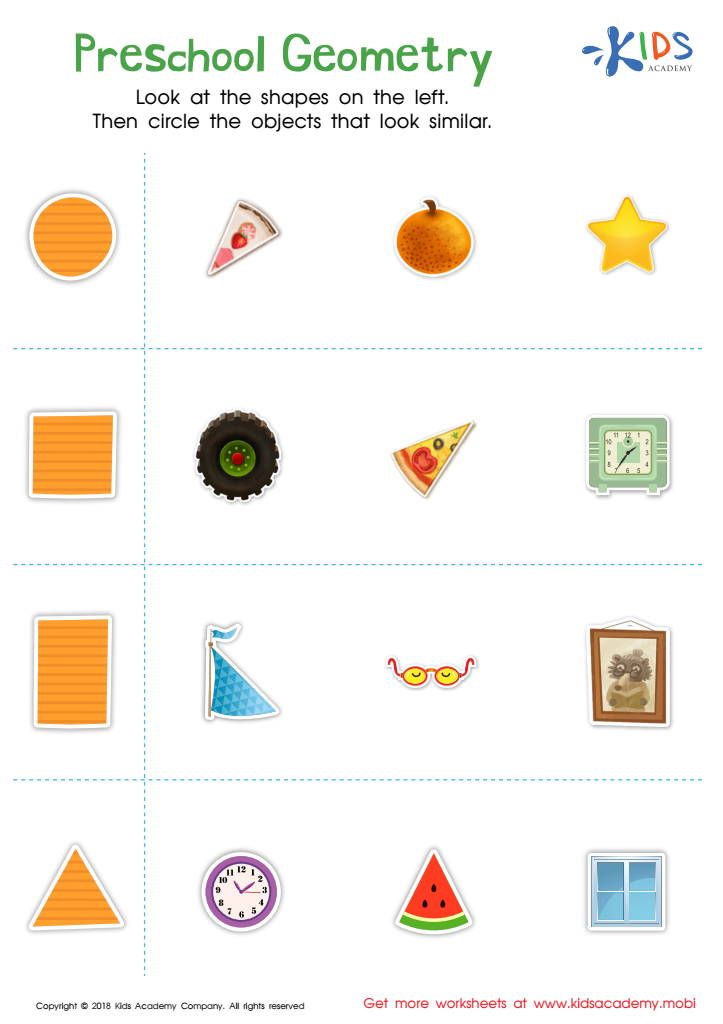
Preschool Geometry Worksheet
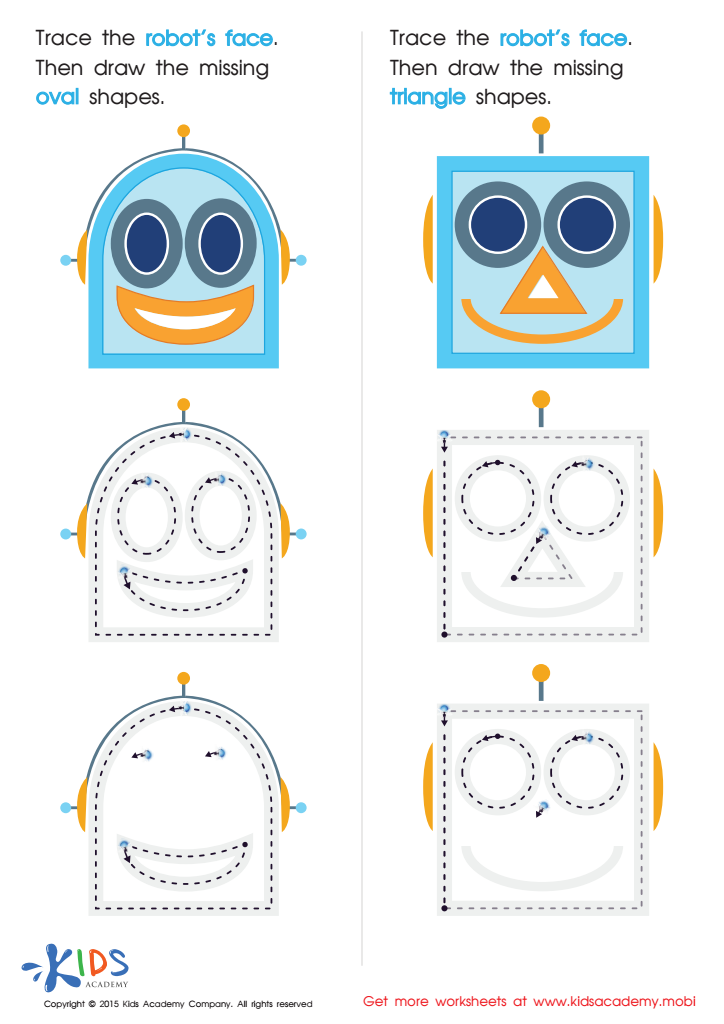
Drawing Ovals And Triangles with Fun Printable
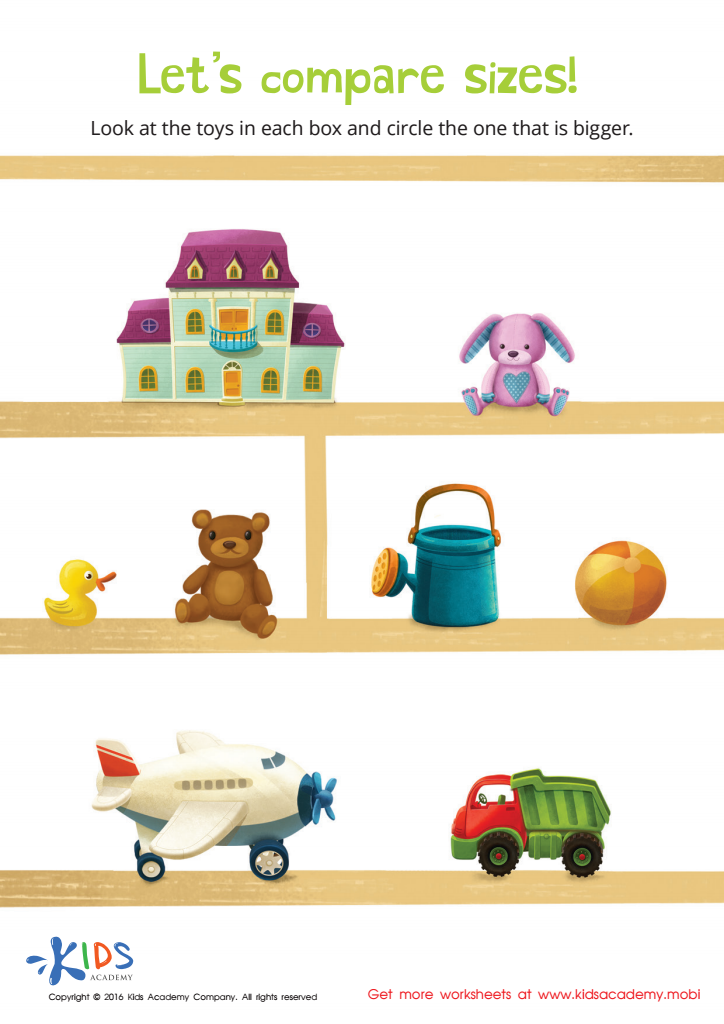
Classifying by Size Sorting Worksheet








Developing basic geometry understanding in 4-year-old children provides a strong foundation for their future learning and cognitive development. At this age, children's brains are incredibly receptive and adaptable, with curiosity driving their desire to explore and learn about their environment. Introducing basic geometry helps them develop critical thinking and problem-solving skills, which are fundamental in both academic and everyday life.
For example, learning about shapes, patterns, and spatial relationships allows young children to better understand and organize the world around them. Recognizing and naming shapes like circles, squares, and triangles can enhance their language skills and descriptive vocabulary. Engaging with puzzles and shape-sorting activities can improve their hand-eye coordination and fine motor skills, essential tools for later tasks like handwriting.
Moreover, an early understanding of geometry promotes logical thinking. When children observe that a square has four equal sides or that a triangle always has three sides, they begin to grasp the basics of logic and categorization, skills integral to subjects such as science and literacy.
Parents and teachers investing in early geometry education can set children up for success in the future by fostering a solid base upon which more complex mathematical concepts can be built. This nurtured curiosity and confidence in handling geometric concepts early on can lead to improved academic performance and a lifelong love for learning.








