Filters

826 filtered results

Clear all filters
Favorites
With answer key
Interactive

826 filtered results

Difficulty Level

Grade


Check out this FREE "Number Recognition" Trial Lesson for age 5-7!

Writing Number Sentences for Addition Story Problems

Favorites
With answer key
Interactive
  • 5-7
  • Number Recognition
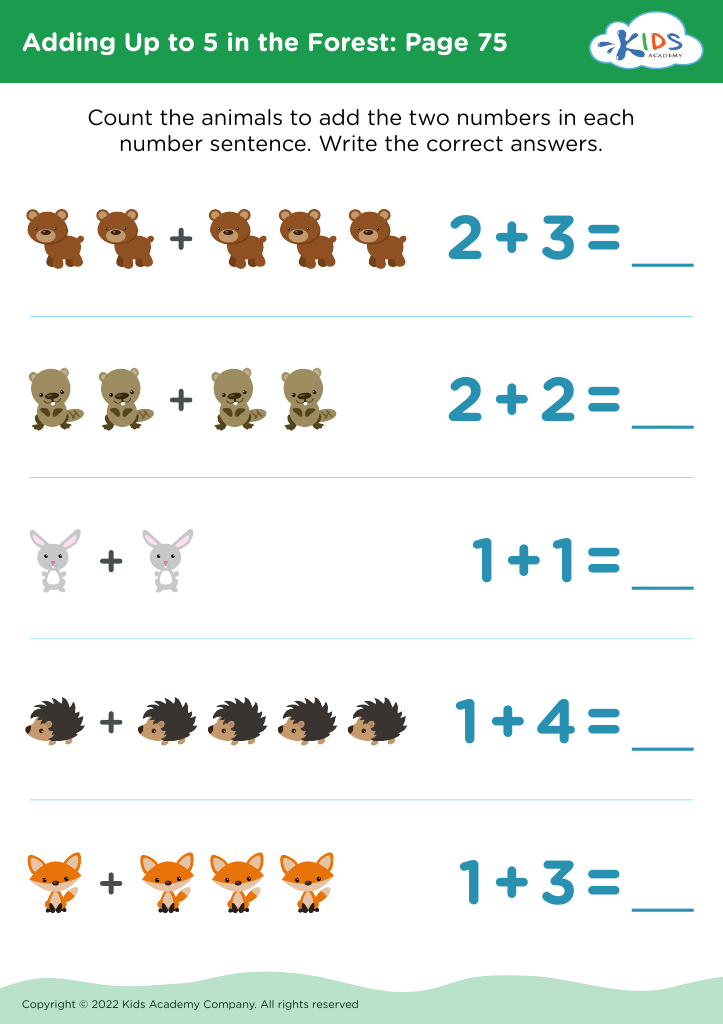
Adding Up to 5 in the Forest: Page 75
Worksheet
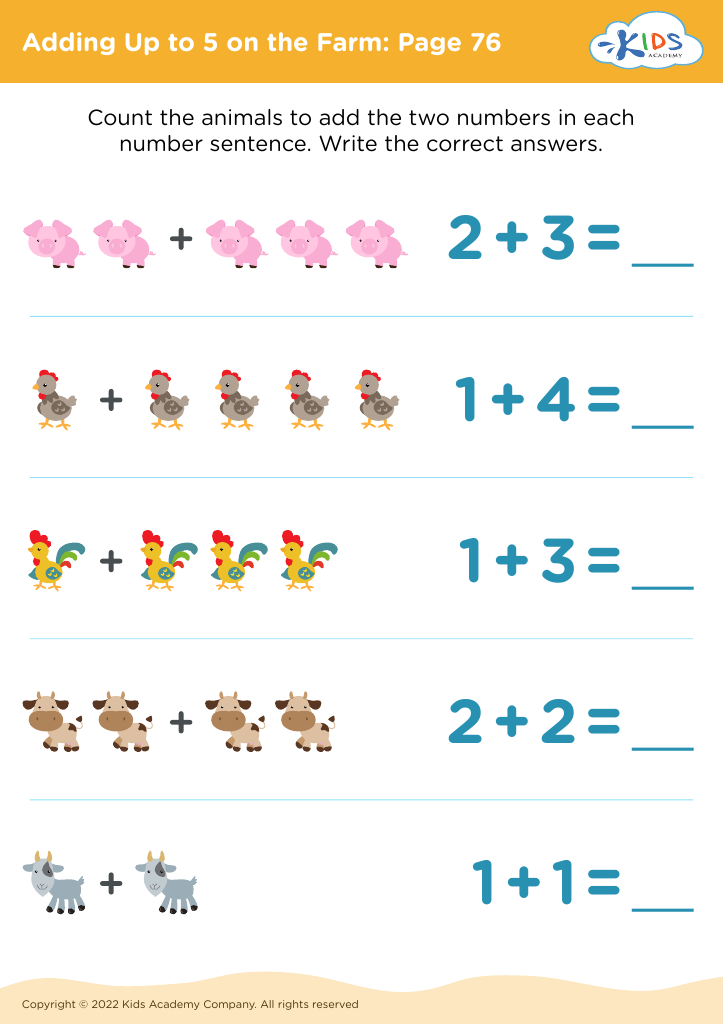
Adding Up to 5 on the Farm: Page 76
Worksheet
Pirate Ship Addition Worksheet

Pirate Ship Addition Worksheet

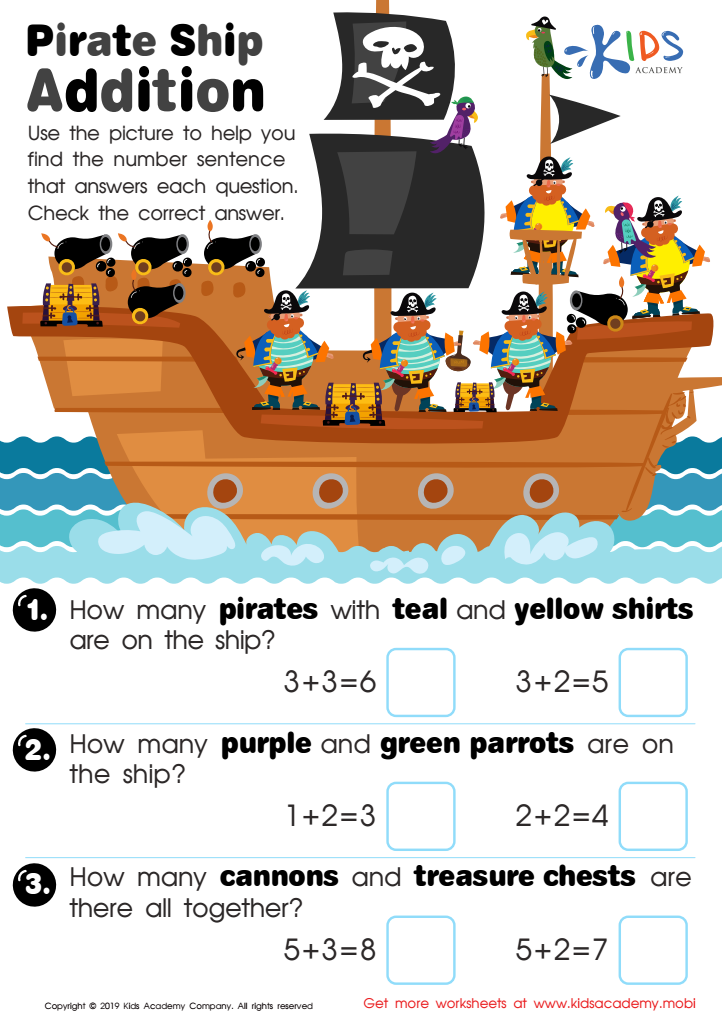
Does your family love pirate stories? Get your kids excited about this easy activity! Ask them to explain what makes pirate tales special, then look at the picture in the printout. Answer the three number questions at the bottom - use the picture to find the right number sentence. Help your kids check the correct answer. Max 80 words.
Pirate Ship Addition Worksheet
Worksheet
Dot to Dot Numbers Printables

Birthday Counting Connect Dots Worksheet
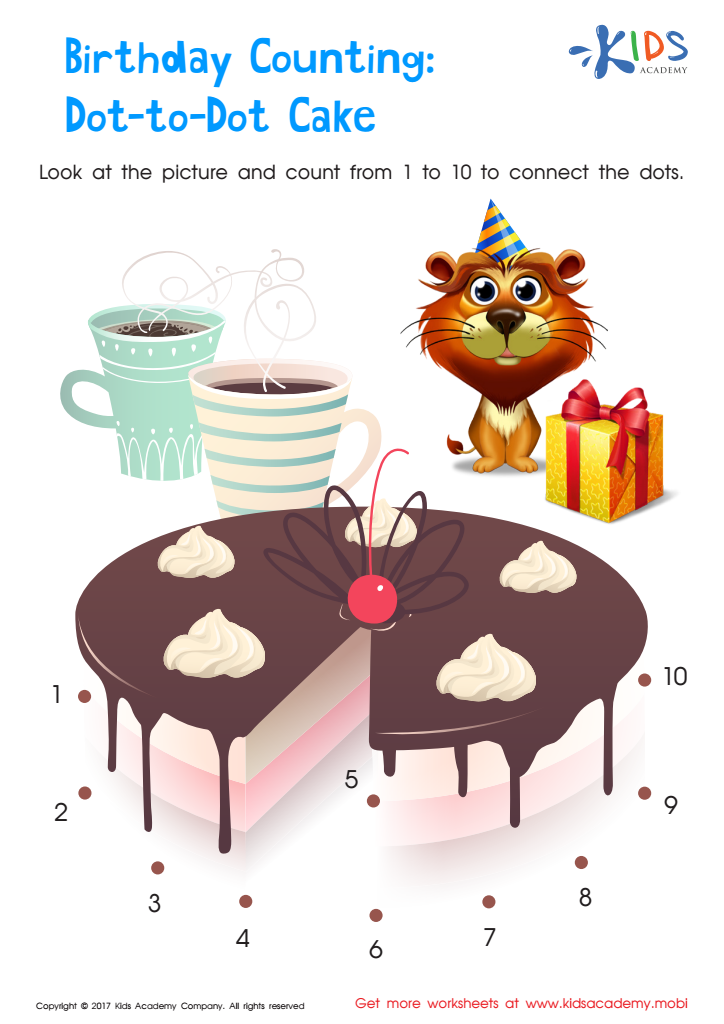
Help your child count to ten and draw curved lines with this birthday cake dot to dot! Practice numeracy and problem solving skills, and enjoy the fun of creating a picture. Then, use it as a reminder for your child’s birthday and learn about the days and months of the year.
Birthday Counting Connect Dots Worksheet
Worksheet
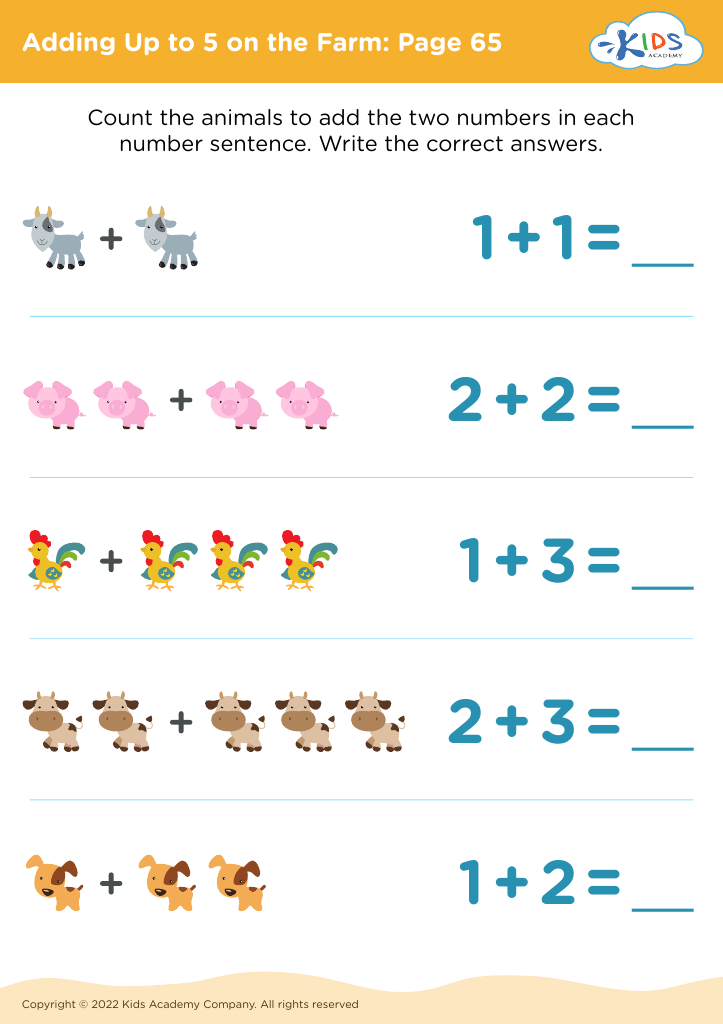
Adding Up to 5 on the Farm: Page 65
Worksheet
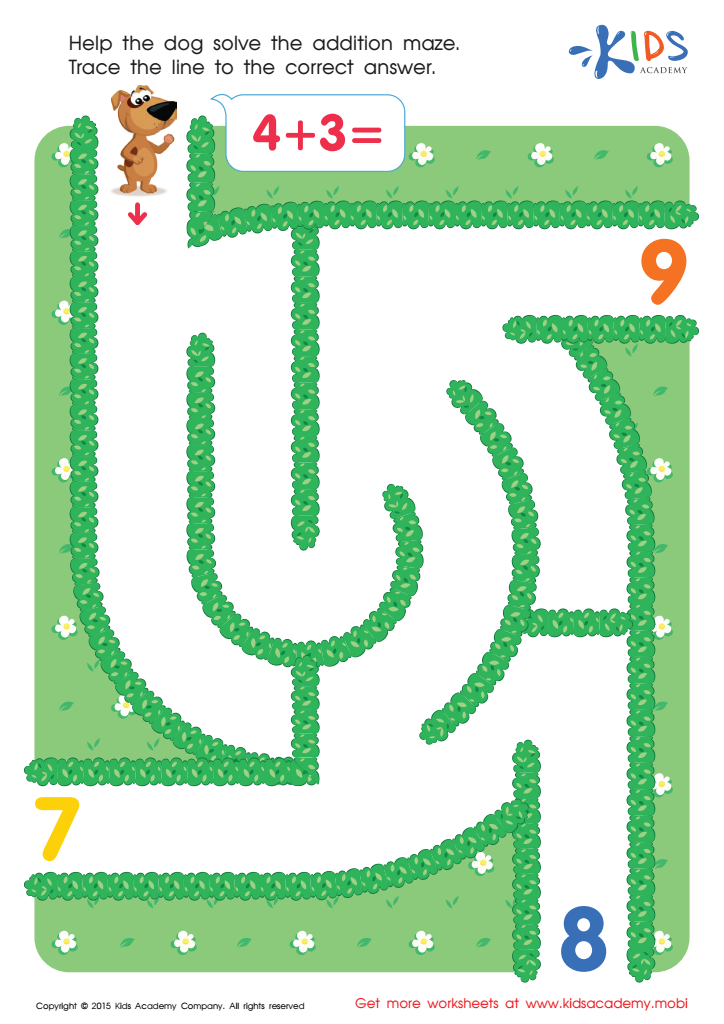
Math: Addition PDF Worksheet Four And Three

Addition Four And Three Worksheet
Let's have fun math practice! Grab a new worksheet to keep your kids engaged while helping them learn. Trace the path to the right answer and see the joy when they find it. Check Kids Academy for more free algebra worksheets and other learning materials - let's make learning exciting!
Addition Four And Three Worksheet
Worksheet
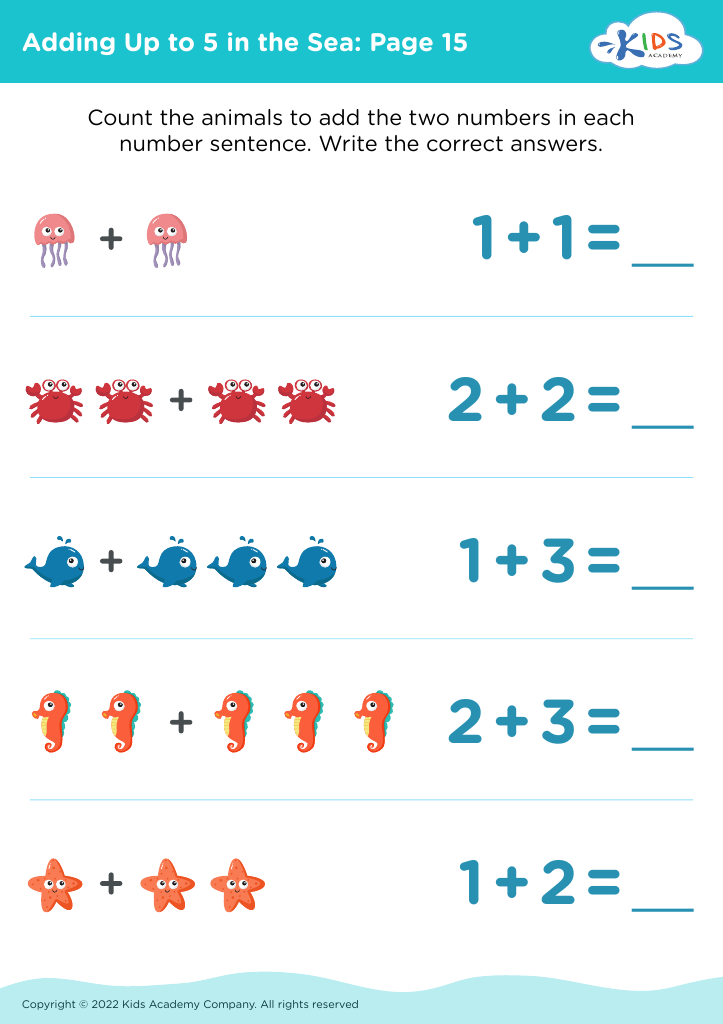
Adding Up to 5 in the Sea: Page 15
Worksheet
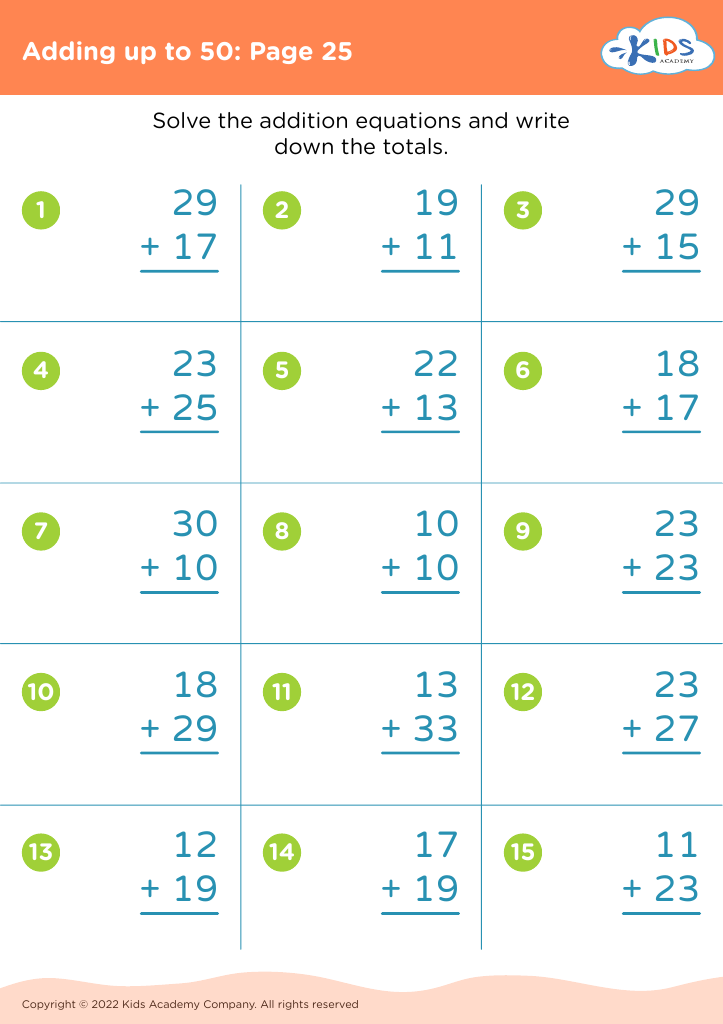
Adding up to 50: Page 25

Adding up to 50: Page 25

Adding up to 50: Page 25
Worksheet
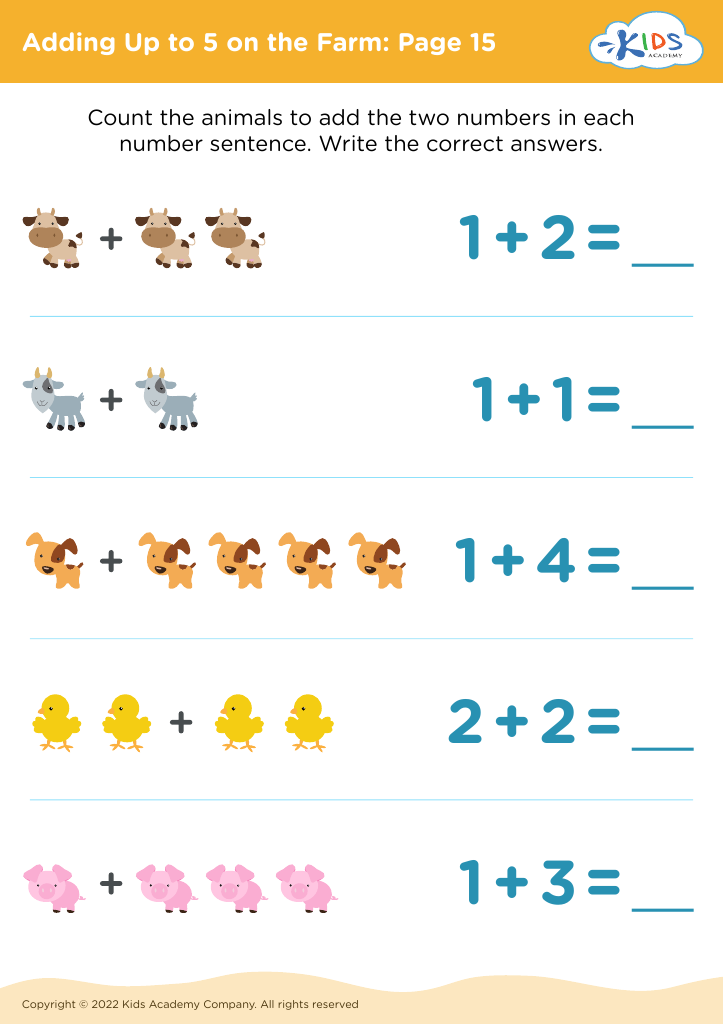
Adding Up to 5 on the Farm: Page 15
Worksheet
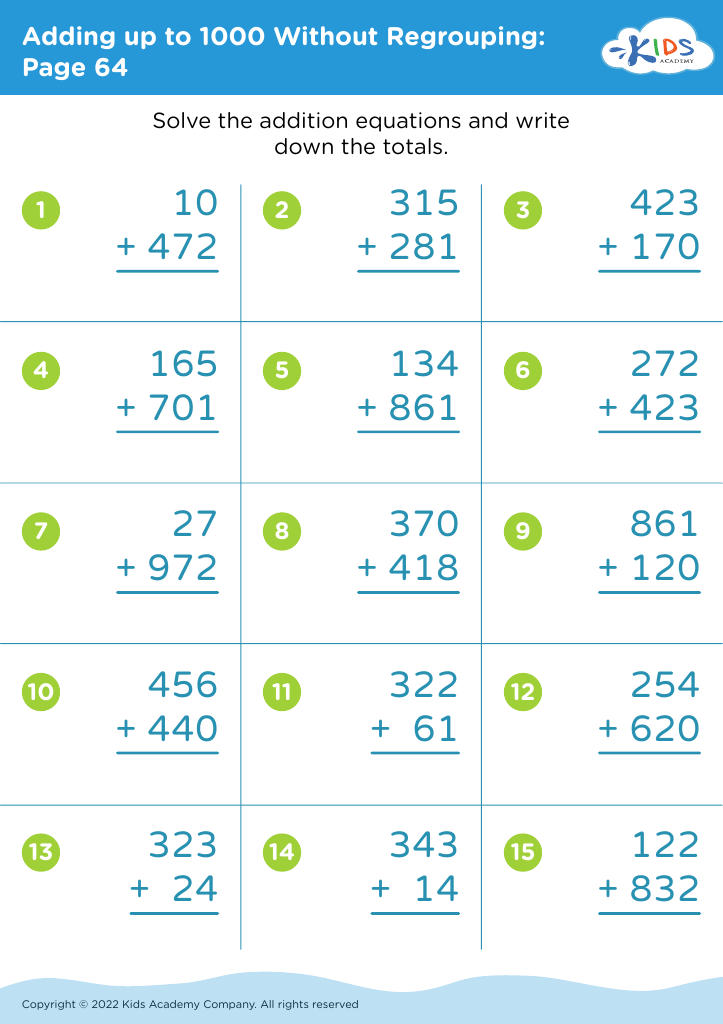
Adding up to 1000 Without Regrouping: Page 64
Worksheet
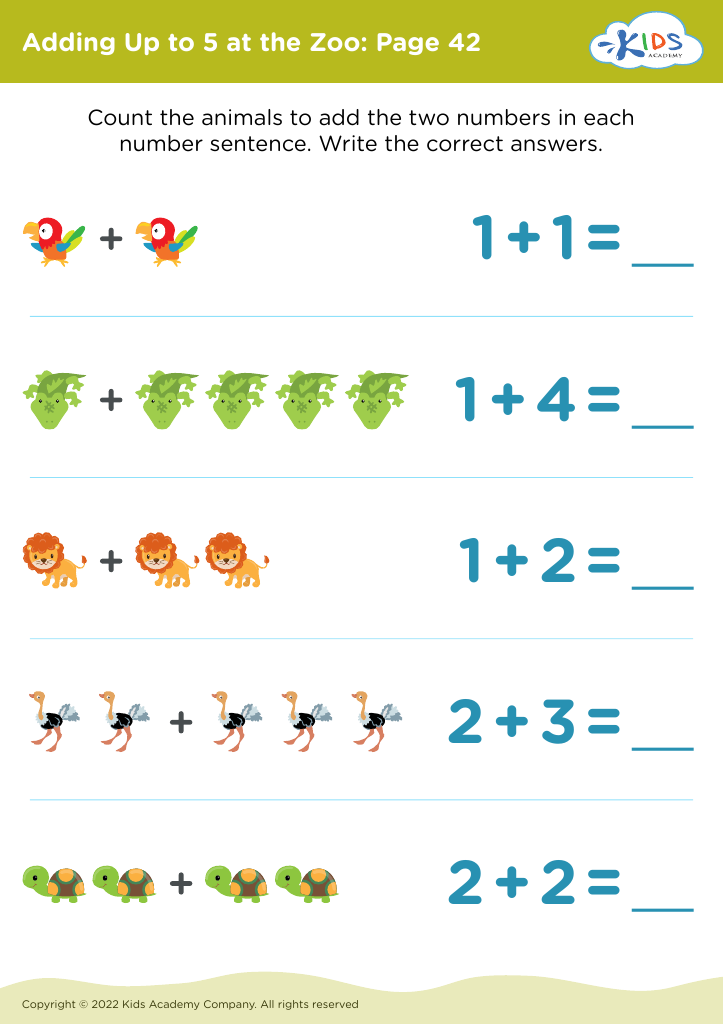
Adding Up to 5 at the Zoo: Page 42
Worksheet
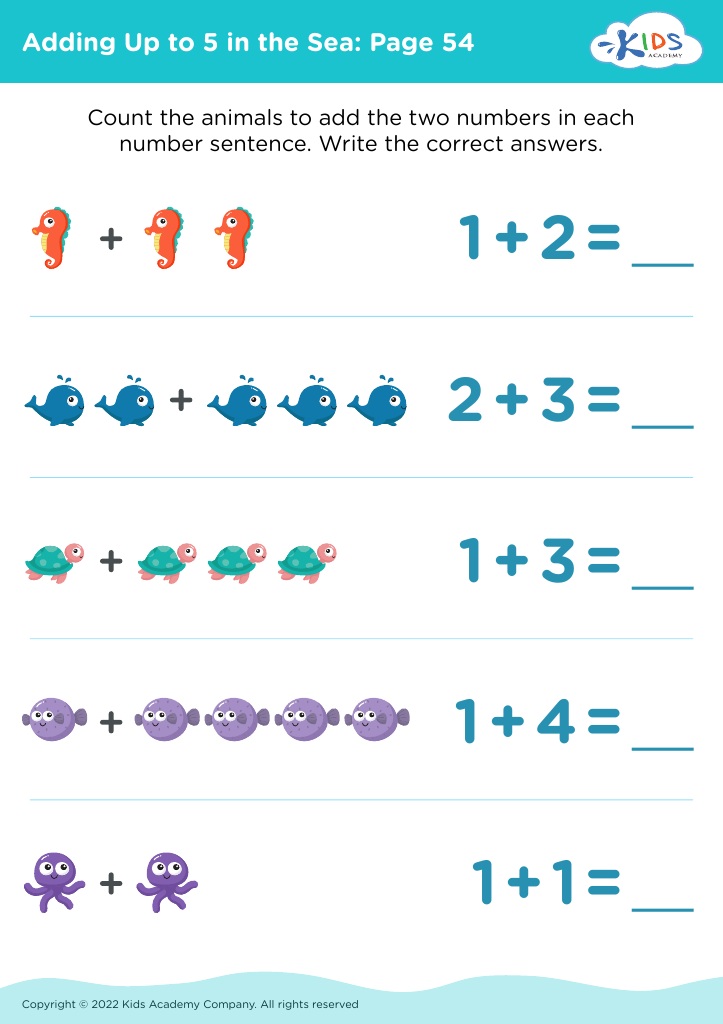
Adding Up to 5 in the Sea: Page 54
Worksheet
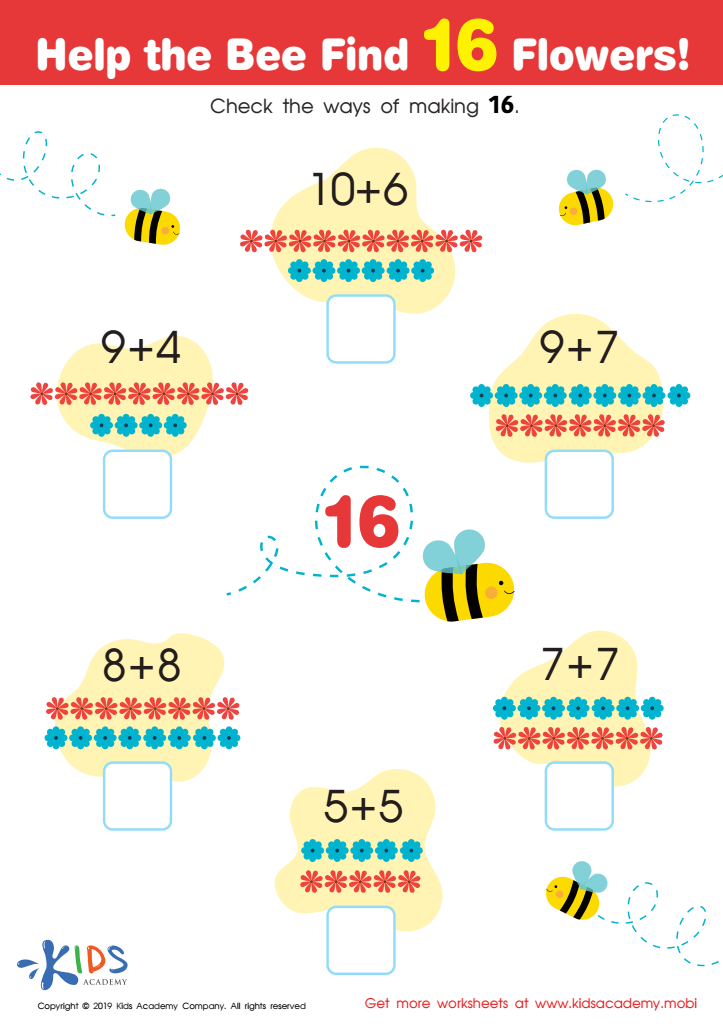
Help the Bee Find 16 Flowers Worksheet
Help the Bee Find 16 Flowers Worksheet
Ask your students to count as high as they can. Show them that different numbers can equal the same figure with examples like 2+2=4 and 3+1=4. Ask for more examples, then help the bees find 16 flowers by checking the ways of making 16.
Help the Bee Find 16 Flowers Worksheet
Worksheet
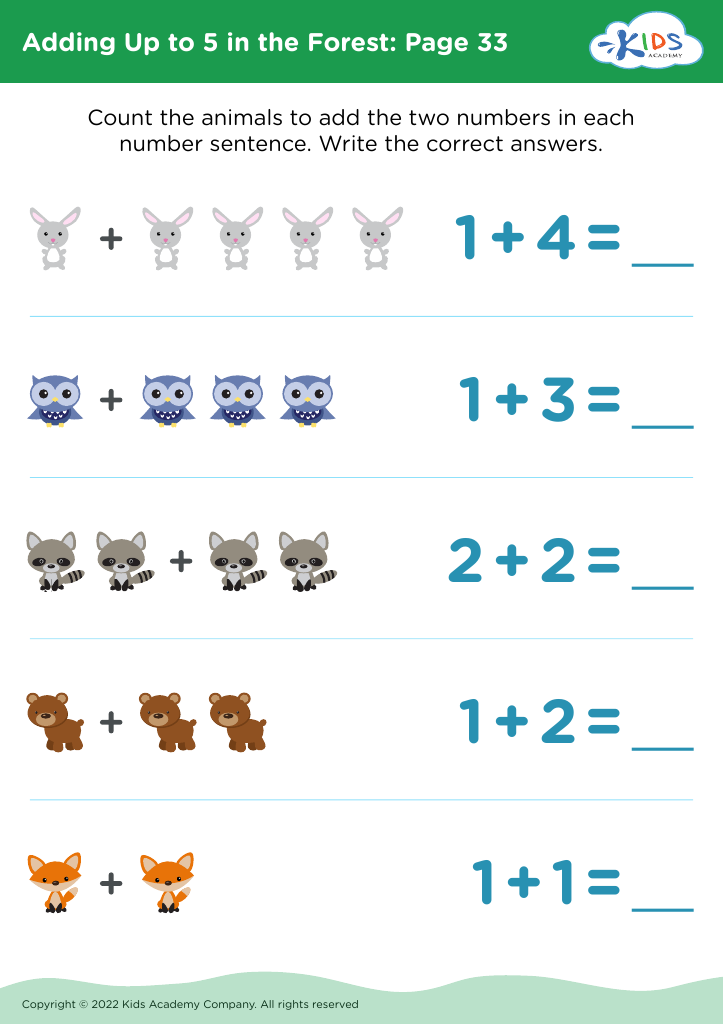
Adding Up to 5 in the Forest: Page 33
Worksheet
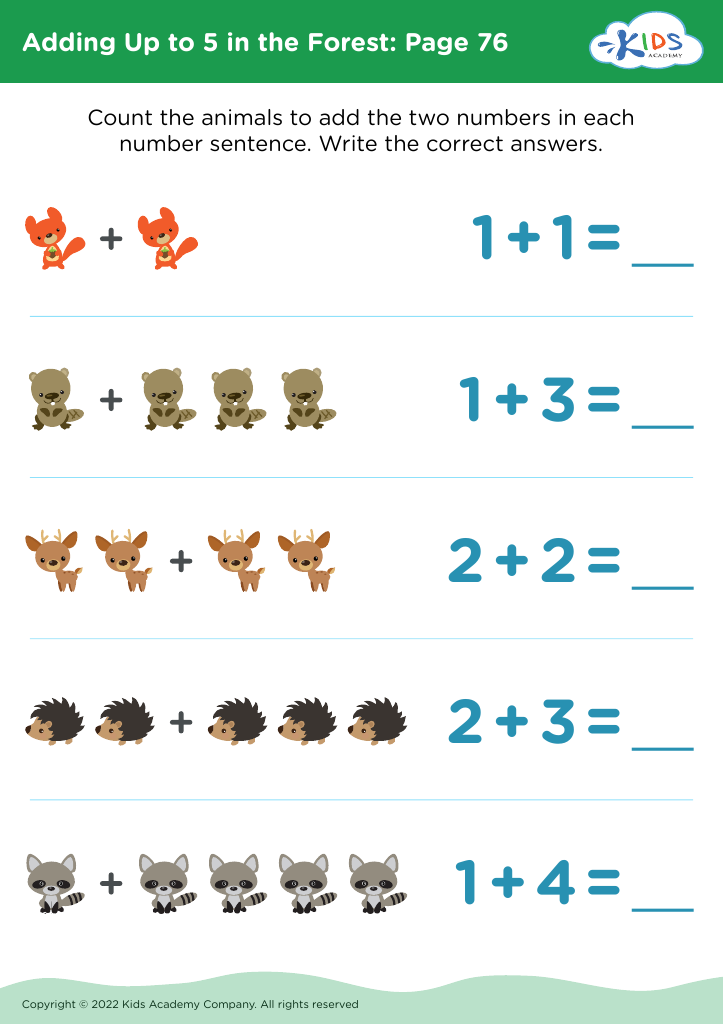
Adding Up to 5 in the Forest: Page 76
Worksheet
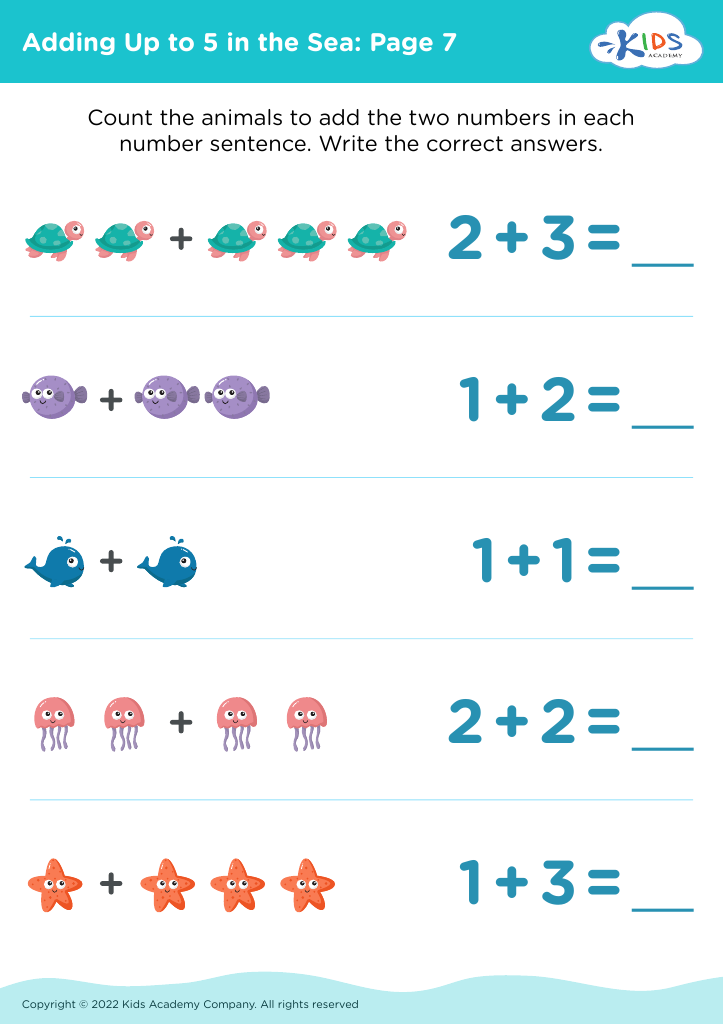
Adding Up to 5 in the Sea: Page 7

Adding Up to 5 in the Sea: Page 7

Adding Up to 5 in the Sea: Page 7
Worksheet
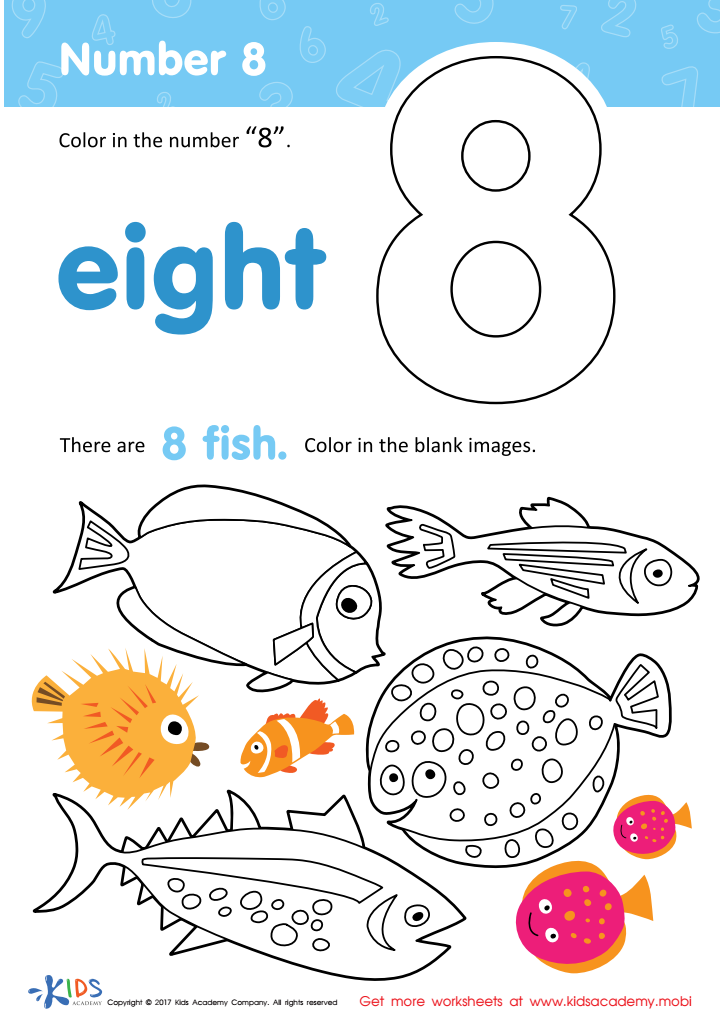
Coloring Page: Number 8

Number 8 Printable

Dive into the deep sea and learn to read and recognize the number eight! Challenge your child's creativity by having them create beautiful fish. They'll love counting and coloring with number 8.
Download (PDF)
Assign to My Students
Number 8 Printable
Worksheet
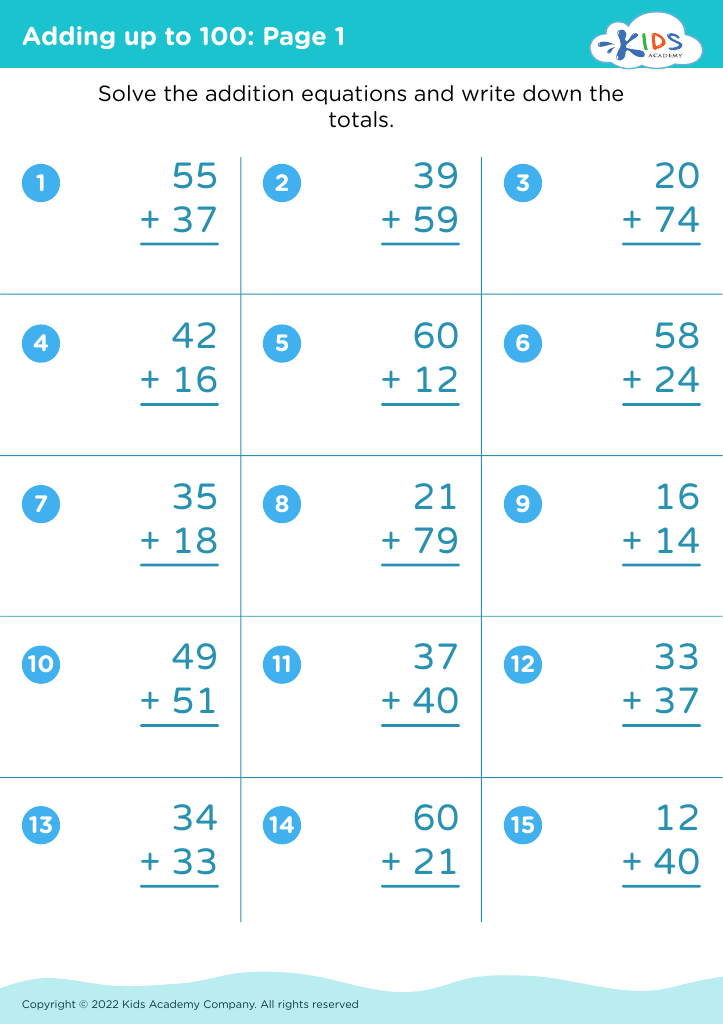
Adding up to 100: Page 1

Adding up to 100: Page 1

Adding up to 100: Page 1
Worksheet
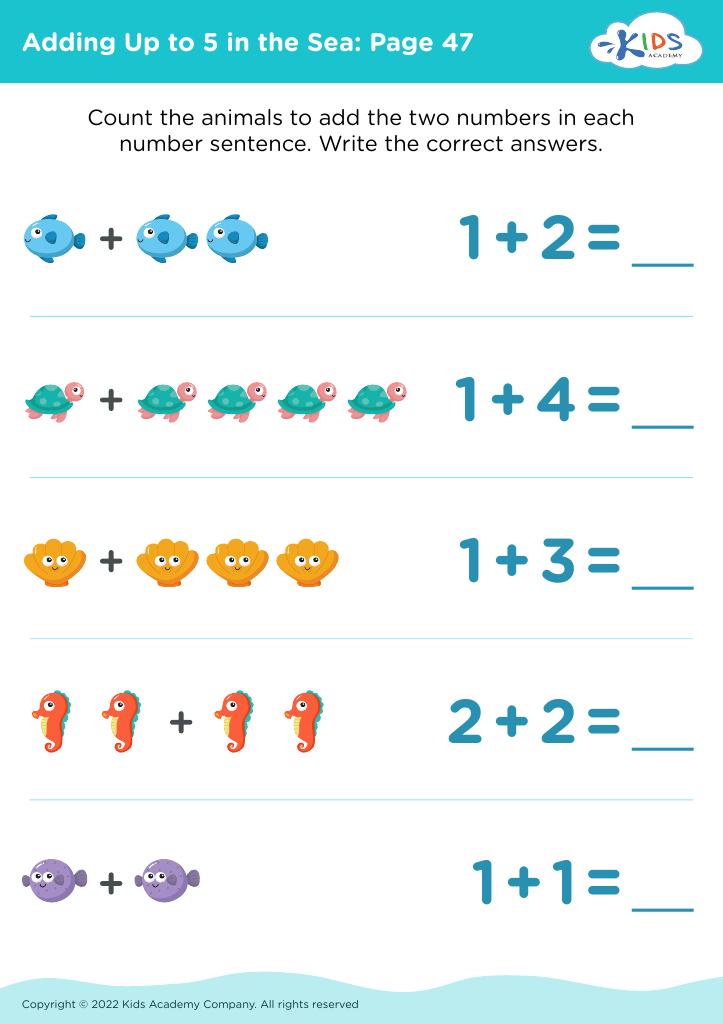
Adding Up to 5 in the Sea: Page 47
Worksheet
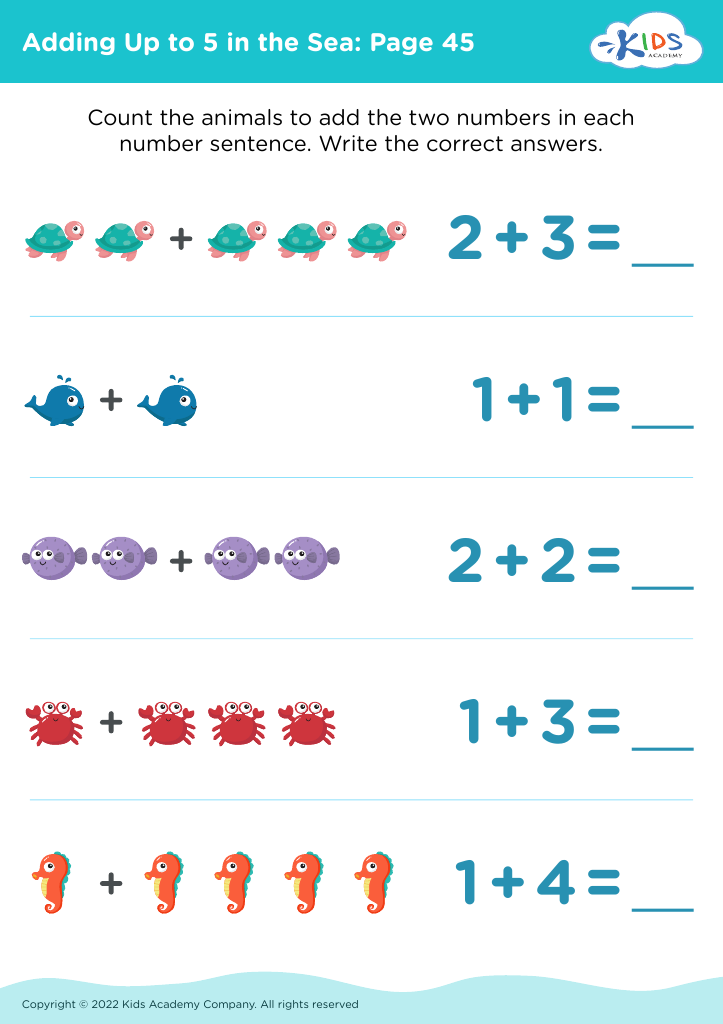
Adding Up to 5 in the Sea: Page 45
Worksheet
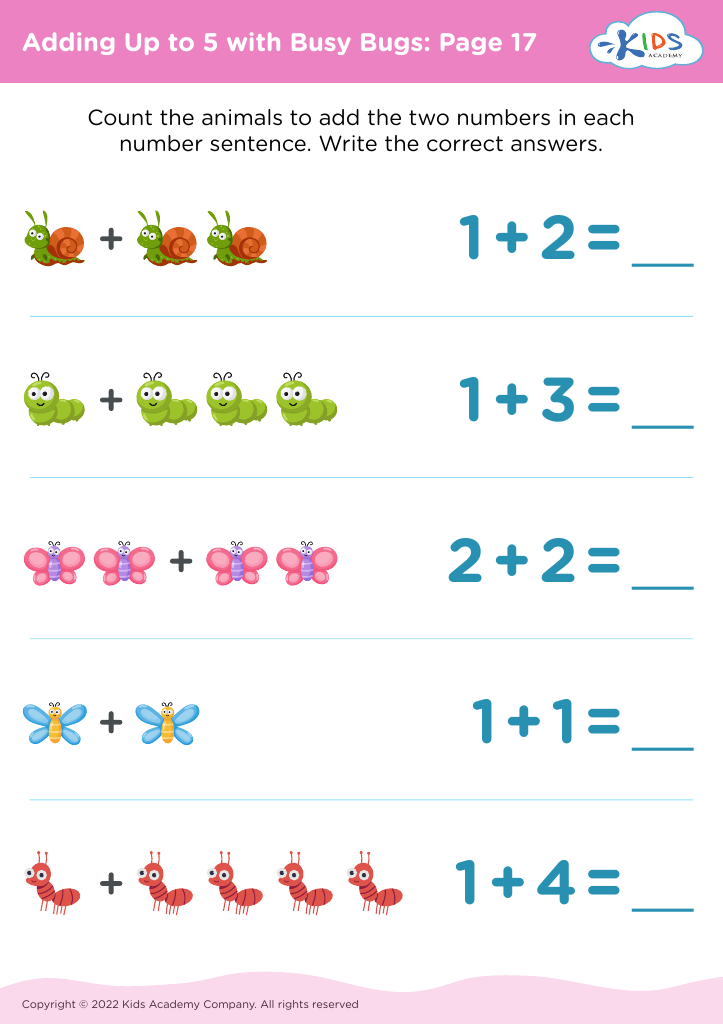
Adding Up to 5 with Busy Bugs: Page 17
Worksheet
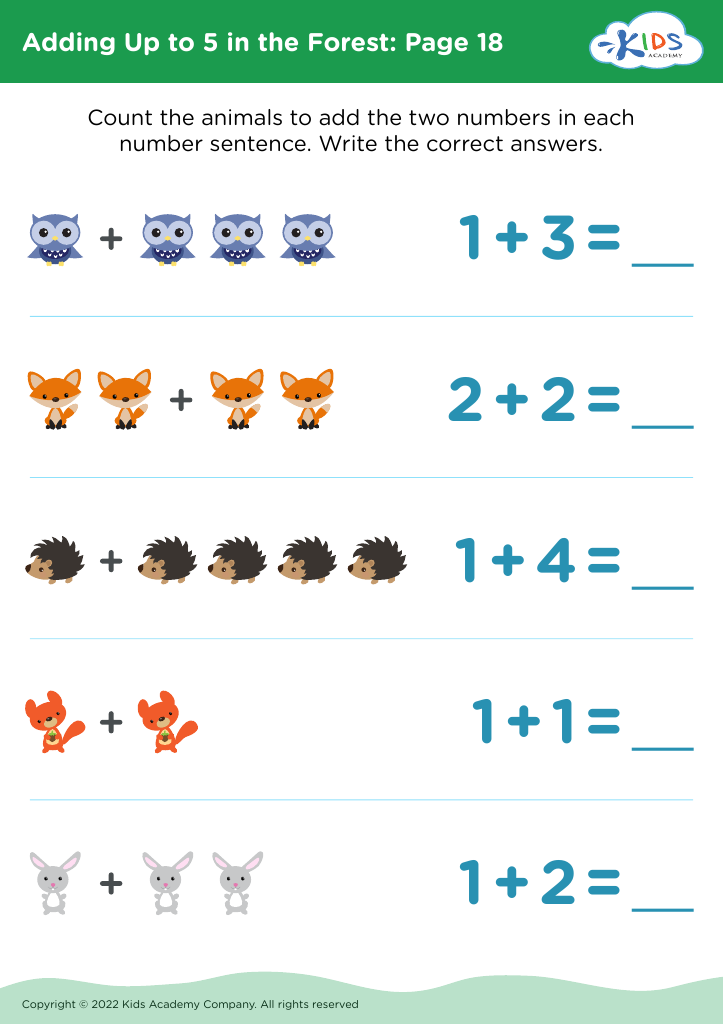
Adding Up to 5 in the Forest: Page 18
Worksheet
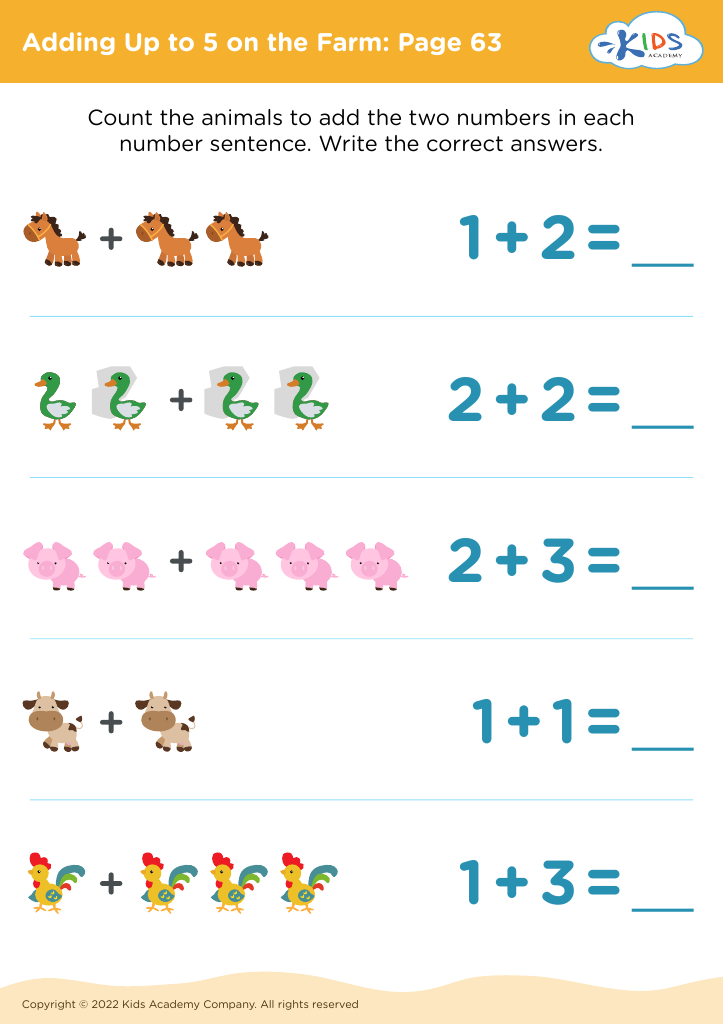
Adding Up to 5 on the Farm: Page 63
Worksheet
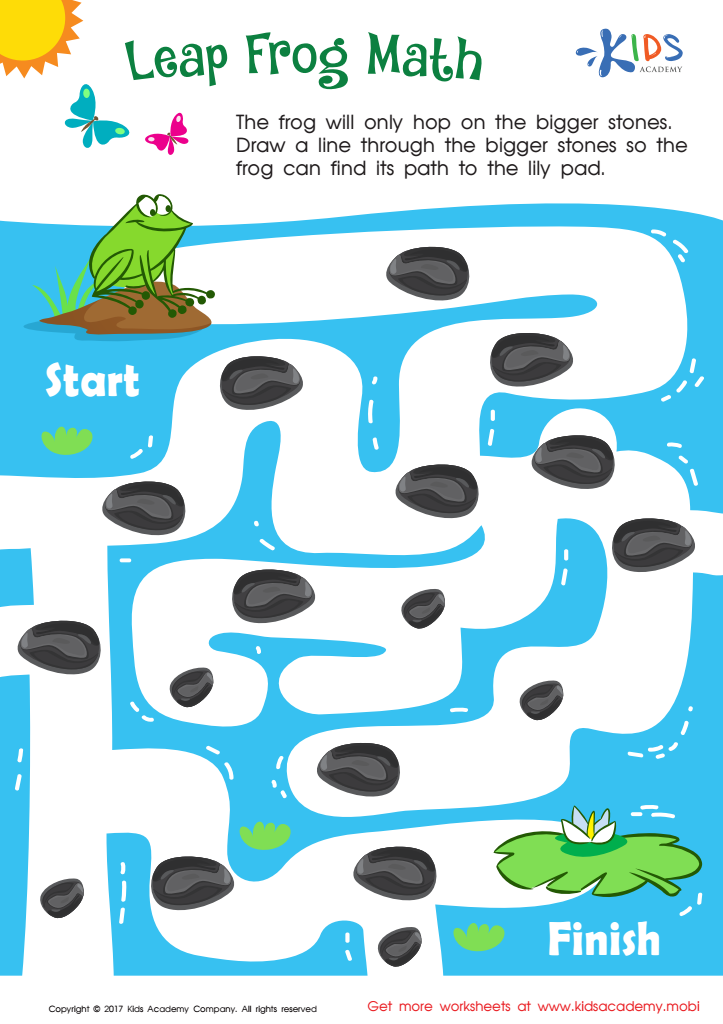
Math puzzle worksheet for kindergarten

Math Puzzle Worksheet

Kids will use their math skills to help the frog get through the maze by selecting the larger stones. Perfect for kindergarteners, it develops the ability to identify size differences.
Math Puzzle Worksheet
Worksheet


Number recognition is a foundational skill critical for the early stages of a child's education, laying the groundwork for more complex mathematical understanding. For children aged 5-7, developing number recognition is essential as it helps them comprehend and identify numbers, their values, and sequences.

Firstly, number recognition facilitates everyday activities, such as counting objects, reading page numbers, or understanding time. This early competency instills confidence, making children more eager to explore mathematical concepts further. Moreover, it enhances cognitive skills like memory and attention, crucial for overall academic success.

Secondly, number recognition is the precursor to arithmetic skills, such as addition and subtraction, which are fundamental competencies in early education. Without a solid grasp of number recognition, children may struggle with basic math operations, leading to potential difficulties in more advanced math-related subjects in later years.

Additionally, early proficiency in number recognition often correlates with better performance in other subjects. For example, pattern recognition, an essential skill in reading and problem-solving, is reinforced through counting and number identification activities.

Parents and teachers play a pivotal role in nurturing these skills through engaging activities, games, and practical applications. By prioritizing number recognition, they create a positive learning environment that fosters curiosity, supports academic achievement, and nurtures lifelong skills in young learners.