Discover our comprehensive "Understanding Multiplication Addition & Subtraction Worksheets for Ages 5-7". Designed to build foundational math skills, these engaging worksheets cover essential concepts, emphasizing the connections between multiplication, addition, and subtraction. Perfect for young learners, each worksheet delivers fun, interactive activities that make mastering math enjoyable and accessible. Boost your child's confidence and understanding with step-by-step exercises tailored to their learning pace. Whether at home or in the classroom, our expertly crafted worksheets will reinforce core skills and inspire a lifelong love for math. Start the journey to mathematical mastery today!
Check out this FREE Trial Lesson on Addition & Subtraction for age 5-7!

L

Favorites
With answer key
Interactive
  • 5-7
  • Understanding multiplication
  • Addition & Subtraction
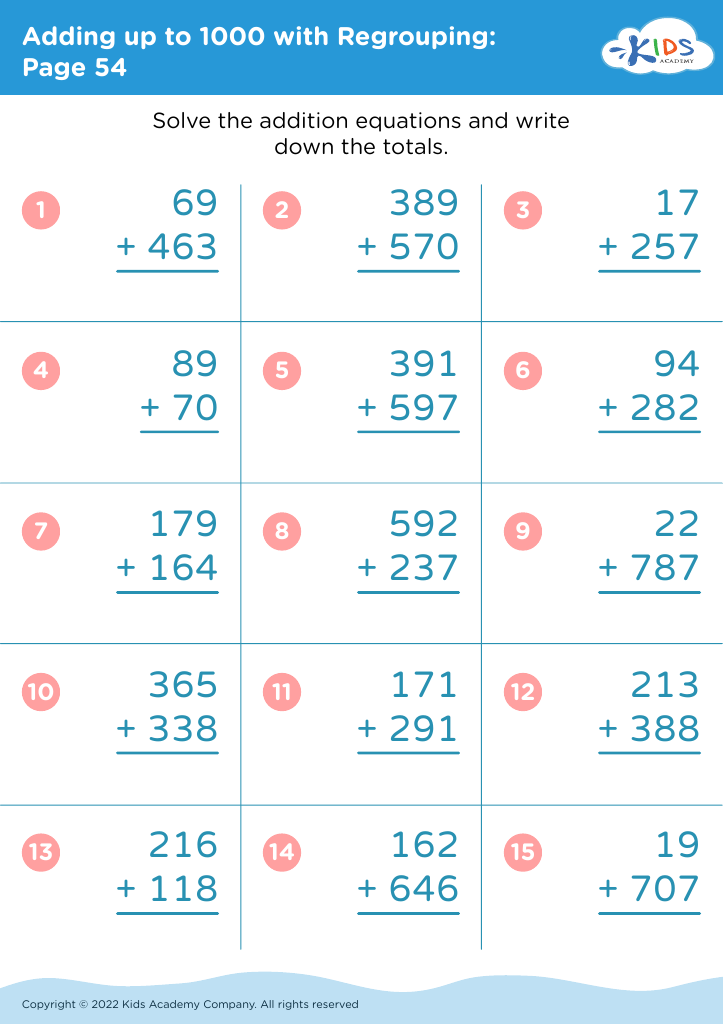
Adding up to 1000 with Regrouping: Page 54
Worksheet
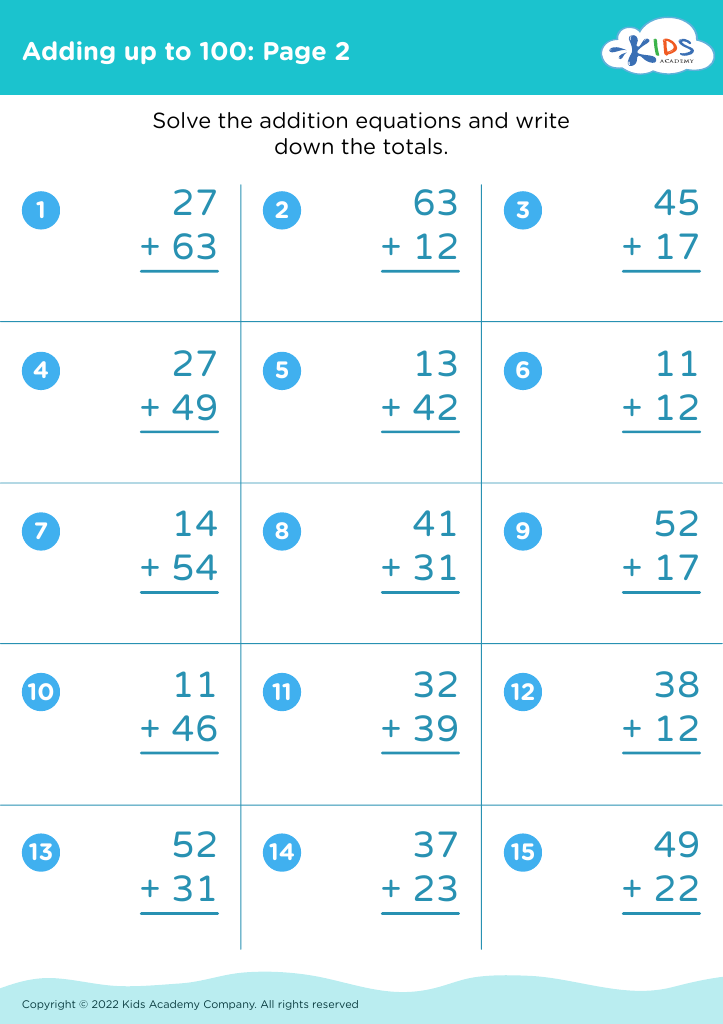
Adding up to 100: Page 2

Adding up to 100: Page 2

Adding up to 100: Page 2
Worksheet
Equal Groups: Assessment1 Worksheet

Equal Groups: Assessment 1 Worksheet

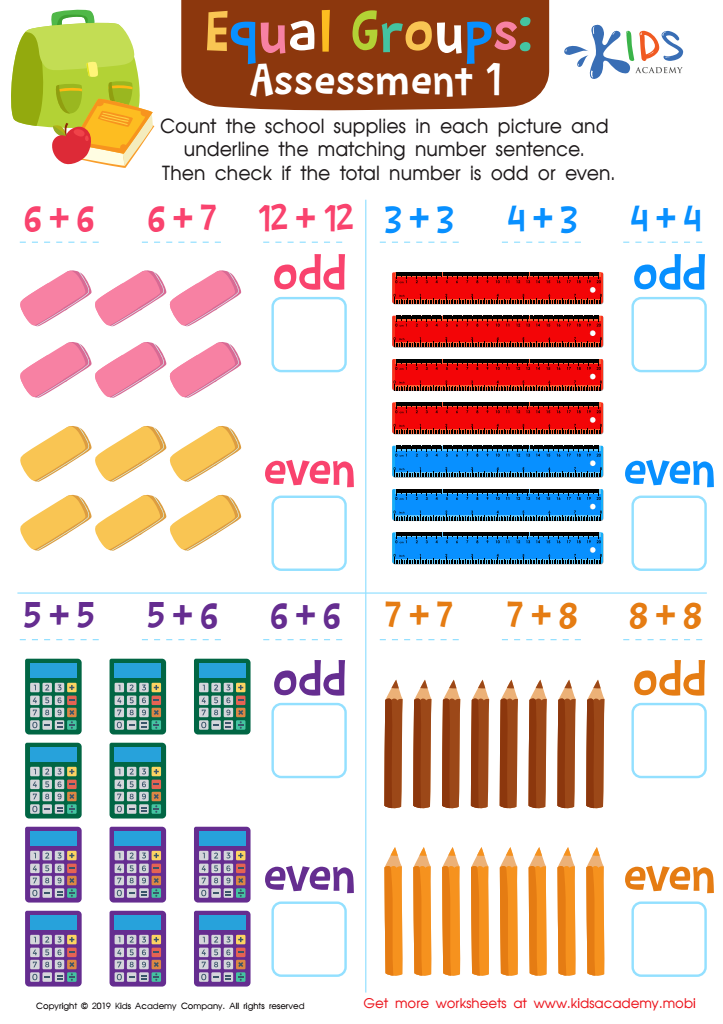
Have your students count the school supplies in each picture. Underline the number sentence that matches. Ask them if the total number is odd or even. Help your eager little preschoolers explore their classroom, which is full of pencils, chairs, desks, a blackboard and the teacher's desk.
Equal Groups: Assessment 1 Worksheet
Worksheet
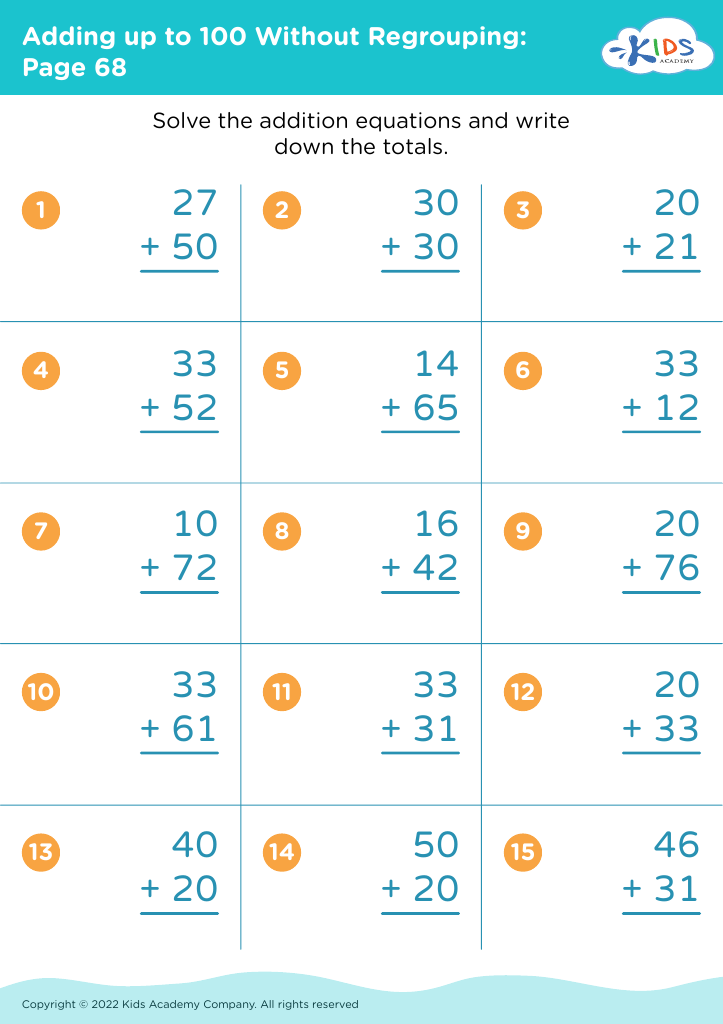
Adding up to 100 Without Regrouping: Page 68
Worksheet
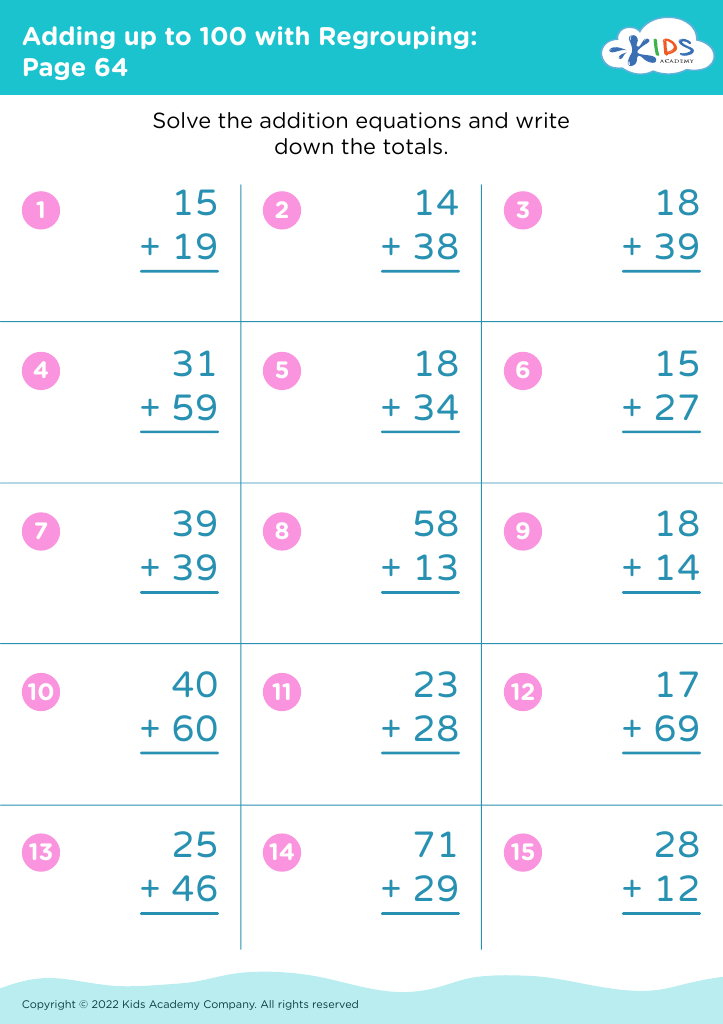
Adding up to 100 with Regrouping: Page 64
Worksheet
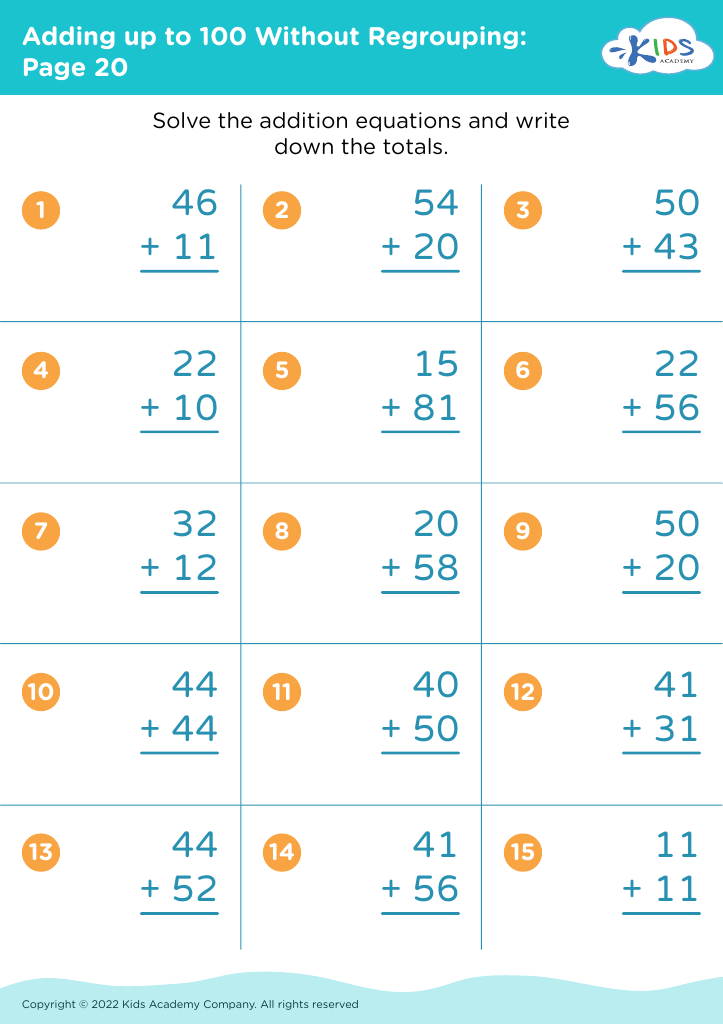
Adding up to 100 Without Regrouping: Page 20
Worksheet
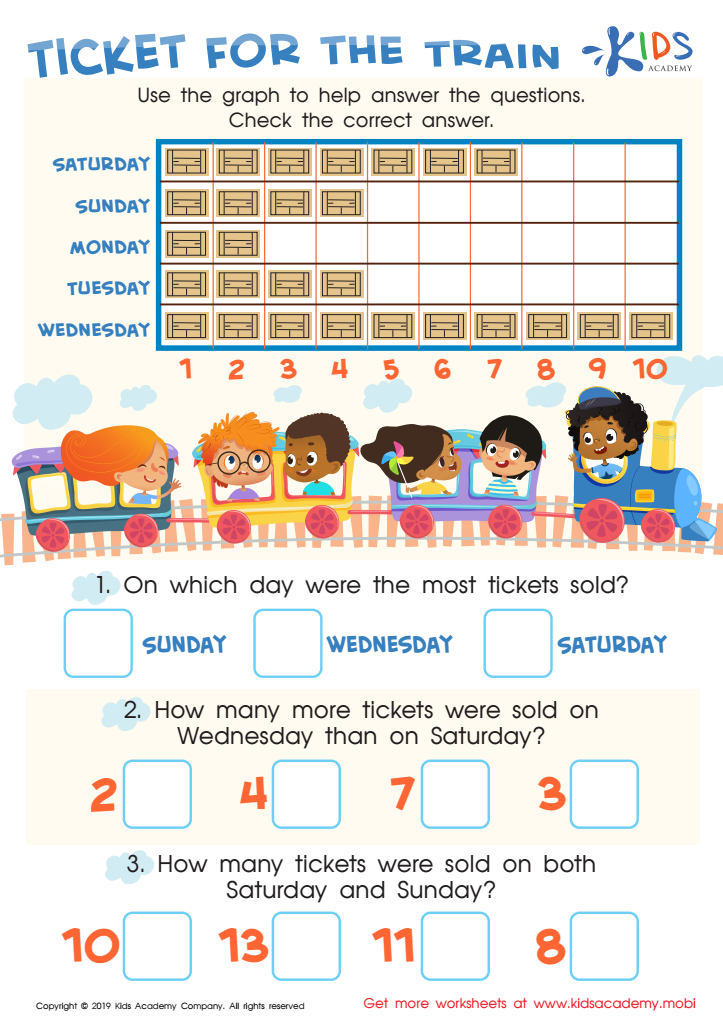
Ticket for the Train Worksheet
Ticket for the Train Worksheet

It's important to use fun scenarios with familiar objects when teaching kids. Try discussing train rides and the accompanying picture graph. Ask questions about it, then help kids check the correct answers. Let them enjoy the learning process!
Ticket for the Train Worksheet
Worksheet
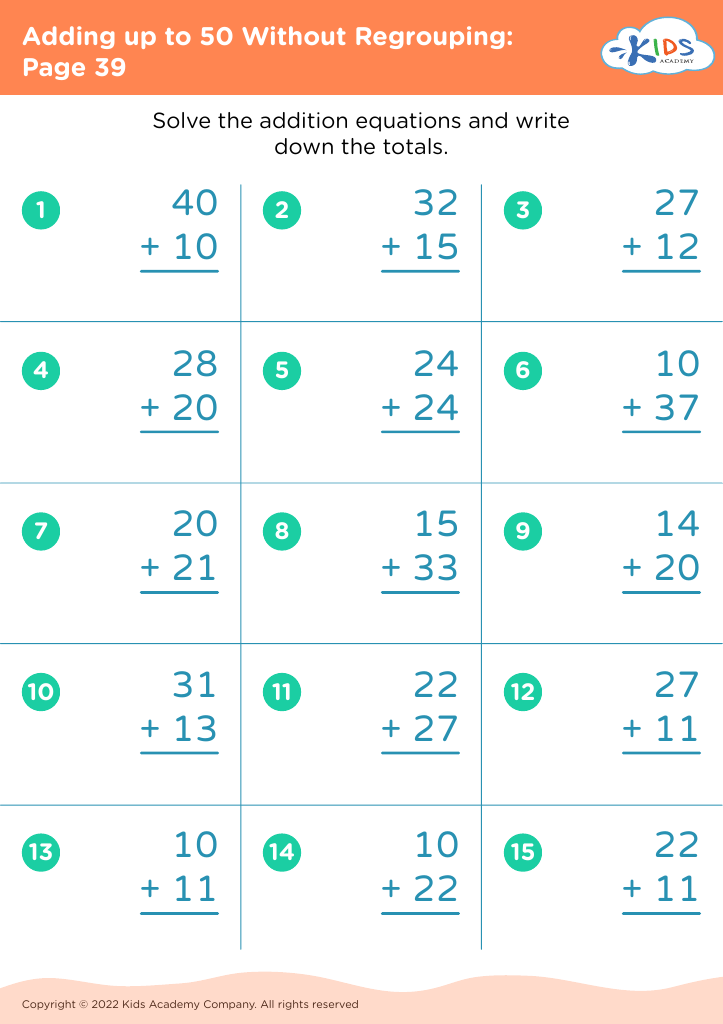
Adding up to 50 Without Regrouping: Page 39
Worksheet
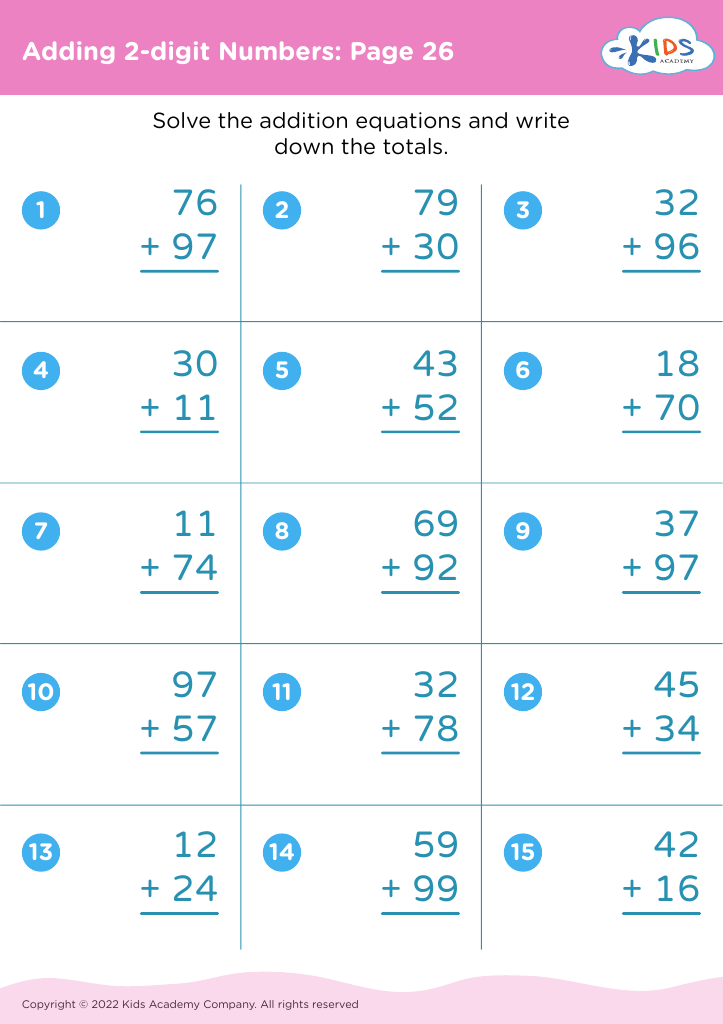
Adding 2-digit Numbers: Page 26

Adding 2-digit Numbers: Page 26

Adding 2-digit Numbers: Page 26
Worksheet
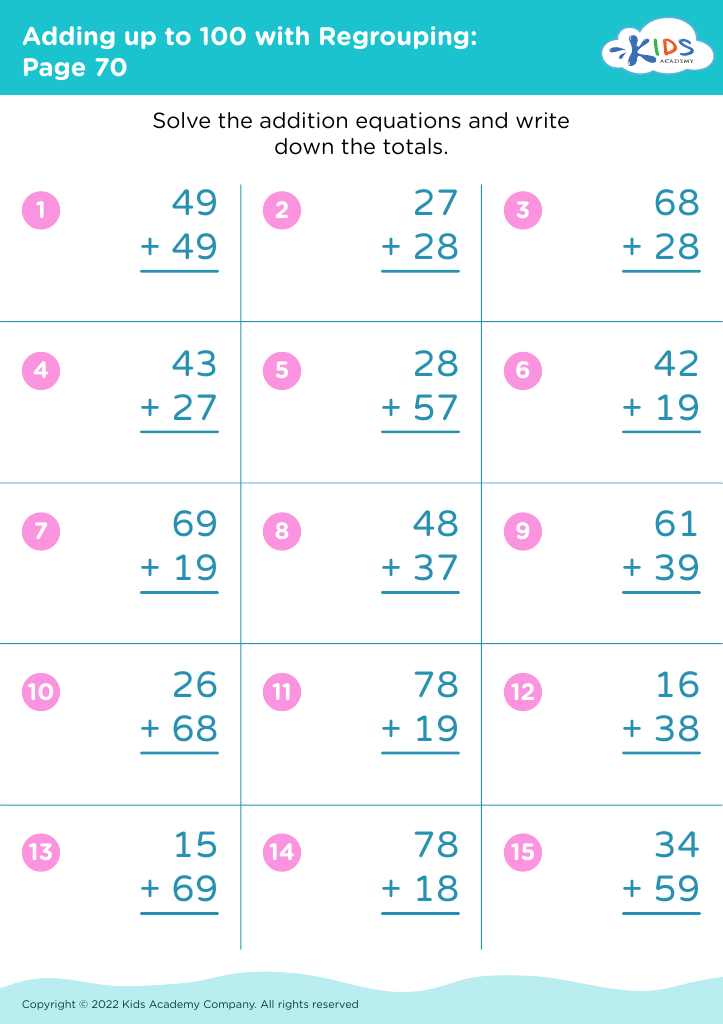
Adding up to 100 with Regrouping: Page 70
Worksheet
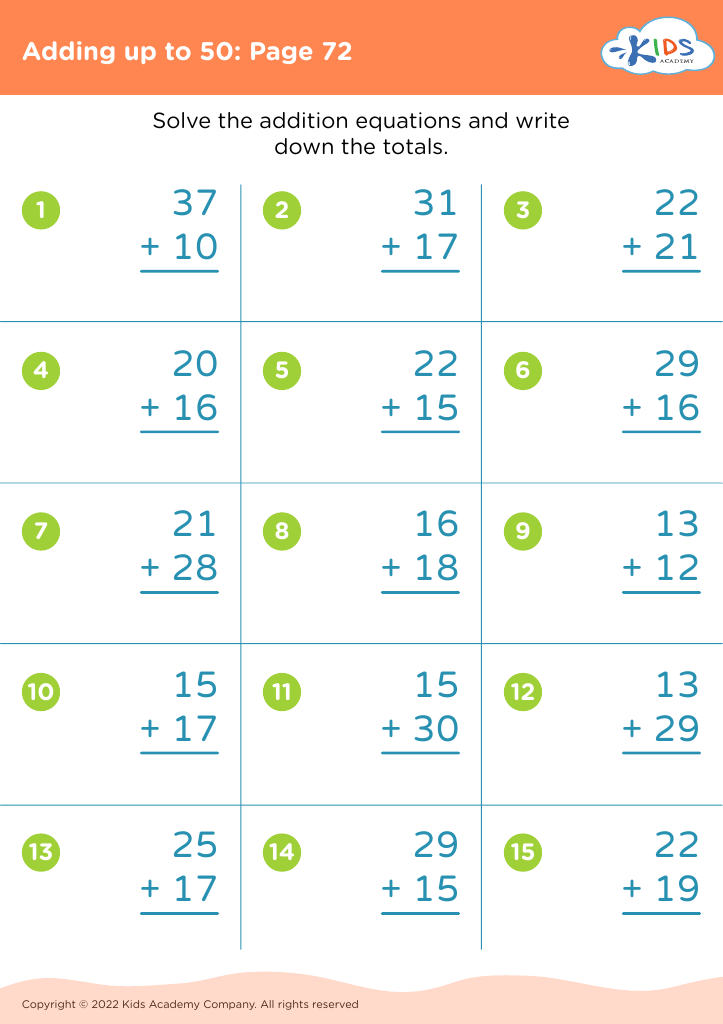
Adding up to 50: Page 72

Adding up to 50: Page 72

Adding up to 50: Page 72
Worksheet
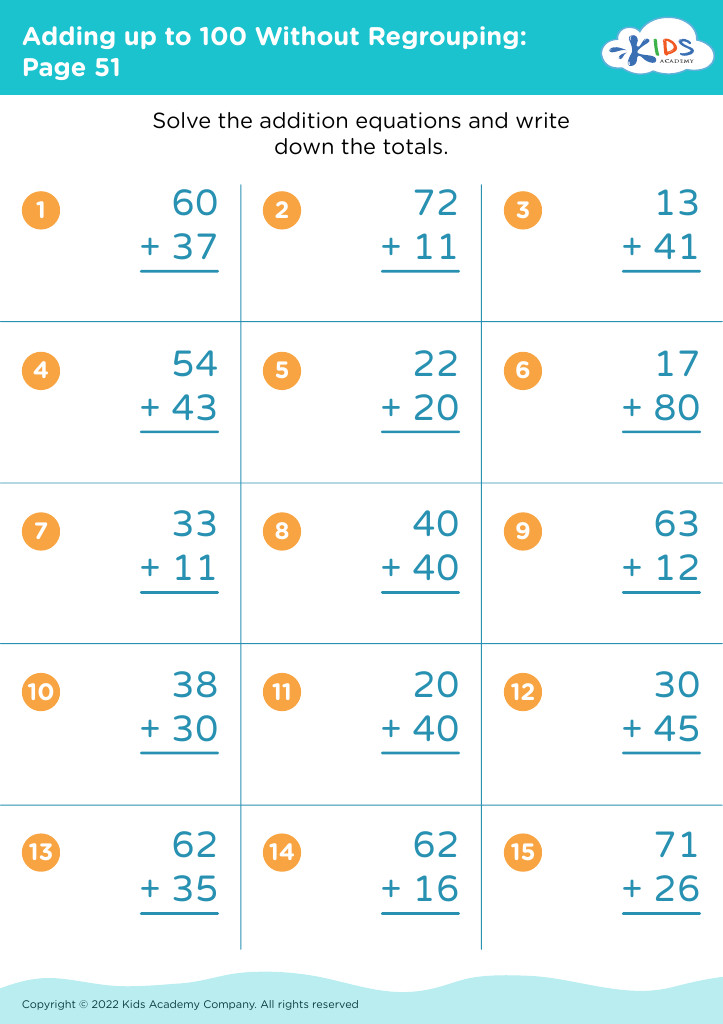
Adding up to 100 Without Regrouping: Page 51
Worksheet
Equal Groups: Assessment 2 Worksheet
Equal Groups: Assessment 2 Worksheet
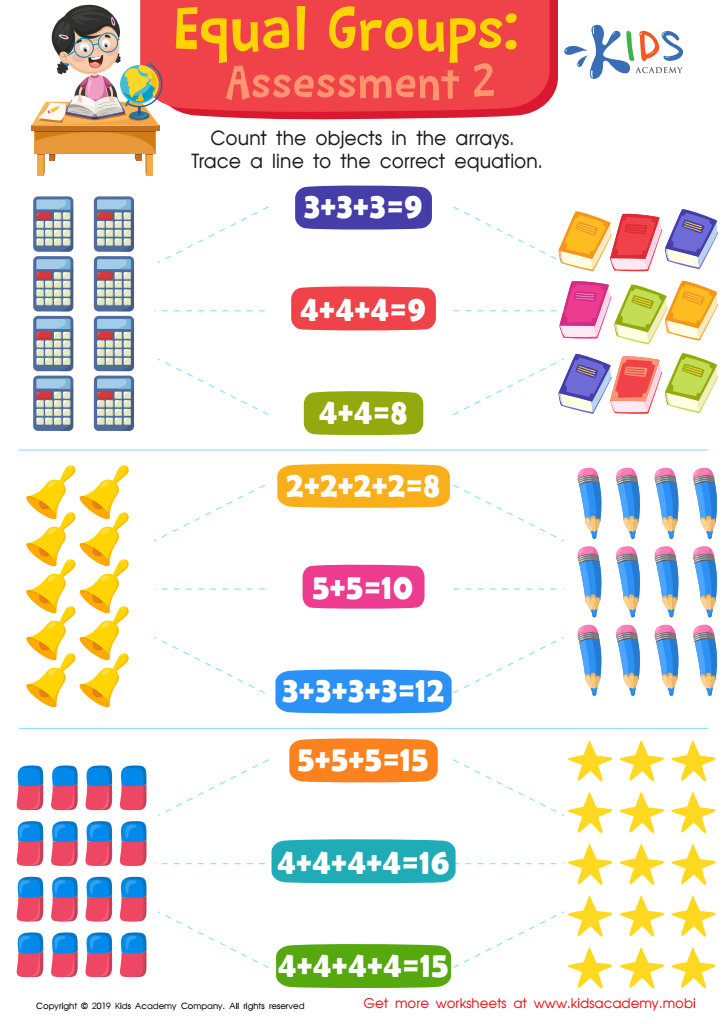
Get your kids to pay attention to learning with familiar objects, bright colors, and this worksheet. It has six arrays - ask kids to identify them and count the objects. Then, help them trace a line to the correct equation.
Equal Groups: Assessment 2 Worksheet
Worksheet
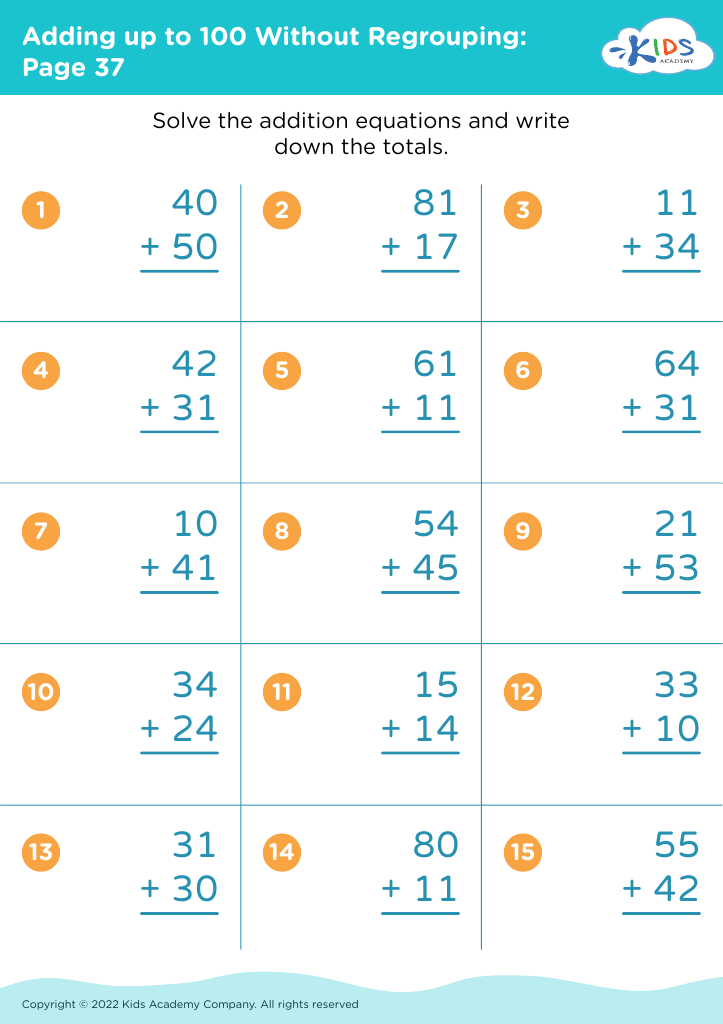
Adding up to 100 Without Regrouping: Page 37
Worksheet
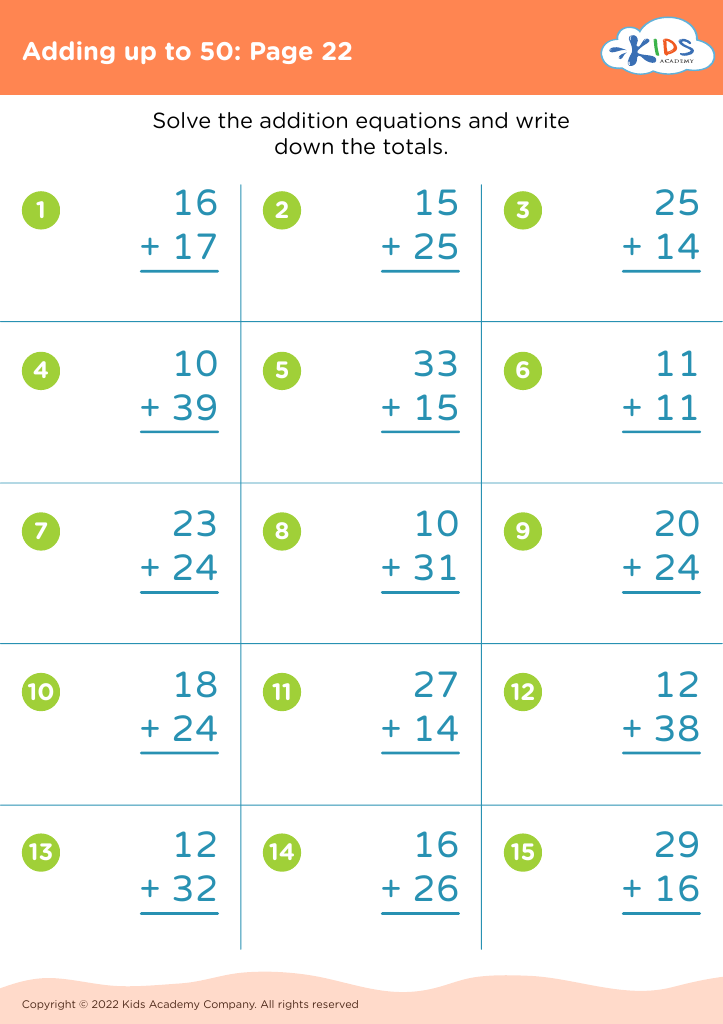
Adding up to 50: Page 22

Adding up to 50: Page 22

Adding up to 50: Page 22
Worksheet
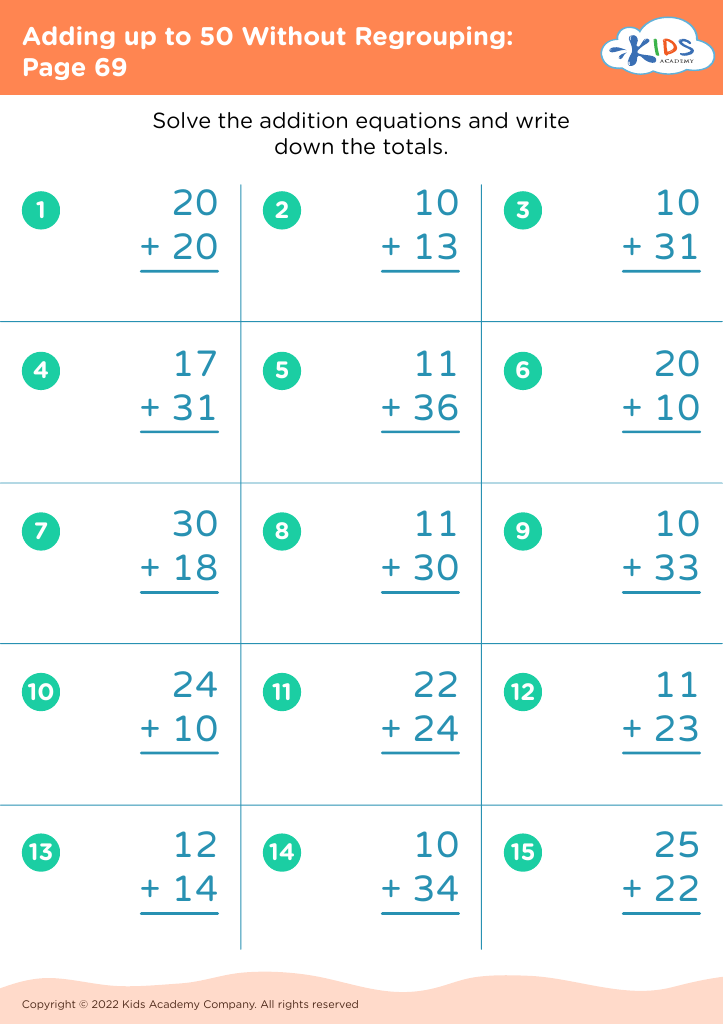
Adding up to 50 Without Regrouping: Page 69
Worksheet
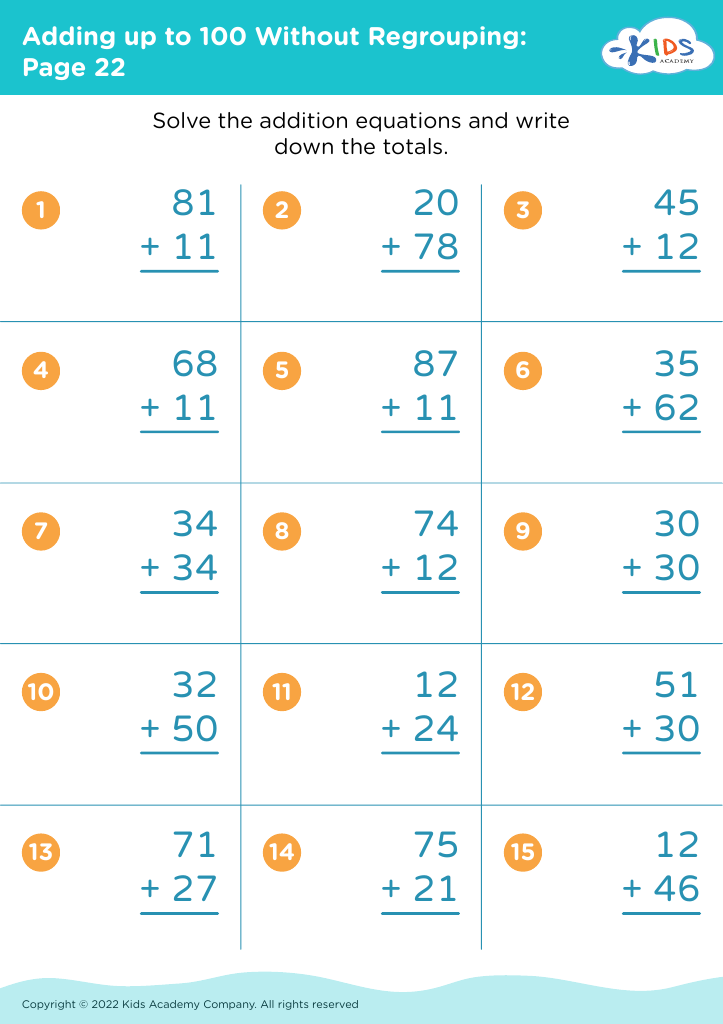
Adding up to 100 Without Regrouping: Page 22
Worksheet
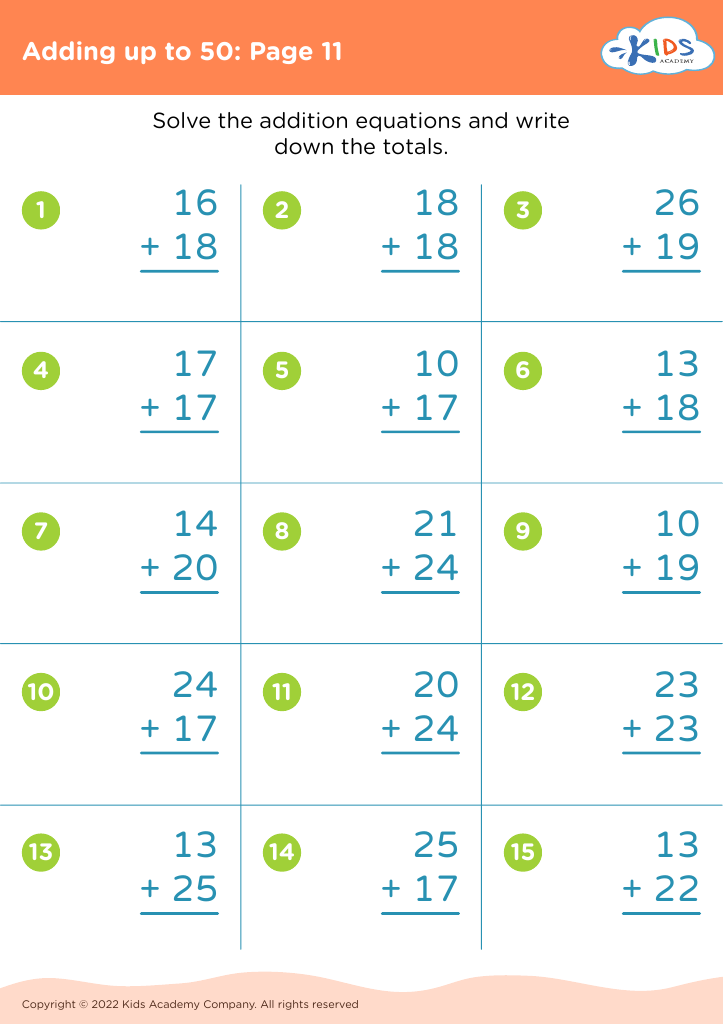
Adding up to 50: Page 11

Adding up to 50: Page 11

Adding up to 50: Page 11
Worksheet
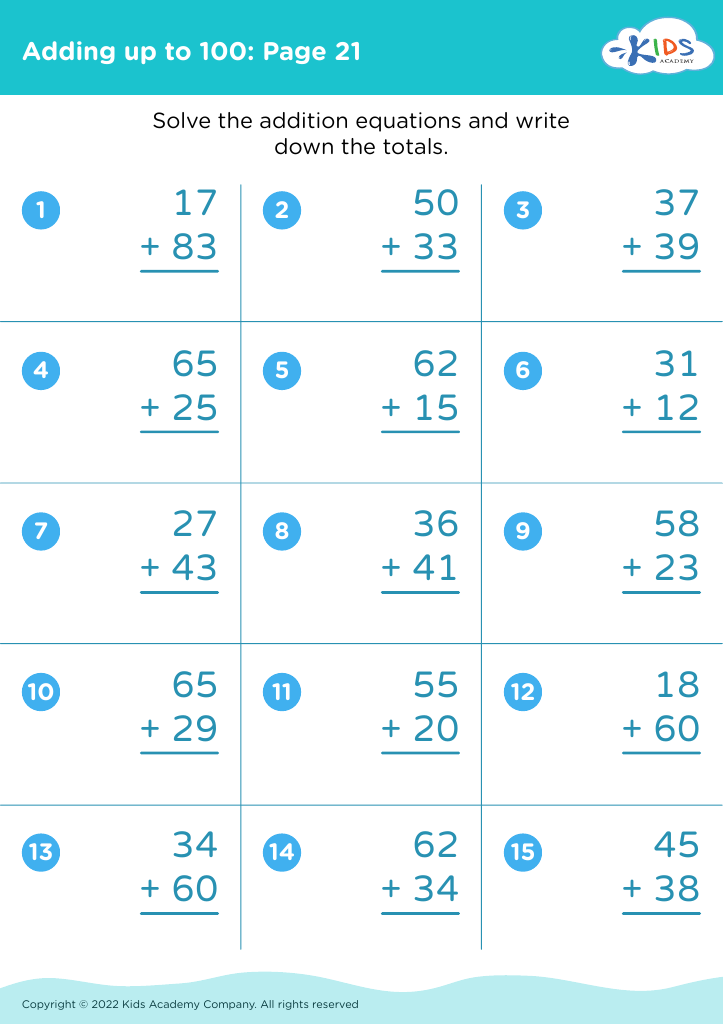
Adding up to 100: Page 21

Adding up to 100: Page 21

Adding up to 100: Page 21
Worksheet
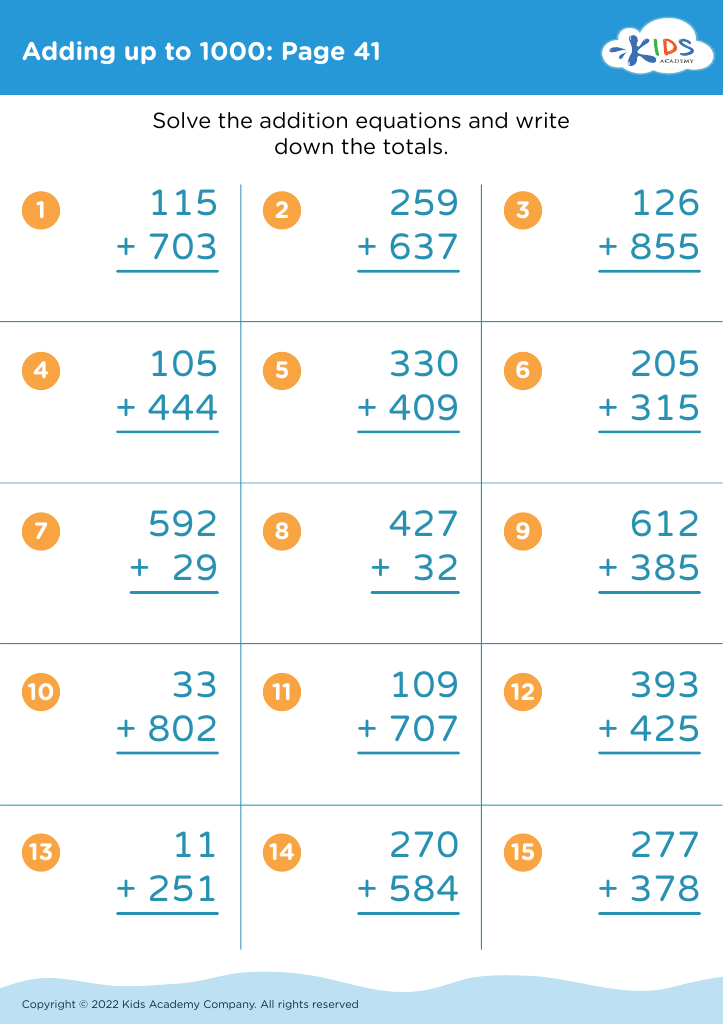
Adding up to 1000: Page 41

Adding up to 1000: Page 41

Adding up to 1000: Page 41
Worksheet
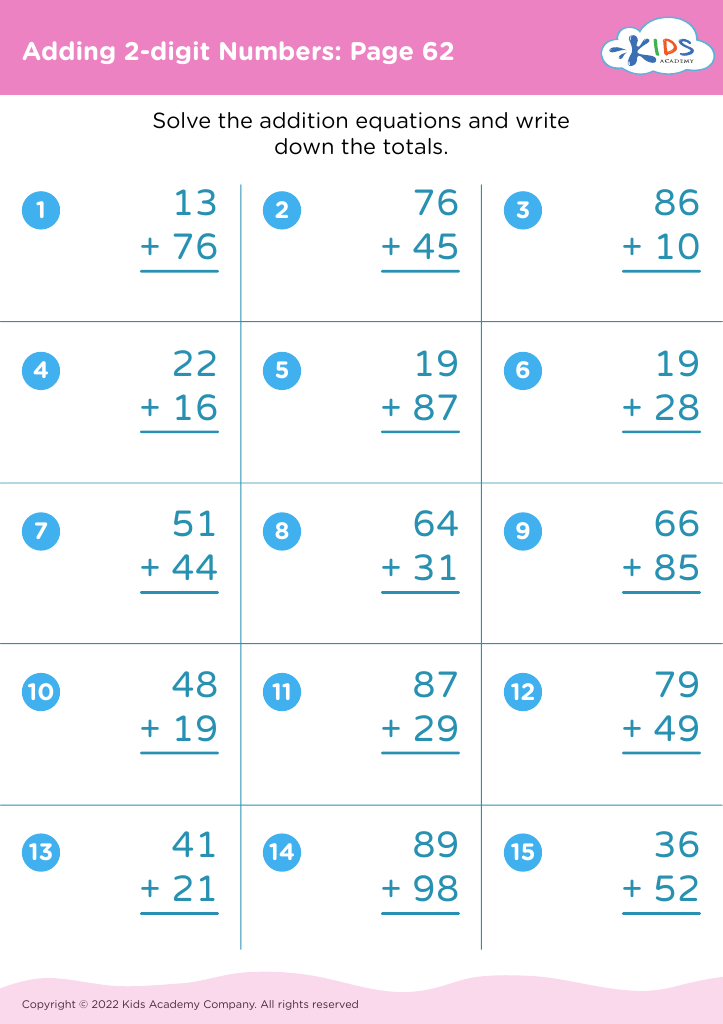
Adding 2-digit Numbers: Page 62

Adding 2-digit Numbers: Page 62

Adding 2-digit Numbers: Page 62
Worksheet
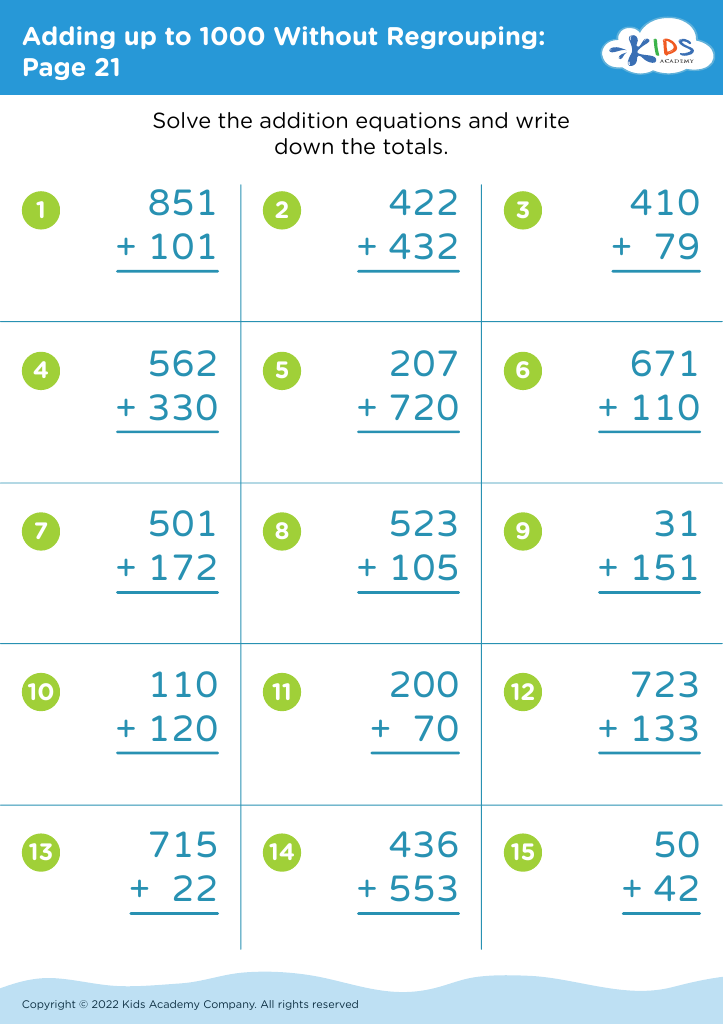
Adding up to 1000 Without Regrouping: Page 21
Worksheet
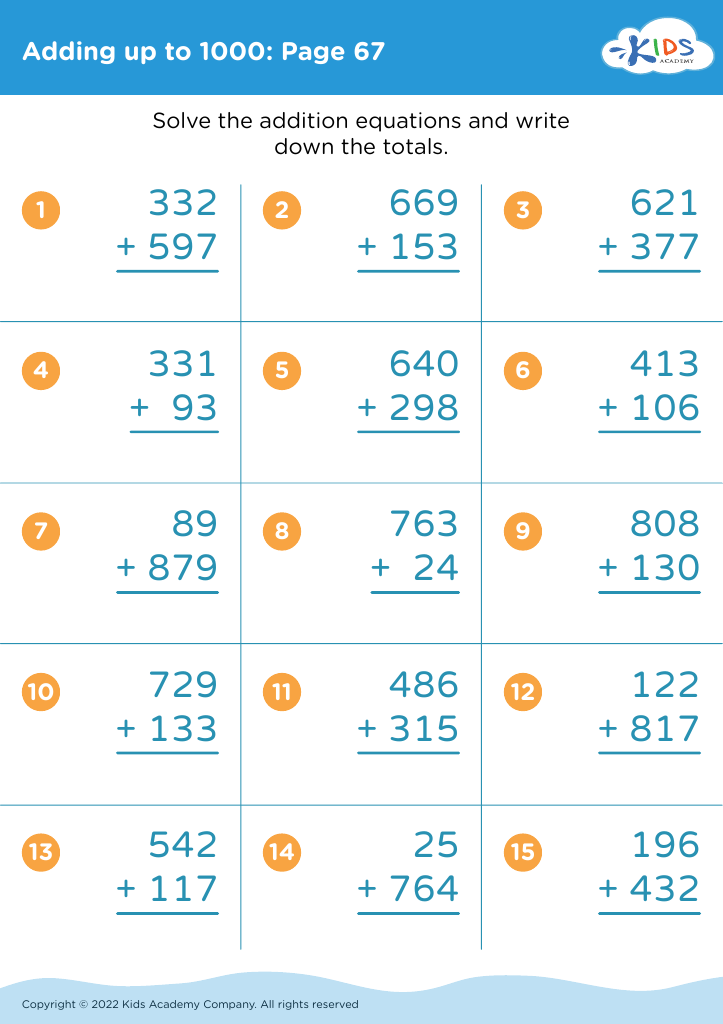
Adding up to 1000: Page 67

Adding up to 1000: Page 67

Adding up to 1000: Page 67
Worksheet


Understanding multiplication, addition, and subtraction is essential for children aged 5-7 as these foundational math skills play a critical role in their cognitive and academic development. At this early age, children are highly receptive to new information, and establishing a strong mathematical foundation can set them up for future success in more complex mathematical concepts and problem-solving.

Addition and subtraction are the building blocks of arithmetic and foster critical thinking by allowing children to grasp the concepts of quantity, comparison, and change. These skills are not only applicable to mathematics but extend to real-life situations, enhancing a child’s ability to make decisions, analyze outcomes, and manage everyday tasks efficiently.

Additionally, an early exposure to multiplication, often introduced through repeated addition, prepares children for higher-level math, encouraging patterns recognition and proportional reasoning. It fosters an understanding of groupings and helps children grasp the concept of scalability, which is vital in various real-life contexts.

Moreover, mastering these skills can boost a child's confidence and aptitude in other academic areas. Parents and teachers should therefore prioritize the development of these mathematical skills to support holistic educational growth, inspire a lifelong interest in learning, and establish a strong foundation for future academic and professional achievements.