Hand-eye Coordination Geometry Worksheets for Ages 5-7
7 filtered results
-
From - To
Discover our engaging Hand-eye Coordination Geometry Worksheets designed specifically for children aged 5-7! These interactive resources target key skills in geometry while enhancing hand-eye coordination, crucial for early learners. Our colorful, visually appealing worksheets are composed of fun activities that help children recognize shapes, practice tracing, and develop spatial awareness. Perfect for both classroom and home learning, these worksheets promote fine motor skills and provide a playful approach to mastering geometry concepts. Foster creativity and critical thinking in your child as they enjoy learning through our expertly crafted exercises. Explore the exciting world of geometry with our hand-eye coordination worksheets today!
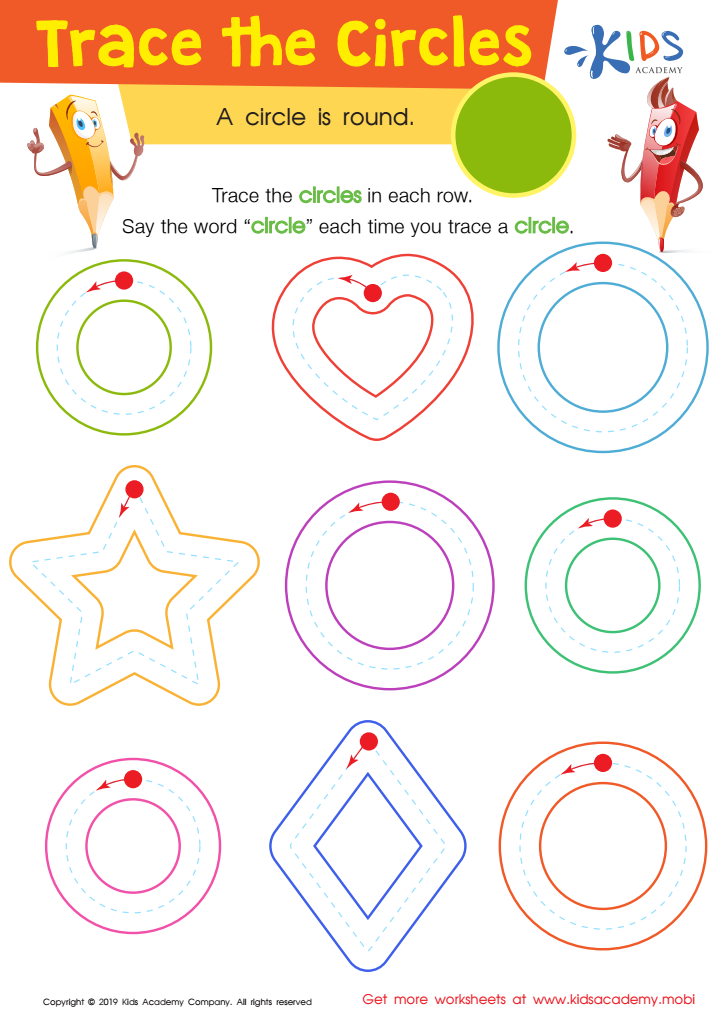
Trace The Circles Worksheet
 Assign to My Students











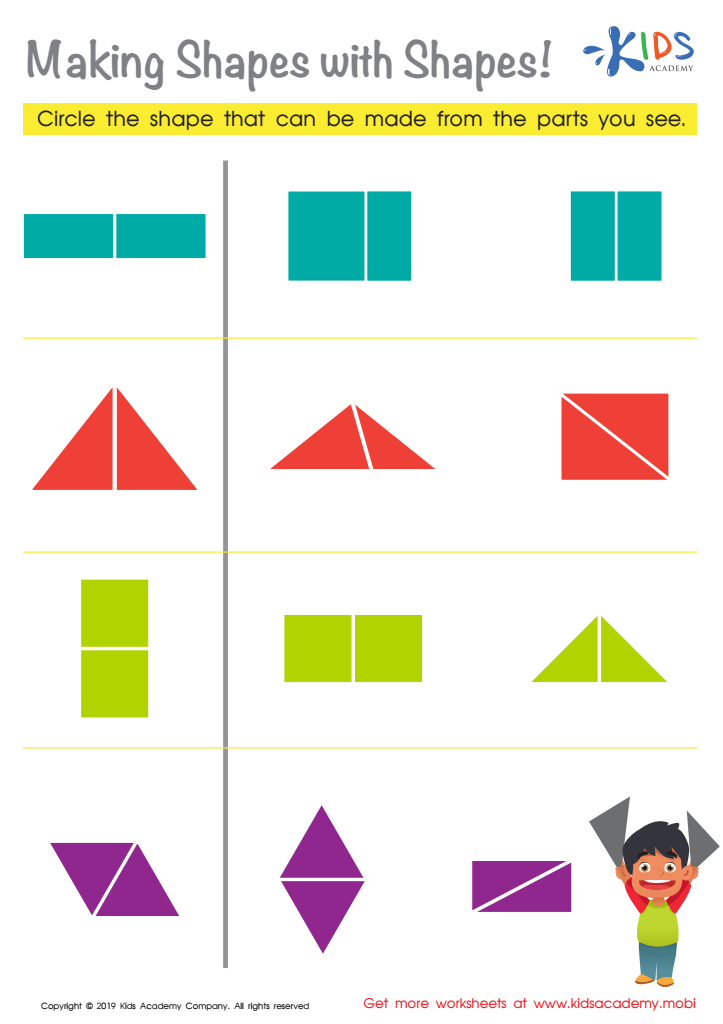
Making Shapes with Shapes Worksheet
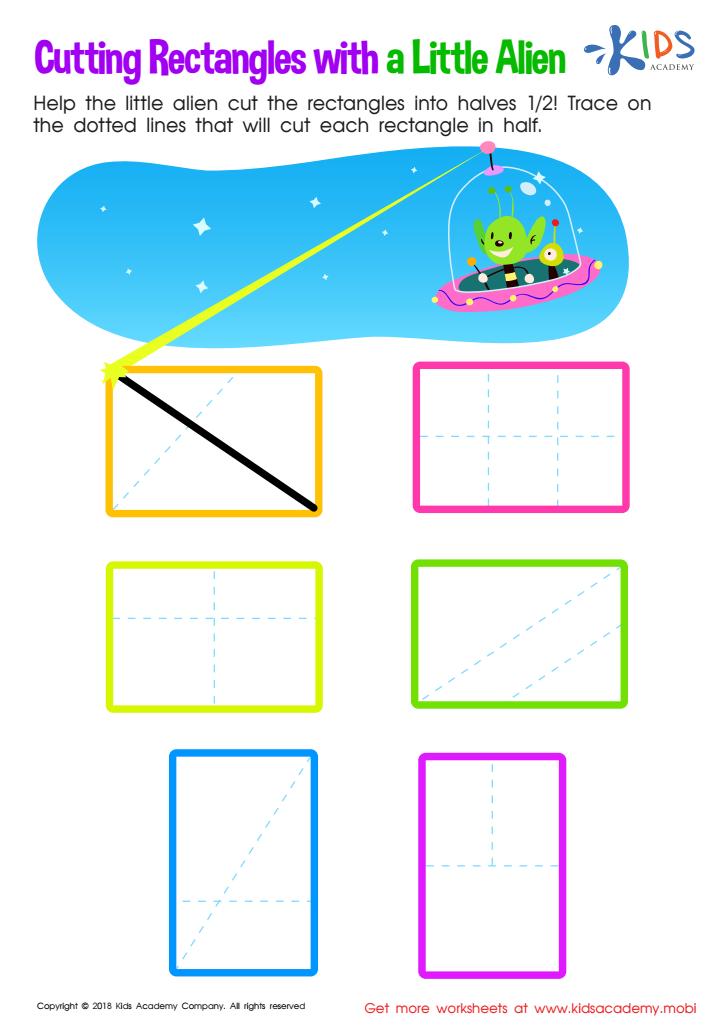
Cutting Rectangles with Alien Worksheet
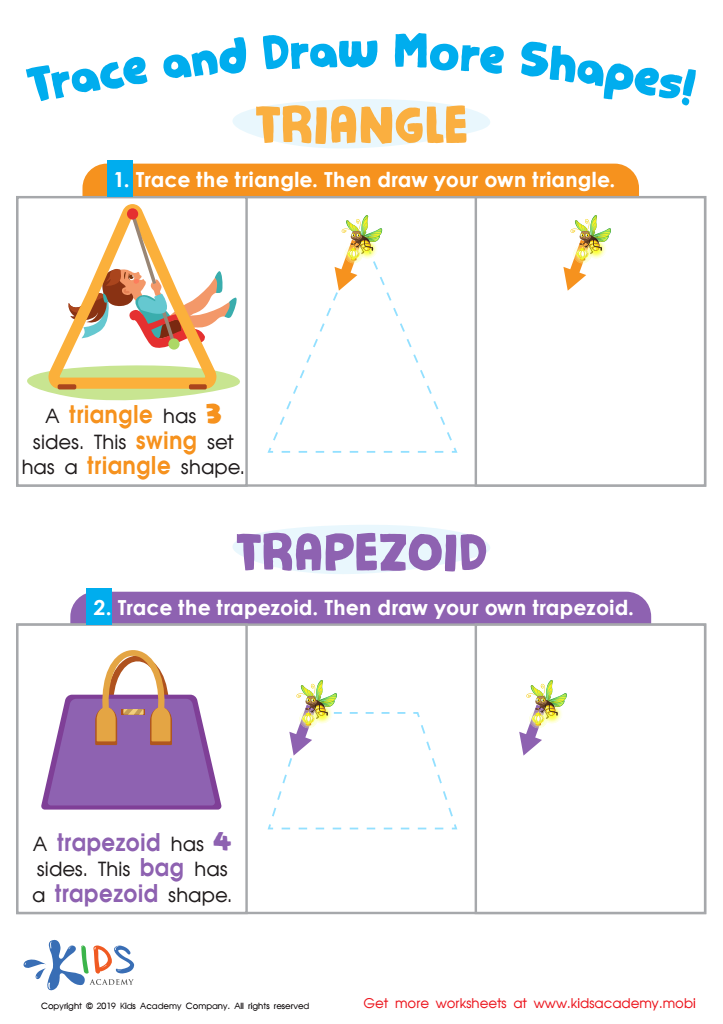
Trace and Draw More Shapes Worksheet
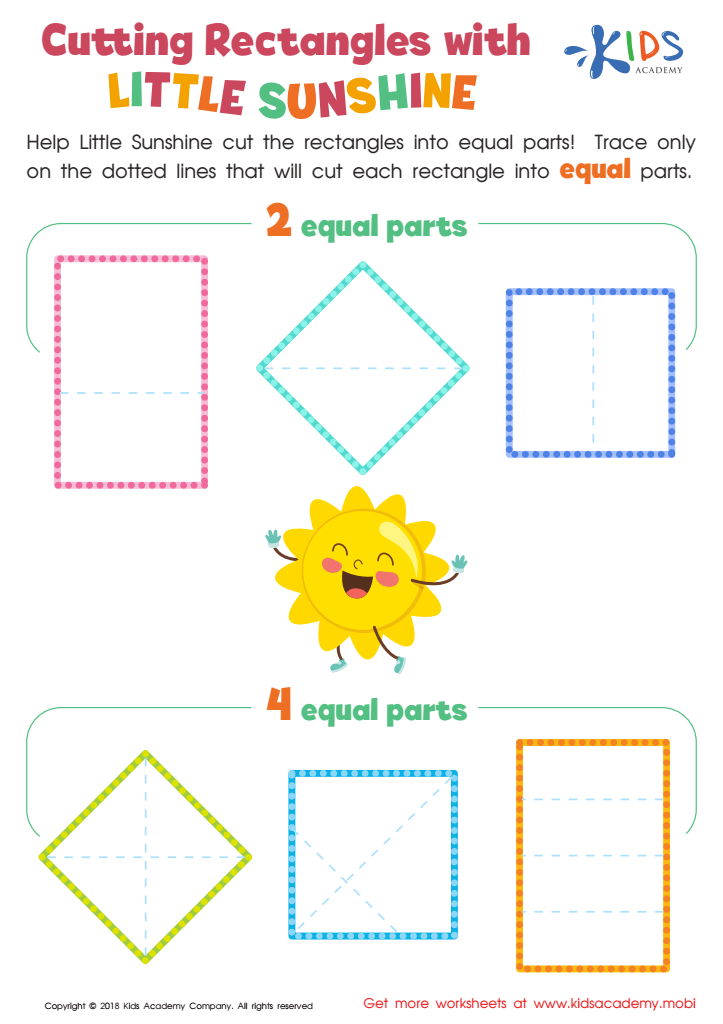
Cutting Rectangles with Little Sunshine Worksheet
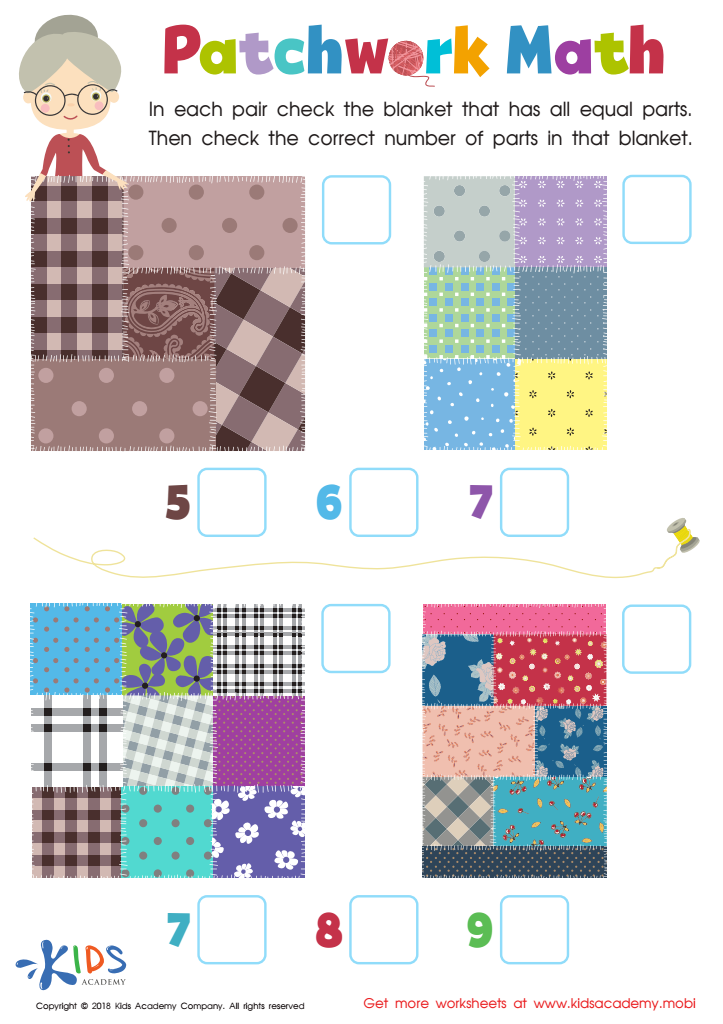
Patchwork Math Worksheet








Hand-eye coordination is a crucial skill developed during early childhood, and focusing on geometry can enhance this important ability for ages 5 to 7. At this stage, children are naturally curious and eager to explore their environment. Integrating hand-eye coordination activities with geometric concepts not only makes learning engaging but also establishes a strong foundation for math skills.
As children manipulate shapes, such as fitting blocks together or tracing geometric figures, they build fine motor skills and spatial awareness. This experiences enable them to visually interpret and physically engage with shapes, fostering their problem-solving skills and creativity. Furthermore, enhancing hand-eye coordination supports overall cognitive development, improving memory and focus—skills that are essential for future learning success.
For parents and teachers, prioritizing hand-eye coordination in geometry aligns with developmental goals set by early educational standards. It can lead to better academic performance in future grades as foundational skills in geometry and spatial reasoning strengthen. Investing time in these activities not only supports children's physical development but also prepares them for more complex mathematical concepts, ensuring they are capable learners as they progress through their education. Ultimately, fostering these skills encourages a lifelong love for learning and exploration.








